
Reviewed · CONCENTRATION CAMP MEMORIAL TOURS
Never Again Berlin – Sachsenhausen Concentration Camp
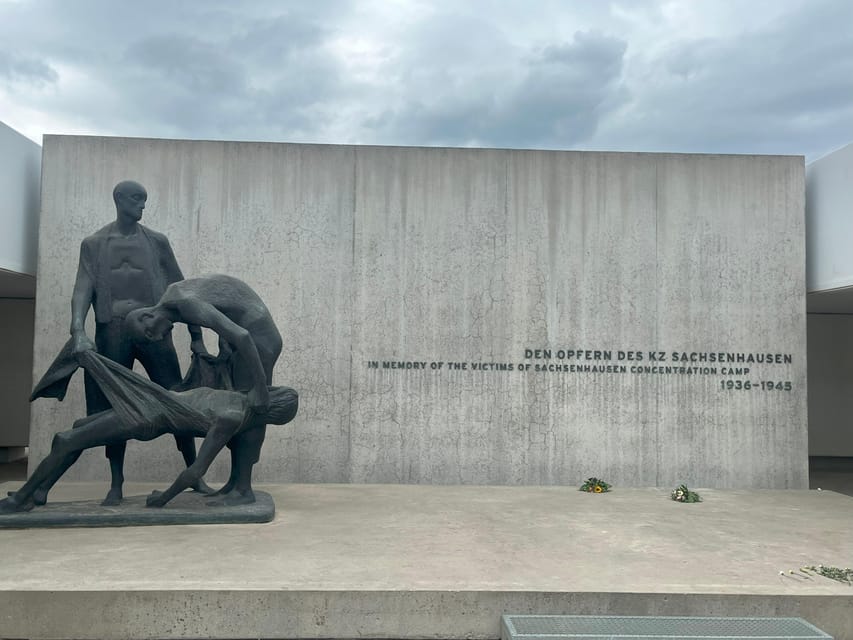
Sachsenhausen is not a sightseeing stop in the usual sense. It is a place where the machinery of Nazi terror becomes painfully concrete, from the SS officers’ family homes to Station Z, where Soviet prisoners were murdered. The tour connects those remains to the rise of Hitler and to political extremism in Germany today.
I like the later start time, which can suit a busy Berlin schedule, and I like that the outing includes the train and bus journey with an English speaking guide rather than leaving you to find Oranienburg alone. Siobhan has earned especially warm praise for clear, careful explanations. The main concern is guide coverage: one account says the guide stayed outside for most of the memorial, so confirm how much of the site your guide will personally lead.
Key points to know before you go
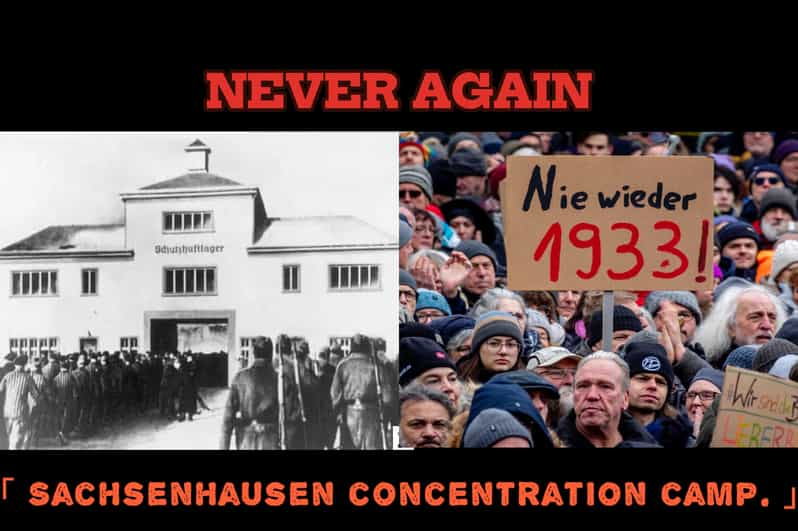
- Station Z gives the visit its hardest focus: You see where mass shootings, gas chambers, and cremation were part of the camp’s killing system.
- The walk begins in Oranienburg: The 35 minute train ride and 10 minute bus trip each way make this a half-day outing from Potsdamer Platz.
- SS life sits beside prisoner suffering: The route shows how officers enjoyed family life while people were abused nearby.
- Entrance is included, transport is not: Buy a Berlin ABC ticket before meeting the guide.
- Bring food and water: Only two food options are available at the memorial, and they may not be open.
- This is for mature visitors: Children under 12 are not accepted, and the subject matter is severe.
Why Sachsenhausen deserves a full morning or afternoon
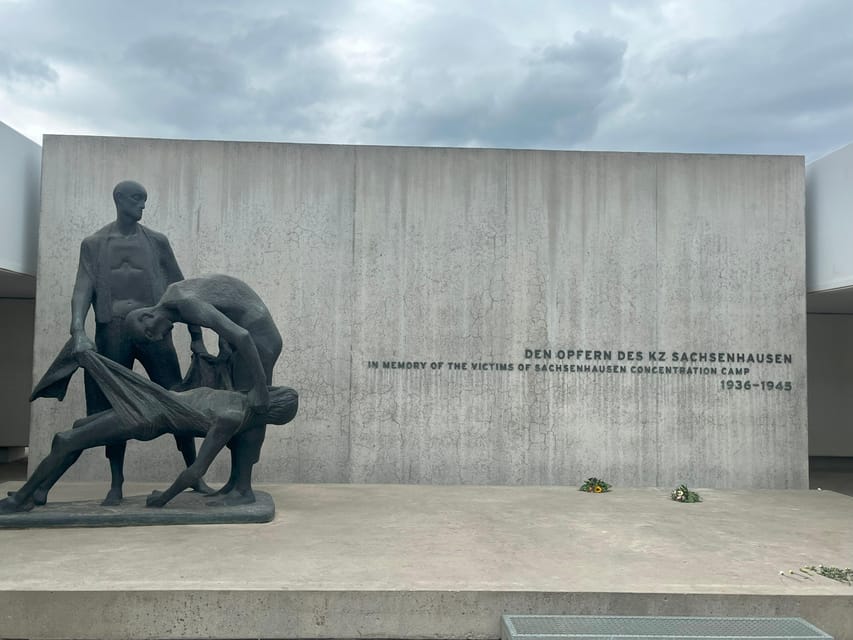
The value of this experience lies in the way it joins large political events to small, grim details. You do not only hear that the Nazi regime imprisoned and murdered people. You see how the camp was planned, staffed, managed, and made to look normal to those who worked there.
The visit starts in Berlin at Potsdamer Platz, in front of Espresso House. Look for the guide carrying a small yellow flag. From there, you take a train for about 35 minutes, followed by a 10 minute bus ride to Sachsenhausen Memorial in Oranienburg.
That travel time matters. The camp is outside central Berlin, so going alone requires a little planning. With this tour, you get help with the route and a guide who can provide context before you enter. The tradeoff is that the total outing lasts 270 minutes, including transport, so it takes a good part of your day.
The exact price supplied for the tour is $38 per person. Entrance is included, but your Berlin ABC train ticket is extra. Since the memorial itself is free to enter, the price is mainly for the guide service and organized transport support. That can be fair value if you want interpretation and a simpler route. It is less compelling if you prefer to read displays on your own and do not mind arranging public transport.
More Concentration Camp Memorial Tours in Berlin
- Berlin: Sachsenhausen Concentration Camp Tour in English
★ 5.0 · 5,711 reviews - Berlin: Sachsenhausen Concentration Camp Memorial Tour
★ 4.7 · 3,716 reviews - Sachsenhausen Concentration Camp Bus Tour in English from Berlin
★ 5.0 · 1,962 reviews
Oranienburg and the road to the memorial
The introduction begins in Oranienburg, a city that endured wartime bombing while the camp was left untouched. That detail raises an uncomfortable question about what was protected, what was ignored, and how nearby communities lived alongside the camp system.
The guide also explains Hitler’s rise to power and the reason this location was selected. That opening is important. Without it, the memorial can feel like a collection of grim buildings. With it, you begin to see Sachsenhausen as part of a wider system built through law, propaganda, police power, forced labor, and racial ideology.
From the station, the walk continues to the visitors’ center. Wear comfortable shoes because the day includes station walks, bus connections, and several hours on site. Comfortable clothing, water, and snacks are sensible choices.
The visitors’ center contains models that show the camp’s layout. These are useful before seeing the remains because they explain how physical space was used for surveillance and control. The design was not accidental. Buildings, fences, paths, guard positions, and open areas all helped enforce the prisoners’ helpless position.
The SS camp and the normality of evil
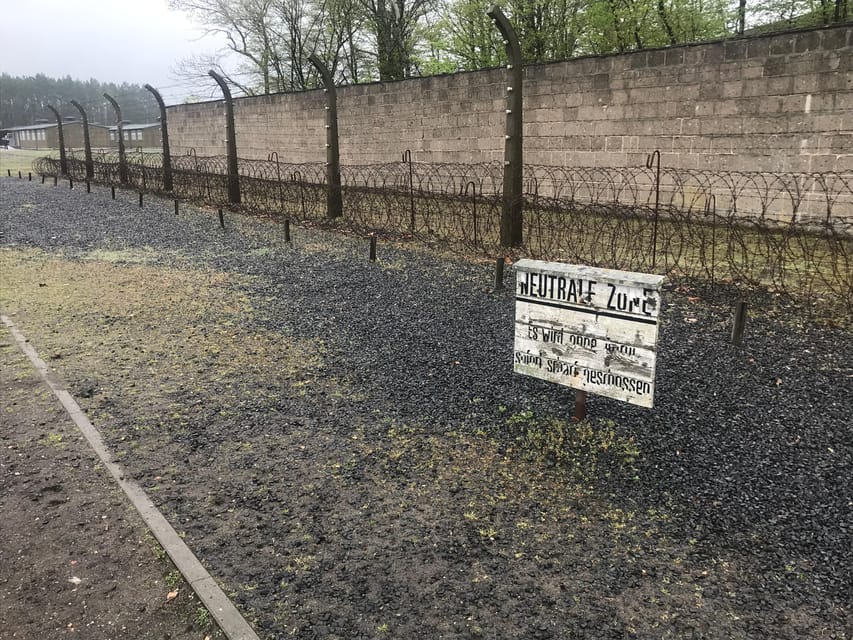
One of the strongest parts of the route is the former SS troop camp. The memorial also shows the head of the camp’s house, where officers spent time with their families while prisoners suffered nearby.
This contrast is hard to forget. It strips away the idea that cruelty always looks wild or chaotic. Here, people could eat dinner, raise children, and enjoy private life while taking part in an organized system of abuse. I find this section especially useful because it examines the people who carried out the system, not just those who suffered under it.
You also hear about the forced sex work imposed on female prisoners. The subject is handled as part of the camp’s exploitation of prisoners’ bodies and labor. The presence of reporters, ambassadors, and humanitarian organizations adds another troubling question: who knew what was happening, and what did they choose to do with that knowledge?
The visit does not offer easy comfort. It asks you to look at silence, access, and responsibility. That makes the tour more demanding than a simple account of dates and buildings, but also more useful.
Tower A and the system behind the violence
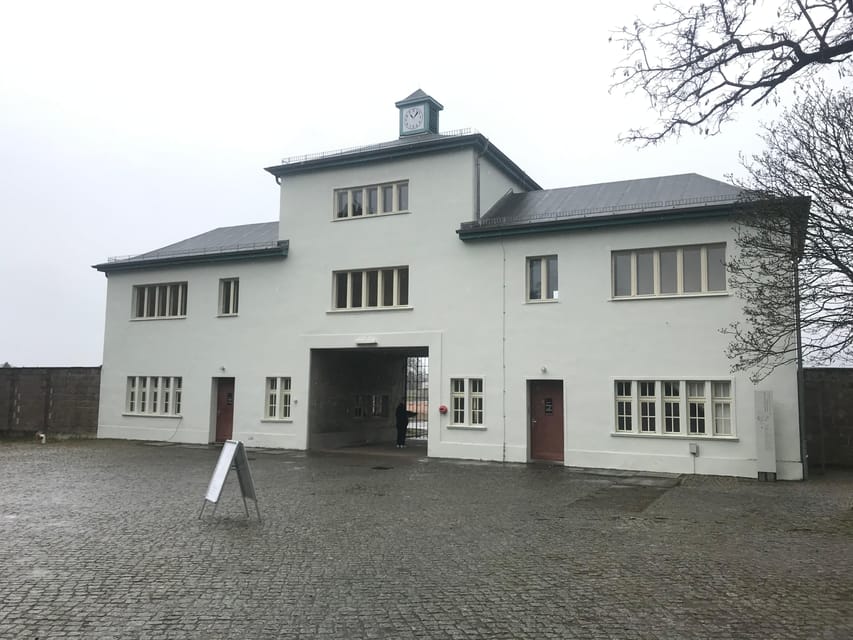
Tower A is the main entrance area and includes the Perpetrators’ Room exhibition. Here, the focus shifts toward SS indoctrination and the officers who administered the camp.
Portraits and displays examine how these men were trained to accept Nazi racial thinking and treat prisoners as less than human. The point is not to excuse them. It is to show how propaganda, hierarchy, obedience, and career ambition helped produce ordinary administrators of terror.
Daily roll calls reveal another part of the system. Prisoners could be forced to stand for long periods as punishment and control. You also learn about the shoe testing track, where prisoners from the lowest categories were forced to test footwear for the benefit of the German war economy.
This is one of the clearest examples of how the Nazis profited from prisoner suffering. Human beings were used as unpaid labor and as tools for product testing, with exhaustion and injury treated as acceptable costs.
A good guide can make these details understandable without rushing them. Siobhan is specifically praised for taking time to explain the site and for adding stories that would be easy to miss alone. At the same time, guide quality appears to vary. One poor account describes a guide who stayed outside for most of the visit and gave vague answers. I would ask at the start how the tour will be handled inside the memorial.
Other memorial sites within reach of Berlin:
- Berlin: Sachsenhausen Concentration Camp Tour in English
★ 4.8 · 1,889 reviews - Sachsenhausen Concentration Camp Memorial Tour (Max. 15 Guests)
★ 5.0 · 1,516 reviews - Berlin: Sachsenhausen Concentration Camp and Potsdam Tour
★ 4.6 · 1,334 reviews - Sachsenhausen concentration camp.
★ 5.0 · 1,189 reviews
Barracks, the kitchen, and the danger of forgetting
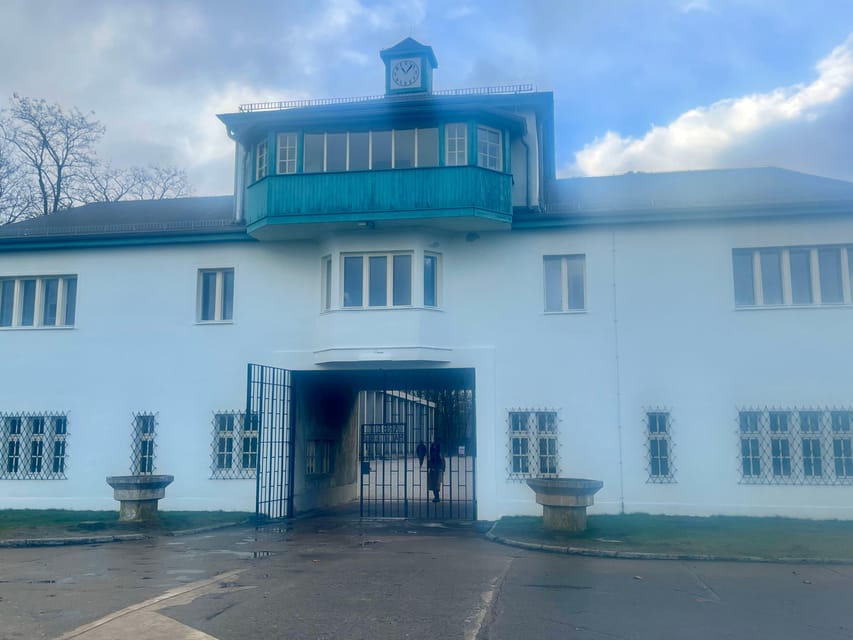
Part of the visit allows you to explore the prisoners’ barracks and camp kitchen. These spaces can feel quieter than the main exhibition areas, but that quiet should not be mistaken for a lack of importance.
The barracks show the crowded, controlled conditions in which prisoners lived. The kitchen points to the basic management of hunger and survival. Together, they help you understand the camp as a functioning institution, not merely a place where isolated crimes occurred.
The memorial has also faced attacks from neo-Nazis who deny the Holocaust. That fact connects the site to the present. The visit links this denial and extremist politics to the rise of the AfD, a German far-right party.
You should expect the guide to draw a line between historical evidence and current political arguments. The point is not to turn the memorial into a campaign stop. It is to show why places such as Sachsenhausen still matter. Evidence can be attacked, distorted, or dismissed, so the act of preserving and explaining it remains active work.
Station Z and the machinery of murder
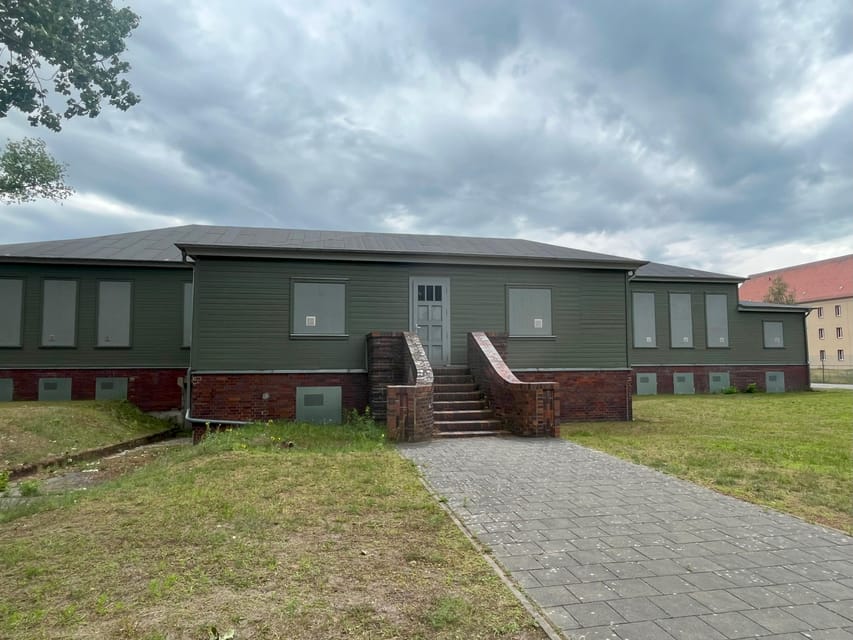
Station Z is likely to be the most difficult stop. Its name refers to the place where prisoners were killed, and the exhibition covers the mass murder of Soviet prisoners, including child soldiers.
The displays explain how the gas chambers and crematorium operated. That practical detail is disturbing, but it matters. It shows the planned nature of the killings and the way technology, staff, records, and buildings were brought together to murder people on a large scale.
Give yourself time here. The subject is not suited to a rushed photo stop, and the tone of the visit should remain respectful. Photography rules and memorial behavior should be followed carefully, even where specific restrictions are not stated in the booking details.
This section also changes how you see the rest of the camp. Earlier buildings can seem like administrative or military structures. After Station Z, their place in the wider system becomes harder to separate from the violence.
The infirmary and Nazi medical crimes
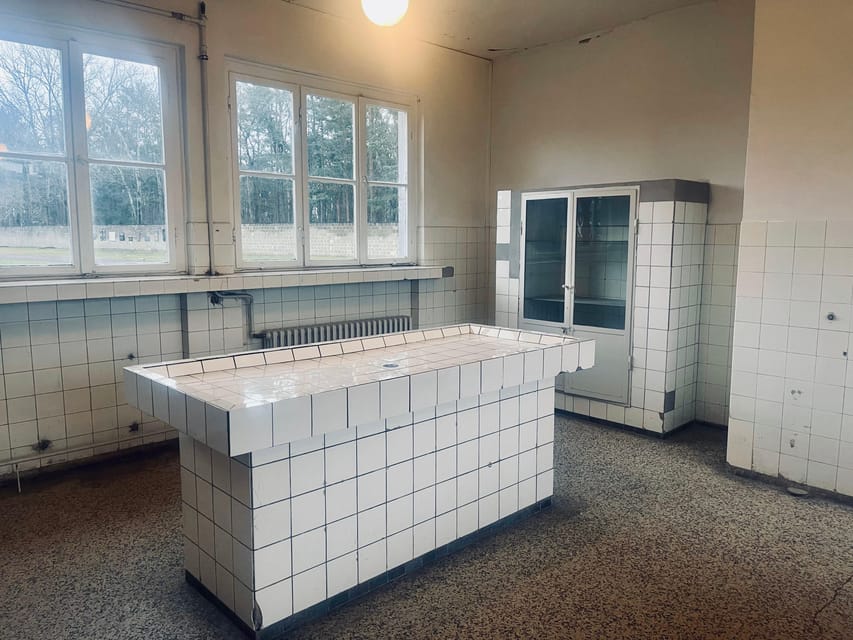
The infirmary examines another part of Nazi rule: racism, eugenics, control over women’s bodies, and medical experimentation.
Doctors used prisoners as subjects for experiments that could help their careers. The phrase lab rats is not an exaggeration of the basic idea. People in the camp had no meaningful ability to refuse, and medical authority became another tool of domination.
This section is especially valuable for anyone interested in how persecution entered hospitals, research, and public policy. It shows that Nazi crimes were not limited to soldiers with weapons. Doctors, officials, guards, and administrators could all take part in a system that defined certain people as disposable.
The focus on women’s bodies also widens the story. Prisoners were not only controlled through labor, hunger, and confinement. Their ability to make decisions about their own bodies was attacked as part of racial policy.
What the four hour memorial visit feels like
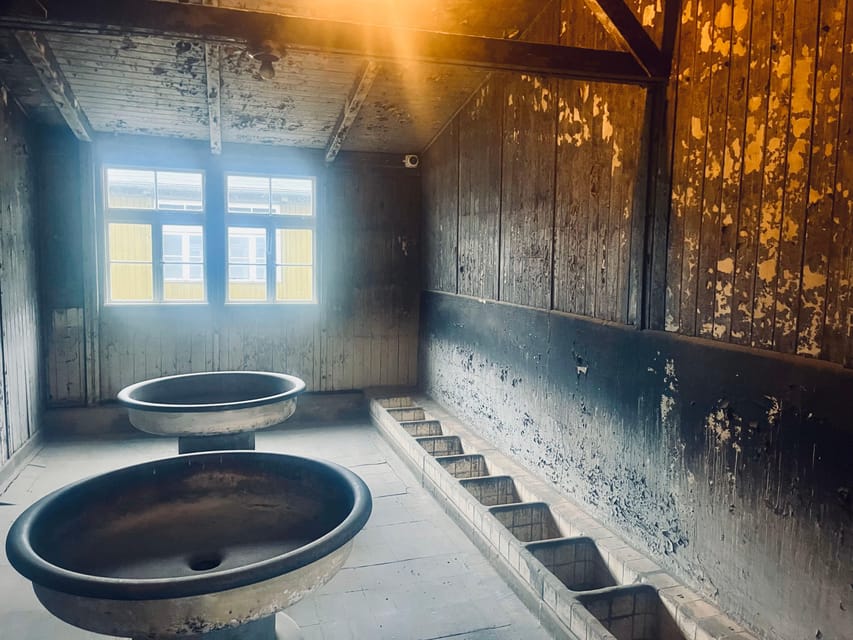
The memorial portion takes about four hours, including guided touring, walking, sightseeing, and a break. That is enough time to cover the major parts of the camp without reducing the visit to a quick circuit.
Still, this is not a light excursion. The material includes murder, sexual exploitation, medical abuse, forced labor, and the persecution of children. Children under 12 are not accepted, and I would be cautious about bringing older children unless you already know they can handle difficult subjects.
The site is listed as wheelchair accessible. The booking information does not give a detailed route assessment, so if you need specific access information, ask before booking. The train and bus connections also form part of the day and may affect comfort for anyone with limited mobility.
Food is a practical weakness. There are only two food options at the camp, and they are not always open. Bring snacks and water. This is not the kind of place where you want to spend part of your limited visit searching for lunch.
Guide quality and what you are paying for
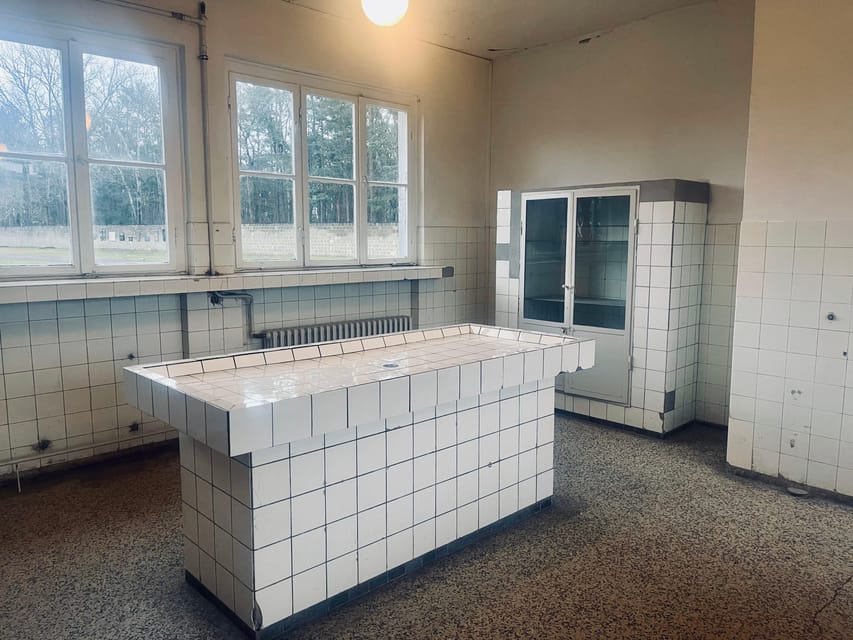
The best reason to book is the guide’s interpretation. A strong guide can connect Hitler’s rise, the camp’s design, SS indoctrination, forced labor, mass killing, medicine, and modern extremism into one clear story.
Siobhan receives particularly strong praise for detailed explanations, passion, patience, and adapting the visit to the group. Another guide helped a group after it made a travel mistake, which suggests that practical support can be useful on a day involving several connections.
But do not assume every departure will be identical. A serious complaint describes a guide who did not accompany the group for most of the memorial and could not answer questions. There is also a note about two languages being handled at the same time, which may slow the pace and split your attention.
Ask these questions at the beginning:
- Will the guide accompany the group inside the main exhibitions?
- Will the tour be in English only?
- How much time is planned at Station Z and the infirmary?
- Is the break long enough to eat the snacks you bring?
Those questions are not rude. They help you know what service the $38 fee is buying.
Who should book the Never Again tour
I would recommend this tour to you if you want a guided first visit to Sachsenhausen and prefer not to manage the train and bus route alone. It suits adults and mature teenagers who want historical explanation rather than a quick look at memorial buildings.
It is also a good fit if you value links between past and present. The sections on Holocaust denial, neo-Nazi attacks, and the AfD give the visit a current political edge without losing sight of the victims.
You may prefer an independent visit if you want to set your own pace, spend long periods reading, or avoid the risk of a guide covering two languages. Since entrance is free, the organized tour is worthwhile mainly when the guide is present and useful throughout the site.
The later start is helpful for anyone who wants a slower morning in Berlin. The half-day length, included entrance, flexible cancellation up to 24 hours, and reserve now, pay later option also make planning easier. Just remember to buy the Berlin ABC ticket separately.
Final call: should you book?
Book this experience if you want a serious, guided introduction to Sachsenhausen with transport support and a clear link to modern Germany. Its strongest feature is the range of subjects covered, from SS family life and prisoner labor to Station Z and medical crimes.
Skip it if you are uncomfortable paying for a guide at a memorial with free entry, or if you need complete control over the pace. Before you commit, confirm that your departure includes an English speaking guide who will accompany you inside. With that detail settled, this can be a meaningful and well-structured half-day from Berlin.
FAQ
Where does the tour start?
The meeting point is in front of Espresso House at Potsdamer Platz. The guide carries a small yellow flag.
How long does the full experience last?
The stated duration is 270 minutes, or four and a half hours. This includes the train, bus, memorial visit, walking, and return journey.
How do I reach Sachsenhausen from Berlin?
The group takes a train from Potsdamer Platz area for about 35 minutes, followed by a bus ride of about 10 minutes. The same transport pattern is used on the return.
Is the train ticket included?
No. You must buy a Berlin ABC train ticket before the tour. The ticket cost is separate from the tour price.
Is entrance to Sachsenhausen included?
Yes. Entrance is included in the tour price, although the memorial itself is free for general access.
What language is the tour in?
The live guide language is English. One account notes that two languages were handled together on a departure, so you may wish to confirm this before booking.
What should I bring?
Bring comfortable shoes, water, snacks, and comfortable clothing. Food choices at the memorial are limited and may not always be available.
Is the tour suitable for children?
Children under 12 are not accepted. The subject matter includes mass murder, forced labor, sexual exploitation, and medical experiments.
Can I cancel or pay later?
You can cancel up to 24 hours before the tour for a full refund. The reserve now, pay later option allows you to hold a place without paying immediately.
Just added in Berlin
- Private One way Airport Transfer Berlin Airport To Berlin★ 3.5 · 17 reviews
- Private Walking Tour: Berlin Wall, Cold War and Checkpoint Charlie★ 5.0 · 37 reviews
- Modern Berlin Private Walking Tour: Diverse, Vibrant and Exciting German Capital★ 5.0 · 13 reviews
- Private Day Trip to Potsdam from Berlin by Train★ 4.5 · 27 reviews
- City Explorer: Potsdam Private Day Trip★ 4.5 · 10 reviews
- Berlin Private Custom 5-Hour Tour by Car★ 5.0 · 30 reviews
- Private Half-Day Sightseeing Tour in Berlin★ 3.5 · 6 reviews
- Berlin Private Custom Tour in a Minivan, East and West★ 5.0 · 123 reviews
Concentration Camp Memorial Tours, compared.
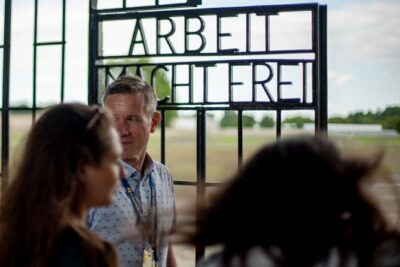
Sachsenhausen Concentration Camp Tour in English
Read our review →
Dachau Concentration Camp Memorial Site Tour from Munich by Train
Read our review →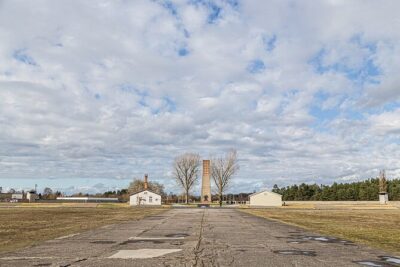
Sachsenhausen Concentration Camp Memorial Tour
Read our review →
Sachsenhausen Concentration Camp Bus Tour in English from Berlin
Read our review →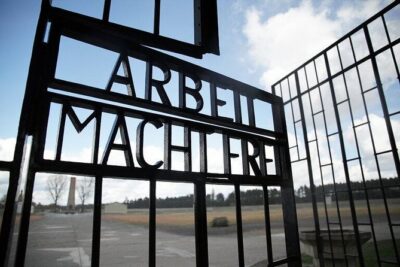
Sachsenhausen Concentration Camp Memorial Tour (Max. 15 Guests)
Read our review →
Sachsenhausen Concentration Camp and Potsdam Tour
Read our review →Browse the lists this tour appears in