
Reviewed · TRAIN EXPERIENCES
Private Day Trip to Potsdam from Berlin by Train
Potsdam gives you a very different side of Germany from Berlin: royal parks, quiet lakes, red-brick streets, and the Cold War story of the Glienicke spy-swap bridge. This private six-hour outing links the main sights by train and on foot, with a guide who can shape the day around your interests.
I like the personal format, especially for history lovers who want time for questions. I also like the practical hotel pickup and drop-off, plus the chance to learn how Berlin’s transit system works. The main catch is clear: this is a street-level tour, so palace interiors are not included.
Key points to know before booking
- The Dutch Quarter has a distinct red-brick character: Walk through an 18th-century neighborhood built for Dutch artisans under Frederick William I.
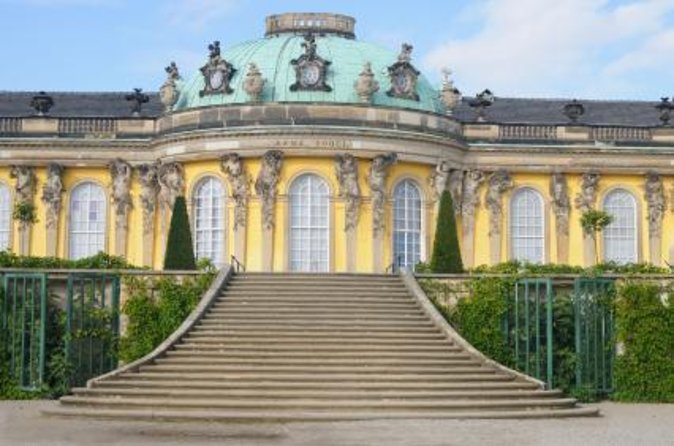
- Sanssouci is seen from the outside: You explore the palace grounds and architecture, but admission to the palace is not part of the tour.
- Cecilienhof connects Potsdam with 1945: Your guide explains the Potsdam Conference and the decisions made by Churchill, Truman, and Stalin.
- Glienicke Bridge adds a Cold War chapter: You cross the former spy-exchange site between Berlin and Potsdam.
- The day is private and flexible: Only your group takes part, so the guide can spend more time on your questions and interests.
- The transport plan may vary in practice: The tour is sold as a train trip, but one reported outing used bicycles for much of the Potsdam portion, so ask when booking.
Why Potsdam makes a strong half-day from Berlin
Potsdam is close enough to reach without a long coach ride, yet it feels like a proper change of scene. Berlin gives you grand avenues, museums, and modern city life. Potsdam brings palace gardens, village-like streets, water, and a more relaxed pace.
The appeal is not just pretty scenery. Potsdam sits at the meeting point of Prussian royal ambition and 20th-century political drama. You can move from Frederick the Great’s summer residence to the home used by Germany’s last Crown Prince, then walk across a bridge famous for Cold War spy exchanges.
That range makes a private guide useful. A self-guided visit can show you the buildings, but it may not connect the royal era, the Second World War, and the Cold War into one clear story. Guides such as Glen, Jamie, Julian, and Nickolay were praised for explaining German history in an approachable way and answering questions without rushing the group.
The tour runs for about six hours. That is enough time for a substantial visit, though not enough to see every palace interior and corner of the parks at a leisurely pace. Think of it as a guided introduction to Potsdam, not a complete palace museum day.
Other journeys by rail from Berlin:
- Dachau Concentration Camp Memorial Site Tour from Munich by Train
★ 4.5 · 5,637 reviews - Nuremberg: City Tour with the Bimmelbahn Train
★ 4.4 · 2,475 reviews - Würzburg: City Tour with the Bimmelbahn Train
★ 4.4 · 1,322 reviews
The train ride from Berlin to Potsdam
The tour includes hotel pickup and drop-off. Your guide meets you at your hotel, then walks with you to a train station and handles the route to Potsdam. This is a useful feature if you are still getting comfortable with Berlin’s public transport system.
One of the more practical benefits is learning how to get around by train. After the tour, you may feel more confident using Berlin’s transit network on your own. The ride also avoids the feel of a packaged coach excursion, and a private train trip leaves room for conversation from the start.
The exact departure can be set for morning, midday, or afternoon. I would choose the morning if you want the broadest possible time buffer in Potsdam. An afternoon start may work well if you prefer a slower Berlin morning, but six hours can pass quickly once walking and transport are included.
You should wear comfortable shoes and dress for changing weather. The tour operates in all conditions, and much of the experience takes place outdoors. There is no promise of a dry route from one sight to the next, so a rain jacket is a sensible part of your plan.
Walking through the Dutch Quarter
The Dutch Quarter is one of Potsdam’s most recognizable areas. Its red-brick buildings form an 18th-century neighborhood commissioned under Frederick William I, often called the Soldier King, to house Dutch artisans.
This is a good early stop because it gives you a feel for Potsdam beyond its royal residences. The streets have a compact, human scale, and the brick architecture is unlike the grand stone façades associated with Prussian palaces. Your guide can point out how the district fits into the city’s development and why Dutch builders were brought to Potsdam.
I would pay attention to the change of mood here. The quarter is not simply a photo stop. It shows how the rulers of Potsdam tried to shape a working city around the royal court. You get architecture, social history, and a chance to walk at a gentler pace before the larger park sites.
The description places this walk alongside the Cecilienhof portion of the outing, but the exact order can vary. Do not be surprised if your guide rearranges the route to suit transport, weather, or your interests.
Sanssouci Palace from the outside
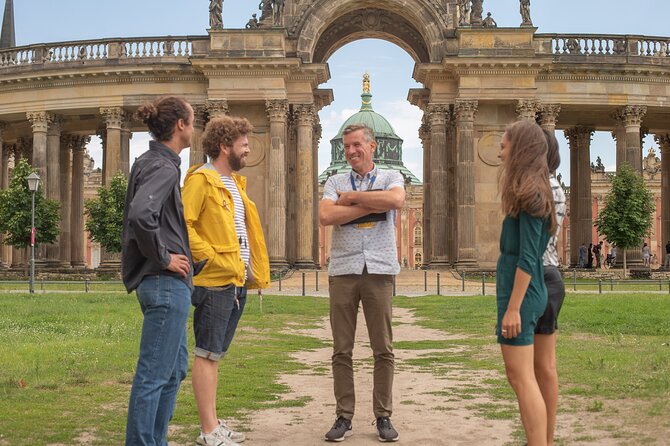
Sanssouci Palace was Frederick the Great’s favorite residence, and the setting is a major reason to visit. The palace sits within extensive parkland containing temples, churches, and decorative structures. Even without entering, you get a strong sense of the royal retreat Frederick wanted to create.
The street-level format has both value and limits. You can study the exterior, walk through the grounds, and hear how the palace fitted into Frederick’s life. You cannot tour the rooms, see the interior decoration, or spend time inside the other royal residences included in the wider park area.
That distinction matters. If your main goal is to see the rooms of Sanssouci, you will need to arrange palace admission separately or choose a different experience. The tour information is direct on this point: entrance tickets are not included.
For a first visit, I still see the outdoor approach as useful. Sanssouci is not an isolated building. Its surrounding park, smaller structures, and long views are part of the experience. A guide can help you understand why the grounds were laid out as they were instead of leaving you to treat the palace as one more photograph.
One guide-led outing reportedly used bicycles for the Potsdam portion, allowing the group to cover more ground. The advertised experience is a train trip from Berlin, but the supplied details do not promise bicycles for every departure. If cycling sounds appealing, ask the provider before you reserve.
Other day trips from Berlin:
- Berlin Complete in one day
★ 5.0 · 222 reviews - From Berlin: Sachsenhausen Concentration Camp Day Trip
★ 4.7 · 52 reviews - Berlin in one day – day tour with an expert guide
★ 5.0 · 14 reviews - Potsdam Day Trip from Berlin with a Local: Private & Personalized
★ 4.0 · 11 reviews
Cecilienhof and the Potsdam Conference
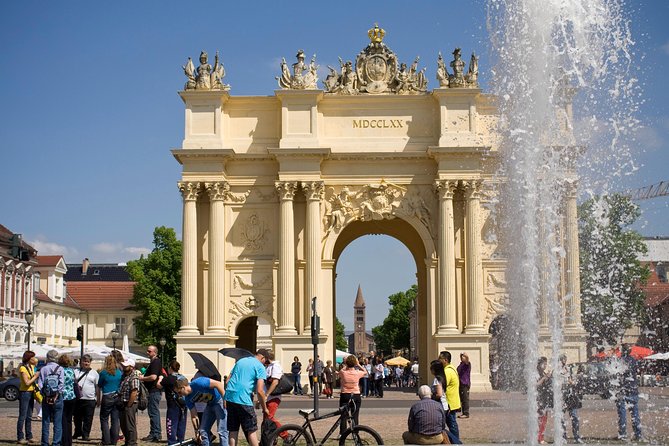
Cecilienhof gives the day its strongest political focus. The building was the manorial home of Germany’s last Crown Prince, and in 1945 it hosted the Potsdam Conference.
This is where your guide can explain the meetings between Churchill, Truman, and Stalin and the decisions that helped shape Cold War Europe for the next half century. The setting adds weight to the story. You are not only hearing about postwar negotiations in an abstract way. You are standing outside the residence where the Allied leaders met to discuss Germany and Europe after the Second World War.
The tour remains at street level, so you should not expect entry into the palace rooms. Still, Cecilienhof is a particularly strong stop for anyone interested in the Second World War, postwar borders, or the start of the Cold War.
The private setting also helps here. If your trip has a strong focus on the world wars, tell your guide at the start. Glen, for example, was praised for adapting the explanation to a group with that interest and for linking Potsdam’s role to the events leading into both world wars. That kind of adjustment is one of the clearest reasons to choose a private tour instead of a fixed group walk.
Crossing Glienicke Bridge
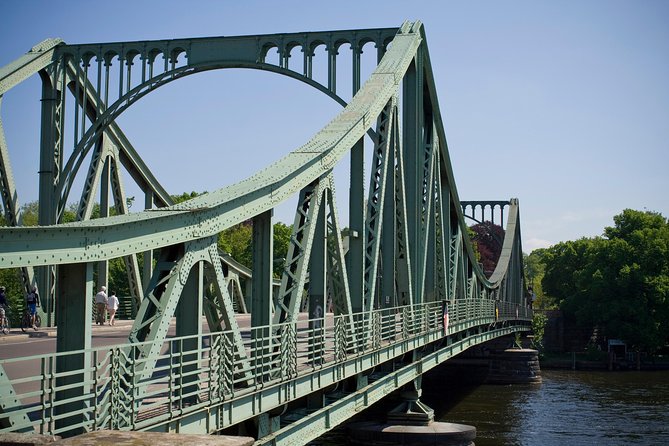
Glienicke Bridge is the most distinctive Cold War stop. Walking across it gives you a direct connection to the spy exchanges that took place during the period when Berlin and Germany were divided.
The bridge itself is not a palace or museum, so its importance depends on the explanation. Your guide helps turn an ordinary crossing into a political story about intelligence agents, rival power blocs, and the tense relationship between East and West.
This stop works well beside Cecilienhof. At Cecilienhof, you hear about the postwar decisions made by the Allied leaders. At Glienicke Bridge, you see how the division of Europe later played out in real places. The two locations give the day a clear historical arc.
It is also a welcome change of pace from the palace grounds. You are outdoors, moving through a site with a sharper 20th-century identity. If you enjoy political history more than royal interiors, this part of the tour may be the highlight.
What a private guide adds
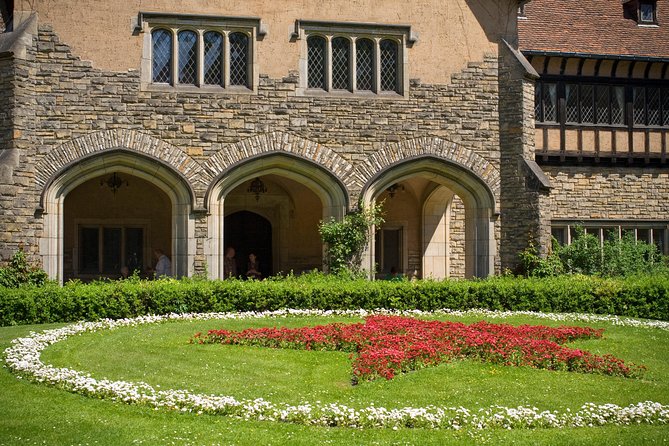
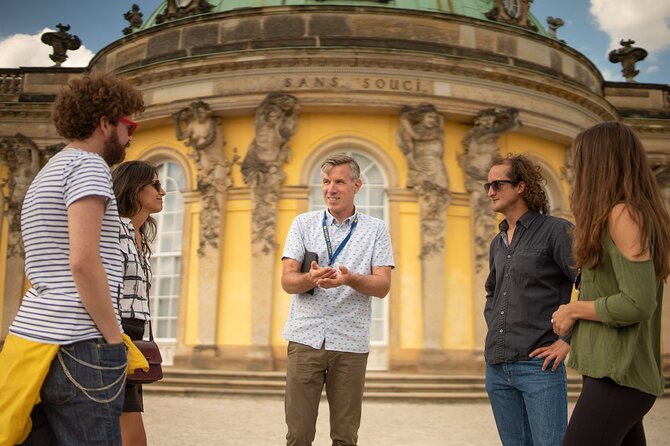
The strongest feature here is not simply having a guide. It is having one guide for your own group. You can ask for more detail at a palace, move on when a stop has given you enough, or spend extra time on the Cold War story.
The guides named in the feedback include Glen, Jamie, Julian, Nickolay, and Paul. Jamie was singled out for a flexible style, a good sense of humor, and the ability to answer many questions. Julian was described as personable and well prepared, while Nickolay handled the hotel meeting and train walk in a friendly, clear way.
Those names do not guarantee which guide you will receive. They do show the sort of experience the operator aims to provide: a local professional who can explain the route, manage public transport, and adjust the focus.
The private format is especially useful for families, couples, or friends with a shared interest in German history. It may be less appealing if you prefer complete independence or want to spend several hours inside museums. The guide brings context and convenience, but you are paying for that service.
Price, group size, and what is included
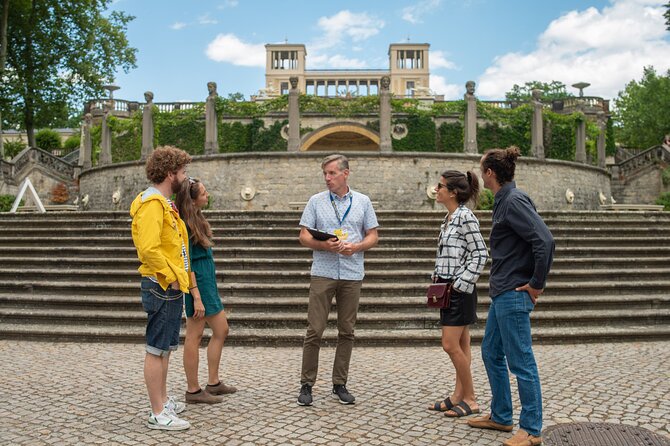
The listed cost is $336.74 per person. That is a serious price for a six-hour outing, but the value changes with the size of your party. You receive a private tour, a local professional guide, hotel pickup and drop-off, and help with the train journey. Group discounts are also listed, though the exact discount is not provided.
For one or two people, the cost may feel high compared with taking the train and walking around Potsdam independently. For a larger private group, the per-person value can look better, especially if you want a flexible day and do not want to work out the route yourself.
Food and drinks are not included. Palace admission is also not included, and that is the biggest cost detail to remember. You are paying for the guide, transport assistance, and outdoor sightseeing rather than a full palace ticket package.
The experience has a 4.7 rating from 27 reviews, with 93 percent recommending it. The most consistent strengths are the guides’ subject knowledge, friendly manner, flexibility, and ability to make the train journey simple.
Who will get the most from this Potsdam trip
I would choose this tour if you want one guided outing that combines:
- Royal Potsdam and Sanssouci Park
- The red-brick Dutch Quarter
- The Potsdam Conference
- Cold War history at Glienicke Bridge
- A private guide who can answer questions
- Hotel pickup and help with public transport
It suits people with a moderate level of physical fitness. You will walk outdoors, cross between sights, and deal with train stations and public transport. The tour is not designed for a completely stationary sightseeing day.
It is also a good match for anyone whose Berlin visit includes a strong Second World War or Cold War focus. One group used the day to follow that theme, and the guide adjusted the discussion to explain Potsdam’s part in the wider story.
You may want another option if palace interiors are your top priority. Since admission is not included, this outing gives you an outside view and historical explanation, not a full museum visit. You should also ask about the transport plan if you specifically want to travel only by train and walk, since one reported outing covered much of Potsdam by bicycle.
Booking details worth noting
You can select a morning, midday, or afternoon departure, so choose a time that fits your Berlin plans. Confirmation is normally sent at booking. If you reserve within two days of departure, confirmation can take up to 48 hours and remains subject to availability.
The activity is offered in English and operates in all weather. Dress for the forecast, bring comfortable shoes, and allow room in your day for outdoor walking.
Free cancellation applies when you cancel at least 24 hours before the start time. Cancellations or changes inside that 24-hour window are not refunded or accepted.
Should you book this Potsdam tour?
Book it if you want Potsdam explained, not just photographed. The private format, hotel pickup, transit help, and flexible historical discussion make it a strong choice for a first visit, especially if you care about Prussian royalty, the Second World War, or the Cold War.
Skip it if you mainly want palace interiors or the lowest-cost route. In that case, independent transport plus separate palace admission may suit you better. For everyone else, this is a well-rounded six-hour introduction that connects Potsdam’s gardens and grand buildings with the difficult political events that shaped modern Europe.
FAQ
How long is the private Potsdam tour?
The tour lasts approximately six hours.
Does the tour travel from Berlin to Potsdam by train?
Yes. The experience includes travel from Berlin to Potsdam by train, with hotel pickup and drop-off. One reported outing used bicycles for much of the Potsdam portion, so ask about the exact transport plan when booking.
Are palace entrance tickets included?
No. The tour is conducted at street level and does not include admission to Sanssouci Palace or the other palaces.
What sights are included?
The route includes the Dutch Quarter, Sanssouci Palace and its parkland, Cecilienhof, and Glienicke Bridge.
Is hotel pickup available?
Yes. Hotel pickup and drop-off are included.
Is the tour private?
Yes. Only your group takes part in the activity.
Can I cancel for a full refund?
Yes, if you cancel at least 24 hours before the scheduled start time. Cancellations made less than 24 hours before the experience are not refunded.
Just added in Berlin
- Private One way Airport Transfer Berlin Airport To Berlin★ 3.5 · 17 reviews
- Private Walking Tour: Berlin Wall, Cold War and Checkpoint Charlie★ 5.0 · 37 reviews
- Modern Berlin Private Walking Tour: Diverse, Vibrant and Exciting German Capital★ 5.0 · 13 reviews
- City Explorer: Potsdam Private Day Trip★ 4.5 · 10 reviews
- Berlin Private Custom 5-Hour Tour by Car★ 5.0 · 30 reviews
- Private Half-Day Sightseeing Tour in Berlin★ 3.5 · 6 reviews
- Berlin Private Custom Tour in a Minivan, East and West★ 5.0 · 123 reviews
- Private Day Tour to Germany and Poland – Traces of World War 2★ 5.0 · 5 reviews
Train Experiences, compared.
Dachau Concentration Camp Memorial Site Tour from Munich by Train
Read our review →
Dachau Small-Group Half-Day Tour from Munich By Train
Read our review →
Browse the lists this tour appears in