
Reviewed · CONCENTRATION CAMP MEMORIAL TOURS
Berlin: Sachsenhausen Concentration Camp Memorial Tour
Sachsenhausen is not a sightseeing stop in the usual sense. It is a place where the scale and machinery of Nazi persecution become harder to keep at a distance. The train ride from Berlin, the empty camp grounds, and the surviving buildings work together to make that history feel immediate. I especially like the careful guidance through a difficult subject and the chance to see major memorial areas in a single half-day.
I also like that the guide begins with the train journey, rather than rushing you through the gate with no context. Peter, Walid, Richard, Felipe, and Amelia are among the guides praised for clear explanations and respectful handling of questions. The main drawback is practical but important: your ABC train ticket is extra, and the outdoor site can feel bitterly cold, especially in winter.
Key points to know before you go
- Train from Alexanderplatz: Meet beside the World Time Clock, then travel with your guide toward Sachsenhausen.
- A serious five-hour visit: Allow time for transportation and roughly three hours at the memorial site.
- Major camp areas included: See Tower A, Barracks 38 and 39, punishment cells, the infirmary and morgue area, prisoner kitchen, Station Z, and the Soviet memorial.
- Clear historical explanation: The tour covers the camp’s origins, its role as a model camp, prisoner life, executions, and the memorial’s changing meaning.
- Flexible ending: Return to Berlin with the guide or stay longer and make your own way back.
- Low advertised price: The $21 cost includes the guide and the €3 memorial entrance fee, but not the ABC train ticket.
Why the train ride matters before Sachsenhausen
The tour starts at Alexanderplatz, beside the World Time Clock. Look for the guide wearing Buendía accreditation. This meeting point is easy to identify, but Alexanderplatz is busy, so arrive with enough time to find the clock and gather with the group.
You buy an ABC zone train ticket before the activity. You can use a station ticket machine or the Berliner Verkehrsbetriebe website. This is the one cost that can catch you off guard. The tour price is listed as $21, but that figure does not include the train fare, so sort out your ticket before meeting the guide.
The journey north is more than simple transport. Your guide uses the ride to explain how Sachsenhausen began, why the Nazis designed it as a model camp, and how it fit into the wider concentration camp system. That early explanation gives you a framework for what you will see later. Without it, the site can feel like a collection of stark buildings and foundations. With it, the layout starts to make sense.
Guides such as Peter and Felipe have been praised for checking that everyone has the correct ticket and gets off at the right stop. That kind of help matters because the trip involves public transportation, and the group may be large. One account referred to a group of 28 people, so stay close and listen for instructions at stations.
More Concentration Camp Memorial Tours in Berlin
- Berlin: Sachsenhausen Concentration Camp Tour in English
★ 5.0 · 5,711 reviews - Sachsenhausen Concentration Camp Bus Tour in English from Berlin
★ 5.0 · 1,962 reviews - Berlin: Sachsenhausen Concentration Camp Tour in English
★ 4.8 · 1,889 reviews
Tower A and the first view of the camp
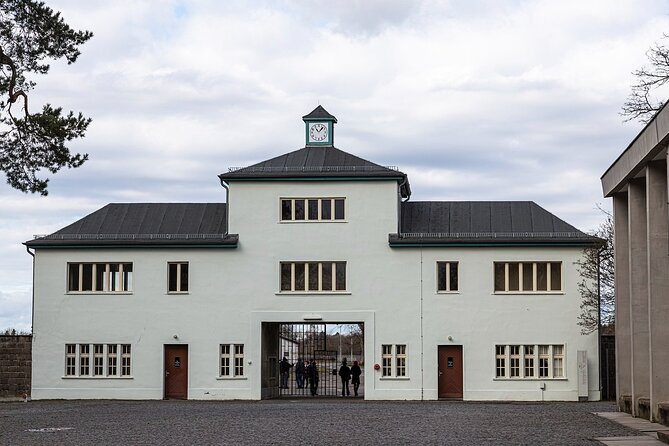
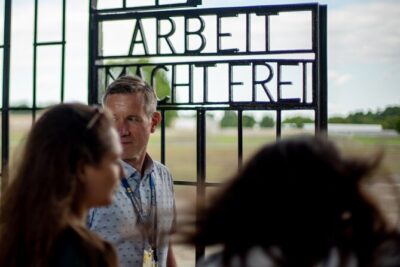
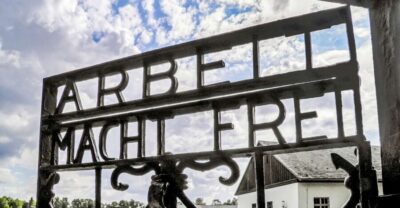
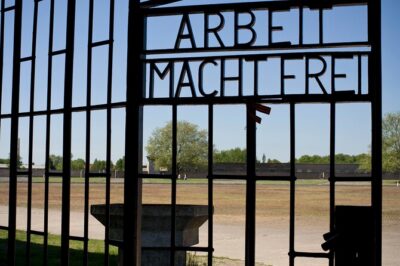
At Sachsenhausen, the visit begins at Tower A, the main entrance. The gate carries the infamous Arbeit macht Frei sign, a phrase that falsely presented forced labor as a path to freedom. Seeing it in place is a grim introduction, and your guide will explain its role within the camp system.
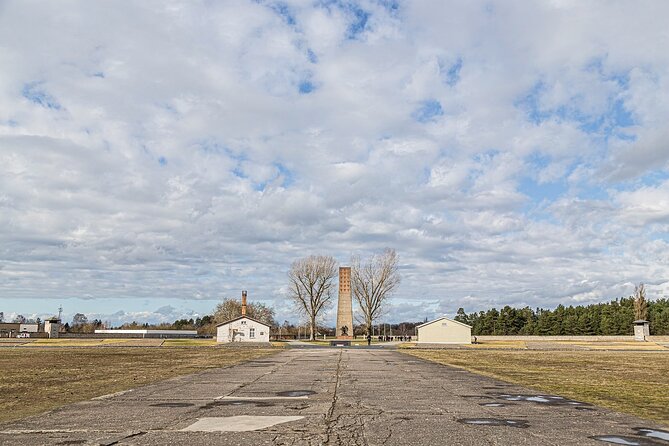
The first impression is not built around spectacle. Much of the site is open and exposed, with broad distances between the remaining structures and reconstructed areas. That emptiness can be unsettling. It also helps you understand that control came from the whole design of the camp, not only from individual buildings.
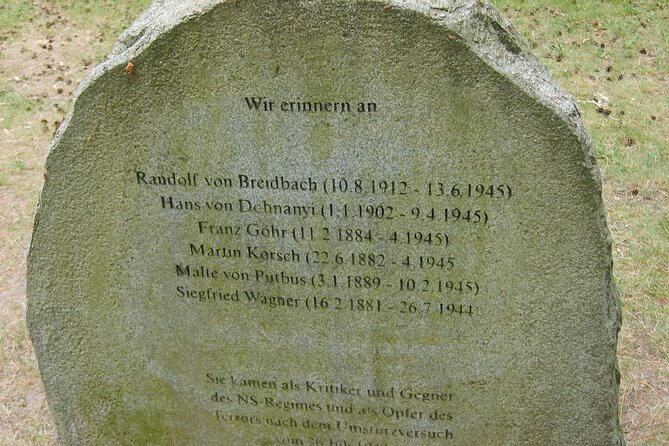
A guide-led visit is useful here because the memorial includes monuments created at different times and under different political ideas. The site’s meaning changed after the war, and the monuments do not all tell the same story. Your guide helps separate the Nazi period from the later Soviet memorial period, rather than treating every object as part of one single historical moment.
This is a serious subject, and the tone matters. The best guides described during this tour are praised for being respectful, clear, and willing to answer questions without turning the visit into a performance. Some use gentle humor during the travel portions, but the approach becomes appropriately restrained inside the memorial.
Barracks 38 and 39, where prisoner life becomes personal
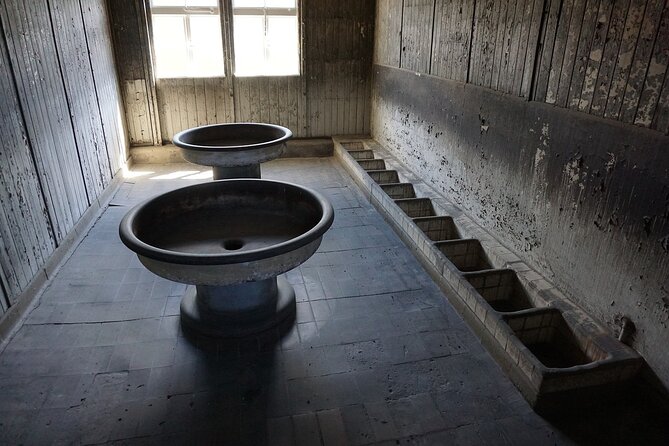
Barracks 38 and 39 focus on Jewish prisoners and the cramped conditions in which they were held. Barracks 38 now contains a museum about daily life, giving the visit a more personal scale after the wider discussion of camp planning and Nazi policy.
Here, I would slow down and listen closely. The value of a guide is not simply naming the building. It is connecting the physical space with the lives forced into it. You hear about the routines, restrictions, and conditions prisoners faced, along with the stories of notable prisoners connected with the camp.
The museum setting also gives you a break from the open grounds, though you should not expect a light or comfortable stop. The material is difficult, and the cramped barracks are part of what makes the visit emotionally demanding. If you prefer to process quietly, tell your guide or take a little time after the group explanation.
Punishment cells and the machinery of control
The original punishment cells show how the camp administration used detention and fear to enforce obedience. The tour explains that prisoners could be punished for what the Nazi authorities labeled minor offenses. That detail is important because it shows how arbitrary the system could be. Punishment was not limited to serious resistance.
This stop is less about one dramatic object and more about understanding control as a daily system. Your guide can place the cells within the wider operation of the camp, helping you see how rules, surveillance, labor, and punishment worked together.
The site is not presented as a simple story of villains and victims without detail. Guides such as Richard have been praised for explaining events in an orderly way and correcting misconceptions. That makes a difference at a place where visitors often arrive with partial knowledge from films, school lessons, or popular history.
Other memorial sites within reach of Berlin:
- Sachsenhausen Concentration Camp Memorial Tour (Max. 15 Guests)
★ 5.0 · 1,516 reviews - Berlin: Sachsenhausen Concentration Camp and Potsdam Tour
★ 4.6 · 1,334 reviews - Sachsenhausen concentration camp.
★ 5.0 · 1,189 reviews - Visita en español al campo de concentración Sachsenhausen
★ 5.0 · 1,170 reviews
The infirmary, morgue, and medical crimes
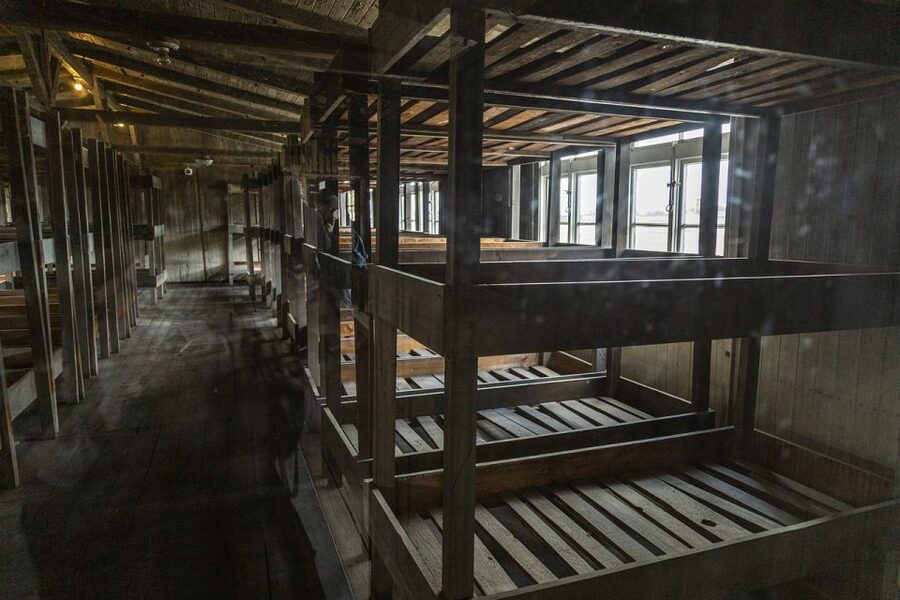
The former infirmary and morgue area brings some of the most disturbing material on the tour. You learn about cruel medical experiments conducted on prisoners and the conditions surrounding medical treatment and death inside the camp.
This part requires emotional preparation. The information is presented as history, but the subject is still painful. A respectful guide will not soften the crimes, yet will explain them with care and accuracy. Amelia, Peter, Richard, and Walid are among the guides singled out for balancing clarity with sensitivity.
You may find this stop more affecting than the larger memorial structures because it concerns the abuse of people who were already imprisoned and powerless. Give yourself permission not to rush. The visit is designed to cover important areas, but you do not have to treat it like a checklist.
The prisoner kitchen and the camp story in museum form
The former prisoner kitchen now serves as a museum covering key moments in the camp’s history. This stop helps pull together the themes introduced during the train ride and earlier sections of the visit.
The kitchen is useful because it shifts the focus from one type of crime to the wider history of the camp. Your guide explains how Sachsenhausen operated and how the experience of prisoners changed over time. You also gain a clearer sense of how the camp functioned as part of Nazi Germany’s larger system of imprisonment and persecution.
The museum format can make the information easier to follow, especially if this is your first visit to a concentration camp memorial. You will see historical material in a setting connected to everyday camp operations, rather than only hearing a timeline outdoors.
Station Z and the limits of what a memorial can show
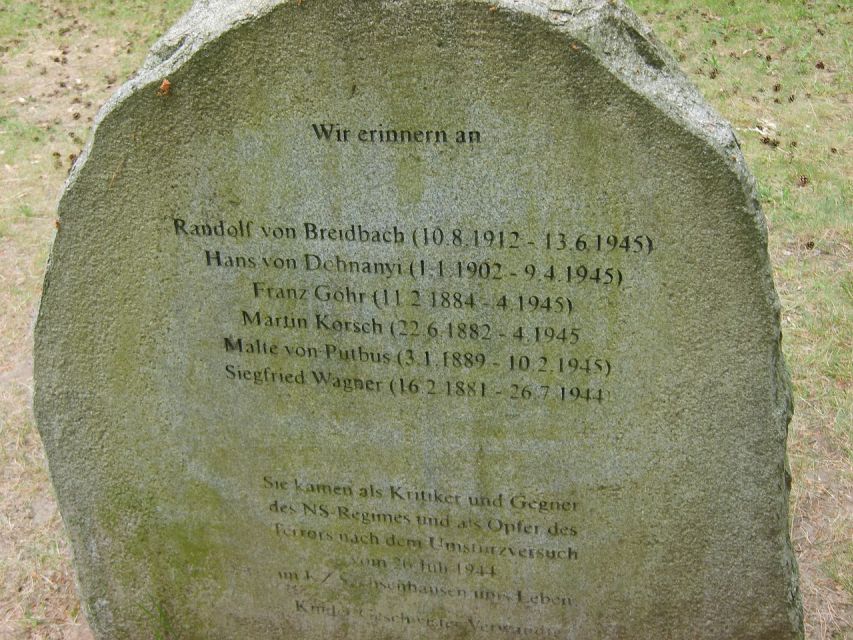
Station Z is the name given to the area where many executions took place. What remains is stark, and the stop does not need dramatic presentation. The guide’s job is to explain what happened and allow the place to speak for itself.
This is one of the points where the tour’s respectful tone matters most. You are not visiting an attraction built for entertainment. The guide provides the facts, explains the site, and gives you room to take in the meaning.
For many visitors, Station Z is among the hardest parts of the day. It also makes clear why a memorial visit should not be judged only by the number of buildings still standing. Absence, fragments, and carefully explained ground can carry enormous weight.
The Soviet memorial and the camp’s second chapter
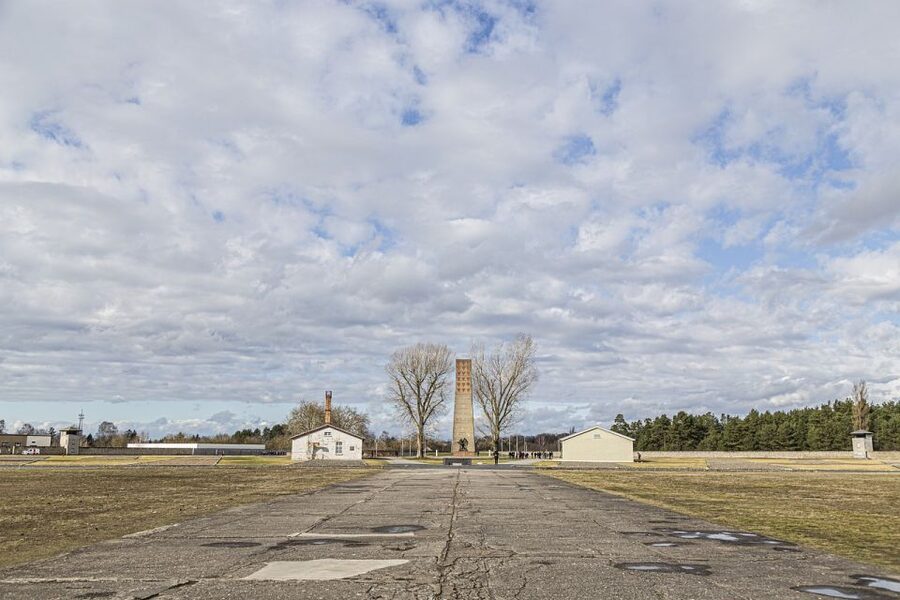
The final major stop is the Soviet memorial built in 1961. It reflects the camp’s role after World War II and introduces a second layer to the site’s history.
This is where the guide helps prevent a common mistake: assuming the memorial represents only the years of Nazi rule. Sachsenhausen was later used by the Soviet authorities, and the monument belongs to that later period. Seeing it after the main camp areas gives you a broader understanding of how political memory changes over time.
The contrast between the original camp history and the later Soviet memorial is one of the tour’s most valuable features. You are not shown a single polished version of the past. Instead, you see how different governments and ideologies placed their own meaning onto the same ground.
A five-hour schedule with a flexible finish
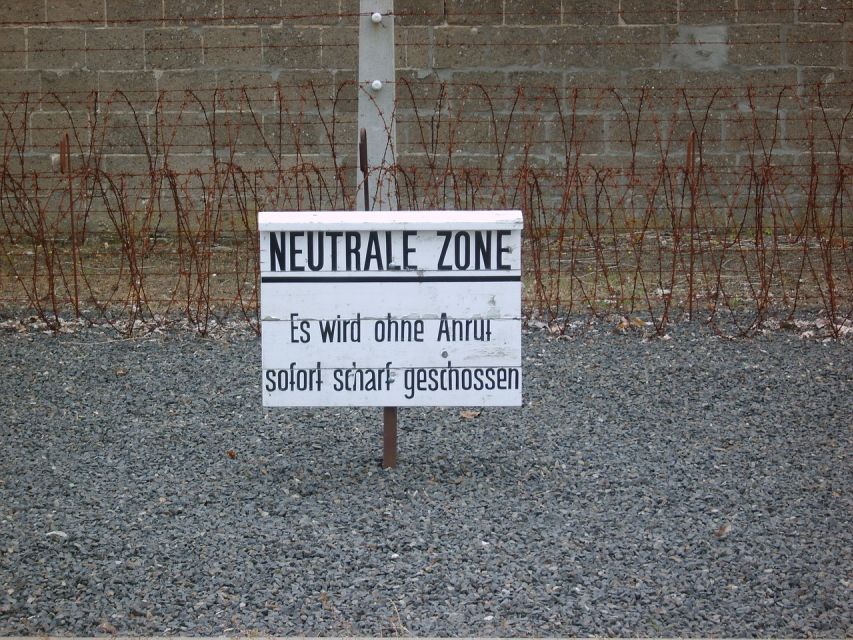
The full activity lasts about five hours, including the trip from Berlin and the return journey. Expect a substantial amount of walking and time outdoors. Comfortable shoes are essential, and bringing snacks is sensible because the day is long and the tour does not include food.
The memorial visit itself may take around three hours, depending on the pace of the group and the guide’s explanations. Winter conditions can be rough. Several people found the cold especially noticeable, so wear more layers than you think you need and consider gloves, a hat, and weatherproof footwear.
At the end, you have two choices. You can return to Berlin by train with the guide’s help, or stay longer and continue exploring the memorial independently. I like this arrangement because it gives you structure without forcing you to leave just as you begin to understand the site.
If you stay, remember that you will need to manage your own return journey. The guide can help you understand the train route, but the group assistance ends when the guided portion ends. One useful practical tip is to use the restroom when you have the opportunity. The site is large, and facilities are not something you want to leave until the last minute.
Language, accessibility, and who should book
The tour is offered in Spanish, English, German, French, and Italian. If you book an English departure, guides such as Amelia and Sarah have been praised for strong English and clear delivery. Still, guide assignments can vary, so do not book expecting a particular person.
This is not a suitable choice for wheelchair users or people with mobility impairments. The site involves walking across a large memorial area, and the tour is not designed around accessible travel.
I would recommend it to first-time visitors who want historical structure and help with the train journey. It also suits students and anyone who wants to understand how Sachsenhausen operated, rather than simply wander through the grounds.
I would think twice if you want a light half-day outing, dislike walking, or find concentration camp memorials too emotionally heavy. This is a difficult visit by design. A guide can help you understand it, but no guide can make the subject easy.
Is the $21 price good value?
At $21 per person, the tour offers good value for a five-hour outing. The price includes the professional guide, the guided visit, and the €3 entrance fee to the memorial. Your train ticket is extra, so the final cost will be higher than the headline price.
The strongest value comes from the time before and after the gate. You are not left to work out the transport, the camp layout, or the political history of the memorial on your own. Guides such as Walid, Richard, Peter, Felipe, and Paul have been praised for managing the train journey, explaining the history clearly, and helping with directions after the tour.
The tour also gives you independent time at the end. That is better than a rigid schedule, especially at a memorial where you may want quiet time after the group explanation.
Should you book the Sachsenhausen tour?
Book this tour if you want a serious, guided introduction to Sachsenhausen and prefer not to handle the train connection alone. It is especially worthwhile for first-time visitors, students, and anyone who wants the camp’s history explained in clear stages.
Bring warm clothing, good shoes, snacks, and an ABC train ticket. Expect difficult material, long periods outside, and a day that may stay with you well after you return to Berlin.
Skip it if mobility is a concern or if you are looking for casual sightseeing. For everyone else, this is a carefully organized way to visit one of Germany’s most important memorial sites, with enough structure to make the history understandable and enough freedom to let you reflect.
FAQ
Where does the Sachsenhausen tour meet in Berlin?
The meeting point is beside the World Time Clock at Alexanderplatz. The guide will wear Buendía accreditation.
How long does the tour last?
The activity lasts approximately five hours, including transportation between Berlin and Sachsenhausen.
Is the train ticket included?
No. You must purchase an ABC zone train ticket before the activity. It can be bought at a station ticket machine or online through the Berliner Verkehrsbetriebe website.
Is the memorial entrance included?
Yes. The €3 entrance fee to Sachsenhausen Concentration Camp Memorial is included in the tour price.
Which languages are available?
The tour is available in Spanish, English, German, French, and Italian.
Can I return to Berlin with the guide?
Yes. At the end of the guided visit, you can return to Berlin by train with help from the guide.
Can I stay longer at Sachsenhausen?
Yes. You may remain at the memorial after the guided portion and explore at your own pace.
What should I bring?
Bring comfortable shoes and snacks. Warm clothing is also sensible because the memorial includes considerable outdoor time, especially in colder months.
Is the tour suitable for wheelchair users?
No. The activity is not suitable for wheelchair users or people with mobility impairments.
Just added in Berlin
- Berlin: Energizing 2-Hour Morning Segway Tour★ 4.7 · 35 reviews
- Berlin: Thrilling E-Scooter Adventure Tour★ 4.4 · 66 reviews
- Beelitz-Heilstätten: Baum&Zeit Tree Top Walk Entry Ticket★ 4.9 · 7 reviews
- Beer Bike & Party Bike: Unforgettable Berlin City Tour incl. pickup★ 5.0 · 5 reviews
- AXE THROWING EXPERIENCE IN BERLIN★ 4.7 · 24 reviews
- Alternative Berlin / Street art tour – Private group★ 5.0 · 6 reviews
- Berlin: Alternative & Street Art Tour★ 4.5 · 6 reviews
- Berlin: 2.5-Hour Beer & Sunset Sightseeing Boat Cruise★ 4.6 · 61 reviews
Concentration Camp Memorial Tours, compared.
Sachsenhausen Concentration Camp Tour in English
Read our review →
Dachau Concentration Camp Memorial Site Tour from Munich by Train
Read our review →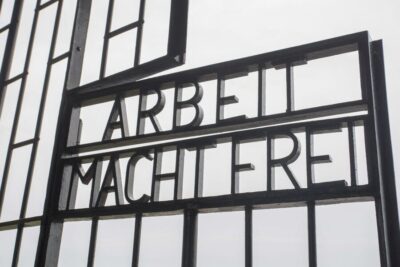
Sachsenhausen Concentration Camp Bus Tour in English from Berlin
Read our review →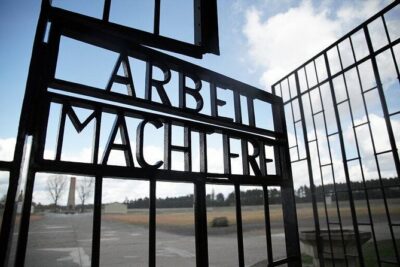
Sachsenhausen Concentration Camp Memorial Tour (Max. 15 Guests)
Read our review →
Sachsenhausen Concentration Camp and Potsdam Tour
Read our review →
Browse the lists this tour appears in