
Reviewed · CONCENTRATION CAMP MEMORIAL TOURS
Berlin: Sachsenhausen Concentration Camp Tour in English
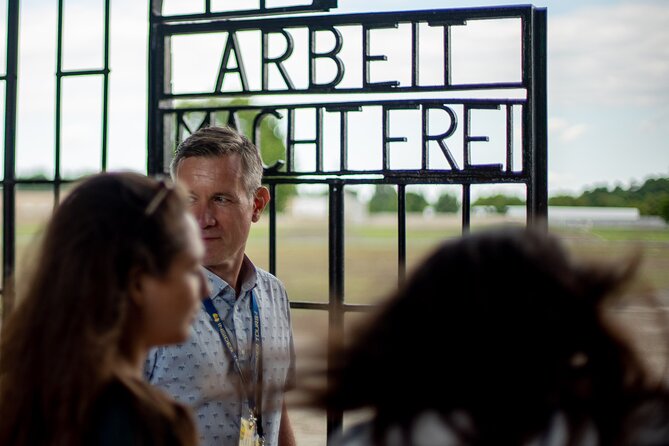
Sachsenhausen is not a quick photo stop. It is a six-hour examination of Nazi terror, reached by train and a long walk from Berlin. You see the camp’s administration center, prisoner barracks, Station Z, punishment cells, infirmary, gallows, and later Soviet camp. The place is open, stark, and difficult by design.
I like two things here. First, your guide stays with you from the Berlin meeting point through the train ride, site visit, and return trip, so the day feels organized rather than pieced together. Second, the guides bring human stories to a broad subject, from Jewish resistance and British prisoners to Stalin’s son and acts of sabotage by Soviet and Polish inmates.
The tradeoff is simple: you walk a lot outdoors, often in weather that will not cooperate. The public transport ticket costs extra, and the subject is emotionally heavy. Still, at $22 plus your ABC transport ticket, this is strong value if you want context that a self-guided visit may not provide.
Key points at a glance
- Station Z and the gallows: See the places connected with mass murder and execution, presented with historical explanation rather than spectacle.
- A guided train journey: Meet outside Friedrichstraße Station, travel to Oranienburg, and walk about 20 minutes to the memorial.
- History beyond the Nazi years: Learn how Sachsenhausen was used by the Soviets after the Second World War.
- Human stories, not only dates: Hear about prisoner resistance, sabotage, British POWs, Jewish inmates, and Stalin’s son.
- Outdoor conditions matter: Wear firm walking shoes, carry water and snacks, and dress for rain, cold, or heat.
- Strong guide reputation: Daniel, Xavier, Lucia, Georgia, Gregor, Rebecca, Irish Paul, and others have been praised for clear, sensitive presentations.
Why Sachsenhausen belongs on a Berlin itinerary
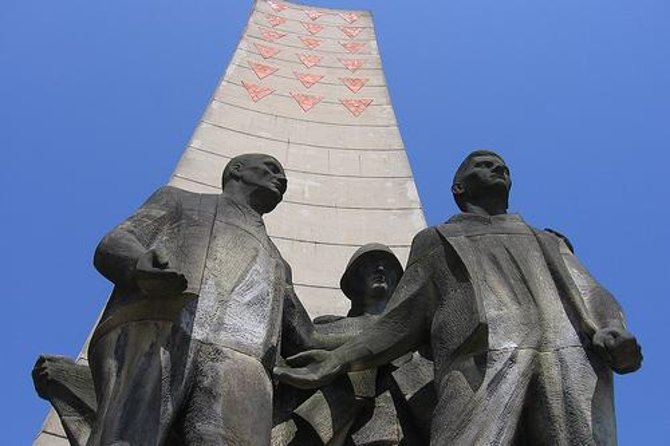
Berlin has no shortage of museums about the Nazi period. Sachsenhausen gives you something different: a physical sense of distance, routine, confinement, and scale. You leave the city center by ordinary commuter train, walk through Oranienburg, and approach the memorial on foot. That transition matters. It separates the visit from the city’s usual sightseeing rhythm.
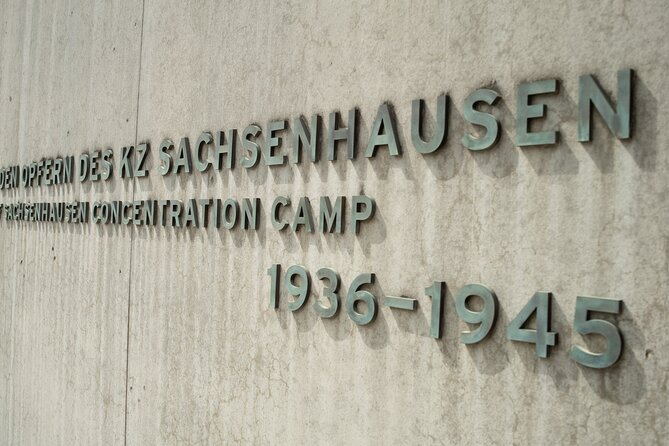
The camp was built by the SS in 1936. It first held political opponents of the Nazi regime, but its prisoner population widened to include people the NSDAP considered a threat. The guide explains this development before taking you through the remains and reconstructed sections of the site.
You should not expect a preserved camp in the sense of a complete historic village. Parts of Sachsenhausen are open ground, foundations, memorial structures, and surviving buildings. That can feel sparse, but it also leaves room for the guide to explain what was here and how the system worked.
The visit covers both the Nazi camp and the Soviet Special Camp that operated after 1945. That wider time frame is one of the strongest reasons to choose a guided visit. You are not given only one chapter, but a difficult sequence of changing uses and political systems.
More Concentration Camp Memorial Tours in Berlin
- Berlin: Sachsenhausen Concentration Camp Tour in English
★ 5.0 · 5,711 reviews - Berlin: Sachsenhausen Concentration Camp Memorial Tour
★ 4.7 · 3,716 reviews - Sachsenhausen Concentration Camp Bus Tour in English from Berlin
★ 5.0 · 1,962 reviews
Meeting at Friedrichstraße and taking the train north
The standard meeting point is outside Friedrichstraße train station, on the square beside the Tränenpalast, also called the Palace of Tears. Look for guides carrying yellow umbrellas. This is a useful visual marker in a busy central area, but arrive with enough time to find the square and settle your transport plans.
Your guide accompanies you on public transport. There is no private vehicle in the standard option, and that is worth understanding before booking. The train ride is part of the experience, not a luxury transfer. It takes roughly 25 to 35 minutes to Oranienburg, followed by a walk of about 20 minutes to the memorial.
You need an ABC public transport ticket for the outward and return journeys. The ticket is not included in the tour price, but staff can help you buy it at the meeting point. Keep this in mind when comparing the $22 headline price. Even after adding transport, the cost remains modest for a licensed guide and a roughly three-hour guided visit.
The train ride also lets the guide set the scene before you reach the camp. Some guides use the journey to answer questions and explain the camp system. That early context helps you understand what you are seeing once the group reaches the memorial.
The return trip is listed as about 45 minutes, though the full experience lasts around 5.5 to 6 hours. That total includes the meeting, transport, walking, and time at the site. Plan around it rather than trying to squeeze in a tightly timed afternoon attraction.
Walking from Oranienburg to the memorial
The walk from the station takes about 20 minutes. It is not a hard hike, but it adds to an already long day on your feet. One guide may keep the group moving briskly, while another may pause to explain the route and the camp’s position outside Berlin.
I would wear shoes with good support and bring water. The memorial visit runs in all weather, and much of the explanation takes place outside. In winter, cold wind can become a real problem. In summer, the open site offers limited relief from sun. A small snack also makes sense because food and drink are not included.
This walk has practical importance beyond logistics. Prisoners did not arrive at Sachsenhausen as tourists, of course, but following part of the approach on foot helps you understand that the camp was built into the surrounding town and transport network. The guide can connect the site to the ordinary world beyond its perimeter.
The tour is not suitable for wheelchair users or people with limited mobility. It involves the city meeting point, public transport, the station walk, and substantial movement around a large memorial site. If walking is difficult for you, ask about the private option before booking, but note that the private tour still uses public transport unless a separate arrangement is confirmed.
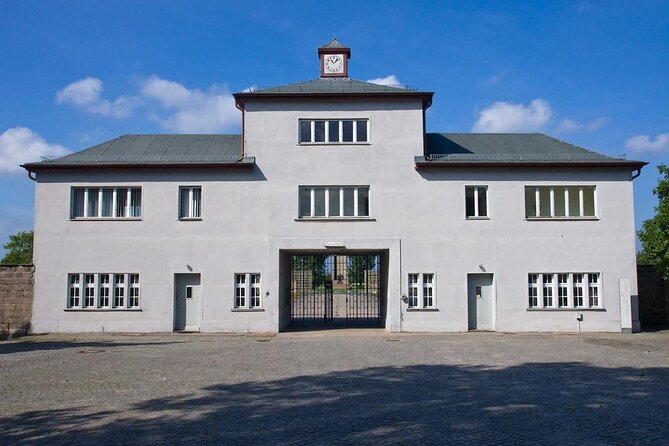
The Camp Administration Center sets the system in view
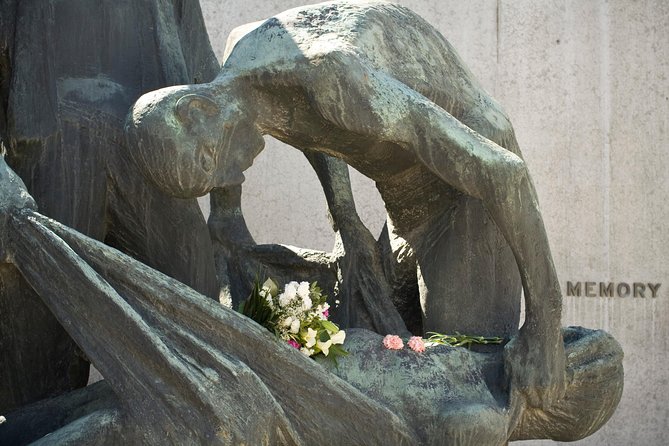
The guided visit begins at the Camp Administration Center, now an on-site museum. This building once functioned as the headquarters overseeing the Third Reich’s 32 main camps and more than 1,000 satellite camps.
Starting here is smart. Instead of beginning with one isolated building or one shocking crime, you first see how the camp network was administered. The guide places Sachsenhausen inside a wider structure of SS control, prisoner transport, forced labor, punishment, and mass killing.
This is where a good guide makes a major difference. Daniel has been praised for using photographs and engaging people across different levels of prior knowledge. Other guides, including Georgia, Xavier, Rebecca, and Irish Paul, have been noted for explaining difficult material with care and clear structure.
The best presentations do not turn the subject into a list of grim facts. They explain how policy became routine, how categories of prisoners were created, and how the camp operated day after day. You should expect a serious tone, though guides may use gentle humor during travel or transitions to help the group manage the weight of the subject.
Other memorial sites within reach of Berlin:
- Sachsenhausen Concentration Camp Memorial Tour (Max. 15 Guests)
★ 5.0 · 1,516 reviews - Berlin: Sachsenhausen Concentration Camp and Potsdam Tour
★ 4.6 · 1,334 reviews - Sachsenhausen concentration camp.
★ 5.0 · 1,189 reviews - Visita en español al campo de concentración Sachsenhausen
★ 5.0 · 1,170 reviews
Barracks, punishment cells, and the daily life of prisoners
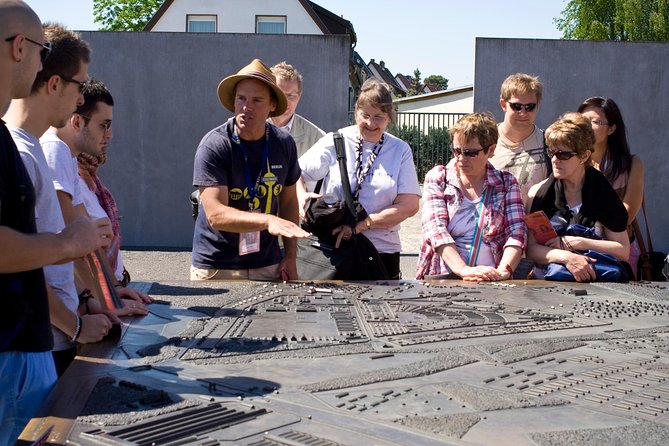
From the administration area, the route takes you through parts of the former prisoner camp. You see barracks, including the Jewish Barracks, as well as punishment cells. These spaces help you understand the contrast between the camp’s planned geometry and the cruelty carried out within it.
The guide discusses the conditions prisoners faced, the different prisoner groups, and the way people were treated according to Nazi racial and political categories. The story is not limited to Jewish prisoners, though their persecution is central. You also hear about political opponents, Soviet and Polish prisoners, British POWs, and others targeted by the Nazi regime.
The Jewish Barracks offer a particularly important stop because they bring the camp’s classification system into physical view. Punishment cells show another side of control, where isolation and discipline were used as tools of terror. The exact balance between buildings and open areas depends on the route and conditions that day, but the guide connects each stop to the broader system.
Expect an outdoor-heavy visit. Some buildings or displays may provide shelter, but you should not count on staying indoors for much of the three-hour tour. This is why warm clothing and weather protection are not minor details.
Station Z, the gallows, and the hardest stops
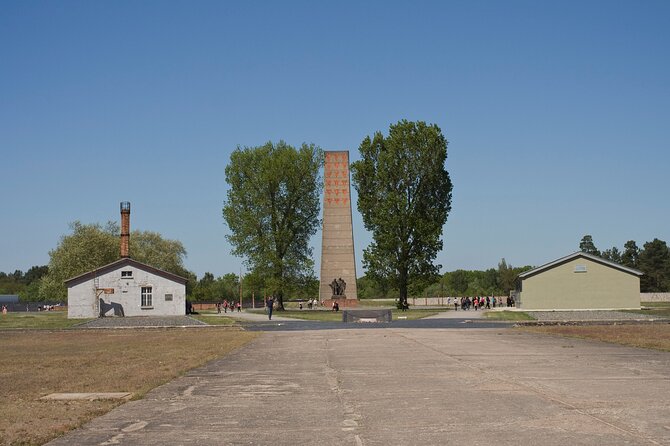
Station Z is the site associated with mass murder and is one of the most difficult points on the route. The guide explains what happened there and places it within the camp’s system of killing. The visit also includes the gallows and other locations connected with execution.
These stops can feel stark because the memorial does not soften the subject. You are not being taken to a theatrical exhibit. You are standing at a site where people were killed, and the guide’s job is to provide facts, names, and context without turning suffering into entertainment.
The tour also covers the pathology laboratory and infirmary, including the sites of medical experimentation. These locations show that violence was not confined to one area of the camp. Medical language and institutional settings could be used alongside punishment, starvation, forced labor, and murder.
The material may be too intense for young children or anyone who prefers a lighter historical outing. The supplied information does not set a minimum age, so use your own judgment. Families who do attend should prepare children in advance and explain that this is a memorial visit, not a standard sightseeing attraction.
Resistance and the people behind the statistics
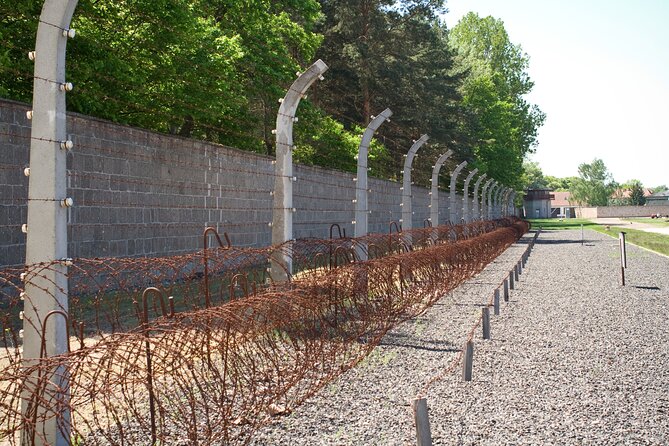
One of the tour’s strengths is its attention to resistance. You hear about a Jewish prisoners’ revolt in 1942, defiance by British POWs, and sabotage carried out by Soviet and Polish prisoners.
These stories matter because concentration camp history can become abstract when reduced to numbers and dates. Resistance does not erase the scale of the crimes, but it helps you see prisoners as people making choices under impossible conditions. The guide also discusses notable prisoners, including Stalin’s son.
A well-run tour gives space to questions. Guides such as Paul Declan, Mikhail, Pete F, Jamie, Ariel, and Lucia have been praised for answering questions patiently and adjusting explanations for people with different levels of background knowledge. That flexibility is valuable here because the subject crosses military history, German politics, Jewish history, Soviet history, and personal biography.
You may hear a mix of broad history and smaller personal details. The result is more useful than memorizing a string of dates. You come away with a clearer sense of how policy, bureaucracy, ideology, and individual decisions worked together.
Special Camp 1/7 and the Soviet period
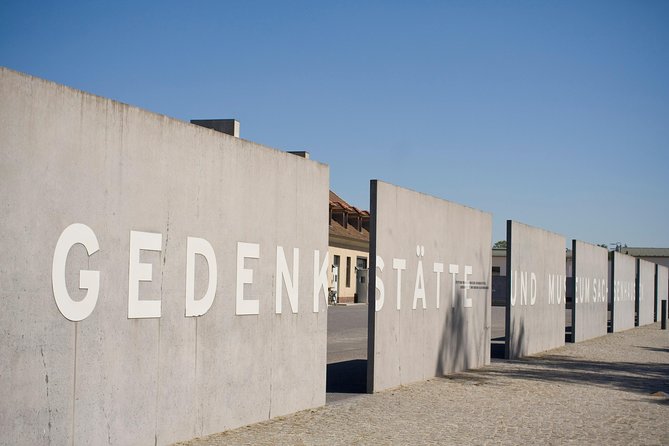
After the Nazi camp’s liberation in 1945, the site was repurposed by the Soviets as Special Camp 1/7. The tour includes this section and explains how Sachsenhausen was used after the war.
This later history is easy to miss on a short visit. Many people arrive focused only on the Nazi period, understandably, but the Soviet use of the site raises important questions about memory, political imprisonment, and how one regime can inherit and alter a place of terror.
The guide does not present the two periods as identical. The point is to understand what changed, what continued, and how the site’s meaning developed over time. Including Special Camp 1/7 makes the tour broader and more honest than a visit that ends at liberation.
Because the memorial covers a large area, the route can feel physically demanding by this stage. Take water breaks when possible and keep an eye on the group. The guides are responsible for keeping everyone together, and several are praised for being attentive to slower walkers and changing weather.
Group size, guide quality, and the tone of the day
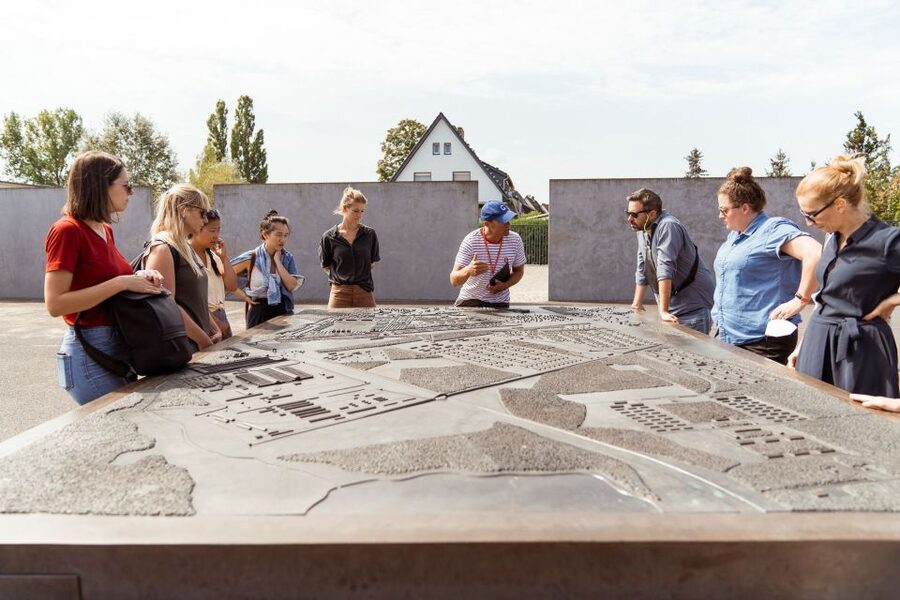
The experience is available in private or small-group formats. On busy dates, a large gathering may be divided into smaller groups for the camp visit. That arrangement matters because a guide speaking to a compact group can answer more questions and keep the presentation personal.
The guides are the main reason to book rather than go alone. Names that have drawn particular praise include Daniel, Xavier, Rebecca, Georgia, Gregor, Lucia, Ariel, Mikhail, Pete F, and Irish Paul. You cannot assume a particular guide unless the booking permits it, but the range of strong guide feedback suggests that the company has several capable people on its roster.
Look for a guide who combines facts with restraint. Daniel has been praised for energy and for helping families understand the subject. Georgia is noted for careful, sensitive explanations and for taking account of cold weather. Irish Paul has been singled out for organization, historical detail, and practical care during freezing conditions.
The tone is serious, but not necessarily grim every minute. A little warmth on the train or between stops can help people stay focused. The right guide knows the difference between easing tension and making light of the crimes being discussed.
Is $22 good value?
At $22 per person, the tour offers good value for a licensed English-speaking guide, guided entry around the memorial, and assistance with public transport. A €3 donation to the memorial is included, which is a useful contribution to the site.
Your ABC transport ticket costs extra, and food and drinks are also your responsibility. The total price is therefore higher than the advertised tour fee, but the main expense is still modest for a half-day excursion from Berlin.
The value is greatest if you want a structured explanation. You could reach Sachsenhausen independently, but you would need to plan the regional transport, understand the route, read the displays, and connect the Nazi and Soviet periods yourself. This tour removes much of that work.
If you prefer to read every display at your own pace, a guided group may feel restrictive. You may also want to stay after the formal tour to visit museums or sections on your own. One practical advantage is that you have the option to remain at the memorial after the guided portion, though you must make your own way back if you do not return with the group.
How to prepare for Sachsenhausen
Treat this as a serious outdoor day, not a casual add-on to a Berlin shopping itinerary. Before leaving, check the meeting time, have the correct public transport ticket, and make sure you know where the Tränenpalast is located.
Pack:
- Comfortable walking shoes
- Water
- Snacks
- Weatherproof clothing
- Your ABC transport ticket
Avoid alcohol and drugs, and leave pets at home. The memorial is a place of remembrance, so respectful behavior is essential.
Give yourself emotional space afterward. You may want a quiet meal or a slower evening rather than another packed museum schedule. The tour returns to central Berlin, with a listed drop-off at Reichstagufer 17, but the effect of the visit can last well beyond the train ride.
Who should book this tour?
Book it if you want to understand Sachsenhausen through a clear narrative rather than simply walk among remains. It suits first-time visitors, history enthusiasts, families with older children, and anyone who wants help with the public transport route and the site’s difficult subject matter.
It is especially useful if you have limited time in Berlin but still want to visit a concentration camp memorial. The tour gives you transport support, a licensed English-speaking guide, and a route that includes both Nazi and Soviet history.
Think twice if you dislike group pacing, cannot manage several hours of walking, or expect an indoor museum experience. The public transport and station walk add time, and the memorial is exposed to the weather.
Should you book it?
I would book this Sachsenhausen tour if you want historical context, human stories, and practical help getting to a large and emotionally demanding site. The $22 starting price is fair, the €3 memorial donation is included, and the guides have a strong record of explaining the subject with care.
Choose a dry, mild day if your schedule allows, though the tour runs in all weather. Bring snacks, wear proper shoes, and do not plan a demanding activity afterward. For most visitors who can handle the walking and the subject, this is a worthwhile and respectful use of half a day in Berlin.
FAQ
Where does the Sachsenhausen tour meet?
Meet your guide outside Friedrichstraße train station, on the square beside the Tränenpalast, also called the Palace of Tears. Look for guides holding yellow umbrellas.
How long does the tour take?
The full experience lasts about 5.5 to 6 hours. This includes the train journey, the walk from Oranienburg station, about three hours at the memorial, and the return trip to Berlin.
Is public transport included?
No. You need an ABC public transport ticket for the journey to Sachsenhausen and back to Berlin. You can buy the ticket on the day with help from staff at the meeting point.
What languages are available?
The tour is available with a live English-speaking or German-speaking guide.
Is the tour wheelchair accessible?
No. The tour is not suitable for wheelchair users or people with limited mobility because it involves public transport, a walk from the station, and a moderate amount of walking at the memorial.
What should I bring?
Bring comfortable shoes, water, snacks, comfortable clothing suited to the weather, and your public transport ticket. The tour runs in all weather, so rain and cold protection may be necessary.
Just added in Berlin
- Berlin: Thrilling E-Scooter Adventure Tour★ 4.4 · 66 reviews
- Berlin: Energizing 2-Hour Morning Segway Tour★ 4.7 · 35 reviews
- Beelitz-Heilstätten: Baum&Zeit Tree Top Walk Entry Ticket★ 4.9 · 7 reviews
- Beer Bike & Party Bike: Unforgettable Berlin City Tour incl. pickup★ 5.0 · 5 reviews
- AXE THROWING EXPERIENCE IN BERLIN★ 4.7 · 24 reviews
- Alternative Berlin / Street art tour – Private group★ 5.0 · 6 reviews
- Berlin: Alternative & Street Art Tour★ 4.5 · 6 reviews
- Berlin: 2.5-Hour Beer & Sunset Sightseeing Boat Cruise★ 4.6 · 61 reviews
Concentration Camp Memorial Tours, compared.
Sachsenhausen Concentration Camp Tour in English
Read our review →
Dachau Concentration Camp Memorial Site Tour from Munich by Train
Read our review →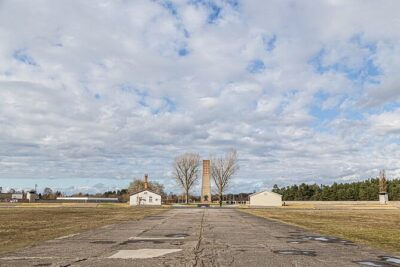
Sachsenhausen Concentration Camp Memorial Tour
Read our review →
Sachsenhausen Concentration Camp Bus Tour in English from Berlin
Read our review →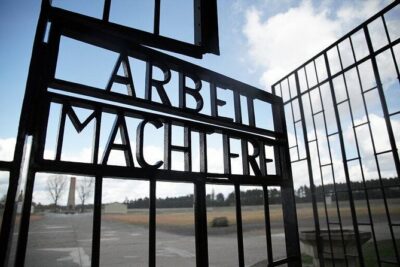
Sachsenhausen Concentration Camp Memorial Tour (Max. 15 Guests)
Read our review →
Sachsenhausen Concentration Camp and Potsdam Tour
Read our review →Browse the lists this tour appears in