
Reviewed · THIRD REICH & WWII TOURS
Hitler to Stalin – WWII & Cold War Tour (Small Group)
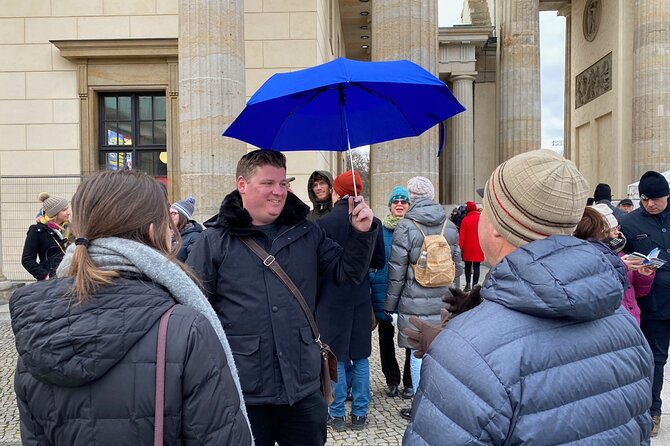
Berlin’s past is unusually close to the surface on this walk. You’ll move from the Brandenburg Gate and Reichstag to the site of Hitler’s bunker, then follow the story into the Cold War at the Berlin Wall and Checkpoint Charlie. Guide Mark has been praised for using old photographs to show how these places looked during the war.
I like the strong historical range: you get Nazi Berlin, the Battle of Berlin, the Holocaust, Soviet occupation, the 1953 uprising, and German division in one compact route. I also like the small group limit of 15, which gives you a better chance to hear the guide and ask questions.
The main drawback is pace. You cover nine stops in about two and a half hours, so several visits are brief, and this is an outdoor walking tour with no promise of shelter in poor weather.
Key points to know
- Nine major sites in 2.5 hours: The route links Brandenburg Gate, the Reichstag, wartime memorials, the Berlin Wall, and Checkpoint Charlie.
- Guide Mark brings visual context: He uses wartime photographs to compare Berlin then and now.
- A serious look at difficult history: The tour covers Nazi crimes, the Holocaust, Soviet repression, the 1953 uprising, and the Cold War division.
- Small group format: A maximum of 15 people should make the walk easier to follow than a large coach tour.
- Good value at $23: You get a focused historical introduction without admission fees added to the listed route.
- Ends at Checkpoint Charlie: The finish is near public transport and puts you in a useful central location for further sightseeing.
From Brandenburg Gate into Berlin’s 20th century
The walk begins at Pariser Platz, beside the Brandenburg Gate. Built in the 18th century for Frederick William II, the gate began as a city entrance and later became a stage for major political events.
Today, it is often presented as a symbol of European unity and peace. This tour gives it a more complicated role. You’ll start by seeing how a beautiful monument can also be pulled into the service of changing governments and competing ideologies.
The opening stop lasts about 10 minutes. That is enough for an introduction and orientation, but not a long architectural study. I would arrive ready to listen rather than expecting time for a full photo session.
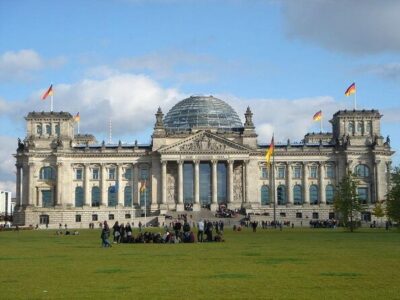
From there, the group moves to the Reichstag, Germany’s lower-house parliament building. The building was completed in 1894 for the Imperial Diet, the political body of the German Empire. Its story then turns sharply in 1933, when a fire damaged the building and became part of the political crisis surrounding the Nazi rise to power.
The Reichstag was badly damaged again during World War II and was restored for parliamentary use in 1999. You’ll spend about 15 minutes here, focusing on the building’s place in German political history rather than touring the interior.
That distinction matters. This experience is a street-level history walk, not a Reichstag admission tour. If you want to visit the parliament building itself, you’ll need to arrange that separately.
More Third Reich and WWII Tours in Berlin
- Berlin: Third Reich and Cold War 2 Hour Walking Tour
★ 4.9 · 6,830 reviews - Berlin’s Best: 2 Hour Walking Tour Third Reich and the Cold War
★ 5.0 · 5,486 reviews - Third Reich Berlin: Hitler and WWII Walking Tour
★ 5.0 · 3,301 reviews
The Soviet memorial and the cost of the Battle of Berlin
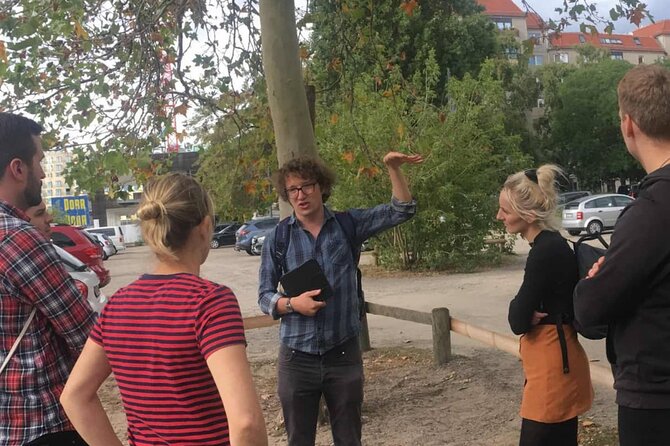
The next stop is the Soviet War Memorial in the Großer Tiergarten. The Soviet Union erected it in 1945 to honor soldiers who died during the Battle of Berlin.
This is an important change in viewpoint. The early part of the walk moves through the institutions and symbols of German power. At the memorial, the focus shifts toward the Soviet forces and the final battle that destroyed much of Berlin in 1945.
The stop lasts about 15 minutes. That is enough time to understand why the memorial was placed here and how it fits into the closing chapter of the war. You’ll also have a chance to consider how Berlin remembers the conflict from more than one national perspective.
The memorial can be especially useful for anyone who knows the war mainly through the Western Allied story. The Battle of Berlin was not a distant final scene. It directly shaped the city you are walking through.
The Holocaust Memorial asks for quiet attention
The Memorial to the Murdered Jews of Europe is one of the most difficult stops on the route. Architect Peter Eisenman designed the site with 2,711 concrete slabs spread across a large open area.
The memorial is abstract rather than explanatory. Its uneven ground and shifting slab heights can leave you feeling uncertain as you walk through it. That physical effect is part of the design, but the tour also helps place the memorial within the larger story of Nazi persecution and mass murder.
You’ll have about 15 minutes here. That is not enough to cover every aspect of the Holocaust, nor should a short walking tour pretend otherwise. What it can do is give you the historical frame needed to understand why this memorial occupies such a prominent place in central Berlin.
I appreciate that the route gives this subject its own stop rather than treating it as a quick photo opportunity. You should expect a serious moment, not a light sightseeing break. The site is open and exposed, so your experience may also depend on the weather and the number of people around you.
The Führerbunker site and the final days of Nazi Berlin
The walk continues to the site of the Führerbunker, Hitler’s final headquarters in Berlin. Hitler moved into the bunker on January 16, 1945. He married Eva Braun there on April 29, less than 40 hours before both died by suicide.
The old Chancellery buildings were later demolished by Soviet forces, while new buildings rose above the area. The underground complex remained mostly undisturbed until 1988. The stop is therefore less about seeing a preserved room and more about understanding what happened beneath a changed piece of the city.
This is one of the places where a strong guide makes a major difference. There is no grand entrance or preserved interior to explain the story for you. Guide Mark’s use of historical images is particularly useful here, since photographs can show the wartime setting that has largely disappeared.
You’ll spend about 15 minutes at the site. That brief stop works best if you are interested in the decisions, fear, and collapse inside the Nazi leadership during the last weeks of the war. It is not a place for spectacle, and the plain setting makes the historical explanation all the more important.
Other trips into the same period in Berlin:
- Berlin: Third Reich, Hitler, and WWII Walking Tour
★ 4.9 · 1,133 reviews - Berlin Third Reich Sites: Half-Day Walking Tour
★ 5.0 · 835 reviews - Berlin: Guided Bike Tour of the Berlin Wall and Third Reich
★ 4.7 · 499 reviews - Hitler’s Germany: Berlin During the Third Reich & WWII
★ 4.8 · 476 reviews
A Cold War oddity at the North Korean embassy
The itinerary then shifts into the Cold War era with a stop near the Embassy of the Democratic People’s Republic of Korea on Glinkastraße in Berlin’s Mitte district.
At first, this may seem like an unusual addition to a World War II tour. It helps show how Berlin became a meeting point for competing communist and Western political systems after the war. The stop is scheduled for about 10 minutes.
Do not expect a public embassy tour. The value here is the location and the political context supplied by the guide. It adds a less familiar detail to a route that otherwise focuses on famous monuments.
The June 17, 1953 uprising
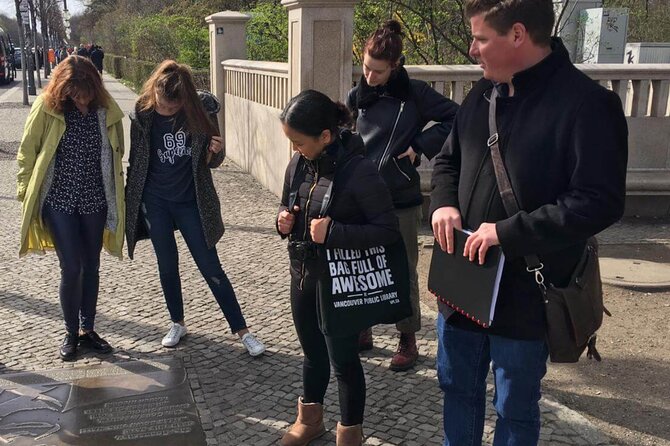
The next memorial recalls the East German uprising of June 17, 1953. Workers and other citizens challenged the communist regime, and Soviet tanks were used to suppress the revolt. About 15,000 people were arrested afterward.
This stop gives you an essential link between the end of World War II and the later Berlin Wall story. The Cold War was not simply a disagreement between governments. It affected people living under an increasingly rigid political system, and the uprising showed the force that could be used against public opposition.
The memorial stop lasts about 15 minutes. I find this part of the route especially useful because it places ordinary resistance before the wall became the main symbol of divided Berlin. It also reminds you that the city’s postwar history included more than the dramatic events at the border crossings.
The Berlin Wall Memorial puts division at eye level
The route then reaches the Berlin Wall Memorial, which commemorates Berlin’s division and the deaths connected with the wall.
This is a key transition. Earlier stops explain the political forces that shaped postwar Germany. Here, those forces become physical: a barrier cutting through neighborhoods, separating families and workplaces, and turning movement across the city into a dangerous act.
The scheduled visit lasts about 15 minutes, so you’ll receive an introduction rather than a full study of every surviving section and memorial feature. Still, the location helps connect the wider Cold War story to the daily reality of divided Berlin.
If you are new to Berlin, this is one of the stops that can help organize the rest of your sightseeing. Later, you may visit other wall remains or museums with a clearer sense of why the barrier mattered.
Checkpoint Charlie closes the story
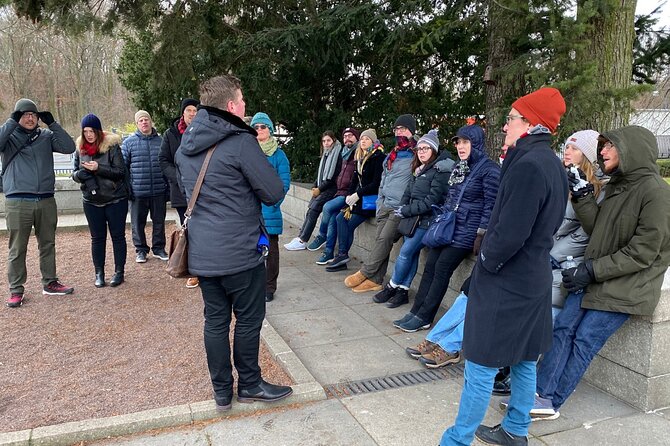
The tour ends at Checkpoint Charlie on Friedrichstraße, one of the best-known crossing points between East and West Berlin. The Western Allies called it Checkpoint C, while the nickname Charlie came from the military phonetic alphabet.
You’ll spend about 20 minutes here, the longest scheduled stop on the route. That extra time fits the site’s importance. Checkpoint Charlie became a powerful Cold War symbol, representing the sharp line between the two political systems.
The site is also a reminder that famous places can change meaning. Today, it is a central tourist stop, but the name once represented the rules, risks, and armed tension of crossing between East and West. A guide can help you look past the photo opportunity and understand the political pressure attached to this corner of Berlin.
Ending here is practical. The address is Friedrichstraße 43 to 45, near public transportation, and you are still in central Berlin. You can continue sightseeing, find food, or use the nearby transit network without having to retrace the entire route.
What the $23 price really gives you
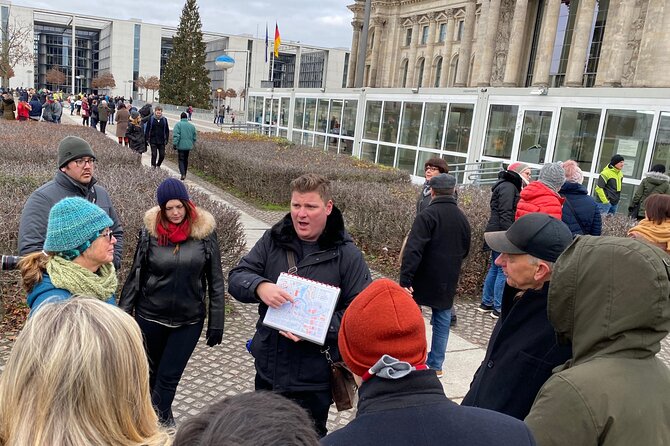
At $23, this is an inexpensive way to get a structured introduction to Berlin’s wartime and Cold War landmarks. The value comes from the route and the guide’s explanations, not from admissions or special access. Every listed stop has free admission, so you are paying mainly for the historical organization and live commentary.
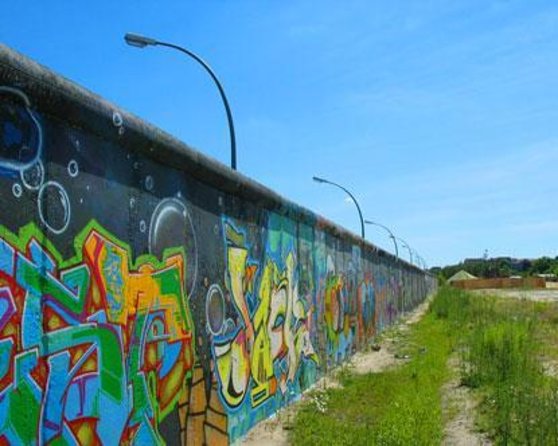
That can be a good deal if you want help connecting places that might otherwise feel scattered. Brandenburg Gate, the Reichstag, the Holocaust Memorial, the Führerbunker site, the June 17 memorial, the Berlin Wall, and Checkpoint Charlie each tell part of the story. The guide’s job is to link them.
The strongest praise has focused on Mark’s presentation. He uses photographs to show how Berlin looked during the war and answers questions in detail. His enthusiasm appears to be a major part of the experience, especially at locations such as the Führerbunker site where little visible remains.
The small group limit also helps protect the value. Fifteen people is not a private tour, but it is small enough for a guide to speak to the whole group without the feel of a crowd. You will still want to stay close and listen carefully, since the route has many stops in a short time.
Walking conditions and practical planning
This is a 2.5-hour outdoor walking experience. Wear comfortable shoes and plan for changing weather. The tour requires good weather, and if poor conditions cause a cancellation, you are offered another date or a full refund.
The meeting point is Brandenburg Gate at Pariser Platz, 10117 Berlin. The finish is Checkpoint Charlie at Friedrichstraße 43 to 45. Both locations are in central Berlin, and the route is near public transportation.
Most people can participate, and service animals are allowed. The tour does not list special admission requirements because the stops are viewed from public areas. Still, a long city walk can feel demanding if you have mobility concerns, so consider the distance and the outdoor setting before booking.
The schedule gives each location between 10 and 20 minutes. That makes the tour efficient, but it also means you should not expect long independent visits. If you want time for photographs, quiet reflection, or detailed museum displays, plan separate visits after the walk.
You can cancel for a full refund up to 24 hours before the start time. Cancellations or changes within 24 hours are not refunded, and the experience can also be canceled if the minimum number of participants is not reached.
Who will get the most from this walk
I would choose this tour if you are visiting Berlin for the first time and want a clear historical framework. It is also a good fit if you have read about the war and Cold War but want to connect those events to actual streets and buildings.
You’ll get the most from it if you enjoy explanation and questions more than passive sightseeing. The comments about Mark’s photographs and storytelling suggest that the guide can add real value, especially for people who want to compare wartime Berlin with the city in front of them today.
This may be less suitable if you want to enter major buildings, spend a long time at the Holocaust Memorial, or focus on one era in great depth. The route covers a lot. Its strength is range, while its tradeoff is limited time at individual sites.
Should you book the Hitler to Stalin tour?
Book it if you want a low-cost, focused walk through Berlin’s most important World War II and Cold War locations. The combination of a 15-person maximum, a central route, free-entry sites, and a guide who uses historical photographs makes $23 a sensible price.
I would especially recommend it early in a Berlin visit. The walk can give you the basic map and chronology you need before exploring museums and memorials on your own.
Skip it if you dislike outdoor walking, need a slow pace, or want interior access to the Reichstag and other buildings. For everyone else, this is a compact way to see how Nazi Berlin, the Soviet victory, the Holocaust, the 1953 uprising, the Berlin Wall, and German division fit into one city story.
FAQ
How long does the Hitler to Stalin tour last?
The tour lasts approximately 2 hours and 30 minutes.
Where does the tour begin?
It begins at Brandenburg Gate, Pariser Platz, 10117 Berlin, Germany.
Where does the tour end?
It ends at Checkpoint Charlie, Friedrichstraße 43 to 45, 10117 Berlin, Germany.
How many people can join the tour?
The group has a maximum of 15 travelers.
Who is the guide?
One guide specifically named in the tour information is Mark. He uses photographs and explains the historical sites in detail.
Is admission included for the attractions?
The listed stops have free admission. This is a walking tour of the sites, not a package with interior admission to the Reichstag or other buildings.
What happens if the weather is poor?
The experience requires good weather. If it is canceled because of poor weather, you can choose a different date or receive a full refund.
More Berlin Wall and Cold War tours in Berlin
- Skip-the-Line: Berlin Wall Museum at Checkpoint Charlie
★ 4.1 · 2,041 reviews - Cold War, Berlin Wall, Spies and the East Side Gallery
★ 5.0 · 1,024 reviews - Berlin: Cold War Walking Tour on Berlin Wall Route
★ 4.8 · 437 reviews - Berlin: Cold War Era History Guided Bike Tour
★ 4.8 · 413 reviews
Just added in Berlin
- Private One way Airport Transfer Berlin Airport To Berlin★ 3.5 · 17 reviews
- Private Walking Tour: Berlin Wall, Cold War and Checkpoint Charlie★ 5.0 · 37 reviews
- Modern Berlin Private Walking Tour: Diverse, Vibrant and Exciting German Capital★ 5.0 · 13 reviews
- Private Day Trip to Potsdam from Berlin by Train★ 4.5 · 27 reviews
- City Explorer: Potsdam Private Day Trip★ 4.5 · 10 reviews
- Berlin Private Custom 5-Hour Tour by Car★ 5.0 · 30 reviews
- Private Half-Day Sightseeing Tour in Berlin★ 3.5 · 6 reviews
- Berlin Private Custom Tour in a Minivan, East and West★ 5.0 · 123 reviews
Third Reich & WWII Tours, compared.

Third Reich Berlin: Hitler and WWII Walking Tour
Read our review →
Walking Tour of Former Nazi Party Rally Grounds
Read our review →
Berlin Third Reich Sites: Half-Day Walking Tour
Read our review →
Birthplace of the Third Reich Guided Walking Tour
Read our review →Browse the lists this tour appears in