
Reviewed · BERLIN WALL & COLD WAR TOURS
Berlin: Cold War Era History Guided Bike Tour
Berlin’s Cold War story makes the most sense when you follow the old border on two wheels. This tour links wall fragments, escape sites, former crossings, watchtowers, and major landmarks into one clear route, rather than leaving you to piece the story together from scattered memorials.
I like the relaxed 15-kilometer route, which gives you time to listen, ask questions, and look around without turning the ride into a race. I also like the quiet paths and side streets that guides such as Paul, Oleg, Lauren, Ana, and Almar have used to show parts of Berlin you could easily miss on foot. The main drawback is that a long ride can be tiring in poor weather, and big city events, such as the Berlin Half Marathon, may force route changes.
Key points to know before you book

- The route follows the former Berlin border: See Mauerpark, Bernauerstraße, Bornholmerstraße, Checkpoint Charlie, wall remains, and one of the last watchtowers.
- The ride is easy-paced but not short: You cover about 15 kilometers over 3 to 3.5 hours, with time to stop for stories and questions.
- The starting point is the Kulturbrauerei: The old Prenzlauer Berg brewery is reached easily from Alexanderplatz on the U2.
- The guides are a major part of the experience: English, German, French, and Dutch tours are offered, with private groups available.
- The bike choice matters: A large fleet lets you select a suitable bicycle, and helmets and gloves are available on request.
- The price is fair for a guided half-day: At $35 per person, the tour combines bike hire, instruction, and a focused history lesson.
Why Berlin’s Wall story works so well by bicycle
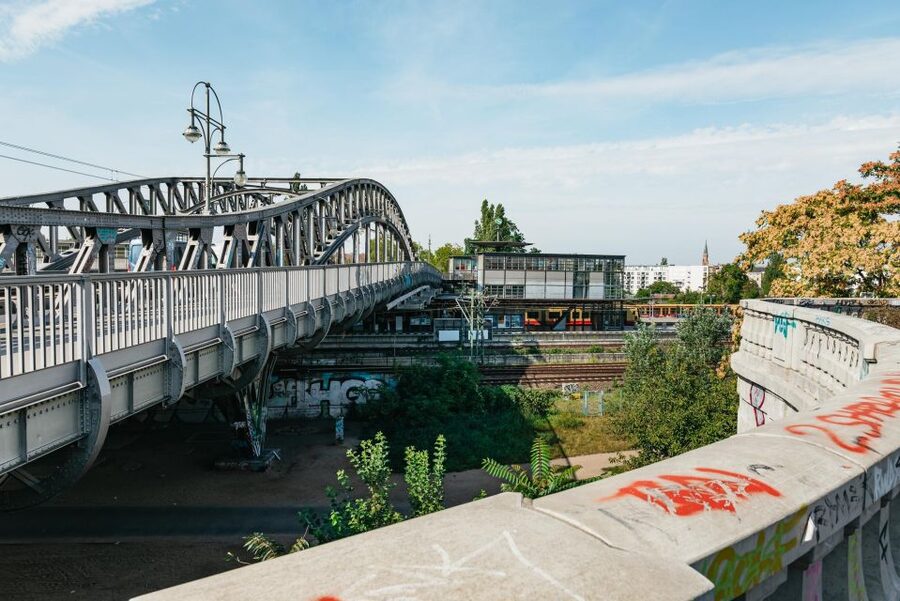
The Berlin Wall was not one isolated monument. It cut through neighborhoods, parks, roads, railway lines, and ordinary lives. A bike route helps you understand that scale because you move along the former dividing line instead of seeing only one preserved section.
The ride also gives the history a useful sequence. You can connect the border crossing at Bornholmerstraße with Bernauerstraße, then continue toward the city center and Checkpoint Charlie. The places become chapters in one story: construction, division, escape, surveillance, political pressure, and the sudden opening of the border.
I find this more useful than a short stop at a single wall memorial. You see physical remnants, but you also see the spaces where the wall has disappeared. That contrast matters. Berlin is a modern city, and much of the border is now marked by pavement lines, memorials, open spaces, or nothing obvious at all.
The guides add the human scale. The tour includes stories of successful and tragic escape attempts, as well as an explanation of how the wall came down almost overnight after nearly 30 years. The emphasis is not only on Cold War politics. You also learn how the division affected people living, working, and traveling in Berlin.
Other divided-city history in Berlin:
- Berlin: Third Reich and Cold War 2 Hour Walking Tour
★ 4.9 · 6,830 reviews - Berlin’s Best: 2 Hour Walking Tour Third Reich and the Cold War
★ 5.0 · 5,486 reviews - Skip-the-Line: Berlin Wall Museum at Checkpoint Charlie
★ 4.1 · 2,041 reviews
Starting at the Kulturbrauerei in Prenzlauer Berg
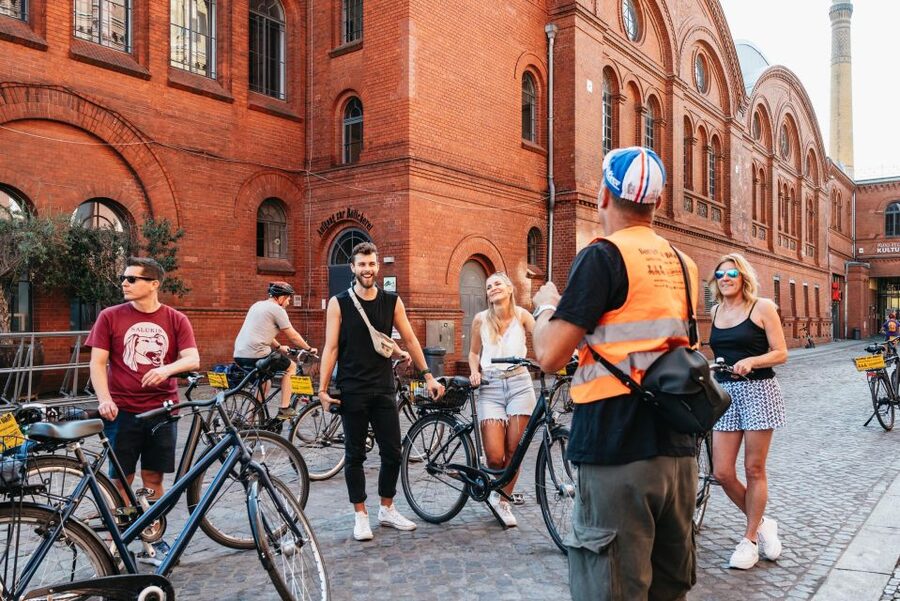
The tour begins at the Berlin on Bike depot inside the Kulturbrauerei, a striking 19th-century brewery complex in Prenzlauer Berg. Its red-brick buildings, courtyards, and industrial details make a more interesting starting point than an ordinary storefront.
From Alexanderplatz, take the red U2 line toward Pankow and get off at Eberswalder Straße, three stops away. Leave the station in the opposite direction of travel, following signs for Kulturbrauerei. Walk along Danziger Straße for about 150 meters, turn right onto Knaackstraße, then enter the complex through the large doorway and follow the yellow signs to the bicycle depot.
Allow a little extra time for this walk. The meeting point is inside a large complex, and arriving rushed can make the bike selection and departure feel hectic. The activity ends at the same depot, which makes the logistics simple.
At the shop, you can choose from a large fleet. That is worth taking seriously. If you are not used to a coaster brake, ask for a bicycle with a braking system you know. One rider specifically found the coaster-brake style less comfortable without prior familiarity. Helmets and gloves are available on request, while sunscreen, trouser clips, and rain ponchos are provided as useful extras.
Mauerpark and the first signs of the border
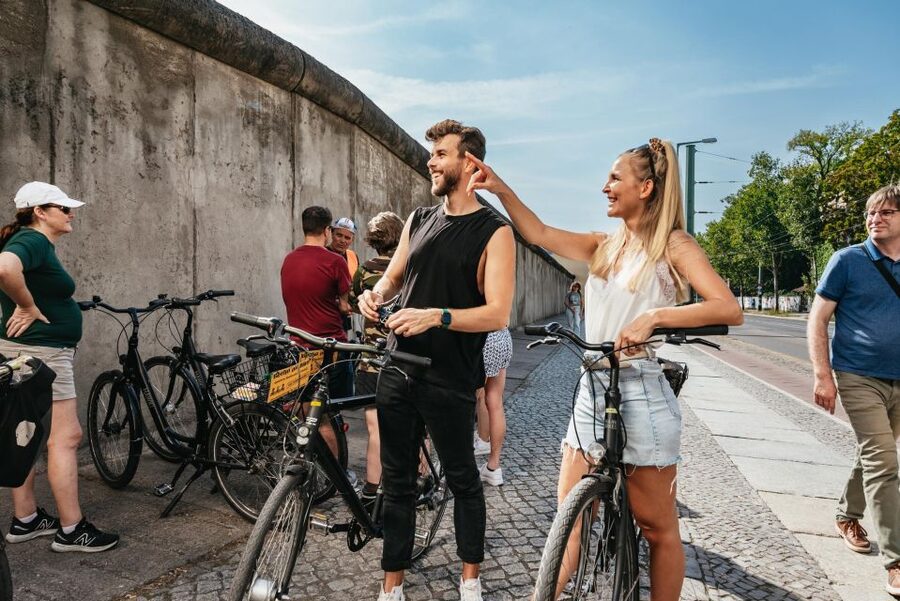
From Prenzlauer Berg, the route heads toward Mauerpark. The name means Wall Park, and the open green space occupies part of the former border zone. Today it feels like a public park, but its position helps you understand how the wall divided Berlin through areas that had once been connected.
This is a good early stop because it sets up the central idea of the tour. The border was not simply a wall between two distant countries. It ran through the city, beside homes and streets, and affected daily movement.
The relaxed pace helps here. You are not expected to listen while racing through traffic. The group stops at key places, and the guide explains what you are looking at before the ride continues. Guides such as James and Geoff have been praised for mixing humor with serious material, a useful balance for a subject that can otherwise become heavy.
The route may use bike paths and quieter streets that are not obvious to someone exploring alone. You still need to pay attention to the road and follow the guide, but you are not spending the entire outing on major traffic routes.
Bernauerstraße and the personal cost of the Wall
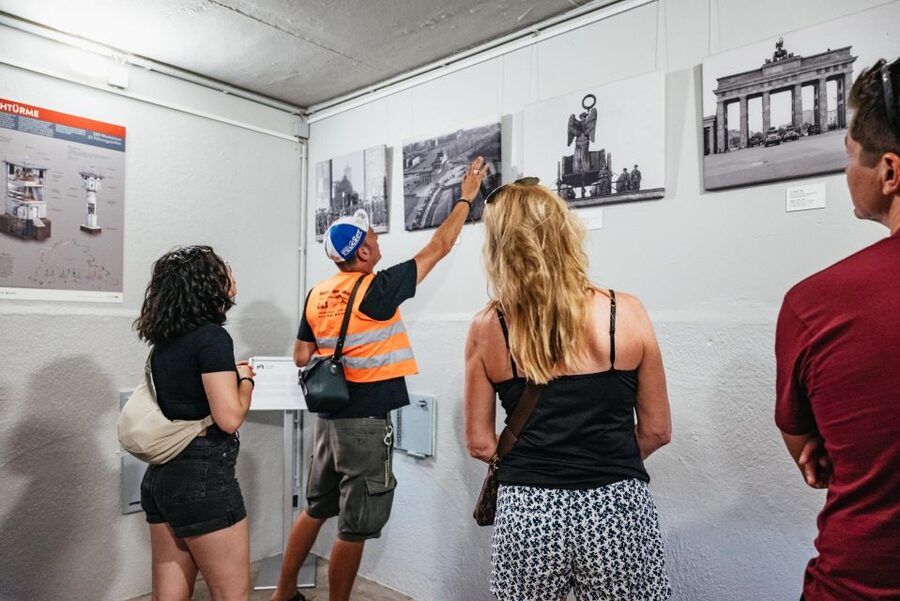
Bernauerstraße is one of the most important parts of the route. Here, the former border is tied closely to stories of homes, escape attempts, and the physical arrangement of the wall system.
The area helps you see that the barrier was more than a single concrete slab. The border included controlled zones, watchpoints, and obstacles designed to stop people crossing from East Berlin to West Berlin. The remaining sections and memorial features make the system easier to picture.
This is where a good guide earns the price of the tour. A map or plaque can identify a location, but a guide can explain why it mattered and how the area changed. Ana, Lauren, and Paul have all been singled out for clear storytelling and for answering questions in a way that helps visitors connect the facts.
You should expect pauses rather than a continuous ride. The tour is designed around stops, explanations, and time for photographs. That makes it a better choice for someone who wants context than for someone seeking a fast cycling workout.
Other rides around Berlin:
- Berlin: Sights and Highlights Bike Tour with a Local Guide
★ 4.8 · 2,698 reviews - Berlin Highlights 3-Hour Bike Tour
★ 5.0 · 948 reviews - Berlin City Bike Tour with Beer Garden Stop
★ 5.0 · 917 reviews - Berlin Highlights: 3-Hour Bike Tour
★ 4.9 · 809 reviews
Bornholmerstraße and the night the border opened
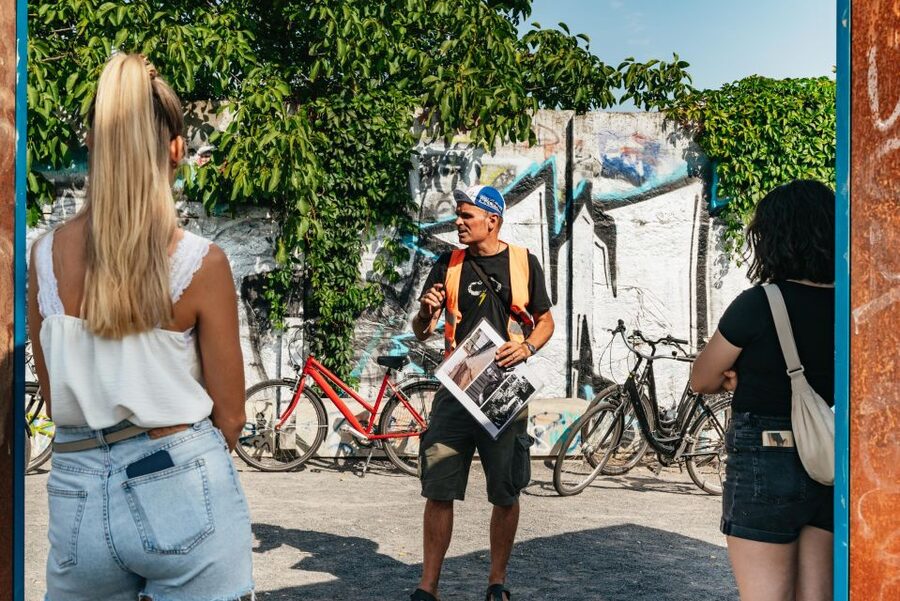
Bornholmerstraße was one of the former border crossings, and it plays an important role in understanding the wall’s final hours. The opening of the border is often remembered as a huge political event, but the tour also explains how confusion and pressure helped turn one evening into a historic break.
The guide connects this location to the wider story of November 1989 and the wall’s sudden collapse as a functioning barrier. You hear how Berliners reacted and why the event felt so unexpected after decades of separation.
The value of stopping here is that the story becomes tied to a real street rather than a distant date. You can picture people gathering at a crossing that had controlled movement for years, then watch the old border lose its power.
The tone stays fairly neutral and fact-based, which suits a subject that can be presented too simply. You are given room to consider the political decisions, the pressure from ordinary people, and the lasting effects on the city.
Checkpoint Charlie and the symbols of the Cold War
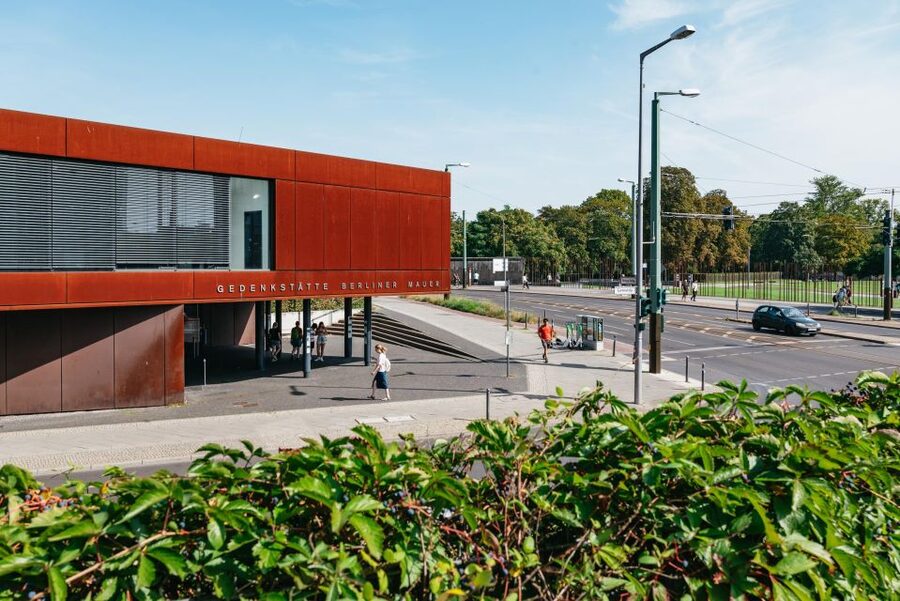
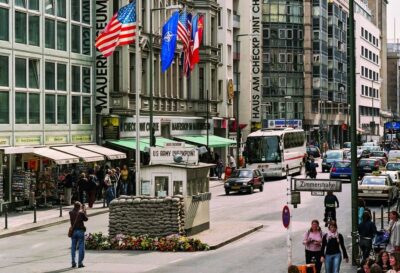
Checkpoint Charlie is one of Berlin’s best-known Cold War sites. It was a crossing between the American and Soviet sectors and has become a standard stop for first-time visitors.
The tour places it within the larger route, which is helpful. On its own, Checkpoint Charlie can feel like a quick photo stop surrounded by modern city life. With the guide’s explanation, you understand why this crossing became such a powerful symbol and how it fit into the network of divided Berlin.
You also see remains of the Berlin Wall and one of the last watchtowers included on the route. These physical traces vary in scale, but together they show how much infrastructure supported the border.
This section can feel more crowded and commercial than quieter parts of the route. That is a genuine tradeoff. You will not get the same calm atmosphere everywhere, but you do gain one of the most recognizable Cold War locations and a useful explanation of its role.
Brandenburg Gate and the city’s older story
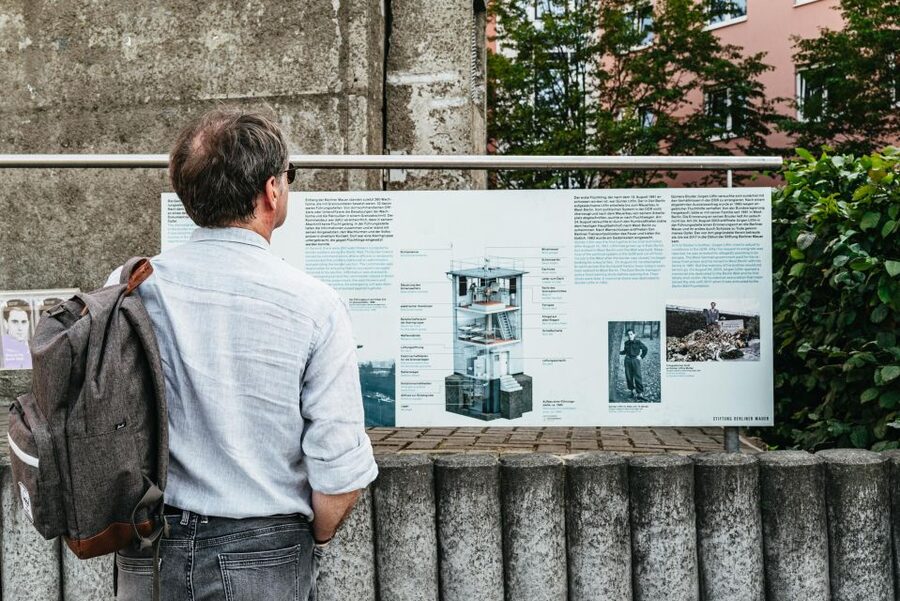
The ride continues to the Brandenburg Gate, one of Berlin’s defining landmarks. The gate predates the Cold War, and the guide explains its 18th-century origins before placing it in the later story of division and reunification.
That wider time frame improves the tour. Berlin’s history did not begin with the wall, and the Brandenburg Gate has carried different meanings across several political eras. During the Cold War, its location near the border made it a symbol of a divided capital. After reunification, it became a symbol of a city joined again.
I like this final major stop because it connects the specific history of the wall to Berlin as a whole. You have spent the ride following a border, then arrive at a landmark that represents the capital’s changing identity.
The route then returns to the bicycle depot. You hand back the bike there, so you do not need to arrange a second meeting point or find your way across the city after the tour.
What the $35 price really includes
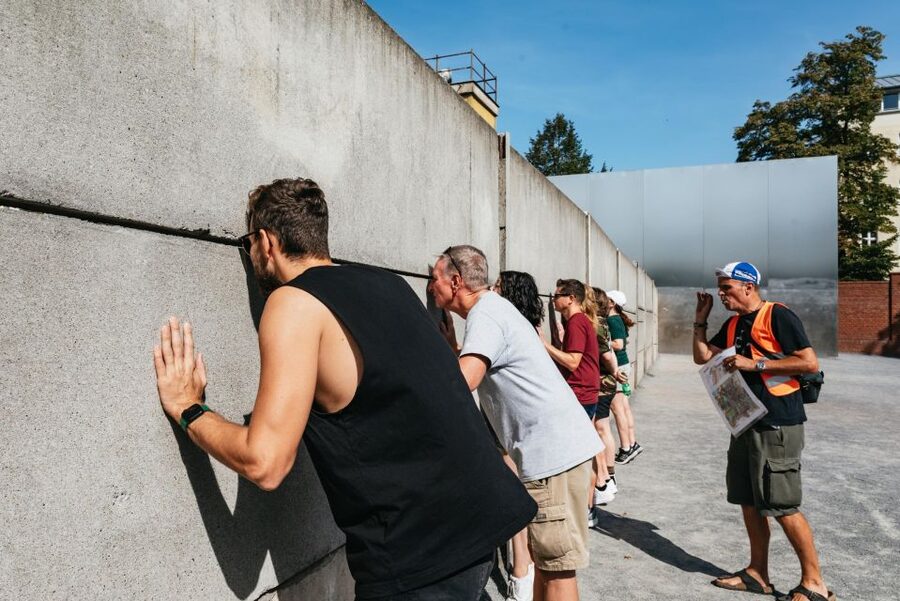
At $35 per person, this is good value if you want both transport and interpretation. The fee covers the bicycle and guide, while helmets and gloves are available on request. Sunscreen, trouser clips, and rain ponchos are also included for practical comfort.
You are paying for more than a standard rental. A bicycle rental would let you cover ground, but it would not explain the former crossings, escape attempts, watchtowers, or the political setting at each stop. The guide also handles the route, which saves you from navigating between scattered memorials.
The value is strongest for a first or second visit to Berlin. You can cover a wide slice of the city in half a day and still have time later for museums or additional memorials.
A private group is available if you want a more personal format. The regular tour may be a better value for solo visitors or couples, while a private option can make sense for a family group, school group, or friends who want to shape the discussion around particular questions.
Pace, fitness, and practical comfort
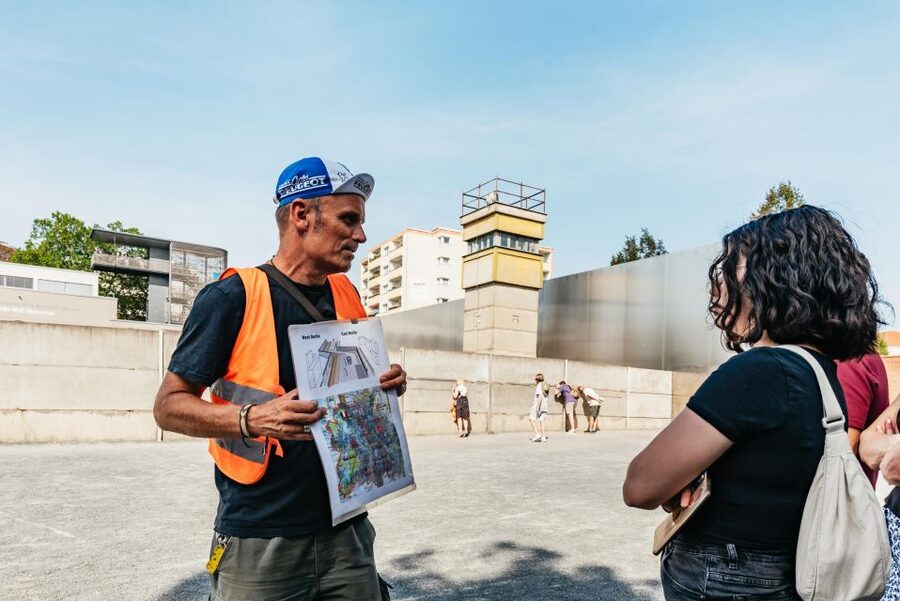
You cover approximately 15 kilometers at a relaxed pace. This is not presented as a demanding athletic ride, but you should still be comfortable on a bicycle for several hours and able to ride through city streets.
Wear comfortable shoes and clothes. A helmet is sensible, even though it is listed as available on request rather than automatically required. Trouser clips can help if you are wearing loose clothing, and rain ponchos are available in bad weather.
The tour is not suitable for children under eight. For older children, the main question is attention span and cycling confidence. The history includes escape attempts, state control, and tragic outcomes, so parents may want to decide if that subject fits their child.
Weather can change the feel of the day. Light rain need not end the outing because ponchos are available, but wet roads and cold temperatures can make a three-hour ride less pleasant. Check the forecast and dress for sitting on a bike as well as walking between stops.
Large public events can also affect the route. A Berlin Half Marathon once required a guide to adjust the plan, and the group still completed a useful tour. That is a reminder that this is a city ride, not a sealed museum visit. Events, traffic controls, and street conditions can occasionally alter the order or exact path.
The guides make the difference
The guide is the most important variable in this experience. The strongest tours depend on someone who can explain complicated events in plain language, keep a group together, and make time for questions without losing the schedule.
English, German, French, and Dutch are offered. Past guide names associated with the experience include Paul, Oleg, Geoff, Lauren, Ana, Almar, Andy, James, and Guv. You cannot assume a particular guide will lead your departure, but the range of positive comments about storytelling, humor, patience, and clear explanations is encouraging.
Paul has been praised for handling a large group safely and changing the route when late arrivals affected the timing. Oleg has been noted for detailed explanations at each stop, while Lauren and Ana have been appreciated for bringing the Wall’s personal stories to life. Guv has taken groups onto bike paths that are easy to miss when exploring alone.
The best guides do not simply recite dates. They explain why a site mattered, answer questions, and connect one stop to the next. That is exactly what you should want from a Cold War tour.
Who should book this ride
I would choose this tour if you want a clear introduction to Berlin’s divided past and prefer moving through the city instead of spending the entire morning indoors. It suits couples, friends, solo visitors, and families with children aged eight or older who can manage a relaxed ride.
It is also a smart choice if you have limited time. In 3 to 3.5 hours, you cover several important locations that are spread across Berlin. You get a practical orientation to the former border and can return later to the places that interest you most.
I would skip it if you strongly dislike cycling, need a fully seated sightseeing option, or want an in-depth museum treatment at every stop. The ride offers a broad view, not hours inside each memorial. You should also reconsider on a very wet or cold day unless you are comfortable riding in those conditions.
For most visitors, the combination of a sensible route, useful historical context, and a fair $35 price makes this a strong way to meet Berlin’s Cold War past. Book it early in your stay if possible, then use what you learn to give the rest of your Berlin sightseeing more meaning.
FAQ
How long does the Berlin Cold War bike tour last?
The tour lasts approximately 3 to 3.5 hours. Starting times vary, so check availability when booking.
How far do you cycle?
The route covers approximately 15 kilometers at a relaxed pace.
Where does the tour begin?
You meet at the Berlin on Bike depot inside the Kulturbrauerei in Prenzlauer Berg. The nearest metro station is Eberswalder Straße on the U2 line.
Does the tour return to its starting point?
Yes. The activity ends back at the bicycle depot where the tour begins.
What languages are available?
Live guides are available in English, German, French, and Dutch.
Are bicycles and safety equipment included?
A bicycle is included. Helmets and gloves are available on request. Sunscreen, trouser clips, and rain ponchos in bad weather are also provided.
Is the tour suitable for young children?
The tour is not suitable for children under eight years old. Comfortable clothing and shoes are recommended for all participants.
More history to see in Berlin
- Berlin: Natural History Museum Entrance Ticket
★ 4.6 · 3,382 reviews - Berlin: World Heritage Cruise to Potsdam
★ 4.5 · 1,435 reviews - Berlin Historical Highlights Walking Tour
★ 4.9 · 657 reviews - Berlin Private Complete History All Day Walking Tour
★ 5.0 · 474 reviews
Just added in Berlin
- Berlin: Energizing 2-Hour Morning Segway Tour★ 4.7 · 35 reviews
- Berlin: Thrilling E-Scooter Adventure Tour★ 4.4 · 66 reviews
- Beelitz-Heilstätten: Baum&Zeit Tree Top Walk Entry Ticket★ 4.9 · 7 reviews
- Beer Bike & Party Bike: Unforgettable Berlin City Tour incl. pickup★ 5.0 · 5 reviews
- AXE THROWING EXPERIENCE IN BERLIN★ 4.7 · 24 reviews
- Alternative Berlin / Street art tour – Private group★ 5.0 · 6 reviews
- Berlin: Alternative & Street Art Tour★ 4.5 · 6 reviews
- Berlin: 2.5-Hour Beer & Sunset Sightseeing Boat Cruise★ 4.6 · 61 reviews
Berlin Wall & Cold War Tours, compared.
Skip-the-Line: Berlin Wall Museum at Checkpoint Charlie
Read our review →
Cold War, Berlin Wall, Spies and the East Side Gallery
Read our review →
Guided Bike Tour of the Berlin Wall and Third Reich
Read our review →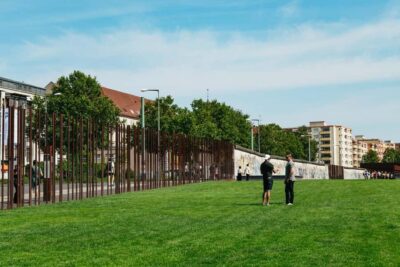
Browse the lists this tour appears in