
Reviewed · THIRD REICH & WWII TOURS
Hitler’s Germany: Berlin During the Third Reich & WWII
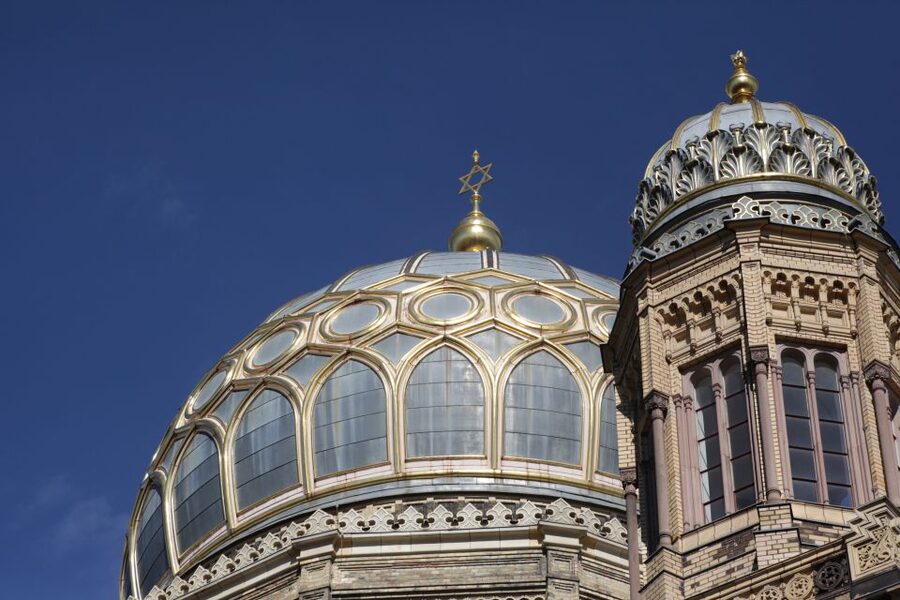
Berlin’s Nazi past is written into ordinary streets, empty plots, surviving office blocks, and memorials you could easily pass without noticing. This four-hour walk connects those pieces, from the former Jewish district and Anhalter Bahnhof to the Gestapo headquarters, Hitler’s bunker site, and the Reichstag, where the Battle of Berlin reached its final stage.
I like the strong route and the way it links political power with personal suffering. I also like the guides’ range, with names such as Glen, Jimmy, Jonathan N, Artie, Emma, and Amelie repeatedly praised for clear storytelling, humor, and care with difficult material.
The main consideration is simple: you stay outside. You do not enter the Reichstag, the Topography of Terror Museum, or other buildings, and the tour runs in all weather. Bring good shoes, a rain layer, and a public transport ticket for the short metro ride.
Key points to know before you book
- The route covers Berlin’s central Nazi district: See the former Luftwaffe headquarters, Gestapo and SS sites, the Propaganda Ministry area, Hitler’s bunker site, and the Reichstag.
- A short metro ride is part of the tour: You need a single AB public transport ticket if one is not already included in your Berlin transport plans.
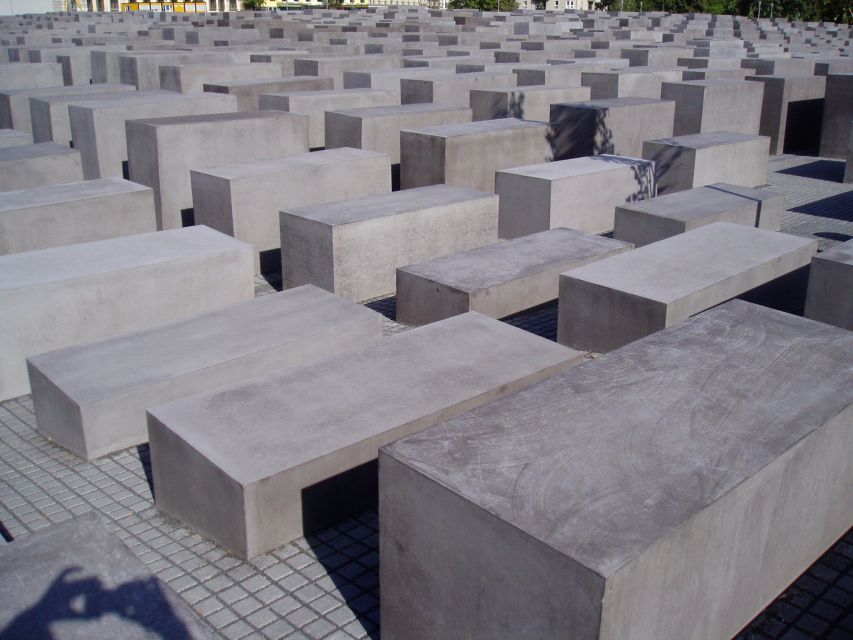
- The history is handled with care: The route includes Nazi persecution of Jewish people, the Holocaust, the T4 euthanasia program, and the murder of Sinti and Roma.
- The guides are the main strength: Glen, Jimmy, Jonathan N, Artie, Rohan, and others have been praised for clear explanations, good pacing, humor, and strong command of the subject.
- It is an outdoor tour in every season: The walk continues on public holidays and in bad weather, so plan your clothing rather than hoping for a perfect forecast.
Why this four-hour Berlin walk matters
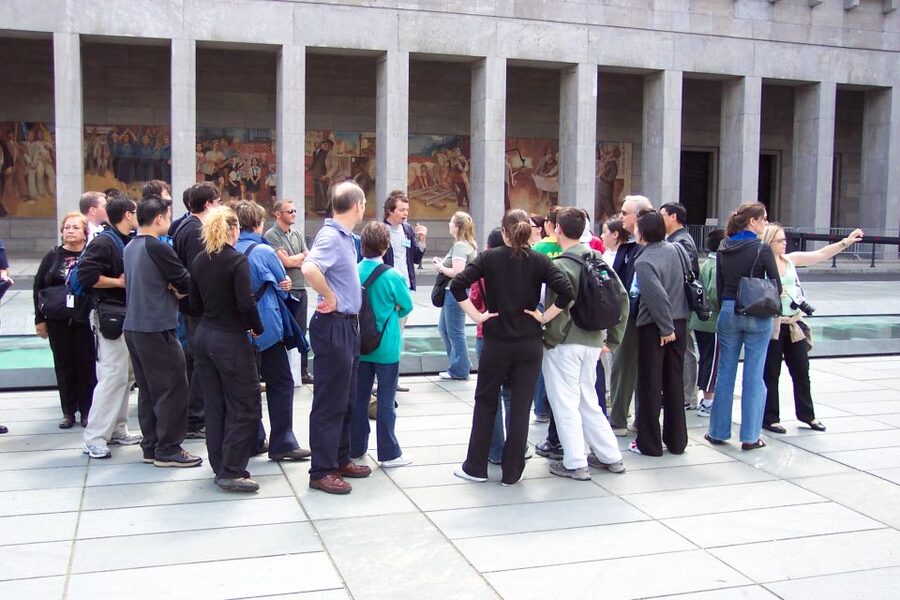
I think this tour works because it does not treat the Third Reich as a museum topic sealed behind glass. You move through the streets where ministries, police offices, military headquarters, and government buildings once worked together.
That physical setting helps you understand how power operated. The route also keeps the victims in view. It begins with Berlin’s Jewish district and later includes memorials to Jewish people, Sinti and Roma, and politicians arrested when the Nazis seized power in 1933.
The price is $23 per person, which is a strong value for four hours with a live guide. You are paying for interpretation and route planning rather than entry tickets. Since no buildings are entered, the value depends heavily on the guide, and the large number of positive ratings suggests that guide quality is usually the deciding strength.
This is not a light sightseeing stroll. The subject includes state terror, deportation, mass murder, forced euthanasia, and the destruction of much of Berlin. Still, the guides appear to keep the walk human and approachable. Jimmy, Jonathan N, and Artie are praised for using humor at suitable moments, while Amelie is noted for bringing maps and photographs to help explain the city’s wartime changes.
More Third Reich and WWII Tours in Berlin
- Berlin: Third Reich and Cold War 2 Hour Walking Tour
★ 4.9 · 6,830 reviews - Berlin’s Best: 2 Hour Walking Tour Third Reich and the Cold War
★ 5.0 · 5,486 reviews - Third Reich Berlin: Hitler and WWII Walking Tour
★ 5.0 · 3,301 reviews
Starting with Berlin’s Jewish district
Your guide begins in central Berlin with an explanation of the Jewish district and the Nazi destruction of Jewish life nearby. This opening matters because it puts people and communities before military hardware and famous leaders.
You learn about daily life, persecution, and the ways memory is marked in modern Berlin. The point is not simply that a community was destroyed. It is that the destruction took place through laws, public offices, police work, propaganda, arrests, deportation, and organized murder.
That wider view gives the rest of the walk a stronger frame. When you later see government buildings and police headquarters, you can connect them to the machinery of persecution rather than viewing them as isolated sites.
The exact meeting point varies with the option you book, so check your confirmation carefully. The tour may be shared or private, and group size can shape the experience. One particularly positive account described a group of nine, small enough for the guide to speak with everyone and answer questions along the route.
Anhalter Bahnhof and the short metro transfer
The route then uses the metro for a short ride to Anhalter Bahnhof. A single AB ticket is needed if you do not already have suitable public transport coverage.
Anhalter Bahnhof was once a huge railway station. It was badly damaged during the Second World War, and the remaining structure helps show the scale of Berlin’s wartime destruction. This is an effective early stop because the tour moves from the story of persecution into the physical damage left by war.
The metro ride also breaks up the walk. You are not marching for four straight hours, though you should still expect substantial time outdoors. The schedule includes a pause along the route, but this is not a café-based tour, and no meal or refreshment is included.
The former Luftwaffe headquarters
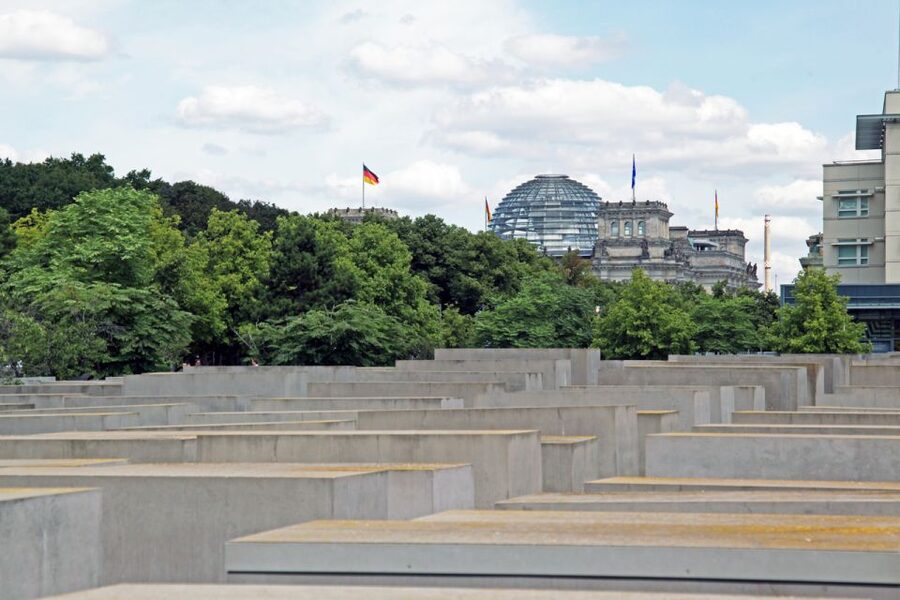
From Anhalter Bahnhof, you walk through what was once the Nazi government district. One major stop is the enormous former Luftwaffe headquarters, associated with Hermann Göring and the German air force.
The building is described as one of the best surviving examples of Nazi architecture. Its size and severe design give you a direct sense of how the regime wanted its institutions to appear: imposing, disciplined, and permanent.
This stop is useful because architecture becomes part of the political story. Your guide can explain how buildings projected authority and how the government district brought military, police, propaganda, and administrative power close together.
You do not go inside. That limitation is worth keeping in mind. You see the exterior and learn how it fits into the district, but visitors wanting interior access or a museum visit will need to plan those separately.
Other trips into the same period in Berlin:
- Berlin: Third Reich, Hitler, and WWII Walking Tour
★ 4.9 · 1,133 reviews - Berlin Third Reich Sites: Half-Day Walking Tour
★ 5.0 · 835 reviews - Berlin: Guided Bike Tour of the Berlin Wall and Third Reich
★ 4.7 · 499 reviews - Private Walking Tour Berlin Third Reich Hitler and World War II
★ 5.0 · 360 reviews
Gestapo, SS, and the Topography of Terror area
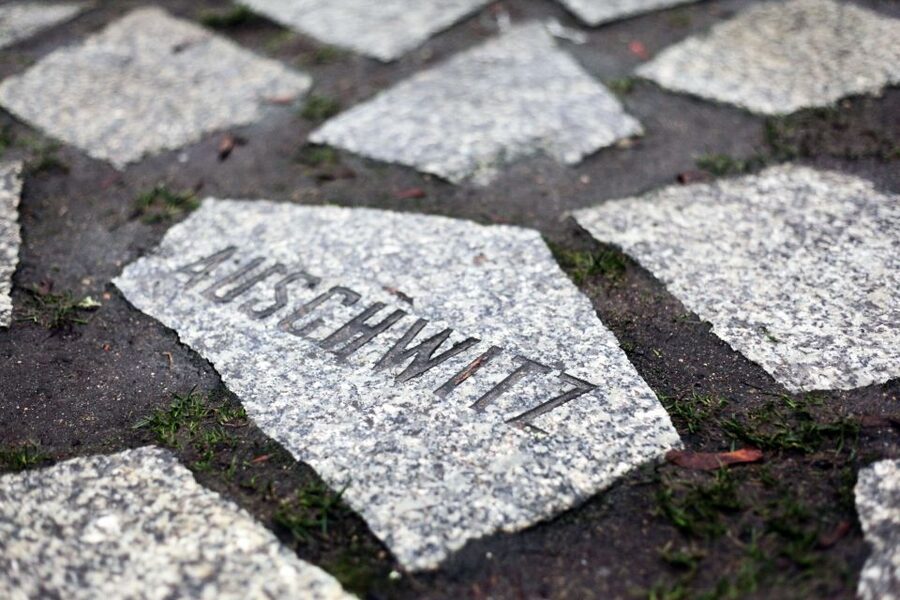
The walk continues to the former Gestapo and SS headquarters, now associated with the Topography of Terror Museum. These offices were tied to some of the Nazi regime’s most brutal work.
The Gestapo was the secret police. The SS grew into a major force of persecution, terror, and mass murder. Standing at the former headquarters gives the subject a bureaucratic edge: these crimes were not carried out by a vague force called the Nazis. They depended on offices, files, orders, transport, prisons, and people doing specific jobs.
The tour information refers to a museum break, but the experience itself does not include entering buildings. Treat this as time around the Topography of Terror site, not as a guided museum visit or an admission ticket.
If you want to spend serious time inside the museum afterward, allow extra time beyond the four-hour walk. The outdoor tour gives you the setting and the main story. A museum visit can then add documents and displays at your own pace.
Propaganda, the T4 program, and the Holocaust
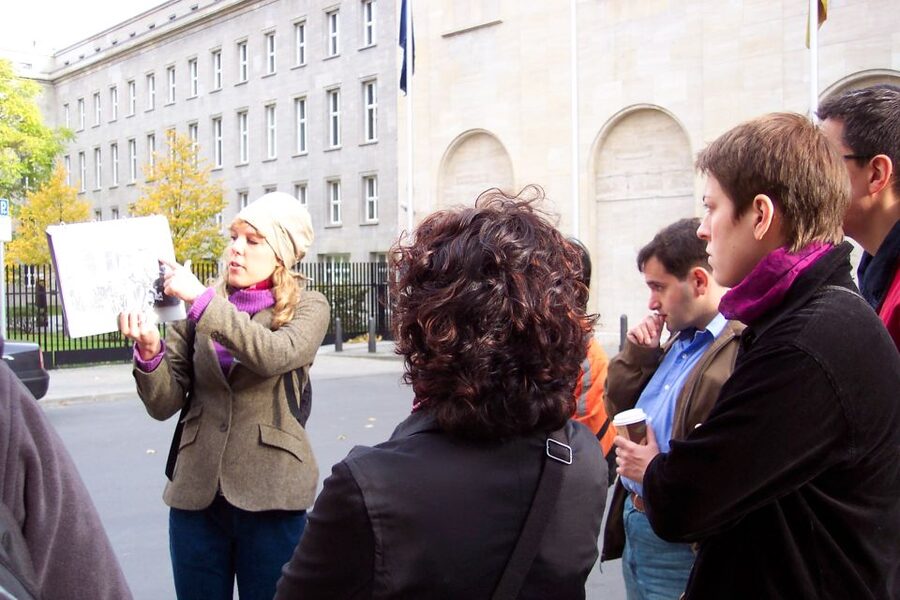
After the government and police sites, the guide turns to three especially important subjects: Joseph Goebbels and propaganda, the T4 euthanasia program, and the Holocaust.
Goebbels’ role helps explain how the regime shaped public messages and used media to support its goals. This is not only a story about speeches and posters. It is about how repeated claims, censorship, fear, and official messaging helped create a climate in which persecution could advance.
The T4 program is another essential part of the route. It concerned the organized murder of people with mental and physical disabilities. Including it makes the tour less predictable than a standard Hitler and battlefield walk, and it shows how Nazi mass murder developed through earlier policies and institutions.
The Holocaust receives its place within this wider system. The guide connects persecution in Berlin with the decisions and offices that drove the murder of Europe’s Jewish population. The subject is painful, but the route’s focus on locations and institutions helps keep the discussion specific rather than abstract.
I would choose this tour for the way it connects ideas to places. You are not only told that propaganda mattered or that police terror was organized. You are shown where parts of that system operated.
Memorials in and around the Tiergarten
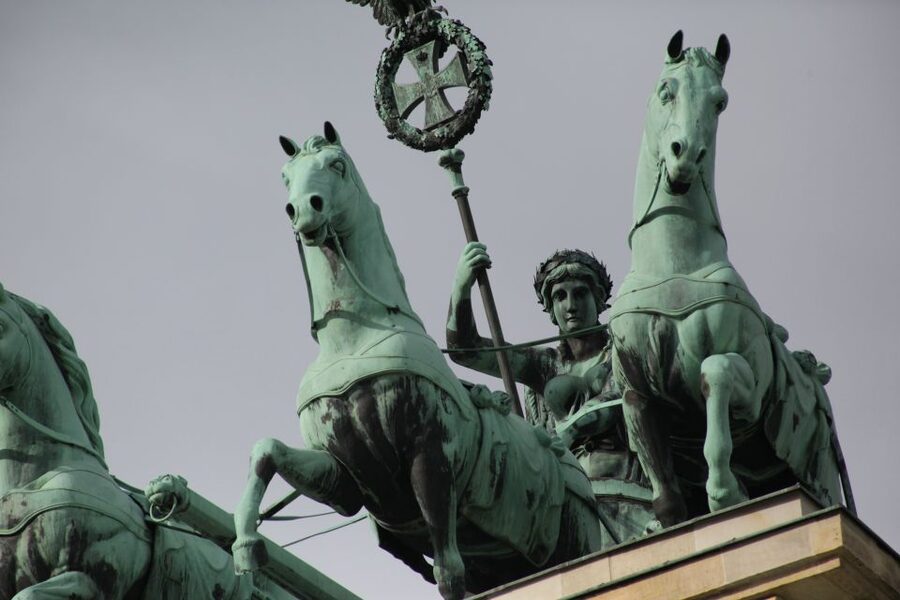
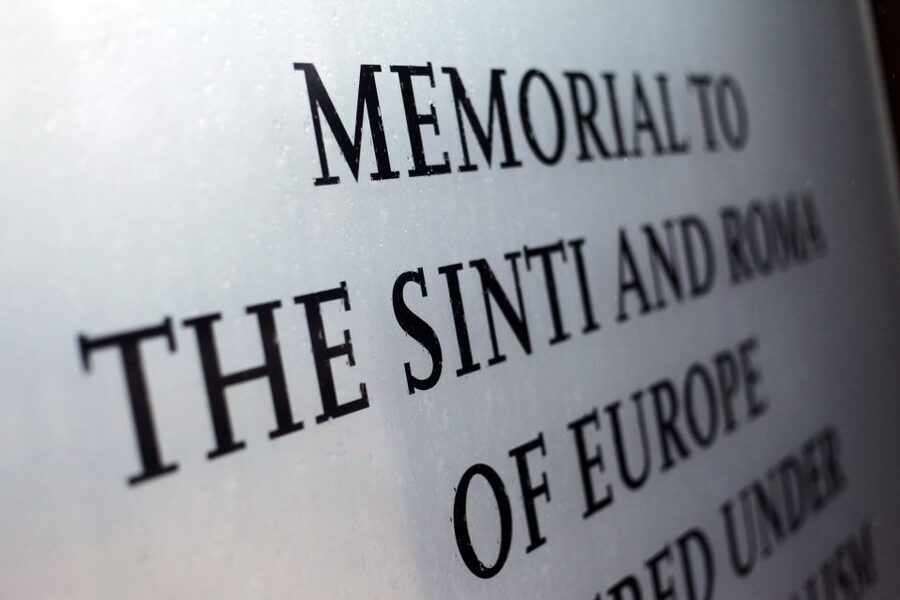
As the route heads toward the Tiergarten, Berlin’s large central park, you visit the Memorial to the Sinti and Roma Victims of National Socialism.
This memorial broadens the story beyond the most familiar account of Nazi persecution. The Sinti and Roma were targeted, deported, and murdered under National Socialist rule. Including their memorial reminds you that the regime persecuted several groups and that remembrance in Berlin continues to develop.
You also visit the memorial for 96 politicians arrested by the Nazis as they took power in 1933. This stop helps explain how the regime damaged political opposition at the start of its rule.
Together, these memorials make the route more thoughtful. You move from state buildings and military plans to public remembrance. The walk asks you to consider not only what happened, but also how modern Berlin chooses to mark it.
Several guides have been praised for pointing out places people might otherwise miss. That is one of the tour’s practical strengths. Berlin’s central sights are spread out, and a good guide shows you how less obvious memorials fit into the city’s larger story.
Hitler’s bunker site and the end of the regime
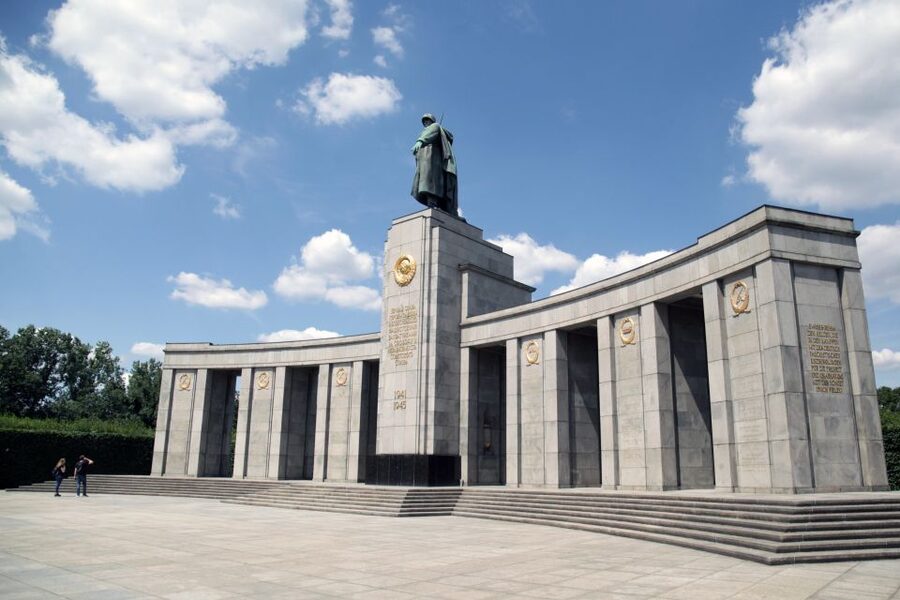
The tour also covers the site of Hitler’s bunker. There is no dramatic preserved bunker interior to visit here. The value is in understanding the location and the final days of the regime.
Your guide explains that Hitler died by suicide less than a mile from the Reichstag as Soviet forces attacked Berlin. The story brings the tour from the rise of the dictatorship to its violent collapse.
This part can be surprisingly useful for first-time visitors because the modern city gives little visual help. Much of the area has changed, and without an explanation it is easy to miss the connection between the bunker site, the former government district, and the Reichstag.
The guide also discusses Hitler and Albert Speer’s plan to rebuild Berlin as Germania, a monumental capital for a global empire. The unrealized plan reveals the regime’s grand ambitions and its desire to reshape the city as a symbol of power.
Finishing at the Reichstag
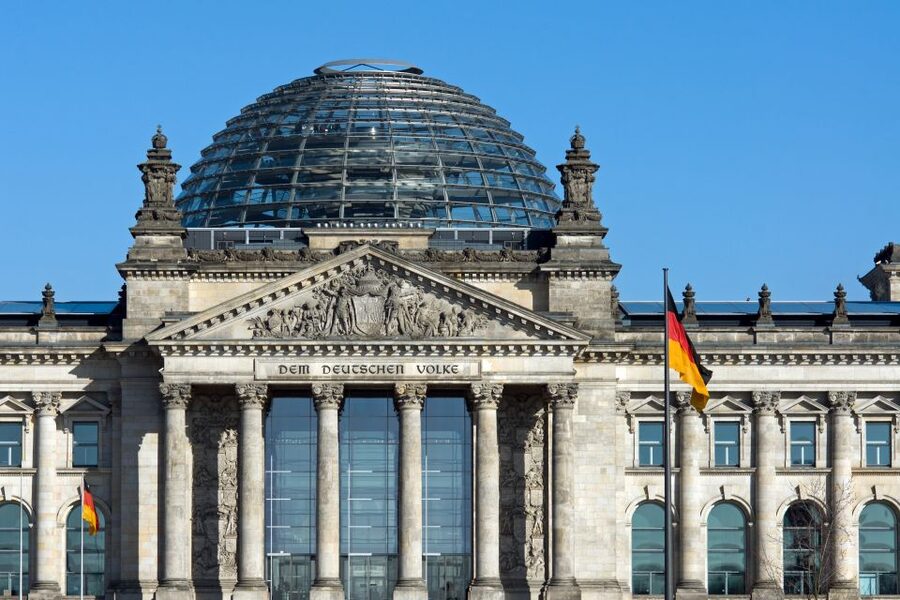
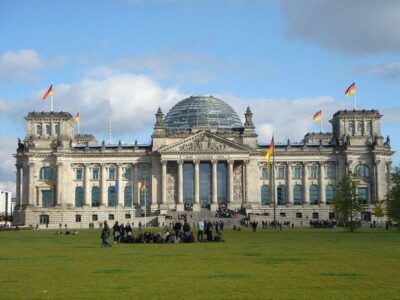
The walk ends outside the Reichstag, Germany’s parliament building. The finish is well chosen because the building links the Nazi period with present-day democratic Germany.
Your guide explains the Battle of Berlin and the Soviet assault on the Reichstag under anti-aircraft fire. The tour ends with the building as a place of conflict, destruction, rebuilding, and political change.
You do not enter the Reichstag as part of this experience. If you want to visit the dome or interior, you will need to arrange that separately. Still, ending outside gives the guide a clear place to explain the final battle and the contrast between Hitler’s dictatorship and the parliament’s current role.
Allow a little time after the tour if you want photographs, food, or a separate visit nearby. The walk’s endpoint is useful for continuing a day of central Berlin sightseeing.
What the guides add to the experience
The provider uses English and German-speaking guides, with native-level English available. Guide quality matters greatly here because the tour covers a lot of ground and some subjects need careful explanation.
The strongest pattern in the guide feedback is not one fixed personality. It is a shared ability to explain difficult history in an engaging way. Glen is repeatedly praised for enthusiasm and strong subject knowledge. Jimmy is described as friendly, funny, and good at keeping the group interested. Jonathan N is praised for humor and a large supply of stories.
Other guides bring different strengths. Emma is noted for a well-planned route and lively presentation. Artie is described as approachable and particularly good with history. Amelie used maps, photographs, and other documents, while one West Berlin guide added personal knowledge of the city and its divisions.
Your guide will vary, so do not book expecting one named person unless the booking page specifically confirms it. The consistent point is that the best guides make the four hours pass quickly without making the subject feel casual.
Practical planning for weather, pace, and cost
The tour runs in all weather and on public holidays. Berlin rain can make an outdoor history walk tiring, so bring waterproof clothing and shoes with solid grip. One group found spare umbrellas useful, but you should not rely on that being standard.
Four hours is a good length for the amount covered. A shorter walk would have to skip important material, while a longer version could become hard to absorb. There is enough time for questions and a break, but you should expect a full half-day commitment.
The route includes a metro ride, so keep a valid AB ticket available. The ticket cost is not included in the $23 tour price. Meeting points vary by booking option, and private groups are available if you want more control over pace and questions.
At $23, I see this as good value for a first visit or for anyone who wants the Nazi period put into a clear geographic order. It is less suitable if you mainly want museum interiors, long time at each memorial, or a relaxed sightseeing walk with only brief historical notes.
Should you book this Berlin history tour?
Book it if you want a serious, clearly organized introduction to Berlin during the Third Reich and the Second World War. The route covers more than the usual headline sites, and the attention to the Jewish district, Sinti and Roma victims, political prisoners, the T4 program, and propaganda gives the tour real breadth.
I would especially recommend it early in your Berlin stay. The walk helps you understand the city’s memorials and surviving buildings, making later visits to museums and monuments more meaningful.
Skip it if four hours outdoors sounds too demanding, if you need step-free certainty that is not provided in the available details, or if you want to go inside the Reichstag and museums during the tour. For everyone else, $23 buys a useful map of one of Berlin’s darkest chapters, delivered by guides who appear to care about both accuracy and the people listening.
FAQ
How long does the tour last?
The tour lasts four hours.
What languages are available?
The tour is offered in English and German. English-speaking guides with native-level English are available.
Does the tour enter the Reichstag?
No. The tour finishes outside the Reichstag and does not enter buildings.
Do I visit the Topography of Terror Museum?
The route goes to the former Gestapo and SS headquarters, now home to the Topography of Terror Museum area. The tour does not include entering buildings.
Is public transport included?
No. You need a single AB public transport ticket if required for the metro ride.
Does the tour run in bad weather?
Yes. The tour runs in all weather and on public holidays.
Can I book a private group?
Yes. A private group option is available.
Can I cancel for a full refund?
Yes. You can cancel up to 24 hours in advance for a full refund.
Just added in Berlin
- Berlin: Energizing 2-Hour Morning Segway Tour★ 4.7 · 35 reviews
- Berlin: Thrilling E-Scooter Adventure Tour★ 4.4 · 66 reviews
- Beelitz-Heilstätten: Baum&Zeit Tree Top Walk Entry Ticket★ 4.9 · 7 reviews
- Beer Bike & Party Bike: Unforgettable Berlin City Tour incl. pickup★ 5.0 · 5 reviews
- AXE THROWING EXPERIENCE IN BERLIN★ 4.7 · 24 reviews
- Alternative Berlin / Street art tour – Private group★ 5.0 · 6 reviews
- Berlin: Alternative & Street Art Tour★ 4.5 · 6 reviews
- Berlin: 2.5-Hour Beer & Sunset Sightseeing Boat Cruise★ 4.6 · 61 reviews
Third Reich & WWII Tours, compared.

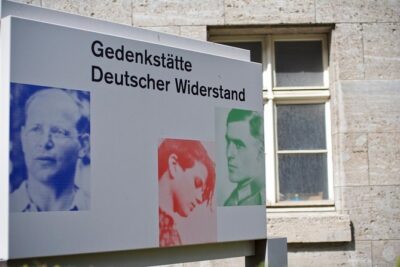
Third Reich Berlin: Hitler and WWII Walking Tour
Read our review →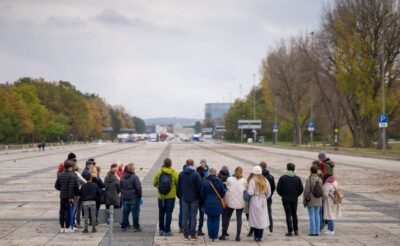
Walking Tour of Former Nazi Party Rally Grounds
Read our review →
Berlin Third Reich Sites: Half-Day Walking Tour
Read our review →
Birthplace of the Third Reich Guided Walking Tour
Read our review →Browse the lists this tour appears in