
Reviewed · THIRD REICH & WWII TOURS
Third Reich Walking Tour Munich
Munich was not just a backdrop to Nazi Germany. It was where Adolf Hitler built his political career, where the Nazi Party found early support, and where public spaces became stages for propaganda and power. This 2.5-hour walking tour connects those places in the city center, turning familiar squares and beer halls into sites with a much darker past.
I like the route for two reasons: it brings history to the exact streets where events unfolded, and the guides explain the political and social setting rather than tossing out dates alone. Guides such as Michael, Jake, Nicola, Aileen, and Paul have been praised for clear storytelling, open answers, and well-chosen historic photos. The main drawback is simple: this is an outdoor walking tour, and the subject is heavy. Cold weather, tired feet, and a great deal of information can affect the experience.
Key points to know before you book
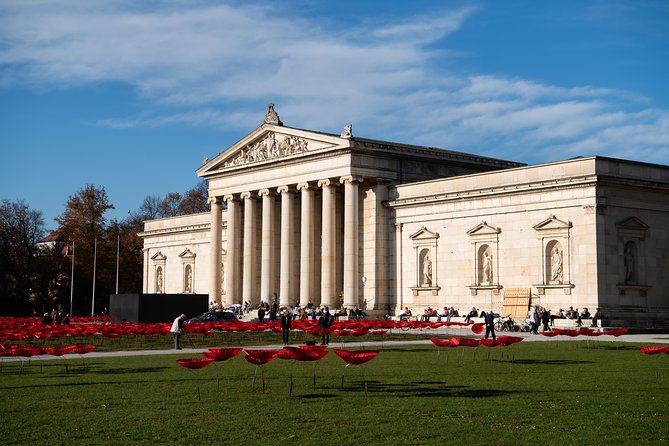
- Munich’s Nazi-era story comes alive at Königsplatz, a major site for Nazi rallies, ceremonies, and propaganda.
- Odeonsplatz connects politics with violence, including the Nazi Party’s marches and memorial displays.
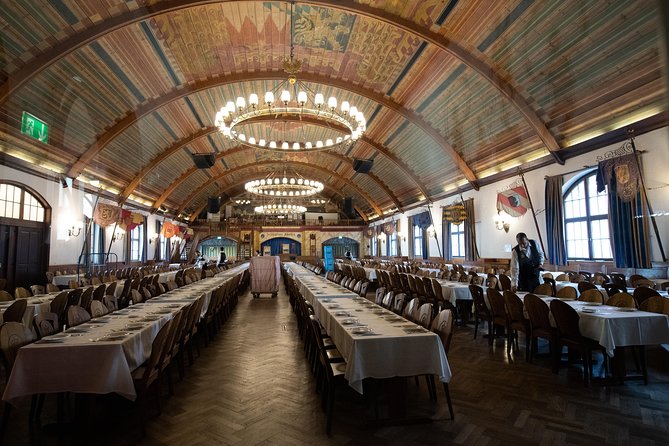
- The Hofbräuhaus shows how beer halls became political meeting places, not just places for food and drink.
- Guides use photos, stories, and discussion to make the past easier to understand and remember.
- The route ends at Marienplatz, so you can continue sightseeing in Munich without arranging another transfer.
- The group can reach up to 25 people, and the $45.95 price is strongest for visitors who want context, not just a city walk.
Why Munich matters to the Third Reich story
Munich gives you a useful starting point for understanding the Nazi rise because so much of the early movement happened here. The city was a gathering place for political groups, veterans, nationalists, and people angry about Germany’s post-World War I troubles. Hitler arrived in this setting and gradually turned public speaking, propaganda, and party organization into tools for gaining power.
That local focus makes this tour different from a general World War II overview. You are not simply hearing about Berlin, the war fronts, or the camps. You are looking at the streets and buildings where Hitler and the Nazi Party worked to win attention and influence.
I find that approach valuable because it shows how political movements grow through ordinary places. A square, a hall, or a government building may look harmless today. A guide can show you how the same place was used for speeches, marches, ceremonies, intimidation, or public messaging.
The tour also covers the damage caused by Nazi ideology and World War II. It includes memorial stops connected with people who opposed the regime and those who suffered under it. That balance matters. The route is not designed to glorify Nazi leaders or treat the period as a collection of dramatic anecdotes. It places the rise of the regime alongside its human cost.
More Third Reich and WWII Tours in Munich
- Munich: Third Reich & WWII Walking Tour
★ 4.6 · 6,181 reviews - Munich: Birthplace of the Third Reich Guided Walking Tour
★ 4.6 · 771 reviews - Munich World War II Sites Including Dachau Concentration Camp
★ 4.5 · 570 reviews
Starting at Radius Tours on Dachauer Strasse
The tour begins at Radius Tours, at Dachauer Strasse 4, a central meeting point that is near public transportation. Check-in takes only a few minutes, but I would arrive with enough time to find the office and get settled before the group leaves.
The tour is offered in English, and confirmation is provided when you book. The maximum group size is 25 people. That is not a private walk, but it is still small enough for questions to be possible, especially when the guide pauses at a major site.
The group format can affect your experience. With a full group, you may need to stand near the guide to hear every explanation and see any photographs being shown. With fewer people, the discussion can feel more personal. One booking even resulted in a solo walk during a quiet period, though you should treat that as an unusual possibility rather than something to expect.
From the beginning, remember that this is a walking route through central Munich. The tour does not use a coach, and there is no indoor museum component included. Wear shoes suited to city walking and check the forecast before you go. A cold, gray day can make an outdoor history tour harder work, even when the guide is strong.
Königsplatz and the public face of Nazi power
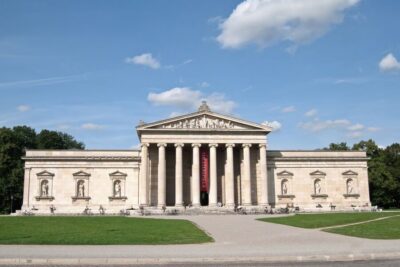
Königsplatz is one of the most important stops on the route. The square was used by the Nazi Party for major events, rallies, and ceremonies. Its broad, formal setting made it useful for public displays of order and control.
Your guide explains how architecture and open space helped the Nazi propaganda machine. The point is not only what happened at Königsplatz, but why a government would choose a place like this for marches and ceremonies. Scale, symmetry, crowds, flags, speeches, and ritual all helped turn political power into a public performance.
This is one of the stops where photographs can make a real difference. The present-day square does not automatically reveal how it was used during the Nazi period. Historic images help you compare the site as it looks now with the crowds and political theater that once filled it.
You spend about 15 minutes here. That is enough for a clear explanation, but not enough for a long academic discussion of every architectural detail. If you want to study the subject at length, note down the names and ideas that interest you, then follow up later.
Odeonsplatz and the road to political violence
The tour continues to Odeonsplatz, where the Nazi Party held marches and memorial events. You spend about 30 minutes here, making it one of the longer stops.
Odeonsplatz is especially useful for seeing how the Nazis linked political loyalty with remembrance and sacrifice. Memorial ceremonies helped create a story in which party members were presented as martyrs. That story could then be used to strengthen group identity and encourage obedience.
This part of the tour also helps explain the movement’s struggle for power. Political change did not happen through speeches alone. Marches, confrontations, public displays, and carefully managed symbols all played a role. A good guide makes those connections without losing you in a string of dates.
The square is also a place where you may have questions. Guides such as Michael, Jake, and Nicola have been praised for answering openly, including when questions become uncomfortable. That matters on a subject where simple explanations can hide the choices made by institutions and individuals.
You should expect to stand outside while listening. If you visit in winter, bring a warm coat and gloves. One guide reportedly paused for a short coffee and bathroom break after asking the group what it wanted, but that should not be treated as a guaranteed part of every departure.
Other trips into the same period in Munich:
- Munich City Walking Tour, includes Third Reich & Viktualienmarkt
★ 5.0 · 458 reviews - Third Reich & WWII Walking Tour
★ 4.5 · 417 reviews - Berlin: Third Reich and Cold War 2 Hour Walking Tour
★ 4.9 · 6,830 reviews - Berlin’s Best: 2 Hour Walking Tour Third Reich and the Cold War
★ 5.0 · 5,486 reviews
The Hofbräuhaus and politics in a beer hall
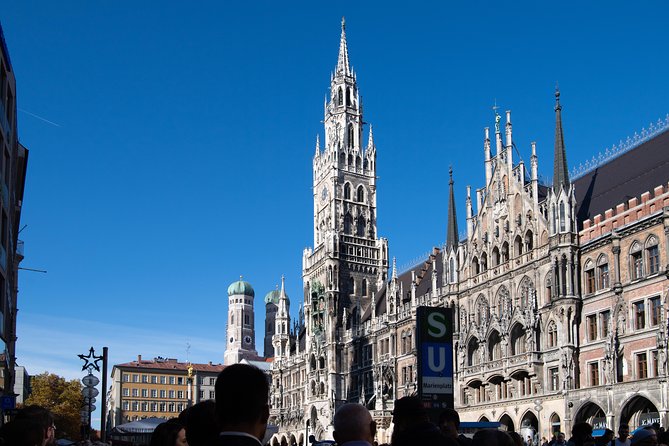
The Hofbräuhaus is one of Munich’s best-known beer halls, but on this route you see another side of it. It served as an important political meeting place for the Nazi Party during its early years.
That detail helps correct a common misunderstanding. The Nazi rise did not take place only in official offices or grand government buildings. Political groups also used familiar social spaces to meet supporters, build networks, deliver speeches, and spread ideas.
The stop lasts about 20 minutes. Your guide places the Hofbräuhaus in the story of the movement’s early development and explains why beer halls were useful political venues in Munich. The setting also gives you a chance to consider how familiar local traditions can be used by political organizations.
The tour does not include a meal or a beer tasting. You are seeing the building as a historical site within the route. If you want to return later for food or a drink, you can do that separately, but the walking tour itself remains focused on history.
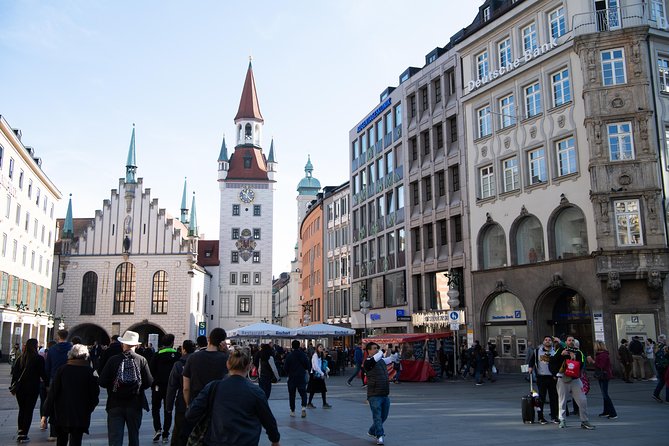
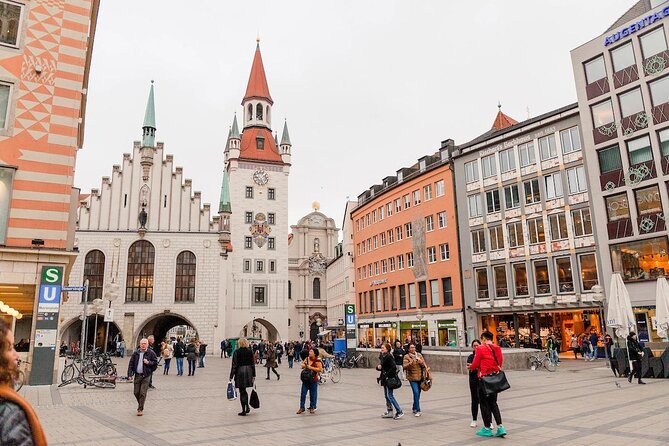
The Old Town Hall and Munich’s civic center
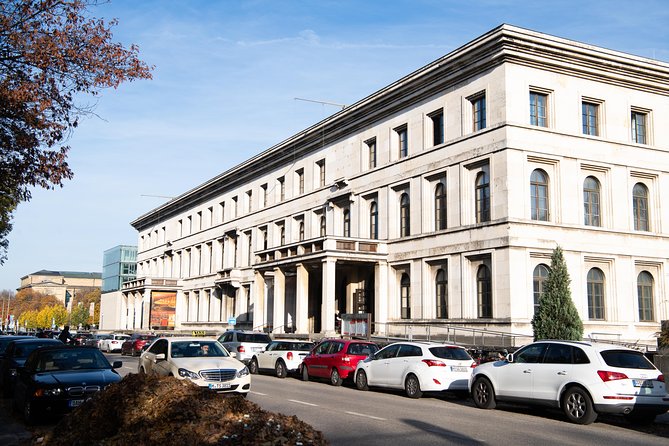
The Old Town Hall is another stop on the way through central Munich. You spend about 15 minutes here, hearing how the city’s civic spaces fit into the story of the Third Reich.
This stop helps widen the focus beyond party rallies. The tour looks at Munich as a city whose public institutions and central spaces were caught up in the political changes of the time. That broader view is useful because authoritarian power depends on more than a single leader. It affects government, public life, communication, and the way people use shared spaces.
The Old Town Hall is also a good reminder that the Nazi past is woven through the normal sightseeing route. You do not need to travel far from the main center to encounter places tied to this period. If you are already planning to see Munich’s old town, adding this tour gives those sights more context.
The guide may use a historic photograph or a story to connect the building to the period being discussed. Pay close attention here, since the tour covers a lot in a short time. One practical complaint is that the amount of information can be difficult to remember without notes. I suggest writing down a few names and events as you go.
Marienplatz, memorials, and the end of the route
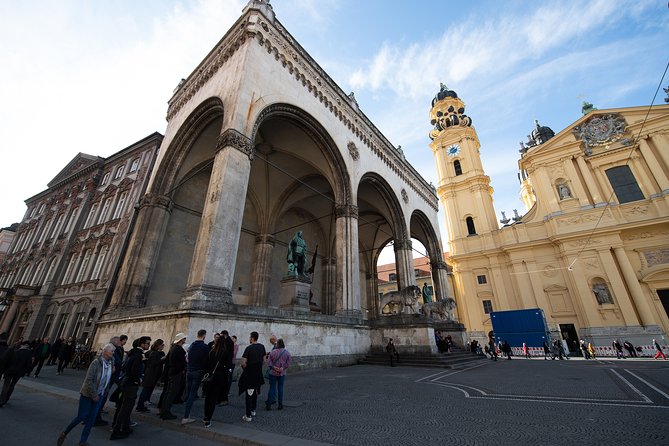
The tour concludes at Marienplatz, Munich’s central square. You spend about 20 minutes in the city center, and the ending leaves you in a convenient place for more sightseeing.
Marienplatz is not simply a final stop for directions. It gives the tour a natural way to connect the Nazi past with present-day Munich. After hearing how propaganda and political violence shaped the city, you finish in a public space that now feels open, ordinary, and thoroughly part of modern city life.
The route also includes memorials honoring people who opposed Nazi ideology and those who suffered or died under the regime. These moments keep the focus on human beings rather than on Hitler alone. That is one of the tour’s strongest features. Understanding the machinery of power matters, but so does remembering the people who resisted it and the people destroyed by it.
Since you finish at Marienplatz, you can continue to the Old Town, find a cafe, visit another attraction, or retrace part of the route. One particularly useful idea is to return to a few stops later, when you have had time to process the material and take photographs at your own pace.
How the guides shape the experience
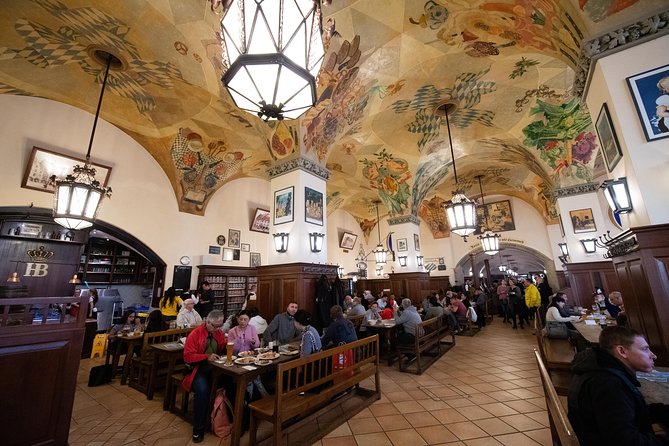
The guide is the main reason this tour works. The route itself is easy to follow, but the meaning of each place depends on the explanation.
The guides named in the feedback include Michael, Jake, Nicola, Aileen, Paul, Nick, Scott, Alex, Steve, Michelle, Sarah, Daniel, and others. Their styles vary, but the qualities you should want are consistent: clear speech, a firm grasp of the subject, willingness to take questions, and sensitivity to the weight of the material.
Some guides use historic photographs to show how a location looked during the Nazi period. Others add humor in small doses to keep the group engaged during a difficult subject. That humor should not be confused with making light of Nazi crimes. Used carefully, it can make a long outdoor explanation easier to follow.
I also like that the guides connect the past to modern Germany. The goal is not to leave you with a frozen image of the 1930s and 1940s. You get a sense of how Munich remembers this period now and why public memory still matters.
The quality can vary somewhat from one guide to another, as it does with any scheduled group tour. Still, the repeated praise for clear explanations and thoughtful answers suggests that the guiding is a major strength of the experience.
What $45.95 gets you
At $45.95 per person, this is not the cheapest way to walk through Munich. You can visit the squares yourself for free, and you can read about Hitler and the Nazi Party before arriving.
The value comes from the connections. In two and a half hours, you move between Königsplatz, Odeonsplatz, the Hofbräuhaus, the Old Town Hall, and Marienplatz while a guide links them into one story. You are paying for interpretation, historical images, pacing, and the chance to ask questions.
I think the price is fair if you are interested in modern European history and want more than a quick look at famous buildings. It is less compelling if you prefer a general city tour, dislike standing outdoors, or already have advanced knowledge and want several hours of detailed archival discussion.
The tour is also a good use of time early in a Munich stay. Once you understand the city’s role in the Nazi rise, later visits to museums, memorials, and historic sites can make more sense. If you are a serious history student, you may want a longer specialist program in addition to this walk. Several hours would be useful for covering the subject in greater depth.
Who should take this Munich walking tour?
I would suggest this tour to you if you want a clear introduction to Munich’s role in the Third Reich, especially if you learn best by standing in the actual places being discussed. It suits first-time visitors, history fans, and anyone who wants to understand how propaganda and public life helped a political movement gain power.
It also works well for people who have already read about the period. One participant with a strong academic background still found new details, which is a useful sign that the guide can add more than basic textbook facts.
You should think twice if you want an indoor museum tour or if cold and wet weather will make two and a half hours outside unpleasant. The pace is steady, and there is a lot to absorb. You will get more from it if you listen closely and accept that you may not remember every name or date.
The tour welcomes most people and allows service animals. It is near public transportation, but the central route still involves regular walking and periods of standing.
Booking, weather, and cancellation details
The tour is offered in English, uses a mobile ticket, and normally accommodates no more than 25 people. It requires good weather and a minimum number of participants. If poor weather cancels the tour, you can choose another date or receive a full refund.
You can cancel for a full refund up to 24 hours before the start time. Cancellations or changes made within 24 hours are not refunded or accepted. Since the route is entirely outdoors, check the forecast and plan your clothing before the cancellation deadline passes.
Should you book the Third Reich Walking Tour in Munich?
Book it if you want a focused, serious history walk that shows how Munich helped shape the Nazi movement. The route is well chosen, the central finish is convenient, and the guides add the context you cannot get from looking at the buildings alone.
I would choose it early in a Munich visit, then use the rest of the trip to explore museums and memorials with a better sense of place. Bring warm clothing, comfortable shoes, and a willingness to listen carefully. At $45.95, it is a solid purchase for history-minded visitors, but not the right choice for anyone seeking a relaxed sightseeing stroll.
FAQ
How long is the Third Reich Walking Tour in Munich?
The tour lasts approximately two hours and 30 minutes.
Where does the tour begin?
It begins at Radius Tours, Dachauer Strasse 4, 80335 Munich, Germany.
Where does the tour end?
The tour ends at Marienplatz in central Munich.
Which places are included on the route?
The route includes Königsplatz, Odeonsplatz, the Staatliches Hofbräuhaus, the Old Town Hall, and Marienplatz.
Is the tour offered in English?
Yes. The tour is offered in English.
What happens if the tour is canceled because of weather?
You can choose a different date or receive a full refund if poor weather causes the tour to be canceled.
More walking tours in Munich
- Munich: Old Town & Viktualienmarkt City Walk in German
★ 4.7 · 2,304 reviews - Munich: Night Watchman Walking Tour
★ 4.7 · 2,092 reviews - Munich Ghosts and Spirits Evening Walking Tour
★ 5.0 · 1,900 reviews - Munich Old Town Walking Tour
★ 4.5 · 1,287 reviews
Just added in Munich
- 2 Hours Munich: VIP Private Segway Tour★ 4.9 · 5 reviews
- “Comedykills” – das Open Mic im Glockenbachviertel★ 4.1 · 51 reviews
- Munich: Classical Concert at the Residenz Palace★ 4.5 · 148 reviews
- Munich: City Highlights Guided Segway Tour★ 4.6 · 266 reviews
- From Munich: Herrenchiemsee Palace and Boat Trip Day-Tour★ 4.8 · 129 reviews
- Hop-On Hop-Off Tour CitySightseeing Munich★ 4.0 · 309 reviews
- Munich: Law Library Guided Visit with Entry Tickets★ 4.6 · 297 reviews
- From Munich: Guided Group Tour to Eagle’s Nest★ 4.8 · 303 reviews
Third Reich & WWII Tours, compared.
Third Reich Berlin: Hitler and WWII Walking Tour
Read our review →
Walking Tour of Former Nazi Party Rally Grounds
Read our review →
Berlin Third Reich Sites: Half-Day Walking Tour
Read our review →
Birthplace of the Third Reich Guided Walking Tour
Read our review →
Munich World War II Sites Including Dachau Concentration Camp
Read our review →Browse the lists this tour appears in