
Reviewed · BERLIN WALL & COLD WAR TOURS
Cold War, Berlin Wall, Spies and the East Side Gallery
Berlin’s Cold War story feels most powerful when you are standing where the border once ran. This three-hour walk links the Palace of Tears, old East Berlin, Wall remains, and the East Side Gallery, turning scattered sights into one clear story about fear, surveillance, escape, and reunification.
I like the personal scale of the tour, especially the stories about daily life and escape attempts. I also like the use of public transport and lesser-seen Wall areas, including a sobering view through the East side toward the former death strip. The main drawback is that the tour covers a lot of ground, and one poorly managed group or hard-to-hear guide could weaken the experience.
Key things to know before booking
- The route follows Berlin’s divided city: You begin at Friedrichstrasse Station and finish at the East Side Gallery, crossing much of Berlin’s Cold War story.
- The Palace of Tears is a strong early stop: This former border crossing explains the human cost of separation before you reach the more familiar Wall sights.
- Public transport is part of the tour: You need a Berlin AB ticket, listed at €10 per person, in addition to the tour price.
- The guides shape the experience: Klaus, Nikolai, Paul, Jamie, Xavier, Maria, Tobi, and others have been praised for clear explanations, personal stories, and patient answers.
- The group is capped at 22 people: That is small enough for questions, though hearing the guide may depend on where you stand.
- The tour ends at a useful location: The East Side Gallery has many onward transport choices, so you are not stranded at the finish.
Why this Cold War walk works
The best reason to book this tour is its structure. Berlin’s Cold War sights are spread across the city, and it is easy to see the Wall as a series of odd concrete fragments with no clear connection. This route gives you a sequence: the divided station, the emotional border crossing, East Berlin’s public face, the Wall and death strip, then the art-covered remains of the border.
I find that approach far more useful than visiting the East Side Gallery alone. The murals are striking, but without context, they can become a photo stop. Here, you first learn what the Wall controlled and what it cost. By the time you reach the painted concrete, the art carries more weight.
The tour also reaches beyond military strategy. You hear about the United States and its NATO allies facing the Soviet Union and its partners, but the focus stays on Berliners. The guide discusses surveillance by the CIA, KGB, and Stasi, as well as the practical question of what it meant to work, shop, travel, raise children, and maintain relationships behind the Wall.
The experience is offered in English and lasts about three hours. It is rated 4.9 from 1,024 ratings, with 99 percent of customers recommending it. That is a strong record, though the occasional poor experience shows why the guide and group dynamics matter.
Other divided-city history in Berlin:
- Berlin: Third Reich and Cold War 2 Hour Walking Tour
★ 4.9 · 6,830 reviews - Berlin’s Best: 2 Hour Walking Tour Third Reich and the Cold War
★ 5.0 · 5,486 reviews - Skip-the-Line: Berlin Wall Museum at Checkpoint Charlie
★ 4.1 · 2,041 reviews
Starting at Friedrichstrasse Station
Meet outside Friedrichstrasse Station at 10:00 am, arriving 15 minutes early. The supplied meeting information also gives Reichstagufer 17, so I would check the exact meeting pin before leaving your hotel. This is one place where careful planning matters, especially if you are relying on a taxi or ride service.
Friedrichstrasse Station is an apt starting point. During the divided years, it was a major crossing point between East and West Berlin. The station was tied to border controls, restricted movement, and emotional farewells, so the setting introduces the subject before the guide begins the formal history.
The first section includes an underground route described as the ghost train, a line that once connected East and West Berlin during the Cold War. You need a Berlin public transport ticket for the route. The required AB ticket is listed at €10 per person, and it is not included in the tour price.
This public transport element adds useful texture. You are not simply being driven from one monument to another. You are using the city’s transport system while hearing how stations, trains, and crossings were shaped by political division. It also means you should wear comfortable shoes and stay close to the group.
Admiralspalast and the birth of East Germany’s ruling party
The short stop at Admiralspalast takes about five minutes. It marks the place where the East German Socialist Unity Party, known as the SED, was founded in 1946.
This is a brief stop, but it helps explain how political control developed after World War II. The guide can connect the location to the later machinery of the German Democratic Republic, including the state security system and the strict division between East and West.
Do not expect a long indoor visit here. The point is the location and the explanation, not an extended museum stop. If you want a fuller political history, you will need to continue reading or visit another Berlin museum on your own.
The Palace of Tears and the human cost of the Wall
The Palace of Tears, or Tränenpalast, is one of the most important stops on the route. It was a border crossing at Friedrichstrasse Station where people from East and West Berlin said goodbye under the pressure of a system that could separate families for years.
The name comes from those farewells. The building now holds a museum with exhibits about escape attempts, divided families, border controls, and reunification. Admission is free, and the tour allows about 20 minutes here.
I like this stop because it puts faces and feelings onto an otherwise large political story. Maps explain borders. The Palace of Tears explains what those borders did to ordinary relationships. You begin to understand that the Wall was not only concrete, watchtowers, and armed guards. It also meant a parent, partner, sibling, or friend might not be able to cross the city.
The stop can feel hurried if the guide has a large amount to cover. Still, it is one of the places where a good guide can make a major difference. Guides such as Klaus and Maria have been praised for making difficult material clear, while Nikolai has been singled out for connecting the period to his own family’s experience of the Iron Curtain.
Other museums and galleries in Berlin:
- Berlin: Jewish Museum Berlin Entrance Ticket
★ 4.5 · 8,393 reviews - Berlin: Natural History Museum Entrance Ticket
★ 4.6 · 3,382 reviews - Berlin: Neues Museum Entry Ticket
★ 4.6 · 3,261 reviews - Berlin: Museum Island Multiple Museum Entry Ticket
★ 4.4 · 2,007 reviews
Alexanderplatz and life under East German control
At Alexanderplatz, the focus shifts from border crossings to everyday East Berlin. The square was a center of political rallies, communist power, shopping, public life, and state surveillance.
The surrounding GDR architecture helps you see how public space was used to project authority. Alexanderplatz was not merely a city square. It was a stage for the East German state, where official messages and daily routines met in full view.
This section is especially useful if you have already seen the Wall but still want to understand East Berlin as a functioning society. The guide discusses what it meant to live in the German Democratic Republic, described as the most heavily policed state in the Eastern Bloc.
The stop lasts about 15 minutes. It is not a museum visit, so the value comes from the explanation and the guide’s ability to connect buildings and space to political life. Paul has been praised for using photographs on an iPad, which can help you compare the present city with earlier images.
Karl-Marx-Allee and the showcase boulevard
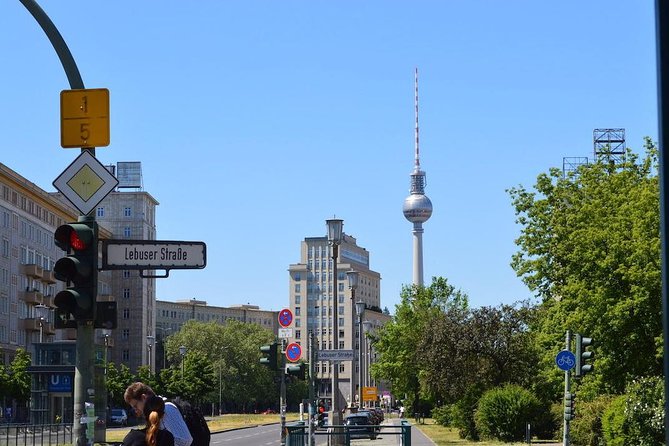
Karl-Marx-Allee offers a different view of East Germany. This grand boulevard was built as a showcase for socialist planning, with monumental Stalinist architecture designed to project strength and order.
The buildings were meant to impress. They also reveal the gap between the public image of the state and the private reality of people living under shortages, restrictions, and surveillance. That contrast is one of the most useful ideas in the tour.
The stop lasts about 20 minutes and does not include a separate admission ticket. You are looking at the architecture while the guide explains how it fit into the state’s message. I would pay attention to the scale here. The boulevard feels deliberate and imposing, very different from the personal stories heard at the Palace of Tears.
The tour covers plenty of ground, but it is not described as an exhausting march. One rating specifically praised the moderate pace and said there was enough walking to keep the experience interesting without making it too demanding. Still, Berlin weather can change quickly, so dress for several hours outdoors.
Berlin Wall Memorial and the former death strip
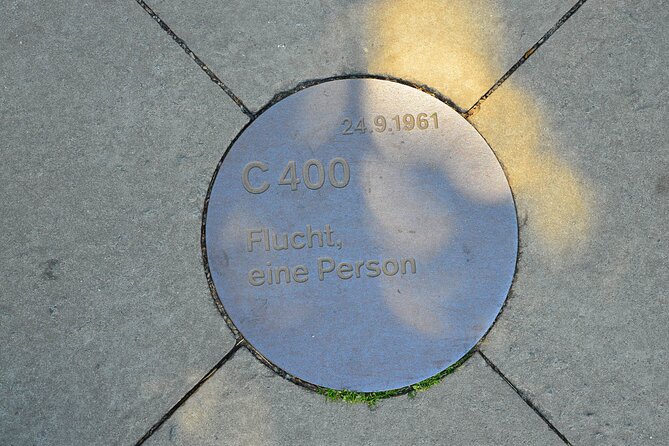
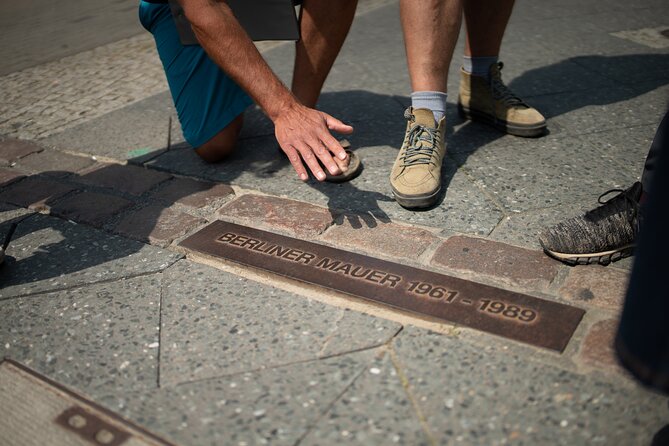
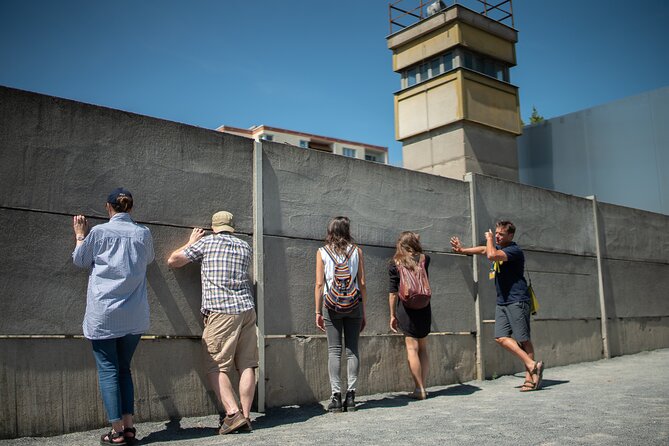
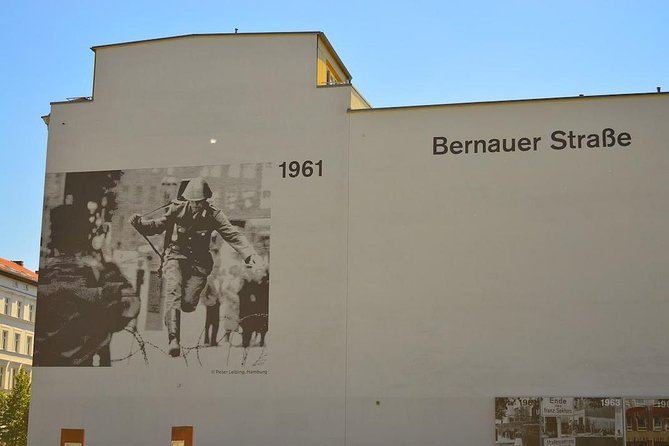
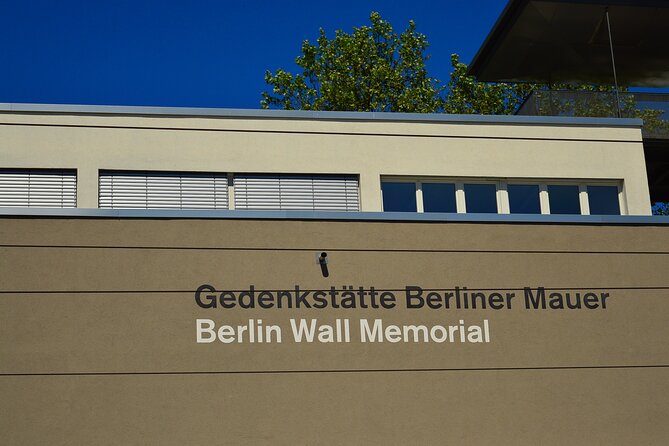
The Wall section is where the history becomes physical. The route includes remains of the Wall at Bernauer Strasse, a place known for escape attempts, as well as areas connected to the former death strip and the old Stasi system.
Bernauer Strasse is important because the Wall ran directly beside homes, streets, and ordinary neighborhoods. Escape attempts here included tunnels and attempts to cross from buildings or nearby areas. The setting shows how close the border was to everyday life.
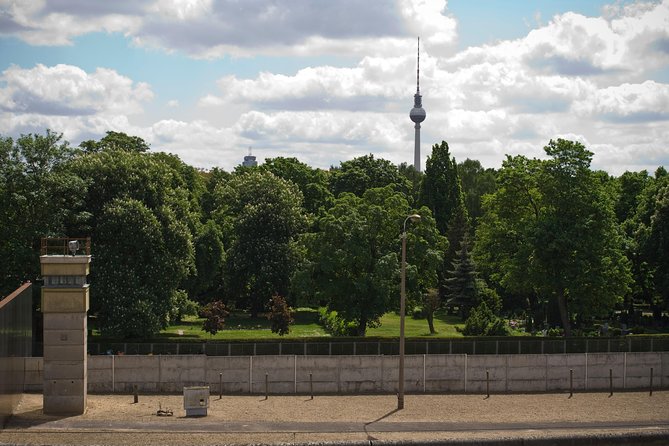
One especially striking detail is the chance to look toward the former West Berlin Wall from the East side through an opening or crack, across the old death zone. That view makes the border’s design easier to understand. You are not just looking at a slab of concrete. You are seeing the space between barriers, the controlled ground where escape could be deadly.
The guide also explains surveillance methods linked to the CIA, KGB, and Stasi. The topic is not limited to spy stories. It includes the way information was gathered, how suspicion affected ordinary people, and how the East German state monitored its own population.
This is the section where group management matters most. The route may involve public transport and busy city areas, and one poor experience described trouble hearing the guide, unclear organization, and too much time spent on guessing games. I would stay near the guide and ask for clarification if the group spreads out.
The East Side Gallery: from border to public art
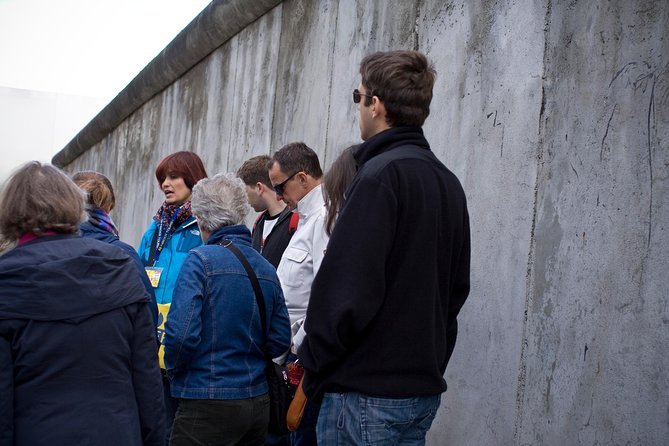
The final stop is the East Side Gallery, the longest permanent open-air gallery in the world and the largest remaining section of the Berlin Wall. The tour allows about 25 minutes here.
The murals turn a former border into a public statement about freedom, hope, resistance, and the end of the Cold War. They are colorful and easy to photograph, but the preceding stops give them meaning. You now know that this concrete once marked a deadly frontier and divided a city.
The East Side Gallery is also a good place to finish because the tour ends at Mühlenstrasse, near many transport options. You can continue exploring the murals, find food and drinks on your own, or head elsewhere in Berlin without a long return journey.
Do not expect every mural to receive a detailed explanation in 25 minutes. The strength of this tour is the complete route, not an art-history lecture. If the Gallery interests you most, allow extra time after the tour.
Guide quality and the role of storytelling
The strongest part of the experience is the guide’s delivery. Names praised in the supplied material include Klaus, Nikolai, Paul, Maria, Ariel, Xavier, Jamie, Jasper, Tobi, Tina, Rohan, Lewis, Aran, Eran, Cameron, and Glen.
Several qualities come through repeatedly: clear historical explanations, personal stories, enthusiasm, and a willingness to answer questions. Klaus has been praised for combining broad Cold War knowledge with stories that are easy to follow. Cameron’s background as a historian helped a former Berlin resident see the city’s past in a new way. Tobi offered firsthand insight into growing up in communist East Germany.
That variety means the exact tone may change by departure. One guide may lean into family stories and daily life. Another may focus more on strategy, political history, or escape attempts. I would welcome that human variation, but I would also keep expectations realistic. A walking tour is only as strong as the person leading it that day.
The group limit is 22 people. That is manageable, but it is not private. If you want to ask many questions, stay near the front and use the stops to speak with the guide.
Price, transport, and practical value
The tour price is $18.04 per person. You must add the Berlin AB transport ticket, listed at €10 per person. Food, drinks, hotel pickup, and hotel drop-off are not included.
For the price, I consider this good value if you want a connected explanation rather than a self-guided list of Wall sites. You pay for a local guide who interprets the city, plus a route that reaches several areas you might not link together on your own.
The value is lower if you already know Berlin’s Cold War story well and prefer to move at your own pace. It is also less suitable if you dislike public transport, outdoor walking, or a schedule that may run slightly over three hours. One positive account noted that the guide continued beyond the planned length to answer questions, while one negative account found an overlong tour frustrating. That difference is worth keeping in mind.
Book at least several weeks ahead if your schedule is fixed. The experience is booked an average of 31 days in advance, which suggests that popular dates can fill early.
Free cancellation is available up to 24 hours before the start time. Cancellations or changes made less than 24 hours before the tour do not qualify for a refund.
Who should book this Berlin experience?
I would choose this tour if you want to understand how the Berlin Wall affected real people, not just see the remaining concrete. It suits first-time visitors, families with older children, history students, and anyone who wants a strong introduction before visiting the Stasi Museum independently.
The route also works for people who have already seen central Berlin. A former Berlin resident found the explanations added new context, which is a good sign for anyone who knows the major sights but has not studied the Cold War in detail.
I would think twice if you need a fully private, quiet, or highly predictable tour. The group can include up to 22 people, the route uses public transport, and guide quality may vary. You should also be ready to walk outdoors for around three hours and remain with the group.
Should you book the Cold War, Berlin Wall, Spies and East Side Gallery tour?
Yes, if your main goal is a clear, human account of divided Berlin. The Palace of Tears, Bernauer Strasse, former death-strip areas, Alexanderplatz, Karl-Marx-Allee, and East Side Gallery create a useful arc from political division to reunification.
The tour is especially good value at $18.04, even after adding the transport ticket, provided you arrive early and confirm the exact meeting location. I would book it for the historical framework, the escape stories, and the chance to hear personal accounts from guides such as Nikolai, Tobi, Klaus, or Paul.
If you want a quiet private guide or a narrow focus on spycraft alone, choose another format. If you want Berlin’s Cold War past explained on the streets where it happened, this is a strong pick.
FAQ
Where does the tour start?
The tour starts at Friedrichstrasse Station, with the meeting information giving Reichstagufer 17, 10117 Berlin, Germany. Arrive 15 minutes before the 10:00 am start.
Where does the tour finish?
The tour finishes at the East Side Gallery on Mühlenstrasse, 10243 Berlin. The area has many onward transport options.
How long does the tour last?
The advertised duration is approximately three hours. It may run longer if the guide spends extra time answering questions.
Is public transport included?
No. You need a Berlin AB transport ticket, listed at €10 per person. The ticket is not included in the tour price.
What sites are included?
The route includes Friedrichstrasse Station, Admiralspalast, the Palace of Tears, Alexanderplatz, Karl-Marx-Allee, Berlin Wall areas near Bernauer Strasse, former death-strip areas, and the East Side Gallery.
Is the Palace of Tears included?
Yes. The tour allows about 20 minutes at the Palace of Tears, and admission is listed as free.
Is the tour offered in English?
Yes. The tour is offered in English.
How many people can join the tour?
The maximum group size is 22 people. Mobile tickets are provided, and service animals are allowed.
Just added in Berlin
- Berlin: Energizing 2-Hour Morning Segway Tour★ 4.7 · 35 reviews
- Berlin: Thrilling E-Scooter Adventure Tour★ 4.4 · 66 reviews
- Beelitz-Heilstätten: Baum&Zeit Tree Top Walk Entry Ticket★ 4.9 · 7 reviews
- Beer Bike & Party Bike: Unforgettable Berlin City Tour incl. pickup★ 5.0 · 5 reviews
- AXE THROWING EXPERIENCE IN BERLIN★ 4.7 · 24 reviews
- Alternative Berlin / Street art tour – Private group★ 5.0 · 6 reviews
- Berlin: Alternative & Street Art Tour★ 4.5 · 6 reviews
- Berlin: 2.5-Hour Beer & Sunset Sightseeing Boat Cruise★ 4.6 · 61 reviews
Berlin Wall & Cold War Tours, compared.

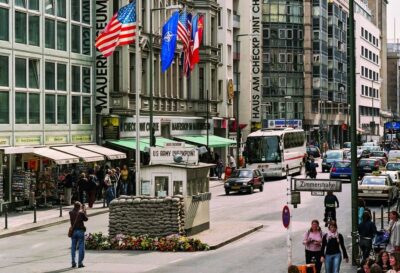
Skip-the-Line: Berlin Wall Museum at Checkpoint Charlie
Read our review →
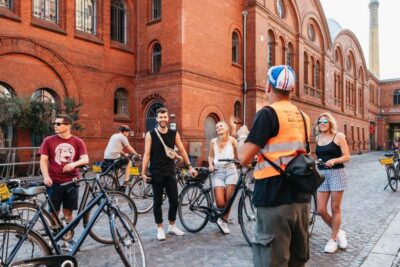
Guided Bike Tour of the Berlin Wall and Third Reich
Read our review →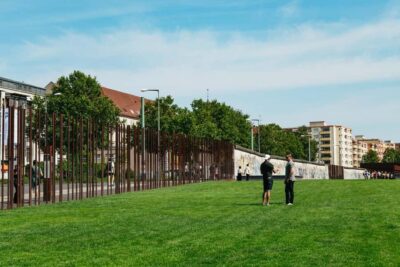
Browse the lists this tour appears in