
Reviewed · CONCENTRATION CAMP MEMORIAL TOURS
From Berlin: Licensed Sachsenhausen Tour with max. 15 people
Sachsenhausen is not a quick photo stop. This is a five-and-a-half to six-hour journey into one of Nazi Germany’s main concentration camps, with roughly three hours spent walking the memorial site. A licensed guide helps connect the empty spaces, surviving structures, witness accounts, and memorials to the larger camp system.
I like the small group limit of 15, which makes it easier to hear the guide and ask difficult questions. I also like that a guide handles the public transport route from central Berlin, a real help when trains change or service is disrupted. The main drawback is the length: you are on your feet for hours, and there are no cafés or shops at the memorial.
Key points at a glance
- A licensed memorial guide: Guides such as Sarah, Georgia, Lewis, Emma, Rebecca, and Ronja are trained by Original Berlin Walks and officially licensed by the memorial.
- A long but worthwhile day: The trip includes about 100 minutes of public transport and walking, plus around three hours inside Sachsenhausen.
- A group capped at 15: You get a more personal tour than on a large coach excursion, with room for questions and discussion.
- Major memorial areas covered: Expect Tower A, Station Z, the Jewish barracks, prison, infirmary, shoe-testing track, watchtowers, and surviving camp remains.
- Bring your own provisions: There are no shops or cafés at or around the site, so pack water, a snack, and weatherproof clothing.
- Good value at $38: The fee includes the guide, memorial fee, and a €3 donation, but you must buy your own ABC public transport ticket.
Why Sachsenhausen needs a full half-day
Sachsenhausen was built in 1936 by the SS, soon after Dachau, and was designed as a major concentration camp for people who opposed the Nazi regime. Its history later included Jewish prisoners and many other prisoner groups, forced labor, executions, imprisonment, resistance, and the death march before liberation in 1945.
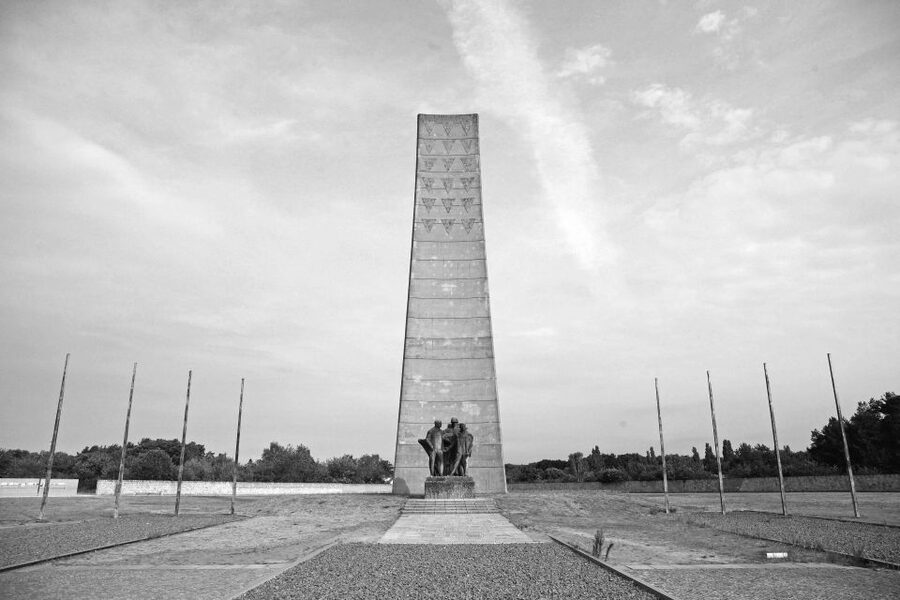
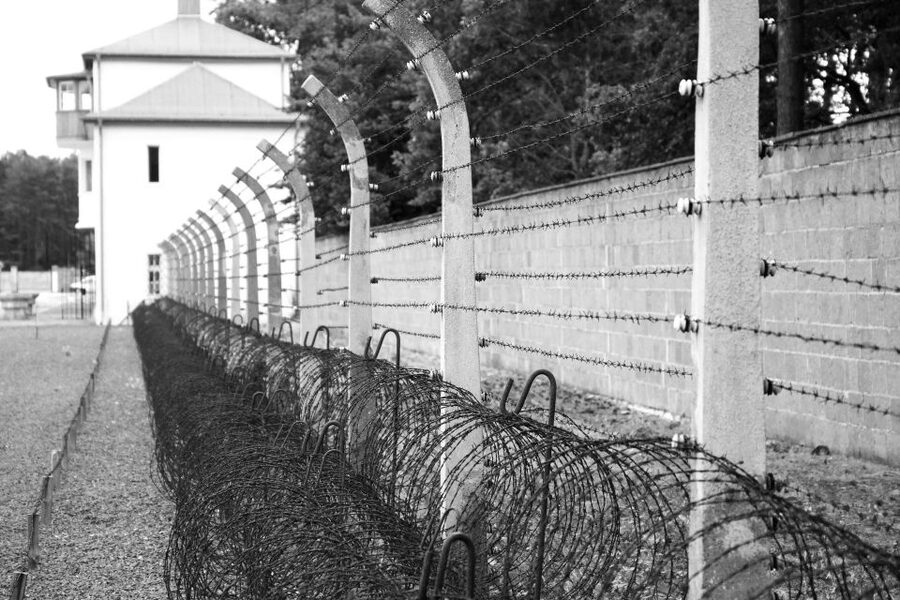
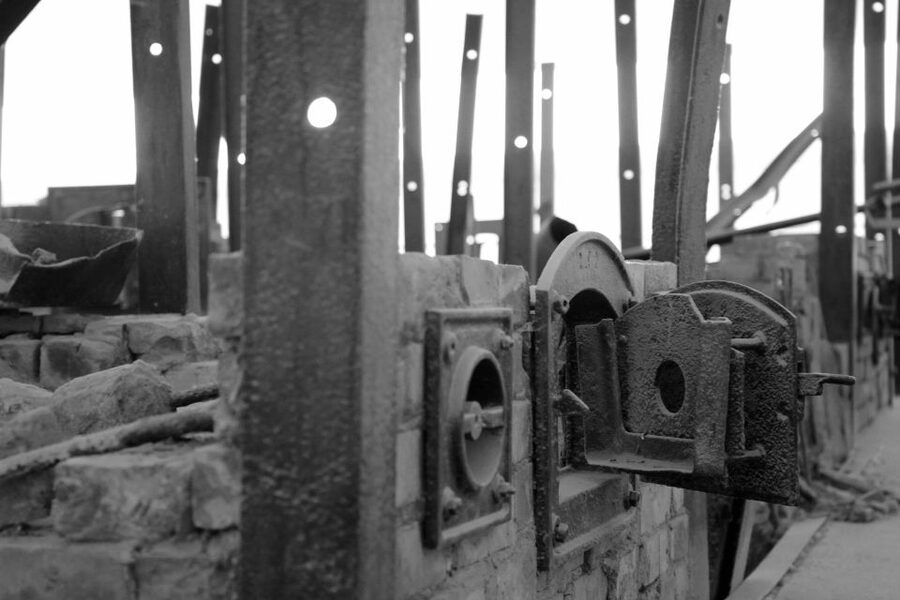
The scale matters. You do not simply enter a preserved building and leave. You walk through a broad memorial site where much has vanished, while foundations, watchtowers, barrack remains, plaques, and reconstructed or preserved areas show how the camp was organized.
That setting can be difficult to take in without context. A licensed guide explains what you are seeing and what is missing. The best guides on this route, including Lewis, Natalie, Chris, Rebecca, and Ronja, are praised for combining clear historical detail with a calm, humane approach. That balance is important here. The subject is brutal, but the tour is not delivered as a theatrical performance.
I especially value the use of witness accounts and current historical research. You learn about daily life under forced labor and deliberate cruelty, but also about prisoners who resisted, escaped, or tried to preserve their humanity. The story of Jewish prisoners who counterfeited millions of pounds sterling in the forgery workshop is one example of the less familiar history included.
More Concentration Camp Memorial Tours in Berlin
- Berlin: Sachsenhausen Concentration Camp Tour in English
★ 5.0 · 5,711 reviews - Berlin: Sachsenhausen Concentration Camp Memorial Tour
★ 4.7 · 3,716 reviews - Sachsenhausen Concentration Camp Bus Tour in English from Berlin
★ 5.0 · 1,962 reviews
Meeting in central Berlin and taking the train north
The meeting point is outside Starbucks opposite Hackescher Markt S-Bahn station, at Neue Promenade 3. This is a sensible starting place because it is central and close to public transport, but arrive with time to spare. You need to meet your guide before the group begins its journey north.
The trip to Sachsenhausen takes about 50 minutes by public transport. You need an ABC day pass or another valid ABC ticket, and that cost is not included in the $38 tour price. The guide travels with the group, helping you use Berlin’s trains and buses and keeping the day moving.
This transport section is more useful than it may sound. Sachsenhausen is about 20 miles north of Berlin, and the route is not the kind of transfer you want to improvise while trying to arrive on time. Guides have handled train shutdowns and route changes before, including one day when the group used three different trains. That flexibility is a real benefit.
The journey also gives the guide time to introduce the Nazi concentration camp system and explain why Sachsenhausen was created. Some guides, including Chris and Steve, have used the outward trip to establish the political and historical setting before the group reaches the memorial.
The tradeoff is simple: this is not a private car transfer. Public transport adds time and means you may stand, transfer, or adjust your route. If you want a door-to-door excursion with no train travel, this is not that kind of tour. If you want a lower-cost and more grounded way to reach the memorial, the train works well.
The 20-minute walk from Oranienburg
After reaching the area near Sachsenhausen, you walk for about 20 minutes to the memorial. This part is worth understanding before you book. The tour involves real walking from the beginning, not only a gentle stroll once you reach the gate.
The walk gives the guide another chance to explain the camp’s place in the surrounding area and to answer questions before entering the memorial grounds. It also means you should wear proper walking shoes. After rain, the site can be muddy, so clean city shoes are a poor choice.
The walk is manageable for most people who are comfortable being on their feet, but the total day adds up. The return includes another 20-minute walk and roughly 50 minutes on public transport. Add the three-hour site tour and the initial transfer, and you have a full, serious half-day.
Tower A and the camp entrance
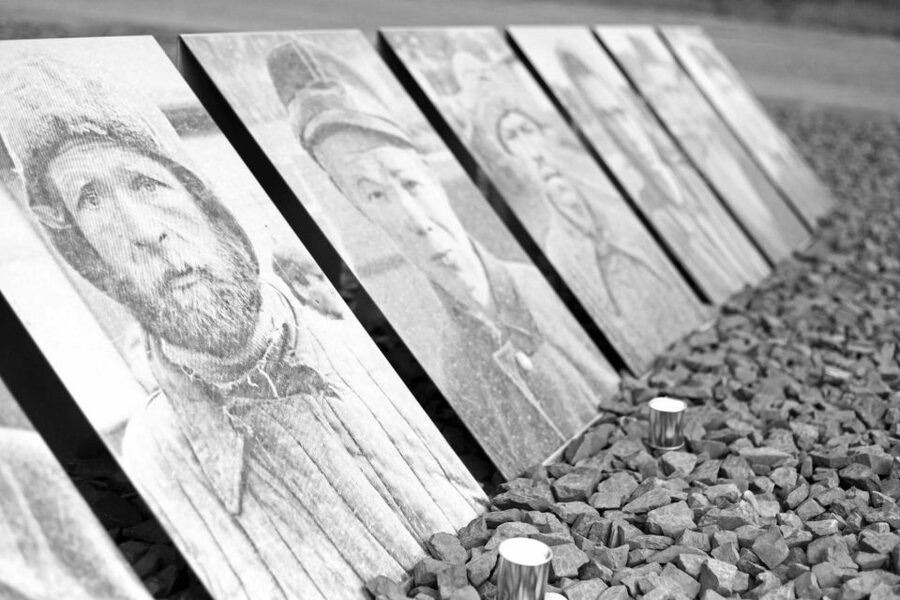
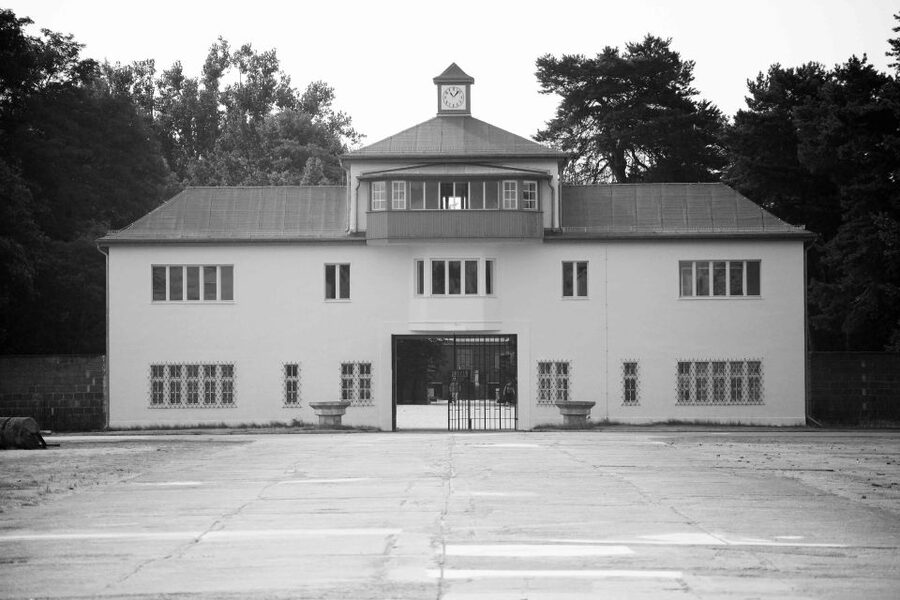
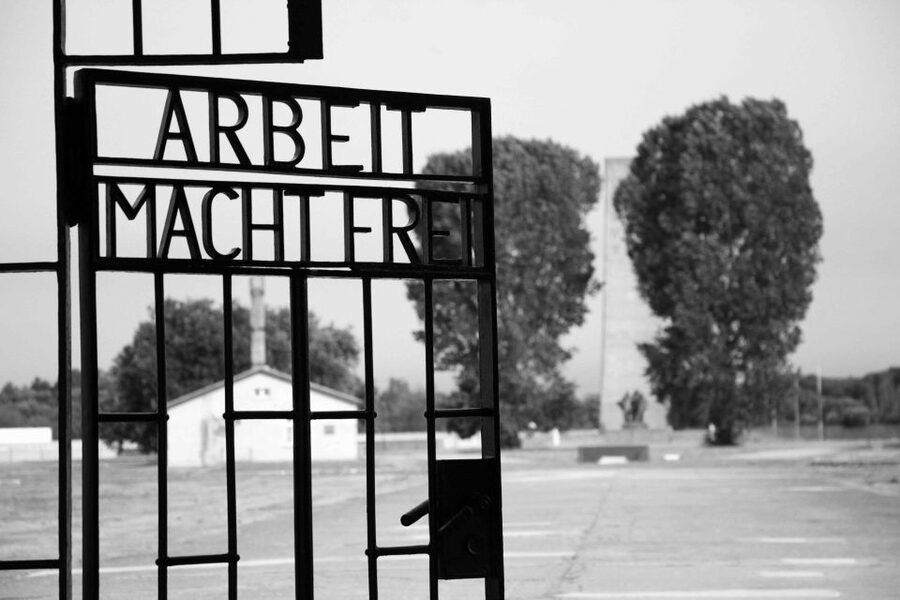
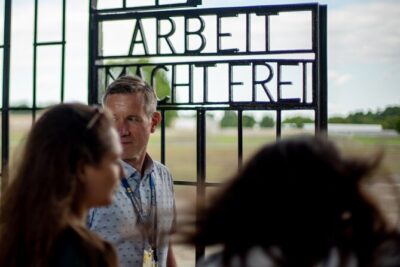
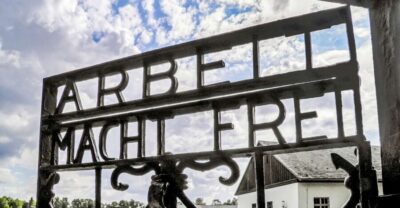
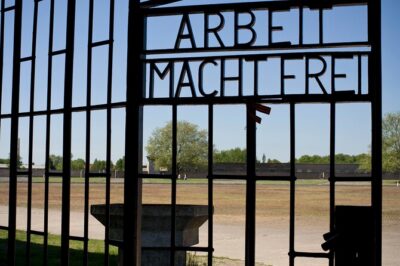
Tower A is the best-known entrance point, with the SS slogan Arbeit macht frei, meaning work sets you free, mounted on the gate. Seeing it in person is stark, but the tour does not treat the gate as a theatrical centerpiece. It is a starting point for understanding how the camp was controlled and presented to prisoners.
From here, the guide helps you read the layout. The watchtowers, barrack blocks, open spaces, and memorial markers reveal the camp’s planned structure. The site is large enough that a guide’s pacing matters. Chris has been praised for walking at a steady speed and keeping the group together, while other guides have been noted for checking that everyone can hear and follow.
A small group helps here. With no more than 15 people, you are less likely to lose the guide in the open grounds, and you can ask a question without interrupting a large crowd. The guide can also adjust the pace when someone needs a moment or when a particular display deserves more explanation.
Other memorial sites within reach of Berlin:
- Berlin: Sachsenhausen Concentration Camp Tour in English
★ 4.8 · 1,889 reviews - Sachsenhausen Concentration Camp Memorial Tour (Max. 15 Guests)
★ 5.0 · 1,516 reviews - Berlin: Sachsenhausen Concentration Camp and Potsdam Tour
★ 4.6 · 1,334 reviews - Sachsenhausen concentration camp.
★ 5.0 · 1,189 reviews
Barracks, prison, infirmary, and the shoe-testing track
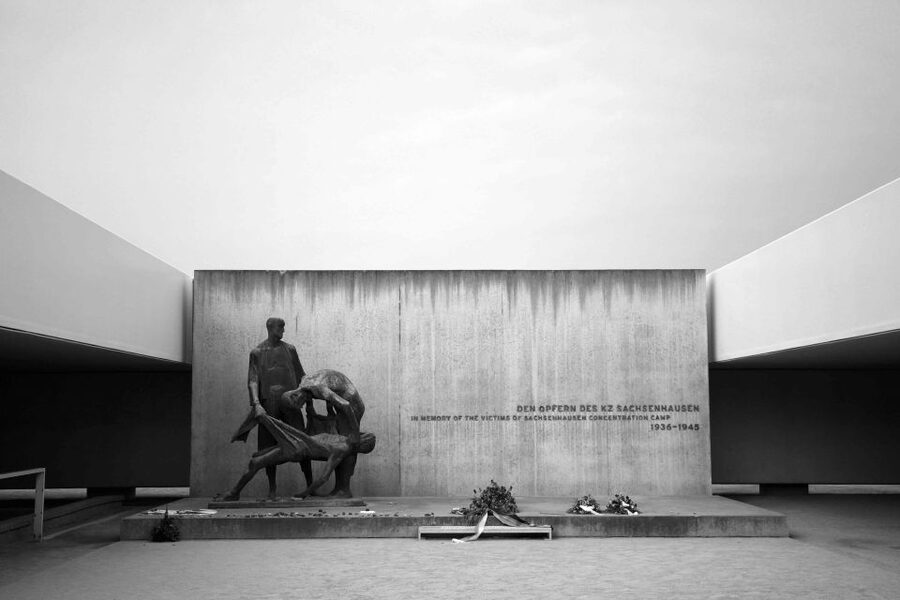
The tour visits the Jewish barracks, prison kitchen, infirmary barracks, and the shoe-testing track. These places help move the story beyond dates and camp architecture.
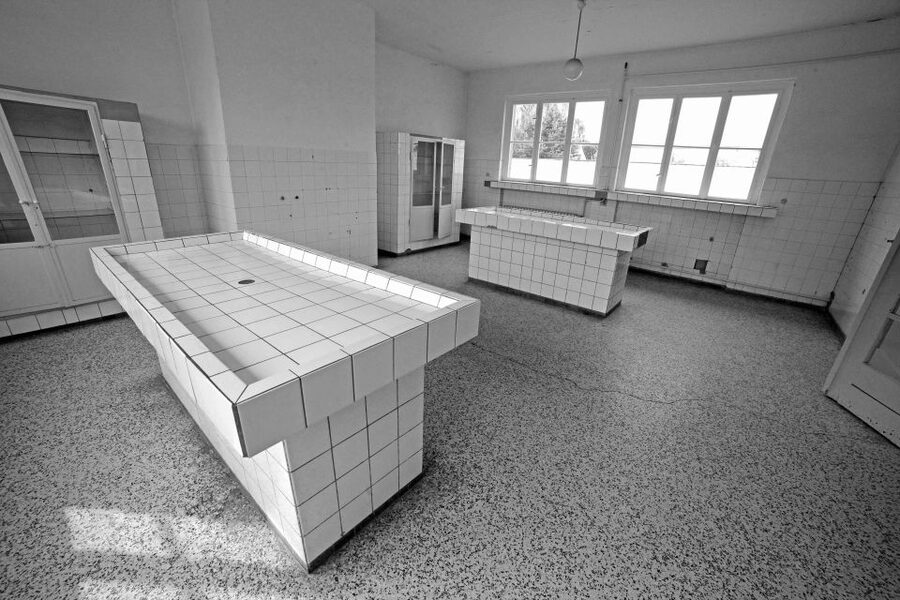
The barracks show the conditions in which prisoners were held. The infirmary raises difficult questions about medical care, illness, and the treatment of prisoners. The prison area points to the camp’s system of punishment and control. The shoe-testing track is especially unsettling because it connects forced labor to the physical exhaustion imposed on prisoners.
You will see memorial statues, plaques, remains of watchtowers, and barrack foundations or blocks. Some interiors contain photographs and documents that take time to study. One practical limitation is that the guided schedule cannot always allow as long as you might want in every room. If you like reading every panel, you may need to use the guide’s free time carefully.
That balance is one of the few things to consider before booking. The guide provides a clear route and interpretation, but you are not spending an entire day independently in each exhibition. The tour is best for building an understanding of the site as a whole, then returning on your own if you want a slower look at every display.
Station Z and the execution center memorial

Station Z marks the former execution area and is one of the most sobering parts of the visit. The memorial here helps explain the machinery of murder without turning the place into spectacle.
A guide can place Station Z within the camp’s wider system of punishment and killing, while also explaining what is known from historical evidence and prisoner accounts. That context is valuable because the surviving remains alone cannot tell the full story.
This is also where the emotional weight of the tour often becomes most apparent. You should expect a serious atmosphere and difficult material. The guides who receive the strongest praise, including Sarah, Rebecca, and Amelia, are described as handling the subject with empathy, clarity, and restraint.
You are not rushed through every moment, but the schedule continues. The guide usually leaves some time for you to look at sections independently, reflect, or read. Bring patience. This is not an attraction designed to entertain you, and the value comes from attention rather than speed.
Resistance, survival, and the death march
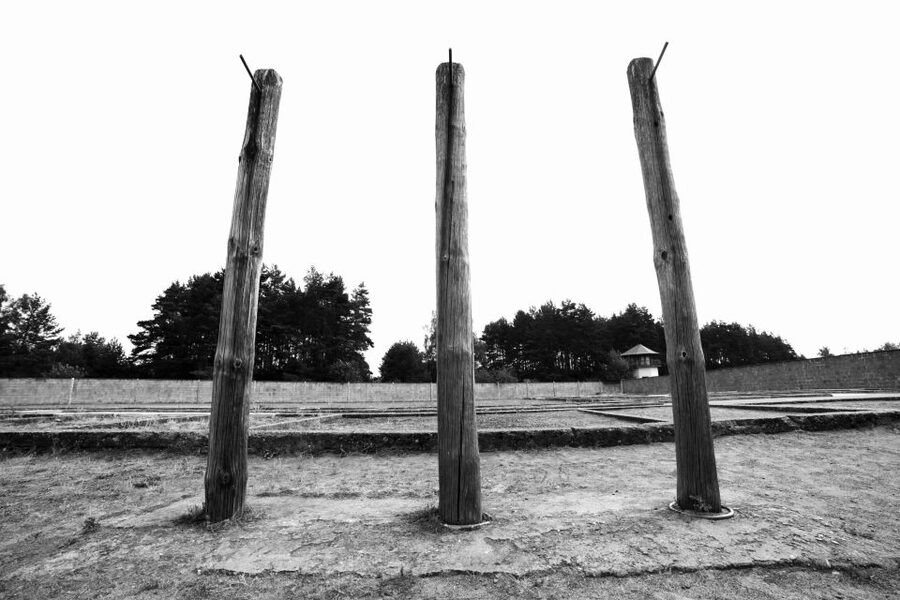
The story is not limited to what the SS did. The guide also covers resistance inside the camp, including the revolt of Jewish prisoners in 1942. You hear about the forgery workshop, where Jewish prisoners produced counterfeit British currency on a huge scale, and about escape attempts such as the tunnel dug by Jimmy James.
These accounts do not soften the crimes committed at Sachsenhausen. They show the choices, skills, courage, and cooperation prisoners used under conditions intended to destroy them. I find this part important because it gives the history more human shape without pretending that individual resistance could erase the wider horror.
The tour also addresses the death march before liberation in 1945. This helps explain that liberation was not a clean or simple ending for everyone held at the camp. The final stages of the camp’s history belong in the visit, even though they can be hard to hear.
Good guides keep these stories connected to the physical site. Ronja has been praised for her focus on political history and social justice, while Emma and Natalie have been noted for answering detailed questions and keeping the group engaged without overloading it. The tone is serious, but guides may use a gentle, appropriate touch of humor during the travel portions to help the group manage a long day.
Food, weather, and the practical side of the visit
Pack water and a snack. There is no possibility of buying drinks or food at the memorial or nearby, and the tour can run from around 9 a.m. until the middle or later part of the afternoon depending on the start time and transport conditions.
One earlier departure has been described as returning around 4:15 p.m., with only short stops for food bought by participants. Do not count on a proper restaurant lunch during the tour. Eat before meeting the group, and bring something substantial if you need regular meals.
Dress for the forecast, but plan for worse conditions. The tour operates in all weather, and much of it is outside. Rain gear matters more than an umbrella alone, and layers are useful because the day combines trains, walking, and open memorial grounds.
Comfortable shoes are essential. The site can be muddy after rain, and the total walking time is more than the itinerary’s 20-minute approach and 20-minute return might suggest. You will spend around three hours moving between memorial areas and displays.
What the $38 price includes
At $38 per person, this is a good-value guided visit if you want historical interpretation and help with transport. The price includes a licensed and trained English-speaking guide, the memorial fee, and a €3 donation to the memorial site.
The donation matters because it supports the continued use of Sachsenhausen as a place of memory and education for individual visitors, schools, and tour groups. You are not paying only for a narrated train ride. Part of the fee supports the memorial’s work.
You still need to buy your own ABC public transport ticket. That extra cost is easy to overlook, so include it when comparing this tour with alternatives. Even with the ticket added, the price remains reasonable for a small group, a licensed guide, transport guidance, and roughly three hours at the memorial.
The 15-person limit is particularly valuable. The tour is not private, but it is small enough for questions and personal attention. Guides have also helped with onward transport and Berlin restaurant suggestions at the end, which can be useful after a demanding day.
Free cancellation up to 24 hours before departure and reserve-now, pay-later booking add flexibility. These are useful safeguards if your Berlin plans are still shifting, but the central question is still whether you want to spend much of a day on a difficult historical visit.
Who should book this Sachsenhausen tour
I would choose this tour if you want a guided introduction to Sachsenhausen and do not feel confident managing the train route alone. It suits first-time visitors to a concentration camp, history-focused visitors, and anyone who wants the memorial explained through individual stories as well as military and political history.
It is also a good fit if you prefer a small group. The guide can hear your questions, keep an eye on the group, and adapt when public transport causes trouble. English is the only stated tour language, so you should be comfortable following a detailed English explanation of difficult material.
I would think twice if you dislike long public transport journeys, need frequent access to cafés, or want to study every exhibition panel at your own pace. You may prefer an independent visit if you already know the site well and want complete control over your schedule.
The emotional side matters too. This is a place of remembrance, not a light sightseeing stop. Give yourself a quiet evening afterward if you can. The tour can be informative and even warm in its human approach, but it should not be treated as casual entertainment.
Should you book it?
Book it if you want clear historical guidance, a small group, and practical help reaching Sachsenhausen from Berlin. The licensed guides are the main strength, and names such as Sarah, Lewis, Rebecca, Emma, Natalie, and Ronja have been singled out for clear explanations, empathy, and careful group management.
The $38 price is fair because it covers more than entry. You get the guide, the memorial fee, the donation, and support through the public transport journey. Just budget for the ABC ticket, pack food and water, and wear shoes that can handle mud.
Skip it if you need a short outing, a relaxed lunch break, or a self-guided pace. For everyone else, this is a serious, well-organized way to understand Sachsenhausen without losing half the day to navigation and guesswork.
FAQ
How long does the Sachsenhausen tour take?
The full experience lasts about 330 minutes, or five and a half hours. Some departures may run closer to six hours because the tour includes public transport and walking.
Where does the tour begin?
It begins outside Starbucks opposite Hackescher Markt S-Bahn station at Neue Promenade 3 in central Berlin.
How do I get to Sachsenhausen?
You travel with the guide by public transport from central Berlin. The outward journey takes about 50 minutes, followed by a walk of roughly 20 minutes to the memorial.
Is public transport included in the price?
No. You need to buy your own valid ABC public transport ticket. An ABC day pass is recommended.
How large is the group?
The group is limited to a maximum of 15 participants.
What language is the tour conducted in?
The tour is conducted in English with a live English-speaking guide.
What areas of Sachsenhausen are visited?
The tour includes Tower A, Station Z, the Jewish barracks, shoe-testing track, prison kitchen, infirmary barracks, watchtower remains, barrack areas, and execution-area memorials.
Can I buy food or drinks at the memorial?
No. There are no shops or cafés at or around the memorial site, so bring water and a snack.
What should I wear?
Wear comfortable shoes and weather-appropriate clothing. The tour operates in all weather, and the site may be muddy after rain.
What happens after the tour?
The guide walks with the group back toward Oranienburg and travels with you by train to central Berlin. Arrival may be at a centrally located station such as Hauptbahnhof, Friedrichstraße, or Gesundbrunnen.
Just added in Berlin
- Berlin: Energizing 2-Hour Morning Segway Tour★ 4.7 · 35 reviews
- Berlin: Thrilling E-Scooter Adventure Tour★ 4.4 · 66 reviews
- Beer Bike & Party Bike: Unforgettable Berlin City Tour incl. pickup★ 5.0 · 5 reviews
- Beelitz-Heilstätten: Baum&Zeit Tree Top Walk Entry Ticket★ 4.9 · 7 reviews
- AXE THROWING EXPERIENCE IN BERLIN★ 4.7 · 24 reviews
- Alternative Berlin / Street art tour – Private group★ 5.0 · 6 reviews
- Berlin: Alternative & Street Art Tour★ 4.5 · 6 reviews
- Berlin: 2.5-Hour Beer & Sunset Sightseeing Boat Cruise★ 4.6 · 61 reviews
Concentration Camp Memorial Tours, compared.
Sachsenhausen Concentration Camp Tour in English
Read our review →
Dachau Concentration Camp Memorial Site Tour from Munich by Train
Read our review →
Sachsenhausen Concentration Camp Memorial Tour
Read our review →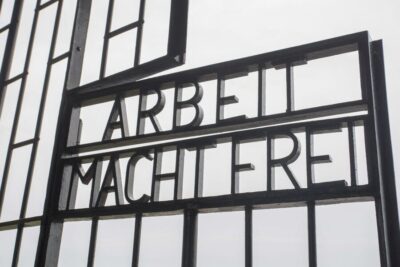
Sachsenhausen Concentration Camp Bus Tour in English from Berlin
Read our review →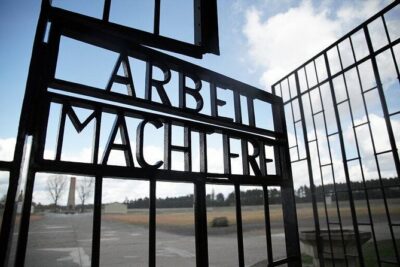
Sachsenhausen Concentration Camp Memorial Tour (Max. 15 Guests)
Read our review →
Sachsenhausen Concentration Camp and Potsdam Tour
Read our review →Browse the lists this tour appears in