
Reviewed · THIRD REICH & WWII TOURS
Berlin: World War Two Third Reich and Cold War Walking Tour
Berlin’s past is unusually close to the pavement. On this five-hour walk, you move from the Third Reich and World War II into East Germany, the Cold War, and the Berlin Wall, with sites such as the Reichstag, Hitler’s bunker, Flak Tower, and Eastside Gallery helping connect the story.
I like the way the tour links political events with ordinary life behind the Wall. I also like the $21 price, which is fair for five hours with an English-speaking local historian. The main caution is organization at the starting point: one detailed account describes a chaotic group-splitting process and says the advertised tour did not operate as expected, so arrive early and confirm your exact group and route.
Key points to know before booking
- The five-hour route covers two major eras: You follow Berlin from Nazi rule and wartime destruction into East German communism and the Cold War.
- The Wall is treated as more than a photo stop: Expect discussion of guard towers, escape routes, divided lives, and the meaning of surviving sections.
- Several major landmarks are included: The route refers to the Reichstag, Hitler’s bunker, a Flak Tower, the Russian-German war museum, Berlin Wall Memorial, and Eastside Gallery.
- The meeting point is easy to identify: Look for the white umbrella on the corner in front of Generator Berlin Alexanderplatz.
- Bring your own supplies: Meals and drinks are not included, so pack water, snacks, cash, and comfortable shoes.
- Allow time for possible meeting-point confusion: The public score is 4.3 from 17 ratings, but one account raises a serious concern about group assignment and tour availability.
Why this Berlin history walk is worth your time
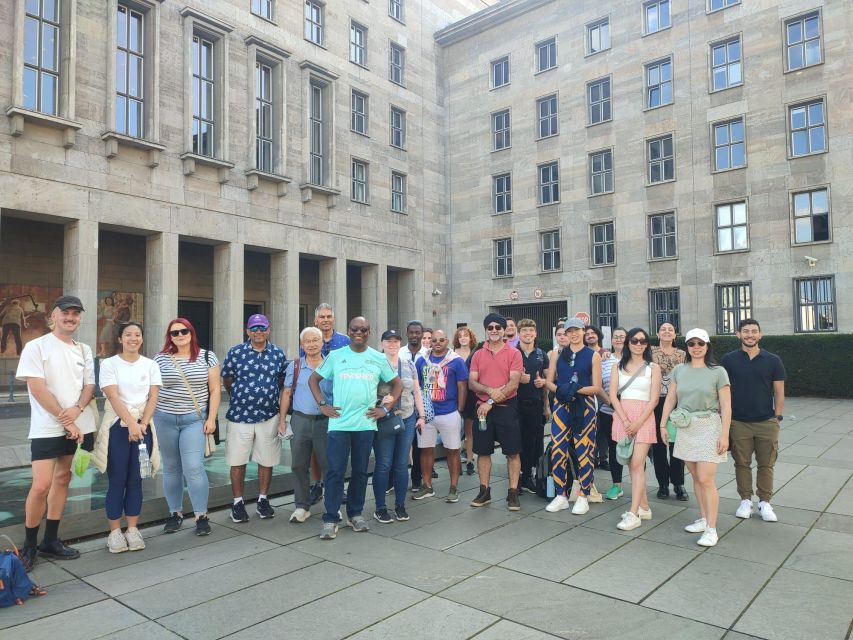
Berlin can feel like several cities layered on top of one another. A grand boulevard may lead to a wartime ruin, a modern government building, or a remaining stretch of concrete that once divided families and political systems.
That is the strength of this experience. Instead of treating World War II and the Cold War as separate chapters, the walk shows how one shaped the other. Nazi dictatorship, wartime defeat, Soviet influence, East German communism, and the Wall all form part of one long story.
I also like the format. Five hours is long enough to make connections without packing every subject into a quick two-hour circuit. You have time to stop, listen, ask questions, and look closely at places that can otherwise pass unnoticed.
The tour is led in English by a local historian. No individual guide name is provided, so you cannot choose a particular guide in advance. The quality of any history walk depends heavily on the person leading it, but the subject matter gives the guide plenty to work with.
The walk is wheelchair accessible, an important practical point for visitors who need step-free access. Still, a five-hour outdoor tour can be tiring, and the exact pavement conditions and rest breaks are not specified. Wear shoes you can comfortably use for much of a day.
More Third Reich and WWII Tours in Berlin
- Berlin: Third Reich and Cold War 2 Hour Walking Tour
★ 4.9 · 6,830 reviews - Berlin’s Best: 2 Hour Walking Tour Third Reich and the Cold War
★ 5.0 · 5,486 reviews - Third Reich Berlin: Hitler and WWII Walking Tour
★ 5.0 · 3,301 reviews
Starting at Alexanderplatz with a practical warning
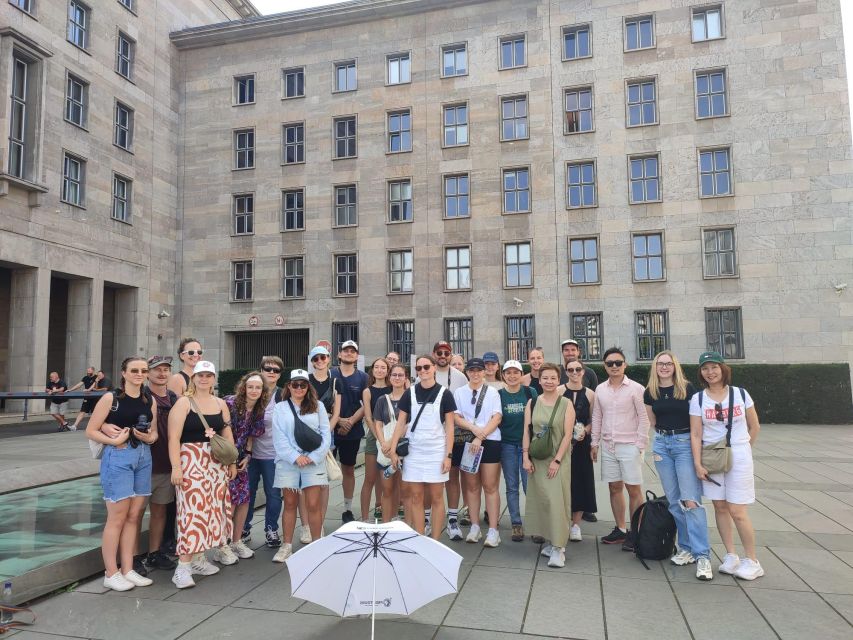
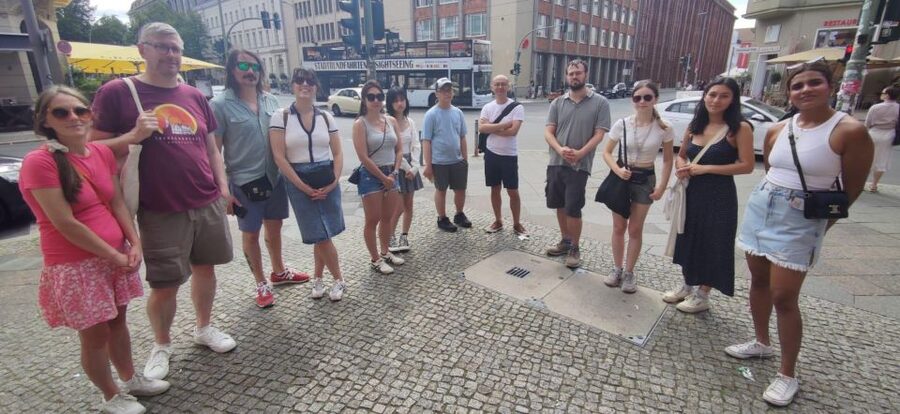
The meeting point is the corner in front of Generator Berlin Alexanderplatz. Look for the white umbrella, which is the visual marker for the tour group.
Alexanderplatz is a useful place to begin because it puts you in central Berlin and near the former East Berlin story. You can reach the meeting area independently, then return to the same place when the activity ends.
Arrive with enough time to identify the correct group. This matters here. A detailed low-rated account describes several tours gathering at the same spot, with people then divided into separate groups. That process was reportedly confusing, and the person felt that only parts of the advertised route were offered.
I would not ignore that warning. It does not cancel out the overall 4.3 rating, but it gives you a sensible arrival plan: get there early, show the tour details to the staff, and ask which guide is handling the World War II and Cold War walk. Make sure you know whether your group will cover the full advertised route before you set off.
Because the activity is sold as five hours, the group assignment matters. You are not booking a casual stroll that can be repeated in an hour. If the route changes, the value of the booking changes with it.
The Third Reich, the Reichstag, and Berlin’s wartime scars
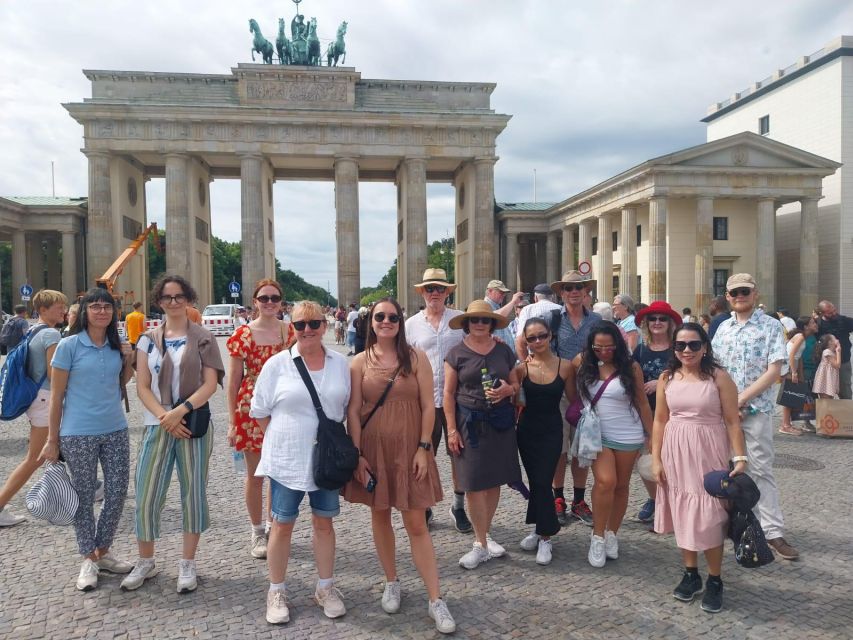
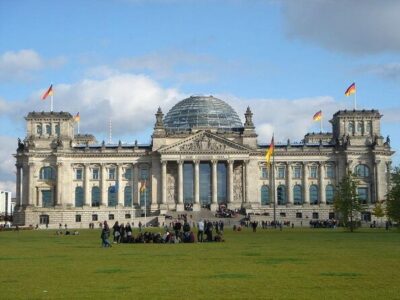
The first part of the walk focuses on Nazi Germany and World War II. The Reichstag is one of the major landmarks connected with this period, though its importance reaches beyond the Nazi era. It represents the German state, political power, war, division, and later reunification.
A guide can help you read the building and its surroundings as part of a wider political story rather than just as an impressive piece of architecture. The tour description also points to Hitler’s bunker, a place tied to the final days of the Nazi regime.
Do not expect the bunker to look like a preserved underground museum from the outside. The value here is historical context. The site helps explain the collapse of the dictatorship and the physical destruction left behind in central Berlin.
That distinction is useful. Berlin contains many locations where the original structure is gone, altered, or deliberately left without a grand memorial. A good guide explains what you are actually seeing, what disappeared, and why the city chose to mark the place in a particular way.
The route also includes a Flak Tower. These enormous wartime structures were built for air defense, and their size gives you a sense of how heavily Berlin was prepared for attack. The tour uses the site to widen the story beyond government offices and famous leaders, bringing in the military reality of the war and the city’s dangerous final years.
Another listed stop is the Russian-German war museum. The name points to the conflict between Nazi Germany and the Soviet Union, one of the most destructive parts of World War II. This subject is essential for understanding why Soviet power had such a large role in Berlin after 1945.
The advantage of having a guide at these locations is the connection between them. You are not simply collecting photographs of famous buildings. You are following a chain of events: dictatorship, war, defeat, occupation, and the division of Germany.
From wartime defeat to East German communism
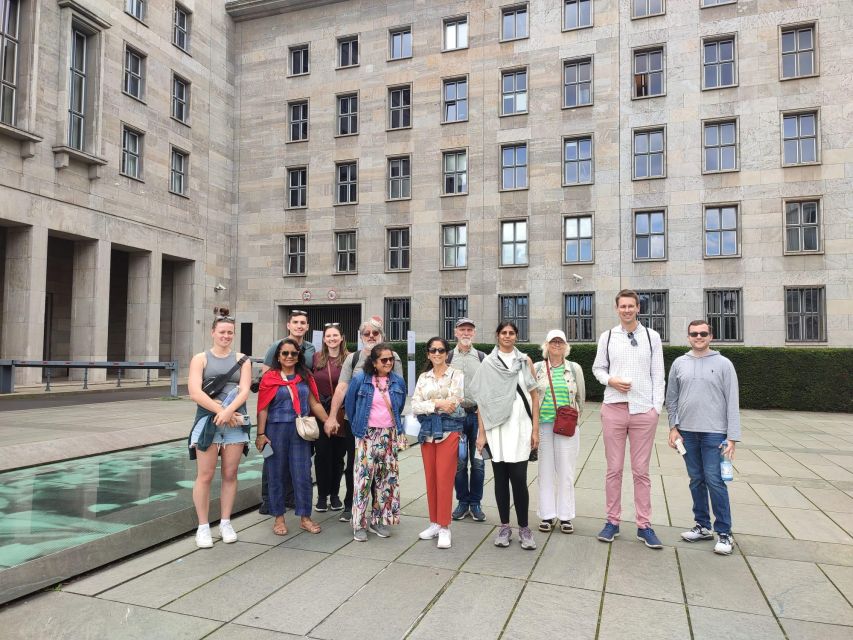
The second part shifts to the Cold War and East Berlin. This change in subject is where the tour becomes especially useful for first-time visitors.
After World War II, Berlin was divided among the victorious powers. The city became a front line between competing political systems, even though it sat inside East Germany. The tour explains this tension through the lives of people who lived behind the Berlin Wall and under East German communism.
That human angle matters. Dates and political labels can make the Cold War seem distant. The Wall made it immediate. Streets, workplaces, neighborhoods, and family relationships were affected by a border that could not be crossed freely.
You will hear about the structures that controlled movement, including guard towers and escape routes. These details show that the Wall was not simply one slab of concrete. It was a border system designed to watch, restrict, and discourage escape.
The tour description also points to less obvious sections of the Wall. That can be more rewarding than visiting only the most photographed pieces. Surviving fragments, empty spaces, and changed streets can raise better questions than a single famous mural.
The guide’s job here is to explain what happened to people who tried to leave East Germany, what the border looked like, and how Berliners lived with it. The supplied information does not promise specific personal stories or a particular escape site, so the exact examples will depend on the guide and route that day.
Other trips into the same period in Berlin:
- Berlin: Third Reich, Hitler, and WWII Walking Tour
★ 4.9 · 1,133 reviews - Berlin Third Reich Sites: Half-Day Walking Tour
★ 5.0 · 835 reviews - Berlin: Guided Bike Tour of the Berlin Wall and Third Reich
★ 4.7 · 499 reviews - Hitler’s Germany: Berlin During the Third Reich & WWII
★ 4.8 · 476 reviews
Berlin Wall Memorial and Eastside Gallery
The Berlin Wall Memorial gives the divided city story a physical setting. It helps you understand how the border worked, how the surrounding area changed, and why remnants of the Wall still matter.
For many visitors, the memorial is more meaningful than a lone fragment in a modern street. The point is not just to see concrete. It is to picture the barrier, the controlled zone around it, and the lives interrupted by its presence.
Eastside Gallery offers a different mood. The surviving Wall section is known for its large painted works, turning a former barrier into an open-air display of political and artistic expression. The tour presents this as part of Berlin’s cultural impact, which includes music, art, and revolutionary ideas.
I like having both sites in the same experience. The memorial encourages quiet thought about separation and loss. Eastside Gallery shows what happened when the Wall became a public canvas and a symbol of change.
Still, you should keep your expectations sensible. This is a guided walking tour, not a private art tour or a museum visit built around long indoor stops. You will get historical explanation and on-site interpretation, but the time available at each location depends on the group and the overall route.
The route description says the tour includes exclusive entry to important landmarks, but it does not specify which sites require tickets or how long you spend inside them. Ask the guide at the start what is included as an interior visit and what is viewed from outside.
Architecture that survived Berlin’s hardest years
Berlin’s buildings tell the story in a quieter way. Some survived bombing, some were damaged and rebuilt, and others were replaced after reunification.
The tour draws attention to architectural landmarks that witnessed the city’s political shifts. The Reichstag is the clearest example, but the Flak Tower and surviving Wall structures add different kinds of evidence.
I find this approach helpful because Berlin’s architecture can otherwise seem disconnected. A grand government building, a military structure, and a bare Wall fragment may appear to belong to separate tours. Here, they are read together.
Look for changes in scale and purpose. The Reichstag reflects national government. The Flak Tower points to wartime defense. The Wall marks political division and control. Each site helps you understand a different kind of power.
The tour also brings in Berlin’s role in music, art, and political change. The supplied details do not name specific artists, musicians, or movements, so you should not book this expecting a specialist art itinerary. Instead, expect cultural references that show how Berlin’s turbulent politics shaped the city’s creative life.
What five hours feels like on foot
Five hours is a serious block of time. It gives the guide room to explain context, but it also means you should prepare for a full outdoor outing.
Bring comfortable shoes, weather-appropriate clothing, snacks, drinks, and some cash. Meals and refreshments are not included. Cash may be useful for personal purchases or unexpected needs, though the tour does not promise stops at a particular shop or café.
The starting and ending point is the same, at the white umbrella near Generator Berlin Alexanderplatz. That makes your return simple, but the route itself covers a lot of historical ground. The exact order and movement between places are not fully specified.
That missing detail is worth clarifying before departure. The named locations include central government sites, wartime structures, the Wall Memorial, and Eastside Gallery. If you are expecting every location to receive equal time, ask how the five hours are divided.
A five-hour walk is best for someone who enjoys listening outdoors and wants a connected story. It is less suitable if you need frequent indoor breaks, dislike long periods on foot, or prefer a short introduction followed by free time.
The activity is wheelchair accessible, which broadens its usefulness. Since the exact route surface and rest arrangements are not given, you may still want to confirm practical details with the operator if you have specific mobility needs.
Is $21 a fair price?
At $21 per person, the tour is priced below many long guided city walks. The value depends on delivery and on whether the full advertised subject range is covered.
For five hours with a local historian, the price is attractive. You are paying for interpretation, not just a route between monuments. If the guide clearly links the Nazi period, wartime destruction, Soviet influence, East German life, the Wall, and reunification, the tour can give you a strong framework for the rest of your time in Berlin.
The price is also reasonable for a first visit because the route covers landmarks that would otherwise require separate planning. You do not need to research every memorial, Wall fragment, and political site before arriving.
The concern is operational rather than financial. The one detailed account of the experience describes a confusing start and says the promised tour was not offered in full. That is a major issue at any price, especially when you have reserved five hours.
The booking terms reduce some risk. You can cancel up to 24 hours ahead for a full refund, and you can reserve now and pay later. Those options help if your Berlin plans are still moving around, but they do not solve a same-day group assignment problem. Confirm the tour at the meeting point before leaving with the group.
Who should book this experience?
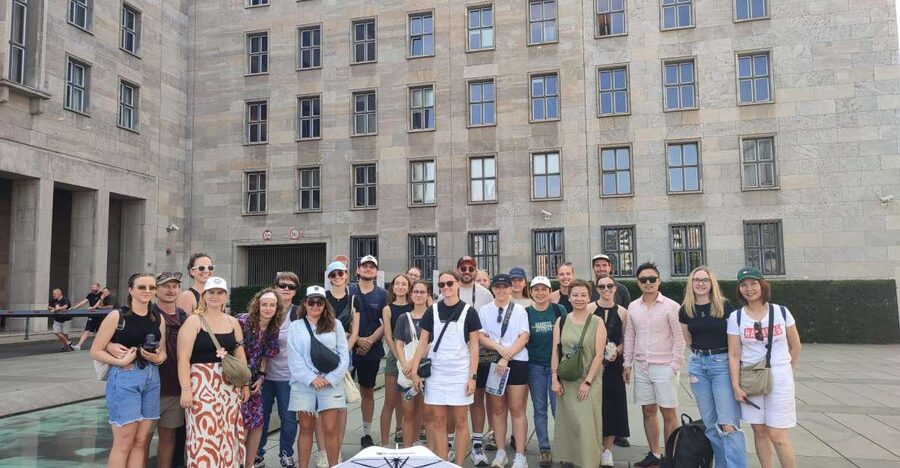
I would choose this tour if you want one long introduction to Berlin’s political past and prefer a guide to connect the sites for you. It suits visitors who are curious about both the Nazi period and the Cold War, rather than those interested in only one era.
It is also a good fit if you want to see the Berlin Wall in several forms. The Memorial offers a sober historical setting, Eastside Gallery brings art into the story, and the guard towers and escape routes add practical detail.
You will get the most from it if you already know a little about European history, but you do not need specialist knowledge. The guide is there to explain the turning points and show why each place matters.
I would be more cautious if your schedule is tight or if you need a guaranteed, precisely timed itinerary. The route includes many major subjects, and the meeting-point account raises enough concern that you should confirm the group and coverage before committing your whole day.
The tour is conducted in English only. If you need another language, this is not the right choice.
Should you book the Berlin World War Two and Cold War Walk?
Book it if you want a five-hour historical framework for Berlin at a low price, especially if the combination of Third Reich sites, East German life, and the Wall appeals to you.
The strongest feature is the range. You move from Hitler’s bunker and wartime structures to the Berlin Wall Memorial and Eastside Gallery, with the Cold War providing the link between them. That is a useful way to understand why modern Berlin looks and feels so politically charged.
Before joining, arrive early at the white umbrella, confirm your guide, and ask whether your group is covering the full World War II and Cold War route. If the operator handles that part well, $21 is good value. If you need a perfectly controlled itinerary, consider the organization warning carefully.
FAQ
How long does the Berlin World War Two and Cold War Walking Tour last?
The tour lasts five hours. Starting times vary, so check availability when booking.
Where does the tour begin?
Meet at the corner in front of Generator Berlin Alexanderplatz. Look for the white umbrella.
Where does the activity end?
The tour ends back at the meeting point near Generator Berlin Alexanderplatz.
What language is the tour conducted in?
The live guided tour is conducted in English.
Which historical sites are included?
The listed sites and subjects include the Reichstag, Russian-German war museum, Flak Tower, Hitler’s bunker, Eastside Gallery, Berlin Wall Memorial, guard towers, escape routes, and other Wall remnants.
Are food and drinks included?
No. Meals and refreshments are not included. Bring your own snacks and drinks.
Is the tour wheelchair accessible?
Yes, the activity is listed as wheelchair accessible. The exact route conditions and rest arrangements are not specified, so confirm any particular accessibility needs in advance.
More walking tours in Berlin
- Discover Berlin Half-Day Walking Tour
★ 5.0 · 9,624 reviews - Berlin: Discover Berlin Walking Tour
★ 4.9 · 5,998 reviews - Berlin: Hidden Backyards Guided Walking Tour
★ 4.8 · 5,360 reviews - Berlin: Alternative Berlin Walking Tour
★ 4.6 · 1,204 reviews
More Berlin Wall and Cold War tours in Berlin
- Skip-the-Line: Berlin Wall Museum at Checkpoint Charlie
★ 4.1 · 2,041 reviews - Cold War, Berlin Wall, Spies and the East Side Gallery
★ 5.0 · 1,024 reviews - Berlin: Cold War Walking Tour on Berlin Wall Route
★ 4.8 · 437 reviews - Berlin: Cold War Era History Guided Bike Tour
★ 4.8 · 413 reviews
Just added in Berlin
- Private One way Airport Transfer Berlin Airport To Berlin★ 3.5 · 17 reviews
- Private Walking Tour: Berlin Wall, Cold War and Checkpoint Charlie★ 5.0 · 37 reviews
- Modern Berlin Private Walking Tour: Diverse, Vibrant and Exciting German Capital★ 5.0 · 13 reviews
- Private Day Trip to Potsdam from Berlin by Train★ 4.5 · 27 reviews
- City Explorer: Potsdam Private Day Trip★ 4.5 · 10 reviews
- Berlin Private Custom 5-Hour Tour by Car★ 5.0 · 30 reviews
- Private Half-Day Sightseeing Tour in Berlin★ 3.5 · 6 reviews
- Berlin Private Custom Tour in a Minivan, East and West★ 5.0 · 123 reviews
Third Reich & WWII Tours, compared.

Third Reich Berlin: Hitler and WWII Walking Tour
Read our review →
Walking Tour of Former Nazi Party Rally Grounds
Read our review →
Berlin Third Reich Sites: Half-Day Walking Tour
Read our review →
Birthplace of the Third Reich Guided Walking Tour
Read our review →Browse the lists this tour appears in