
Reviewed · THIRD REICH & WWII TOURS
Berlin: Guided Bike tour of the Berlin Wall and Third Reich
Berlin’s past is easier to grasp when you can pedal through it. This three-hour ride links the Berlin Wall, Nazi-era sites, Holocaust memorials, and today’s government district, giving you a feel for how the city’s history sits in its streets, parks, canals, and empty spaces. The best guides, including Paul, Simon, Juliette, Theo, and Simone, add personal stories and clear explanations without turning the ride into a lecture.
I like the easy pace and flat streets, which let you cover far more ground than you would on foot. I also like the small maximum group of 15, the comfortable bikes, baskets, helmets, and the option of an infant seat. The main caution is that FREE BERLIN guides design their own routes, so you may not visit every stop listed. If Checkpoint Charlie or the Holocaust Memorial is essential for you, say so before setting off.
Key points to know before you pedal away
- The route connects two dark chapters: You may cover the Berlin Wall, Nazi Germany, the Holocaust, and postwar Berlin in one outing.
- Guides shape the experience: The FREE BERLIN concept allows each guide to choose a route, so no two rides are guaranteed to be identical.
- You cover useful ground: One family covered about 13 kilometers at an easy pace with frequent breaks.
- The cycling is generally gentle: Berlin is flat, though some riders may find main roads and cycle lanes daunting.
- Personal stories add meaning: Guides such as Paul, a native of West Berlin, have shared first-hand perspectives on the divided city.
- The price is fair for a three-hour city tour: At $42.34 per person, bike, helmet, guide, and a broad route are included.
Why a bicycle helps you understand Berlin
Berlin’s historic sights are spread across a wide area. Walking between the Wall memorial, the Reichstag, the Führerbunker site, and Checkpoint Charlie would take much of your day, while a bus can leave you staring through glass and missing the small details between major sights.
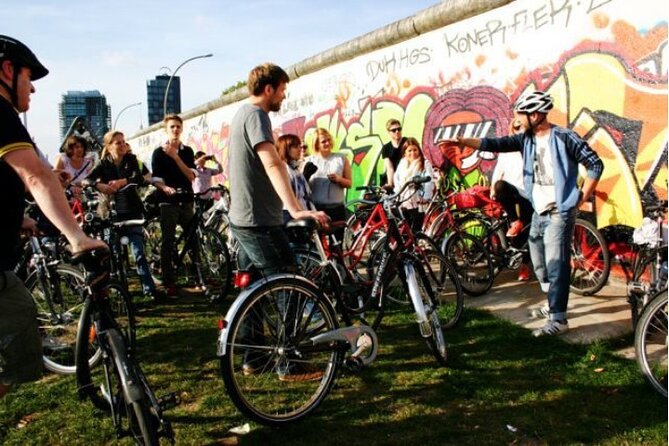
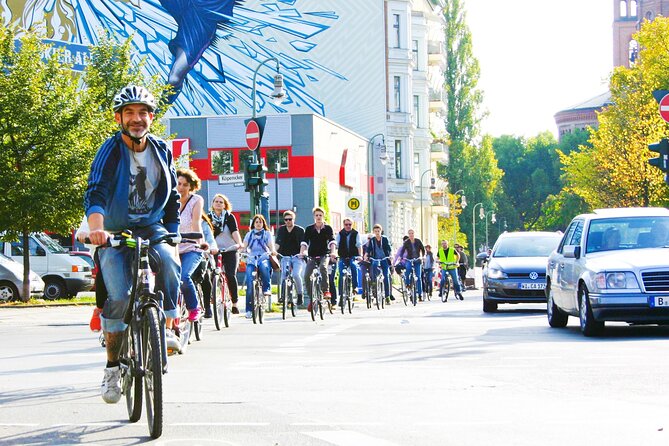
A bicycle gives you a useful middle ground. You move at street level, stop often, and see how one district changes into another. You may ride through parks, along former border zones, past government buildings, and through neighborhoods that do not fit neatly into a standard sightseeing circuit.
The ride is not meant to replace a museum visit. It gives you a map in your head. Afterward, you will have a better sense of where East Berlin ended, where the Wall ran, how the death strip cut through the city, and why Berlin’s memorials appear in such different settings.
The ride is usually manageable rather than athletic. One family covered about 13 kilometers with children aged 10, 14, and 17, and found the pace easy because of the many stops. Still, you should feel comfortable riding in a city. One route included main roads and cycle lanes, and some riders found that part a little nerve-racking. Guides generally keep the group together, wait at red lights, and give riding instructions.
More Third Reich and WWII Tours in Berlin
- Berlin: Third Reich and Cold War 2 Hour Walking Tour
★ 4.9 · 6,830 reviews - Berlin’s Best: 2 Hour Walking Tour Third Reich and the Cold War
★ 5.0 · 5,486 reviews - Third Reich Berlin: Hitler and WWII Walking Tour
★ 5.0 · 3,301 reviews
Starting in Nikolaiviertel, Berlin’s reconstructed old town
You meet at FREE BERLIN Bike Tours & Rental, Poststraße 11, near public transport. The ride begins in Nikolaiviertel, the area often described as Berlin’s only real old town.
The word old needs a little care here. Much of the district was destroyed during the Second World War and later reconstructed, so this opening stop is useful precisely because it raises questions about what historic Berlin means. You begin with the city’s medieval roots, then quickly move into the destruction and rebuilding that shaped modern Berlin.
This is a short introduction, about 10 minutes. Think of it as orientation rather than a full old-town tour. You will learn why the area matters, then leave it behind for a much wider story.
Civil courage at the New Synagogue
The New Synagogue, home to the Centrum Judaicum, provides a brief but important stop. Here, the guide explains how a police officer acted to protect the building during the November 1938 pogrom, often called the Night of Broken Glass.
The stop lasts only about five minutes, so you will not tour the interior. Its value is the human scale of the story. Instead of hearing only about government policy and mass violence, you hear about one act of courage in a night when Jewish property and synagogues were being attacked.
The route also includes discussion of memorials for people deported and murdered during the Holocaust. These sites are less famous than the large memorial near Brandenburg Gate, and that contrast is useful. Berlin does not tell its past in one voice or with one design. Different memorials reflect different periods, political systems, and choices about how memory should appear in public.
The Berlin Wall at its most understandable
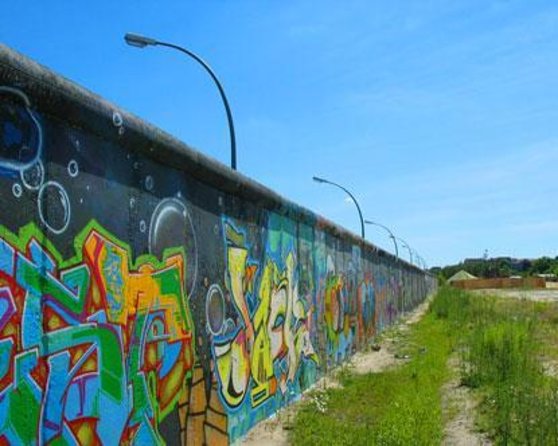
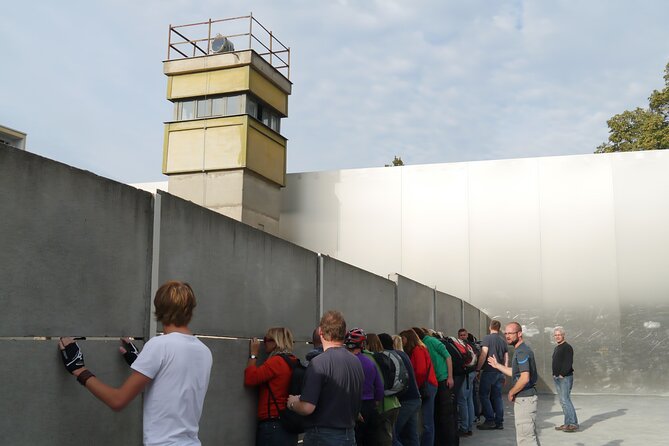
The Wall section is the heart of the ride for many people. The Berlin Wall Memorial is one of the few places where you can still understand the barrier as a system, not merely as a strip of painted concrete.
A surviving section shows how the Wall divided streets, homes, families, and daily life. The guide can explain the layers of fortification and the open ground between barriers. This is much more useful than seeing a single decorated slab in isolation.
The stop is scheduled for roughly 10 minutes, though the guide may spend more or less time depending on the group and route. That short stop gives you a framework, but it does not allow a long museum visit or detailed study of every memorial marker. If the Wall is your main reason for booking, plan to return on your own afterward.
Mauerpark follows naturally. Once part of the border zone, it now represents a very different Berlin, a place associated with free expression, weekend activity, and public life. The change is the point. You see how a place built around separation became a place where people gather.
Other trips into the same period in Berlin:
- Berlin: Third Reich, Hitler, and WWII Walking Tour
★ 4.9 · 1,133 reviews - Berlin Third Reich Sites: Half-Day Walking Tour
★ 5.0 · 835 reviews - Berlin: Guided Bike Tour of the Berlin Wall and Third Reich
★ 4.7 · 499 reviews - Hitler’s Germany: Berlin During the Third Reich & WWII
★ 4.8 · 476 reviews
Humboldthain and the remains of Nazi power
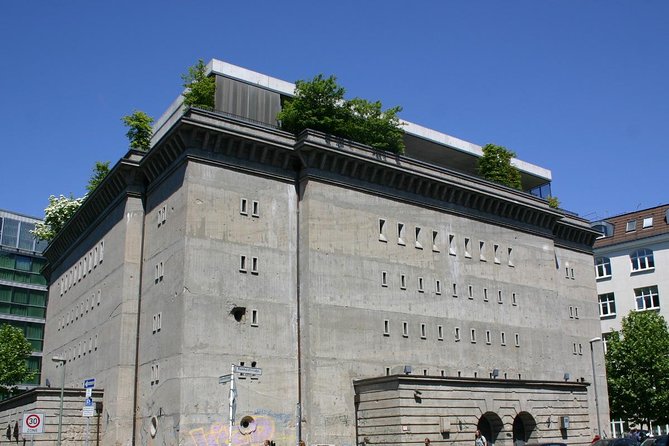
At Humboldthain, the group may stop near the remains of a giant flak tower. Built as an air-defense structure and air-raid shelter during the Nazi period, it offers both a view over Berlin and a direct look at the scale of Nazi construction.
This is one of the more unusual stops because the physical remains do much of the explaining. The structure is hard to mistake for ordinary civic architecture. It shows how military planning entered the city itself and how enormous resources went into defense and control.
The stop is brief, around 10 minutes. You should not expect a full visit inside the tower. Instead, the guide connects what you see with Nazi architecture and wartime Berlin, then gets you moving again.
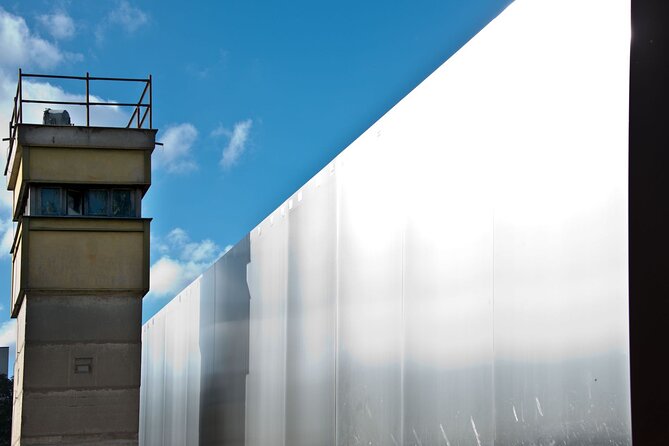
The route can continue to the Günter Litfin Memorial, where an original watchtower preserves the memory of the first person shot while trying to cross the Berlin Wall. This small site is less polished and less grand than Berlin’s major memorials. That makes it especially effective. You are confronted with a specific person, a specific death, and the machinery of the border.
Invalidenfriedhof and escape stories
Invalidenfriedhof was created as a cemetery for Prussian military figures. The Wall later cut through it, leaving graves and paths divided by the border.
The guide uses this setting to explain escape attempts and the geography of the former frontier. Nearby canals and checkpoints shaped how people tried to get from East to West Berlin. The cemetery also shows how political borders can slice through places that seem permanent.
This is another short stop, about five minutes. It is not a conventional sightseeing highlight, but it rewards attention. You may find it more affecting than a grand monument because the Wall’s damage is written into an old burial ground.
From Spreebogen to the Reichstag
At Spreebogenpark, you get a broad view of Germany’s government district. The guide discusses the political center you see today, then contrasts it with Albert Speer’s plans under Hitler.
Speer envisioned a Great Hall large enough for 180,000 people. The scale sounds almost unreal, but that is exactly why the stop works. The planned building reveals how architecture was used to express power, obedience, and imperial ambition.
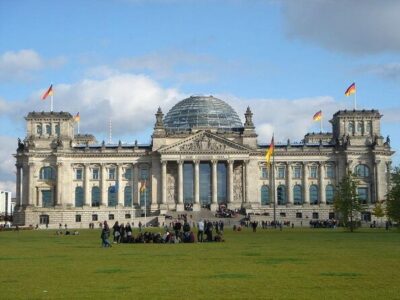
The Reichstag comes next. You stop outside to discuss Hitler’s rise to power and Germany’s later democratic development. There is no time to enter the building or visit its glass dome, so you should not book this ride expecting an interior Reichstag visit.
Still, the exterior stop helps connect the old political center with the modern German government. The guide can explain how a building associated with the collapse of democracy now serves a democratic parliament. That contrast is one of Berlin’s recurring themes.
Holocaust memorials and the Führerbunker site
The route may pass several memorials dedicated to major victim groups of the Holocaust. The best-known is the Memorial to the Murdered Jews of Europe, near Brandenburg Gate.
The field of concrete slabs is powerful because it offers no simple image or single message. As you walk or cycle beside it, the memorial changes in height and feeling. A short stop cannot explain every interpretation, but it gives you enough time to look, ask questions, and discuss what the design suggests.
The route then reaches the Führerbunker site. Today, there is no dramatic ruin to see. The location is marked by an ordinary parking area, and the guide explains why the bunker was covered and why the site was not turned into a shrine.
That plain setting is part of the lesson. The place where Hitler spent his final weeks and died does not offer a grand monument. You get historical context without spectacle, which is a sound approach for such a loaded site.
Checkpoint Charlie and the Cold War
The English-language version of the ride includes Checkpoint Charlie when the guide’s route allows it. This was the most famous Cold War border crossing and the place where American and Soviet forces faced one another during a dangerous confrontation.
The stop lasts about 10 minutes. You will hear how the crossing operated and why tensions there raised fears of a much wider war. The modern setting is busy and commercial, so the guide’s explanation matters more than the physical checkpoint display.
This is also the stop most likely to create disappointment if you assume every advertised location is guaranteed. The provider’s route system gives guides freedom to choose their own path. Traffic, weather, group pace, city events, and the guide’s judgment can change the itinerary.
If Checkpoint Charlie is a must-see, tell the guide at the start. The same advice applies to Invalidenfriedhof, the Reichstag, the Holocaust Memorial, and the Wall memorial. A guide may be able to adjust the route, but there is no promise that every point will fit into three hours.
The guides make the difference
The structure gives you historic sites, but the guide shapes how much you take away. Paul, a native of West Berlin, has brought personal memories of life before the Wall fell and explained differences between East and West Berlin. That local viewpoint can make the division feel less abstract.
Simon has been praised for making difficult material lively, answering questions, and keeping riders safe, even in rain. Juliette has been described as a strong guide for a manageable group and as someone who can adjust the route, including a possible Brandenburg Gate stop. Theo has provided clear riding instructions and detailed explanations, while Simone has used personal stories and thoughtful questions to encourage discussion.
These names are not a promise that you will get one particular guide. They do show the range of styles you might encounter. Some guides emphasize personal experience, some build a clear historical sequence, and some make the ride more interactive.
That variety is both a strength and a weakness. A good guide can turn a short stop into a memorable lesson. A less structured route may feel scattered, especially if you want a strict timeline from Nazi Germany through the Cold War. One rider found the information disjointed and the group of 12 a little large for easy cycling. Keep your expectations realistic: this is a guided overview, not a seminar or a museum tour.
Bikes, group size, weather, and family use
The bikes and helmets are included. The bikes have been described as comfortable, with baskets or basket carriages useful for carrying water, coats, or a small bag. Infant seats can be provided if requested, and children are welcome when accompanied by an adult.
The group size ranges from a minimum of four to a maximum of 15. Fifteen is still a fairly large cycling group, particularly on busy streets, but it is small enough for a guide to give instructions and stop for explanations. If demand creates a larger gathering, the company has split people into smaller groups in the past.
The tour runs in all weather. Bring clothing suited to the forecast, since you will be outside for about three hours. Rain did not prevent one outing from going ahead, but wet streets and cold wind can change how enjoyable the ride feels.
The meeting point is also the return point. Food and drinks are not included, so bring water or buy something before setting off. The ride is offered in English or German, depending on the option you choose. The English route is the one specifically associated with Checkpoint Charlie.
Is $42.34 a fair price?
At $42.34 per person, this is a sensible price for a three-hour guided ride with a bike, helmet, and guide included. You are paying not only for equipment, but also for a route that connects sites spread across Berlin and for help making sense of them.
The value is strongest if you have limited time and want a first look at several periods of Berlin’s past. You can cover more ground than on foot and still stop often enough to understand what you are seeing.
The value is weaker if you want long visits at each memorial. Ten minutes at the Berlin Wall Memorial or Holocaust Memorial is enough for orientation, not enough for a full examination. I would use this ride as your historical framework, then return independently to the one or two sites that matter most to you.
Free cancellation is available up to 24 hours before the start time. The tour requires a minimum number of participants, so a cancellation for low numbers may result in another date or a full refund.
Who should book this ride?
I would book it early in a Berlin stay, especially since it is often reserved about 17 days ahead. It gives you a practical map of the city and may help you choose which museums and memorials deserve more of your time.
This is a good fit for families, first-time visitors, history-minded adults, and anyone who would rather see Berlin outdoors than sit on a bus. It also suits you if you want local stories and a broad view of the Wall, rather than one fixed memorial visit.
I would hesitate if you dislike city cycling, need guaranteed access to every listed stop, or want the Third Reich portion to receive equal time with the Berlin Wall. The title promises both subjects, but the actual balance depends on the guide and route. Ask at the start what the day’s plan includes.
FAQ
How long does the Berlin Wall and Third Reich bike tour last?
The tour lasts approximately three hours.
Where does the tour begin and end?
It begins and ends at FREE BERLIN Bike Tours & Rental, Poststraße 11, 10178 Berlin, Germany.
Is the bicycle included in the price?
Yes. Bicycle and helmet use are included.
Is the tour offered in English?
Yes. The experience is offered in English, and it is also available in German depending on the selected option.
Will the tour definitely visit Checkpoint Charlie?
No. Guides create their own routes through the FREE BERLIN concept. Checkpoint Charlie is specifically included only in the English version, but the exact route can vary.
Can children join the tour?
Yes. Children are welcome, but they must be accompanied by an adult. Infant seats can be provided on request.
What happens if I need to cancel?
You can receive a full refund if you cancel at least 24 hours before the start time. Cancellations or changes made less than 24 hours before the start time are not accepted for a refund.
The final call
Book this tour if you want an active, well-priced introduction to Berlin’s Wall, Nazi past, Holocaust memorials, and modern government district. The strongest part is the combination of distance, local explanation, and personal stories from guides such as Paul, Simon, Juliette, Theo, and Simone.
Just treat the route as a flexible historical ride, not a checklist. Tell the guide your must-see sites, bring suitable clothing, and plan a separate visit if you want serious time at the Wall Memorial, Holocaust Memorial, Reichstag, or Checkpoint Charlie. With that approach, the bicycle becomes more than transport. It helps you see how Berlin’s past still shapes the city block by block.
More bike rides around Berlin
- Berlin: Sights and Highlights Bike Tour with a Local Guide
★ 4.8 · 2,698 reviews - Berlin Highlights 3-Hour Bike Tour
★ 5.0 · 948 reviews - Berlin City Bike Tour with Beer Garden Stop
★ 5.0 · 917 reviews - Berlin Highlights: 3-Hour Bike Tour
★ 4.9 · 809 reviews
More Berlin Wall and Cold War tours in Berlin
- Skip-the-Line: Berlin Wall Museum at Checkpoint Charlie
★ 4.1 · 2,041 reviews - Cold War, Berlin Wall, Spies and the East Side Gallery
★ 5.0 · 1,024 reviews - Berlin: Cold War Walking Tour on Berlin Wall Route
★ 4.8 · 437 reviews - Berlin: Cold War Era History Guided Bike Tour
★ 4.8 · 413 reviews
Just added in Berlin
- Private One way Airport Transfer Berlin Airport To Berlin★ 3.5 · 17 reviews
- Private Walking Tour: Berlin Wall, Cold War and Checkpoint Charlie★ 5.0 · 37 reviews
- Modern Berlin Private Walking Tour: Diverse, Vibrant and Exciting German Capital★ 5.0 · 13 reviews
- City Explorer: Potsdam Private Day Trip★ 4.5 · 10 reviews
- Private Day Trip to Potsdam from Berlin by Train★ 4.5 · 27 reviews
- Berlin Private Custom 5-Hour Tour by Car★ 5.0 · 30 reviews
- Private Half-Day Sightseeing Tour in Berlin★ 3.5 · 6 reviews
- Berlin Private Custom Tour in a Minivan, East and West★ 5.0 · 123 reviews
Third Reich & WWII Tours, compared.

Third Reich Berlin: Hitler and WWII Walking Tour
Read our review →
Walking Tour of Former Nazi Party Rally Grounds
Read our review →
Berlin Third Reich Sites: Half-Day Walking Tour
Read our review →
Birthplace of the Third Reich Guided Walking Tour
Read our review →Browse the lists this tour appears in