
Reviewed · THIRD REICH & WWII TOURS
Berlin: Third Reich and Cold War 2 Hour Walking Tour
Berlin’s hardest history is spread across ordinary streets, government buildings, memorials, and empty patches of ground. This two-hour walk pulls those places into one clear story, moving from Nazi rule and the Battle of Berlin to the Wall, escape attempts, and German reunification. The route makes history physical, not just something you read in a museum.
I especially like the compact route and the range of places it covers. You’ll see the Reichstag, Soviet War Memorial, Holocaust Memorial, former Nazi offices, a 200-meter section of the Berlin Wall, and Checkpoint Charlie without spending your whole day on one subject. The main consideration is pace: two hours and roughly 2 kilometers means the guide must keep moving, so you’ll get a strong overview rather than long visits at each site.
Key points at a glance
- Walk from the Brandenburg Gate to Checkpoint Charlie: Follow Berlin’s story through central landmarks tied to dictatorship, war, division, and reunification.
- See a real 200-meter section of the Berlin Wall: Hear about escape attempts and the human cost of the city’s division.
- Visit the site of Hitler’s Bunker: The location is now unmarked in a dramatic way, which makes the guide’s explanation especially important.
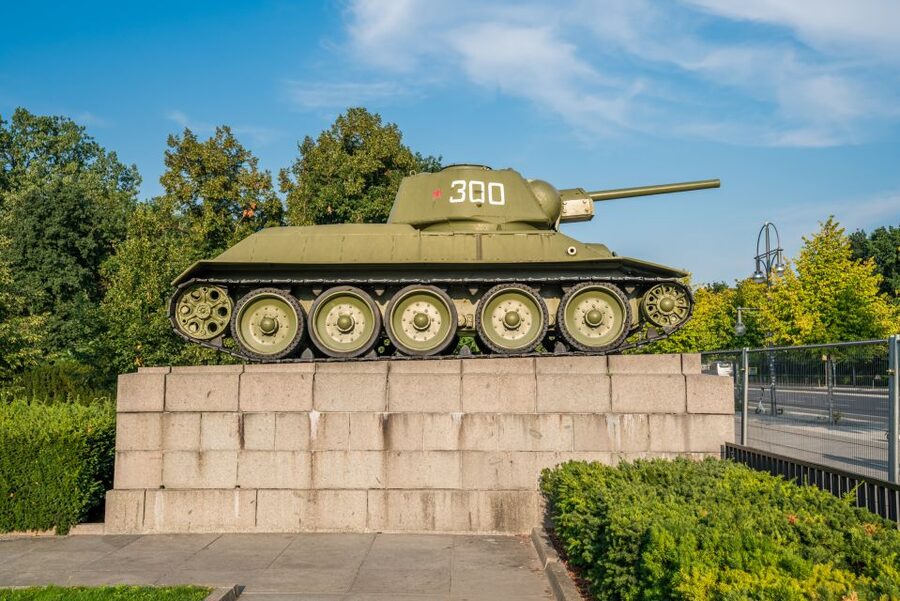
- Pause at the Soviet War Memorial: Preserved Red Army tanks and memorial stonework recall the Battle of Berlin and the Soviet dead.
- Learn from lively guides: Hannah, Jimmy, Ru, Scott, Peter, Mikhail, Marie, and others are praised for clear delivery, humor, careful pacing, and strong answers to questions.
- Choose a shared or private walk: English and German options are available, though language choices can differ between group types.
Why this two-hour Berlin history walk works
This is a useful first look at Berlin because it links two periods that are often taught separately. The Third Reich explains the destruction of the city and the political vacuum after 1945. The Cold War explains why Berlin was then split by walls, checkpoints, competing governments, and armed tension.
You begin at the Brandenburg Gate, a fitting place for that story. It once formed part of the city’s grand ceremonial heart, later sat close to the Berlin Wall, and became a powerful image of reunification after 1989. Your guide can use one landmark to explain Nazi spectacle, Cold War division, and the return to a united Germany.
The walk is led in English or German. The guide holds a pink umbrella at the meeting point, making the group easier to find in the open space at Pariser Platz. The nearest station is Brandenburger Tor, served by S1, S2, S25, S26, and U5, with buses 100 and 245 also nearby.
The tour costs $23 per person. I consider that fair value if you want a strong orientation to Berlin’s 20th-century past. You are not paying for museum entry or transport. You are paying for a guide who can connect several sites and explain what happened between them. If you already know this history well and prefer long, quiet visits at memorials, you may get more from visiting individual museums on your own.
More Third Reich and WWII Tours in Berlin
- Berlin’s Best: 2 Hour Walking Tour Third Reich and the Cold War
★ 5.0 · 5,486 reviews - Third Reich Berlin: Hitler and WWII Walking Tour
★ 5.0 · 3,301 reviews - Berlin: Third Reich, Hitler, and WWII Walking Tour
★ 4.9 · 1,133 reviews
Brandenburg Gate and the Reichstag: power in plain sight
The Brandenburg Gate is more than a convenient starting point. Its location lets the guide explain how Berlin’s political center changed meaning over time. Nazi parades passed through this part of the city, the Cold War placed the gate near the dividing line, and the events of 1989 turned it into a symbol of reunion.
From there, you pass the Reichstag. The building is now Germany’s federal parliament, but the guide focuses on the 1933 Reichstag Fire and its role in Hitler’s rise to power. This is a valuable stop because the building’s polished modern identity can hide the political crisis attached to it.
You’ll hear how the Reichstag survived war, destruction, and the division of Berlin before becoming the home of German democracy again. The stop does not appear to include an interior visit, so treat it as an outdoor explanation rather than a parliament tour.
A good guide makes the difference here. Jimmy is praised for a comfortable pace, easy-to-follow storytelling, humor, and willingness to answer questions. Thomas is noted for speaking clearly and loudly enough for the whole group, a practical advantage when several people gather around a city landmark.
The Soviet War Memorial in Tiergarten

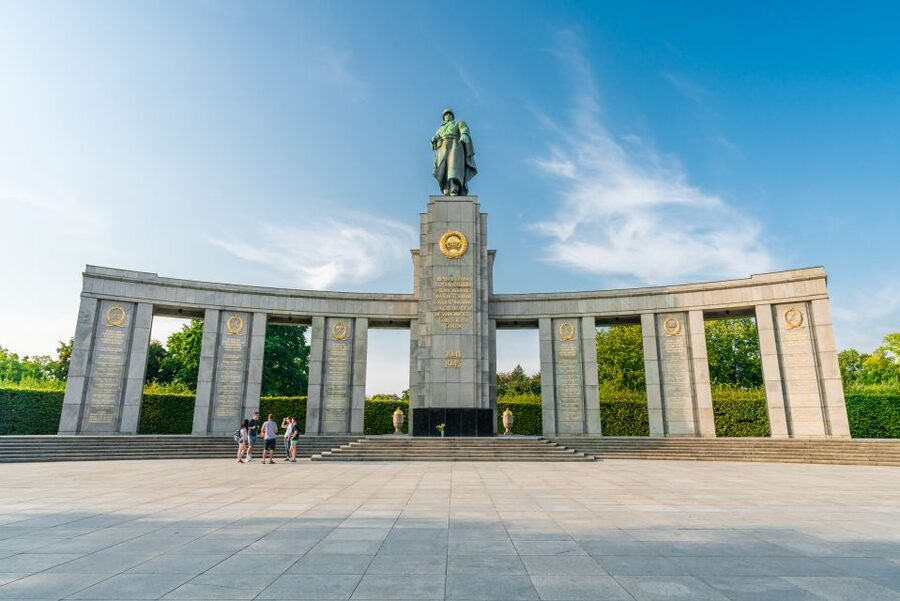
The route continues to the Soviet War Memorial in Tiergarten, where preserved Red Army tanks and memorial features honor approximately 80,000 Soviet soldiers who died during the Battle of Berlin. This is one of the tour’s most striking reminders that the final fighting of the Second World War happened here, in the city you are walking through.
The memorial adds balance to the story. Berlin’s Nazi past is central, but the city’s defeat and occupation also involved enormous Soviet losses. The tanks make the military history tangible, while the setting in Tiergarten gives you a brief change from the dense government district.
This is a pause for context rather than a long memorial visit. You will want to look closely, but the schedule has several more major stops ahead. On hot days, guide Mikhail has been especially attentive about keeping the group in the shade when possible. That sort of small practical care matters on a walking tour with limited stopping time.
The Holocaust Memorial and Hitler’s Bunker
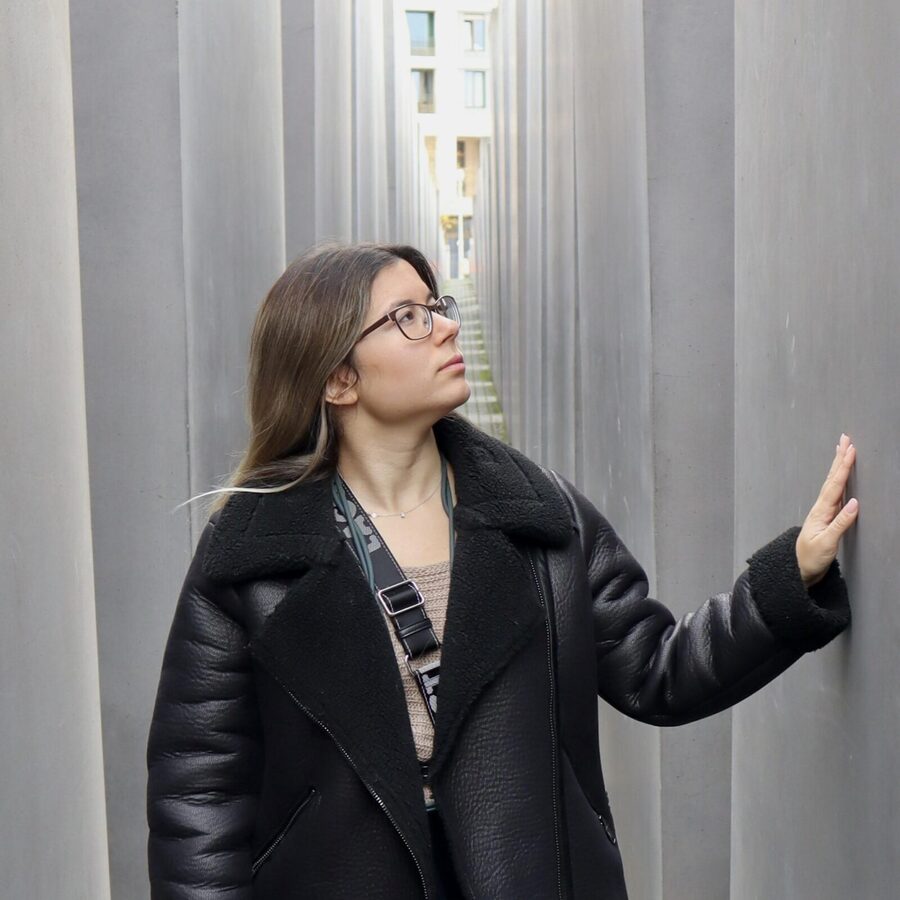
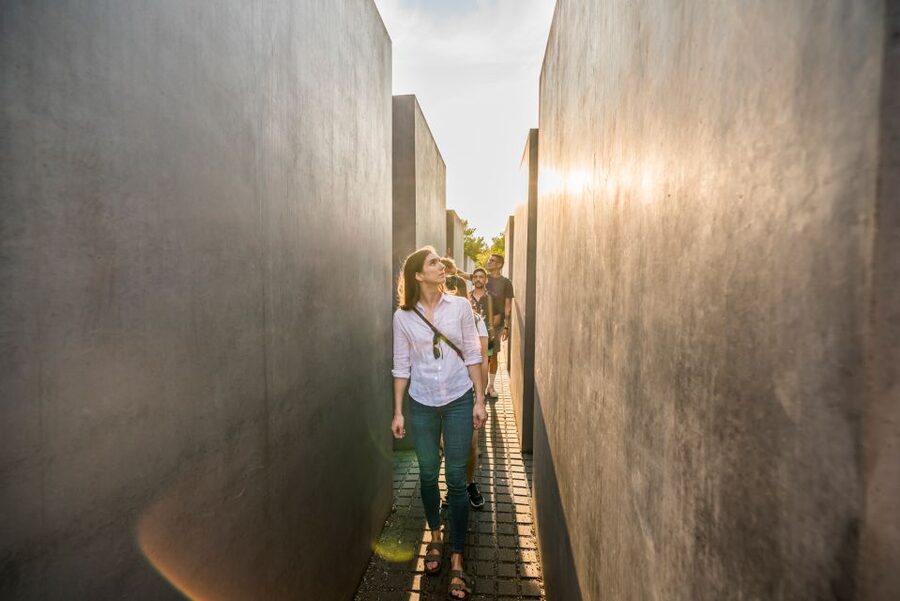
At the Memorial to the Murdered Jews of Europe, you encounter the field of concrete blocks dedicated to the six million Jewish victims of the Holocaust. The memorial is open and exposed from the outside, yet its changing heights and narrow passages can create a disorienting feeling as you walk through it.
Your guide gives the memorial its historical frame. The site is not simply a photo stop. It asks you to consider how a modern city marks mass murder without reconstructing the buildings or events themselves. Allow yourself a quiet moment here, even though the tour continues.
Nearby is the site of Hitler’s Bunker. The bunker itself is not presented as a dramatic ruin or attraction. That restraint is important. The location now sits within the everyday city, and the guide explains how Hitler spent his final days there as the Third Reich collapsed.
This stop works best when you want facts and context rather than spectacle. A guide can explain the site without turning it into a shrine. The short schedule means you should not expect an extended historical lecture, but you will leave with a clearer sense of where the final days of the Nazi regime unfolded.
Other trips into the same period in Berlin:
- Berlin Third Reich Sites: Half-Day Walking Tour
★ 5.0 · 835 reviews - Berlin: Guided Bike Tour of the Berlin Wall and Third Reich
★ 4.7 · 499 reviews - Hitler’s Germany: Berlin During the Third Reich & WWII
★ 4.8 · 476 reviews - Private Walking Tour Berlin Third Reich Hitler and World War II
★ 5.0 · 360 reviews
Detlev-Rohwedder-Haus and the Topography of Terror
The walk then reaches the former Ministry of Aviation, now known as Detlev-Rohwedder-Haus. Under Hermann Göring, the building served as a major Nazi government office. In 1949, it became the birthplace of East Germany, giving the same structure a second political life after the war.
That change makes the building especially useful for understanding Berlin. You are not looking at a single-period monument. You are seeing how Nazi administrative power, postwar occupation, and East German state-building overlapped in one place.
Next comes the former headquarters of the SS and Gestapo, now associated with the Topography of Terror. This is where the Nazi regime’s machinery of persecution was directed. The stop helps connect ideology with administration. Terror was not only carried out at distant camps or battlefields. It was organized through offices in the center of Berlin.
The outdoor portion can feel brief, especially if you want to study the documentation in detail. If you have extra time, you may want to return to the Topography of Terror separately. On this walk, its value is the position it gives you in the larger story: Nazi control, wartime destruction, postwar division, and the city’s effort to document what happened.
Walking the Berlin Wall to Checkpoint Charlie
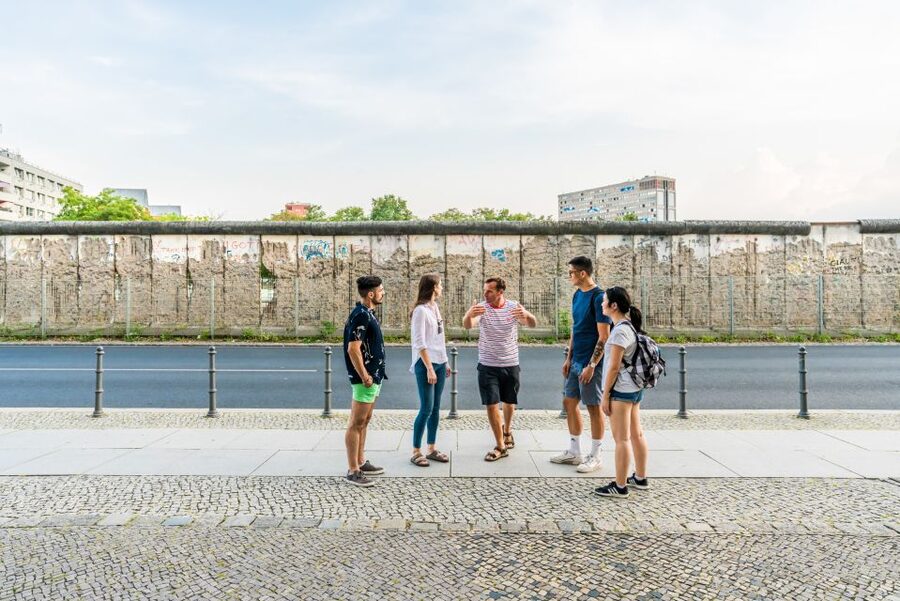
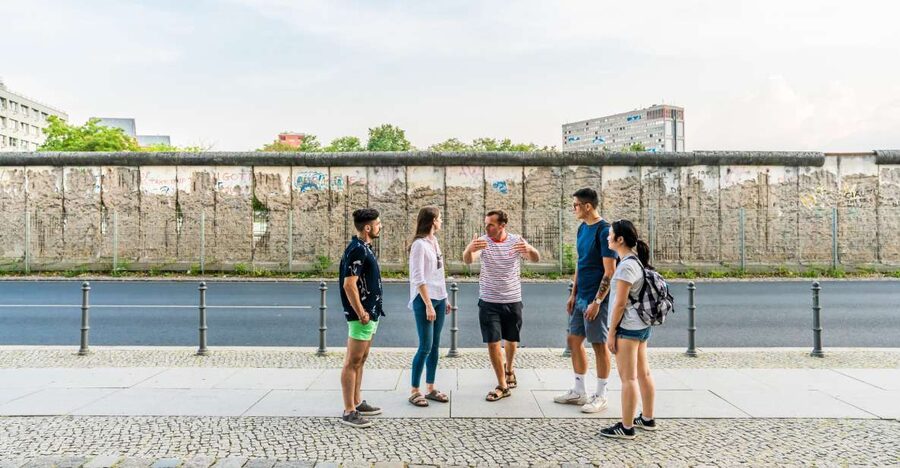
A 200-meter stretch of the Berlin Wall is the tour’s clearest Cold War stop. The remaining section gives you a physical sense of the barrier, but the guide’s stories are what explain its human meaning. You hear about people who risked everything to escape and about the lasting effects of a city divided for decades.
The wall was not only a line on a map. It separated families, workplaces, streets, and entire ways of life. A short preserved section cannot show all of that, but it gives the guide a place to explain how the border worked and why crossing it was so dangerous.
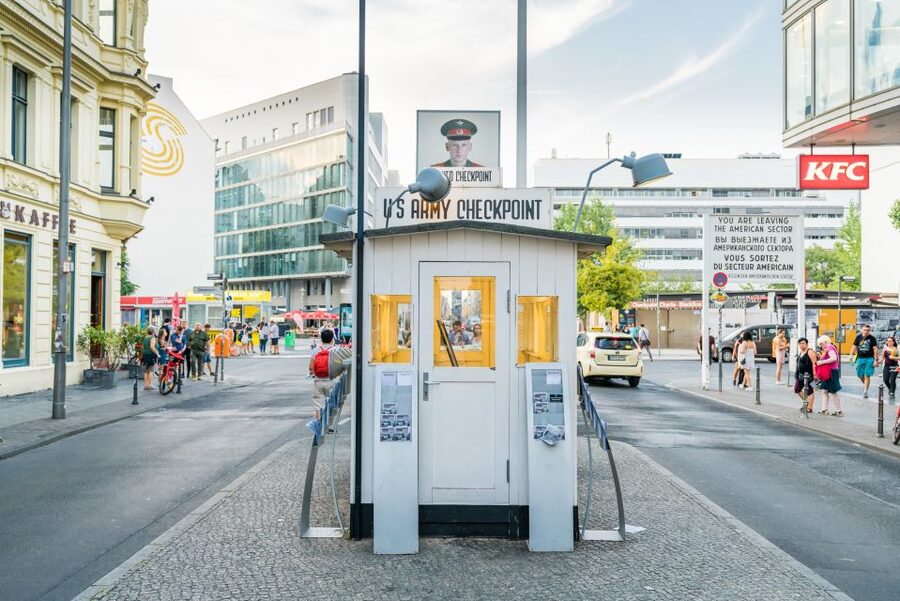
The route finishes at Checkpoint Charlie, once the scene of a tense standoff between American and Soviet tanks. The checkpoint also became linked with escape attempts and the final days before the Wall fell. It is one of Berlin’s most famous Cold War locations, but it can feel heavily shaped by tourism today.
That is exactly why a guide helps. Instead of treating Checkpoint Charlie as a quick photo backdrop, you can learn what happened there and how the checkpoint fits into the wider story of reunification. The final stop gives the walk a strong ending, moving from Nazi dictatorship through postwar rivalry to the opening of the border and the return of a united Germany.
Pace, guides, and the feel of the group
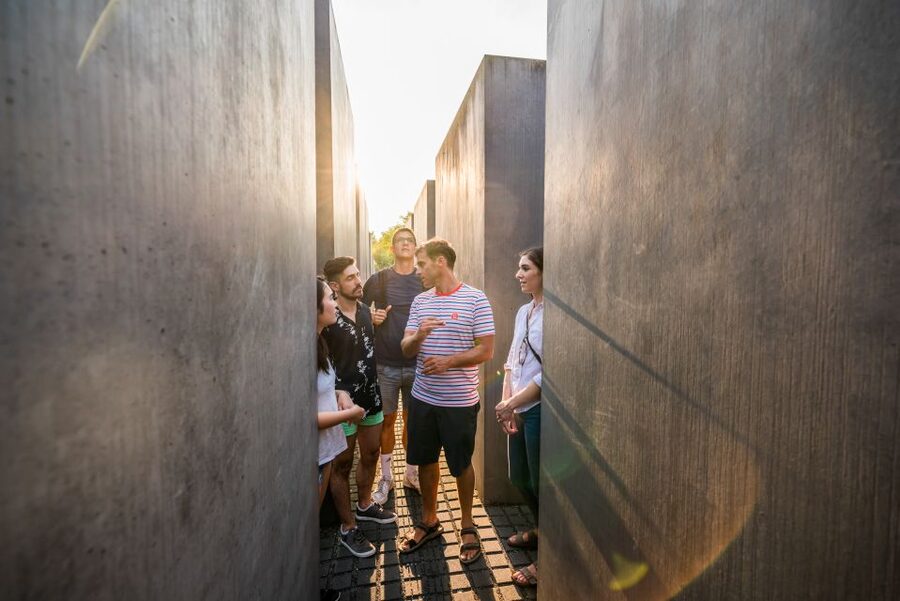
The tour takes about two hours and covers roughly 2 kilometers. I would call it a comfortable city walk for most people, but it is not a slow museum-style experience. You stop, listen, move on, and repeat. Wear comfortable shoes, bring water, and carry an umbrella because the tour runs in all weather.
The guides receive especially strong praise for storytelling and presentation. Hannah is described as energetic and able to present the past in an unusual, enjoyable way. Scott is praised for passion and for making the two hours pass quickly. Marie brings humor and a poignant tone, while Peter is appreciated for weaving small incidents into the larger account and answering questions along the way.
Other guides have their own strengths. Ru is noted for answering questions during the walk and adding unusual historical facts. Tina helps make Cold War Berlin easier to understand. Alex is valued for creating a clear story arc, and Joachim for giving thoughtful answers. Mikhail combines warmth with strong subject knowledge, while Raffaello is praised for his gift for storytelling.
Because guides vary, your exact experience will depend partly on who leads your departure. The consistent practical traits to look for are clear speech, a good pace, and the ability to handle questions without losing the thread of the tour. The guide also needs to make difficult material understandable without making it feel casual or entertaining for its own sake.
Shared and private options are available. A private group may suit you if you want to ask many questions, set a slower rhythm, or focus more heavily on one period. Check the language carefully before booking, since the shared and private options do not always offer the same choices.
Who should book this Berlin walking tour?
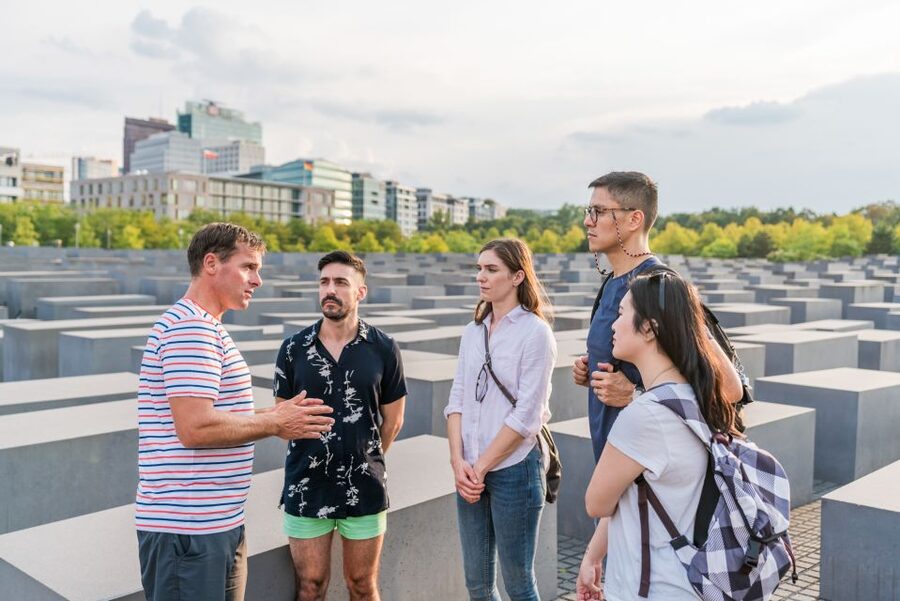
I would choose this tour early in a Berlin visit, especially if you want the city to make more sense before visiting museums. It gives you a map of key places and a basic timeline that can guide the rest of your sightseeing.
It also suits families with older children and adults who prefer learning outdoors. The subject is serious, but strong guides use stories, clear explanations, and occasional humor to keep the group engaged. If you need wheelchair access, the activity is listed as wheelchair accessible, though you should still expect the full route and outdoor conditions.
You may want another option if you dislike group pacing, want to enter every major building, or already have a detailed plan for the Topography of Terror and other museums. The tour visits many significant places, but most are viewed from outside and explained on the spot.
The meeting information contains one detail worth confirming before you go. The route is described as ending at Checkpoint Charlie, while the meeting details also say the activity ends back at the meeting point. Since Checkpoint Charlie is listed as the final stop, check the exact end point when reserving so you can plan your next journey.
Should you book it?
Book this walk if you want Berlin’s Nazi and Cold War history explained as one connected story. For $23, the combination of central landmarks, a live guide, and a 2-kilometer route offers good value, especially on your first day in the city.
I would be happiest with a guide such as Hannah, Jimmy, Ru, Scott, Peter, Mikhail, Marie, or Alex, all of whom are noted for strong delivery in different ways. Still, the tour’s real strength is its structure. In two hours, you move from the Brandenburg Gate to the Reichstag, the Soviet War Memorial, the Holocaust Memorial, Hitler’s Bunker, Nazi government offices, the Berlin Wall, and Checkpoint Charlie.
Bring good shoes, water, and rain protection. Keep your expectations realistic: this is a brisk overview, not a series of long site visits. If that suits you, it is a direct and worthwhile way to understand the forces that shaped modern Berlin.
FAQ
How long does the Berlin Third Reich and Cold War tour last?
The walking tour lasts two hours.
How far will I walk?
You should expect to walk approximately 2 kilometers during the tour.
Where does the tour start?
Meet in front of the tourist information point at Brandenburg Gate, Pariser Platz 1. Look for the guide with the pink umbrella.
How can I reach the meeting point?
The closest public transport is Brandenburger Tor station, served by S1, S2, S25, S26, and U5. Buses 100 and 245 also stop nearby.
Which landmarks are included?
The route includes the Brandenburg Gate, Reichstag, Soviet War Memorial in Tiergarten, Memorial to the Murdered Jews of Europe, Hitler’s Bunker site, Detlev-Rohwedder-Haus, Topography of Terror, a 200-meter section of the Berlin Wall, and Checkpoint Charlie.
Is Checkpoint Charlie the final stop?
Checkpoint Charlie is listed as the final stop on the route. The meeting information also says the activity ends back at the meeting point, so confirm the exact end location when booking.
What languages are available?
Live guiding is available in English and German. Language choices can differ between shared group and private options, so check the available language for your preferred tour type.
Is the tour wheelchair accessible?
Yes, the activity is listed as wheelchair accessible.
Does the tour run in bad weather?
Yes. Tours run in all weather conditions and on public holidays. Bring an umbrella and wear comfortable shoes.
More walking tours in Berlin
- Discover Berlin Half-Day Walking Tour
★ 5.0 · 9,624 reviews - Berlin: Discover Berlin Walking Tour
★ 4.9 · 5,998 reviews - Berlin: Hidden Backyards Guided Walking Tour
★ 4.8 · 5,360 reviews - Berlin: Alternative Berlin Walking Tour
★ 4.6 · 1,204 reviews
More Berlin Wall and Cold War tours in Berlin
- Skip-the-Line: Berlin Wall Museum at Checkpoint Charlie
★ 4.1 · 2,041 reviews - Cold War, Berlin Wall, Spies and the East Side Gallery
★ 5.0 · 1,024 reviews - Berlin: Cold War Walking Tour on Berlin Wall Route
★ 4.8 · 437 reviews - Berlin: Cold War Era History Guided Bike Tour
★ 4.8 · 413 reviews
Just added in Berlin
- Berlin: Energizing 2-Hour Morning Segway Tour★ 4.7 · 35 reviews
- Berlin: Thrilling E-Scooter Adventure Tour★ 4.4 · 66 reviews
- Beelitz-Heilstätten: Baum&Zeit Tree Top Walk Entry Ticket★ 4.9 · 7 reviews
- Beer Bike & Party Bike: Unforgettable Berlin City Tour incl. pickup★ 5.0 · 5 reviews
- AXE THROWING EXPERIENCE IN BERLIN★ 4.7 · 24 reviews
- Alternative Berlin / Street art tour – Private group★ 5.0 · 6 reviews
- Berlin: Alternative & Street Art Tour★ 4.5 · 6 reviews
- Berlin: 2.5-Hour Beer & Sunset Sightseeing Boat Cruise★ 4.6 · 61 reviews
Third Reich & WWII Tours, compared.
Berlin’s Best: 2 Hour Walking Tour Third Reich and the Cold War
Read our review →
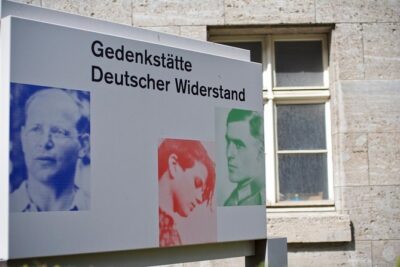
Third Reich Berlin: Hitler and WWII Walking Tour
Read our review →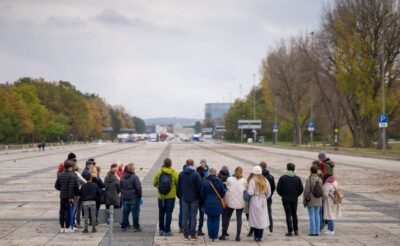
Walking Tour of Former Nazi Party Rally Grounds
Read our review →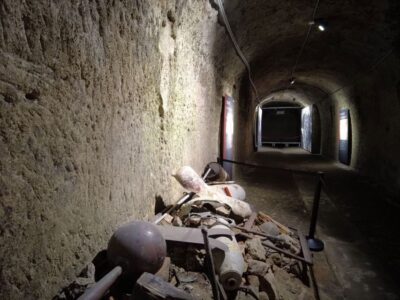
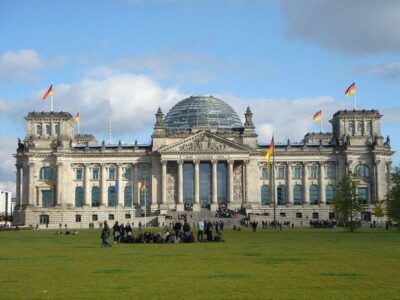
Berlin Third Reich Sites: Half-Day Walking Tour
Read our review →
Birthplace of the Third Reich Guided Walking Tour
Read our review →Browse the lists this tour appears in