
Reviewed · CONCENTRATION CAMP MEMORIAL TOURS
Visita en español al campo de concentración Sachsenhausen
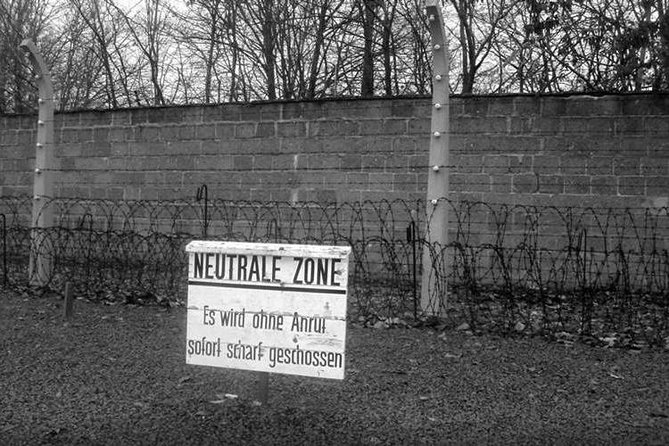
Sachsenhausen is not a sightseeing stop in the usual sense. It is a place of memory, and the Spanish-language guidance helps you face its difficult history with context rather than simply walking among empty buildings. The tour covers the camp’s entrance, barracks, command center, execution area, kitchen, armory, and other key sites.
I like two things here. First, you travel from central Berlin with a guide, so you do not have to piece together the site alone. Second, the explanations connect the physical remains to daily life inside the camp. The main drawback is the pace: some visitors find the schedule tight, with little time to look around on their own.
Key points at a glance
- Spanish from start to finish: The tour is designed for Spanish speakers and may be led by guides such as Alberto, Vicent, Edu, Micaela, or Jorge.
- A full three-hour site visit: You see major areas including Tower A, the barracks, kitchen, firing area, command center, armory, and casino.
- A serious, respectful subject: This is a memorial visit focused on Nazi persecution, prisoner life, and remembrance.
- Central Berlin meeting point: The tour begins at Pariser Platz 4 at 9:00 a.m.
- Budget for public transport: You must bring a purchased ABC transport ticket, which is not included.
- Plan for changing weather: Much of the experience takes place outdoors, so warm clothing and weatherproof layers matter.
Why Sachsenhausen belongs on a Berlin trip
Berlin tells the story of the Nazi period through museums, memorials, former government buildings, and scattered traces across the city. Sachsenhausen gives you a different kind of understanding. Here, the setting itself becomes part of the lesson.
The former concentration camp is in Oranienburg, outside central Berlin. That distance matters. You leave the city and arrive at a site built for imprisonment, forced labor, punishment, and murder. The broad grounds and surviving structures make the system easier to grasp than a display case in a city museum can.
This is not a light half-day outing. The subject is painful, and the visit may leave you quiet for the rest of the day. That is not a flaw in the experience. It is part of what makes a careful visit worthwhile.
A guide also helps you avoid treating the camp like a collection of ruins. The important question is not just what remains, but what happened in each space and how the camp operated. The strongest parts of this tour come from those links between place, policy, and human experience.
More Concentration Camp Memorial Tours in Berlin
- Berlin: Sachsenhausen Concentration Camp Tour in English
★ 5.0 · 5,711 reviews - Berlin: Sachsenhausen Concentration Camp Memorial Tour
★ 4.7 · 3,716 reviews - Sachsenhausen Concentration Camp Bus Tour in English from Berlin
★ 5.0 · 1,962 reviews
Meeting in Berlin at 9:00 a.m.
The day begins at Pariser Platz 4, near one of Berlin’s best-known central landmarks. Arriving early is sensible. You need time to find the meeting point, check your mobile ticket, and make sure you have the required ABC transport ticket.
The advertised start time is 9:00 a.m. The full experience lasts about five hours, with roughly three hours at the memorial site. The timing includes getting from Berlin to Oranienburg and organizing the group before and after the guided visit.
The tour has a maximum of 30 people. That is not a private experience, but it is small enough for a guide to address questions and keep the group together. In practice, groups may be divided between guides. One account describes Edu and Micaela organizing the transfer and splitting the group, with Edu then leading one section.
The public transport ticket is an important cost detail. Your ABC ticket is not included, so add it to the advertised price of $34.58 per person. Food and drinks are also not included. Bring what you need for the morning and afternoon, since the schedule is built around the memorial visit rather than a meal stop.
The journey to Oranienburg
The trip from Berlin makes Sachsenhausen accessible without arranging your own route. That convenience is one of the better reasons to choose a guided outing, especially if you are unfamiliar with the city’s transport zones.
The guide helps with the transfer and explains how the day will work. This support is useful because the visit is time-sensitive. You are not simply arriving at the entrance and wandering until you feel ready to leave. You travel as a group and follow a planned schedule.
The journey also gives the guide a chance to establish basic historical context before you reach the site. Several guides, including Alberto, Vicent, Edu, and Jorge, are described as clear, patient, and well prepared. The strongest praise centers on their ability to explain difficult material in a direct and respectful way.
Do not expect the trip to feel like a casual excursion. The subject begins before you enter the memorial. If you prefer to process historical sites alone and at your own pace, the group format may feel restrictive.
Entering through the camp entrance
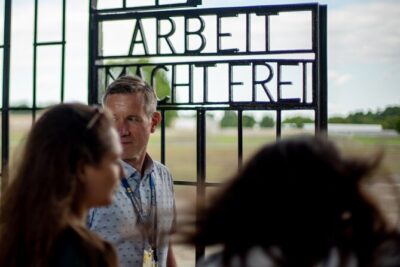
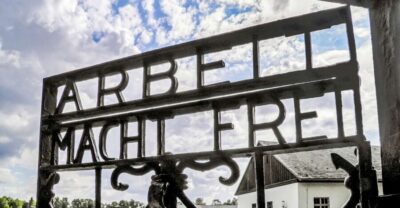
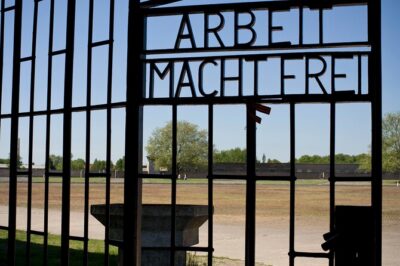
The visit inside Sachsenhausen begins with the former entrance area, including Tower A. This is an important opening because it introduces the structure of control. The gate and entrance were not just physical access points. They were part of a system designed to intimidate, monitor, and separate prisoners from the outside world.
The guide sets the tone here. A good explanation prevents the entrance from becoming a quick photo stop. You learn how the camp was organized and how its buildings related to one another.
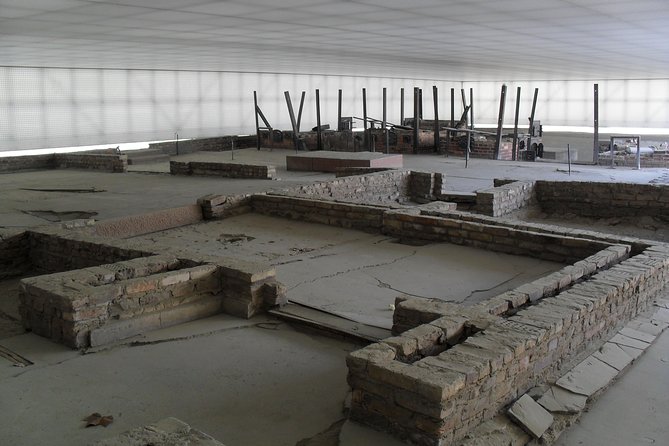
The tour then moves through the former grounds and surviving facilities. Some areas contain buildings or exhibits, while other sections are open and stark. You should not expect every part of the camp to look intact. In fact, the absence of buildings in some places is part of the memorial’s impact.
One practical point: the site is large, and you will spend time walking outdoors. Wear shoes suited to uneven or ordinary outdoor paths, and dress for the forecast. The tour runs in all weather.
Other memorial sites within reach of Berlin:
- Berlin: Sachsenhausen Concentration Camp Tour in English
★ 4.8 · 1,889 reviews - Sachsenhausen Concentration Camp Memorial Tour (Max. 15 Guests)
★ 5.0 · 1,516 reviews - Berlin: Sachsenhausen Concentration Camp and Potsdam Tour
★ 4.6 · 1,334 reviews - Sachsenhausen concentration camp.
★ 5.0 · 1,189 reviews
Barracks, kitchen, and daily prisoner life
The barracks are where the tour shifts from overall layout to the experience of people held inside the camp. The guide explains how prisoners lived, how the spaces were used, and what daily conditions meant in practice.
This is one of the tour’s most valuable features. Without explanation, an empty room or reconstructed section can be hard to interpret. With a guide, the buildings become evidence of a controlled routine shaped by deprivation, labor, fear, and punishment.
The kitchen adds another piece to that picture. It was part of the camp’s basic system of supply and control. You will hear how ordinary functions, such as food preparation, fit into the wider treatment of prisoners.
The experience does not depend on dramatic staging. There are no attractions here, and there should not be. The guide’s words, the remaining structures, and the quiet of the grounds do the work.
I would give yourself permission to pause when you need to. The schedule may be firm, but you do not have to fill every moment with conversation. This is a place where silence can be useful.
Command center, armory, and the camp system
The command center helps you understand that Sachsenhausen was not an isolated prison with random acts of cruelty. It was administered through offices, rules, guards, records, buildings, and routines.
The tour also visits the armory and the area identified as the casino. These less familiar locations help show how the camp functioned as a controlled institution. The guide places them within the wider layout, so you can see the relationship between administration, guard facilities, prisoner housing, and punishment areas.
This is where a Spanish-speaking guide can make a real difference. You are dealing with specialized historical terms and emotionally difficult details. Listening in your strongest language gives you more room to follow the facts, ask questions, and notice how each area fits the whole.
The guides are not identical, and the experience may vary slightly depending on who leads your group. Alberto is praised for warmth and historical command. Vicent is described as making the past vivid while remaining respectful. Micaela is noted for her attention to questions, while Jorge is described as clear and patient. These comments point to the value of the guide, but they do not guarantee a specific person on your date.
The firing area and the hardest part of the visit
The execution and firing area is among the most distressing sections of the route. It is also one of the places where a guide’s care matters most.
A responsible explanation gives you historical facts without turning suffering into spectacle. The purpose is to understand what happened and to remember the people affected, not to chase a shocking moment.
The guide may also connect this location to the wider history of Nazi persecution and the Second World War. One reason the tour works well for many people is that it does not treat the camp as a sealed-off story. The explanations place Sachsenhausen within the machinery of the regime and the period that produced it.
Expect this part of the visit to be emotionally heavy. Families should think carefully about the subject and the length of the day. The tour information says most people can participate, but it does not promise a child-specific program. One criticism concerns children paying the same way while needing more time, so families may find the fixed pace difficult.
A three-hour guided walk, not free exploration
The guided section lasts about three hours. That gives you time to cover the principal areas, but it does not provide unlimited room for independent viewing.
This distinction matters. You are paying for interpretation and organization rather than for a private visit with a flexible timetable. One person found that an additional 45 minutes would have made it easier to explore in depth. Another found the strict timing stressful, especially when deciding whether to stop and look at something more closely.
I would choose this tour if you want a structured introduction. It is particularly useful if you have never visited Sachsenhausen and want help understanding the site’s layout and history.
If you already have a strong background in the subject, or if you prefer to read every panel slowly, you may want more time than this format allows. The tour gets you through the main areas, but it is not designed as a full-day research visit.
Is $34.58 a fair price?
At $34.58 per person, the tour offers reasonable value if you want transport organization, a Spanish-speaking guide, and a guided visit of about five hours. The price does not include the ABC transport ticket, food, or drinks, so your actual cost will be higher.
The value rests mainly in the guide. The memorial itself is a place you could try to visit independently, but understanding what you are seeing is much harder without context. The tour takes care of the meeting process, helps keep the group on schedule, and gives you a sustained explanation in Spanish.
That said, the group size can reach 30 people, and your time at each point is controlled. You are paying for ease and interpretation, not privacy.
A good comparison is simple:
- Choose this tour if you want Spanish explanations and a planned visit from Berlin.
- Consider going independently if you want to set your own pace and are comfortable arranging transport and interpreting the site yourself.
- Add extra time to your Berlin schedule afterward, since this is a serious visit rather than a quick attraction.
Weather, clothing, and practical comfort
The tour operates in all weather. That means you should take the forecast seriously, particularly in winter. A guide named Vicent is specifically praised for the explanations, while the same account warns that winter visitors need to dress warmly.
Bring layers, a coat, and protection from rain when needed. Much of the visit takes place outside, and cold or wet conditions can make a heavy subject feel even harder to manage.
You should also bring water and any food you want during the day, since meals and drinks are not included. The meeting point and end point are different: the tour starts in Berlin at Pariser Platz and ends at Sachsenhausen Memorial and Museum in Oranienburg. Confirm your onward plans after the visit.
The activity accepts service animals, is near public transport, and says most people can participate. A mobile ticket is provided, and confirmation arrives when you book.
Who should book this Sachsenhausen tour?
This experience suits you if Spanish is your preferred language for serious historical subjects. It also fits first-time visitors who want a guide to explain the camp’s layout, daily life, and place in Nazi history.
It is a good match for adults, students, and families with older children who are prepared for difficult material. The guide can answer questions, but the format is still a group walk with a fixed schedule.
I would hesitate to recommend it to someone seeking a relaxed day trip, flexible photography time, or a quiet self-guided visit. The content is upsetting, the weather can be uncomfortable, and the pace may feel brisk.
Should you book it?
Book this tour if you want Spanish-language historical guidance and a practical way to reach Sachsenhausen from Berlin. The route covers the main areas, and the guides are repeatedly praised for clear explanations, patience, respect, and strong command of the subject.
Think twice if you need a great deal of free time. The three-hour site visit is substantial, but some people will want at least another 45 minutes to read and reflect.
For most Spanish-speaking visitors who want structure and context, this is a worthwhile choice. Go prepared for a difficult day, bring the required ABC ticket and suitable clothing, and treat the memorial with the seriousness it deserves.
FAQ
Where does the Sachsenhausen tour begin?
The tour begins at Pariser Platz 4, 10117 Berlin, Germany.
What time does the tour start?
The scheduled start time is 9:00 a.m.
Where does the tour end?
The listed end point is Sachsenhausen Memorial and Museum, Str. d. Nationen 22, 16515 Oranienburg, Germany.
How long does the experience last?
The full experience lasts approximately five hours. The guided visit inside and outside the former camp facilities lasts about three hours.
Is the tour conducted in Spanish?
Yes. The tour is designed for Spanish speakers and includes a Spanish-language professional or local guide.
Which areas of Sachsenhausen are included?
The visit includes the entrance, Tower A, armory, casino, command center, firing area, barracks, kitchen, and other former camp facilities.
Is public transportation included?
No. You must bring a purchased ABC transport ticket. The ticket is not included in the tour price.
Are food and drinks included?
No. Food and drinks are not included, except for any value-added offers specified in the guidebook.
How many people can join the tour?
The activity has a maximum group size of 30 people.
Can I cancel for a full refund?
Yes, if you cancel at least 24 hours before the experience start time. Cancellations made less than 24 hours in advance are not refunded, and late changes are not accepted.
Just added in Berlin
- Berlin: Energizing 2-Hour Morning Segway Tour★ 4.7 · 35 reviews
- Berlin: Thrilling E-Scooter Adventure Tour★ 4.4 · 66 reviews
- Beelitz-Heilstätten: Baum&Zeit Tree Top Walk Entry Ticket★ 4.9 · 7 reviews
- Beer Bike & Party Bike: Unforgettable Berlin City Tour incl. pickup★ 5.0 · 5 reviews
- AXE THROWING EXPERIENCE IN BERLIN★ 4.7 · 24 reviews
- Alternative Berlin / Street art tour – Private group★ 5.0 · 6 reviews
- Berlin: Alternative & Street Art Tour★ 4.5 · 6 reviews
- Berlin: 2.5-Hour Beer & Sunset Sightseeing Boat Cruise★ 4.6 · 61 reviews
Concentration Camp Memorial Tours, compared.
Sachsenhausen Concentration Camp Tour in English
Read our review →
Dachau Concentration Camp Memorial Site Tour from Munich by Train
Read our review →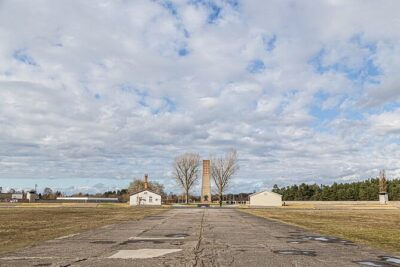
Sachsenhausen Concentration Camp Memorial Tour
Read our review →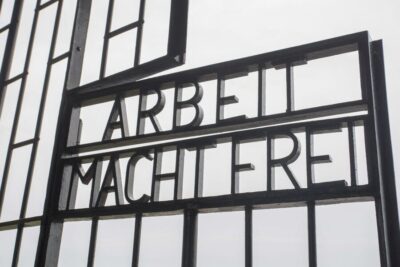
Sachsenhausen Concentration Camp Bus Tour in English from Berlin
Read our review →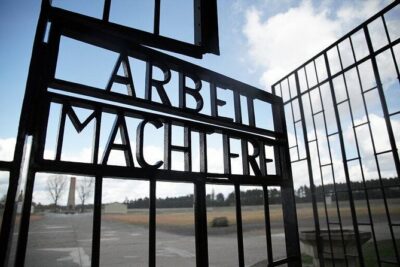
Sachsenhausen Concentration Camp Memorial Tour (Max. 15 Guests)
Read our review →
Sachsenhausen Concentration Camp and Potsdam Tour
Read our review →Browse the lists this tour appears in