
Reviewed · CONCENTRATION CAMP MEMORIAL TOURS
Never Again Sachsenhausen Concentration Camp
Sachsenhausen is not a light sightseeing stop. It is a place where the buildings, empty spaces, and surviving details force you to face how a concentration camp was designed to control people. This four-hour experience adds clear explanation to a difficult visit, including the camp’s Nazi period, its later use as a Soviet special camp, and its role in Communist anti-fascist propaganda.
I especially like the small group limit of 15, which gives you room to ask questions without turning the memorial into a crowded lecture. I also like Siobhán’s thoughtful, feminist approach, which connects the camp’s history with racism, women’s bodies, eugenics, medical abuse, and today’s far-right politics.
The main drawback is the subject itself, not the price or pace. Sachsenhausen can be upsetting, and this tour is direct about brutality, Holocaust denial, and current political connections. If you want only a quiet audio guide, the openly progressive tone may not suit you.
Key points to know before booking
- Four hours from central Berlin: Meet at Potsdamer Platz, then travel by public transport toward Oranienburg. The ABC ticket is not included.
- A small English-language group: The maximum is 15 people, with guide Siobhán leading the visit.
- More than a Nazi camp tour: The discussion also covers the Soviet special camp and Communist-era memorial messaging.
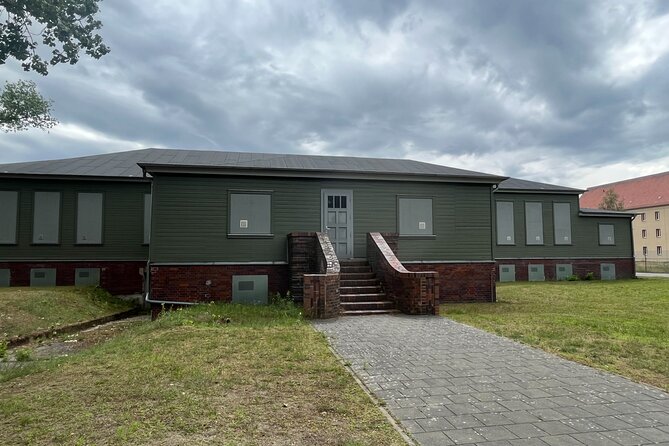
- Important surviving areas: Expect the visitors’ center, prisoner barracks, camp kitchen, and infirmary.
- A modern political lens: The tour links the site’s history to Holocaust denial, the AfD, racism, and control over women’s bodies.
- A donation is included: Your $31.29 fee includes a contribution to the memorial, but not food, water, or public transport.
Why Sachsenhausen needs more than a quick look
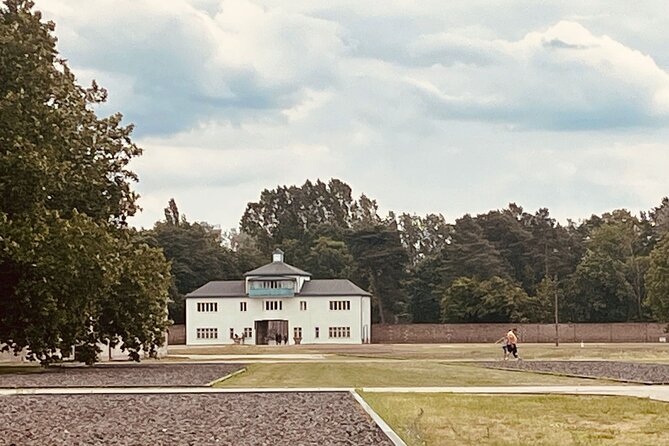
Sachsenhausen is north of Berlin, so visiting takes a half-day rather than a casual hour between city sights. That extra time matters. The camp is not a single dramatic building with a neat beginning and end. It is a large memorial complex where the scale, layout, and surviving structures gradually explain how a system of imprisonment worked.
I find a guided visit useful here because the site can otherwise feel confusing. You may see foundations, reconstructed buildings, open ground, and modern memorial displays without knowing what each space meant. The guide’s job is not to make the place easier emotionally. It is to help you understand what you are seeing and why it was built that way.
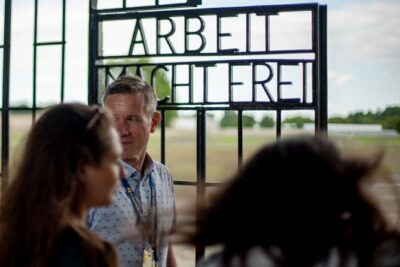
The tone is serious, but not stiff. Siobhán’s approach is described as sensitive to the suffering at the site while allowing brief moments of appropriate levity. That balance is valuable. A four-hour account of murder, abuse, and forced control can become hard to absorb, so a guide who gives you space to think is preferable to someone who rushes from one horror to the next.
This is also not presented as a narrow lesson about 1930s Germany. The discussion includes the Nazi camp, its later Soviet use, and the way political groups have shaped public memory. You are asked to consider not only what happened, but how societies remember it and how extremist ideas can return in new forms.
More Concentration Camp Memorial Tours in Berlin
- Berlin: Sachsenhausen Concentration Camp Tour in English
★ 5.0 · 5,711 reviews - Berlin: Sachsenhausen Concentration Camp Memorial Tour
★ 4.7 · 3,716 reviews - Sachsenhausen Concentration Camp Bus Tour in English from Berlin
★ 5.0 · 1,962 reviews
Starting at Potsdamer Platz and reaching the memorial
The meeting point is Potsdamer Platz 10 in central Berlin. Public transport takes you out toward Sachsenhausen, and the ABC-zone ticket is your responsibility. Plan for this extra cost when comparing the $31.29 tour price with going independently.
The journey is part of the practical reason to book a group experience. You do not have to work out every part of the route alone, and the guide can help the group stay together. Still, you should arrive ready for a full half-day. The tour lasts about four hours, and that figure includes the travel and site visit rather than just a short talk inside one building.
A few practical points matter:
- Bring water and a snack, since neither is included.
- Wear shoes suitable for a moderate amount of walking.
- Keep your public transport ticket separate from the tour cost.
- Leave enough time to reach Potsdamer Platz before the stated start.
- The activity ends back at the meeting point.
The experience accepts mobile tickets, and confirmation is provided when you book. Service animals are allowed. The activity is near public transportation, but you should still expect a physically active outing rather than a seated museum visit.
The visitors’ center explains a camp built for control
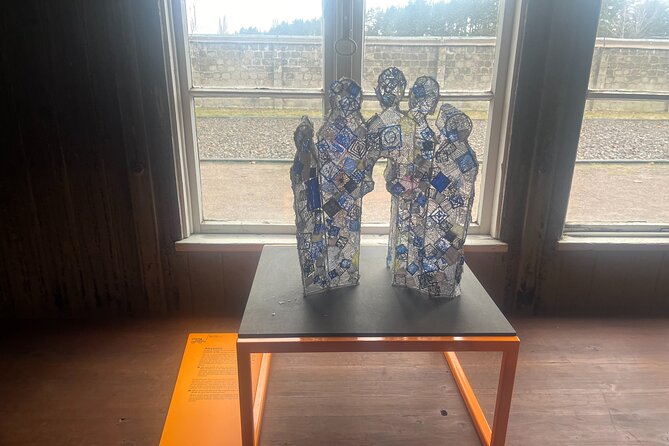
The first major stop is the visitors’ center. Here, models of the camp help explain its physical design. This is one of the most useful parts of the visit because the layout was not random. The buildings, sightlines, and controlled movement through the site all served a system built around surveillance, punishment, and the supposed superiority of the SS and Nazi racial order.
I like beginning with this kind of overview. Before seeing individual barracks or the infirmary, you get a sense of how the whole site functioned. The model gives you a map in your head, which helps the later walk make more sense.
The introduction also points to an unsettling modern detail. A former SS training camp has become the location of today’s Brandenburg police academy. That does not erase the memorial, but it creates an uncomfortable contrast between a place built to train agents of a dictatorship and a modern institution connected with public law enforcement.
The point is not to suggest that the present institution is identical to the past. The value is in noticing how places change, what remains, and how a country deals with buildings tied to a criminal regime. A good guide can help you sit with that tension instead of giving you an overly tidy explanation.
Barracks and kitchen: ordinary spaces with a violent purpose
From the visitors’ center, you explore the prisoner barracks and camp kitchen. These areas can seem plain at first glance, and that is part of what makes them difficult. The horror was carried out through systems, routines, hunger, forced labor, discipline, and the removal of human dignity, not only through scenes that look dramatic to a modern eye.
The kitchen is especially useful for understanding how food and basic care could become tools of control. The barracks help place prisoners’ daily lives within the larger camp structure. You are not simply looking at old rooms. You are considering how architecture and routine were used to confine people and strip away choice.
The visit also addresses attacks by neo-Nazis who deny the Holocaust. That detail brings the memorial into the present without making the past a political prop. It shows why preserving sites and teaching their history still matters. A memorial can be damaged physically, but denial also works by weakening public understanding of what happened.
The tour connects these issues with the AfD, a German far-right political group. This is one of the clearest signs that the experience uses a current political lens. If you prefer tours that avoid present-day politics, you should know this in advance. If you want to understand how memory, nationalism, racism, and denial overlap, the connection adds value.
Other memorial sites within reach of Berlin:
- Berlin: Sachsenhausen Concentration Camp Tour in English
★ 4.8 · 1,889 reviews - Sachsenhausen Concentration Camp Memorial Tour (Max. 15 Guests)
★ 5.0 · 1,516 reviews - Berlin: Sachsenhausen Concentration Camp and Potsdam Tour
★ 4.6 · 1,334 reviews - Sachsenhausen concentration camp.
★ 5.0 · 1,189 reviews
The infirmary reveals medicine used as a weapon
The infirmary is likely to be the hardest section of the visit. Here, the focus shifts to racism, eugenics, control over women’s bodies, and medical experiments. Prisoners were treated as test subjects by Nazi doctors who could use the camp to advance their careers.
That history is especially important because it cuts through the idea that medical abuse was carried out only by obviously brutal people. Doctors, institutions, and professional ambitions could all be folded into a racial dictatorship. The infirmary shows how language about science and health can be twisted into a system that decides whose life matters.
The discussion of women’s bodies adds another layer that many standard camp tours give less attention. It places gender alongside race and political persecution, rather than treating prisoners as one undifferentiated group. Siobhán’s feminist approach appears most relevant here, connecting personal bodily control with wider systems of power.
You should give yourself mental space around this part of the tour. The subject is not handled as sensational entertainment, and the guide’s careful tone helps. Still, the material is graphic in its implications. This is not the right outing for a rushed schedule or a family group that has not discussed the subject beforehand.
Three periods of history, not one
One strength of this experience is that it does not stop in 1945. Sachsenhausen is presented through three major stages: the Nazi concentration camp, the Soviet special camp that followed, and the later use of the site as a pro-Communist, anti-fascist propaganda tool.
That wider frame helps you avoid a common problem at historical sites: treating the past as a single closed chapter. After the Nazi camp ended, the location did not become politically neutral overnight. It was reused, reinterpreted, and placed inside another system of power.
The Soviet period deserves careful attention because it can be overshadowed by the Nazi history. Including it does not reduce the Nazi crimes or create a false comparison. It shows how different governments can use the same site for imprisonment, memory, and political messaging.
For me, this is one of the tour’s most worthwhile features. You leave with a more complicated understanding of how memorials are formed. You also see why a guide should explain not only what happened in each building, but how later generations chose to present it.
A progressive approach that will not suit everyone
The guide’s commentary is explicitly progressive and feminist. That means the tour makes links among historical racism, medical control, women’s bodies, Holocaust denial, and the rise of the AfD. These connections are not added as decoration. They shape the questions the tour asks you to consider.
I see that as a strength if you want history tied to public life. The site becomes more than a frozen memorial. It becomes a place to think about how prejudice is organized, how institutions can serve ideology, and how democratic societies respond to far-right movements.
There is a tradeoff. A visitor who wants a neutral-sounding, strictly chronological presentation may find the political framing too strong. The tour is not described as a dense academic lecture or a fully scripted audio presentation. It offers interpretation and discussion, filtered through the guide’s point of view.
That does not make it careless. The tone is described as respectful and attentive to the emotions of the group. The guide also responds to questions and adapts to a mixed group of teenagers and adults. I would choose this experience for people who want a human guide with a clear perspective, not for someone seeking a detached recording.
What $31.29 buys you
At $31.29 per person, the main value is structure. You pay for an English-language guide, a small group capped at 15, and a donation to the memorial. You also get help making sense of a complicated site that would be easy to visit without fully understanding.
The donation matters. It is not a substitute for the entry details of the memorial, but it means part of the fee supports the place you are visiting. When you compare the cost with going alone, remember to add the ABC public transport ticket and any food or drink you need.
The price is reasonable if you value discussion and historical context. It is less attractive if you only want transportation or a quick walk around the grounds. This is not a sightseeing transfer with a few facts added. The purpose is education, reflection, and direct discussion of difficult subjects.
The excellent rating and full recommendation from the small set of published feedback suggest that the guide’s care and communication are central to the experience. I would place more weight on the repeated praise for Siobhán’s sensitivity, flexibility, and ability to keep the group engaged than on the star score alone.
Who should book this Sachsenhausen visit
I would recommend it to:
- First-time visitors to Sachsenhausen who want help reading the site.
- People interested in how Nazi persecution connects with later politics and public memory.
- Small groups who prefer questions and conversation to an audio guide.
- Adults and older teenagers prepared for material about murder, racism, medical abuse, and sexual control.
- Visitors who want an English-language experience with a clearly stated progressive viewpoint.
I would hesitate to recommend it to someone with only a short gap in Berlin. Four hours is a serious commitment, and the subject needs time. I would also choose another format for children or teenagers who have not been prepared for the material, since the infirmary and discussion of prisoner abuse are particularly heavy.
The moderate fitness requirement is worth taking seriously. You will walk around a large memorial site, and the tour is not designed as a seated museum presentation. Bring water, dress for walking, and remember that the public transport ticket is separate.
Final verdict: book it if you want context, not comfort
Book this tour if you want Sachsenhausen explained as a living memorial, not treated as a grim photo stop. The small group, the donation, and Siobhán’s careful guidance give the visit shape, while the discussion of the Soviet period, Holocaust denial, the AfD, eugenics, and women’s bodies gives it reach beyond the usual Nazi-era outline.
Do not book it expecting emotional ease or a politically neutral script. This is a direct, progressive, sometimes sickening look at state violence and the ways its legacy remains relevant. For the right reader, that is precisely its value. You should leave saddened, better informed, and still able to think clearly about what you have seen.
FAQ
How long does the Sachsenhausen tour last?
The experience lasts approximately four hours.
Where does the tour begin and end?
It begins at Potsdamer Platz 10 in Berlin and ends back at the meeting point.
Is public transportation included in the price?
No. You need to purchase your own public transport ticket for the ABC zone.
Is the tour offered in English?
Yes. The experience is offered in English.
What is included in the $31.29 price?
The price includes the guided experience and a donation for the memorial. Snacks, bottled water, and public transport are not included.
Can I cancel for a full refund?
Yes. You can cancel at least 24 hours before the start time for a full refund. Changes or cancellations made less than 24 hours before the start time are not accepted, and the experience may also be canceled if its minimum number of participants is not reached.
Just added in Berlin
- Private One way Airport Transfer Berlin Airport To Berlin★ 3.5 · 17 reviews
- Private Walking Tour: Berlin Wall, Cold War and Checkpoint Charlie★ 5.0 · 37 reviews
- Modern Berlin Private Walking Tour: Diverse, Vibrant and Exciting German Capital★ 5.0 · 13 reviews
- Private Day Trip to Potsdam from Berlin by Train★ 4.5 · 27 reviews
- City Explorer: Potsdam Private Day Trip★ 4.5 · 10 reviews
- Berlin Private Custom 5-Hour Tour by Car★ 5.0 · 30 reviews
- Private Half-Day Sightseeing Tour in Berlin★ 3.5 · 6 reviews
- Berlin Private Custom Tour in a Minivan, East and West★ 5.0 · 123 reviews
Concentration Camp Memorial Tours, compared.
Sachsenhausen Concentration Camp Tour in English
Read our review →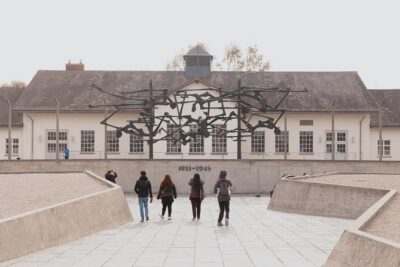
Dachau Concentration Camp Memorial Site Tour from Munich by Train
Read our review →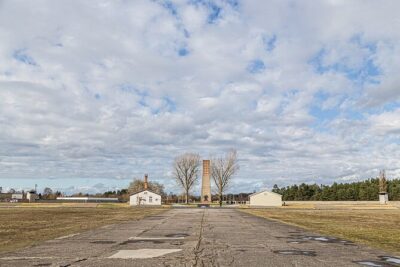
Sachsenhausen Concentration Camp Memorial Tour
Read our review →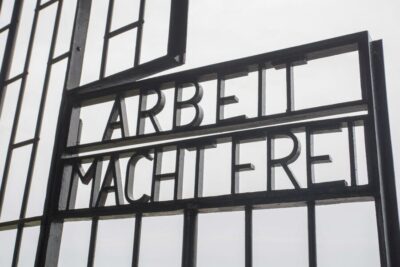
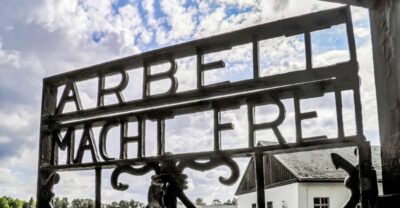
Sachsenhausen Concentration Camp Bus Tour in English from Berlin
Read our review →
Sachsenhausen Concentration Camp Memorial Tour (Max. 15 Guests)
Read our review →
Sachsenhausen Concentration Camp and Potsdam Tour
Read our review →Browse the lists this tour appears in