
Reviewed · CONCENTRATION CAMP MEMORIAL TOURS
Berlin: Sachsenhausen Concentration Camp Guided Tour
Sachsenhausen is not a sightseeing stop in the usual sense. It is a place where the machinery of Nazi persecution becomes painfully concrete: the roll-call ground, the barracks, the shoe-testing track, and Station Z, the execution site. I like that this five-hour tour gives the camp’s full story rather than stopping at the best-known buildings. I also like the small group of no more than seven, which leaves room for serious questions and a quieter pace.
The main drawback is time. Four hours at the memorial sounds generous, but the grounds are large and the subject demands pauses. You may want more time inside the exhibitions, especially if you care about original drawings and camp artifacts. One recent booking described six or seven hours as a better length.
Key points to know before booking
- A small group of up to seven: You can ask questions and stay close to the guide without the feel of a large coach tour.
- A full four-hour camp visit: The route covers prisoner life, the Jewish sector, Station Z, the infirmary, and the Soviet special camp.
- Guides with strong subject knowledge: Matt, Tom, and Jorg have led this experience, with particular praise for careful explanations and respectful handling of difficult material.
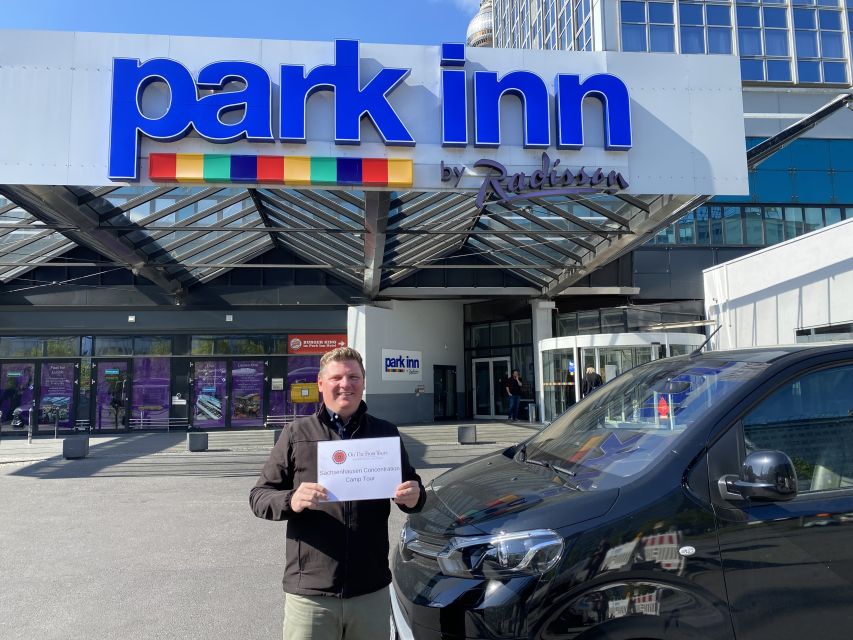
- Transport from central Berlin: Pickup and return are at the Park Inn by Radisson Berlin Alexanderplatz, with about 30 minutes each way by van.
- The postwar story is included: You learn about Soviet Special Camp No. 7, not only the Nazi period.
- Come prepared for weather and walking: The tour runs rain or shine, and comfortable shoes are essential.
Why Sachsenhausen deserves a full morning
Sachsenhausen was created near Berlin as a model for the Nazi concentration camp system. Its layout and administration were intended to guide the design and operation of later camps. That makes the site important not only for what happened to prisoners there, but also for understanding how a system of imprisonment, forced labor, punishment, and murder was organized.
I find the setting especially sobering because the tour begins with the structure behind the crimes. Before you enter the camp, the guide explains the SS Concentration Camps Inspectorate, the office responsible for managing the wider camp network. This gives you a framework for the rest of the visit. You are not simply looking at isolated ruins. You are learning how orders, guards, routines, buildings, and paperwork turned persecution into daily practice.
The tour also looks at the mindsets of both prisoners and guards. That does not mean treating their experiences as equal. It means examining how prisoners tried to survive inside a brutal system and how the SS enforced it through fear, routine, surveillance, and violence. A good guide keeps that distinction clear, and Matt, Tom, and Jorg have each been praised for combining factual detail with a respectful tone.
More Concentration Camp Memorial Tours in Berlin
- Berlin: Sachsenhausen Concentration Camp Tour in English
★ 5.0 · 5,711 reviews - Berlin: Sachsenhausen Concentration Camp Memorial Tour
★ 4.7 · 3,716 reviews - Sachsenhausen Concentration Camp Bus Tour in English from Berlin
★ 5.0 · 1,962 reviews
Meeting at Alexanderplatz and riding to the memorial
The day begins at the main entrance and taxi pickup point of the Park Inn by Radisson Berlin Alexanderplatz. The central meeting place is useful if you are staying in Berlin’s core, and pickup and return are included. The van ride takes about 30 minutes each way, giving the guide time to introduce the Nazi camp system before you reach the memorial.
That early explanation matters. It prepares you for the site without rushing straight into the most difficult areas. You begin to understand why Sachsenhausen was selected as a model camp and how its administration connected with the wider Third Reich.
The tour is conducted in English. A bottle of water is included, but bring a snack because the day is long and there is only a short break at the camp kitchen. Comfortable shoes are a must. The memorial is visited on foot, and the tour operates in all weather, so a rain jacket or warm layer is sensible depending on the season.
Entering through Tower A
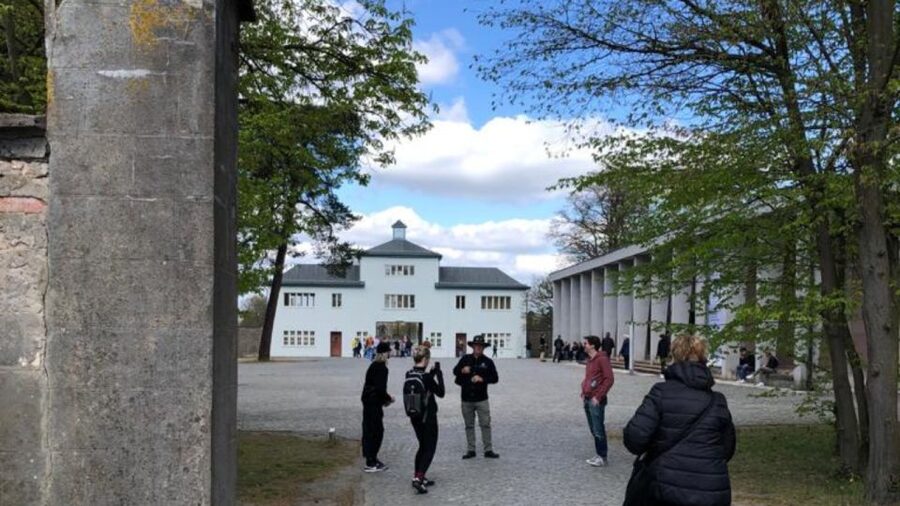
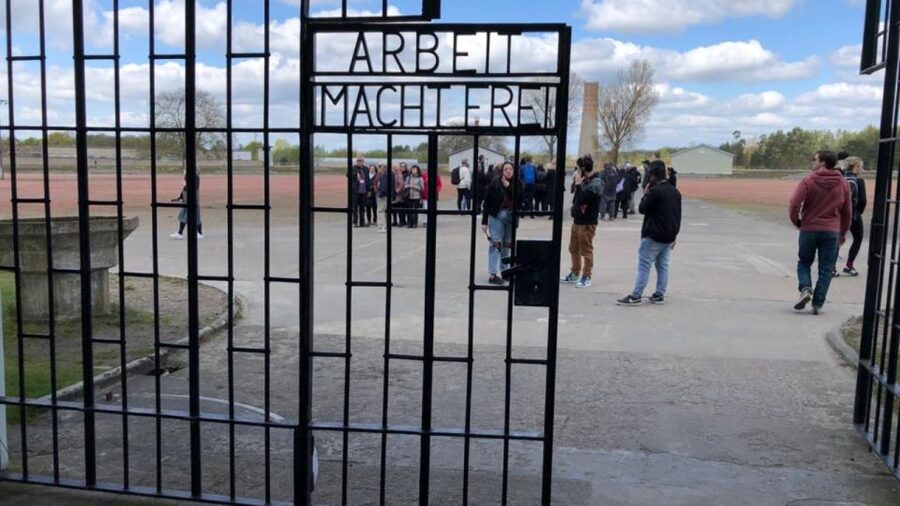
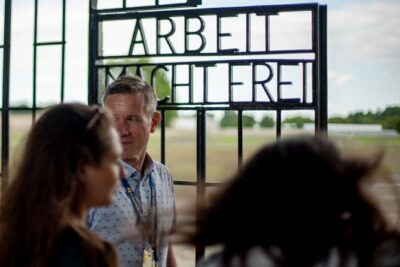
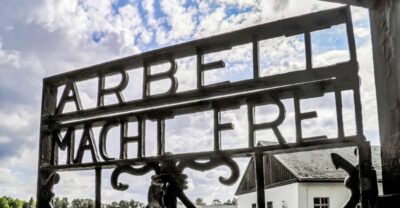
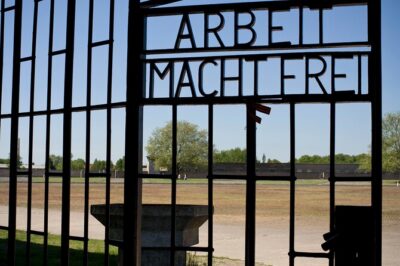
At the main entrance, you pass through Tower A beneath the infamous words Arbeit Macht Frei. The entrance is one of the most recognizable features of the camp, but the tour does not treat it as a photo opportunity. The guide places it in context, explaining how the gate, watchtower, and layout communicated control from the first moment a prisoner arrived.
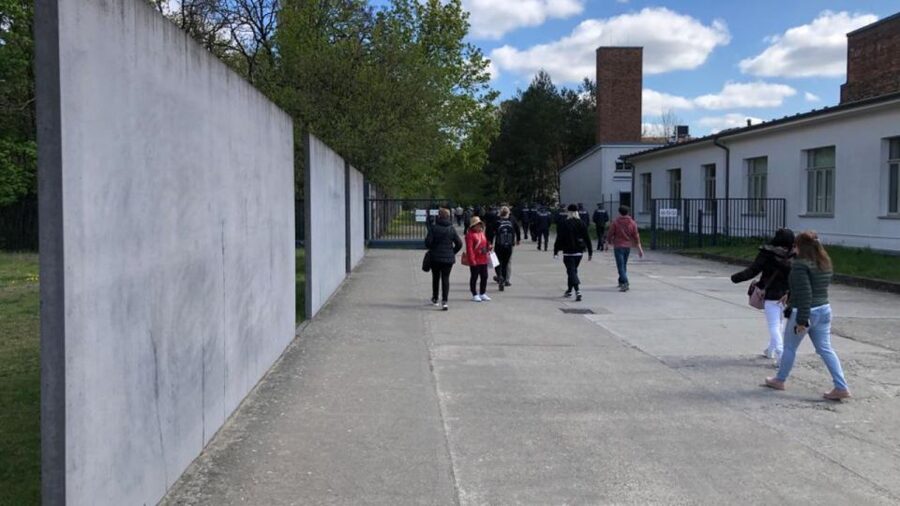
Inside, the focus turns to the daily routine. You learn about morning roll call, when prisoners were assembled and counted, and the shoe-testing track, where inmates were forced to walk long distances to test footwear for the German military. These details can sound administrative until you understand what they meant physically: exhaustion, punishment, exposure, and the use of prisoner bodies for the needs of the camp system.
This is one of the tour’s strongest features. Instead of presenting Nazi crimes only through dates and major events, it shows how cruelty entered ordinary hours. Getting up, lining up, walking, eating, working, and sleeping were all controlled.
The Jewish sector and prisoner barracks
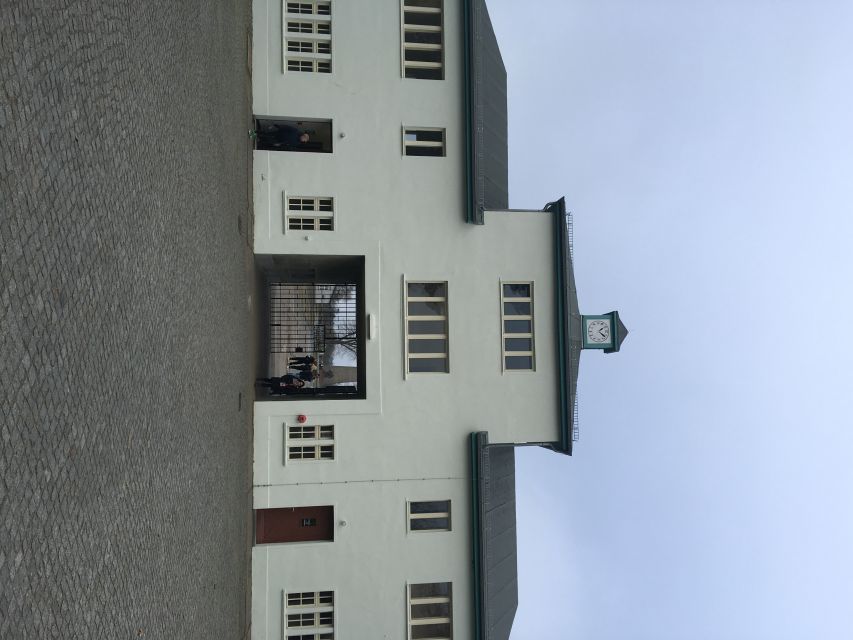
The route continues to the Jewish sector, where you see the cramped conditions in which prisoners were held. The barracks help you picture overcrowding and the lack of privacy. The guide explains what daily life was like for inmates and the challenges they faced simply to remain alive.
Some of the original buildings and displays have been preserved, while other parts of the camp are marked by foundations or reconstructed elements. That mix can require attention. You should listen closely to what is original, what has been rebuilt, and what is being shown through an exhibition. The value of the tour comes partly from having someone explain those differences rather than leaving you to guess.
The camp’s Jewish sector also reminds you that prisoners were not one uniform group. People were imprisoned for different reasons, and their treatment varied within the system. The guide discusses the conditions faced by inmates while keeping the focus on the human cost rather than reducing the site to statistics.
Other memorial sites within reach of Berlin:
- Berlin: Sachsenhausen Concentration Camp Tour in English
★ 4.8 · 1,889 reviews - Sachsenhausen Concentration Camp Memorial Tour (Max. 15 Guests)
★ 5.0 · 1,516 reviews - Berlin: Sachsenhausen Concentration Camp and Potsdam Tour
★ 4.6 · 1,334 reviews - Sachsenhausen concentration camp.
★ 5.0 · 1,189 reviews
The cell block and prisoners held apart
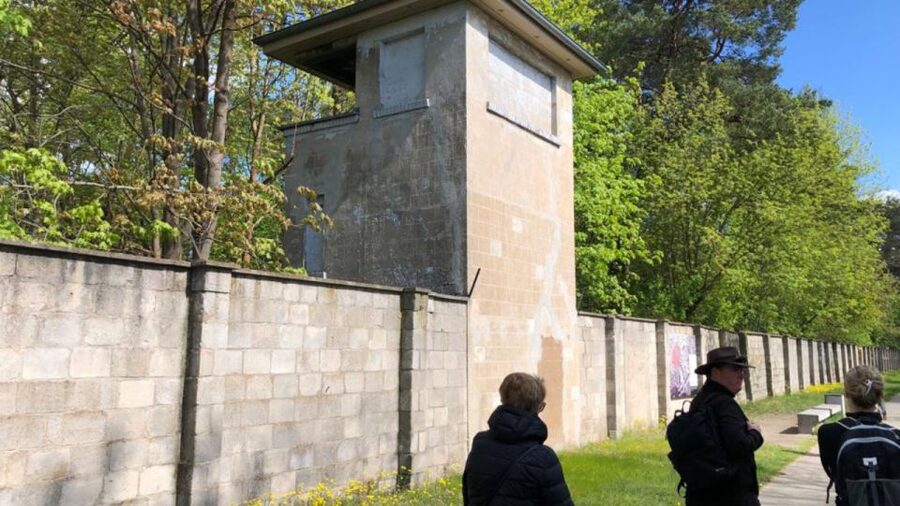
The camp cell block brought another form of control. Here, British prisoners of war and special prisoners, including Stalin’s son, were held. The building’s history adds a different layer to the visit, because imprisonment here was tied not only to mass detention but also to political importance, military status, and the Nazi authorities’ use of selected prisoners.
The cell block is described as a place of secrecy and harsh mistreatment. You will hear how prisoners in this section were isolated and controlled. It is a useful reminder that the camp contained many forms of confinement, from mass barracks to individual cells.
This portion can be emotionally demanding because the spaces are more enclosed than the open camp grounds. The small group helps here. With only a few people, you can hear the guide clearly and ask for clarification without interrupting a large crowd.
A break at the camp kitchen
The camp kitchen provides a short break during the visit. You can use the restrooms, have some water or a snack, and look at an exhibition of camp objects. Prisoner drawings remain visible on the walls, offering a direct connection to the people who lived through the camp.
I consider this pause important, not a distraction. Four hours on a site like Sachsenhausen requires a moment to reset. You can take in the displays at your own pace, though the time available may feel limited. If exhibitions are a major reason for your visit, pay attention to the guide’s timing and use the break efficiently.
The kitchen also brings the subject back to basic needs. Food, hunger, labor, and rationing were central to prisoner life. A building associated with feeding becomes another way to understand how deprivation was built into the camp routine.
Station Z and the machinery of murder
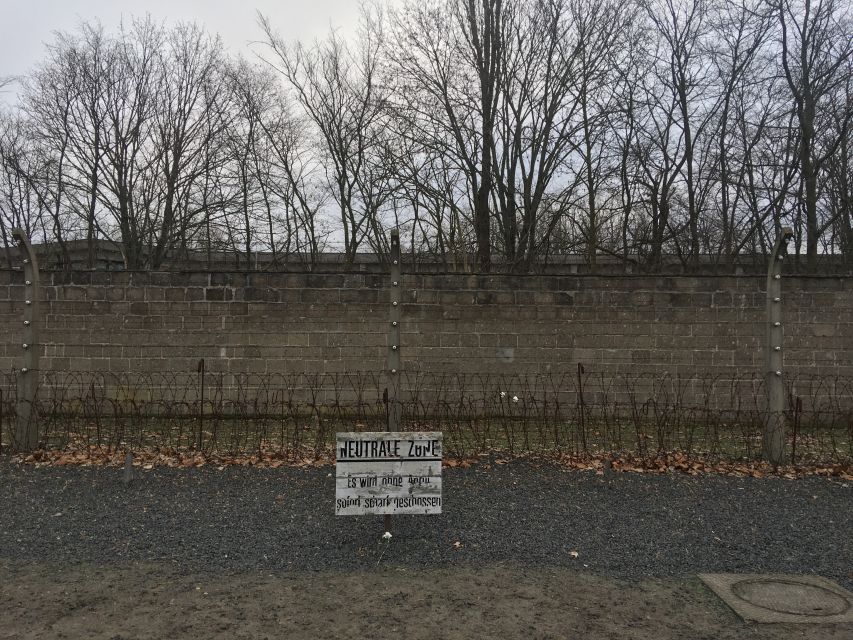
The tour then reaches Station Z, the camp’s execution site, gas chamber, and crematorium. This is the most difficult part of the visit. Here, the guide explains the Nazi Final Solution and the systematic murder of prisoners.
The site should be approached quietly and without forcing yourself to stay longer than you can manage. You may find that the factual explanation is easier to absorb than a dramatic presentation would be. The guides praised in this experience, including Matt and Tom, are described as careful and compassionate when dealing with this material.
Station Z is also where the tour’s earlier explanations come together. The camp’s administration, guards, prisoner categories, daily routines, and systems of punishment were not separate subjects. They formed part of a structure that could end in organized killing. Seeing the execution area after learning about ordinary camp life makes that connection stark.
The infirmary and medical abuse
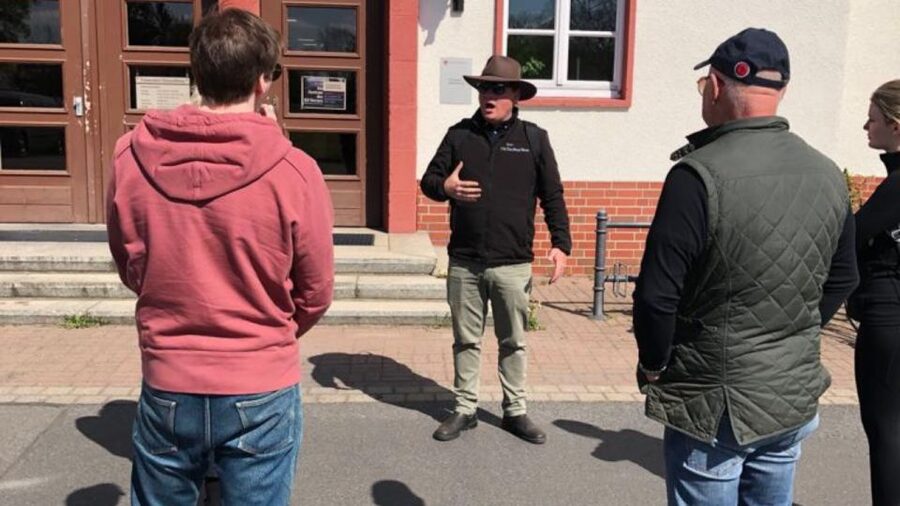
Before leaving, the group visits the camp infirmary. The guide explains that prisoners were subjected to medical experiments there. This stop expands the story beyond forced labor and execution, showing how Nazi authorities also abused prisoners through so-called medical research and treatment without consent.
The infirmary can be easy to overlook on a self-guided visit because it does not have the same visual impact as the main gate or Station Z. With a guide, it becomes part of the wider explanation of how prisoners were denied control over their own bodies.
The subject is disturbing, but it is necessary. A visit to Sachsenhausen should not leave you with only a general sense that conditions were harsh. It should help you understand the different ways prisoners were controlled, exploited, injured, and killed.
The Soviet Special Camp after 1945
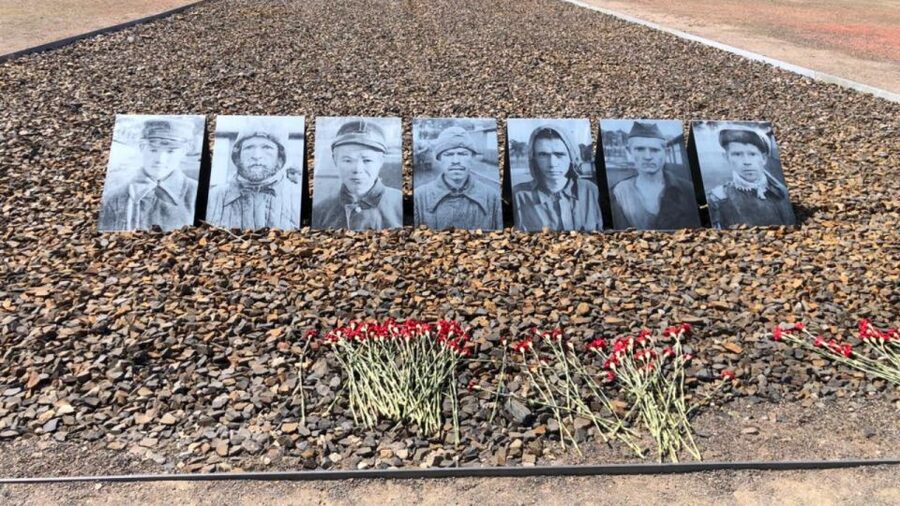
One feature that sets this tour apart from a visit focused only on the Nazi era is its treatment of Sachsenhausen after the war. The Soviet Union continued to use the camp as Special Camp No. 7. About 60,000 people were held there, including German prisoners of war, convicted war criminals, and political prisoners.
The guide discusses continued mistreatment, postwar conservation, and the site’s place in modern Germany. This later chapter does not erase or equal the Nazi crimes. Instead, it explains how a place built for imprisonment continued to carry painful political meaning after 1945.
I value this section because memorials are not frozen in one date. Sachsenhausen has a layered story, and understanding the Soviet use of the site helps you see why preservation, interpretation, and public memory can be complicated. It also gives you a better sense of how Germany has dealt with difficult parts of its twentieth-century past.
What the small group changes
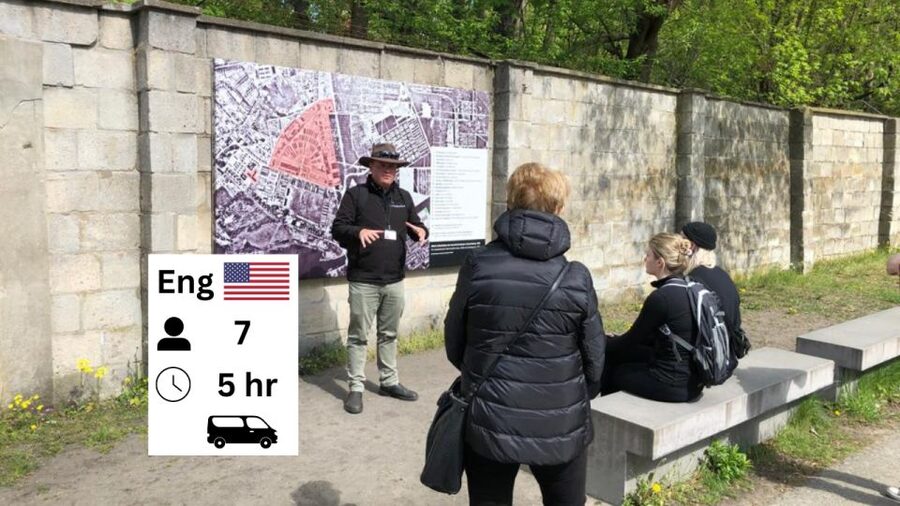
The group is limited to seven participants, and that is more than a marketing detail here. A small group lets the guide speak in a lower voice, answer personal questions, and adjust the pace when a subject needs more explanation. It also makes the visit feel less like a procession.
Past guides have included Matt, Tom, and Jorg. Matt has been praised for combining historical accuracy with sensitivity, while Tom has been described as patient, clear, and respectful in cold weather. Jorg has been noted for strong explanations and useful context about Berlin and the Second World War.
Guide quality matters greatly at a memorial. A guide who simply recites dates can make the site feel remote. A guide who overdramatizes it can make the experience uncomfortable for the wrong reasons. The strongest approach is calm, precise, and human. That is the tone you should look for here.
Is $115 good value?
At $115 per person, this is not the cheapest way to reach Sachsenhausen. You are paying for a five-hour experience, round-trip transport from central Berlin, an English-speaking guide, a small group, and a contribution connected to the memorial’s preservation.
The value depends on how you want to visit. If you are comfortable arranging transport and reading the memorial’s information on your own, a self-guided visit may cost less. But you will need to handle the journey, plan your route across the grounds, and build the historical connections yourself.
For me, the strongest value is the guide’s interpretation. Sachsenhausen covers a lot of ground and its history includes the Nazi camp system, prisoner life, mass murder, medical abuse, and Soviet detention after the war. A good guide turns those separate locations into one clear story.
The tradeoff is time inside the exhibitions. Four hours at the memorial includes walking, explanations, questions, a break, and several major areas. If you want to read every panel or study each object, you may feel hurried. Think of this as a guided overview with depth, not a full day for independent research.
Who should book this experience?
You should consider this tour if you want serious historical context and prefer not to manage transport from Berlin. It suits first-time visitors to Sachsenhausen, people with a strong interest in the Second World War, and anyone who values a small group with room for questions.
It is also a good choice if you want the postwar Soviet period included. Many people visit concentration camp memorials with a narrow focus on 1933 to 1945, but the later history changes how you understand the site today.
This may not suit you if you need a light morning, dislike long walks, or want to spend most of your time silently reading exhibitions. The subject is painful, the tour runs rain or shine, and Station Z and the infirmary can be particularly hard to process.
Book ahead if the small group matters to you. Cancellation is free up to 24 hours before the start, and you can reserve now and pay later, which gives you some flexibility when planning your Berlin days.
Should you book the Sachsenhausen tour?
I would book this tour if you want a carefully explained visit rather than a quick look at the main gate and barracks. The route covers the camp’s central history, the Jewish sector, prisoner routines, Station Z, the infirmary, and the Soviet special camp, all with transport from Alexanderplatz.
Allow yourself quiet time afterward. This is not an attraction to tick off before lunch and forget. The small group, strong guides, and broad historical scope make the $115 price reasonable for many visitors, but give yourself permission to choose a shorter or self-guided visit if you know you need more time alone at the memorial.
FAQ
Where does the tour begin?
The meeting point is at the main entrance and taxi pickup and drop-off area of the Park Inn by Radisson Berlin Alexanderplatz.
How long does the experience last?
The full experience lasts five hours. The van ride takes about 30 minutes each way, and the guided visit at Sachsenhausen lasts about four hours.
How do I reach Sachsenhausen?
Round-trip transportation is provided by van from the Park Inn at Alexanderplatz. The guide uses the journey to explain the Nazi concentration camp system before you arrive.
What language is the tour in?
The live tour guide speaks English.
How large is the group?
The group is limited to seven participants.
Is the tour wheelchair accessible?
Yes, the activity is listed as wheelchair accessible.
What should I bring?
Bring comfortable shoes and snacks. A bottle of water is included, and the tour operates rain or shine.
Can I cancel or pay later?
You can cancel up to 24 hours in advance for a full refund. You can also reserve your place and pay later.
Just added in Berlin
- Private Walking Tour: Berlin Wall, Cold War and Checkpoint Charlie★ 5.0 · 37 reviews
- Modern Berlin Private Walking Tour: Diverse, Vibrant and Exciting German Capital★ 5.0 · 13 reviews
- Private One way Airport Transfer Berlin Airport To Berlin★ 3.5 · 17 reviews
- Private Day Trip to Potsdam from Berlin by Train★ 4.5 · 27 reviews
- City Explorer: Potsdam Private Day Trip★ 4.5 · 10 reviews
- Berlin Private Custom 5-Hour Tour by Car★ 5.0 · 30 reviews
- Private Half-Day Sightseeing Tour in Berlin★ 3.5 · 6 reviews
- Berlin Private Custom Tour in a Minivan, East and West★ 5.0 · 123 reviews
Concentration Camp Memorial Tours, compared.
Sachsenhausen Concentration Camp Tour in English
Read our review →
Dachau Concentration Camp Memorial Site Tour from Munich by Train
Read our review →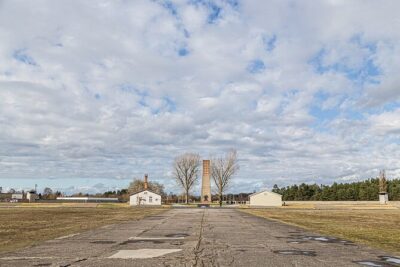
Sachsenhausen Concentration Camp Memorial Tour
Read our review →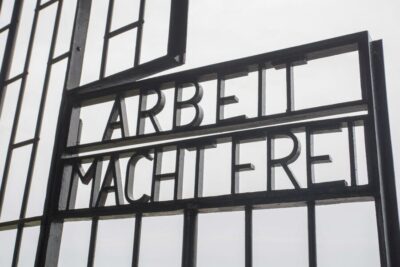
Sachsenhausen Concentration Camp Bus Tour in English from Berlin
Read our review →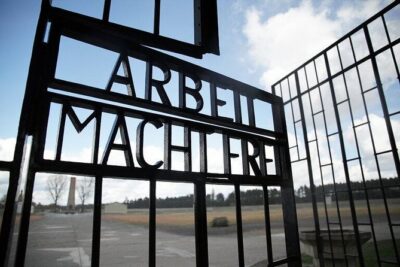
Sachsenhausen Concentration Camp Memorial Tour (Max. 15 Guests)
Read our review →
Sachsenhausen Concentration Camp and Potsdam Tour
Read our review →Browse the lists this tour appears in