
Reviewed · THIRD REICH & WWII TOURS
Berlin Third Reich Sites: Half-Day Walking Tour
Berlin’s Nazi past is scattered across the city, often marked by a plaque, a surviving wall, or an empty space. This four-hour walking tour ties those fragments together, starting near Hackescher Markt and ending outside the Reichstag. The route covers Jewish Berlin, Nazi institutions, resistance, memorials, and the final days of the war.
I like the efficient route, which lets you see more than you likely would alone, and I like the chance to ask questions as the story unfolds. Guides such as Peter, Hannah, Tom, Jonathan, and Gregor have been praised for clear explanations and a thoughtful tone. The main drawback is simple: you walk for four hours, often outdoors, and the subject is grim. Good shoes and suitable clothing matter.
Key points to know before you book
- A citywide history lesson on foot: The route connects Hackescher Markt, Anhalter Bahnhof, the Topography of Terror, several memorials, and the Reichstag.
- Strong guide-led context: The guide explains how Hitler and the Nazi Party gained power, how the regime operated, and how persecution spread.
- A serious look at persecution: The tour addresses Jewish people, Sinti and Roma communities, homosexual victims of Nazi persecution, and others affected by the dictatorship.
- A useful half-day format: The tour begins at 10:00 a.m. and finishes near the Reichstag, leaving the afternoon open.
- Good value at $21.77: You pay for four hours with an English-speaking professional guide. The only stated extra is an AB Zone transport ticket, about €3.80.
- Prepare to walk in all weather: The group can reach 25 people, and the tour operates even when conditions are poor.
Why this route helps make sense of Berlin
Berlin does not present its Nazi-era story in one neat museum. Important places are spread across central districts, and some are ruins while others still serve public or government functions. If you visit alone, you may see the buildings but miss how they fit together.
This route provides that connection. It begins with the rise of Adolf Hitler and the Nazi Party, then moves through the machinery of dictatorship, the persecution of targeted groups, resistance, and the collapse of the regime in 1945. You are not simply ticking off monuments. You are following a chain of events across the city.
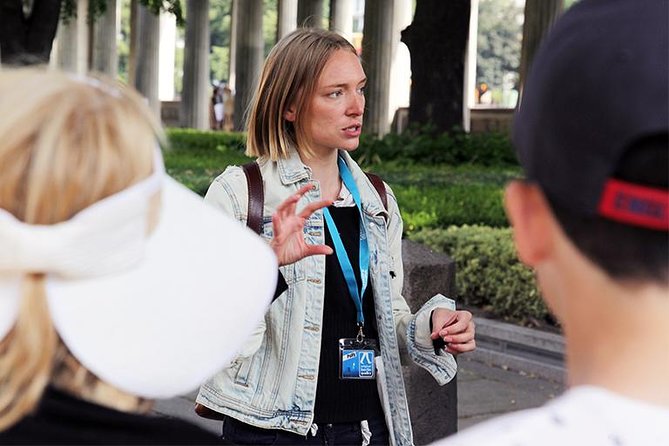
The guide is central to the experience. The strongest guides on this tour, including Peter, Glen, Rohan, Tom, Giles, Hannah, James, Jonathan, and Gregor, have been praised for speaking clearly, answering questions, using historical images, and keeping the group focused. That matters here because many sites are understated. A guide can point out what is missing, explain what stood there before, and show how a location was used.
The tone is serious but not necessarily stiff. Several guides have used carefully timed humor to keep the group attentive without making light of the subject. That balance is valuable on a long walking tour dealing with mass murder and dictatorship.
More Third Reich and WWII Tours in Berlin
- Berlin: Third Reich and Cold War 2 Hour Walking Tour
★ 4.9 · 6,830 reviews - Berlin’s Best: 2 Hour Walking Tour Third Reich and the Cold War
★ 5.0 · 5,486 reviews - Third Reich Berlin: Hitler and WWII Walking Tour
★ 5.0 · 3,301 reviews
From Hackescher Markt to Berlin’s Jewish past
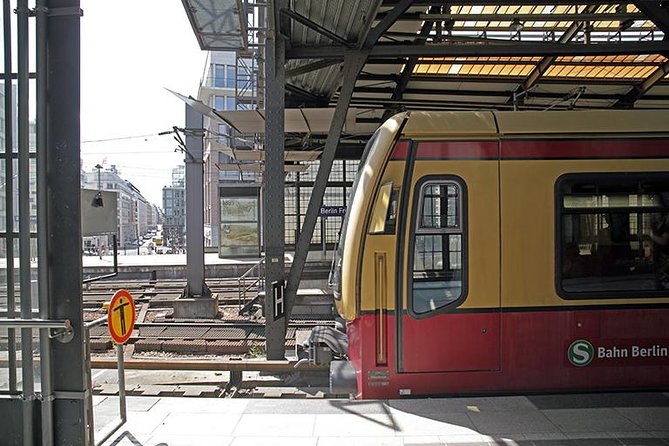
The meeting point is at Neue Promenade 3, near Hackescher Markt S-Bahn station. The tour starts at 10:00 a.m. You need an AB Zone transport ticket to reach the meeting point, costing about €3.80 according to the tour details. That ticket is not included, so allow time to buy it at the station.
The opening stops focus on Jewish life and persecution. At the Museum Blindenwerkstatt Otto Weidt, the guide explains the history of the workshop and its wartime setting. The listed stop is brief, about five minutes, and admission is free. The value here is not a long museum visit. It is the introduction of a specific place connected to the effort to protect Jewish workers during the Nazi period.
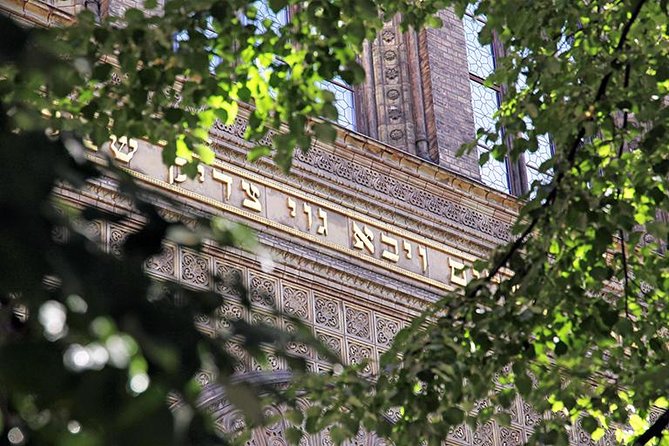
The tour then reaches the Stiftung Neue Synagoge Berlin, also called the Centrum Judaicum. Again, the stop is short, about five minutes, with the guide providing the historical setting. This part of the route helps you understand that Berlin’s Jewish story did not begin with Nazi persecution. There was an established community, religious life, and a major synagogue before the dictatorship attacked Jewish people and their place in German society.
You should not expect extended indoor visits at these first stops. The tour is built around outdoor explanations and brief site visits rather than museum admission. If you want to spend serious time inside the Centrum Judaicum or the Otto Weidt museum, you would need to return independently.
Anhalter Bahnhof and the machinery of deportation
Anhalter Bahnhof is one of the more affecting locations because the ruined station makes the destruction of wartime Berlin visible. The guide explains how many Jewish residents of Berlin were deported from here to concentration camps.
The stop lasts about five minutes, but the subject carries considerable weight. The station is not presented as an isolated wartime ruin. It forms part of the larger story of how persecution became organized deportation. The setting helps you picture the process in a real urban place, close to ordinary streets and daily life.
This is also where the limits of the tour format become clear. Five minutes is enough for a focused explanation, but not enough for a long pause or detailed exploration. If you prefer to move slowly at sites of remembrance, you may find the schedule brisk. The benefit is that you continue on to several other places within the same morning.
Topography of Terror and the institutions behind Nazi rule
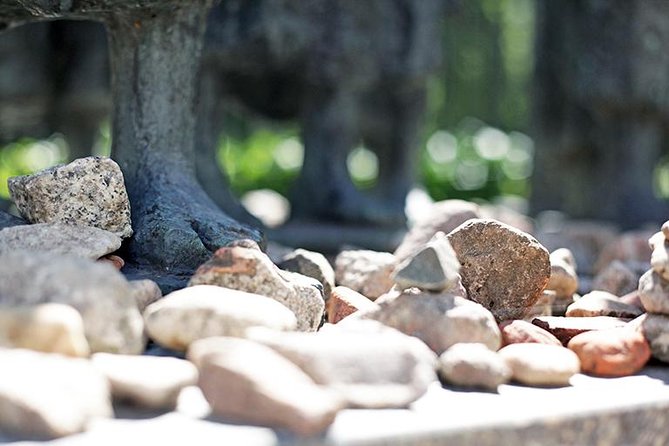
The route continues to the former SS and Gestapo headquarters on what was once Prinz-Albrecht-Strasse. Today, the site is home to the Topography of Terror museum. The guide explains how the SS and Gestapo operated and how these institutions helped enforce Nazi control.
The listed stop is about 15 minutes, making it one of the longer pauses. That extra time is useful because the site demands more explanation than a single memorial. The focus is not only on Hitler himself. You learn about the officials, police bodies, and administrative systems that turned political ideas into arrests, terror, and mass persecution.
Admission is listed as free, but this tour does not promise a full museum visit. The guide explains the site, and you can return later if you want more time with the displays. I would treat the walking tour as an orientation rather than a replacement for the museum.
This is one of the strongest parts of the route for understanding responsibility. Dictatorships do not function through one leader alone. The guide’s job is to show how institutions and people made the system work.
Other trips into the same period in Berlin:
- Berlin: Third Reich, Hitler, and WWII Walking Tour
★ 4.9 · 1,133 reviews - Berlin: Guided Bike Tour of the Berlin Wall and Third Reich
★ 4.7 · 499 reviews - Hitler’s Germany: Berlin During the Third Reich & WWII
★ 4.8 · 476 reviews - Private Walking Tour Berlin Third Reich Hitler and World War II
★ 5.0 · 360 reviews
The former Aviation Ministry and a surviving Nazi building
The former Ministry of Aviation is the next major stop. The guide discusses the former headquarters of the German Luftwaffe and the consequences of Nazi rule for Jewish people and Sinti and Roma communities.
This building is important partly because it survives. You are looking at a structure associated with the Nazi state, not just a memorial built after the war. The contrast can be unsettling. Modern Berlin surrounds a building that once housed a central part of the regime.
The stop lasts about 10 minutes. That gives the guide time to place the Luftwaffe within the wider dictatorship and to connect military power with racial persecution. The tour does not treat the war as a separate subject from the Holocaust and other crimes. It shows how those stories developed together.
Resistance at the Johann Georg Elser sculpture
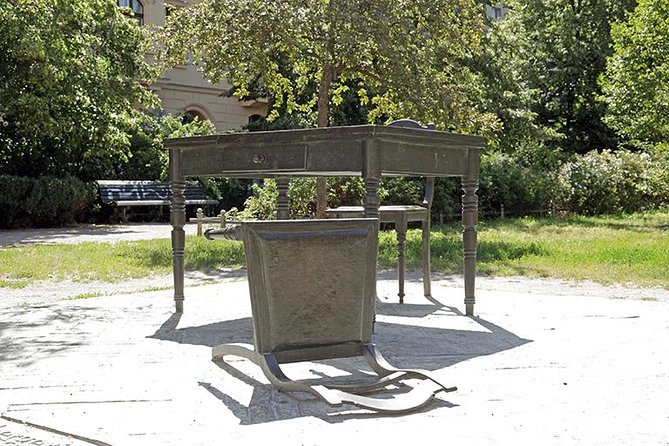
At the Johann Georg Elser sculpture, the guide explains an attempt to kill Hitler. Elser planned and carried out a bomb attack in 1939, and the sculpture marks a less familiar part of the period’s story: opposition did exist, even though it failed.
The stop is listed at about five minutes. It is a compact reminder that resistance to Hitler came in different forms and from different individuals. The tour does not present German society as uniformly supportive or uniformly opposed. That distinction helps you think about choices, fear, belief, and the risks faced by people who resisted.
Because the explanation is short, you may want to note the name if this subject interests you and explore it further later. The tour gives you the essential connection without turning the stop into a separate lecture.
The Holocaust Memorial and the problem of remembrance
The Memorial to the Murdered Jews of Europe is one of Berlin’s most recognizable sites. The guide explains its purpose and the history behind it during a 10-minute stop.
You will see the memorial in a different way after visiting Anhalter Bahnhof and the former Nazi offices. The memorial is not just a striking field of concrete blocks. It is part of Germany’s effort to confront the murder of Europe’s Jews in a central, visible location.
The guide-led setting is helpful because memorials can raise questions that are hard to answer from appearance alone. What does the design ask you to feel? How does a modern city remember crimes committed by the state? The guide can provide context while allowing you time to look and think.
Do not expect a long, quiet visit with no interruption. This is a group walk, and the schedule continues. If you want to enter the underground Information Centre, check separately whether you have time after the tour, since the included activity is a walking tour and guided explanation rather than a promised museum visit.
The Roma and LGBT memorials
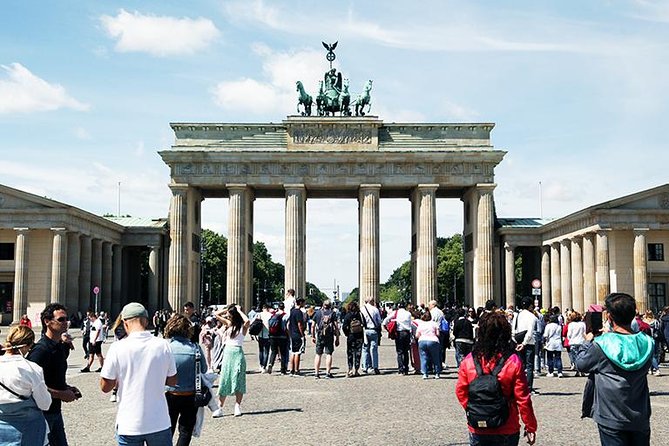
The route also includes the Monument to Homosexuals Persecuted Under the National Socialist Regime. The guide explains the history of Nazi persecution of homosexual people, and the listed stop lasts about 10 minutes.
This stop broadens the tour beyond the most familiar outline of the Third Reich. You are asked to consider how Nazi persecution targeted different groups through different laws, categories, and forms of violence. That makes the tour more useful than one focused only on Hitler, military events, and the final bunker.
The tour also addresses Sinti and Roma communities, especially while discussing the consequences of Nazi rule at the former Aviation Ministry. Together, these stops show that the Nazi racial system did not affect one community alone.
The material is difficult, and the memorials require a respectful approach. The guide’s tone matters here. The strongest descriptions of guides such as Hannah, Gregor, and Tom emphasize sensitivity as well as clear teaching, which is exactly what this section calls for.
Soviet Memorial Tiergarten and the war’s final chapter
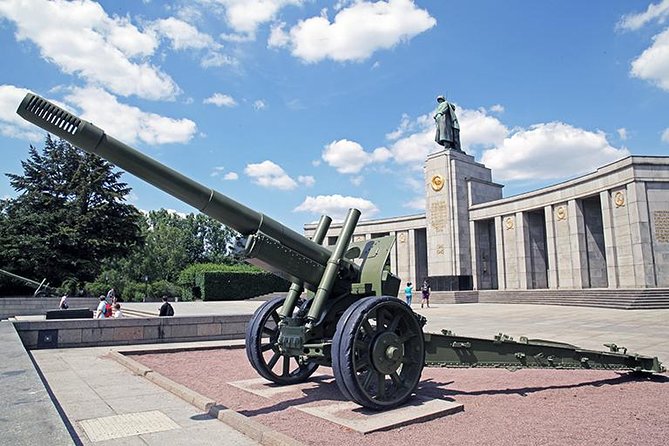
At the Soviet Memorial in Tiergarten, the guide explains the history of the site during a 10-minute stop. This changes the focus from persecution inside Nazi Germany to the military defeat of the regime and the Soviet role in the capture of Berlin.
The memorial helps place the final phase of World War II in the city itself. Berlin was not simply the headquarters of the Nazi government. It became a battlefield, and the war’s end left a visible mark on the capital.
This is also a reminder that Berlin’s 20th-century story did not stop in 1945. The memorial belongs to the postwar city as well as the war. The tour’s focus remains the Third Reich, but the site gives that story a wider ending.
Finishing at the Reichstag
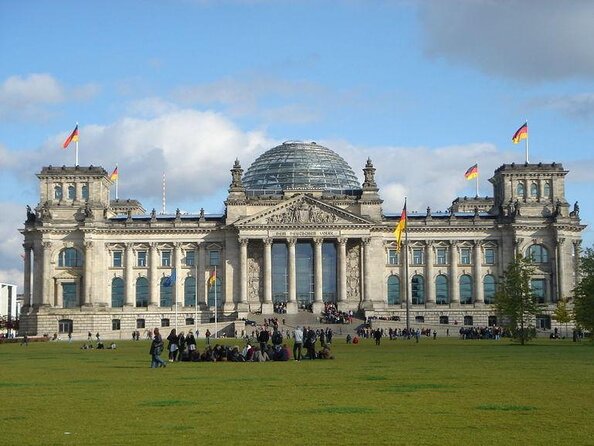
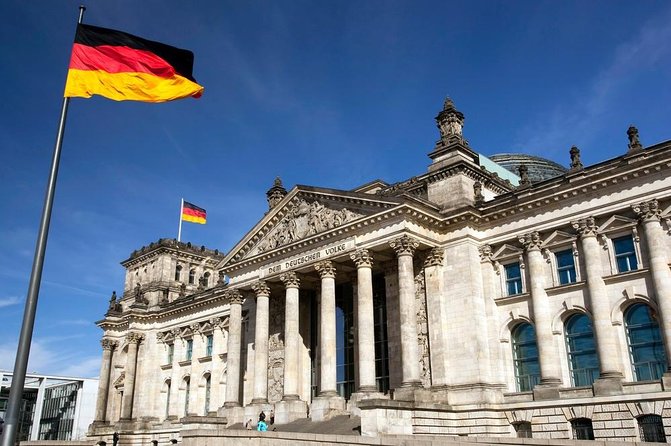
The final stop is outside the Reichstag, Germany’s parliament building. The guide explains its importance in 1933, when the Nazis came to power, and in 1945, when the war reached its final days in Berlin.
Ending here gives the tour a clear arc. You begin with the political rise of Hitler and finish at a building linked to both the seizure of power and the collapse of the regime. The Reichstag also connects the past to present-day democratic Germany.
The tour ends at Platz der Republik 1, outside the Reichstag. That is convenient for continuing your day in central Berlin, but remember that the experience does not include a Reichstag interior visit or dome entry. The stated endpoint is outside the building.
How much walking and how the group feels
The tour lasts about four hours and includes ten stops. Some stops are only five minutes, while others last 10 or 15 minutes. That schedule keeps the group moving, but it also means you will spend much of the morning walking between sites.
Comfortable shoes are essential. One person noted that the walk was manageable even with foot trouble and a recovering leg, but you should judge your own stamina rather than rely on that experience. The tour operates in all weather, so bring clothing suited to rain, cold, heat, or wind.
The maximum group size is 25. That is not a private tour, but it is small enough for questions if the guide manages the group well. The strongest guide comments repeatedly highlight clear voices, patience, and the ability to answer questions from different generations.
You may hear historical photographs and reference points used during the walk, depending on the guide. Guides named in the supplied material include Peter, Glen, Rohan, Steve, Tom, Giles, Gregor, Eran, Scott, Anja, Hannah, Benjamin, Rebecca, James, Johnathan N, Jonny, and Paul. You cannot choose a particular guide from the information provided, but the range of praised guides suggests that the individual guide will shape the experience.
What the $21.77 price really buys
At $21.77 per person, this is inexpensive for a four-hour guided activity in central Berlin. You are paying mainly for the guide’s time, route planning, historical explanation, and the chance to ask questions. The sites themselves are generally viewed from public areas, and the stops are listed with free admission.
The AB Zone transport ticket, about €3.80, is extra. That is a small addition, but it is useful to know before you arrive at Hackescher Markt. The tour uses no included meals, private transport, or paid museum admissions.
I see the value in the route rather than in entrance tickets. You could walk to several of these places alone, but you would need to research the connections and decide what deserves attention. The tour compresses that work into one morning and leaves your afternoon free.
The tradeoff is depth. You receive a guided overview of many places, not a long museum visit at each one. If you want to study the Topography of Terror or Jewish Berlin at length, plan separate time before or after the walk.
Who should book this walk?
I would recommend it if you are visiting Berlin for the first time, have limited time, or want a clear framework before exploring museums on your own. It suits adults and older children who can handle a serious subject and four hours on foot. One guide was specifically praised for keeping teenagers interested, which suggests the format can work for families when the young people are ready for the material.
It is also a good choice if you want more than military history. The route includes Jewish life and persecution, Sinti and Roma communities, homosexual victims of the regime, resistance, Soviet forces, and the political collapse of Nazi Germany.
I would hesitate if you dislike group walking tours, need long indoor breaks, or want extensive time at each memorial. The subject is emotionally heavy, and the route continues on schedule. A private guide or a series of museum visits may suit you better if you need a slower pace.
Final verdict: a strong first morning in Nazi-era Berlin
Book this tour if you want the major Nazi-era sites explained as one connected story rather than as isolated addresses. The route is efficient, the price is fair, and the guide-led context is the main reason to choose it.
Bring good shoes, weather-ready clothing, and a willingness to ask questions. I would pair the walk with extra time at the Topography of Terror or a Jewish history museum, since the tour gives you a strong introduction but cannot provide a full study of every site in four hours.
FAQ
Where does the Berlin Third Reich Sites walking tour begin?
The tour begins at Neue Promenade 3, 10178 Berlin, near Hackescher Markt S-Bahn station.
What time does the tour start?
The tour starts at 10:00 a.m.
Where does the tour finish?
The tour finishes outside the Reichstag at Platz der Republik 1, 11011 Berlin.
How long does the walking tour last?
The tour lasts approximately four hours.
What language is the tour offered in?
The tour is offered in English and includes a professional English-speaking guide.
Is public transportation included?
No. You need an AB Zone transport ticket, costing approximately €3.80, which is available from the station at the meeting point.
What places are visited?
The route includes the Museum Blindenwerkstatt Otto Weidt, Neue Synagoge Berlin, Anhalter Bahnhof, the Topography of Terror, the former Aviation Ministry, the Johann Georg Elser sculpture, the Holocaust Memorial, the Monument to Homosexuals Persecuted Under National Socialist Regime, the Soviet Memorial Tiergarten, and the Reichstag.
Are entrance tickets included?
The tour details list free admission for the stops. The activity includes the four-hour walking tour and guide, but it does not promise extended indoor visits or admission to paid attractions.
How large can the group be?
The maximum group size is 25 travelers.
Can I cancel for a full refund?
Yes. You can cancel at least 24 hours before the experience start time for a full refund. Cancellations or changes made less than 24 hours before the start time are not accepted for a refund.
More walking tours in Berlin
- Discover Berlin Half-Day Walking Tour
★ 5.0 · 9,624 reviews - Berlin: Discover Berlin Walking Tour
★ 4.9 · 5,998 reviews - Berlin: Hidden Backyards Guided Walking Tour
★ 4.8 · 5,360 reviews - Berlin: Alternative Berlin Walking Tour
★ 4.6 · 1,204 reviews
Just added in Berlin
- Berlin: Energizing 2-Hour Morning Segway Tour★ 4.7 · 35 reviews
- Berlin: Thrilling E-Scooter Adventure Tour★ 4.4 · 66 reviews
- Beer Bike & Party Bike: Unforgettable Berlin City Tour incl. pickup★ 5.0 · 5 reviews
- Beelitz-Heilstätten: Baum&Zeit Tree Top Walk Entry Ticket★ 4.9 · 7 reviews
- AXE THROWING EXPERIENCE IN BERLIN★ 4.7 · 24 reviews
- Alternative Berlin / Street art tour – Private group★ 5.0 · 6 reviews
- Berlin: Alternative & Street Art Tour★ 4.5 · 6 reviews
- Berlin: 2.5-Hour Beer & Sunset Sightseeing Boat Cruise★ 4.6 · 61 reviews
Third Reich & WWII Tours, compared.

Third Reich Berlin: Hitler and WWII Walking Tour
Read our review →
Walking Tour of Former Nazi Party Rally Grounds
Read our review →

Birthplace of the Third Reich Guided Walking Tour
Read our review →
Munich World War II Sites Including Dachau Concentration Camp
Read our review →Browse the lists this tour appears in