
Reviewed · BERLIN WALL & COLD WAR TOURS
Skip-the-Line: Berlin Wall Museum at Checkpoint Charlie
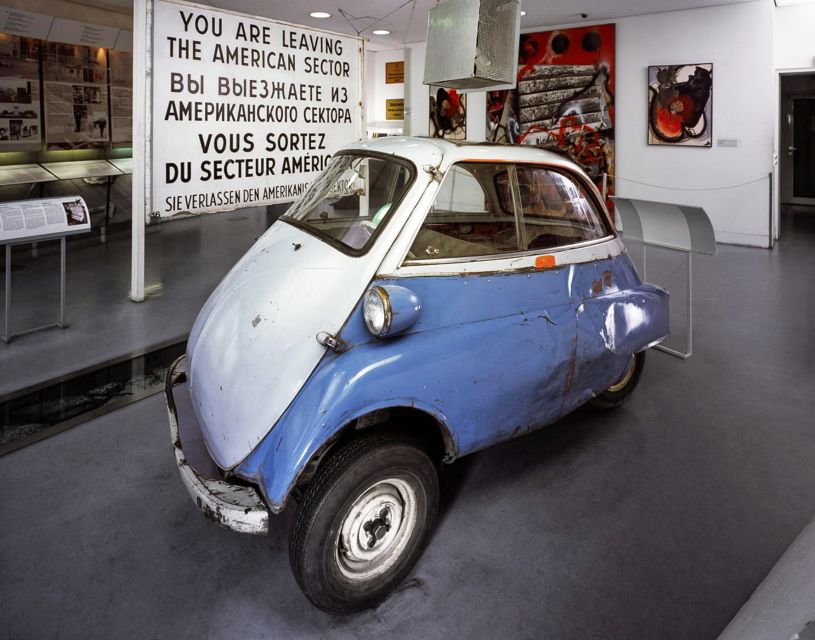
The most striking thing here is the collection of real escape equipment. A hot-air balloon, mini-submarine, cars, and aircraft show the astonishing lengths people went to reach freedom from East Germany. This is not just a museum about a concrete barrier. It is about planning, fear, courage, and the practical mechanics of escape.
I like the museum’s location directly beside Checkpoint Charlie, and I like that the story continues beyond the Wall’s fall into wider questions about human rights and political repression. The main drawback is its presentation: there is a huge amount of text, and the route can feel loosely organized. Bring time, patience, and perhaps skip it if your children need a highly interactive museum.
Key points to know before you go
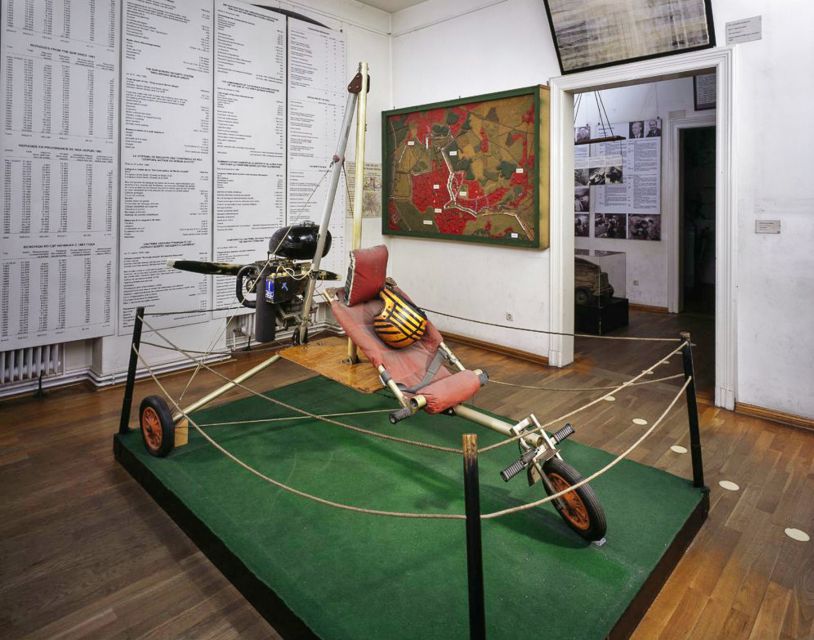
- Original escape machines: See unusual vehicles and devices donated by people who used them, or helped others use them, to flee East Germany.
- A large self-guided museum: Plan about two hours at a brisk pace, or much longer if you read the displays closely.
- Directly at Checkpoint Charlie: The museum gives the famous crossing point historical context instead of treating it as a quick photo stop.
- Skip-the-line entry: Your $21 ticket lets you bypass the ticket queue, though it does not include a live guide or audioguide.
- Text-heavy displays: There is a lot to read, with information presented in several languages in many parts of the exhibition.
- Wheelchair accessible: The venue is listed as accessible for wheelchair users.
Why the Berlin Wall Museum matters
The museum opened on October 19, 1962, soon after the Berlin Wall was built. Its purpose was political from the start. It opposed the Wall, documented violations of human rights, and offered help to people searching for a way out.
That background gives the building a different feel from a museum created decades later by distant historians. The institution grew alongside the division of Berlin. People who escaped, and those who helped them, later donated vehicles, tools, documents, and other objects connected with their escape attempts.
I find that important because the Wall can seem like a simple Cold War monument. In reality, it divided streets, families, workplaces, and daily routines. The museum keeps the focus on the people caught inside that system.
You will also see material about resistance and nonviolent protest. The upper levels extend into wider international conflicts, peace movements, and human rights issues. That broader focus will appeal to you if you want more than a narrow account of Berlin between 1961 and 1989. It may feel less focused if you came only to study the Wall itself.
Other divided-city history in Berlin:
- Berlin: Third Reich and Cold War 2 Hour Walking Tour
★ 4.9 · 6,830 reviews - Berlin’s Best: 2 Hour Walking Tour Third Reich and the Cold War
★ 5.0 · 5,486 reviews - Cold War, Berlin Wall, Spies and the East Side Gallery
★ 5.0 · 1,024 reviews
Starting at Checkpoint Charlie
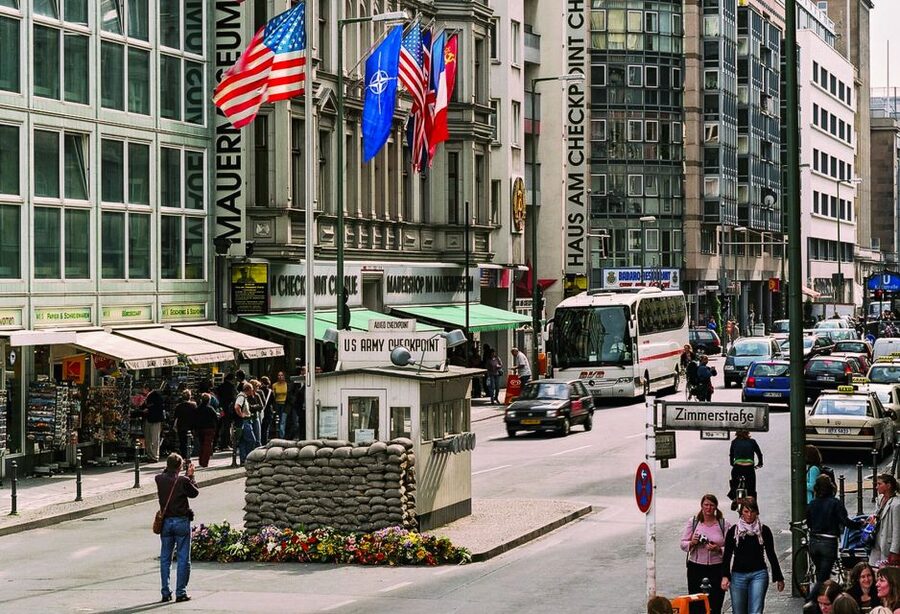
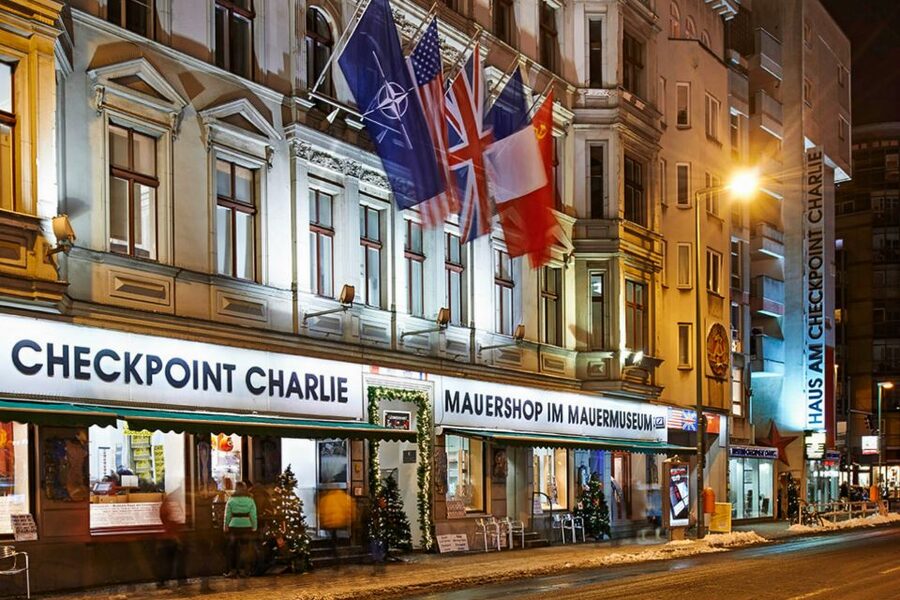
The address is Friedrichstraße 43-45, 10969 Berlin, right by Checkpoint Charlie. That makes this an easy stop to combine with a walk around central Berlin, especially if you want to see the former border crossing before entering the museum.
Checkpoint Charlie outside is a reconstructed and highly photographed landmark. The museum gives you the missing context: why this particular crossing mattered, what the East and West sides represented, and how tense the divided city could be.
With the skip-the-line ticket, you go past the ticket queue and into the exhibition. That convenience matters most during busy periods, although you should not assume it means a completely empty entrance. The ticket is for admission, not a private arrival or guided welcome.
The museum is much larger than its exterior suggests. Several people have found themselves needing more time than expected, so avoid booking another fixed activity too soon afterward. If your schedule allows only one hour, you will need to choose what to read rather than attempt the whole display carefully.
The escape stories and original objects
The strongest section is the collection of escape artifacts. A hot-air balloon immediately changes the scale of the story. It shows that escape was not always a matter of slipping through a hidden tunnel or crossing at night. Some plans required engineering, secrecy, materials, and an extraordinary willingness to risk failure.
The mini-submarine is equally memorable. It helps you picture how inventive escape helpers became when ordinary routes were closed. Cars and aircraft add another layer, showing that people tried to use familiar transport in unfamiliar ways.
These objects are valuable because they make political history physical. A paragraph about border restrictions can be easy to forget. A vehicle altered for an escape attempt is harder to dismiss as an abstract tale.
The display also explains the work of the people who helped East Germans flee. The museum was used as a base for planning escapes and organizing opposition to the GDR regime. Once people reached safety, many donated the equipment and objects connected with their journeys.
Not every item will have the same impact. Some material is made up of photographs, documents, reproductions, and lengthy explanations. One older assessment found fewer original artifacts than expected, so keep your expectations sensible. The museum’s strength is the combination of objects and stories, not a room full of untouched historical machinery.
Reading the Wall’s political story
You will need to read here. The exhibition covers the rise of the Wall, life in East Berlin, the political system of the GDR, escape attempts, international tensions, and the Wall’s eventual fall.
The writing is detailed, and many displays include translations into different languages. That helps international visitors, but it also adds to the amount of material on the walls. I would not treat this as a quick visual museum where you can understand everything by glancing at captions.
The political background is one of the best reasons to visit. The museum explains the Eastern Bloc and the conflict between East and West, rather than presenting the Wall as an isolated Berlin oddity. You will get more from the exhibits if you already know a little about postwar Germany, but the museum also supplies plenty of basic context.
The weakness is the flow. The route from entrance to exit is not always easy to follow, and the museum has expanded over time. Some sections feel tightly connected to the Wall, while others move into later or broader political issues.
That can frustrate you if you want a clean chronological journey. It can also be a strength if you prefer to follow subjects at your own pace. Think of the museum as a large archive open to the public, not a tightly scripted one-hour show.
Other museums and galleries in Berlin:
- Berlin: Jewish Museum Berlin Entrance Ticket
★ 4.5 · 8,393 reviews - Berlin: Natural History Museum Entrance Ticket
★ 4.6 · 3,382 reviews - Berlin: Neues Museum Entry Ticket
★ 4.6 · 3,261 reviews - Berlin: Museum Island Multiple Museum Entry Ticket
★ 4.4 · 2,007 reviews
How long should you allow?
The advertised validity is one day, but the practical question is how much of that day you want to spend inside. At a brisk pace, one to two hours may cover the main material. If you read closely, two and a half hours is more realistic, and some people could spend much longer.
I would allow at least two hours. That gives you time for the escape objects, the political displays, and the sections on protest without turning the visit into a race.
The museum can feel short only if you skim it. Several people have underestimated its size and then wished they had more time. That is a useful warning for anyone pairing it with a timed museum, concert, or walking tour.
The space may also feel crowded or noisy when school groups are present. Stairs and narrow viewing areas can become awkward if a large group stops in one place. A quieter visit will make the reading easier, particularly if you want to absorb the personal stories rather than simply see the main objects.
Is the $21 ticket good value?
At $21 per person, this is fair value if you treat the museum as a substantial visit rather than a quick attraction beside Checkpoint Charlie. You are paying for access to a large collection, original escape equipment, and a detailed account of the Wall and its political setting.
The value improves if you have two or three hours available. A short visit makes the price feel less convincing because much of the museum’s appeal comes from the quantity of information.
The skip-the-line feature is useful, but it is not necessarily a major money-saver. Some visitors have found little or no queue, especially during quiet periods. Others value the advance ticket because it removes one decision from a busy sightseeing day.
The price is also higher than buying directly may be in some cases. One family found that an advance booking carried an added cost of roughly three to four pounds per person compared with paying at the museum. Check the current direct price before booking if you are traveling with several people.
For a solo visitor or couple on a busy day, the convenience can justify the difference. For a family of four visiting in a quiet season, compare prices first.
Audioguide, live guide, or your own pace?
This admission ticket does not include an audioguide or guided tour. You enter and work through the displays yourself.
That is fine if you like reading and setting your own pace. You can linger over an escape vehicle, skip a dense political section, or return to an earlier display without waiting for a group.
An audioguide may be useful if you prefer spoken explanation, but the museum has a lot of written material. Some people found the amount of reading sufficient and did not feel an audio device was essential. Others wished they had selected one after realizing how large the exhibition was.
Do not book this ticket expecting a guide such as Peter, Steve, or Louisa. Those names appear in accounts of guided experiences, but this product includes entrance only. If you want a narrated walk with a guide, you need a separate tour.
A self-guided visit also lets you think about the exhibits privately. The subject can be upsetting, especially when the displays describe the risks people accepted to escape an authoritarian system. You can take a pause without holding up a group.
Who will enjoy this museum most?
I would recommend it most strongly to adults, history students, and anyone with a serious interest in the Cold War, divided Germany, or human rights. It is also a good choice for first-time visitors who want to understand why Checkpoint Charlie became such a powerful symbol.
Teenagers who enjoy history may find the escape equipment gripping. Teenagers who need interactive displays may lose interest because much of the visit involves reading. Some interactive elements have not always worked, which makes the museum feel even more dependent on its printed explanations.
Families can still make it work by setting a clear goal. Focus first on the balloon, mini-submarine, cars, and aircraft, then choose a few escape stories to read fully. You do not need to study every panel for the visit to have value.
The museum is wheelchair accessible, which makes it practical for a wider range of visitors. The available information does not provide further details about specific access arrangements, so contact the venue directly if you need precise information before arrival.
Practical ways to get more from your visit
Start with the main escape displays before committing to every wall panel. That gives you a clear sense of the museum’s most distinctive material and helps you decide how much time to spend on the wider political sections.
Bring your attention span, not just your camera. Photography rules may restrict pictures in parts of the exhibition, and at least one visitor was disappointed not to be allowed to photograph the information. Ask staff about the current policy when you arrive.
Wear comfortable shoes if you plan to stay for several hours. The museum has more material than the outside suggests, and you may be moving between many rooms and levels.
If you are visiting Berlin in low season, a quieter atmosphere can make the reading easier. In busier periods, try to arrive outside the main rush or accept that some displays may be harder to approach when school groups are present.
Finally, do not judge the museum only by its first room. The strongest material may be farther inside, and the upper level adds the story of protest, peace, and human rights. Give yourself enough time to see beyond the famous checkpoint.
Should you book the Berlin Wall Museum?
Book it if you want a serious, object-filled account of escape from East Germany and have at least two hours to read. The original vehicles, direct setting beside Checkpoint Charlie, and strong focus on human courage make this one of Berlin’s more meaningful history stops.
Think twice if you want a short, polished, highly interactive attraction. The museum can feel text-heavy, its route is not always obvious, and the broader political material may seem less focused than the Wall exhibits.
For most first visits to Berlin, I think the museum earns its place, especially when paired with a walk around Checkpoint Charlie. Compare the direct admission price with the $21 ticket, then choose skip-the-line entry if saving time matters more than finding the lowest possible cost.
FAQ
Where is the Berlin Wall Museum located?
The museum is at Friedrichstraße 43-45, 10969 Berlin, directly beside Checkpoint Charlie.
How long is the ticket valid?
The admission ticket is valid for one day. You should check availability for the current starting times.
Does the ticket include a guided tour?
No. The ticket includes entrance only. A guided tour is not included.
Is an audioguide included?
No. An audioguide is not included in the admission ticket.
What can I see inside the museum?
You can see original escape artifacts, including a hot-air balloon, mini-submarine, cars, and aircraft, along with displays about the Berlin Wall, East German life, escape attempts, resistance, and human rights.
Is the museum wheelchair accessible?
Yes. The activity is listed as wheelchair accessible.
Can I cancel the booking?
Yes. You can cancel up to 24 hours in advance for a full refund.
Just added in Berlin
- Berlin: Energizing 2-Hour Morning Segway Tour★ 4.7 · 35 reviews
- Berlin: Thrilling E-Scooter Adventure Tour★ 4.4 · 66 reviews
- Beelitz-Heilstätten: Baum&Zeit Tree Top Walk Entry Ticket★ 4.9 · 7 reviews
- Beer Bike & Party Bike: Unforgettable Berlin City Tour incl. pickup★ 5.0 · 5 reviews
- AXE THROWING EXPERIENCE IN BERLIN★ 4.7 · 24 reviews
- Alternative Berlin / Street art tour – Private group★ 5.0 · 6 reviews
- Berlin: Alternative & Street Art Tour★ 4.5 · 6 reviews
- Berlin: 2.5-Hour Beer & Sunset Sightseeing Boat Cruise★ 4.6 · 61 reviews
Berlin Wall & Cold War Tours, compared.

Cold War, Berlin Wall, Spies and the East Side Gallery
Read our review →
Guided Bike Tour of the Berlin Wall and Third Reich
Read our review →

Browse the lists this tour appears in