
Reviewed · BERLIN WALL & COLD WAR TOURS
Berlin Wall: Small Group Guided Tour
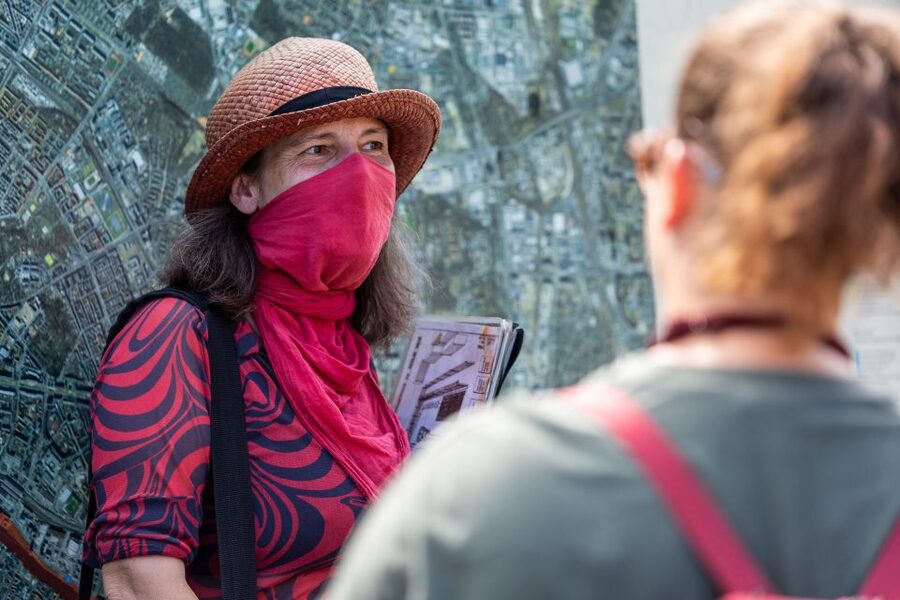
The most moving part of this walk is its starting point: Bornholmer Straße, where East and West Berliners first crossed together on the night the Wall fell. You then follow the old border through places where the Wall is sometimes reduced to a pavement mark, a line of trees, or a surviving section of barrier. That makes the past feel less like a museum display and more like part of the city under your feet.
I like the small maximum of 12 people, which leaves room for questions and personal stories. I also like the focus on less obvious traces, including the cherry trees along the former death-strip and the old ghost-station area near Nordbahnhof. The main drawback is language: this tour is offered in German, so it is not a good choice if you need English guiding.
Key points to know
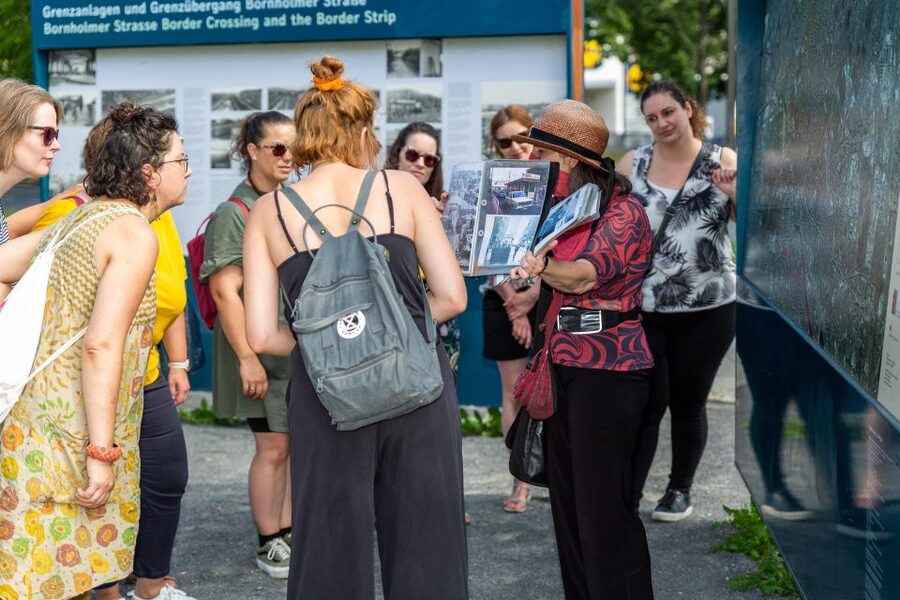
- Bornholmer Straße sets the scene: Begin at the former border crossing where Berliners from both sides met on the night of November 9, 1989.
- The death-strip is more than a wall fragment: Learn to spot less visible border traces and hear the unusual story behind the cherry trees.
- The group is capped at 12: A small party makes it easier to ask questions and hear guides such as Marcus, Markos, Steffen, and Katrine.
- The route links several real Wall sites: Walk by Ulbrichtkurve, cross Schwedter Steg, and visit Mauerpark and Gleim Tunnel.
- Personal memory is a major strength: Guides including Katrine, who grew up in East Berlin, can connect political events with ordinary life.
- Plan for weather and extra time: The walk runs in rain, ponchos are supplied, and some outings have lasted about three hours rather than 2.5.
Starting at Bornholmer Straße
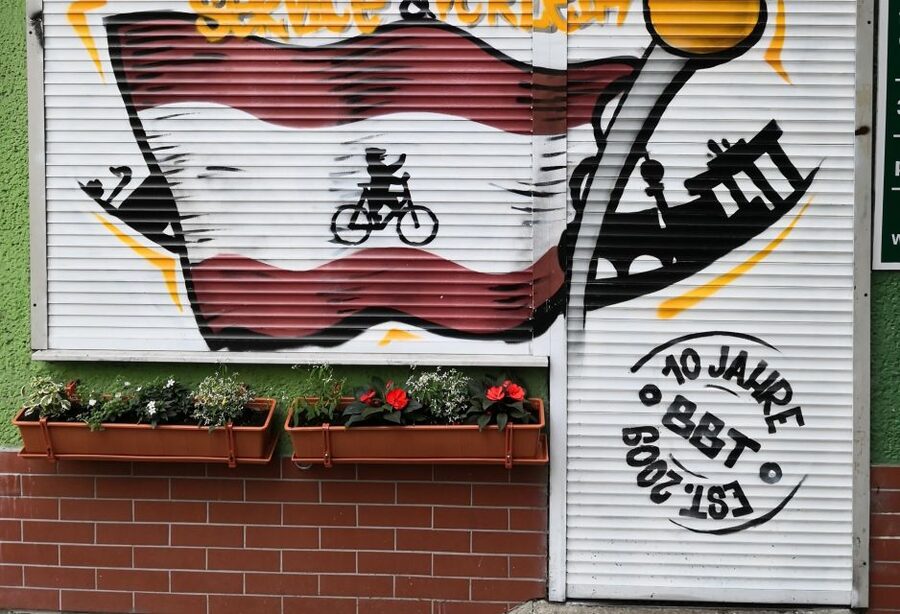
Your meeting point is the Berlin Bike Tours office, close to the old Bornholmer Straße crossing. It is an easy place to reach by public transport, only a minute from the Björnsonstraße tram stop and about two minutes from Bornholmer Straße S-Bahn station.
This is a fitting start. Bornholmer Straße was the first Berlin border crossing to open on the night the Wall came down. People from East Berlin crossed into the West, and people from the West moved toward the East. The location became a place of celebration, confusion, and sudden freedom.
Your guide uses that moment to explain what the Wall did to Berlin. You are not simply looking at a line on a map. You are learning how one barrier split streets, neighborhoods, transport routes, workplaces, and families.
The group size matters here. With no more than 12 people, you can ask for clarification without holding up a large crowd. Several guides have been praised for making time for questions, and Marcus is particularly good at explaining his own experiences of life while the Wall was still in place.
Other divided-city history in Berlin:
- Berlin: Third Reich and Cold War 2 Hour Walking Tour
★ 4.9 · 6,830 reviews - Berlin’s Best: 2 Hour Walking Tour Third Reich and the Cold War
★ 5.0 · 5,486 reviews - Skip-the-Line: Berlin Wall Museum at Checkpoint Charlie
★ 4.1 · 2,041 reviews
Following the former death-strip
From Bornholmer Straße, the walk follows the former border zone toward the memorial areas. This is where the tour asks you to pay attention to details that are easy to miss.
The border was not only a concrete wall. It included fences, patrol routes, open ground, watch areas, and controlled crossings. Some traces have disappeared under newer streets and buildings. Others can be detected only when someone points them out.
That is one of the best reasons to take a guided walk instead of wandering alone. A guide can explain how remaining traces are documented and show you where the old border once ran, even when little is visible. The experience is quieter and more thoughtful than simply photographing a painted section of Wall.
The route also introduces the former death-strip. That term refers to the controlled space between parts of the border system, where escape attempts were dangerous. The tour does not treat this as a dramatic backdrop. It explains how the space worked and why so much of it has been altered or reused.
You should expect a fair amount of walking on city streets and paths. Wear comfortable shoes, and leave enough room in your schedule. The advertised duration is 2.5 hours, but one outing took about three hours. The pace can depend on the guide, questions, and the size of your party.
The unusual story of Berlin’s cherry trees
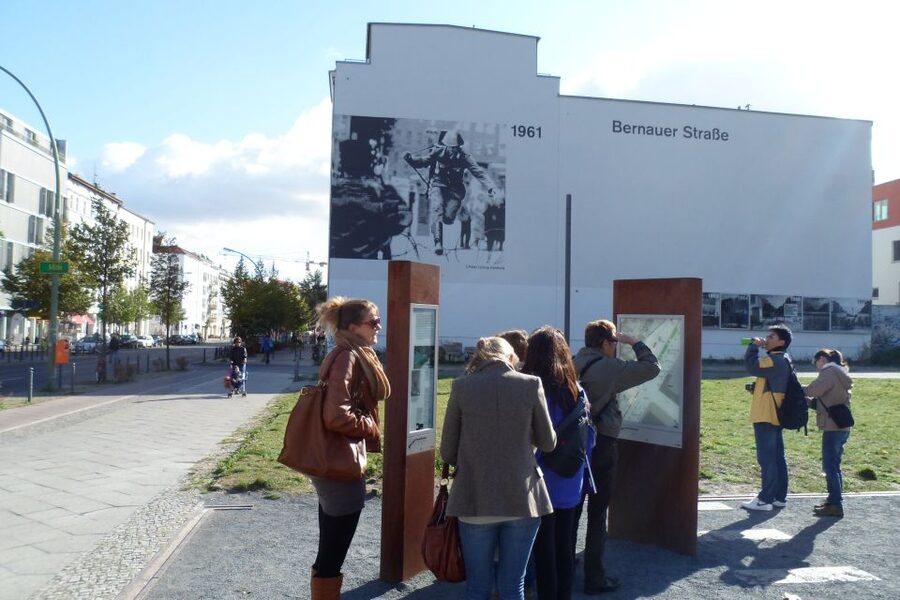
The cherry trees along the old border are one of the tour’s most distinctive details. They soften a place that once represented armed division, but their story is not simply decorative.
Your guide explains how the trees came to grow along the former Wall and how their presence is documented today. This adds a human and unexpected detail to the political story. You begin to see the old border not only through concrete, guard routes, and escape attempts, but also through the way Berlin has marked and remembered the space since reunification.
I like this part because it gives you something specific to look for. A broad explanation about the Cold War can blur together after a while. A line of cherry trees gives the history a visible thread. You can connect the physical setting with the changing meaning of the former border.
The exact appearance of the area will depend on the season. The supplied details do not promise blossoms, so do not book this expecting a spring flower display. The point is the history of the trees and the way they mark the old route.
Ulbrichtkurve and the Wall’s changing shape
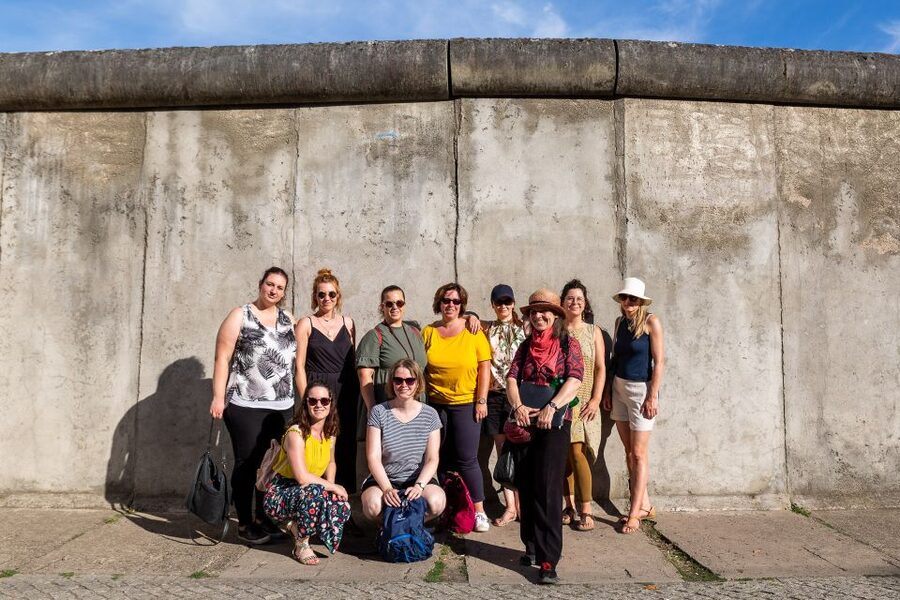
The walk includes the well-known Ulbrichtkurve, a section associated with the former border route. This stop helps show that the Wall was not a perfectly straight line. It bent around streets, railway lines, buildings, and other parts of Berlin’s existing city plan.
That matters because the Wall often appears in photographs as one clean strip of concrete. On the ground, the border was more complicated. The tour gives you a sense of how it cut through a working city and how the old route relates to today’s streets.
A guide can also explain the names attached to these places. This is useful if you plan to visit Berlin’s Wall memorials on your own later. You will recognize the terms and understand why a small bend or gap deserves attention.
Do not expect a large attraction at every stop. Some points are ordinary-looking urban spaces. That is part of the lesson, but it can also disappoint anyone hoping for a continuous preserved wall. The walk is about reading the city, not moving from one dramatic monument to another.
A few more things to do in Berlin worth a look
- Berlin: Reichstag, Dome and Government District Guided Tour
★ 4.7 · 18,288 reviews - Berlin: Government District around the Reichstag Guided Tour
★ 4.7 · 8,447 reviews - Berlin: Hidden Backyards Guided Walking Tour
★ 4.8 · 5,360 reviews - Berlin: 1-Hour Boat Tour with Bilingual Live Guide
★ 4.7 · 3,629 reviews
Crossing Schwedter Steg near Mauerpark
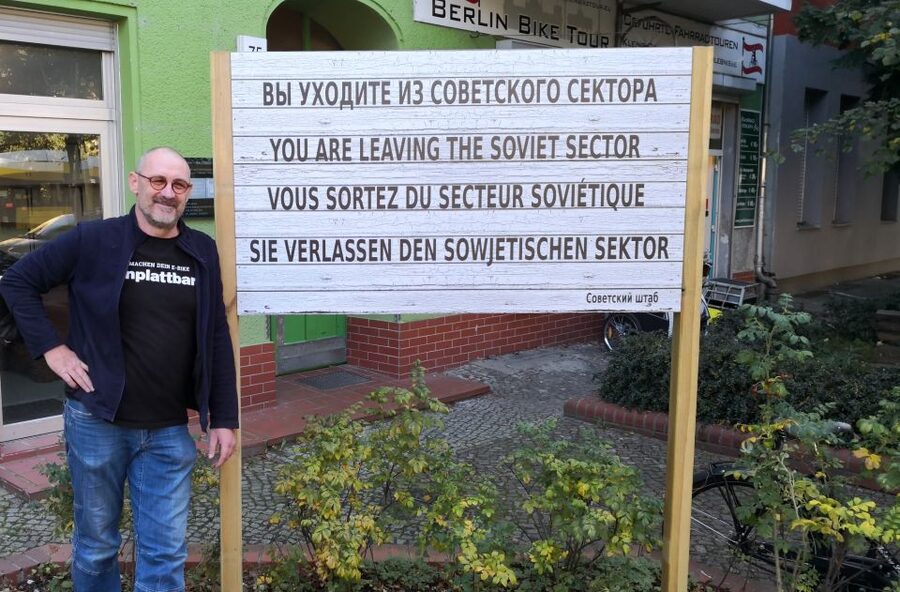
The route continues over Schwedter Steg Bridge, near Mauerpark. This gives you another view of how the former border divided transport links and public space.
Mauerpark is now one of Berlin’s best-known social and cultural areas, but its setting also reflects the former border. During the Cold War, this was not simply an open park for relaxing and meeting friends. The tour connects the present-day space with the controlled strip that once ran through it.
This is a useful stop for anyone trying to understand how Berlin has reused former border land. You can enjoy the park as it is today while keeping sight of what the space once meant. The contrast is strong without needing a long museum visit.
The route also offers a natural chance to pause for coffee. Food and drinks are not included, so bring money for your own refreshment. The stop is best viewed as a practical break during a walking tour, not a formal café experience included in the booking.
Gleim Tunnel and the city after the Wall
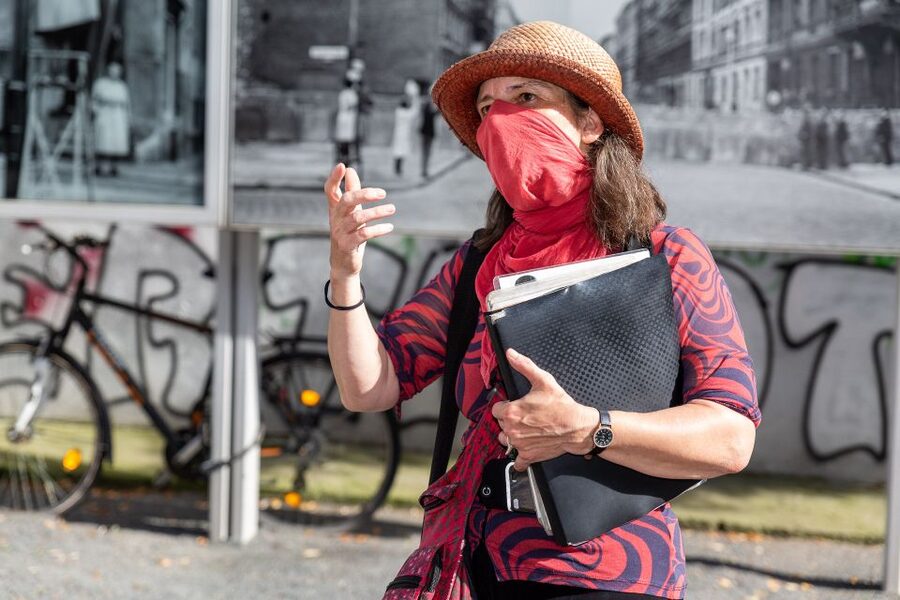
Gleim Tunnel is another unusual point on the route. It is tied to a large party held there every year, a reminder that places once linked with division can later take on entirely different uses.
The tour uses this site to show the changing character of Berlin after reunification. The Wall is not treated only as a subject frozen in 1961 or 1989. You also see how the city has absorbed former border spaces into everyday life, public events, and local culture.
Gleim Tunnel will appeal to you if you like urban history with a present-day connection. It is not just a memorial stop. It helps explain how Berlin’s old dividing line has become part of the city’s social geography.
The tour’s final stretch leads toward Nordbahnhof, a former ghost station. During the division of Berlin, some trains passed through stations that were closed to East Berlin residents and heavily controlled. The supplied route description says the walk finishes at Nordbahnhof, while the meeting information says the activity ends back at the meeting point. Because those details differ, confirm the exact endpoint before booking, especially if you have a train or dinner reservation afterward.
Guides who make the past personal
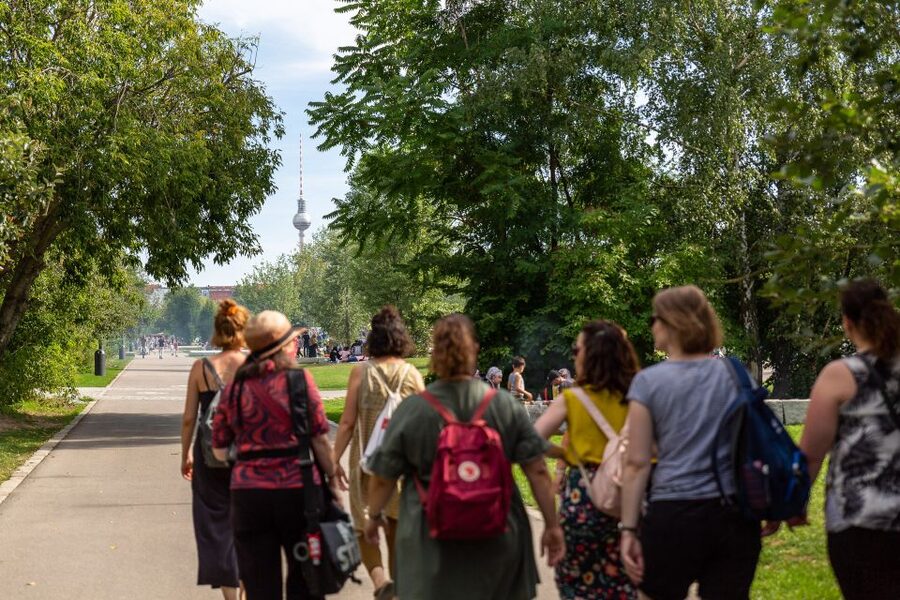
The strongest part of this experience is the guide. The route itself can be followed independently, but a good guide turns separate locations into a connected story.
Marcus has been praised for explaining the Wall clearly and for sharing his own experiences of life before its fall. Markos has also been singled out for keeping a 13-year-old interested for the full walk, a useful sign if you are bringing older children or teenagers. Steffen is described as using humor and personal stories, and one walk with him lasted three hours.
Katrine offers a different kind of perspective. She was born and raised in East Berlin before the Wall fell. Her background can help you think about the period from the point of view of someone who lived within the Eastern system, rather than hearing only a general account of Cold War politics.
Guide assignments can vary, so you cannot assume you will receive a particular person. The important point is that the tour depends heavily on live explanation. Ask questions as you go. The small group makes this much easier than on a large city tour.
Why the small group affects the experience
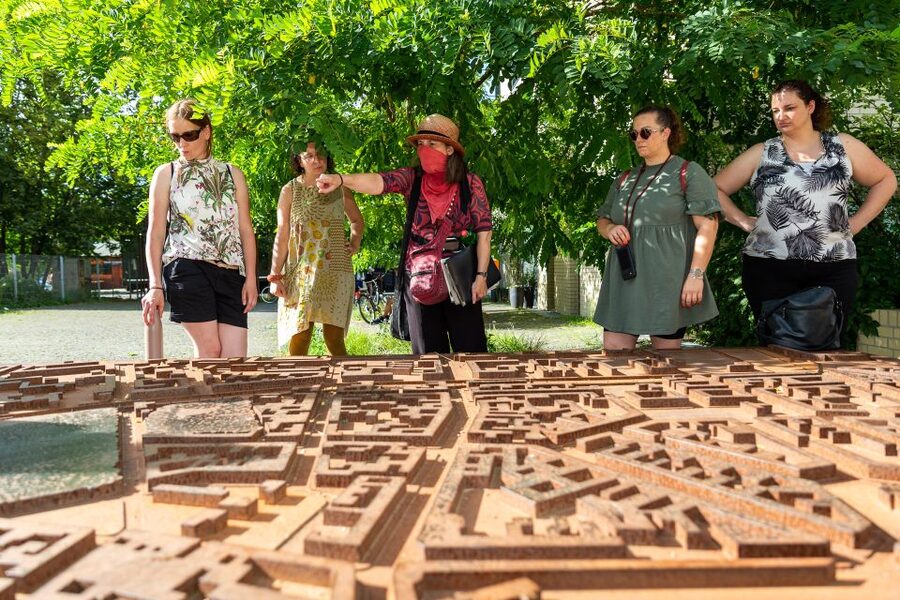
A maximum of 12 people is a practical advantage. You are walking through public streets, not sitting in a theater, so hearing the guide matters. A smaller party also lets the guide stop briefly when someone wants to ask about a family story, a border detail, or a location that is difficult to identify.
The experience can feel almost conversational when only a few people book. One couple had enough time to ask Marcus many questions during their 2.5-hour walk. That kind of exchange is harder to arrange in a group of 30 or 40.
There is a tradeoff. A small-group tour may still operate with only the minimum of two participants, but it can be canceled at short notice if that minimum is not reached. If three or more people are in your booking, the stated cancellation deadline is three days before the tour. The general booking terms also allow cancellation up to 24 hours in advance for a full refund, so read the conditions shown for your specific reservation.
Price, weather, and practical planning
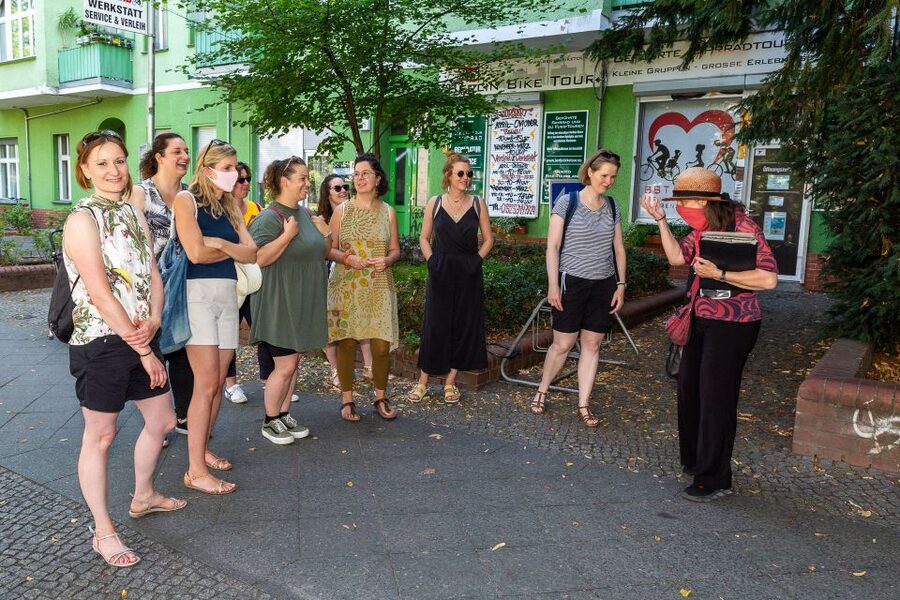
At $24 per person, this is a reasonable price for a 2.5-hour guided walk, especially if you want personal interpretation rather than a self-guided route. You are paying for a German-speaking guide, the smaller group, and the ability to ask questions at each stop.
The value is strongest for visitors who want context. If you already know the Wall’s history and only want photographs, you may find that several stops are subtle. If you want to understand how the border shaped ordinary streets and neighborhoods, the price is easier to justify.
The walk operates in all weather. Rain ponchos are supplied when needed, but you should still wear shoes suited to a long city walk and bring layers. Food and drinks are not included. The route includes a coffee opportunity, but you pay for anything you order.
The meeting point is well connected:
- Björnsonstraße tram stop, served by M1, M13, and M50, is about one minute away.
- Bornholmer Straße S-Bahn station, served by S1, S2, S8, S25, and S85, is about two minutes away.
- Schönhauser Allee S-Bahn and U-Bahn station is about a 10-minute walk away, with S8, S41, S42, S85, and U2 service.
The tour is conducted in German. That is the single most important booking check. If you do not understand German well enough to follow a detailed historical explanation, choose a tour in another language instead.
Who should take this Berlin Wall walk?
I would choose this tour if you want to understand the Wall through actual places rather than only through a museum exhibition. It suits adults interested in modern European history, couples who prefer a focused walk, and families with teenagers who can manage 2.5 to 3 hours on foot.
It also works well early in a Berlin visit. The route gives you a working map of the former division, so later visits to memorials, museums, and surviving Wall sections make more sense.
You might skip it if you need English guiding, dislike walking in poor weather, or want a tour centered on large preserved sections of concrete. This route includes some quiet and easily missed traces. Its strength is interpretation, not spectacle.
Should you book it?
Book this Berlin Wall tour if you want a small party, a German-speaking guide, and a route that goes beyond the most obvious Wall photographs. Bornholmer Straße, the cherry trees, Ulbrichtkurve, Schwedter Steg, Mauerpark, Gleim Tunnel, and Nordbahnhof give the walk a clear sense of place.
The best reason to choose it is the chance to hear personal memories from guides such as Marcus, Markos, Steffen, or someone with a background like Katrine’s. Just confirm the language, allow extra time beyond 2.5 hours, prepare for rain, and check the exact finish point before you go.
FAQ
How long does the Berlin Wall tour last?
The stated duration is 2.5 hours. One walk lasted about three hours, so allow some extra time for questions and a slower pace.
What language is the tour offered in?
The live tour guide speaks German. The supplied information does not list another language option.
How large is the tour group?
The group has a maximum of 12 participants. At least two participants are required for the tour to operate.
Where does the tour start?
Meet your guide at the Berlin Bike Tours office near Bornholmer Straße. It is about one minute from the Björnsonstraße tram stop and two minutes from Bornholmer Straße S-Bahn station.
Which Berlin Wall sites are included?
The route includes Bornholmer Straße, the former death-strip, the cherry trees, Ulbrichtkurve, Schwedter Steg near Mauerpark, Gleim Tunnel, and the area around Nordbahnhof.
Does the tour run in the rain?
Yes. The tour operates in all weather, and rain ponchos are provided when necessary.
Are food and drinks included?
No. Food and drinks are not included. You may have a chance to stop for coffee during the route, but you pay for your own refreshments.
Can I cancel the booking?
The stated terms allow cancellation up to 24 hours before the tour for a full refund. For bookings with three or more people, the listed cancellation deadline is three days before the scheduled tour.
Just added in Berlin
- Private One way Airport Transfer Berlin Airport To Berlin★ 3.5 · 17 reviews
- Private Walking Tour: Berlin Wall, Cold War and Checkpoint Charlie★ 5.0 · 37 reviews
- Modern Berlin Private Walking Tour: Diverse, Vibrant and Exciting German Capital★ 5.0 · 13 reviews
- Private Day Trip to Potsdam from Berlin by Train★ 4.5 · 27 reviews
- City Explorer: Potsdam Private Day Trip★ 4.5 · 10 reviews
- Berlin Private Custom 5-Hour Tour by Car★ 5.0 · 30 reviews
- Private Half-Day Sightseeing Tour in Berlin★ 3.5 · 6 reviews
- Berlin Private Custom Tour in a Minivan, East and West★ 5.0 · 123 reviews
Berlin Wall & Cold War Tours, compared.

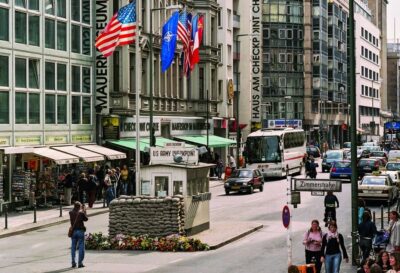
Skip-the-Line: Berlin Wall Museum at Checkpoint Charlie
Read our review →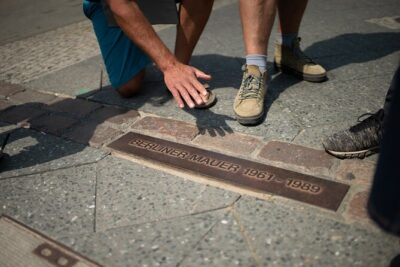
Cold War, Berlin Wall, Spies and the East Side Gallery
Read our review →
Guided Bike Tour of the Berlin Wall and Third Reich
Read our review →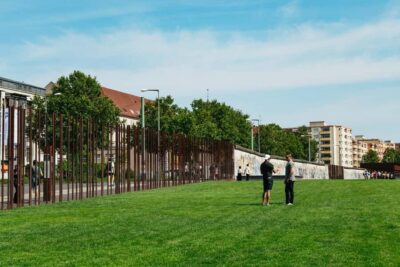
East Berlin and the Berlin Wall 2-Hour Walking Tour
Read our review →Browse the lists this tour appears in