
Reviewed · THIRD REICH & WWII TOURS
Munich: Third Reich and World War II Segway Tour of the City
Munich’s Nazi-era story comes into sharper focus when you move through the city rather than simply read about it. This three-hour Segway tour links Hitler’s former apartments, the Brown House, Königsplatz, Odeonsplatz, and the site of the old synagogue, while also folding in Bavarian kings and everyday city life. I like that you cover a large area quickly, and I like the careful beginner training before you head into town.
The main caution is that a Segway is not equally comfortable for everyone. Some riders feel nervous on roads, and the route can be less satisfying if you want long stretches in the English Garden. The tour is for ages 14 and up, and it is not suitable during pregnancy.
Key points at a glance
- Hitler’s Munich in one moving route: See his former apartments from 1920 to 1929 and from 1933, along with the Brown House and the Führer’s Building.
- A proper beginner briefing: Guides give you practice before leaving the office, which matters if this is your first Segway ride.
- Small groups of up to 10: The guide can watch the group more closely and offer help when needed.
- More than Nazi history: The route includes Bavarian royal stories, the Old Synagogue site, Königsplatz, Odeonsplatz, and Schelling-Salon.
- English or German commentary: Guides including Abdel and Jamal have been praised for patience, clear English, and friendly instruction.
- Good coverage for a short stay: At $100 per person, the value comes from combining transport, city orientation, and guided history in one outing.
Learning the Segway before entering Munich
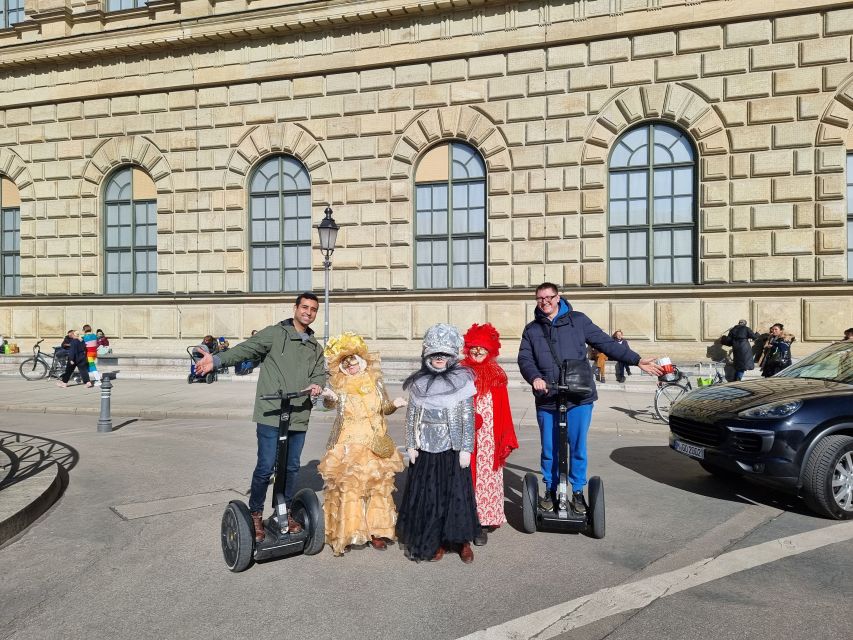
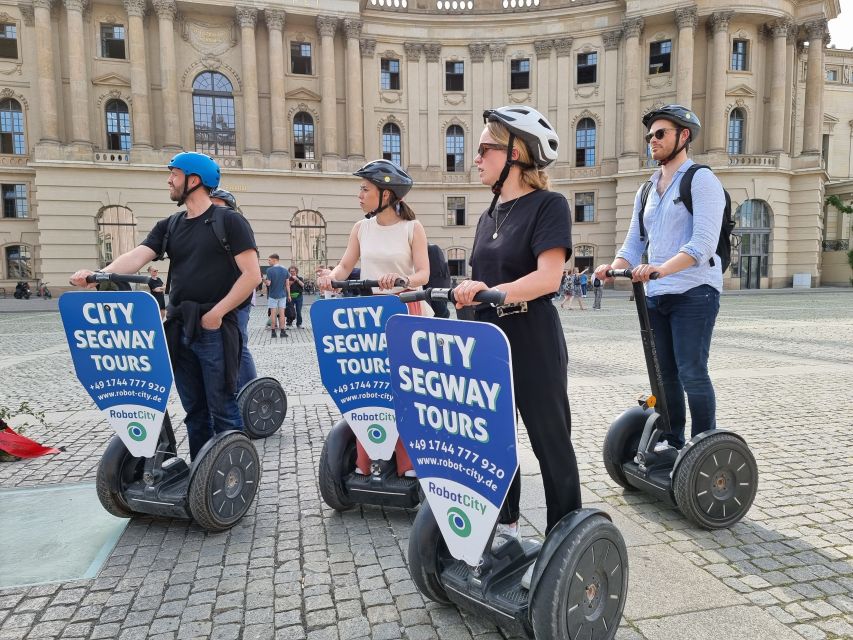
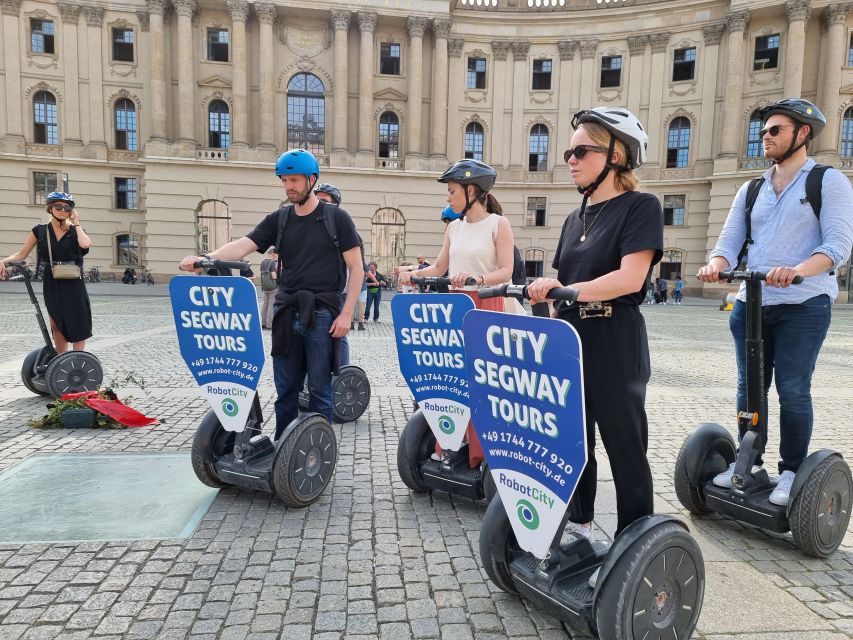
You meet the guide at Robot City Segway Tour München, the office used by Firewheels Tour GmbH. The experience begins with a safety briefing and practical instruction on how to control the Segway.
That opening matters. Several riders had never used a Segway before, yet the training helped them get moving. One first-time pair described feeling nervous at the start, while another group quickly became comfortable after instruction from Abdel. You should still expect a short learning curve, especially when turning, stopping, or riding near other road users.
The guide is not simply handing you a helmet and sending you off. The strongest part of the operation is the personal help at the beginning. Abdel is singled out for being patient, friendly, and steady with beginners. Jamal is also praised for giving detailed training before the group set out.
You receive the Segway and helmet as part of the tour. Hotel pickup and drop-off are not included, so you need to make your own way to the office. Check the exact start time when booking, since the three-hour experience has several possible departure times.
More Third Reich and WWII Tours in Munich
- Munich: Third Reich & WWII Walking Tour
★ 4.6 · 6,181 reviews - Third Reich Walking Tour Munich
★ 4.5 · 4,291 reviews - Munich: Birthplace of the Third Reich Guided Walking Tour
★ 4.6 · 771 reviews
A fast ride through Munich’s central sights
The Segway lets you connect parts of Munich that would take longer on foot. That is the tour’s basic advantage. You are not stopping for a full museum visit at each point, but you can see a broad stretch of the city and return later to places that catch your interest.
The guide rides with the group and points out buildings, streets, and historic locations. Commentary is available in English or German. The group limit is 10 people, which is small enough for the guide to keep an eye on riders and answer questions without addressing a large crowd.
The experience is best understood as a moving introduction. You get the outline of Munich’s political and cultural story, plus a useful sense of where major sights sit in relation to one another. If you are in town for only a short time, this coverage can save you from piecing together the center on your own.
It is not a substitute for the Documentation Centre at the former Nazi Party Rally Grounds or a dedicated museum visit. The emphasis is on seeing locations and hearing the guide explain their place in the city, not on spending long periods inside exhibits.
Hitler’s apartments and the rise of the Nazi movement
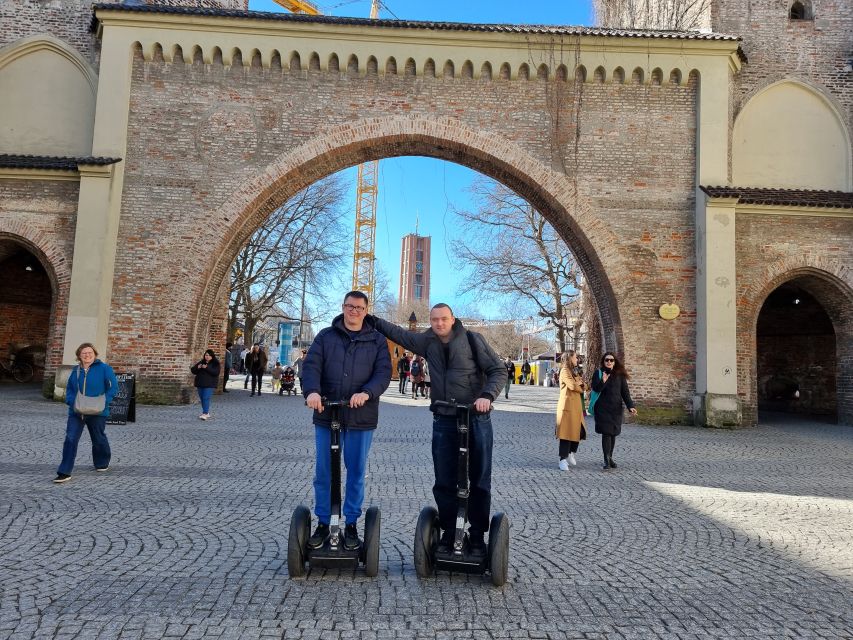
The tour gives unusual attention to the places connected with Hitler’s years in Munich. You pass his apartment from 1920 to 1929, then another apartment connected with him in 1933.
These stops help place his political rise in the physical city. Instead of treating the story as something that happened in a distant political capital, the route shows you the Munich addresses and public spaces tied to his early years and growing power.
You also pass the Brown House, the former headquarters of the Nazi Party, and the Führer’s Building. These sites are important because they show the administrative and symbolic center of the movement in Munich. The guide explains what happened in the city during the Nazi period and World War II as you move between the locations.
Expect a street-level explanation rather than a formal academic lecture. That can be a strength if you want a clear introduction without spending half a day indoors. It can also be a limitation if you already have a strong background in the period and want detailed political analysis.
One rider particularly enjoyed the tour because of an interest in World War II history. That is a good indication of the tour’s focus, but you should know it is not a full military history tour. Munich’s wartime story is part of a wider route that also covers royal history and the city’s general character.
The Old Synagogue site and Munich’s wartime memory
The stop at the site of the old synagogue adds an important part of the story that should not be missed. Here, the guide discusses what happened in Munich during World War II and the fate of Jewish life in the city.
The value of this stop is that it places persecution and destruction within the ordinary city center. You are not only looking at government buildings and party offices. You are also being reminded of the community that was targeted and erased.
Because the stop is made outside, the depth of the explanation depends on the guide. The most useful approach is to listen closely and ask questions if you want more context. The tour provides a starting point, while a museum or memorial visit afterward can give you more time with documents and personal stories.
This part of the route also keeps the experience from becoming a parade of Nazi landmarks. The guide has a responsibility to explain what these places mean, not simply point them out as dark curiosities. The available feedback suggests that the best guides handle the subject with care while keeping the tour accessible.
Other trips into the same period in Munich:
- Munich World War II Sites Including Dachau Concentration Camp
★ 4.5 · 570 reviews - Munich City Walking Tour, includes Third Reich & Viktualienmarkt
★ 5.0 · 458 reviews - Third Reich & WWII Walking Tour
★ 4.5 · 417 reviews - Munich 3-Hour Segway Tour: Nazi Munich & Royal Architecture
★ 4.9 · 194 reviews
Königsplatz, Odeonsplatz, and the royal city
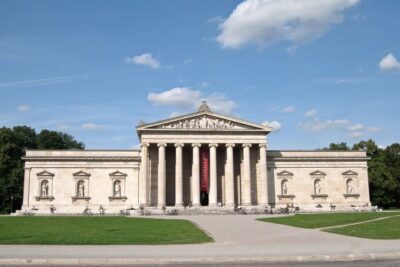
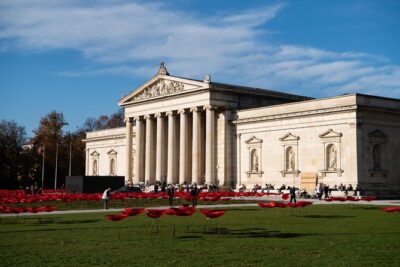
Munich was a royal capital long before the Nazi era, and the tour makes room for that older story. At Königsplatz and Odeonsplatz, you see grand spaces tied to Bavaria’s political and architectural past.
The guide talks about the Bavarian kings and explains how Munich developed as a seat of power. This wider context is helpful because the city’s monumental center was not created for one period alone. Royal ambitions, civic identity, political theater, and later Nazi use all overlap here.
Odeonsplatz is especially useful for understanding how Munich’s grand streets and buildings shaped public life. Königsplatz, with its formal scale, helps explain why the Nazi leadership used central Munich for ceremonies and propaganda.
You will not tour every building in detail, and the exact length of each stop can vary. Think of these squares as anchors in the route. They give you a strong visual map of central Munich and make later independent walks easier.
Schelling-Salon and the everyday city
One of the more unusual stops is Schelling-Salon, a pub that remained open through both World War I and World War II. It is a small detail, but it adds a human scale to a tour otherwise filled with major political locations.
Places like this remind you that cities are not only shaped by leaders, armies, and official buildings. People continued to meet, eat, drink, and carry on with daily life while Europe was at war. The stop also gives the guide a chance to talk about Munich beyond its most famous and troubling associations.
The route then points you toward places to return for food and atmosphere. The guide may recommend Hofbräuhaus am Platzl, the beer hall first built in 1589, or Hofbraukeller, which serves traditional Bavarian cooking.
These recommendations are not included meals or arranged visits. They are useful suggestions for later, particularly if you want to follow the tour with a classic Bavarian meal. I would treat them as starting points rather than a promise that either restaurant will suit every taste or budget.
Riding conditions, weather, and comfort
A Segway is fun when you feel in control, but the ride is not equally relaxing on every surface. One rider found the roads frightening for a member of the group, while the parks and cycle tracks felt much easier. Confident riders wanted more time in the English Garden.
That is useful practical information. The tour is not simply a leisurely park ride. You will travel through city streets and use cycle tracks, so you need to remain alert and comfortable around other traffic. If you are uneasy on wheels, tell the guide early and use the practice time fully.
The experience has gone ahead in rain, snow, and very cold weather. That does not mean conditions will always be pleasant. Wear clothing suited to the forecast, since three hours outside can feel long when you are standing still at historic stops.
Crowds during Oktoberfest did not prevent one small group from getting around, but busy periods can affect the pace. The Segway helps you cover ground, yet popular areas may still require patience and careful riding.
The tour is limited to participants aged 14 and older. It is not suitable for pregnant women. The supplied information does not give a separate accessibility assessment, so anyone with mobility or balance concerns should ask the operator before booking.
How the guides affect the experience
The guide is the main variable here. The strongest feedback centers on Abdel, who has been praised for professional handling, patience, humor, and clear explanations. Jamal is also noted for detailed instruction and a pleasant introduction to central Munich.
That personal approach matters on a Segway tour. A guide who watches the group closely can make a nervous first ride feel manageable. A guide who explains the city well can turn a simple ride into a useful history lesson.
There has been at least one language mix-up, with an interpreter arranged to help. The tour is offered in English and German, but communication is still worth confirming when you book, especially if your group needs a particular language.
The feedback is not uniformly glowing on the amount of detail. One rider wanted more information about certain sights, including the archway at the end of Leopoldstrasse. I would set expectations at a good general introduction rather than a specialist lecture on every building you pass.
Is $100 a fair price?
At $100 per person, this is not the cheapest way to see Munich. You are paying for a guide, Segway, helmet, training, and three hours of city coverage. There is no hotel transfer, meal, or museum admission included.
The value improves if you want to see a lot in a short stay. A walking tour may offer more detail at each stop, but it will not cover the same ground as easily. A standard sightseeing vehicle may cover distance, but it will not give you the same open-air experience or the hands-on novelty of riding a Segway.
I see the price as reasonable for someone who values both transport and interpretation. It is less compelling if your main aim is a slow, detailed study of Nazi history, or if you already know central Munich well.
The small group size also helps justify the cost. With no more than 10 participants, the guide can offer assistance and keep the outing moving. If your group is comfortable on Segways, you get a lively way to connect major sites without arranging several separate walks.
Who should book this Munich Segway tour?
I would recommend it for active adults and teenagers aged 14 or older who want a broad introduction to Munich. It is especially suited to first-time visitors, people with only a few days in the city, and anyone interested in the Nazi period but also keen to see royal Munich and ordinary local places.
It works well for couples and small groups. One couple ended up with a private-feeling outing because no other participants joined them, though you should not assume that will happen on your date.
You should think twice if you dislike riding near roads, have balance concerns, are pregnant, or want an indoor museum-style history lesson. You should also allow for weather. Rain, snow, and cold have not stopped the experience, but they can change how enjoyable the three hours feel.
Free cancellation up to 24 hours before the start and the option to reserve now and pay later make the booking less rigid. Those terms are useful if your Munich schedule is still moving, but you should still check the available start time before committing.
FAQ
How long is the Munich Segway tour?
The tour lasts three hours.
What language is the tour offered in?
The live tour is offered in English or German.
Where does the tour meet?
You meet the guide at Robot City Segway Tour München in Munich.
What is included in the price?
The price includes the guide, Segway, and helmet.
Is hotel pickup included?
No. Hotel pickup and drop-off are not included.
How many people can join the group?
The group is limited to 10 participants.
What age must participants be?
Children under 14 are not suitable for this activity.
Is the tour suitable for pregnant women?
No. The activity is listed as unsuitable for pregnant women.
Can I cancel for a full refund?
Yes. You can cancel up to 24 hours in advance for a full refund.
Should you book it?
Book this tour if you want to cover Munich’s main central sights quickly and enjoy learning through movement. The careful training, small groups, and helpful guides such as Abdel and Jamal make it approachable for first-time riders. The route also gives you a useful mix of Nazi-era sites, Bavarian royal history, Jewish history, and everyday Munich.
Skip it if you want extensive time at each historic stop or feel uneasy riding on city roads. For the right rider, $100 buys more than a novelty ride. It gives you a fast city orientation, a serious introduction to Munich’s difficult past, and a practical list of places to explore on foot afterward.
More Segway Tours in Munich
- Munich: City Highlights Guided Segway Tour
★ 4.6 · 266 reviews - Munich: City Highlights Guided Segway Tour
★ 4.5 · 161 reviews - Munich: Beer Stories Guided Segway Tour
★ 4.5 · 31 reviews - 3-H Munich: City Highlights Guided Segway Tour
★ 4.8 · 7 reviews
Just added in Munich
- Pub crawl incl. Oktoberfest museum guided tour with beer tasting (private)★ 5.0 · 5 reviews
- South Tyrolean specialties and wine tasting★ 5.0 · 5 reviews
- Short & sweet: Tasting the Viktualienmarkt★ 4.8 · 37 reviews
- Size Matters Beer Tour Munich★ 4.6 · 105 reviews
- Secret Food Tours Munich★ 4.8 · 5 reviews
- Munich: Romantic Wine Experience for Two at Viktualienmarkt★ 4.2 · 14 reviews
- Munich: Resistance against Hitler – Historical Walking Tour★ 5.0 · 5 reviews
- Residence of Munich private tour with skip the line ticket★ 5.0 · 4 reviews
Third Reich & WWII Tours, compared.

Third Reich Berlin: Hitler and WWII Walking Tour
Read our review →
Walking Tour of Former Nazi Party Rally Grounds
Read our review →
Berlin Third Reich Sites: Half-Day Walking Tour
Read our review →
Birthplace of the Third Reich Guided Walking Tour
Read our review →Browse the lists this tour appears in