
Reviewed · THIRD REICH & WWII TOURS
Munich 3-Hour Segway Tour: Nazi Munich & Royal Architecture
Munich’s story comes into focus quickly on this three-hour Segway tour. You move from grand royal buildings to places tied to the rise of Nazism, then roll past the famous Eisbach river surfers. It is an unusual mix of beauty, difficult history, and modern city life.
I like the small groups of up to eight and the careful training before you set off. I also like how much ground you cover without spending the day on foot. The main drawback is simple: you ride on roads and in city traffic, so this is not the best choice if you want a slow, purely pedestrian sightseeing tour.
Key points
- Thirty-minute Segway lesson: You get hands-on instruction before the sightseeing begins, even if this is your first ride.
- Royal Munich in one route: See the Residenz, Bavarian State Opera, Maximilianstraße, Maximilianeum, and Siegestor.
- A serious look at Nazi Munich: Königsplatz and nearby central sights help explain Munich’s role in Germany’s darkest period.
- The Eisbachwelle: Watch skilled river surfers ride a standing wave in the English Garden area.
- Helpful first-day orientation: The guide shares practical tips for the rest of your stay.
- Weather matters: The tour runs in rain and cold unless conditions are extremely poor, so dress for wind and wet pavement.
Why this Munich Segway tour works
A Segway gives you a useful middle ground between walking and a bus tour. You can cover central Munich’s major sights while still stopping for photos and short explanations. You are not sealed behind glass, and you do not have to keep pace with a large crowd on foot.
The route also has a good contrast. Munich is famous for its palaces, museums, opera house, and wide ceremonial squares, but its 20th-century story is far more troubling. Your guide connects those two sides instead of presenting the city as one long parade of handsome buildings.
I especially like this as a first or second activity in Munich. The route gives you a broad map of the center, and the guide can point out places you may want to revisit later. It is also a practical choice if you have limited time and want to see the area north and east of the old town.
The tone is usually light and social, but the subject matter is not always easy. Guides explain Munich’s role during World War II and the rise of Nazism, then shift back to the city’s royal architecture and river culture. If you want a formal study of Nazi history, you should add a dedicated museum or memorial visit. This tour gives context while moving through the city.
More Third Reich and WWII Tours in Munich
- Munich: Third Reich & WWII Walking Tour
★ 4.6 · 6,181 reviews - Third Reich Walking Tour Munich
★ 4.5 · 4,291 reviews - Munich: Birthplace of the Third Reich Guided Walking Tour
★ 4.6 · 771 reviews
Starting at Karlsplatz and learning the Segway
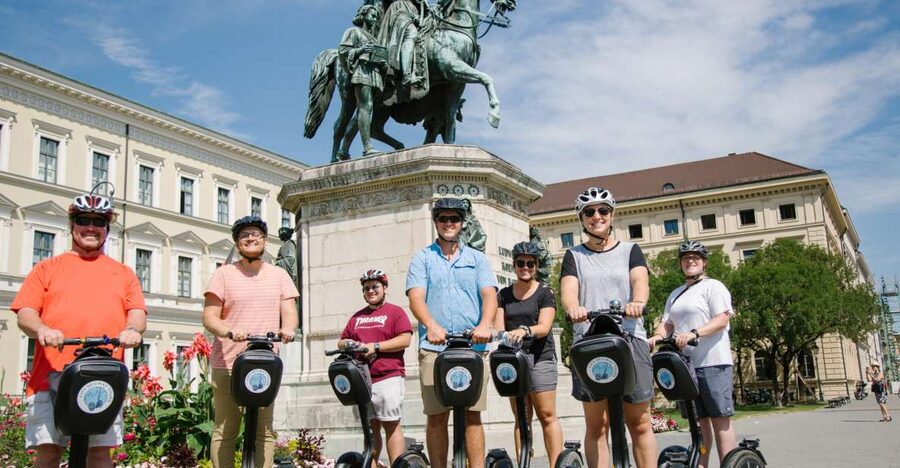
You meet at Fat Tire Tours at Karlsplatz 4, close to the busy Stachus area. From the Karlsplatz McDonald’s, keep the city gate behind you, turn right along Sonnenstrasse, and look for the shop on the right after about 50 meters, inside the courtyard at Karlsplatz 4.
The first part is not sightseeing. Plan on roughly 30 minutes for orientation and safety instruction. You learn how to mount, stop, turn, balance, and handle the machine before heading out. This matters because the Segway responds to small shifts in your body. Push too hard and you may move faster than expected; stay relaxed and the machine becomes much easier to control.
Several guides have been praised for giving one-on-one help during this stage. Canaan, for example, has been noted for working with each rider before departure. Matt has also been described as patient and encouraging, including with riders who had never used a Segway.
That training makes this experience more approachable than the name might suggest. Still, do not treat it as effortless. You need a basic level of fitness, balance, and comfort around city movement. Open-toed shoes are not allowed, and comfortable, closed shoes are the sensible choice.
Karolinenplatz, Königsplatz, and Munich’s difficult past
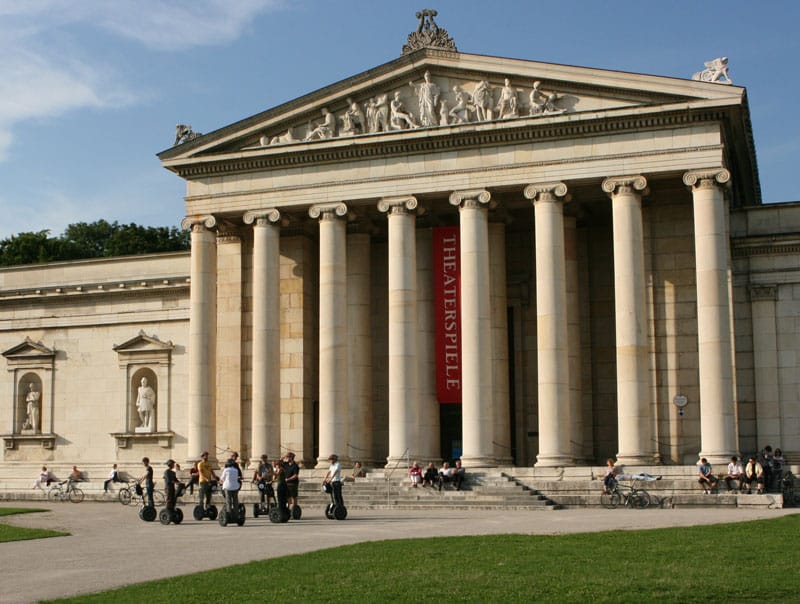
After the practice session, the group begins moving through the historic center. Karolinenplatz is an early photo stop, followed by Königsplatz, one of Munich’s most imposing public spaces.
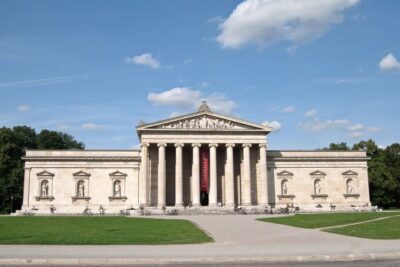
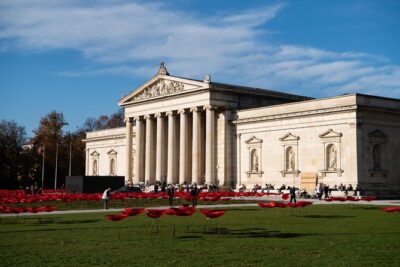
Königsplatz was designed with the Acropolis in Athens as a model. Its broad space and classical buildings reflect the royal ambitions of 19th-century Bavaria. Your guide also uses the square to explain how the Nazis later used monumental architecture and public gatherings for political purposes.
That shift in meaning is one of the strongest parts of the route. You see an elegant square, but you also learn how architecture can be used to project power. The tour does not treat Munich’s dark past as a footnote, yet it keeps the discussion connected to the places around you.
The stop is brief, about five minutes in the posted schedule, so expect an introduction rather than a long lecture. If Nazi-era history is a main reason for your visit, take notes and return later for a more extended visit to relevant museums and memorial sites.
Munich’s museums from the saddle
The route continues past the Alte Pinakothek and Pinakothek der Moderne. These are major cultural landmarks, and the outside views give you a quick sense of Munich’s museum quarter.
The Alte Pinakothek is tied to European art and the long cultural ambitions of Bavaria’s rulers. The Pinakothek der Moderne represents a later, more modern side of the city. Seeing both in one sequence helps you understand how Munich moved from a royal capital toward a major center for art, design, and architecture.
You do not go inside the museums on this tour. The stops are for sightseeing and photographs, so allow extra time on another day if you want to see the collections. That is a reasonable tradeoff here, since entering even one museum would change a three-hour ride into a much longer activity.
Other trips into the same period in Munich:
- Munich World War II Sites Including Dachau Concentration Camp
★ 4.5 · 570 reviews - Munich City Walking Tour, includes Third Reich & Viktualienmarkt
★ 5.0 · 458 reviews - Third Reich & WWII Walking Tour
★ 4.5 · 417 reviews - Munich: Third Reich and World War II Segway Tour of the City
★ 4.1 · 44 reviews
Siegestor and Odeonsplatz
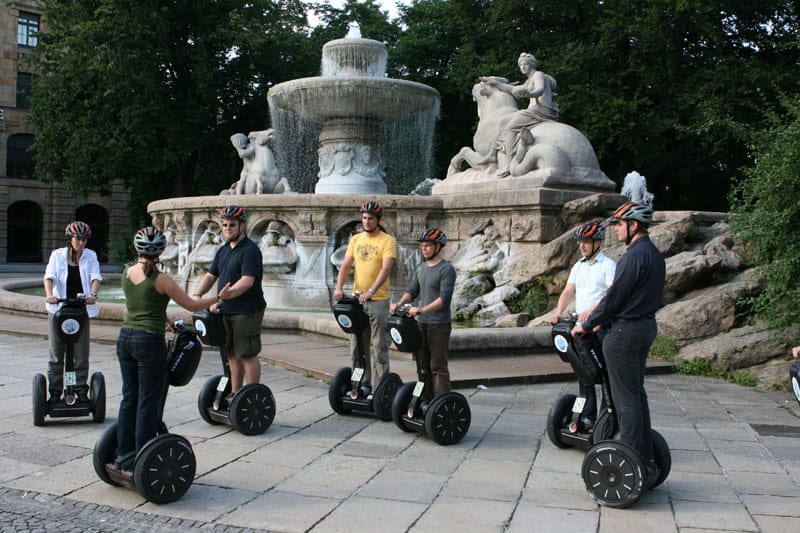
Siegestor, the Victory Gate, provides another look at Munich’s classical style. It was built as a military monument, but its later meaning became more complicated after the destruction of World War II. Your guide can place the gate within the larger story of Munich’s royal and wartime past.
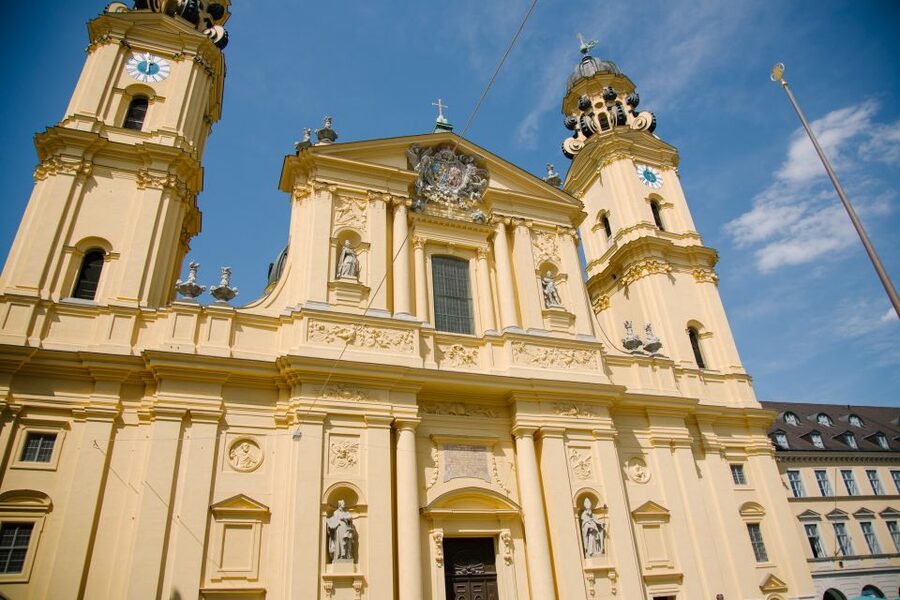
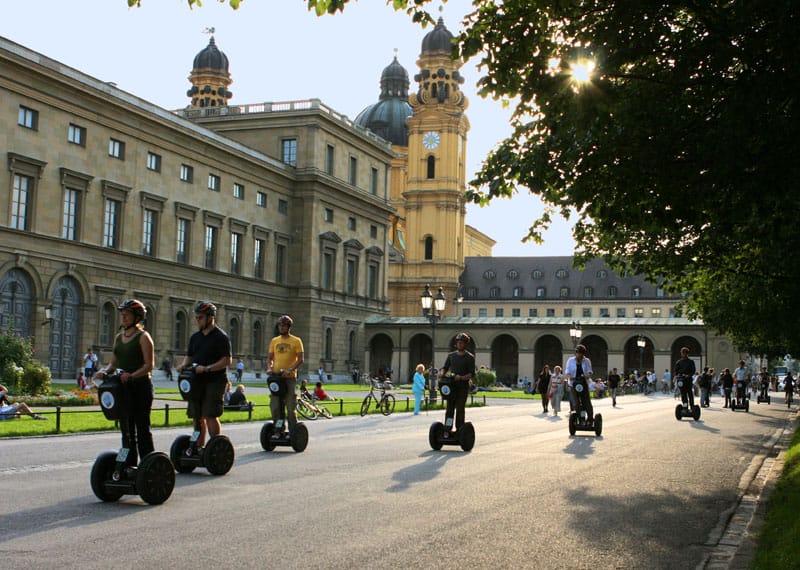
At Odeonsplatz, the route reaches one of the city’s grandest urban spaces. You pass the Theatinerkirche area and move toward the Munich Residenz, the former royal palace. The exact amount of explanation depends on the guide and the pace of the group, but the sequence gives you a strong feel for how the Bavarian court shaped the center.
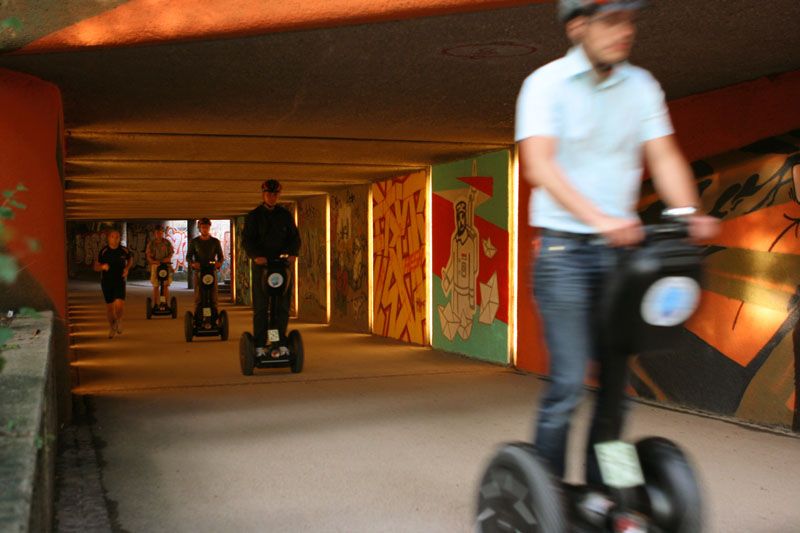
This is also where the ride can feel more urban. You may encounter pedestrians, bicycles, cars, and changing road surfaces. Guides brief you on riding etiquette, and one account of the tour specifically notes that the group handled busy Munich roads without trouble. You should still stay alert and follow instructions closely.
The Residenz and Bavaria’s royal architecture
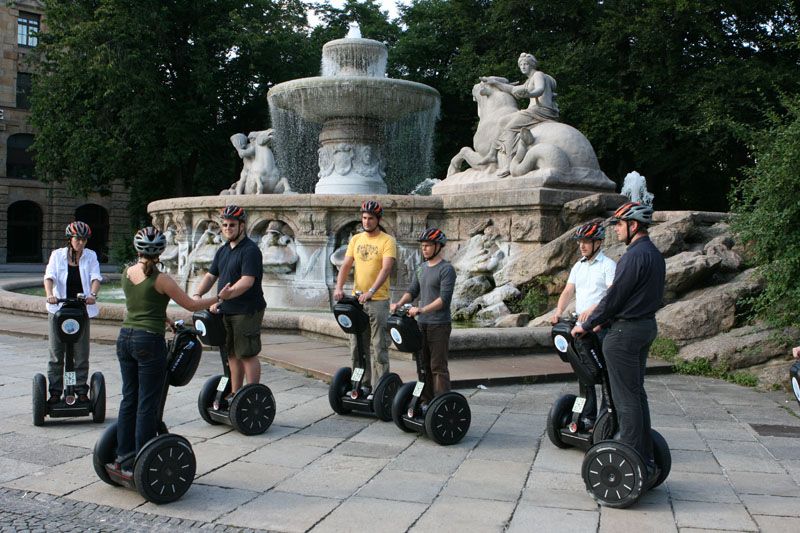
The Munich Residenz is one of the tour’s major architectural highlights. It served as the home of Bavarian rulers and is far more impressive in person than a quick exterior photograph suggests.
On the Segway, you see the palace as part of the city rather than as an isolated museum stop. The nearby Bavarian State Opera and Maximilianstraße add to the same royal and civic story. Wide streets, formal facades, and grand public buildings show how Munich presented itself as a capital.
The Bavarian State Opera is another short photo stop. You should not expect an interior visit or a performance connection, but the building helps round out the picture of Munich as a city where court life, music, politics, and public ceremony all overlapped.
Haus der Kunst and the city’s changing identity
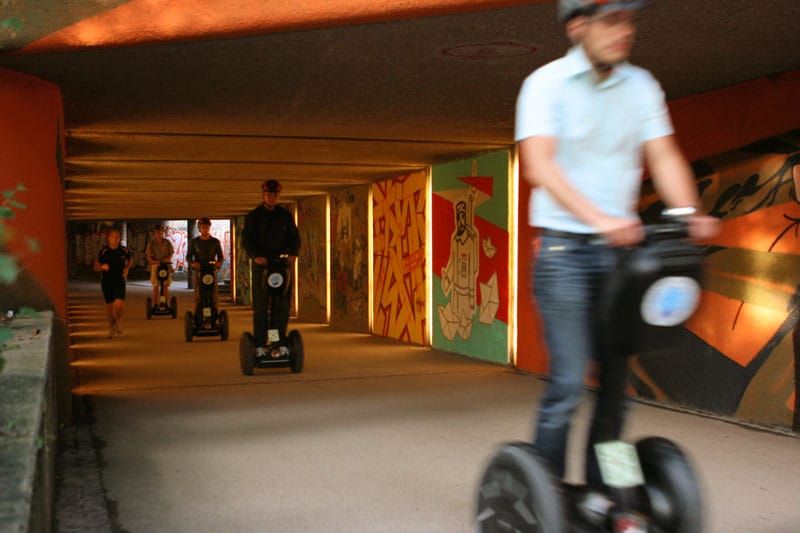
Haus der Kunst brings the tour back to the 20th century. Its history is linked to the Nazi period, and its monumental design offers another chance to discuss how governments use buildings to express ideology.
This stop works well because it is not presented as a detached history lesson. You are seeing the structure in the middle of modern Munich, with art, traffic, and daily city life moving around it. The contrast helps explain how Munich has had to live with, interpret, and move beyond difficult parts of its past.
The tour’s historical information is strongest when the guide connects individual buildings to larger changes in Bavaria. Several guides, including Tom, Thomas, and Steve, have been praised for telling stories that make the city’s past easier to follow. Your guide on the day may be different, but the format depends heavily on clear storytelling rather than a scripted audio track.
The Eisbachwelle and Munich’s playful side
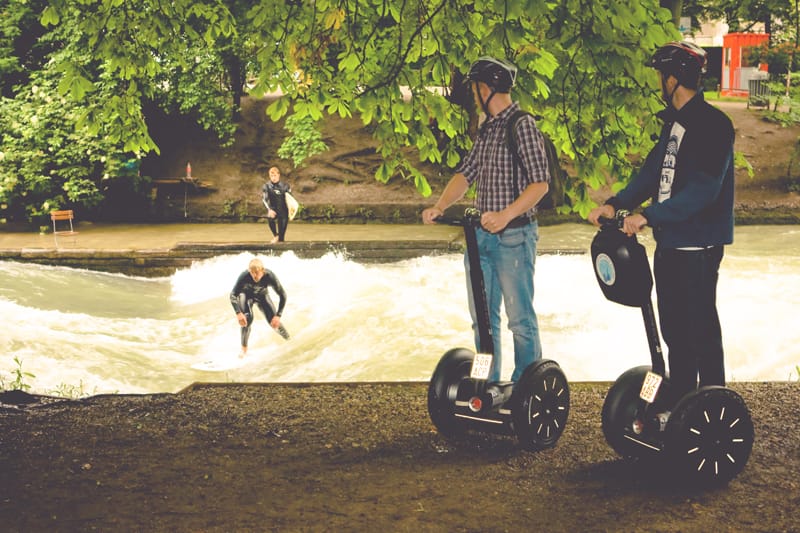
The Eisbachwelle is the tour’s most memorable change of mood. Here, river surfers ride a permanent standing wave in the Eisbach, a narrow channel connected to the Isar system.
You stop for around ten minutes, which gives you time to watch the surfers and take photos. The sight is genuinely odd in the best way: a fast-moving city river becomes a surf spot in the middle of Munich. It is also one of the places where the city’s modern, outdoorsy character comes through.
The stop is popular, so do not expect solitude. You are there to watch from the edge, not to try the wave. The guide explains why this spot matters and helps place it within Munich’s public river culture.
The Angel of Peace, the Isar, and Maximilianeum
From the Eisbachwelle, the route heads toward the Angel of Peace. The monument marks a major historical anniversary and sits above the Isar, giving the stop both a civic and scenic role.
The Isar River section provides a welcome change from palace facades and busy central streets. You get a sense of the river as part of Munich’s daily life, not just as a background feature. The route then reaches the Maximilianeum, a grand building that has housed the Bavarian state parliament since 1949.
This is a particularly useful stop for understanding modern Bavaria. The Maximilianeum looks like a royal palace, but it serves a current political purpose. That mix of old architectural language and present-day government runs through much of Munich.
The ride along the river and east side of the center can also feel more open than the early city streets. You still need to watch the road and your spacing, but the change of setting keeps the three hours from becoming a string of similar squares.
Maximilianstraße and the return to Karlsplatz
Maximilianstraße brings the tour back to Munich’s polished side. The avenue is known for grand architecture and upscale shops, and it leads toward the Bavarian State Opera before the group returns to Karlsplatz.
This final stretch neatly ties together several themes: royal ambition, modern city wealth, public culture, and the practical layout of central Munich. You finish where you started, which makes it easy to continue with your own plans afterward.
The posted stops are short, often five minutes each. That keeps the ride moving, but it also means you should not expect a detailed talk at every location. The value is in the full route and the links between places, not in lengthy time at one monument.
What the $91 price gets you
At $91 per person, this is not a bargain sightseeing loop, but the price can make sense if you value time and mobility. You get a three-hour guided route, the Segway itself, safety instruction, and a small group capped at eight participants.
The training is part of the value. A cheap ride would be less useful if you spent the first hour feeling unsure of the machine. Here, the lesson helps you cover much more of Munich than you could comfortably walk in the same period.
The English-speaking guide is also important. Canaan, Bob, José, Michelle, Matt, Steve, Tom, and Thomas are among the guide names associated with particularly warm and capable experiences. The strongest guide qualities are patience during training, clear city history, and a sense of humor that keeps the group relaxed.
Do not expect food or drinks to be included. Bring cash if you want to buy something during the day, though the tour itself does not promise a meal or a scheduled café stop. One longer outing included a coffee break, but you should not count on that unless your guide says so.
Weather, clothing, and who should book
The tour runs in rain and cold except during extremely bad weather. That matters more on a Segway than on a walking tour because movement creates wind chill. Wear warm layers, gloves, and shoes with good coverage. Raincoats are included, and jackets and gloves have sometimes been available for people caught unprepared, but you should dress properly from the start.
You must be at least 14 years old. Anyone under 18 needs an accompanying adult or completed insurance paperwork. The weight range is 100 to 250 pounds, or 45 to 115 kilograms.
This is not suitable for pregnant people, anyone with back problems, recent surgery, mobility impairments, a low fitness level, or anyone over 95. If you are close to the weight limit or unsure about balance, contact the operator before booking rather than hoping the practice session will solve the problem.
I would choose this tour for first-time Munich visitors, couples, families with older teenagers, and anyone who wants history with a bit of motion. It is also a good fit for people who find long walking tours tiring but still want an outdoor view of the city.
I would skip it if you dislike riding near traffic, need long uninterrupted time at monuments, or want a specialist tour focused only on Nazi history or art museums.
Should you book the Munich Segway tour?
Book it if you want a lively overview of Munich that combines royal architecture, Nazi-era context, the Isar, and the Eisbach surfers in one morning or afternoon. The small group and substantial training make the experience less intimidating than a quick Segway lesson followed by immediate departure.
I especially recommend it early in your stay. You will learn the shape of the center, spot places to revisit, and get practical tips from the guide. Just remember that this is an active city ride, not a museum tour. Dress for the weather, accept the short stops, and keep your expectations focused on broad coverage and good storytelling.
FAQ
Where does the Munich Segway tour start and end?
The tour starts and ends at Fat Tire Tours, Karlsplatz 4, near Stachus. The shop is in the courtyard after you turn right from the Karlsplatz McDonald’s and walk about 50 meters along Sonnenstrasse.
How long is the Segway training?
The safety briefing and Segway orientation take about 30 minutes before the sightseeing begins.
What languages are available?
The tour is offered in English and German.
How many people are in each group?
Groups are limited to eight participants.
What age and weight limits apply?
Participants must be at least 14 years old and weigh between 100 and 250 pounds, or 45 and 115 kilograms. Minors under 18 need an accompanying adult or completed insurance paperwork.
Does the tour operate in bad weather?
The tour runs in rain and cold unless the weather is extremely severe. Raincoats are included, but you should bring comfortable, warm clothing and closed shoes.
More Segway Tours in Munich
- Munich: City Highlights Guided Segway Tour
★ 4.6 · 266 reviews - Munich: City Highlights Guided Segway Tour
★ 4.5 · 161 reviews - Munich: Beer Stories Guided Segway Tour
★ 4.5 · 31 reviews - 3-H Munich: City Highlights Guided Segway Tour
★ 4.8 · 7 reviews
Just added in Munich
- Pub crawl incl. Oktoberfest museum guided tour with beer tasting (private)★ 5.0 · 5 reviews
- South Tyrolean specialties and wine tasting★ 5.0 · 5 reviews
- Short & sweet: Tasting the Viktualienmarkt★ 4.8 · 37 reviews
- Size Matters Beer Tour Munich★ 4.6 · 105 reviews
- Secret Food Tours Munich★ 4.8 · 5 reviews
- Munich: Romantic Wine Experience for Two at Viktualienmarkt★ 4.2 · 14 reviews
- Munich: Resistance against Hitler – Historical Walking Tour★ 5.0 · 5 reviews
- Residence of Munich private tour with skip the line ticket★ 5.0 · 4 reviews
Third Reich & WWII Tours, compared.

Third Reich Berlin: Hitler and WWII Walking Tour
Read our review →
Walking Tour of Former Nazi Party Rally Grounds
Read our review →
Berlin Third Reich Sites: Half-Day Walking Tour
Read our review →
Birthplace of the Third Reich Guided Walking Tour
Read our review →Browse the lists this tour appears in