
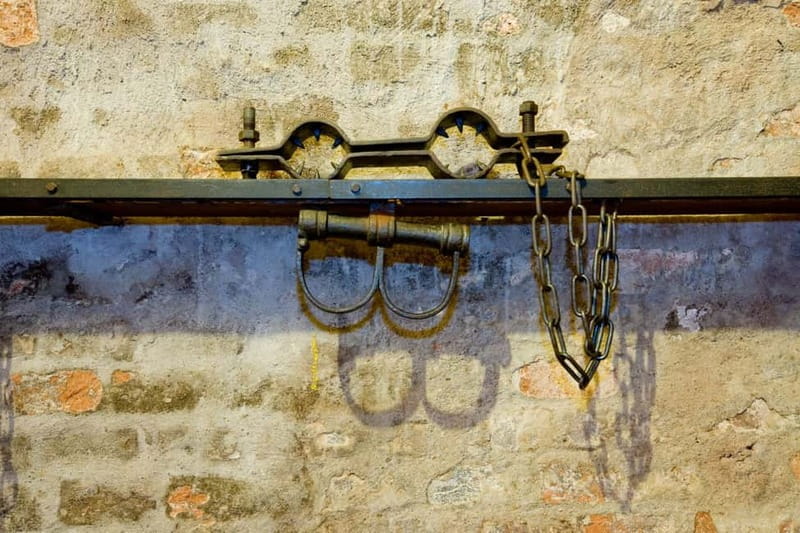
Reviewed · CRIME, WITCHES & CEMETERY TOURS
Nuremberg: Medieval Dungeons Guided Tour
Beneath Nuremberg’s Old City Hall, twelve cramped cells and a torture chamber tell a bleak story about medieval justice. Prisoners were held here from the fourteenth century while officials questioned them, often using pain to force a confession. I like the way the mostly original dungeon furnishings make the past feel close, and I like the short 45-minute format, which fits neatly into a day of sightseeing.
The guides are a major part of the experience. Names praised for clear English, humor, and strong storytelling include Nick, Alex, Wolfgang, Dimitri, Mariana, Hannes, Luke, and Dejan Grasser. The main drawback is simple: this is a small site, not a large museum, so you may find the four main areas less substantial than expected for the price.
Key points to know before you go
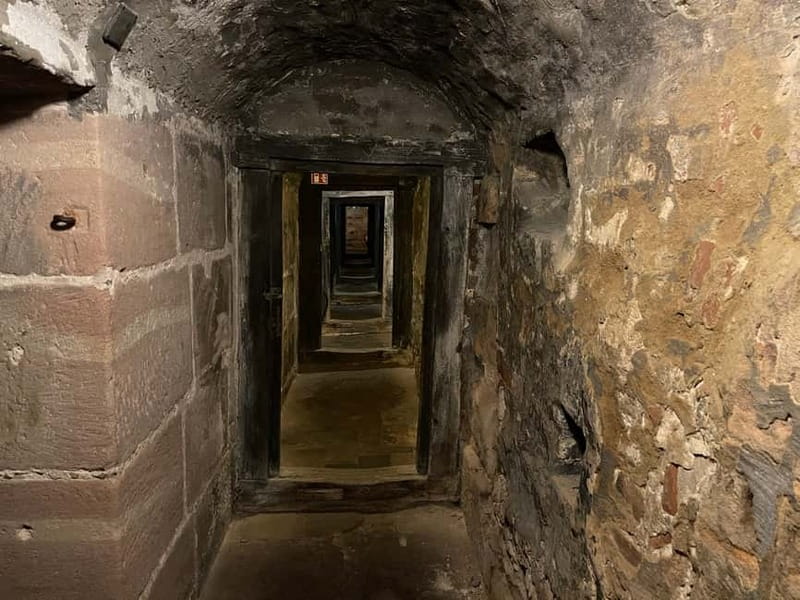
- Twelve cramped cells: Walk through the small prison rooms beneath the Old City Hall and see how little space prisoners had.
- A mostly original torture chamber: The stark room gives the tour its strongest and most unsettling moment.
- A short, focused visit: The tour lasts about 45 minutes, or up to an hour depending on the pace and questions.
- Strong live guiding: English and German guides explain medieval law with facts, stories, and occasional humor.
- Cold, tight conditions: Bring warm clothing and avoid this tour if you have claustrophobia or limited mobility.
- A low-cost history stop: At about $11 per person, it offers a useful look at Nuremberg’s past without taking half your day.
Entering the medieval dungeons below Old City Hall
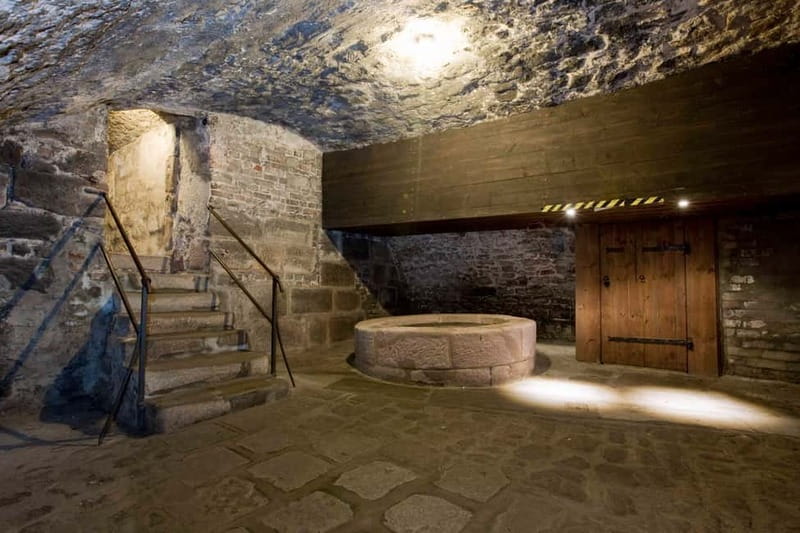
You meet outside the Altes Rathaus, near the middle entrance. Wait outdoors rather than going inside to search for a ticket desk. The meeting point is central and easy to pair with other old-town sights, but you should leave yourself enough time to locate the correct entrance.
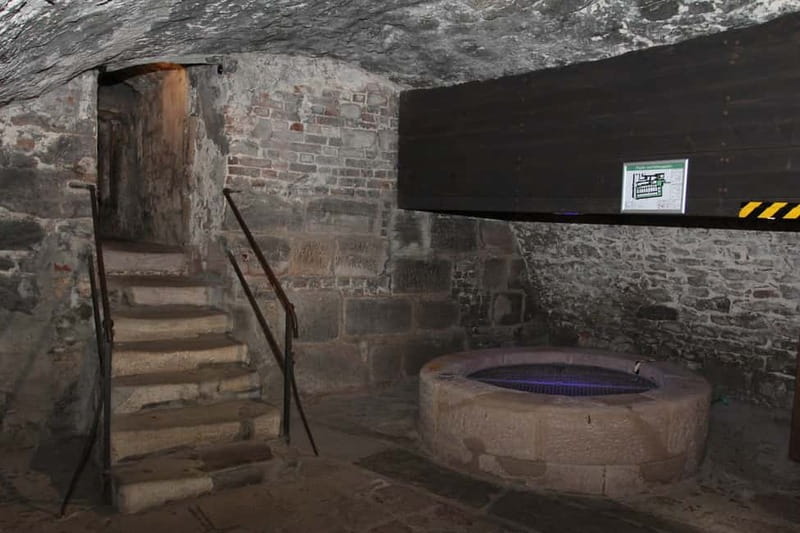
The tour leads below street level into the vaulted cellars. That change in setting matters. Above ground, Nuremberg’s old center can feel bright and busy. Below it, the stone rooms are cold, enclosed, and plain. You do not need an elaborate exhibition to understand the mood. The low ceilings and narrow passages do much of the work.
I like this immediate contrast. You are not being shown a modern display built to resemble a prison. You are walking through historic underground rooms that retain much of their original character. The setting gives the guide a strong starting point for explaining how law worked in medieval Nuremberg.
The tour is live, not simply an audio experience. It is offered in English and German, and the guide can answer questions as the group moves from room to room. Several guides are praised for clear English and a lively delivery. Nick is described as a strong storyteller, while Alex is noted for balancing humor with the serious subject. Wolfgang, Dimitri, Mariana, Hannes, Luke, and Dejan Grasser are also named for clear explanations, warmth, or good presentation.
Other dark corners of Nuremberg:
- Medieval Tour in Nuremberg in Spanish
★ 5.0 · 1,374 reviews - Hamburg: Sex and Crime in St. Pauli Tour for Ages 18+
★ 4.7 · 15,447 reviews - Cologne: Melaten Cemetery Life, Love and Death Tour
★ 4.9 · 2,728 reviews
Twelve cells and a hard lesson in medieval justice
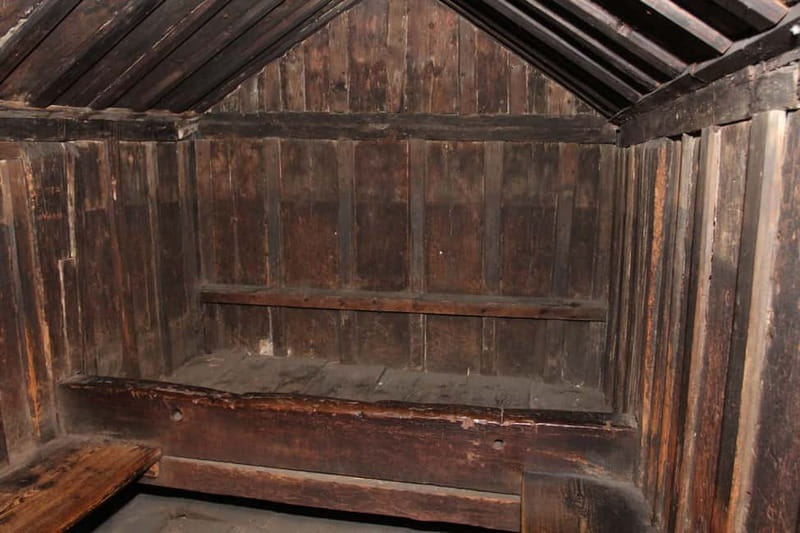
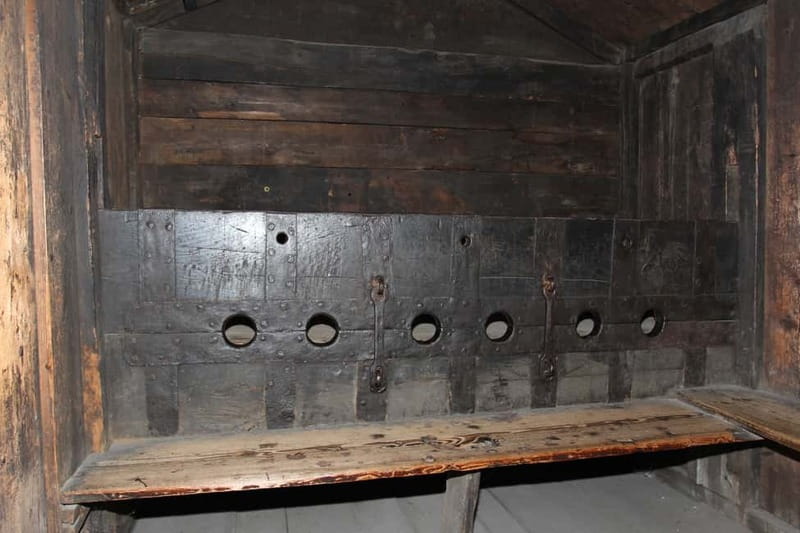
The first major part of the visit takes you through twelve small cells. These were not comfortable holding rooms. Prisoners were kept there while waiting for judgment, and the tour explains what that wait could mean.
The important point is that the dungeon was not simply a place where someone served a fixed prison sentence. It functioned as a remand prison, holding people while officials investigated accusations and sought a confession. You learn how a person could be treated as guilty, or at least treated harshly, before a fair judgment in the modern sense had taken place.
That makes the tour more than a walk through old stone rooms. It gives you a direct look at the gap between medieval ideas of justice and the legal protections you expect today. The central question was often not how to test evidence carefully, but how to obtain an admission of guilt.
The guide explains the conditions prisoners faced and why being thrown into the dungeon could amount to a death sentence. Poor conditions, fear, illness, and the threat of torture all formed part of the experience. The cells help you picture the physical side of this system, while the guide supplies the legal and social context.
The rooms are small enough that you quickly understand the lack of privacy and personal space. That is also where the first practical limitation appears. If the group is large, you may need to listen carefully and move at the guide’s pace. This is not a place where you can spread out, linger in every corner, or photograph each room without holding up the group.
The torture chamber and the path to confession
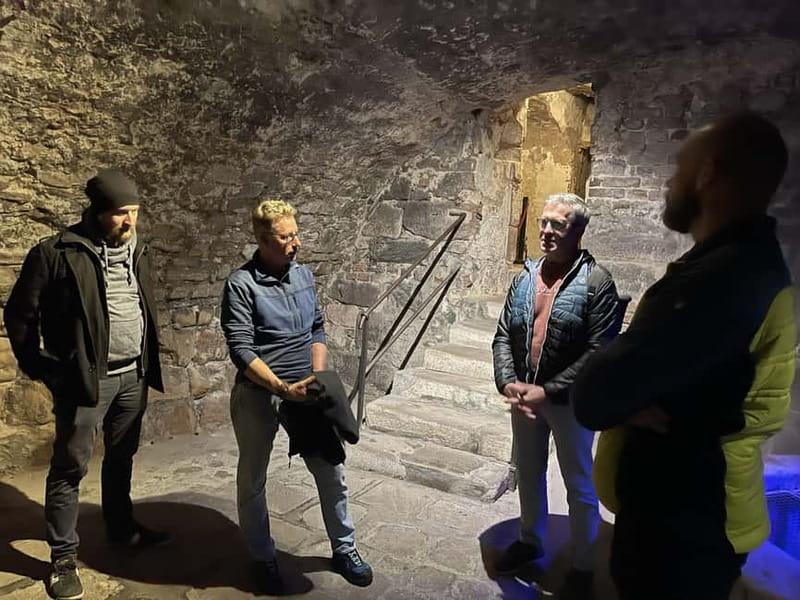
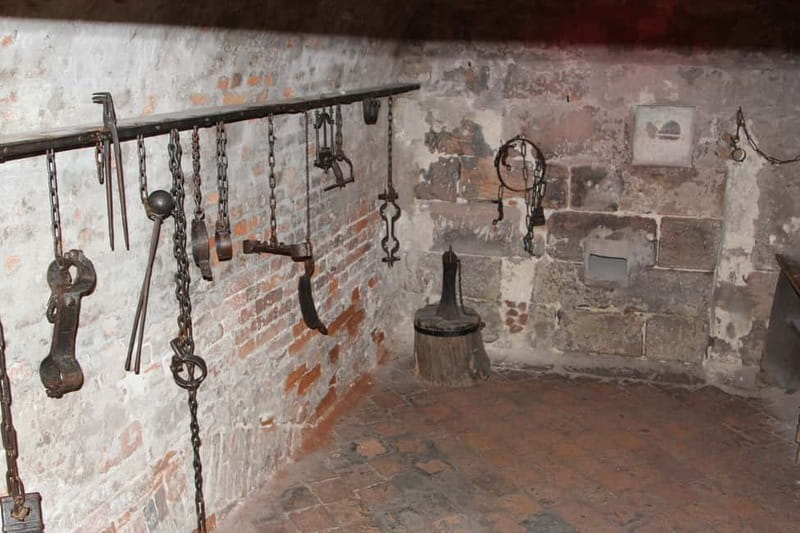
The torture chamber is the emotional center of the tour. You see the room and hear how torture was used during the Middle Ages as part of questioning and punishment. The guide explains the methods and the thinking behind them, including the grim belief that a confession could establish guilt.
You should know the subject matter before booking. The tour includes reports of torture, and some stories are graphic. The presentation is not meant to be a shock show, though the material is naturally disturbing. A good guide gives the facts in a controlled way, using humor carefully rather than making light of the suffering.
That balance matters. Several named guides are praised for being funny while still treating the subject with care. This can make a difficult topic easier to follow, but the jokes will not remove the unpleasant details. If you are sensitive to stories of physical punishment, you may find the torture chamber uncomfortable.
I find the room most useful when you treat it as a lesson in power. The point is not simply that medieval people used cruel devices. The larger issue is what happens when authorities can inflict pain in the name of finding the truth. The dungeon shows how a legal system can turn an accusation into a life-changing ordeal.
The chamber is also where expectations should be realistic. You will not find a huge collection of devices or a full museum of medieval crime. The experience centers on the rooms themselves, the original elements, and the guide’s explanation. If you want many objects, labels, and display cases, this visit may feel brief.
Why the original furnishings matter
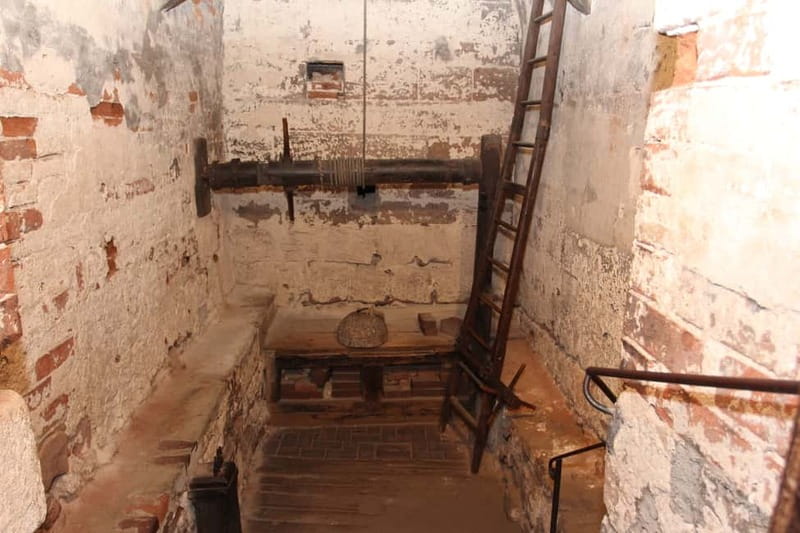
The dungeon contains mostly original furnishings, which gives the tour more weight than a recreated attraction. Even ordinary features become useful evidence of how the prison operated. The bare rooms, stonework, and limited fittings show that the site was designed for confinement rather than comfort.
I like that the experience leaves space for your imagination. You are not surrounded by modern screens or a long row of staged scenes. The guide describes what happened, and the rooms give you enough physical detail to picture the prisoners waiting there.
That simplicity may also disappoint you if you expect a large collection. The site has only a few rooms that are open and meaningful to explore, with the twelve cells and torture chamber forming the main visit. One careful assessment found the tour interesting but smaller than expected for the cost. That is a fair warning, especially if you have visited larger prison museums elsewhere.
The value comes from location and interpretation, not quantity. At about $11 per person, you are paying for access to an unusual historic space and a live explanation of medieval justice. I consider that a fair price for a focused stop of 45 minutes, particularly if you enjoy local history and already plan to be in Nuremberg’s old center.
A few more things to do in Nuremberg worth a look
- Nuremberg: Old Town Guided Walking Tour
★ 4.6 · 2,416 reviews - Berlin: Reichstag, Dome and Government District Guided Tour
★ 4.7 · 18,288 reviews - Dresden: Semperoper Tickets and Guided Tour
★ 4.7 · 12,102 reviews - Berlin: Government District around the Reichstag Guided Tour
★ 4.7 · 8,447 reviews
A 45-minute stop that fits a busy day
The stated duration is 45 minutes, though the visit can run closer to an hour when the guide takes questions or the group moves slowly. That makes it easy to place between other sights, a meal, or a walk through the old town.
I would not build an entire day around the dungeons. The site is compact, and the experience is strongest as one part of a Nuremberg history day. Its short length is an advantage if you want something focused rather than another long museum visit.
The pace can be brisk. One visitor found there was not much time for photographs, and that is worth keeping in mind. You will move through narrow spaces while the guide talks, so listen first and take pictures when the group pauses. A charged smartphone is listed as something to bring, and you will want the battery for photos or access to any booking details.
There is no meal or drink service as part of the visit, and food and drinks are not allowed inside. Wear warm clothing. The underground rooms can feel chilly, and the advice is especially useful on a rainy or cool day.
Stairs, narrow rooms, and who should skip it
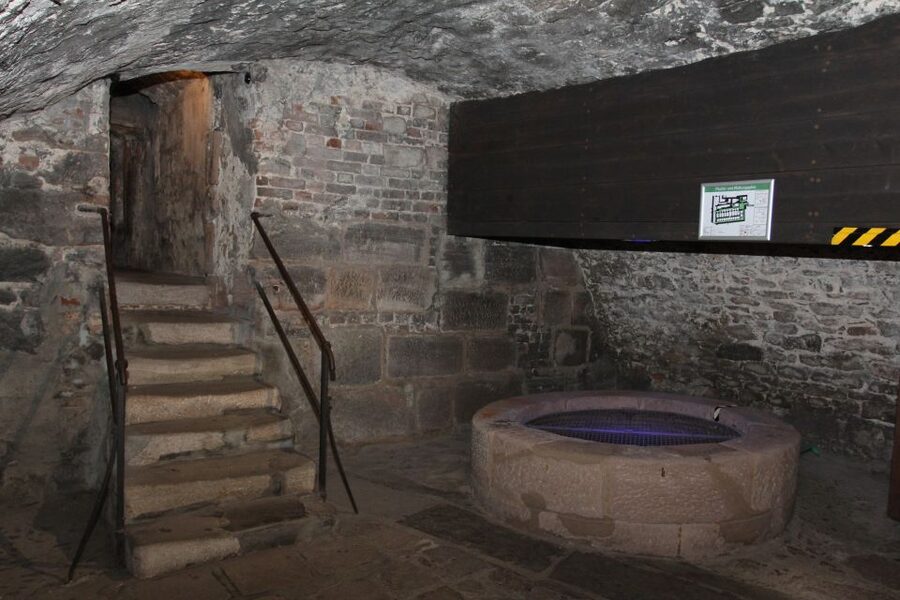
This tour is not suitable for people with mobility impairments. You will encounter stairs and cramped spaces, and the historic dungeon does not offer the kind of easy access found at a modern museum.
It is also not suitable for people with claustrophobia. The cells are small, the route is underground, and the atmosphere depends partly on that sense of confinement. If tight rooms make you anxious, the physical setting may overpower the historical value.
Children under 10 are not allowed to visit. Older children and teenagers may find the subject fascinating, but you should judge their comfort with stories of torture. One family found the tour suitable for children aged 12 and 15, while another recommendation suggested it works best for people around 13 and older who are not easily upset by graphic material.
The tour can work well for adults, older children, history students, and anyone curious about how medieval law operated. It is less suitable for very young children, people seeking a light sightseeing activity, or anyone who wants a large interactive exhibition.
The guides make the difference
The quality of the experience depends heavily on who leads your group. The strongest guiding style combines clear historical explanation, a good speaking voice, and enough humor to keep the tour moving without losing respect for the subject.
Dimitri is praised for a careful approach and proper tone. Mariana is noted for a warm presentation. Alex is remembered for making the tour interesting while keeping the serious parts in view. Nick is singled out for vivid storytelling, and Wolfgang for a funny, well-delivered visit. Dejan Grasser is praised for answering questions and bringing the past to life, though one person found the pace a little fast.
That last point is useful. If you have questions, ask them when there is a natural pause. The guides are described as willing to answer questions, but the route is compact and the group cannot stop everywhere for long.
A live guide also gives you something an audio guide cannot always provide: a sense of timing. The guide can slow down at the torture chamber, explain a confusing point about medieval justice, or add details about the people who operated the dungeon. That personal delivery is a major part of the value.
How this compares with a larger museum visit
This is a specialist site, not a broad survey of Nuremberg. It focuses on crime, punishment, imprisonment, and the legal system beneath one historic building. You will not receive a full account of every period in the city’s past.
That narrow focus is useful if you want to understand one difficult part of medieval life. The dungeons show how ordinary people could become trapped in a system that relied on confinement and forced confession. You get a close look at a working part of civic life that is easy to miss when you only visit churches, squares, and grand public buildings.
The tradeoff is scale. There are not dozens of galleries or hours of exhibits. If your ideal museum visit includes many artifacts and long reading panels, you may want to pair this tour with another historic site rather than treating it as your main cultural stop.
For me, the best reason to book is the connection between place and subject. The guide is explaining medieval justice while you are standing in the rooms where prisoners were actually held. That is harder to grasp from a display case.
Booking value and practical timing
At about $11 per person, this is a modest-cost activity. The price works best for you if you value a short guided experience and want context that you would not get by viewing the Old City Hall from outside.
The cost may feel high if you expect a large torture museum. The site is compact, and the visit is over quickly. I would judge the price against the quality of the guide, the original setting, and the convenience of fitting it into your day rather than against the number of rooms alone.
The activity offers free cancellation up to 24 hours before the scheduled time, and you can reserve now and pay later. That is useful if your Nuremberg plans depend on weather or changing train times. Check the available starting times when you book, since the tour is offered at set times rather than as an all-day entry.
Meet outside the Old City Hall near the middle entrance and wait there. The tour ends back at the same meeting point, so you can continue into the old town without arranging transport.
Should you book the Nuremberg dungeon tour?
Book it if you want a short, serious history experience with a live guide, original underground rooms, and a clear look at medieval crime and punishment. The excellent value comes from the setting, the strong storytelling, and the chance to see a part of Nuremberg that is easy to miss above ground.
Skip it if you dislike enclosed spaces, have mobility limits, or want a large collection of torture devices and museum displays. For everyone else, this is a well-priced 45-minute stop that can add real context to your visit, especially when the guide takes time to explain how confession, punishment, and judgment worked in medieval Nuremberg.
FAQ
How long does the Nuremberg Medieval Dungeons tour last?
The tour lasts about 45 minutes. Depending on the group and questions, the visit may take closer to 60 minutes.
Where does the tour begin?
Meet outside the Old City Hall, or Altes Rathaus, near the middle entrance. Wait outside for the guide.
What languages are available?
The tour is available with a live guide in English or German.
Are children allowed on the tour?
Children under 10 are not allowed to visit the dungeons. Older children may attend, but the tour includes reports of torture and may not suit children who are sensitive to graphic subjects.
Is the tour suitable for people with claustrophobia or mobility impairments?
No. The tour is not suitable for people with claustrophobia or mobility impairments because it includes cramped underground spaces and stairs.
What should I bring?
Bring warm clothing and a charged smartphone. Food and drinks are not allowed inside the dungeons.
Just added in Nuremberg
- Nuremberg’s Mystery Morning: Breakfast & Escape Game★ 4.4 · 57 reviews
- Nuremberg: The Old Town in Evening Light – IN GERMAN★ 4.7 · 353 reviews
- Nuremberg Third Reich Tour in Spanish★ 5.0 · 355 reviews
- Nuremberg Old Town and Nazi Rally Grounds Walking Tour★ 4.7 · 377 reviews
- Nuremberg Old Town and Nazi Party Rally Grounds Walking Tour in English★ 4.5 · 504 reviews
- Nuremberg: Hop-On Hop-Off Bus Tour★ 4.3 · 763 reviews
- Nuremberg: Historischer Kunstbunker WWII Art Bunker Tour★ 4.8 · 921 reviews
- Nuremberg: PLAYMOBIL®- FunPark★ 4.7 · 863 reviews
Crime, Witches & Cemetery Tours, compared.




Raven Black Witches and Executioners Walking Tour
Read our review →
Browse the lists this tour appears in