
Reviewed · CRIME, WITCHES & CEMETERY TOURS
Nuremberg: 1.5-Hour Medieval Tour
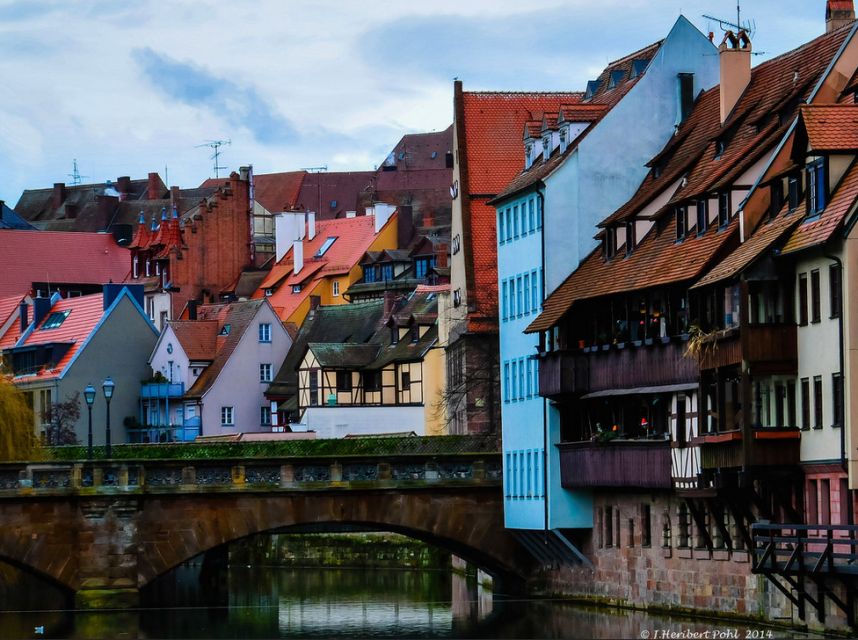
Nuremberg’s old town makes a fine history lesson because the key sights are packed into a walkable area. This 90-minute tour links the castle, Albrecht Dürer’s home, the Sebalder and Lorenzer quarters, and the city’s Italian connections into one clear story.
I like the focus on medieval Nuremberg rather than a general city orientation, and I like that the tour brings in real people, especially Dürer and other residents who shaped the city. The main consideration is language: the live guide speaks German, and the minimum group size is 10 people.
Key points to know before you book
- Start at the Schöner Brunnen: Meet at the fountain on Hauptmarkt, one of the old town’s central gathering places.
- Nuremberg Castle anchors the story: You hear about the castle and the Burgfreiung before walking downhill into the historic center.
- Albrecht Dürer gets more than a passing mention: His house provides a personal link to work, daily life, and difficult periods in the city’s past.
- Two old towns are included: The route covers both Sebalder Altstadt and Lorenzer Altstadt, giving you a wider view of Nuremberg.
- Italian influence adds an unusual angle: The discussion of Venetian Nuremberg shows that the city’s story reached well beyond Bavaria.
- German is the tour language: Claudia is one guide singled out for making the past feel lively and personal.
Starting at Hauptmarkt and the Schöner Brunnen
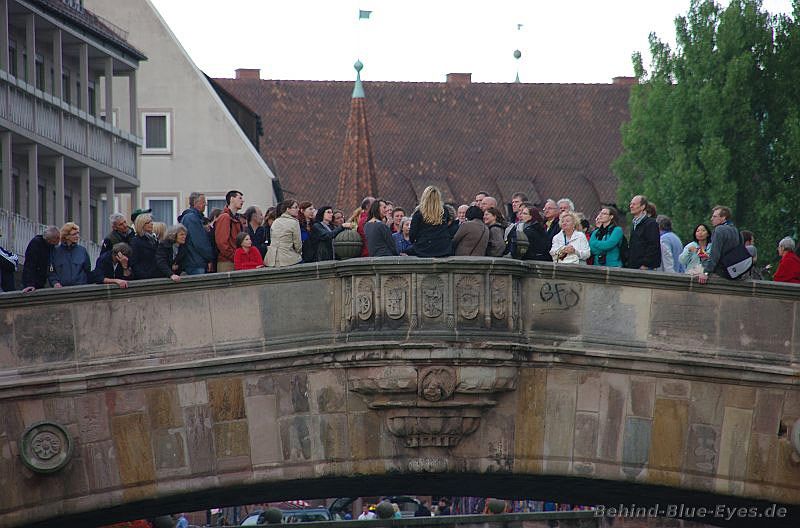
Your meeting point is the Schöner Brunnen, the ornate fountain on Hauptmarkt. This is a practical place to begin because it puts you in the heart of Nuremberg’s old town, with major sights close by.
The fountain also sets the tone for the tour. You are not starting in a modern district and then being driven toward history. You begin among the streets and buildings that shaped the city’s public life. From here, the guide introduces Nuremberg’s development and explains how the medieval center grew around power, trade, religion, and civic life.
I find a central meeting point especially useful on a short tour. You do not spend part of your 90 minutes waiting for transport or crossing wide modern roads. The walk itself becomes the main event.
Hauptmarkt can be busy, so arrive with enough time to find the Schöner Brunnen. The tour ends back at the meeting point, which makes it easy to continue sightseeing afterward. You can also use the square as a simple reference point if you want to explore more of the old town on your own.
Other dark corners of Nuremberg:
- Nuremberg: Medieval Dungeons Guided Tour
★ 4.8 · 1,726 reviews - Medieval Tour in Nuremberg in Spanish
★ 5.0 · 1,374 reviews - Nürnberg: Mörder, Fälscher, Messerstecher
★ 4.8 · 53 reviews
Nuremberg Castle and the Burgfreiung
The route includes Nuremberg Castle, one of the city’s defining sights. The castle gives the guide a natural place to explain how Nuremberg functioned during the Middle Ages and why this city mattered.
The focus is on the castle’s history and the Burgfreiung, the area around the castle that had its own special status. You get a sense of how authority operated in the city, rather than simply stopping for a photo of towers and stone walls.
That distinction matters. A castle can become background scenery when you visit alone. With a guide, you can connect the buildings to the people and systems that once used them. The tour presents Nuremberg as a center of power and activity, not just a preserved old town.
The supplied details do not promise entry into the castle or any interior rooms. Entrance fees are not included, so treat this as an exterior-focused walking visit unless your guide explains otherwise. That keeps the cost down, but anyone hoping for a full castle museum visit should plan that separately.
The castle section also gives you a useful sense of the city’s layout. From the higher ground, the old town spreads below, and the walk then turns toward streets where artists, merchants, and other residents lived and worked.
Albrecht Dürer’s house and the human side of history
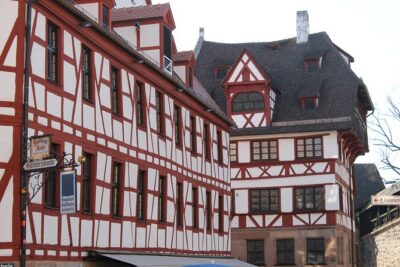
From the castle, the tour continues to Albrecht Dürer’s house. Dürer is one of Nuremberg’s best-known historical figures, and his home gives the tour a more personal center.
You hear about his life, his work, and the troubled times in which he lived. That wording is important because the tour does not treat him only as a famous name attached to a building. His story helps explain how art, trade, education, and city life came together in Nuremberg.
I especially like this part for visitors who want more than dates and rulers. Dürer lets you think about the city through one person’s career. His house becomes a place to discuss what it meant to work, create, and build a reputation in a medieval city.
The tour does not include admission to the house. You will hear about the building and its occupant from outside, while any interior visit would require a separate ticket. That is a fair trade for a short tour, but note the difference if you want a museum visit rather than a guided street walk.
One guide named Claudia has been praised for making Nuremberg’s past feel alive and for turning the walk into a distinct experience. If you are hoping to join her specifically, check whether she is assigned to your departure before booking. Guide assignments can matter when the appeal of a tour depends on storytelling.
Sebalder Altstadt: streets, residents, and daily life
The route continues through Sebalder Altstadt, the old town area associated with the castle side of Nuremberg. Here, the guide shifts from major landmarks to the people who lived and worked in the city.
You learn about other personalities connected with Nuremberg during the Middle Ages. The details provided do not name them all, so the exact stories will depend on the guide and the day. Still, the approach is useful: instead of treating the old town as a collection of buildings, it asks who used these streets and how their lives differed from life today.
The tour also addresses living conditions and how they have changed. That comparison can make medieval history easier to understand. You are not only hearing about a distant era. You are being asked to notice how housing, work, movement, and public life changed over time.
A short walking tour cannot explain every alley or historic building in detail. Its strength is selection. The guide chooses a small number of themes and ties them together as you move. If you prefer a long, highly specialized lecture, 90 minutes may feel brief. If you want a clear introduction before exploring alone, the pace should suit you.
Because the route is on foot and takes place in the old town, comfortable shoes are sensible. The activity is not suitable for wheelchair users, so anyone with mobility concerns should check the route and conditions before reserving.
Same base, a different kind of day out:
- Nuremberg: City Tour with the Bimmelbahn Train
★ 4.4 · 2,475 reviews - Nuremberg: Old Town Guided Walking Tour
★ 4.6 · 2,416 reviews - Nuremberg: Tunnels and Secret Passages in the City Wall Tour
★ 4.8 · 2,334 reviews - Nuremberg: Walking Tour of Former Nazi Party Rally Grounds
★ 4.7 · 1,665 reviews
Lorenzer Altstadt and the city’s divided character
The tour also covers Lorenzer Altstadt, the historic quarter on the other side of the old town. Including both Sebalder and Lorenzer areas gives you more than a single castle district.
This wider route helps explain that Nuremberg was not one compact medieval setting with one single identity. Different quarters had their own roles, buildings, and patterns of life. The guide uses the walk between them to show how the city developed.
The exact street-by-street route is not specified, so you should not expect a fixed list of every church, bridge, or square you will visit. The confirmed focus is broader: the two old towns, their history, and the people connected with them.
That flexibility can be useful. A guide may spend more time at a place that fits the group’s questions or the day’s conditions. The trade-off is that the experience may not match a detailed map-based itinerary point for point.
The tour ends at Hauptmarkt rather than leaving you in another part of the city. You can use the remaining day to revisit the areas that caught your attention, enter a museum separately, or continue walking through the old town without a guide.
Venetian Nuremberg and Italian connections
One of the more unusual subjects is the influence of Italians on German history and the idea of Venetian Nuremberg. This gives the tour a wider frame than a standard medieval castle walk.
Nuremberg was connected to trade and cultural exchange, and the Italian angle helps show that German city life did not develop in isolation. You hear how outside influences affected the city and how Nuremberg fit into wider European connections.
I like this theme because it can change how you read the streets. Instead of seeing the old town as purely local, you begin to look for signs of contact, commerce, and shared ideas. The tour does not present Nuremberg as a sealed medieval world.
The information supplied does not specify individual Italian buildings or a separate museum stop, so keep expectations practical. This is a guided discussion woven into the walking route, not a dedicated Italian art tour.
For visitors who already know the usual Nuremberg highlights, this may be the freshest part of the experience. For first-time visitors, it adds context without requiring a longer full-day program.
What 90 minutes can and cannot do
The tour lasts one and a half hours. That is enough time to connect several major themes, but not enough to explore every attraction in depth.
You can expect a focused walk from the castle area to Dürer’s house, through the two old town districts, and back to Hauptmarkt. The guide explains the city’s medieval development, notable residents, Dürer’s life and work, living conditions, and Italian influence.
You should not expect a meal stop, public transport, or included entrance fees. Food and drinks are not included, and the tour does not provide transport. That is not a serious weakness in this setting because the experience is designed around a walk through the center.
The short format works well at the beginning of a Nuremberg visit. You get a basic map of the old town and a set of stories that can guide the rest of your day. It also fits travelers with limited time who want more substance than a quick photo stop.
The minimum group size is 10 people. This is an important booking detail. A small party may need to confirm that enough participants are booked, or consider the private group option if that arrangement suits their plans.
Is the $23 price fair?
At $23 per person, the tour is reasonably priced for a guided 90-minute walk, especially if you value local explanation over entry tickets. The price pays for a structured route and a live German-speaking guide who connects the sights into one story.
The value depends on what you want from Nuremberg. If you plan to enter the castle or Dürer’s house, you will pay those admission costs separately. If you mainly want orientation, context, and an efficient walk through the old town, the tour covers several important subjects for a modest fee.
The strongest value comes from the storytelling. A castle, fountain, and historic house are easy to locate. It is harder to understand how they relate to one another, how people lived around them, and how foreign influence shaped the city. That is the part a guided walk supplies.
You should also factor in the German-only format. If you understand German well, the price looks more attractive. If you need English or another language, this is not the right choice based on the information available.
Free cancellation up to 24 hours before the start and the option to reserve now and pay later make the booking less rigid. Those terms are helpful when your schedule in Bavaria is still changing.
Who will enjoy this walk most?
I would choose this tour if you want a compact introduction to Nuremberg’s medieval center and enjoy learning through stories about people. It suits first-time visitors who want a clear route before exploring more on their own.
It also fits history-minded visitors who already know Dürer or want to understand the city beyond its major photo stops. The Venetian Nuremberg theme gives the walk a less predictable angle.
This may not be the best match if you need an English-language tour, use a wheelchair, or want extensive interior visits. It may also feel too short if you prefer long explanations at each stop.
Families and mixed-interest groups may appreciate the variety. The tour shifts between a castle, an artist’s home, old town streets, changing living conditions, and international connections. That keeps the subject broader than military history alone.
The 10-person minimum deserves attention for solo visitors or very small parties. A private group is available, but the supplied details do not state its price or exact arrangements. Check those terms before choosing that format.
Should you book the Nuremberg Medieval Tour?
Book it if you want a focused German walking tour that gives Nuremberg a human face. The combination of Nuremberg Castle, Dürer’s house, both old town districts, and Italian influence is well chosen for 90 minutes.
I would especially consider it at the start of your stay. The route can help you decide which buildings and neighborhoods deserve a longer visit later. The price is modest, and the return to Hauptmarkt makes the tour easy to fit into a day of sightseeing.
Skip it if you need English, require step-free access, or want admission to the castle and Dürer’s house included. Also confirm the group requirement before you rely on it for a fixed schedule.
For German-speaking visitors who enjoy clear history, local personalities, and a brisk walk through the old center, this is a sensible way to get oriented without giving up most of your day.
FAQ
Where does the Nuremberg medieval tour start?
The tour starts at Hauptmarkt square, at the Schöner Brunnen fountain.
Where does the tour end?
The activity ends back at the meeting point at Hauptmarkt.
How long does the tour last?
The guided walk lasts 1.5 hours. Starting times depend on availability.
What language is the tour conducted in?
The live tour guide speaks German.
Are entrance fees included?
No. Entrance fees are not included. Food, drinks, and public transport are also excluded.
Is the tour suitable for wheelchair users?
No. The activity is not suitable for wheelchair users.
Just added in Nuremberg
- Tour en español al Campo Zeppelin★ 5.0 · 8 reviews
- Stein: Public guided tour of the “Old Mine” museum★ 4.5 · 18 reviews
- “Rotes Bier” and “Blaue Zipfel”. A historical-culinary walk★ 4.4 · 190 reviews
- Nuremberg: Old Town Guided Tour By Bus★ 4.4 · 198 reviews
- Nürnberg kennenlernen: Highlights in der Altstadt★ 4.7 · 189 reviews
- Nuremberg: Bar and Club Tour with Free Shots and Free Entry★ 3.8 · 23 reviews
- Nürnberg Bachelor(ette) Party with Night PubCrawl★ 4.2 · 5 reviews
- Nuremberg: Tour of Former Nazi Party Rally Grounds★ 5.0 · 43 reviews
Crime, Witches & Cemetery Tours, compared.
Raven Black Witches and Executioners Walking Tour
Read our review →Browse the lists this tour appears in