
Reviewed · CRIME, WITCHES & CEMETERY TOURS
Medieval Tour in Nuremberg in Spanish
Nuremberg’s postcard sights are only half the story. This Spanish-language walk takes you past the market square, churches, bridges, fountains, alleys, and castle while focusing on the city’s stranger side: witch trials, executioners, medieval legends, Kaspar Hauser, and trades that shaped daily life. The storytelling is the main event, not interior visits or formal museum stops.
I like the route’s strong sense of place and its mix of famous landmarks with lesser-known tales. I also like the value: for $19.60, you get about two and a half hours with a Spanish-speaking guide, including a useful orientation to central Nuremberg. Guide Fede is specifically praised for helping guests find the meeting point and keeping the walk lively with humor and clear explanations.
The main consideration is that this is an outdoor walking tour with ten stops, so you should expect steady movement and weather exposure. It also ends at Kaiserburg rather than returning to Hauptmarkt, and the group may include up to 30 people.
Key points of the Medieval Nuremberg walk
- Witchcraft and medieval justice: Learn why witch hunting was once treated as a solution, and hear about the executioner’s feared role.
- Legends with a dark comic edge: Stories involve the devil, a clever boy, flying horses, and Till Eulenspiegel.
- Kaspar Hauser at Unschlitthaus: Explore the mystery of the orphan linked to palace intrigue.
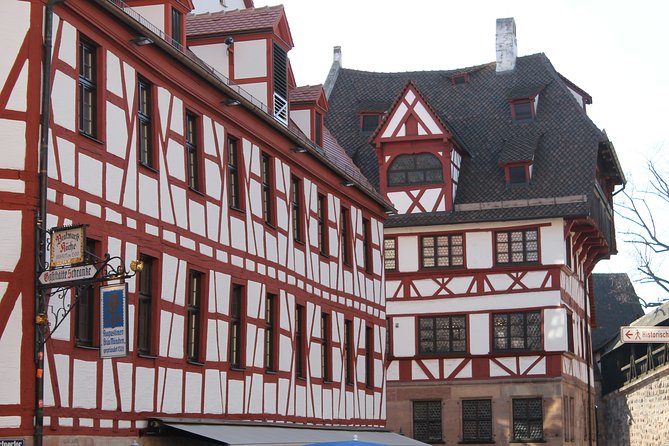
- Weissgerbergasse and the old walls: See one of Nuremberg’s most medieval-looking streets and trace the city’s defenses.
- A Spanish-speaking guide: The tour is led in Spanish, with Fede among the named guides associated with the experience.
- A practical end point: Finish at Kaiserburg, one of Nuremberg’s major sights, after a route through the old center.
Why this Spanish tour shows you a different Nuremberg
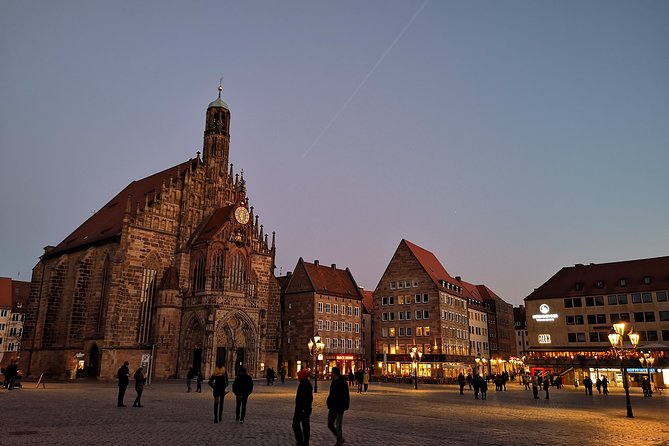
Nuremberg is often reduced to Albrecht Dürer, Christkindlesmarkt, St. Lorenz, and the Imperial Castle. Those are worthwhile subjects, but they can make the city feel tidier and more polished than it once was.
This walk looks at the people and customs behind the stonework. You hear about trades, punishments, superstition, marriage, local legends, and political mystery. The result is less a list of grand dates and more a collection of stories tied to exact streets and buildings.
That approach works especially well in Spanish. If Spanish is your preferred language, you can focus on the details and humor instead of working through a second-language explanation. The guide’s role matters here. Fede is noted for contacting participants to help them locate the meeting point, then mixing historical information with jokes during the walk. That is useful in Nuremberg, where old streets and several similar-looking squares can make a first meeting less obvious.
The tour begins at 3:30 pm and lasts about two hours and 30 minutes. That timing gives you much of the afternoon for museums or independent sightseeing before joining the walk. It also places the castle at the end, which can help you continue exploring the area afterward.
Other dark corners of Nuremberg:
- Nuremberg: Medieval Dungeons Guided Tour
★ 4.8 · 1,726 reviews - Hamburg: Sex and Crime in St. Pauli Tour for Ages 18+
★ 4.7 · 15,447 reviews - Cologne: Melaten Cemetery Life, Love and Death Tour
★ 4.9 · 2,728 reviews
Hauptmarkt: begin with Nuremberg’s city story
The first stop is Hauptmarkt, the central market square. You spend about ten minutes here getting the basic story of Nuremberg and setting the scene for the rest of the route.
This is a smart starting point. The square connects easily to many of the city’s major sights, but the tour does not treat it as a simple photo stop. Instead, it becomes the place where the guide frames Nuremberg as a city shaped by commerce, power, religion, and local legend.
You should arrive a little early. The meeting point is Hauptmarkt 14 in the 90403 Nürnberg area, and the official start time is 3:30 pm. The guide may be able to help if you have trouble finding the group, but it is still better to allow a few extra minutes rather than rush into the opening story.
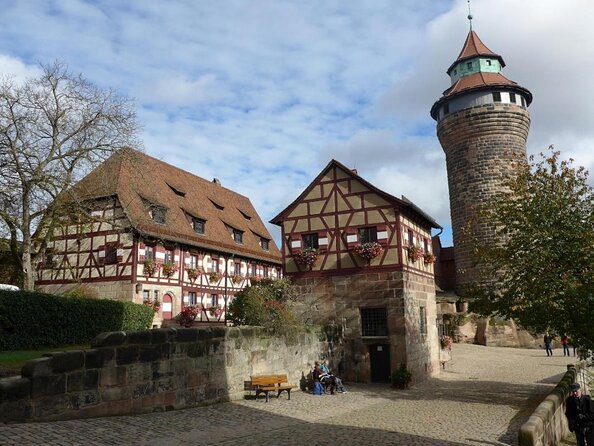
St. Lorenz: church building and local tales
At St. Lorenz, the group spends about ten minutes on the church’s construction and particular stories connected with it. The stop gives the tour a more formal medieval backdrop after the public market atmosphere of Hauptmarkt.
The value here is not just the architecture. A church such as St. Lorenz helps explain the scale and ambition of medieval Nuremberg, while the stories keep the presentation from becoming a dry architectural lecture. You will want to look up at the building as the guide explains it, but the supplied details do not promise an interior visit.
That distinction matters. This is primarily an outdoor route. The schedule lists free admission at each stop, so you are paying for the guided interpretation rather than entrance to monuments.
Heilig-Geist-Spital and Till Eulenspiegel
The next stop is Heilig-Geist-Spital, where the focus turns to Till Eulenspiegel. You spend around ten minutes hearing the story of this famous trickster figure.
This is one of the tour’s lighter moments. After witchcraft, church history, and serious medieval subjects, a tale built around wit and mischief gives the walk some balance. It also shows how medieval storytelling was not limited to saints, rulers, and battles. Popular characters could mock authority, expose foolishness, or simply entertain.
If you enjoy folklore more than dates, this part should appeal to you. If you prefer a tightly chronological account of Nuremberg, the shifting stories may feel less structured. The tour is clearly designed around themes and characters rather than a straight timeline.
Same base, a different kind of day out:
- Nuremberg: City Tour with the Bimmelbahn Train
★ 4.4 · 2,475 reviews - Nuremberg: Old Town Guided Walking Tour
★ 4.6 · 2,416 reviews - Nuremberg: Tunnels and Secret Passages in the City Wall Tour
★ 4.8 · 2,334 reviews - Nuremberg: Walking Tour of Former Nazi Party Rally Grounds
★ 4.7 · 1,665 reviews
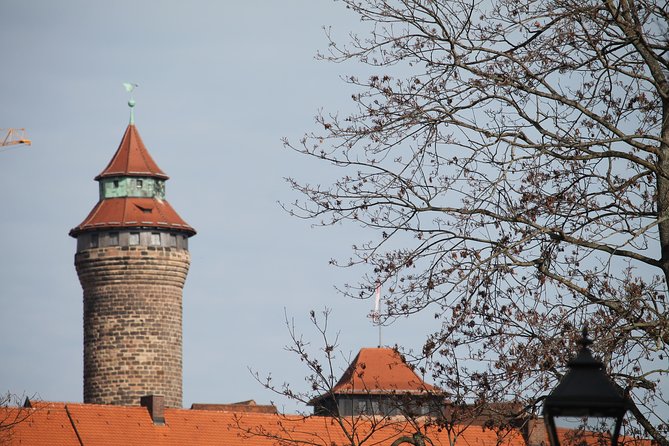
Weisser Turm and the first city wall
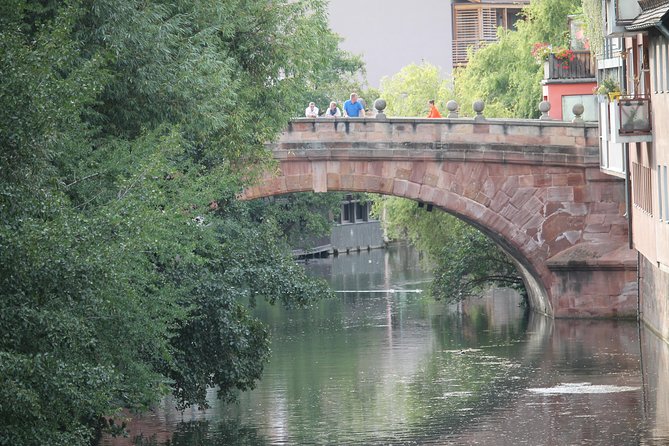
At Weisser Turm, the guide spends about five minutes discussing the tower of the first city wall. This is a short stop, but it helps you understand how Nuremberg was physically protected and organized.
The city wall is not treated as background scenery. Later, at Beim Tiergärtnertor, the route returns to the subject with more detail. Taken together, the two stops let you see the defensive system in stages rather than hearing one rushed explanation.
Five minutes is enough for a quick introduction, but do not expect a full military lecture. The guide has many subjects to cover, and the route keeps moving.
Ehekarussell: marriage, pleasure, and death in stone
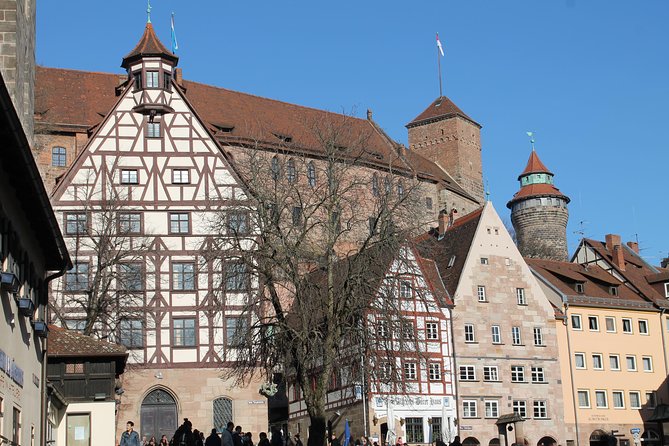
Ehekarussell, also called the fountain of married life, brings a change of tone. The tour spends about ten minutes examining the fountain and the ideas behind it, including the pleasures and difficulties associated with marriage.
The fountain is a useful stop because it brings history down to ordinary life. Medieval Nuremberg was not only about castles and city walls. People married, worked, argued, raised families, and dealt with the less romantic side of domestic life.
The broader tour description also points to fountains of madness, love, and death, including the fountain of fools. That suggests the guide uses public art and civic spaces to explain how Nuremberg expressed humor and social commentary. You are not simply being shown a fountain. You are being asked to read it as a piece of local storytelling.
Unschlitthaus and the mystery of Kaspar Hauser
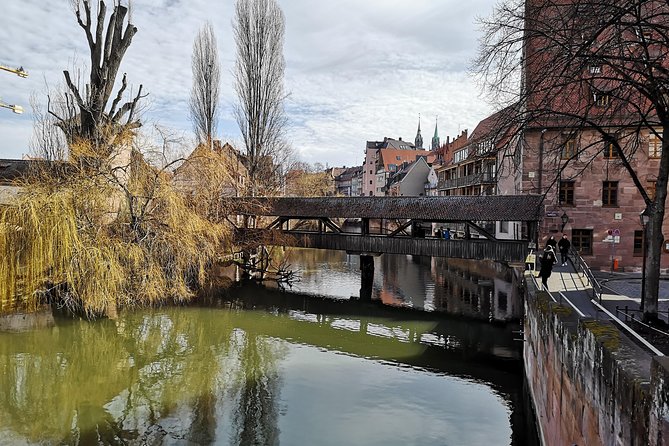
At Unschlitthaus, the subject changes from medieval custom to one of Europe’s most mysterious figures, Kaspar Hauser. You spend about ten minutes on the story of this orphan and the palace intrigues connected with his appearance.
This is a strong choice for a walking tour because the building gives the story a fixed location. Kaspar Hauser’s tale is more recent than the medieval material, but it fits the tour’s interest in secrecy, rumor, identity, and power.
The route does not present Nuremberg as a place with only one historical period. You move from medieval trades and witchcraft to a later mystery that brought political questions into view. That variety keeps the two and a half hours from feeling like a repeated explanation of old stones.
Hangman’s Bridge and Nuremberg’s feared trade
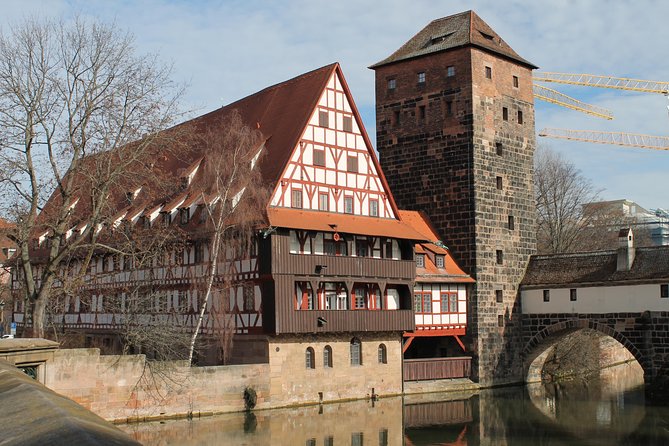
At Hangman’s Bridge, the guide discusses the executioner of Nuremberg, his trade, and his achievements. You spend about ten minutes here.
This is one of the most distinctive subjects on the route. The executioner was necessary to the city’s system of justice, yet the work carried social fear and stigma. The stop gives you a look at the practical machinery behind punishment, rather than treating medieval justice as an abstract idea.
The tour also covers the least desired job and the trades recorded in medieval life, including Mendel’s book. These details are valuable because they show how people earned a living, how occupations were viewed, and how a city depended on jobs that many people preferred not to discuss.
Expect the subject matter to be dark at times. This is not a children’s fantasy walk, even though legends and humor soften the mood.
Weissgerbergasse: the route’s most medieval-looking street
Weissgerbergasse receives about ten minutes and is described as the most medieval street in Nuremberg. This is likely to be one of the walk’s best visual moments.
The narrow street helps you connect the stories to the city’s surviving form. After several stops centered on individual tales, you get a stronger sense of how medieval streets were shaped and used. The name also points toward the old tanning trade, tying the setting to the working life discussed elsewhere on the route.
You should take your time looking around here, but remember that this is a guided walk with a fixed schedule. There is enough time to notice the buildings and take photographs, but not enough for an extended independent exploration of every doorway.
Beim Tiergärtnertor and the city walls
At Beim Tiergärtnertor, the tour returns to the walls and their less obvious history. This stop lasts about five minutes, so it functions as a concise explanation rather than a long break.
The route’s two wall-related stops work well together. Weisser Turm introduces the first city wall, while Beim Tiergärtnertor adds the larger defensive story and the city’s coordinates. That phrase suggests the guide pays attention to how Nuremberg’s fortified center was laid out, not just to isolated towers.
This is also a useful point for orientation. By now you have walked through several parts of the old city, and the walls help you understand the boundary between central Nuremberg and the surrounding streets.
Kaiserburg: finish with castles, flying horses, and darker tales
The final stop is Kaiserburg, where you spend about 15 minutes. The guide covers the castle’s darker stories, including legends of flying horses and women of bad life.
Ending at the Imperial Castle makes practical sense. Kaiserburg is one of Nuremberg’s most important attractions, so you finish near a major sight rather than in an ordinary street. You can continue sightseeing there after the tour, depending on your plans and the opening arrangements of the attraction.
The castle stop also brings together the walk’s main themes: power, legends, social judgment, and the city’s long memory. It is a lively final chapter rather than a simple photo opportunity.
There is no promise of admission to the castle itself. The tour price covers the Spanish-speaking guide, and the listed stops have no admission charge. If you want to visit the castle interiors or exhibitions, plan that separately.
What the $19.60 price really buys you
At $19.60 per person, this tour offers solid value if you want a guided introduction to Nuremberg’s old center in Spanish. The walk lasts about 150 minutes, which works out to a modest cost for a guide, a planned route, and sustained interpretation across ten locations.
The value is strongest for first-time visitors who want context quickly. Instead of spending the afternoon reading separate plaques or searching for explanations, you get a connected route through the center. You also finish at Kaiserburg, saving you the effort of planning a separate path there.
The value is less clear if you want interior access, a very small private group, or a purely architectural tour. The group can include up to 30 people, and the experience focuses on stories rather than entry tickets. At this price, that is a fair trade, but you should know what you are buying.
Practical details before you book
The experience uses a mobile ticket, and confirmation is provided when you book. The meeting point is Hauptmarkt 14, with the walk starting at 3:30 pm and ending at Imperial Castle of Nuremberg, Burg 17.
The tour is near public transportation, and service animals are allowed. Most people can participate, but the route involves walking between ten outdoor stops. Wear comfortable shoes and check the forecast, since rain can affect your enjoyment. Fede’s help with locating the group is a useful bonus, but you should still arrive prepared.
Free cancellation is available up to 24 hours before the start time for a full refund. Changes or cancellations made less than 24 hours before the start are not accepted for a refund. The experience also requires a minimum number of participants, so a cancellation by the operator may result in another date or a full refund.
Who should book this Nuremberg walk?
I would choose this tour if you want Nuremberg explained through human stories, local legends, and unusual details. It is especially suitable for Spanish speakers who want a guided experience rather than a self-guided walk through the old center.
You will likely enjoy it if you like witchcraft lore, medieval occupations, folklore, fountains, city defenses, and unresolved historical mysteries. The Kaspar Hauser section and the executioner’s story give the walk more bite than a standard sightseeing circuit.
I would look elsewhere if you need wheelchair-specific route information, want extensive time inside churches and museums, or prefer a small private tour. The available details confirm that most people can participate, but they do not provide a full accessibility description.
Should you book the Medieval Tour in Nuremberg in Spanish?
Book it if you want a reasonably priced, story-driven introduction to central Nuremberg and Spanish is your best tour language. The route covers familiar sights, but its focus on witchcraft, executioners, Kaspar Hauser, Till Eulenspiegel, medieval trades, and local fountains gives you material that a standard highlights walk may skip.
The strongest reasons to choose it are the unusual subject matter, the useful end point at Kaiserburg, and the lively guide style associated with Fede. Just remember that this is an outdoor group walk, not a castle admission ticket or a private history seminar. Arrive at Hauptmarkt a few minutes early, dress for the weather, and expect the city to be explained through stories as much as through monuments.
FAQ
What language is the tour conducted in?
The tour is conducted in Spanish and includes a Spanish-speaking guide.
How long does the tour last?
The experience lasts approximately two hours and 30 minutes.
Where does the tour begin?
The tour begins at Hauptmarkt 14, 90403 Nürnberg, Germany.
What time does the tour start?
The scheduled start time is 3:30 pm.
Where does the tour end?
The tour ends at Imperial Castle of Nuremberg, Burg 17, 90403 Nürnberg, Germany.
Are entrance tickets to the sights included?
The tour includes the Spanish-speaking guide. The listed stops have free admission, but the provided details do not include separate admission to the interior of Kaiserburg or other attractions.
Just added in Nuremberg
- Nuremberg’s Mystery Morning: Breakfast & Escape Game★ 4.4 · 57 reviews
- Nuremberg: The Old Town in Evening Light – IN GERMAN★ 4.7 · 353 reviews
- Nuremberg Third Reich Tour in Spanish★ 5.0 · 355 reviews
- Nuremberg Old Town and Nazi Rally Grounds Walking Tour★ 4.7 · 377 reviews
- Nuremberg Old Town and Nazi Party Rally Grounds Walking Tour in English★ 4.5 · 504 reviews
- Nuremberg: Hop-On Hop-Off Bus Tour★ 4.3 · 763 reviews
- Nuremberg: PLAYMOBIL®- FunPark★ 4.7 · 863 reviews
- Nuremberg: Historischer Kunstbunker WWII Art Bunker Tour★ 4.8 · 921 reviews
Crime, Witches & Cemetery Tours, compared.

Raven Black Witches and Executioners Walking Tour
Read our review →
Browse the lists this tour appears in