
Reviewed · THIRD REICH & WWII TOURS
The History of Berlin: WWII PRIVATE Walking Tour With Locals
Berlin’s 20th-century story is written across ordinary streets, grand government buildings, empty spaces, and memorials. This private walk links those places in a way a hop-on bus cannot, moving from the New Synagogue and Palace of Tears to the Brandenburg Gate, Holocaust Memorial, Hitler’s bunker site, Bebelplatz, and Museum Island.
I like the private format, which lets you stop for questions, adjust the pace, and ask for more WWII, Holocaust, Nazi, or Cold War detail. I also like the chance to work with local guides such as Sara, Seth, Boyd, Miha, Amelia, and others, whose personalities and routes can shape the day.
The main caution is that the route is flexible, not fixed. One booking may focus heavily on architecture and East Berlin while another covers Checkpoint Charlie, the Wall, and the major memorials. Tell your guide your must-see sites at the start, and be ready for a long walk that can reach roughly 15,000 steps.
Key points to know before booking
- A private four-hour walk: Your party receives the guide’s full attention, with no strangers joining the group.
- A serious look at WWII and the Cold War: The route connects Nazi rule, wartime destruction, the Holocaust, Berlin’s division, and attempted escapes from East Berlin.
- Flexible sightseeing: You can ask for more time at places such as the Holocaust Memorial, Checkpoint Charlie, Bebelplatz, or Museum Island.
- Mostly an outdoor experience: The main landmarks are visited from outside, and attraction admission is not included.
- A walking-heavy day: Wear comfortable shoes and expect a moderate level of physical effort.
- Strong overall ratings with variable guide experiences: The experience is rated 4.9 from 209 reviews and recommended by 97 percent of bookers, but guide quality and route emphasis can vary.
Why a private Berlin history walk works
Berlin can be confusing at first. A grand avenue may reflect Prussian power, Nazi ambition, wartime ruin, Soviet control, and modern reunification within a few blocks. Without a guide, you may see the buildings but miss the connections.
This tour gives you a person to make those connections. Instead of treating each landmark as a separate photo stop, the guide can explain how Berlin’s political power shifted from imperial Germany to the Nazi regime, then to Allied occupation and Cold War division.
The private setup matters most for a subject this serious. You can ask about propaganda, civilian life, resistance, the Holocaust, the Wall, or the practical details of crossing between East and West. You can also slow down when a memorial needs more thought, or move along if your group has reached its limit for difficult material.
The experience is offered in English and lasts about four hours. It is not a museum tour with a set lecture. It is a city walk, with stories delivered outdoors and occasional stops at exhibitions or buildings. Since the guide’s route can change, you should name your priorities early.
More Third Reich and WWII Tours in Berlin
- Berlin: Third Reich and Cold War 2 Hour Walking Tour
★ 4.9 · 6,830 reviews - Berlin’s Best: 2 Hour Walking Tour Third Reich and the Cold War
★ 5.0 · 5,486 reviews - Third Reich Berlin: Hitler and WWII Walking Tour
★ 5.0 · 3,301 reviews
Starting on Oranienburger Strasse
The meeting point is Oranienburger Strasse 36, near public transportation. This puts you in a useful central location, close to several places tied to Berlin’s Jewish, royal, wartime, and Cold War stories.
The New Synagogue is an early stop. Its Moorish-style facade and large golden dome make it one of the area’s most memorable buildings. The guide can use it to explain Berlin’s Jewish community and the destruction and persecution that reshaped the city under Nazi rule.
You should not expect a full indoor visit to every attraction. Entrance fees are not included, and the tour generally visits major sights from outside. If you want to spend substantial time inside a museum, confirm how that would affect the walking route and schedule.
The opening section is also a good moment to tell your guide what matters most. If you want a strong WWII focus, say so. If your priority is the Wall and divided Berlin, make that clear. A private tour gives you flexibility only when you use it.
The Palace of Tears and Berlin’s divided city
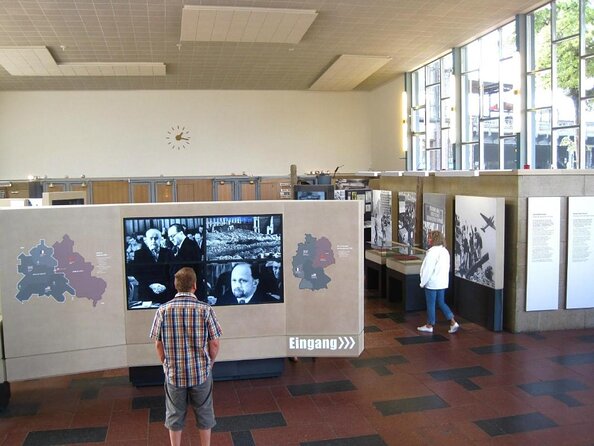
The Palace of Tears, known in German as Tränenpalast, was a former border crossing at Friedrichstrasse station. Its name comes from the emotional farewells that took place there when people from East Berlin had to leave relatives or friends visiting from the West.
This stop shifts the subject from the Nazi era to the Cold War. You hear about the division of Berlin, Russian-occupied East Berlin, Allied-controlled West Berlin, and the risks people took when trying to escape across the border.
The exhibition is an important part of the stop, though attraction admission is not included in the tour price. The guide can give the objects and stories more meaning than a quick independent visit, especially if you want to understand how travel controls affected ordinary families.
This is one of the tour’s strongest features because it adds human scale. The Brandenburg Gate and Reichstag can feel monumental and official. The Palace of Tears brings the story down to train platforms, luggage, farewells, and separation.
Brandenburg Gate, the Holocaust Memorial, and Hitler’s bunker site
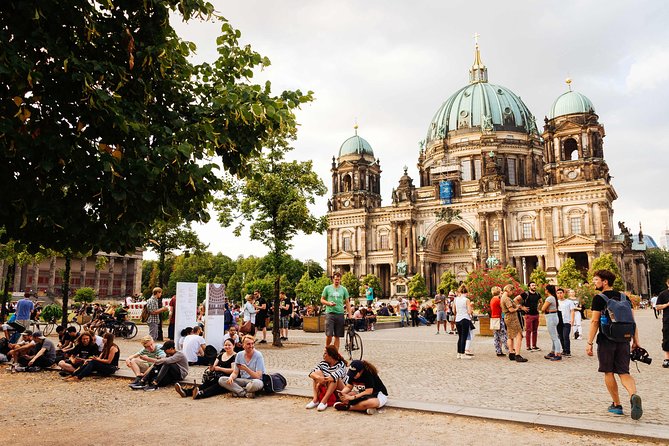
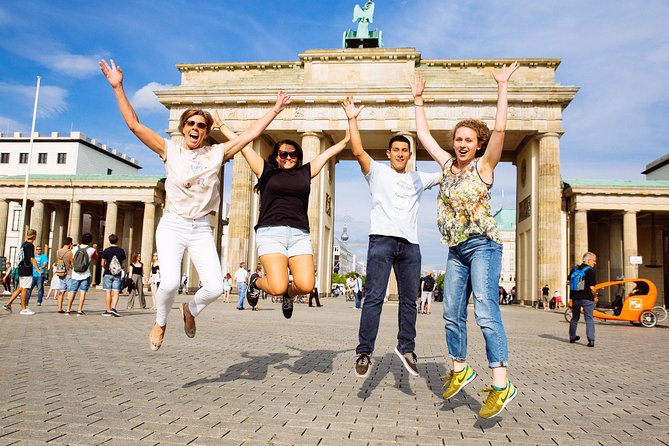
The Brandenburg Gate is one of Berlin’s essential landmarks. Its earlier role as a city gate, its use in political symbolism, and its location near the former division of Berlin make it more than a grand backdrop for photographs.
Your guide can explain how the gate fits into the story of German power and reunification. It is also a practical photo stop, so you get a short break from the heavier material without leaving the main historical route.
Nearby, the Holocaust Memorial offers a very different experience. Its field of concrete blocks creates a stark, disorienting space in the center of the city. The design does not provide a simple story or a comfortable viewing point. Walking through it can feel unsettling, which is precisely why the guide’s explanation and your own quiet time both matter.
The Hitler bunker site is not a preserved underground attraction. You visit the area above the former bunker and learn about the final days of the Nazi regime and the physical destruction around it. This distinction is worth knowing before you go. If you expect an intact bunker interior, you will be disappointed. If you want context about the end of the dictatorship and the city’s postwar handling of the site, the stop is more useful.
The WWII section can be emotionally demanding. I would not treat this as a light sightseeing stroll, though the guides described in the feedback often bring energy, clarity, and room for questions to difficult subjects.
Other trips into the same period in Berlin:
- Berlin: Third Reich, Hitler, and WWII Walking Tour
★ 4.9 · 1,133 reviews - Berlin Third Reich Sites: Half-Day Walking Tour
★ 5.0 · 835 reviews - Berlin: Guided Bike Tour of the Berlin Wall and Third Reich
★ 4.7 · 499 reviews - Hitler’s Germany: Berlin During the Third Reich & WWII
★ 4.8 · 476 reviews
Bebelplatz and the marks of Nazi rule
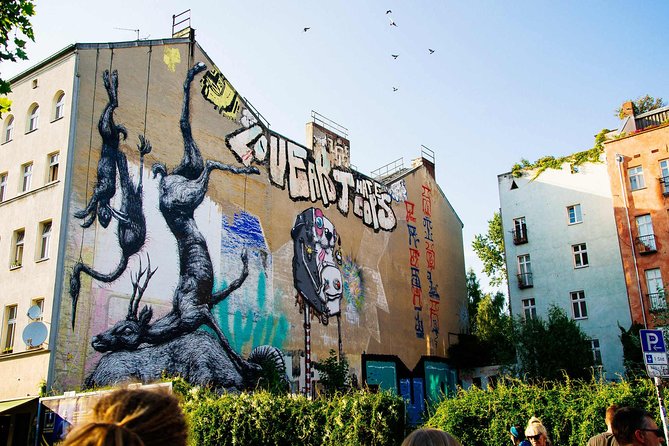
Bebelplatz is surrounded by some of Berlin’s finest historic buildings, including the State Opera and other grand structures. The square is also linked to the Nazi book burning of 1933, when works by Jewish, socialist, and other writers were destroyed in a public display of censorship.
The memorial at the square is easy to miss if you do not know where to look. That is one reason a walking guide adds value. You can pass through the space admiring the architecture and leave without understanding why the square matters.
A good guide will connect the attractive buildings with the political events that took place around them. That contrast is a recurring feature of Berlin. Beauty and horror often occupy the same block.
Bebelplatz also provides a useful transition between the Nazi period and Berlin’s older political identity. The buildings are not simply decoration. They help show how the Nazi regime used central Berlin, ceremony, architecture, and public space to present power.
Museum Island and the Reichstag
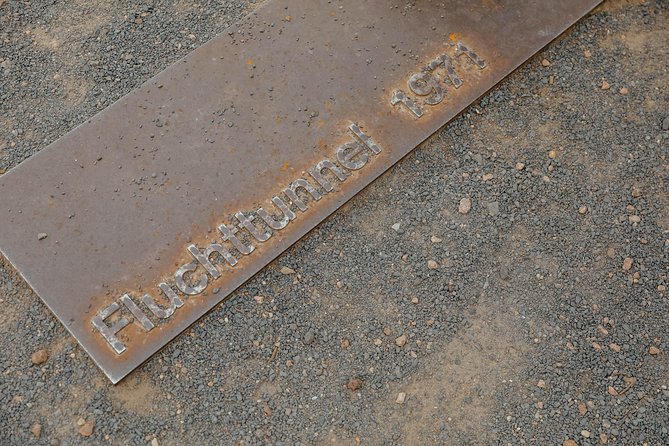
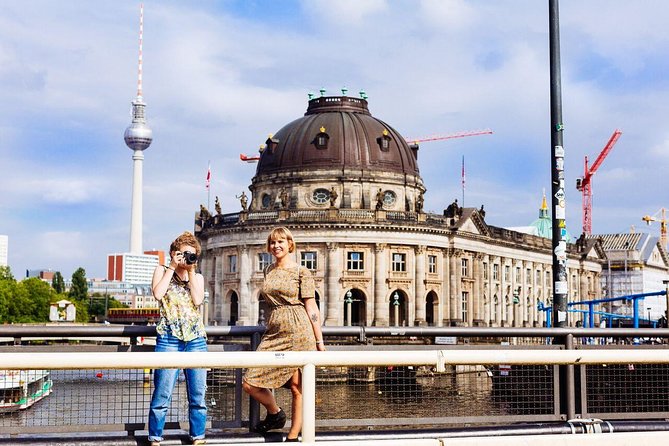
Museum Island occupies the northern part of the Spree Island in Berlin’s historic center. Its museums form one of Germany’s most important cultural complexes, and the island is part of the UNESCO World Heritage system.
The tour allows about an hour around Museum Island, but admission is not included. The stop works best as an exterior orientation unless you have arranged a different plan with your guide. You can learn how the island fits into Berlin’s royal, imperial, wartime, and modern cultural story without spending the day inside a museum.
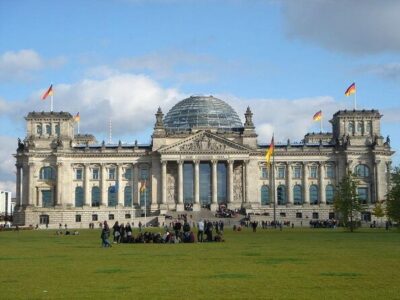
The Reichstag Building is another significant exterior stop, with about 30 minutes allowed in the stated route. Built in 1894 for the Imperial Government of the German Empire, it later became closely tied to the turbulent history of the 20th century. A fire in 1933 badly damaged the building, and the event became a major part of the Nazi regime’s political story.
The Reichstag is not just an impressive government building. Its history helps explain the collapse of Germany’s parliamentary system and the rise of dictatorship. If you want to go inside, remember that admission is not part of this experience.
Checkpoint Charlie and the uncertain parts of the route
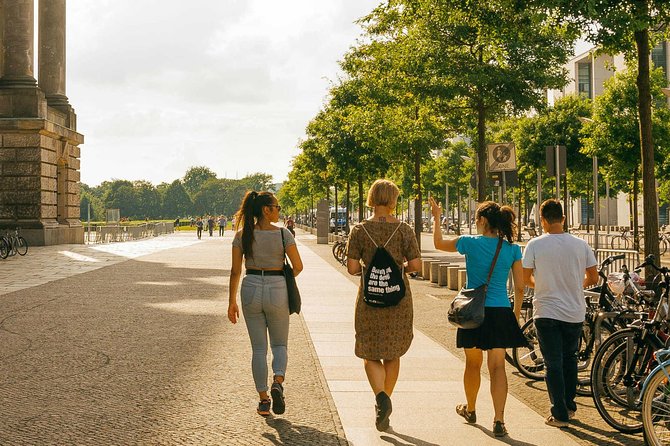
Checkpoint Charlie was the best-known crossing between East and West Berlin during the Cold War. It is one of the city’s most recognizable Wall-era locations and an obvious request if your main interest is divided Berlin.
The route includes about 30 minutes at the checkpoint in the stated schedule, but the flexible format means you should confirm the actual plan with your assigned guide. The same applies to several other possible stops. The description allows for extra locations depending on the guide and route, rather than promising every listed site on every departure.
This is where the tour’s flexibility becomes both an advantage and a risk. You might get an excellent route built around your interests. You might also spend more time on architecture, restored buildings, or East Berlin history than you expected.
One unhappy booking specifically found that major places such as the Berlin Wall, Brandenburg Gate, Checkpoint Charlie, and the Holocaust Memorial were not covered. That does not appear to reflect the usual route, but it is a useful warning. Do not assume that a WWII title guarantees every famous WWII and Cold War site. State your priorities clearly before walking away from the meeting point.
Guides, pace, and the human side of the tour
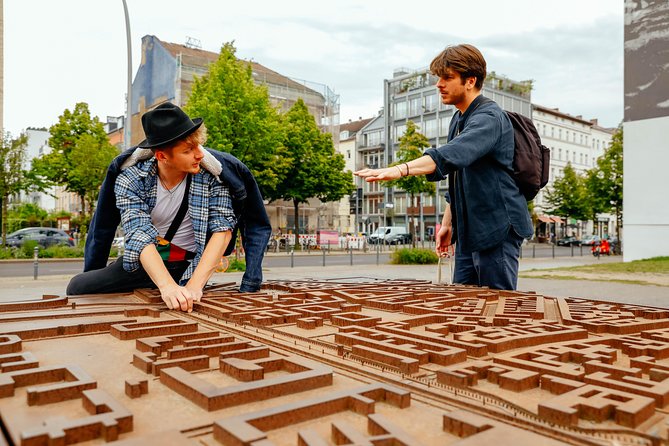
The guides vary. Names associated with especially strong experiences include Sara, Seth, Boyd, Miha, Amelia, Michele, Betty, and Pablo. Their strengths differ, but the most praised qualities are clear explanations, enthusiasm, flexibility, and the ability to answer questions without making the walk feel like a classroom lecture.
Seth is described as especially good at turning four hours of places and dates into a connected story. Sara receives praise for energy, preparation, and tailoring the route. Boyd is often noted for his passion and ability to point out less obvious details. Miha is credited with explaining the city clearly, helping with photo spots, and adding an extra historical stop when time allowed.
You cannot necessarily choose any specific guide when booking, so treat these names as useful possibilities rather than a guarantee. The guide assigned to your date will shape the tone and pace more than the official route description does.
Most of the walking is at street level and requires moderate physical fitness. One booking reported around 15,000 steps, so comfortable shoes are essential. There are opportunities to stop for refreshments, and guides have been praised for suggesting coffee breaks, bathrooms, restaurants, and further places to visit.
Four hours can pass quickly when the guide keeps the story moving. It can also feel long if your group has small children, limited mobility, or little interest in walking. Families should notify the guide in advance if the pace needs to be adjusted.
What the $143.97 price means
At $143.97 per person, this is not a budget walking tour. Its value depends heavily on the size of your party. You are paying for a private guide, a route shaped around your interests, and the chance to ask as many questions as time allows.
For two people, the cost is easier to justify if you want a serious introduction to Berlin and would rather not join a large group. For a family or larger party, group discounts may make the price more reasonable. The private format also saves you from spending half the tour waiting for strangers to take photos or catch up.
The price does not cover hotel pickup, transportation during the tour, or entry to attractions. You also should not expect a series of indoor museum visits. The value lies in the guide’s interpretation of the city and the connections between the outdoor sites.
I would book this early if the schedule matters, since it is often reserved about 40 days ahead. The tour is carbon neutral because the provider offsets the activity’s carbon emissions, a small but useful point for travelers who consider that in their booking choices.
Practical details before you set out
The tour starts at Oranienburger Strasse 36 and ends back at the same meeting point. It is offered in English, includes a mobile ticket, and is available only to your group.
Plan for weather exposure. The supplied information does not promise indoor shelter, meals, hotel pickup, or transport between stops. Wear shoes suited to a long urban walk, carry water, and leave room in your schedule for the walk to run slightly beyond four hours if the guide and group spend extra time at important sites.
Free cancellation is available up to 24 hours before the start time. Changes or cancellations made less than 24 hours before the scheduled start are not accepted for a refund.
Should you book this private Berlin history tour?
Book it if you want a serious, flexible introduction to Berlin’s WWII and Cold War past, especially if you value conversation over a fixed group script. It is a strong choice for couples, families with older children, and small groups who want the guide to adjust the pace and explain details that are easy to miss.
I would be cautious if you want guaranteed entry to museums, a short walk, or a locked-in list of every major site. Before starting, ask your guide to confirm whether the Brandenburg Gate, Holocaust Memorial, Hitler’s bunker site, Checkpoint Charlie, the Wall, Reichstag, and Museum Island fit into your route.
With a 4.9 rating from 209 reviews and 97 percent of bookers recommending it, the experience has a strong overall record. The most useful booking advice is simple: request your priorities, ask which sites are included, and treat the private format as a chance to shape the day rather than a promise that every landmark will appear automatically.
FAQ
How long does the tour last?
The tour lasts approximately four hours.
Where does the tour start?
It starts at Oranienburger Strasse 36, 10117 Berlin, Germany.
Where does the tour end?
The tour ends back at the meeting point.
Is this a private tour?
Yes. Only your party participates, and you receive the guide’s attention without a shared group.
Is the tour offered in English?
Yes. English is the listed tour language.
Does the price include attraction admission?
No. Entrance fees are not included, and the main attractions are visited from outside.
Does the tour include hotel pickup and drop-off?
No. Hotel pickup and drop-off are not included.
How much walking is involved?
You need a moderate level of physical fitness. The route can involve extensive walking, with one booking reporting about 15,000 steps.
Can I cancel for a full refund?
Yes, if you cancel at least 24 hours before the experience starts. Cancellations or changes made less than 24 hours before the start time are not eligible for a refund.
More walking tours in Berlin
- Discover Berlin Half-Day Walking Tour
★ 5.0 · 9,624 reviews - Berlin: Discover Berlin Walking Tour
★ 4.9 · 5,998 reviews - Berlin: Hidden Backyards Guided Walking Tour
★ 4.8 · 5,360 reviews - Berlin: Alternative Berlin Walking Tour
★ 4.6 · 1,204 reviews
More history to see in Berlin
- Berlin: Natural History Museum Entrance Ticket
★ 4.6 · 3,382 reviews - Berlin: World Heritage Cruise to Potsdam
★ 4.5 · 1,435 reviews - Berlin Historical Highlights Walking Tour
★ 4.9 · 657 reviews - Berlin Private Complete History All Day Walking Tour
★ 5.0 · 474 reviews
Just added in Berlin
- Private One way Airport Transfer Berlin Airport To Berlin★ 3.5 · 17 reviews
- Private Walking Tour: Berlin Wall, Cold War and Checkpoint Charlie★ 5.0 · 37 reviews
- Modern Berlin Private Walking Tour: Diverse, Vibrant and Exciting German Capital★ 5.0 · 13 reviews
- Private Day Trip to Potsdam from Berlin by Train★ 4.5 · 27 reviews
- City Explorer: Potsdam Private Day Trip★ 4.5 · 10 reviews
- Berlin Private Custom 5-Hour Tour by Car★ 5.0 · 30 reviews
- Private Half-Day Sightseeing Tour in Berlin★ 3.5 · 6 reviews
- Berlin Private Custom Tour in a Minivan, East and West★ 5.0 · 123 reviews
Third Reich & WWII Tours, compared.

Third Reich Berlin: Hitler and WWII Walking Tour
Read our review →
Walking Tour of Former Nazi Party Rally Grounds
Read our review →
Berlin Third Reich Sites: Half-Day Walking Tour
Read our review →
Birthplace of the Third Reich Guided Walking Tour
Read our review →Browse the lists this tour appears in