
Reviewed · TOURS IN NUREMBERG
Nuremberg: Tunnels and Secret Passages in the City Wall Tour
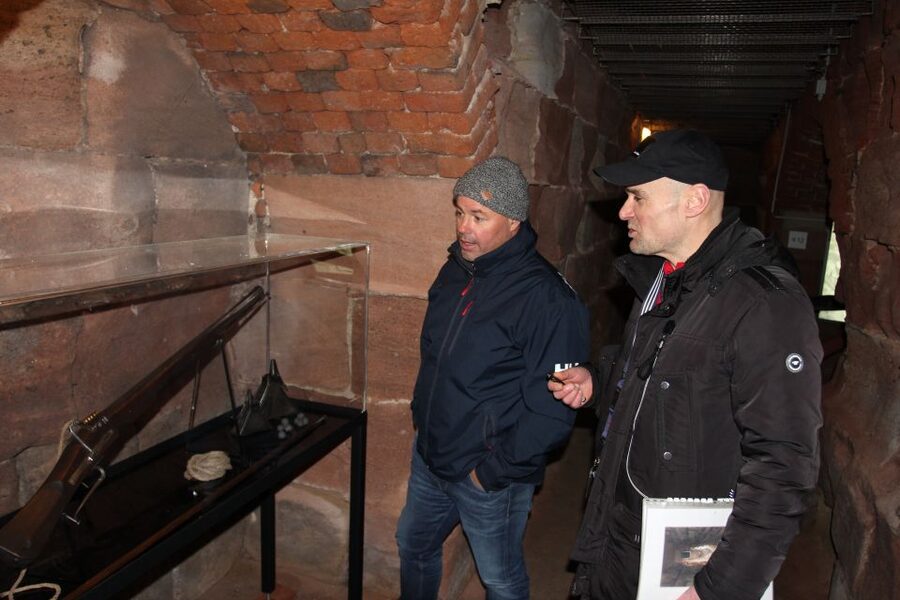
Nuremberg’s most surprising sights may be below your feet. This one-hour tour leads you through narrow sandstone tunnels, vaulted chambers, and secret defensive passages beneath the Imperial Castle, showing how soldiers could fire on attackers from several directions.
I like the direct link between the stonework and the people who used it. You can picture medieval defenders moving through the walls, then see how sixteenth-century bastions were reshaped to resist cannon fire. The price is another strong point: at $14, this is an inexpensive way to reach parts of the castle complex that you cannot visit on your own.
The catch is the physical setting. Expect steep stairs, ramps, damp or muddy surfaces, and some low passages, with no toilet break during the hour. It is not suitable for wheelchair users, people with mobility impairments, or anyone uncomfortable in tight spaces.
Key points to know before you go
- The tour goes below the Imperial Castle: You enter defensive corridors and secret passages that are not part of an ordinary walk around Nuremberg.
- Medieval and sixteenth-century defenses appear side by side: The route explains older tunnels, moat defenses, weapons, and later bastions built to withstand cannon fire.
- The hour is active rather than leisurely: You climb and descend old stairways and ramps throughout the visit.
- Guides make the difference: English and German departures are led by local guides, with Alan, Tom, Andreas, Martin, Ralf, Robert, and Fiona among the names associated with recent tours.
- Wear proper shoes and warm layers: The underground spaces can feel cold, and non-slip footwear is a smart choice.
- The price is unusually fair: At $14 per person, it offers access to a specialized part of Nuremberg’s fortifications for less than many standard city attractions.
Starting beside the Historischer Kunstbunker
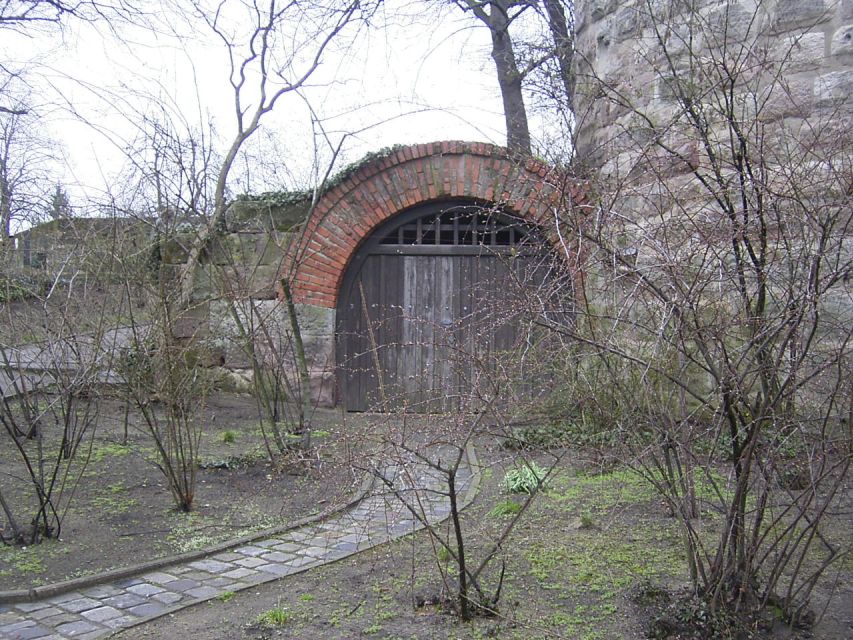
The meeting point is in front of the entrance to the Historischer Kunstbunker at Obere Schmiedgasse 52. That location places you right beside the old fortifications and close to the Imperial Castle, so the tour begins in an area where Nuremberg’s medieval character is easy to see.
Arrive on time. The tour is only an hour, and the guide needs to get the group moving through a fixed route of corridors, stairways, and ramps. A late arrival could be awkward, especially once the group has entered the underground sections.
The meeting point can also help you plan the rest of your day. You are already near the castle and city walls, making this a useful addition to a morning or afternoon of exploring central Nuremberg. I would schedule it alongside, rather than immediately after, a more relaxed meal or museum visit, since the walking route requires steady movement.
A few more things to do in Nuremberg worth a look
- Nuremberg: City Tour with the Bimmelbahn Train
★ 4.4 · 2,475 reviews - Berlin: 1-Hour City Tour by Boat with Guaranteed Seating
★ 4.3 · 16,993 reviews - Leipzig: City History Canal Sightseeing Tour on a Motorboat
★ 4.7 · 6,232 reviews
Entering Nuremberg’s sandstone defenses
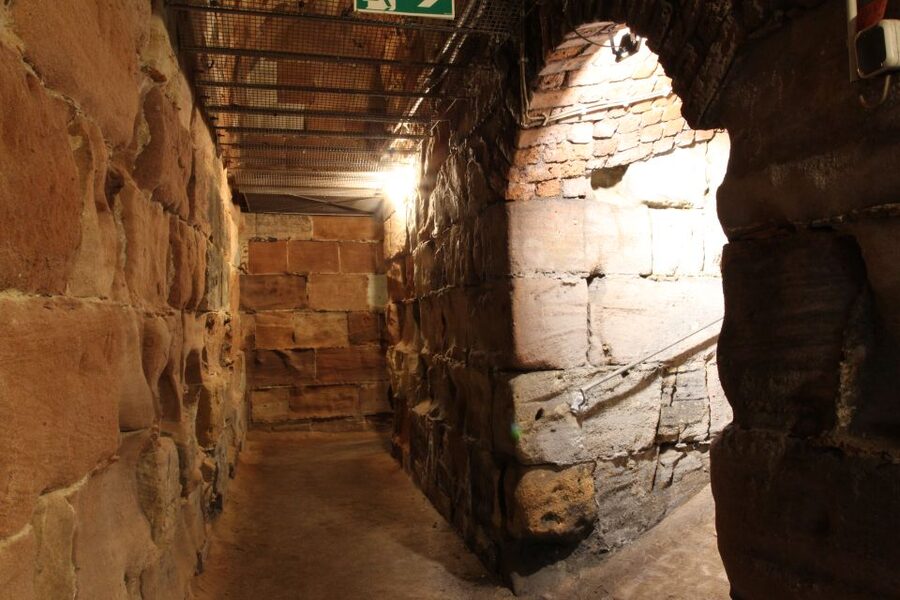
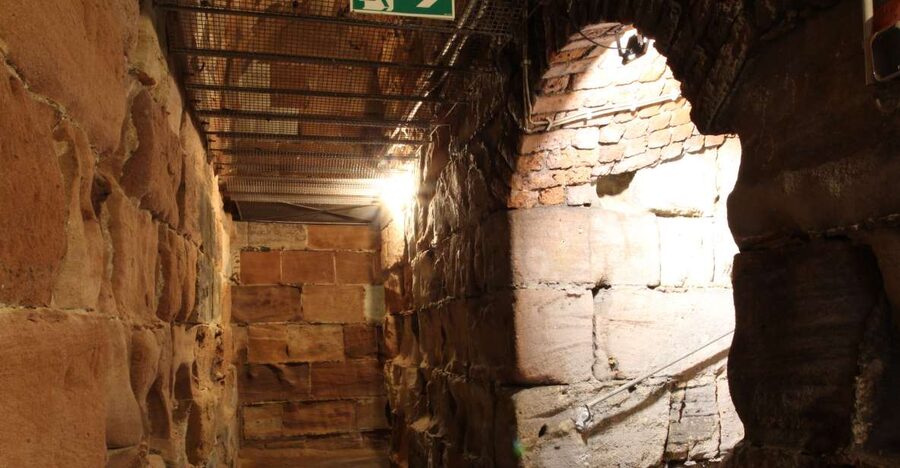
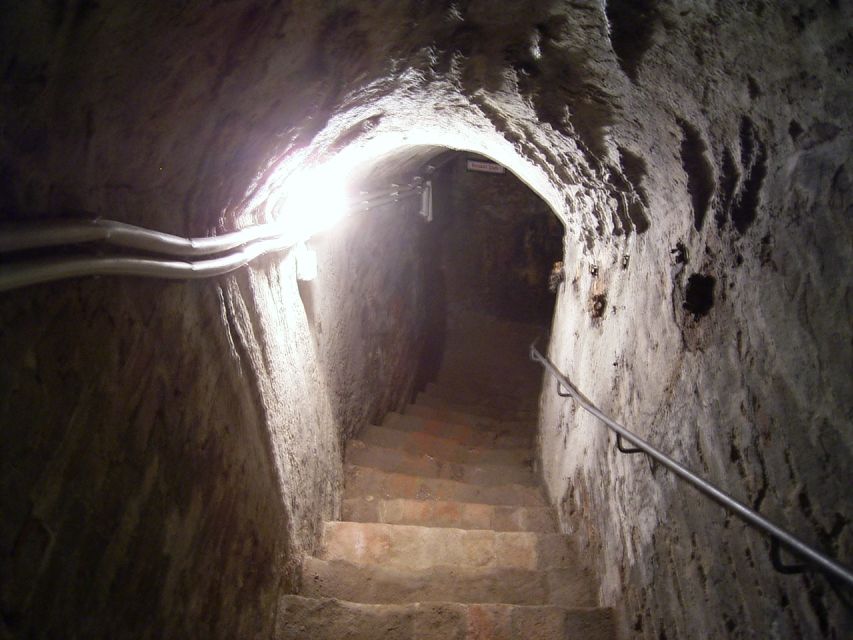
The first real thrill comes when you leave the open streets and enter the defensive spaces cut into the sandstone beneath the castle and city walls. These are not polished museum galleries. They are old working passages, with uneven surfaces, tight turns, and the rough character of military architecture.
That roughness is part of the appeal. You can see why the walls were built thick and why movement through them had to be controlled. The tunnels were not designed for comfort. They were built to let defenders reach firing positions, move supplies, and protect vulnerable sections of the city.
Your guide explains how the layout supported the city’s defense. Instead of viewing the wall as a single solid barrier, you begin to understand it as a network of routes and chambers. Soldiers could use hidden corridors to reach different points, while attackers crossing the moat faced fire from several sides.
The experience works best when you pay attention to the relationship between the passages and the walls above. The underground corridors were not separate from the castle. They formed part of a larger defense system that included the moat, towers, wall walks, gates, and firing positions.
Following the paths of medieval defenders
The tour gives you a practical sense of medieval castle defense. Rather than only hearing dates and names, you walk the routes used by the people responsible for keeping the city safe.
The guide may ask you to think like a defender. Where would you stand? How could you see an approaching enemy? Why would a passage be narrow, low, or angled? This question-based approach helps turn old stone into something understandable.
Most guides use humor and simple explanations to keep the subject moving. Alan has been praised for being friendly and full of facts, while Tom is known for making the subject lively for families. Andreas has led tours that combine clear explanations with a good sense of humor. Martin is another guide associated with an engaging style and strong knowledge of the fortifications.
One small caution: a guide who asks the group to guess the purpose or date of every feature may not suit everyone. A few visitors have found repeated guessing questions slower than they would like. If you prefer a straight lecture with quick answers, that style could test your patience. For many people, though, the questions make the stonework easier to remember.
Seeing the moat as a fighting position
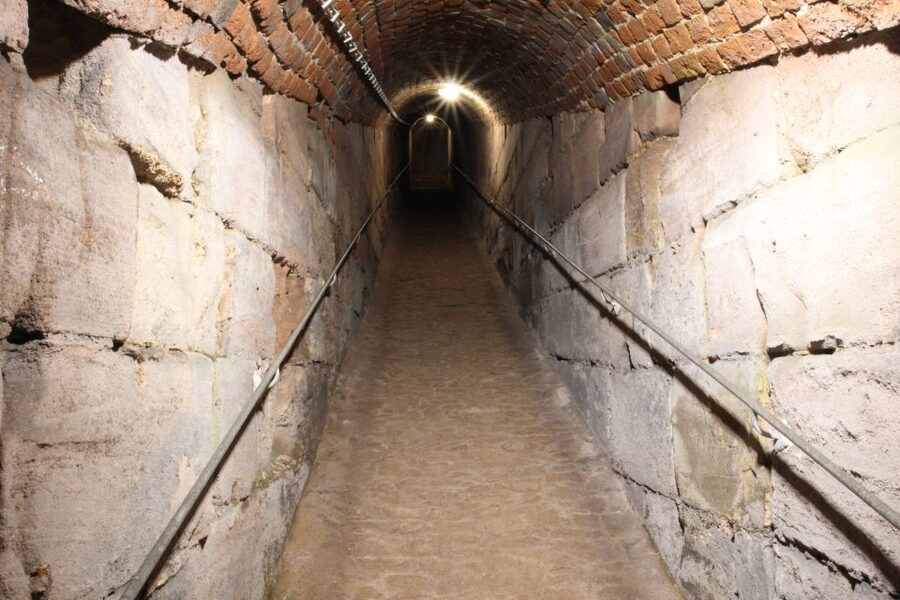
A major strength of this experience is the way it explains the moat. From above, a moat can look like a simple ditch around a castle. Below the castle walls, you see how the surrounding corridors allowed defenders to target attackers as they tried to cross it.
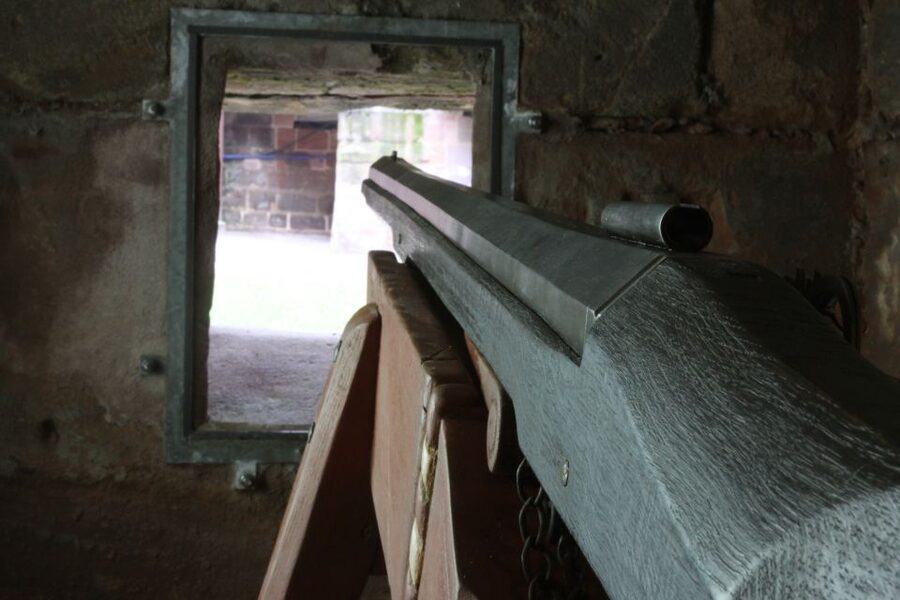
The route takes you through a maze of passages designed for defensive fire. The point was not simply to shoot straight ahead. The arrangement allowed soldiers to cover different angles and protect sections of the moat that an attacker might otherwise reach safely.
This is where the tour gives you information you are unlikely to pick up from a casual walk around the castle. The walls stop looking like scenery and start looking like a carefully planned machine. Every opening, chamber, and route had a role.
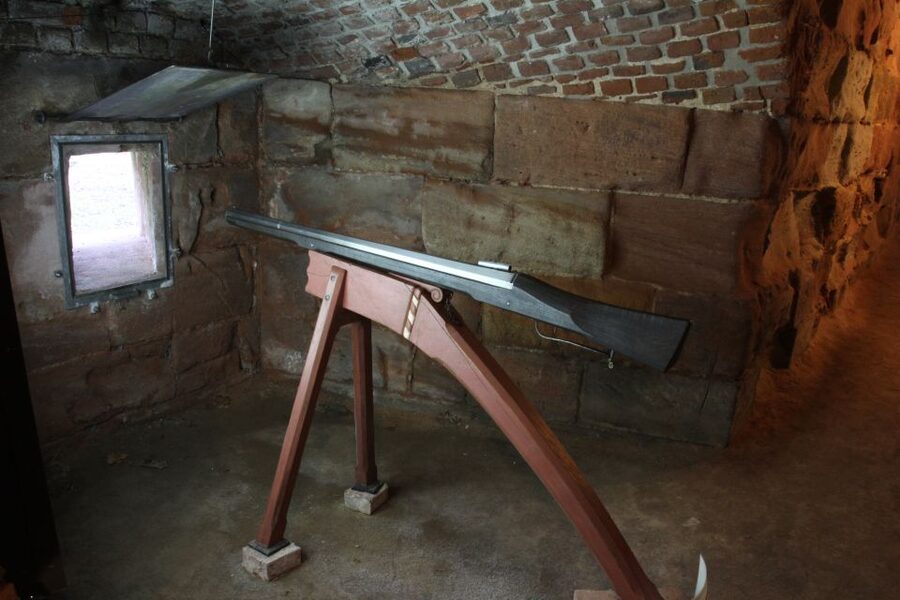
You also learn about the weapons once kept inside the city walls. The tour does not just focus on the age of knights. It traces how the defenses changed as military technology changed, especially when cannon fire made older medieval arrangements less effective.
Same base, a different kind of day out:
- Nuremberg: Old Town Guided Walking Tour
★ 4.6 · 2,416 reviews - Nuremberg: Medieval Dungeons Guided Tour
★ 4.8 · 1,726 reviews - Nuremberg: Walking Tour of Former Nazi Party Rally Grounds
★ 4.7 · 1,665 reviews - Medieval Tour in Nuremberg in Spanish
★ 5.0 · 1,374 reviews
The later bastions and cannon defense
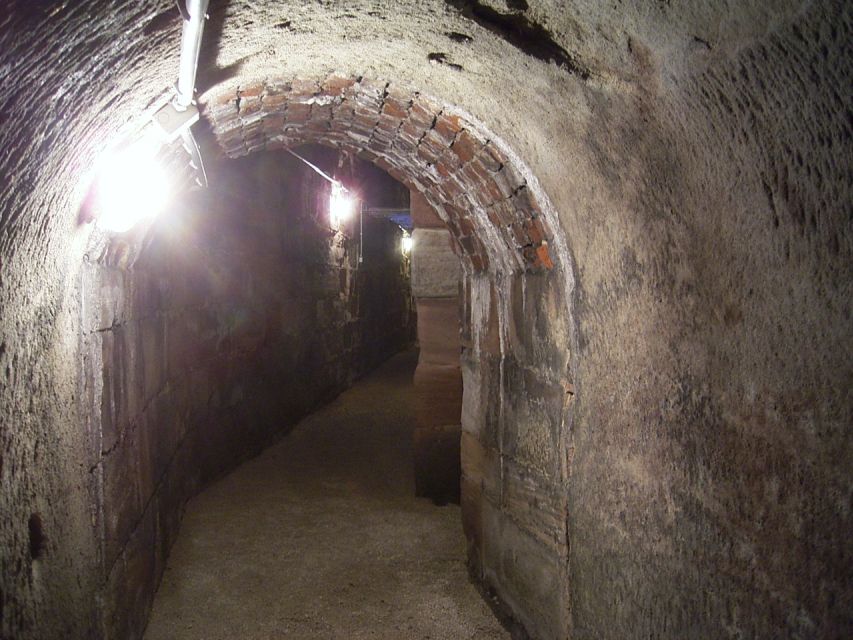
Nuremberg’s fortifications were updated in the sixteenth century with modern bastions designed to withstand cannon fire. These additions show that the city’s defenses were not frozen in the Middle Ages.
The contrast is useful. Older castle defenses often depended on height, thick walls, narrow gates, and positions for bows or early projectile weapons. Later bastions were shaped for artillery warfare, with forms that helped absorb or deflect cannon fire and allowed defenders to answer with weapons of their own.
Your guide connects these visible structures with the hidden corridors below. You do not simply walk through a tunnel and then hear a separate lecture about the walls. The tour shows how the different parts worked together.
The Imperial Castle is especially effective as a setting because its sandstone construction makes the defensive work easy to read. You can see the weight and thickness of the old walls, then move into passages cut through the rock. The scale helps you understand why attacking a fortified city was slow, dangerous, and expensive.
What the one-hour route feels like
Do not expect a gentle stroll. The route includes many old stairways and ramps, with repeated climbing and descending. Some passages may feel low or narrow, and one description notes sections under about 1.5 meters in height.
The underground setting can be damp, wet, or muddy. Non-slip shoes are more important here than fashionable footwear. Sandals and flip flops are not allowed, and sturdy closed shoes will give you better grip and confidence on the steps.
Bring warm clothing even in summer. The underground spaces can feel cold, and the contrast with a warm day above ground may be sharp. On hot days, the tunnels can offer welcome relief, but you should still carry a layer.
There are no toilet breaks during the tour. Use a restroom before meeting the guide, since the schedule does not allow for a pause once the group is inside.
Food and drinks are not allowed in the passages. Pets are also not permitted, although assistance dogs are allowed.
How the guides shape the experience
The information is specific, but the guide’s delivery shapes how much you take away. English and German tours are available, and recent departures have included guides named Alan, Tom, Andreas, Martin, Ralf, Robert, Fiona, Alex, Penny, and others.
Strong guides explain the fortifications in plain language and welcome questions. Ralf, for example, has been praised for telling the group when it would skip a feature and return to it later, a small habit that helps you follow the route. Penny has been noted for using humor to make the historical details easier to grasp.
Clear speech matters underground. Stone corridors can make voices harder to hear, and one visitor found a soft-spoken guide difficult to follow. If you have trouble hearing, stay close to the guide and choose a position near the front when possible.
The tour also works well for families with older children. Guides have kept children aged eight, ten, and twelve interested by mixing facts with questions and stories. Still, the low passages, stairs, and lack of toilet breaks mean that younger children need to be comfortable walking and managing the physical setting.
Is $14 good value in Nuremberg?
Yes, if you want more than an exterior view of the castle. The listed price is $14 per person, and it includes entry to the defensive corridors in the city walls and the secret passages beneath the Imperial Castle.
That matters because these areas are not simply open for casual wandering. The guide provides the access and the explanation that make the spaces useful rather than confusing. You are paying for a focused look at a specialized part of Nuremberg’s history, not just another general walking tour.
The one-hour length also keeps the cost reasonable. You get a concentrated experience without giving up half a day. Some people may wish the tour lasted longer, especially if they enjoy military history, but the short format fits well into a busy city visit.
Flexible booking terms add practical value. You can reserve now and pay later, and cancellation is allowed up to 24 hours in advance for a full refund. Check the available starting times when booking, since the duration is fixed at one hour.
Who should book this tour?
I would choose this tour if you like castles, military history, engineering, or unusual city experiences. It is also a good choice if you have already seen Nuremberg’s main streets and want to understand what made the city defensible.
You do not need to be a serious history fan. The tour is physical and visual enough to work as a general sightseeing activity, especially when the guide explains why a wall, tunnel, or chamber was built in a certain way.
Families with school-age children can enjoy it, particularly if the children like forts, secret passages, and old weapons. The guide may adapt questions for different ages, but parents should think carefully about the stairs, low ceilings, and narrow spaces.
I would skip it if you dislike confined areas, struggle with uneven stairs, or need regular restroom access. The official restrictions exclude people with mobility impairments and wheelchair users, and the underground setting is not suitable for someone with claustrophobia.
What to wear and bring
Keep your packing simple:
- Warm clothing, even during warm weather
- Sturdy, closed, non-slip shoes
- Comfortable clothes for climbing stairs and ramps
- No food or drinks for the underground route
Leave sandals and flip flops at your accommodation. You do not need special equipment, but practical clothing will make the hour more comfortable.
Should you book the Nuremberg tunnels tour?
Book it if you want to see how Nuremberg defended itself from the inside. For $14, the combination of castle setting, underground corridors, moat strategy, and local storytelling is a strong value.
The deciding factor is comfort, not interest. If you can manage old stairs and narrow, low passages, this is a memorable way to understand the city’s fortifications. If you need an accessible route or dislike enclosed spaces, spend your time above ground exploring the castle and walls instead.
FAQ
How long is the Nuremberg tunnels and secret passages tour?
The tour lasts one hour.
How much does the tour cost?
The listed price is $14 per person.
Where does the tour meet?
Meet in front of the entrance to the Historischer Kunstbunker at Obere Schmiedgasse 52.
Which languages are available?
The tour is offered in English and German.
What does the tour include?
It includes entry to the defensive corridors in the city walls and entry to the secret passages beneath the Imperial Castle.
Is the tour physically demanding?
Yes. You will climb many old stairways and ramps, and some passages are narrow or low.
What should I wear?
Wear warm clothing and sturdy, non-slip shoes. Sandals and flip flops are not allowed.
Are toilet breaks available?
No. There are no toilet breaks during the tour, so use a restroom before it begins.
Is the tour suitable for wheelchair users or people with claustrophobia?
No. The tour is not suitable for wheelchair users, people with mobility impairments, or people with claustrophobia.
Just added in Nuremberg
- Nuremberg’s Mystery Morning: Breakfast & Escape Game★ 4.4 · 57 reviews
- Nuremberg: The Old Town in Evening Light – IN GERMAN★ 4.7 · 353 reviews
- Nuremberg Third Reich Tour in Spanish★ 5.0 · 355 reviews
- Nuremberg Old Town and Nazi Rally Grounds Walking Tour★ 4.7 · 377 reviews
- Nuremberg Old Town and Nazi Party Rally Grounds Walking Tour in English★ 4.5 · 504 reviews
- Nuremberg: Hop-On Hop-Off Bus Tour★ 4.3 · 763 reviews
- Nuremberg: Historischer Kunstbunker WWII Art Bunker Tour★ 4.8 · 921 reviews
- Nuremberg: PLAYMOBIL®- FunPark★ 4.7 · 863 reviews
Tours in Nuremberg, compared.



Walking Tour of Former Nazi Party Rally Grounds
Read our review →

Browse the lists this tour appears in