
Reviewed · THIRD REICH & WWII TOURS
Munich: Private or Group Third Reich and WWII Walking Tour
Munich’s polished squares and handsome Old Town hide the places where National Socialism first gained power. This two-hour walking tour connects those sites, from Marienplatz to Königsplatz, with the beer halls, party offices, monuments, and memorials that shaped the city’s dark role in modern history.
I like the use of old photographs and documents, which helps you see how familiar streets looked under the Nazi regime. I also like the human focus: guides explain not only Hitler’s rise, but also the people who resisted him.
The main drawback is the pace. Two hours is enough for a strong overview, but not enough for every museum, memorial, or wartime site in Munich. The subject is also serious, so this is best for older children and adults.
Key points to know before booking
- Start at Marienplatz: Meet beside the golden Mariensäule, on its tall red marble column, and look for the guide carrying a blue Weis(s)er Stadtvogel bag.
- Follow the Nazi story through real places: The route links Marienplatz, Munich’s Old Town, the former Nazi headquarters, and Königsplatz.
- Historic images add weight: Your guide uses photographs and documents to show how buildings and streets looked during the Third Reich.
- Expect a serious, balanced lesson: The tour covers Hitler’s rise, the Beer Hall Putsch, anti-Semitic violence, wartime destruction, and resistance.
- Private pricing can work well for a group: The cost is $259 for up to 25 people, so the per-person value improves sharply as your party grows.
- Wear good walking shoes: Transportation is not included, video recording is not allowed, and the tour runs in English or German.
Why Munich is the right place for this history
Munich is not simply a city where Nazi events happened. It was where the movement took shape, found early supporters, and built its public image.
After World War I, Germany was politically shaken and economically strained. In Munich’s beer halls and backstreets, Adolf Hitler became known as a forceful speaker. The small extremist circle around him grew into the National Socialist German Workers’ Party, or NSDAP.
The city later received the official title Hauptstadt der Bewegung, or Capital of the Movement. That title tells you why a walking tour here can be more revealing than a general museum visit. You are not only hearing dates and names. You are moving through the same civic spaces where speeches were made, power was displayed, and opposition was crushed.
General Eisenhower later called Munich the cradle of the Nazi beast. It is a harsh phrase, but it explains the city’s importance. The tour examines how a local political movement became a national dictatorship and then a force that brought war and mass murder across Europe.
I find this setting useful because Munich can otherwise feel almost too beautiful and orderly. The tour asks you to look again at familiar streets and consider what happened there before, during, and after the war.
More Third Reich and WWII Tours in Munich
- Munich: Third Reich & WWII Walking Tour
★ 4.6 · 6,181 reviews - Third Reich Walking Tour Munich
★ 4.5 · 4,291 reviews - Munich: Birthplace of the Third Reich Guided Walking Tour
★ 4.6 · 771 reviews
Meeting at the Mariensäule in Marienplatz
The tour begins at the Mariensäule, the golden statue on a tall red marble column in the center of Marienplatz. This is a straightforward meeting point, but pay attention to the exact marker. You are looking for the guide with a blue bag labeled Weis(s)er Stadtvogel.
Marienplatz is one of Munich’s most recognizable public squares, so it may be busy. Arriving a little early gives you time to locate the statue without rushing. The tour does not include transportation, and it starts on foot from here.
This opening location is fitting. Marienplatz is not tucked away from the city’s main life. It is a central public stage, and the guide uses the surrounding Old Town to explain how Munich’s public spaces were used for political theater, propaganda, protest, and intimidation.
You will want comfortable shoes and a drink. The walk lasts two hours, and the route includes several stops where you remain standing while the guide explains what happened.
The Old Town and the early Nazi movement
From the center of the Old Town, the guide sets the scene for Munich after World War I. This is where the story moves beyond Hitler as a single political figure and shows the wider conditions that helped him gain attention.
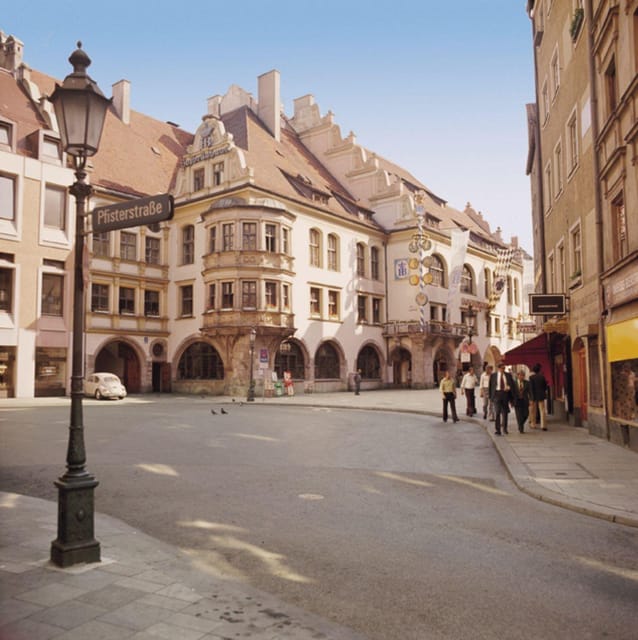
You learn about his early appearances as a beer hall speaker and the small group that treated him as its leader. The beer halls mattered because they were places where political ideas could be delivered directly to large local audiences. In Munich, political organizing was not confined to offices or newspapers. It was performed in public, with speeches, arguments, and loyal followers.
The tour also covers the foundation of the NSDAP in Munich. That detail gives the city a special place in the history of National Socialism. The party was not merely promoted here after it had already become powerful. Its early identity was built here.
The guide’s photographs and documents are especially useful at this stage. A present-day building can look ordinary, even when it played a role in a major political event. Seeing an earlier image helps you connect the modern street to the period being discussed.
The Beer Hall Putsch and the failed grab for power
One of the key events covered is the Beer Hall Putsch, Hitler’s failed attempt to seize power in 1923. The coup collapsed, but its failure did not end his political career.
This stop, or group of stops, helps explain an important point: Nazi power did not arrive in one sudden leap. Hitler tried force, failed, and later used legal politics, propaganda, intimidation, and political alliances to gain control. Understanding that sequence makes the later dictatorship easier to follow.
I appreciate tours that do not treat the failed putsch as a dramatic anecdote and then rush past it. The event shows how fragile the movement was at one point, and how quickly it learned from defeat.
Your guide also places the violent movement around the event in context. The Brownshirts spread fear, and political violence became part of the public life of the city. That makes the walk more than a list of addresses. It shows how intimidation can become normal when institutions fail to stop it.
Other trips into the same period in Munich:
- Munich World War II Sites Including Dachau Concentration Camp
★ 4.5 · 570 reviews - Munich City Walking Tour, includes Third Reich & Viktualienmarkt
★ 5.0 · 458 reviews - Third Reich & WWII Walking Tour
★ 4.5 · 417 reviews - Munich 3-Hour Segway Tour: Nazi Munich & Royal Architecture
★ 4.9 · 194 reviews
Buildings that reveal the scale of Nazi power
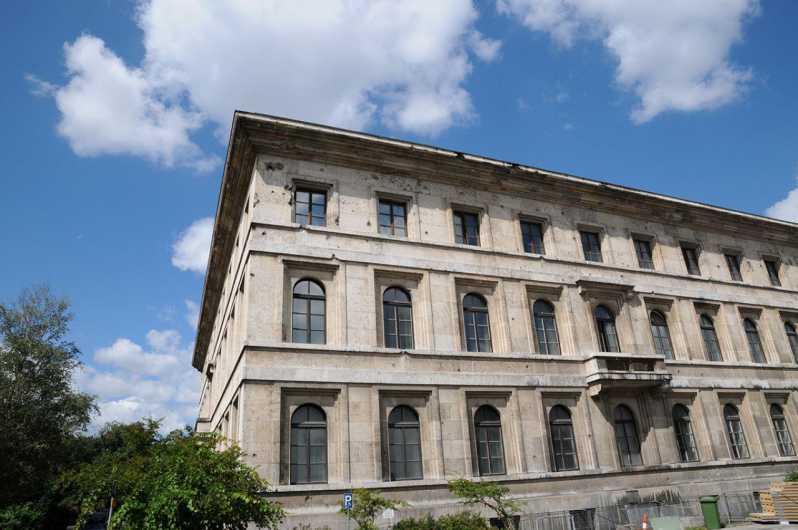
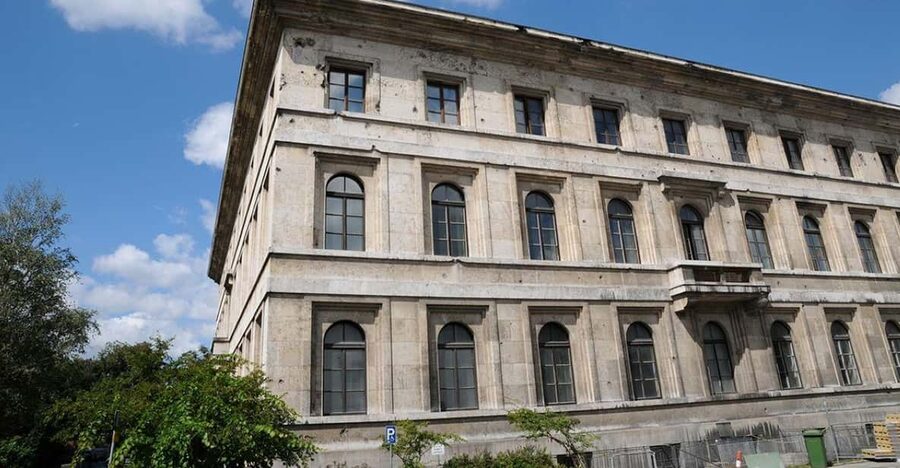
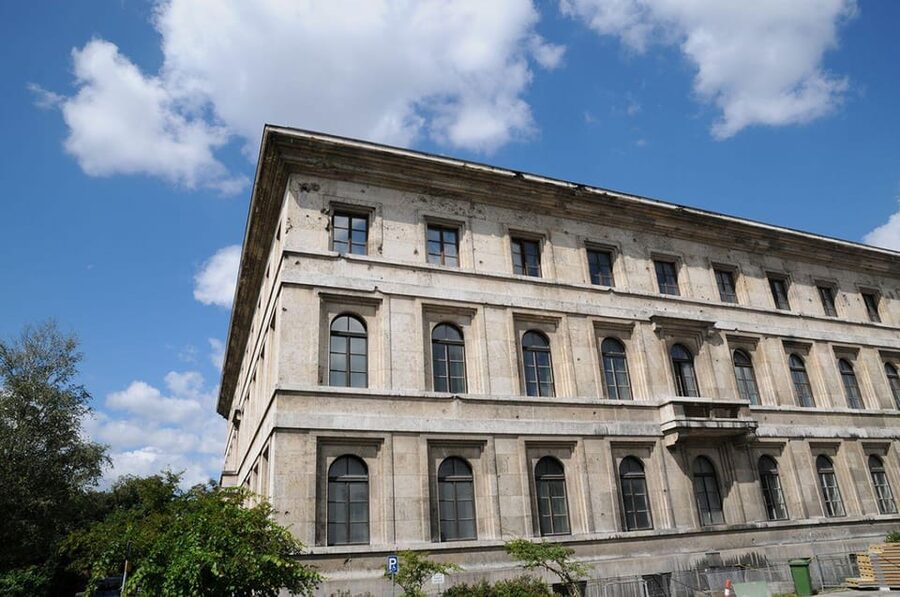
The route includes original buildings and places tied to the Third Reich. Some retain physical scars from the war. Others were designed or used to project the power and permanence of the regime.
Munich suffered heavy Allied bombing, and much of the central city was destroyed or damaged. Yet some grand buildings created under Hitler survived. Their survival creates an unsettling contrast: structures meant to celebrate the regime remain, while many ordinary homes and civic buildings disappeared.
At these locations, the guide explains how architecture was used as political language. Huge proportions, formal spaces, and monumental design were not accidental. They were meant to make the state appear grand, disciplined, and inevitable.
Historic photographs help you compare the buildings then and now. You may also see damage that remains visible. I find this physical evidence more affecting than a polished reconstruction because it keeps the events tied to actual streets and walls.
Do not expect every site to be presented as a preserved memorial. Some locations are part of everyday Munich. That is part of the value, but it also means you need to listen closely. The meaning may not be obvious from the building itself.
The former Nazi headquarters
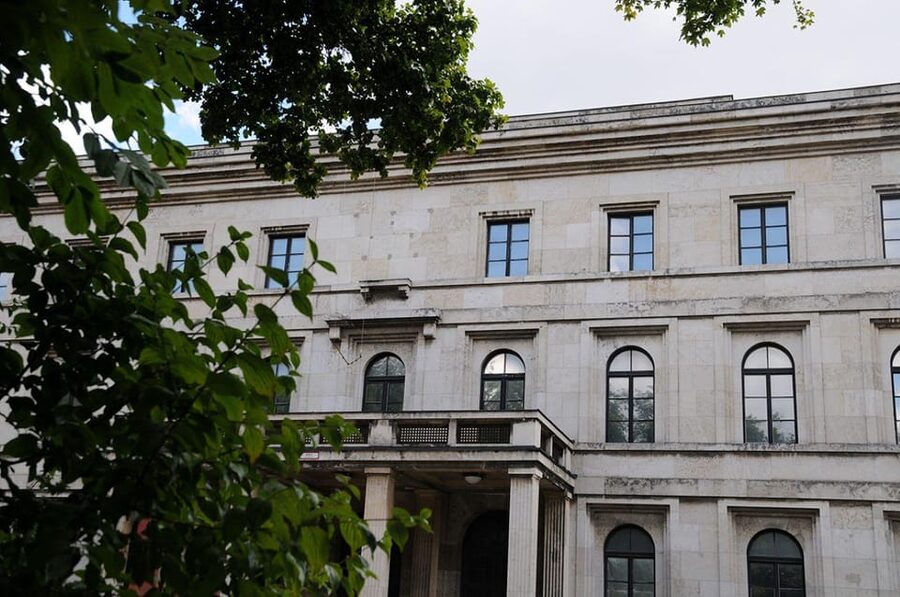
The former Nazi headquarters is one of the tour’s major points. This is where Hitler and the party exercised power over Germany and projected authority beyond the city.
The stop helps connect Munich’s local political story with the wider dictatorship. Early beer hall speeches may seem small compared with the machinery of war, but the headquarters represents the later stage, when the party had become a national government and Munich was its official center.
The contrast between the building’s intended message and what it represents today is central to the experience. Grand architecture once celebrated Nazi rule. Now, its significance is explained in relation to dictatorship, persecution, war, and the victims of the regime.
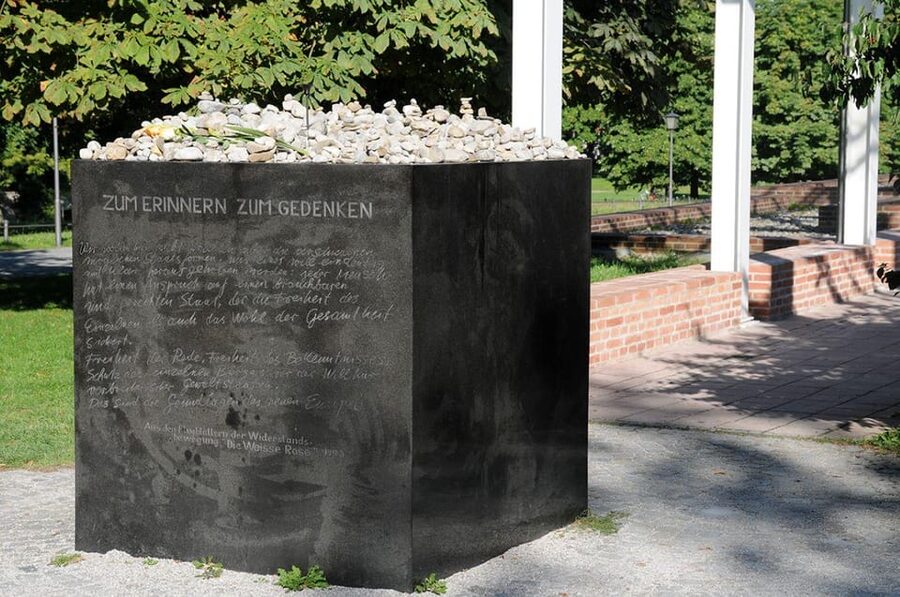
Your guide also brings attention to resistance. That matters because a tour about Hitler can accidentally make him the only character in the story. Here, the focus includes people who opposed the regime in defense of democracy, even when resistance carried enormous personal risk.
Königsplatz and the public face of the regime
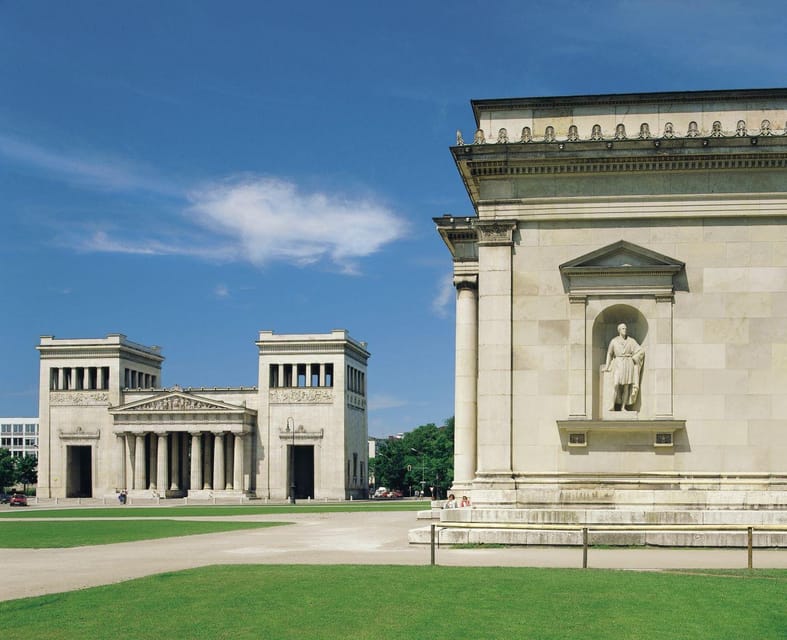
Königsplatz provides a strong setting for understanding Nazi spectacle. The broad ceremonial space and monumental buildings show how the regime used public architecture and open ground to stage power.
The tour links the square to the larger story of Nazi pageantry, party activity, and political control. You are asked to consider how public places can be redesigned to make an ideology feel permanent.
Königsplatz is also useful for seeing the difference between the city’s older civic identity and the image the Nazis tried to impose. Munich’s historic center had its churches, markets, and traditional institutions. The regime added its own grand language of columns, processions, and authority.
The guide does not simply point out impressive buildings. The purpose is to explain what they were meant to communicate and how that message supported a hateful political system.
Persecution, destruction, and resistance
The tour covers anti-Semitic pogroms, the destruction of synagogues, and the public burning of books. These subjects shift the walk from political history to the direct human cost of Nazi rule.
That shift is important. It prevents the tour from becoming an architectural tour of dictatorship. You hear how propaganda and public violence affected Jewish communities and anyone who opposed the regime.
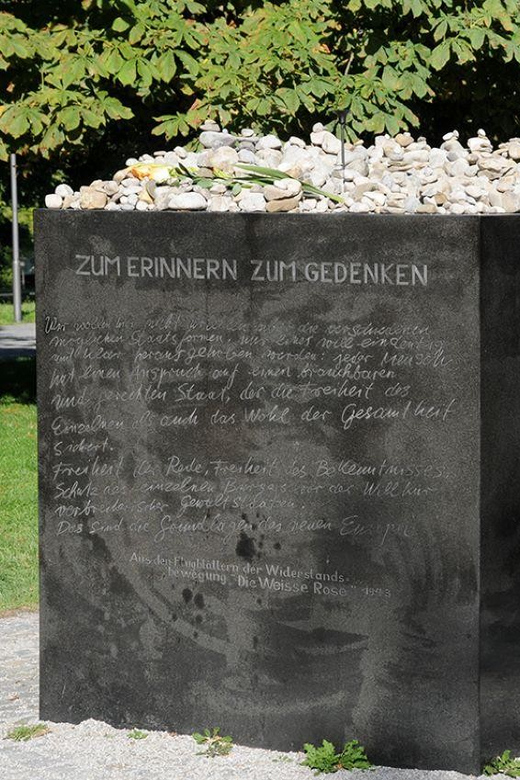
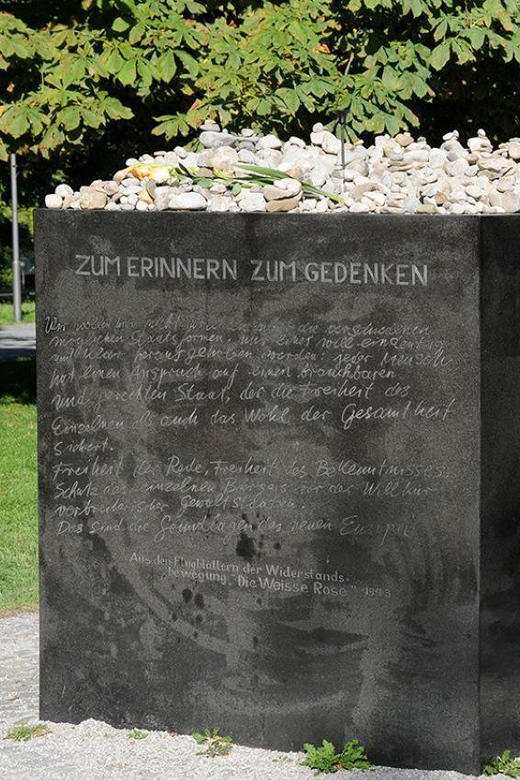
The route also includes memorials dedicated to victims of Nazism and people who gave their lives resisting Hitler. These places provide a necessary counterweight to the party buildings and monuments. Munich’s Nazi past is not only the story of those who gained power. It is also the story of those who suffered, fought back, or were erased.
I would approach this part with patience. The subject is painful, and a good guide needs to give the facts room to settle. The guides on this tour are certified, and the strongest personal feedback describes the presentation as heartfelt, interactive, and responsive rather than a memorized speech. That style can make a difficult subject easier to understand without making it lighter than it should be.
A guide-led experience with room for questions
The quality of a two-hour history walk depends heavily on the guide. The tour is offered in English or German, and individual guides named in the feedback include Karl and Ina.
Karl is described as welcoming and especially effective for a solo participant. Ina is noted for responding to questions and personal reactions, making the walk feel tailored rather than fixed. Other comments describe an engaging guide who used historic images and connected each location to the activities that took place there.
Those details matter because this subject raises difficult questions. You may want to ask how the Beer Hall Putsch affected Hitler’s later strategy, why Munich became the party headquarters, or how resistance was treated. A guide who can respond clearly adds far more value than a basic list of dates.
The tour is offered as a private group experience, with a maximum of 25 people and a listed price of $259 per group. That means the value depends on your party size. Four people would pay about $64.75 each, while a full group of 25 would pay about $10.36 per person. For a private family group, school group, or set of friends, that can be a sensible way to share a serious history lesson.
The wording around group type and private booking should be checked carefully when you reserve. The supplied details describe a private group, while the title also presents private or group options. If having the guide exclusively for your party matters, confirm that choice before paying.
Who should take this Munich walking tour
I would recommend it to adults who want context for Munich beyond palaces, markets, and grand churches. It is also a good fit if you plan to visit other World War II or Nazi-era sites and want a clear introduction first.
Solo visitors can benefit from the focused route and the chance to ask questions. Couples and families with older teenagers may find that the walk gives structure to a difficult subject that can otherwise feel scattered across books, museums, and memorials.
The activity is not suitable for children under 10 according to the tour information. One piece of feedback describes an eight-year-old following along well, but that should not override the stated age guidance. For younger children, choose a different Munich activity.
The walk is wheelchair accessible, though you should still consider the practical demands of a two-hour outdoor route. You will be moving between city locations and standing while the guide speaks. Comfortable footwear is essential.
Timing, weather, and what to bring
The tour lasts two hours, with starting times available according to the booking calendar. Since transportation is not included, plan your arrival at Marienplatz rather than expecting a pickup.
Bring water and dress for the weather. A participant described enjoying the tour despite poor weather, but rain or cold can make a serious walking tour harder to absorb. Munich’s streets may also be crowded, especially around the central square, so leave enough time to find the Mariensäule and the blue guide bag.
Video recording is not allowed. Take written notes if you want reminders, but listen closely during the stops. The photographs and documents shown by the guide are part of the teaching method, and the route moves at a steady pace.
Free cancellation is available up to 24 hours before the start for a full refund. You can also reserve and pay later, which is useful if your Munich schedule is still shifting.
Should you book this tour?
Book it if you want a serious, place-based explanation of how Munich helped launch National Socialism. The tour’s strongest points are its original locations, historic photographs, focus on resistance, and guides who appear ready to answer questions rather than simply recite a script.
Skip it if you want a light introduction to Munich or if a two-hour walk on a difficult subject sounds tiring. It is not a substitute for a full museum visit, and it cannot cover every Nazi-era site in the city.
For most adults with an interest in 20th-century history, I think the $259 group price is reasonable when shared with several people. Meet at the Mariensäule, wear good shoes, and expect Munich to look different by the end of the walk.
FAQ
Where does the tour meet?
Meet at the Mariensäule in the center of Marienplatz. It is the golden statue on a tall red marble column.
How do I identify the guide?
Look for a tour guide carrying a blue bag marked Weis(s)er Stadtvogel.
How long does the walking tour last?
The tour lasts two hours.
Is transportation included?
No. The activity includes the certified guide and walking tour, but transportation is not included.
What languages are available?
The tour is available in English and German.
How much does the private group tour cost?
The listed price is $259 per group of up to 25 people.
Is the tour wheelchair accessible?
Yes, the activity is listed as wheelchair accessible.
What should I bring?
Bring comfortable shoes and drinks.
Can I cancel for a full refund?
Yes. You can cancel up to 24 hours in advance for a full refund.
More walking tours in Munich
- Munich: Old Town & Viktualienmarkt City Walk in German
★ 4.7 · 2,304 reviews - Munich: Night Watchman Walking Tour
★ 4.7 · 2,092 reviews - Munich Ghosts and Spirits Evening Walking Tour
★ 5.0 · 1,900 reviews - Munich Old Town Walking Tour
★ 4.5 · 1,287 reviews
Just added in Munich
- Pub crawl incl. Oktoberfest museum guided tour with beer tasting (private)★ 5.0 · 5 reviews
- South Tyrolean specialties and wine tasting★ 5.0 · 5 reviews
- Short & sweet: Tasting the Viktualienmarkt★ 4.8 · 37 reviews
- Size Matters Beer Tour Munich★ 4.6 · 105 reviews
- Secret Food Tours Munich★ 4.8 · 5 reviews
- Munich: Romantic Wine Experience for Two at Viktualienmarkt★ 4.2 · 14 reviews
- Munich: Resistance against Hitler – Historical Walking Tour★ 5.0 · 5 reviews
- Residence of Munich private tour with skip the line ticket★ 5.0 · 4 reviews
Third Reich & WWII Tours, compared.

Third Reich Berlin: Hitler and WWII Walking Tour
Read our review →
Walking Tour of Former Nazi Party Rally Grounds
Read our review →
Berlin Third Reich Sites: Half-Day Walking Tour
Read our review →
Birthplace of the Third Reich Guided Walking Tour
Read our review →Browse the lists this tour appears in