
Reviewed · TOURS IN TRIER
Luxembourg to Trier: Tour of Germany’s Oldest City.
Trier gives you a quick change of country and a big dose of Roman history in one day. The city is Germany’s oldest, and the Porta Nigra is a powerful opening scene: a huge Roman gate with darkened stones and plenty of stories behind its name. From Luxembourg, the train ride takes about an hour, so you spend more time seeing Trier than sitting on a bus.
I like the small groups of up to 15 people, which make it easier to hear the guide and ask questions. I also like the balance between a two-hour walking tour and two hours of free time, since you get both a useful introduction and room to choose your own lunch, museum, or café stop.
The main drawback is the pace. You cover Roman monuments, a cathedral, Karl Marx House, and the market area in a short visit, so this is an overview rather than a slow, detailed study of Trier. Bring your passport or ID card, wear comfortable shoes, and expect a full half-day on the move.
Key points to know before booking
- One-hour train ride from Luxembourg: Your round-trip rail ticket is included, making this a simple way to cross the border without arranging separate transport.
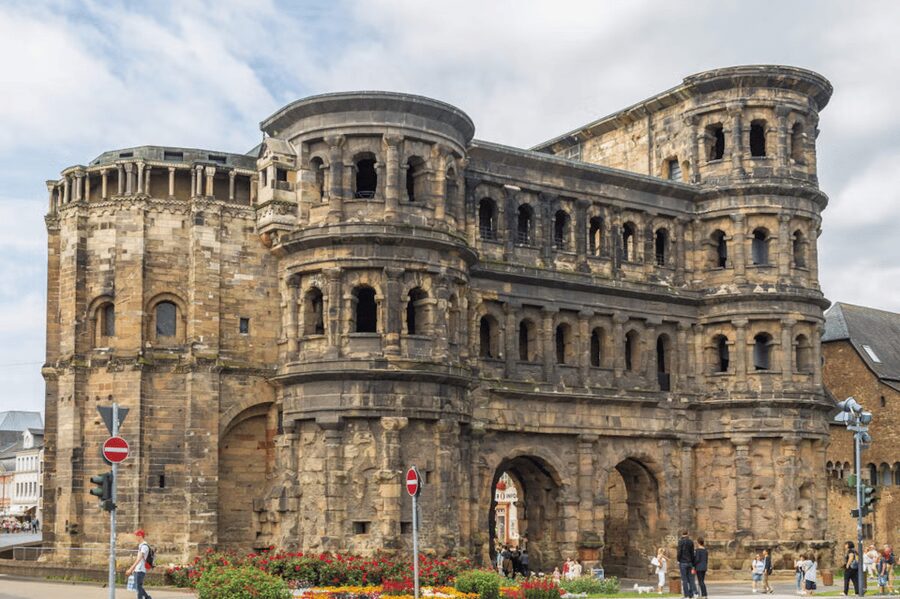
- Roman Trier takes center stage: The Porta Nigra, Basilica of Constantine, amphitheater, and St. Barbara Roman Baths connect the city to its ancient past.
- Two hours are yours: After the guided walk, you can eat, shop, visit another museum, or revisit a favorite sight at your own pace.
- English and Spanish guiding: Guides such as Anna and Paulina lead in Spanish or English, depending on the departure and group.
- Small-group format: The maximum group size is 15, a useful middle ground between private touring and a large coach outing.
- Plan for identification and timing: Bring a passport or ID card, and allow 330 minutes for the full experience, including the train journeys.
Why Trier makes a good day trip from Luxembourg
Luxembourg is well placed for a short visit to Germany, and Trier is a sensible choice because the trip takes only about an hour by train. You get a clear change in setting without losing a whole day to transport.
Trier has an unusual concentration of major sights. Roman remains sit close to medieval and modern landmarks, so the city gives you several chapters of European history within a compact walking route. The tour makes that mix easy to understand instead of leaving you to piece it together from plaques.
I especially like the way the day begins with ancient Trier. The Roman monuments provide a strong framework for the rest of the visit. Later, Karl Marx House and the cathedral add very different subjects, from 19th-century political thought to Christian art and architecture.
This is not a tour for someone who wants to spend every minute inside museums. The schedule gives you a guided introduction, followed by two hours to make your own choices. That split works well if you want orientation but do not enjoy being led from one attraction to the next all day.
A few more things to do in Germany worth a look
- Berlin: 1-Hour City Tour by Boat with Guaranteed Seating
★ 4.3 · 16,993 reviews - Leipzig: City History Canal Sightseeing Tour on a Motorboat
★ 4.7 · 6,232 reviews - Cologne: Panoramic City Cruise
★ 4.3 · 5,698 reviews
The train from Luxembourg to Trier
The meeting point is at the entrance to Luxembourg’s central train station, beside the Oberweis café. This is a practical starting place, especially if you are staying in Luxembourg and can reach the station by tram or on foot.
The train journey takes about one hour each way. Your round-trip ticket is included in the price, so you do not need to work out the cross-border fare separately. The ride also gives you a quiet break before and after the walking portion.
You should bring your passport or national ID card. The tour crosses from Luxembourg into Germany, so identification is an essential part of the day even though the journey is short.
The total activity lasts 330 minutes. That includes the train travel and the guided route, so the time in Trier itself is not a full ten-hour day. If you like efficient sightseeing, this is a good fit. If you prefer long museum visits and unhurried meals, you may find the schedule tight.
Entering Trier through the Porta Nigra
The Porta Nigra is the tour’s first major stop and one of Trier’s most memorable sights. This Roman gate is described as the largest Roman-style entrance in the world, and its scale gives you an immediate sense of the city’s ancient importance.
The name means Black Gate, and the guide explains why the stones appear dark. That small detail is useful because it turns a visual feature into a story rather than leaving you with a photograph and a name.
A 30-minute guided visit gives you time to understand the gate and its place in Trier. You should not expect a long archaeological session, but the stop works well as an introduction. It gives you the basic Roman setting before the tour moves deeper into the city.
The Porta Nigra is also a strong orientation point. From here, the route continues into the historic center, where colorful façades, public squares, and major religious buildings appear close together.
The Basilica of Constantine and Roman power
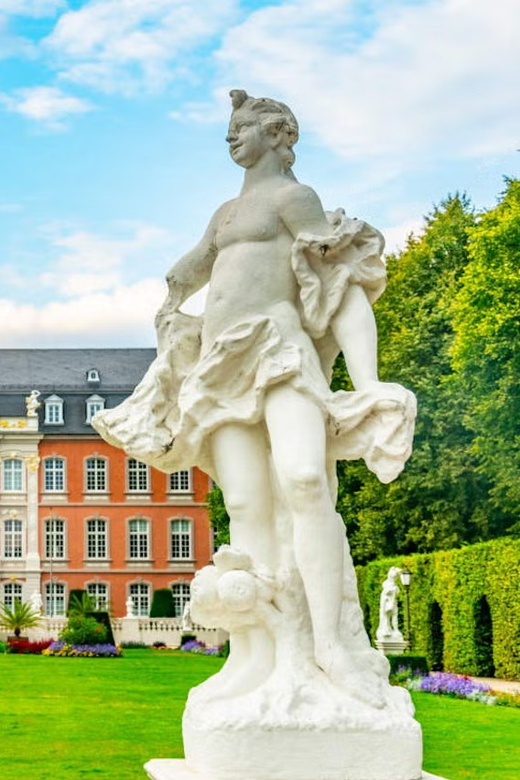
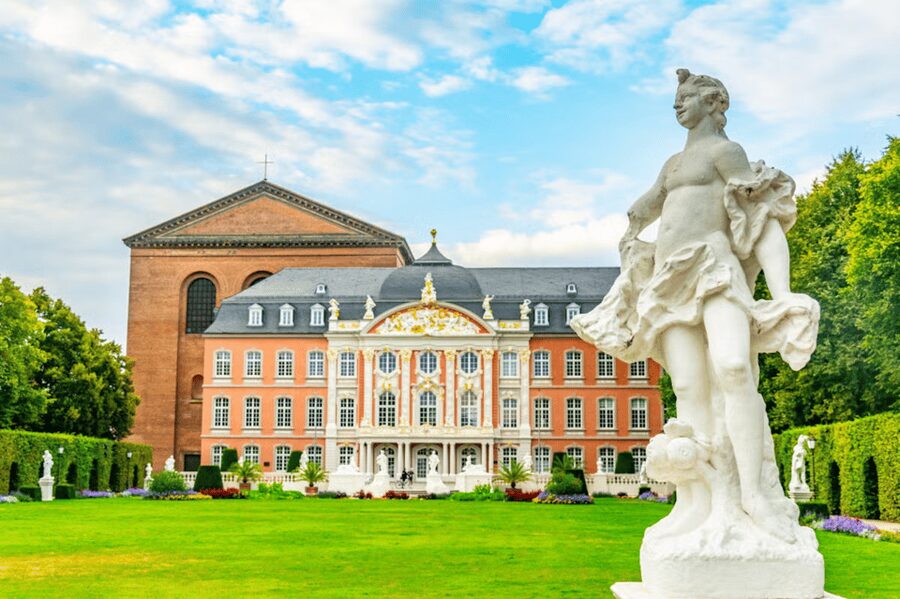
The Basilica of Constantine, also called the Aula Palatina, dates to the year 310. Its huge interior once held the throne of the Roman emperor, and that fact helps you read the building as a statement of imperial power rather than simply an old church.
The tour allows about 25 minutes here. The guide can point out the building’s main features and explain how it functioned in Roman Trier. The scale is the key experience. Even a short visit lets you grasp how impressive this imperial hall must have been.
This stop also adds variety after the Porta Nigra. The gate shows Rome’s defensive and civic presence, while the basilica shows its political authority. You get two different kinds of Roman architecture without needing to travel across the city.
You may want more time inside if architecture is your main interest. The schedule keeps moving, so take in the height and proportions first, then listen for the historical details that make the space meaningful.
Same base, a different kind of day out:
- Berlin: Reichstag, Dome and Government District Guided Tour
★ 4.7 · 18,288 reviews - Hamburg: Sex and Crime in St. Pauli Tour for Ages 18+
★ 4.7 · 15,447 reviews - Hamburg: 1.5-Hour Harbor and Speicherstadt Day Cruise
★ 4.6 · 14,200 reviews - From Munich: Neuschwanstein & Linderhof Castle Full-Day Trip
★ 4.5 · 12,494 reviews
The amphitheater and St. Barbara Roman Baths
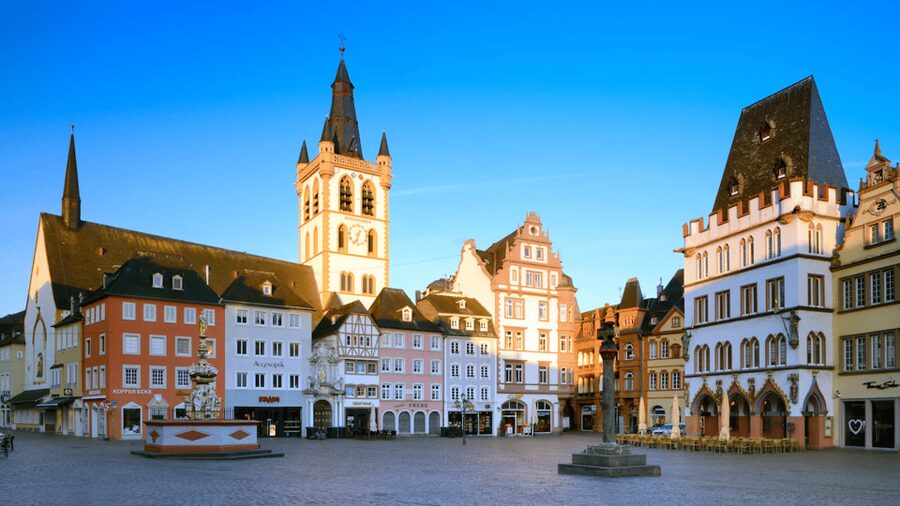
The 2nd-century amphitheater brings a more public and dramatic side of Roman life into view. It was a place where large crowds gathered, and the surviving remains help you picture Trier as a busy Roman center rather than a quiet collection of ruins.
Nearby, the St. Barbara Roman Baths add another angle. These baths are part of Trier’s UNESCO World Heritage collection, and they show how Roman public life included bathing, socializing, and shared civic spaces.
The route gives you a look at both sites, but you should keep the time limit in mind. This is a guided overview of the Roman remains, not a full archaeological tour. The advantage is that you see several important locations in one outing. The tradeoff is that you may not have much time to study every wall or excavation detail.
I like this part of the route because it prevents the Roman story from becoming repetitive. Gates, imperial halls, an amphitheater, and baths each reveal a different part of city life. The guide’s explanations matter here, especially if you do not already know how Roman public buildings fit together.
Karl Marx House and the modern political story
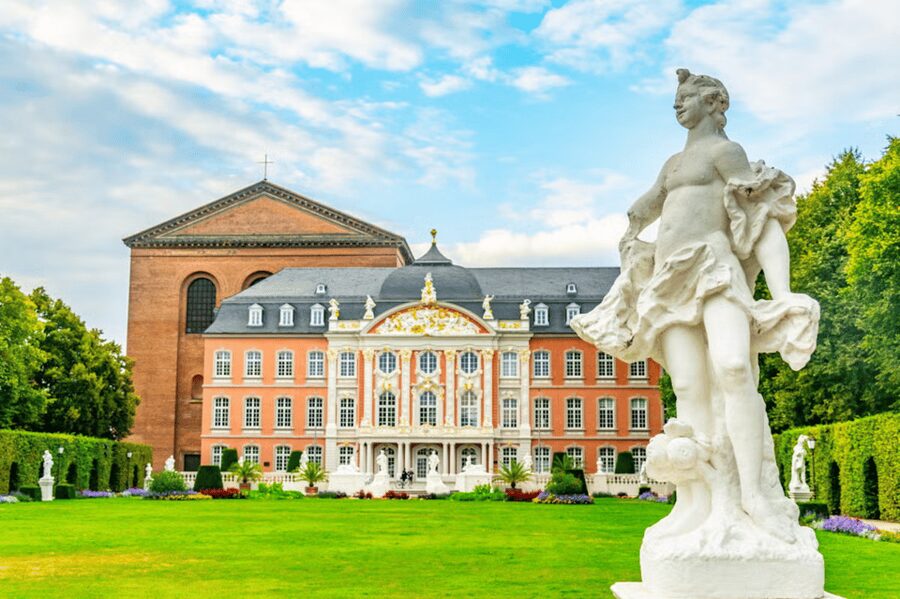
Trier is also the birthplace of Karl Marx. His birthplace was built in 1727 and is now a museum focused on his life and the development of socialism and communism.
The 20-minute guided stop gives you a clear change of subject. After Roman emperors and ancient public buildings, you move into modern European political thought. That contrast is one of the tour’s strengths because it shows Trier as more than an ancient-history destination.
You should think of this stop as an introduction rather than a complete museum visit. Twenty minutes is enough to understand why the house matters and what the museum covers, but you may want to return during your free time if the subject interests you.
The guide can also help place Marx within the city’s larger story. Trier is not presented as a single-period museum city. Roman, religious, medieval, and modern connections sit within the same walk.
St. Peter’s Cathedral and its older walls
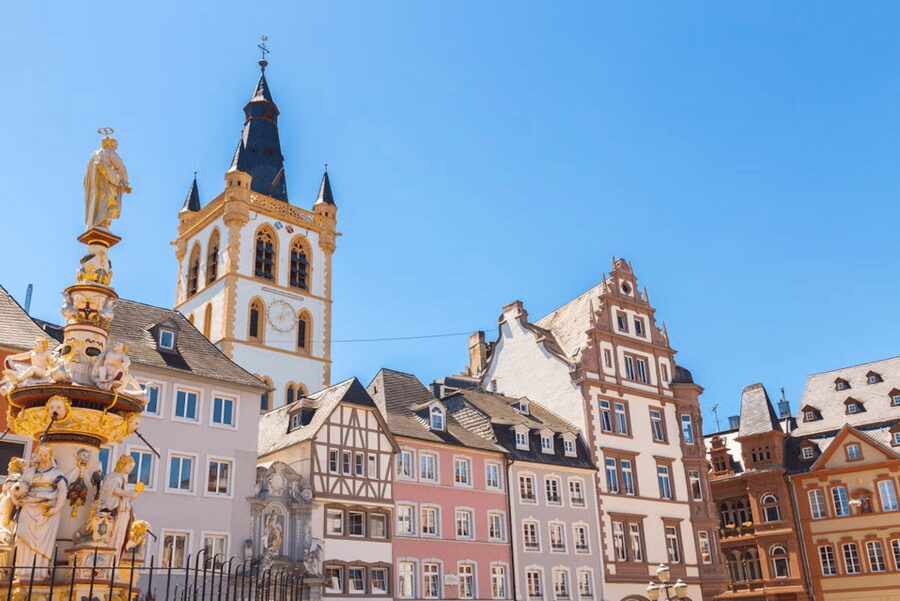
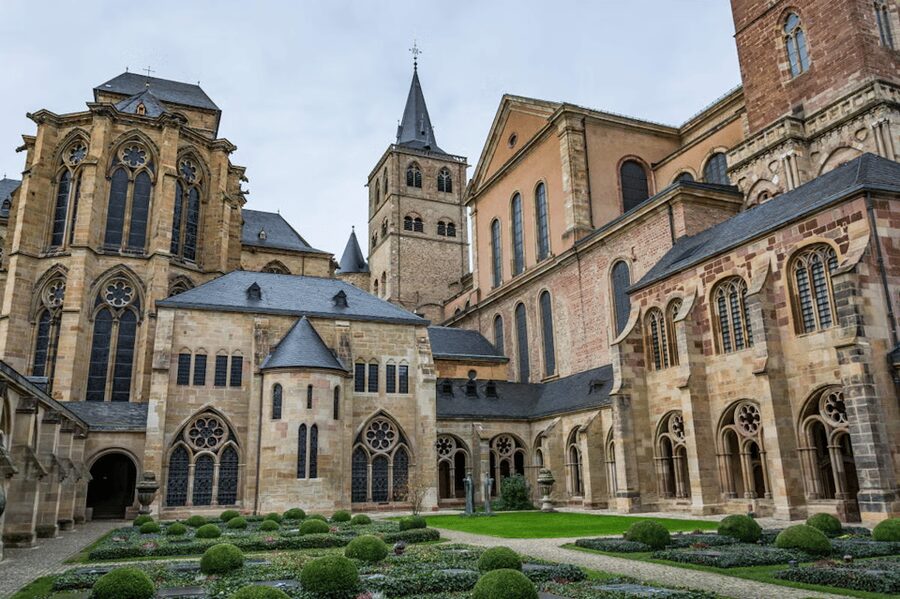
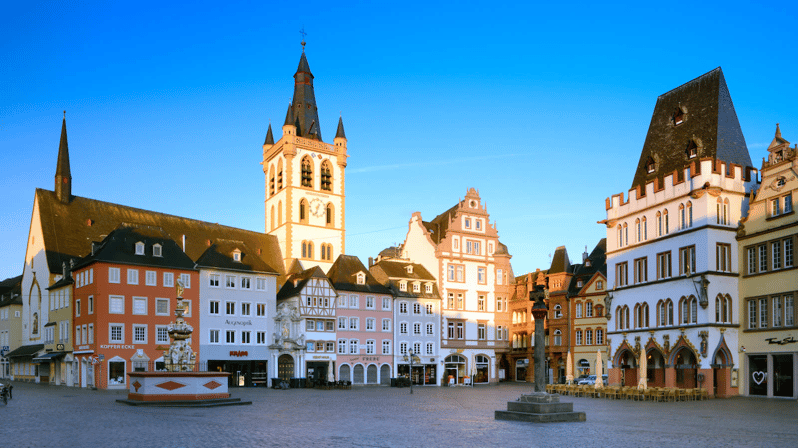
The Cathedral of St. Peter is one of Trier’s central landmarks. Inside, you can see altars, tombs, and original 10th-century walls, giving the visit a layered feel. The building is not just one period or one style. Its details reflect changes over time.
The scheduled visit lasts about 20 minutes. That is enough to see the principal interior features and hear why the cathedral matters, but it is not enough for a slow look at every chapel or tomb.
One intriguing detail is the cathedral’s mysterious guardian below. The description hints at a figure or feature in the lower area, so listen closely when the guide takes you downstairs. This is the sort of small detail that can make a short cathedral visit more memorable.
The cathedral also provides a useful contrast with the Basilica of Constantine. Both are large, important buildings, but they represent different centers of power. One recalls the Roman emperor, while the other reflects Trier’s Christian and medieval identity.
Market Square and your two hours alone
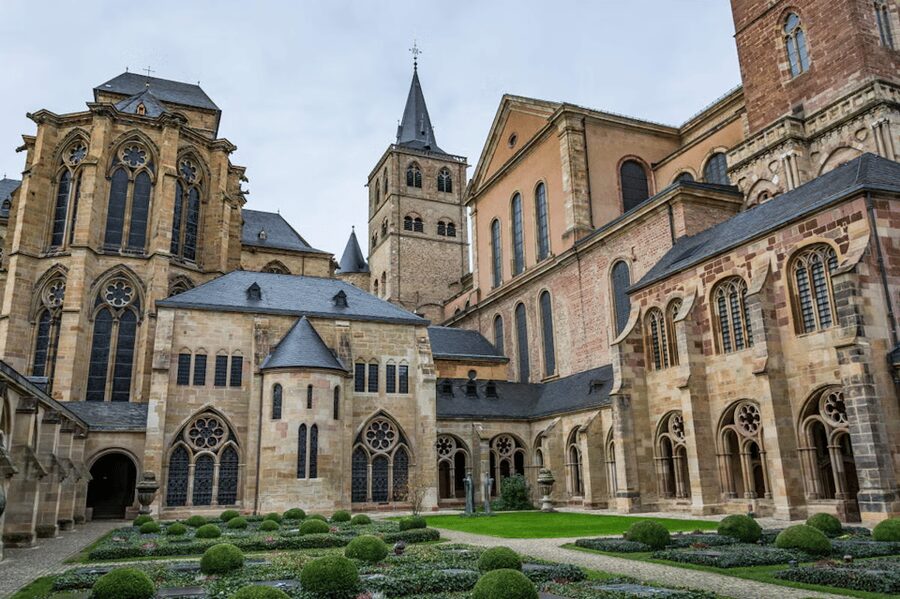
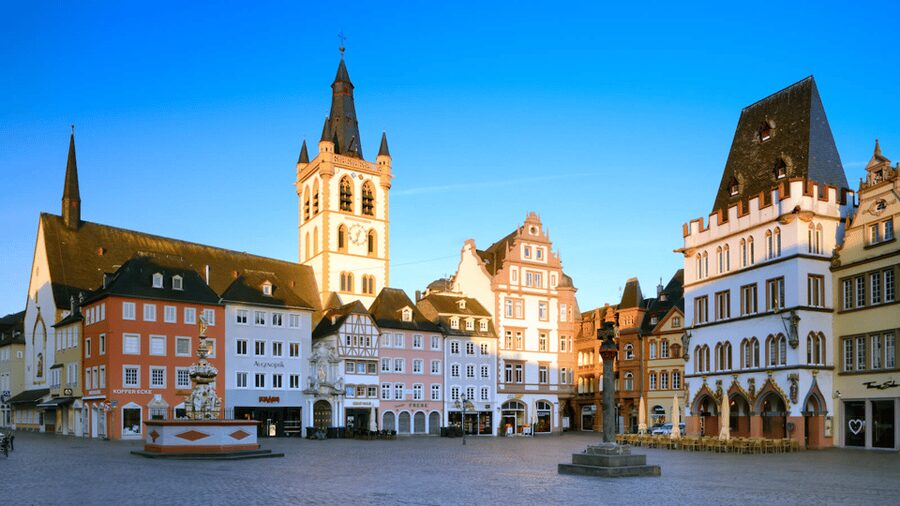
The guided walk ends around Market Square, a pleasant place to pause among colorful houses, flower and fruit stalls, and the St. Peter Fountain. It is an easy spot for photos and a practical place to begin your free time.
You get two hours to continue exploring on your own. That is enough time for a relaxed meal, a café stop, additional shopping, or a return to a sight that caught your attention during the walk.
The free period is a major reason to consider this tour. A tightly controlled group schedule can make a city feel like a checklist. Here, the guide gives you the city’s main framework, then you can decide what matters most to you.
There is also a small risk: two hours can disappear quickly. If you plan to visit a museum, check how much time you need before the tour begins. Karl Marx House may be the obvious choice for some, while others may prefer to stay near the market and enjoy the central streets.
Do not count on seeing every corner of Trier in this window. Use the guided portion to mark places you want to revisit, then choose one priority rather than trying to fit in everything.
Guides, languages, and the group size
The tour is offered in English and Spanish. Named guides connected with the experience include Anna and Paulina. Anna is described as a warm and informative guide, while Paulina is noted for giving clear historical explanations and covering Trier’s best-known places.
Those details matter because this tour depends heavily on the guide. The buildings are impressive, but a good explanation connects them. A guide who can move from Roman engineering to Karl Marx and then to the cathedral gives the city a coherent shape.
The group is limited to 15 people. That is small enough for the guide to remain audible and for you to ask questions without making the walk feel private or expensive. It also keeps the group more manageable at busy public sights.
The experience has an overall rating of 4.6 from nine ratings, with especially strong praise for the guides and the interest of Trier itself. That is a small sample, so I would treat it as a helpful sign rather than a guarantee. The practical takeaway is simple: expect the quality of the day to depend partly on the guide’s style and the group’s pace.
Is the $129 price good value?
At $129 per person, the price is not the cheapest way to visit Trier. But it includes the round-trip train ticket and a guided route through several of the city’s most important sights. You are paying for transport, planning, historical context, and the convenience of returning to Luxembourg without arranging the details yourself.
The value is strongest if you are already based in Luxembourg and want an easy cross-border outing. You avoid figuring out the train fare, finding each Roman site, and building a route that connects the ancient monuments with the cathedral and Karl Marx House.
The value is weaker if you are comfortable arranging your own rail trip and using a map or guidebook. Independent visitors can spend more time at one museum or sight, while this tour gives you a broad introduction.
I would also consider the small-group limit when comparing prices. A group of 15 offers a more personal experience than a large coach excursion, though it is still a shared tour rather than a private one.
The two hours of free time add useful flexibility. You are not paying for a guide to fill every minute, and that can be a benefit if you want lunch or a quiet look around the market area.
Who should book this Trier day trip?
I would recommend this tour if you are staying in Luxembourg and want to see Germany without renting a car or planning a complicated day. It suits first-time visitors who want the main landmarks explained in a sensible order.
It also works well for people interested in Roman history, architecture, religious buildings, or European political thought. The route covers all four subjects in one compact visit.
Families and mixed-age groups may appreciate the variety. A Roman gate, amphitheater, cathedral, market square, and free time offer more range than a day focused on one museum.
I would be more cautious if your main goal is a slow museum visit. The guided stops are short, and the total schedule leaves limited time for long lunches or detailed study. Comfortable shoes are a good idea because the experience combines train travel with a walking route through the city.
Canceling is allowed up to 24 hours before departure for a full refund, and you can reserve now and pay later. Those terms help if your Luxembourg plans are still changing.
Should you book the Luxembourg to Trier tour?
Book it if you want a well-organized first look at Trier, especially if the included train ticket and small group remove the work of planning. The strongest parts are the concentration of Roman sights, the clear historical range, and the two-hour break to explore on your own.
Skip it if you want to choose your own pace from start to finish or spend most of the day inside one museum. Trier rewards a longer visit, but this tour gives you a useful, efficient introduction in 330 minutes.
For many visitors based in Luxembourg, the balance is right: one hour by train, a guided walk through the city’s key stories, and enough free time to make the final part your own.
FAQ
How long does the Luxembourg to Trier tour last?
The activity lasts 330 minutes, including the train journeys between Luxembourg and Trier.
Where is the meeting point?
Meet the guide at the entrance to Luxembourg’s central train station, next to the Oberweis café.
Is the train ticket included?
Yes. A round-trip train ticket from Luxembourg to Trier is included.
What languages are available?
The live tour guide is available in English or Spanish.
How much free time do I get in Trier?
You get two hours of free time after the guided portion of the tour.
What identification should I bring?
Bring your passport or ID card because the tour crosses from Luxembourg into Germany.
Just added in Germany
- Private One way Airport Transfer Berlin Airport To Berlin★ 3.5 · 17 reviews
- Private Walking Tour: Berlin Wall, Cold War and Checkpoint Charlie★ 5.0 · 37 reviews
- Modern Berlin Private Walking Tour: Diverse, Vibrant and Exciting German Capital★ 5.0 · 13 reviews
- Private Day Trip to Potsdam from Berlin by Train★ 4.5 · 27 reviews
- City Explorer: Potsdam Private Day Trip★ 4.5 · 10 reviews
- Berlin Private Custom 5-Hour Tour by Car★ 5.0 · 30 reviews
- Private Half-Day Sightseeing Tour in Berlin★ 3.5 · 6 reviews
- Berlin Private Custom Tour in a Minivan, East and West★ 5.0 · 123 reviews
Tours in Trier, compared.
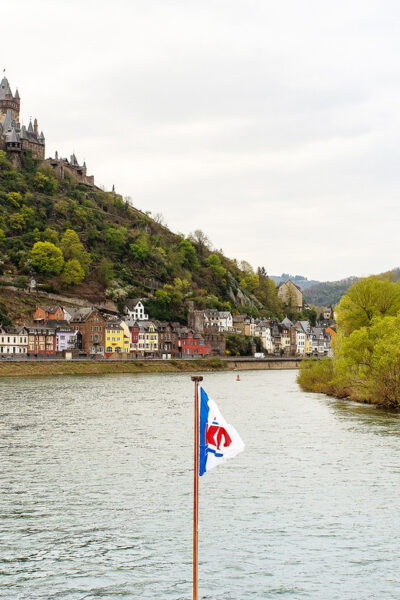
Cochem: Panoramic Cruise on the Moselle River
Read our review →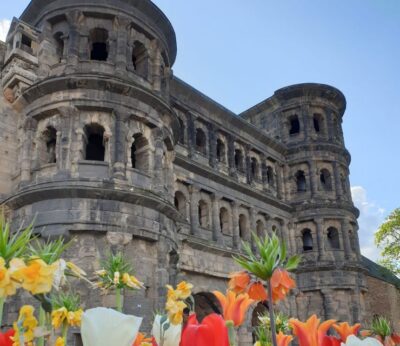
Guided Old Town Highlights and History Walking Tour
Read our review →
Cochem: Panorama-Schiff-Tour 1 Stunde bis Ernst und zurück
Read our review →

Cochem: Bike and Boat Tour with Picnic and Wine Tasting
Read our review →
Browse the lists this tour appears in