
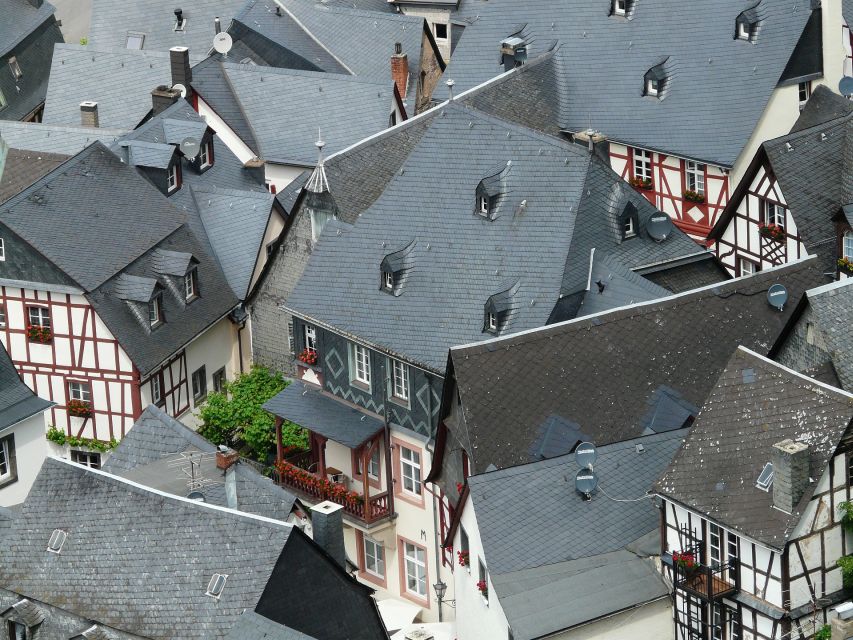
Reviewed · WALKING TOURS
Cochem: Private Guided Walking Tour
Cochem’s appeal comes into focus quickly on this private walk: a pretty Mosel town with a very complicated past. In 90 minutes, you move from Celtic and Roman beginnings to St. Martin’s Church, the Market Square, the Metternich family, Reichsburg, and the darker story of World War II.
I like the private format, since your guide can adjust the walk for your group instead of following a fixed script. I also like the local angle: Bridget has led tours with personal stories about life in Cochem, and one tour included useful knowledge of Mosel wine. The main drawback is time. Ninety minutes gives you a sharp introduction, not a full visit to every historic site or castle interior.
Key points to know before booking
- Cochem’s story spans Celtic, Roman, medieval, Napoleonic, and modern German history.
- The private group can include up to 15 people, making the $272 price better for a family or larger party.
- St. Martin’s Church, the Market Square, Capuchin Monastery, and Reichsburg are the main cultural sights discussed.
- The tour includes serious World War II history, including Cochem’s connection to subcamps of the Natzweiler concentration camp.
- English and German are available, with a local professional guide assigned only to your group.
- Comfortable shoes matter, and the walk is not suitable for wheelchair users or people with mobility impairments.
Cochem’s long story in a short walk
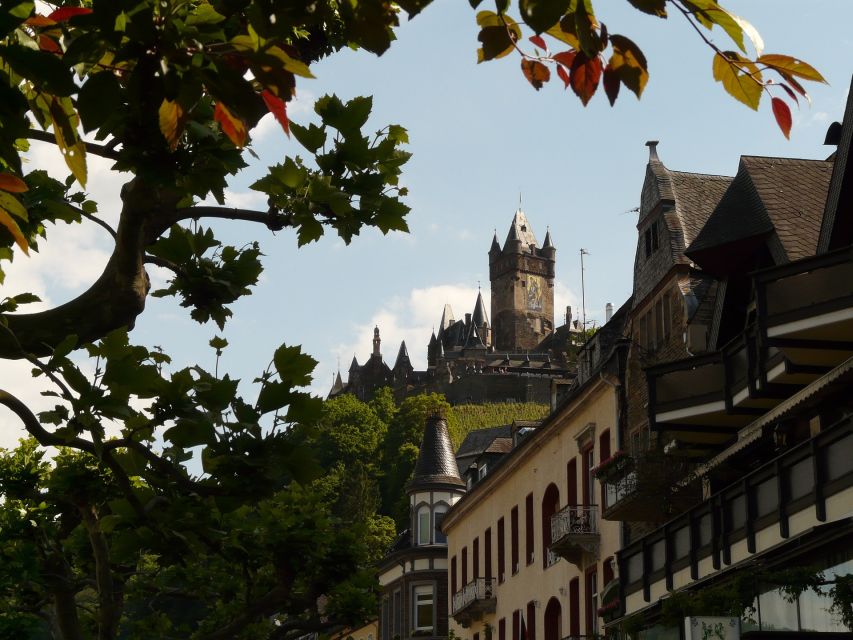
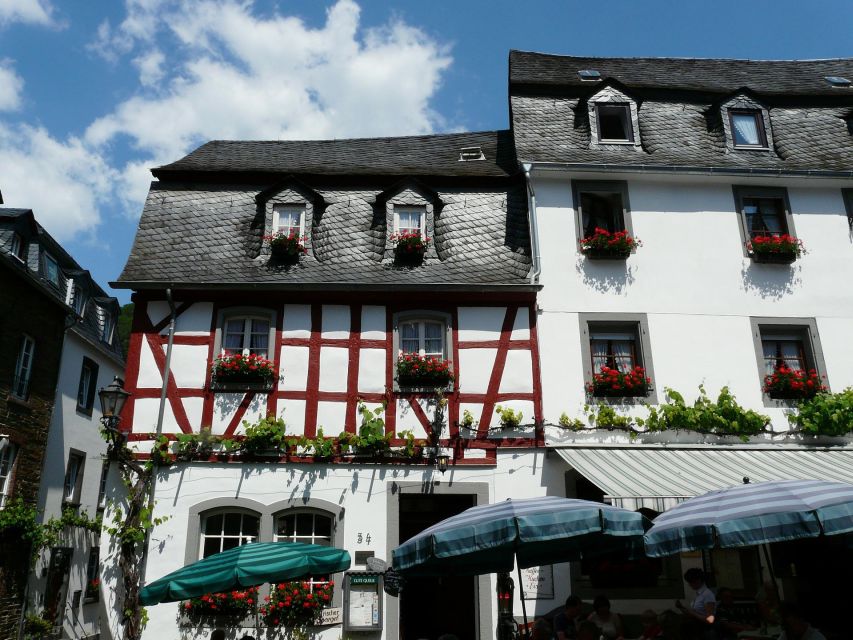
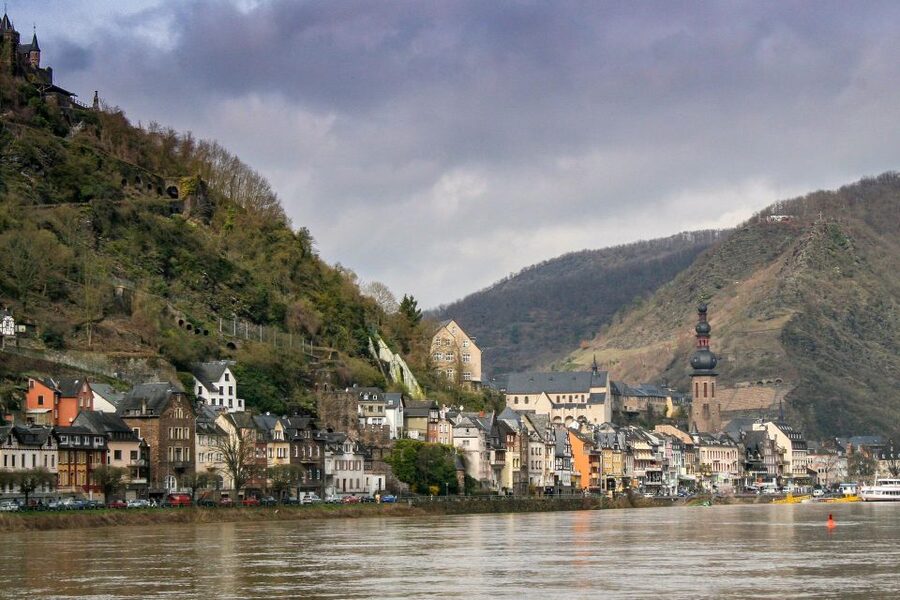
Cochem is easy to read at street level. Its half-timbered houses, church, river setting, and hilltop castle give you the postcard view. Yet the town’s story is not simply one of pretty buildings and Mosel wine.
People lived here in Celtic times, and the Romans later brought the town into their empire. Cochem first appears in written records in the ninth century as Villa Cuchema. That name gives you a useful sense of the town’s age: this is not a settlement created for modern tourism, even if its scenic setting now draws plenty of visitors.
The walk is a good fit if you want the town to make sense quickly. A guide can point out how religion, trade, war, disease, and changing rulers shaped the streets you see today. You are not only looking at façades. You are learning why Cochem developed as it did.
The 90-minute length keeps the outing manageable. You can fit it into a day of sightseeing, a Mosel stop, or a wider visit to Rhineland-Palatinate without giving up half a day. Still, the short format means the guide has to keep moving. If you prefer long visits inside churches and museums, you will need extra time on your own.
More Walking Tours across Germany
- Discover Berlin Half-Day Walking Tour
★ 5.0 · 9,624 reviews - Berlin: Third Reich and Cold War 2 Hour Walking Tour
★ 4.9 · 6,830 reviews - Munich: Third Reich & WWII Walking Tour
★ 4.6 · 6,181 reviews
Meeting your guide at Endertplatz
The tour begins in front of the tourist office at Endertplatz 1, 56812 Cochem. That central meeting point is practical because you can find your bearings before setting off, and it gives your guide an obvious place to gather the private group.
You will be walking through an old town, so comfortable shoes are important. The information provided for the tour says it is not suitable for people with mobility impairments or wheelchair users. That is worth taking seriously rather than treating it as routine fine print. A historic hill town can make a short walk feel more demanding than the clock suggests.
The guide speaks English or German. Since this is a private group, you can ask questions without worrying that a large crowd is waiting for the next stop. The guide may also customize the walk on the spot, which is useful if your group has a special interest in church history, local life, wine, or wartime events.
Past tours have included Bridget, whose approach combined a steady pace with personal knowledge of Cochem. You should not assume she will be your guide, but her tours show the kind of local storytelling this experience can provide. One American group specifically found the pace appropriate, an important point on a compact walking tour.
St. Martin’s Church and the town’s religious past
St. Martin’s Church is one of Cochem’s main landmarks, and it gives the tour a clear first historic anchor. The church is not just a place to take a quick photograph. Its presence helps explain the role of faith and civic life in the old town.
Your guide can put the building into Cochem’s wider story, including the town’s medieval development and the changing powers that controlled it. The church also connects naturally to the Capuchin Monastery, founded in 1623 by Elector Lothar von Metternich.
The monastery adds another layer to the walk. It shows how religious institutions shaped Cochem during the early modern period, when noble families and church leaders had major influence over town life. If you enjoy history that links buildings to people and power, this part should be especially useful.
Do not expect the 90-minute walk to function as a specialist architectural tour. The available details focus on the historical role of the church and monastery rather than a full study of their art, construction, or interior decoration. You will get context, then move on.
Market Square and half-timbered Cochem
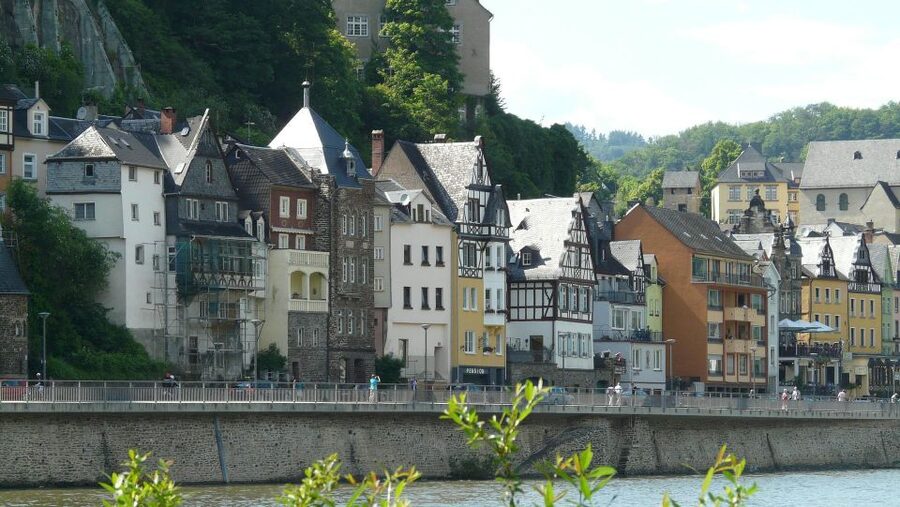
The Market Square offers the scene most people expect from Cochem: charming half-timbered houses gathered around an old civic center. The square mattered in the late Middle Ages, when markets were tied closely to trade, local government, and the daily business of a town.
This is where the guide’s explanation can improve your sightseeing. Without context, you may see a pleasant collection of old buildings. With context, you can understand the square as a place where goods changed hands, news spread, and Cochem’s public life took shape.
I like this stop because it combines visual appeal with a practical story. You do not need to be a specialist in medieval history to see why the square mattered. The architecture gives you something to look at, while the guide explains how the town functioned.
The market area is also a good place to notice the contrast between Cochem’s attractive present and its difficult past. The town feels preserved, but it was damaged and reshaped many times. That contrast is one of the most useful themes of the walk.
A few more things to do in Germany worth a look
- Berlin: Private Reichstag and Glass Dome Tour
★ 4.8 · 2,226 reviews - Berlin Private Complete History All Day Walking Tour
★ 5.0 · 474 reviews - Munich Private Tour with a Local – Highlights & Hidden Gems
★ 5.0 · 469 reviews - Private Walking Tour Berlin Third Reich Hitler and World War II
★ 5.0 · 360 reviews
Reichsburg, the castle above the Mosel
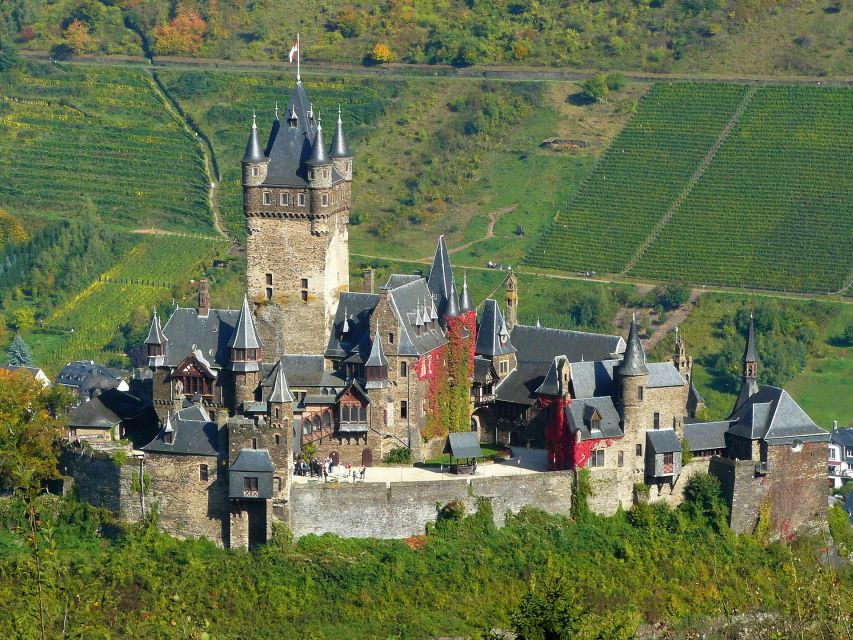
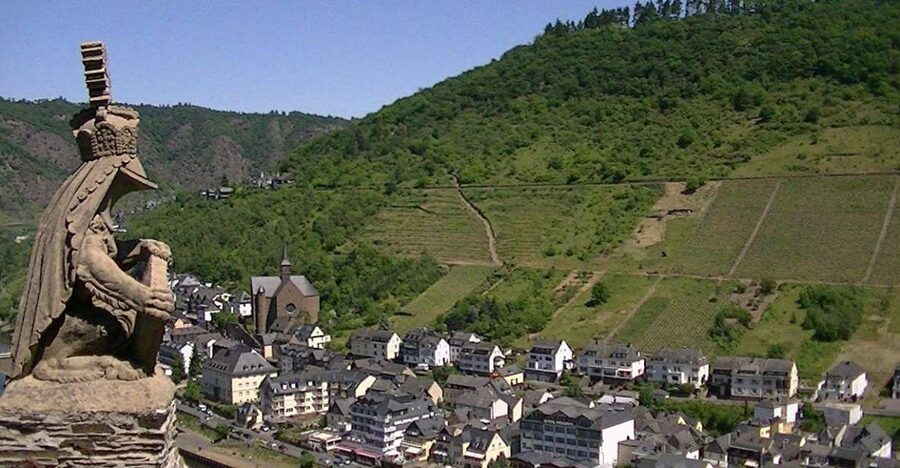
Reichsburg is Cochem’s great visual prize. It rises on a hill above the Mosel and is one of the highest hill castles along the river. Even from below, it explains why Cochem has such a strong sense of place.
The castle’s story is far less tidy than its restored appearance. Cochem was once an Imperial estate, and the original castle was burned by the forces of King Louis XIV during the French conquest. The town then faced a long period of rebuilding.
That detail matters. Reichsburg is often seen as a romantic castle, but its past includes destruction, occupation, and reconstruction. A guide can help you separate the medieval origins from the later restored appearance, which gives the view more meaning.
The experience does not include entrance fees. You should therefore treat the castle portion as a guided look at Reichsburg and its history rather than assume admission to the interior is part of the price. If you want to tour inside, ask about the separate cost and available time before booking or on the day.
The hill setting also affects the walk. You should be ready for an outdoor route with some uphill movement. The tour details do not give a precise route or elevation, so you should ask the provider if your group has concerns about walking uphill.
French conquest, Napoleon, and changing rulers
Cochem changed hands and political status more than once. The French besieged and occupied the town, and Louis XIV’s forces destroyed the original castle. Later, Napoleon’s army occupied Cochem during the period of French control in the region.
After Napoleon’s fall, Cochem was assigned to Prussian rule. These changes help explain why the town cannot be understood through one national story alone. Its location on the Mosel placed it in a region shaped by French and German power struggles.
This is a strong subject for a guided walk because the evidence is spread across the town. You may see a church, a square, a castle, and old houses without knowing how war and government affected them. The guide links those separate sights into one timeline.
The pace will be brisk here. The tour covers several centuries, so you will receive the main events rather than a long lecture on each ruler. I see that as a benefit for most people, but history fans may want to keep notes and return to the castle or town sights later.
The Black Plague and the darker side of Cochem
The tour also covers the impact of the Black Plague. That subject adds a necessary human dimension to the old town’s story. Medieval Cochem was not only a place of markets, churches, and rulers. Disease could disrupt families, work, trade, and public life.
A local guide can help you understand the plague as part of the town’s social history rather than as a detached date in a textbook. The exact details included may depend on your guide and the questions your group asks, but the subject is part of the planned historical scope.
This is not a light sightseeing walk from start to finish. The references to plague, war, and Nazi-era camps make the experience more serious than a simple old-town orientation. That balance is valuable if you want an honest account of Cochem, though families with young children may want to decide in advance how much of the darker material feels appropriate.
World War II and the concentration camp connection
The most difficult part of the tour concerns World War II. Much of Cochem was destroyed, and the town had subcamps connected to the Natzweiler concentration camp system. This is important history, and it changes the way you look at a town that otherwise appears calm and picturesque.
You should expect the guide to address this subject as part of Cochem’s past, not as a separate museum visit. The available information does not promise a memorial site visit or a dedicated museum stop, so do not book this walk expecting an extensive Holocaust education program.
Still, including the topic is a real strength. A town should not be reduced to its prettiest streets, and the wartime chapter helps you see the cost of the region’s twentieth-century history. The postwar story also matters: after the war, Cochem became part of the newly founded German state of Rhineland-Palatinate.
Because the tour is short, the treatment may be concise. If this is your main reason for visiting Cochem, seek additional local information after the walk. If you want a broader understanding of the town, this section gives you an important starting point.
How the private format affects the value
The price is $272 per group of up to 15 people. At the maximum group size, that works out to about $18.13 per person, which is a fair rate for a private 90-minute tour with a dedicated guide. For two people, the same booking costs $136 each, so the value depends heavily on group size.
This pricing makes the tour particularly practical for families, friends, or a cruise group traveling together. You are paying for privacy and flexibility, not just a standard introduction. You can ask questions, request more local detail, and possibly adjust the emphasis during the walk.
The private setup also avoids the common problem of a guide speaking to a crowd with mixed interests. One person may want the castle, another may want wine, and another may care most about wartime history. A private guide has more room to respond.
There is a limit, though. A private tour does not automatically mean a longer or more detailed tour. The duration remains 90 minutes, and entrance fees are not included. If your group is small and you mainly want a quick orientation, compare the cost with other walks before booking.
The booking terms are flexible: you can reserve and pay later, and cancellation is allowed up to 24 hours before the start for a full refund. Those terms help if your Mosel plans may change.
Who should book this Cochem walk
I would choose this tour if you want a fast, personal introduction before exploring Cochem on your own. It suits first-time visitors who want the main sights explained, families who prefer a private pace, and groups interested in both attractive architecture and difficult history.
It is also a sensible choice for people who want local conversation rather than a recorded audio guide. The personal stories associated with Bridget’s tours and the mention of Mosel wine knowledge suggest that the experience can go beyond memorized dates.
You may want something else if you need wheelchair access, dislike uphill walking, or want extended interior visits. The tour is not suitable for wheelchair users or people with mobility impairments, and entrance fees are extra.
You should also consider your group size. With ten to fifteen people, the price makes much more sense. With only one or two people, you are paying a premium for privacy, a dedicated guide, and the chance to tailor the conversation.
Should you book it?
Book this Cochem walking tour if you want the town’s beauty explained alongside its harder truths. The strongest parts are the private guide, the broad historical sweep, the castle setting, and the chance to shape the walk around your group.
I would not book it as a substitute for a full castle visit or a dedicated World War II tour. At 90 minutes, it is an introduction. For a group of several people, though, the price is reasonable, the meeting point is convenient, and the route gives you a useful framework for seeing Cochem with sharper eyes.
FAQ
Where does the Cochem walking tour meet?
The meeting point is in front of the tourist office at Endertplatz 1, 56812 Cochem.
How long does the tour last?
The walking tour lasts 90 minutes.
How much does the private tour cost?
The listed price is $272 per group, with up to 15 people included.
Which languages are available?
The live guide is available in English or German.
Is this a private group tour?
Yes. The guide is assigned to your group only, and the group can include up to 15 people.
What sights and subjects are covered?
The tour covers St. Martin’s Church, the Capuchin Monastery, Market Square, Reichsburg, Cochem’s Celtic and Roman beginnings, the Black Plague, the Metternich family, French and Napoleonic rule, and World War II.
Is entrance to Reichsburg included?
No. Entrance fees are not included in the tour price.
Is the tour suitable for wheelchair users?
No. The experience is listed as unsuitable for wheelchair users and people with mobility impairments.
What should I bring?
Bring comfortable shoes for the walking route.
Can I cancel the booking?
Yes. You can cancel up to 24 hours before the tour for a full refund. You can also reserve now and pay later.
Just added in Germany
- Private One way Airport Transfer Berlin Airport To Berlin★ 3.5 · 17 reviews
- Private Walking Tour: Berlin Wall, Cold War and Checkpoint Charlie★ 5.0 · 37 reviews
- Modern Berlin Private Walking Tour: Diverse, Vibrant and Exciting German Capital★ 5.0 · 13 reviews
- Private Day Trip to Potsdam from Berlin by Train★ 4.5 · 27 reviews
- City Explorer: Potsdam Private Day Trip★ 4.5 · 10 reviews
- Berlin Private Custom 5-Hour Tour by Car★ 5.0 · 30 reviews
- Private Half-Day Sightseeing Tour in Berlin★ 3.5 · 6 reviews
- Berlin Private Custom Tour in a Minivan, East and West★ 5.0 · 123 reviews
Walking Tours, compared.

Third Reich Berlin: Hitler and WWII Walking Tour
Read our review →
Browse the lists this tour appears in