
Reviewed · WINE TOURS
Trier: Guided City Walk with Wine Tasting
Trier’s best trick is putting a glass of Moselle wine beside a Roman ruin. This two-hour walk connects the Porta Nigra, cathedral, medieval market, imperial palace, and Roman baths while Simon explains the city and pours a wine tied to each place. History and tasting share the same route, so you get more than a standard old-town stroll.
I like the careful link between each wine and the stop where it is served. I also like the practical finish: the route ends at the Forum Baths, and your ticket includes a voucher for one glass of wine with a main course at Weinwirtschaft Friedrich-Wilhelm near the Basilica. Simon, a Trier native, is especially good at answering questions and adding details you may not find in a guidebook.
The main consideration is pace. You visit many major sites in two hours, but several stops are brief photo and explanation points rather than long interior visits. City traffic and street noise can also make Simon harder to hear at times, so staying close to the group matters.
Key points to know before booking
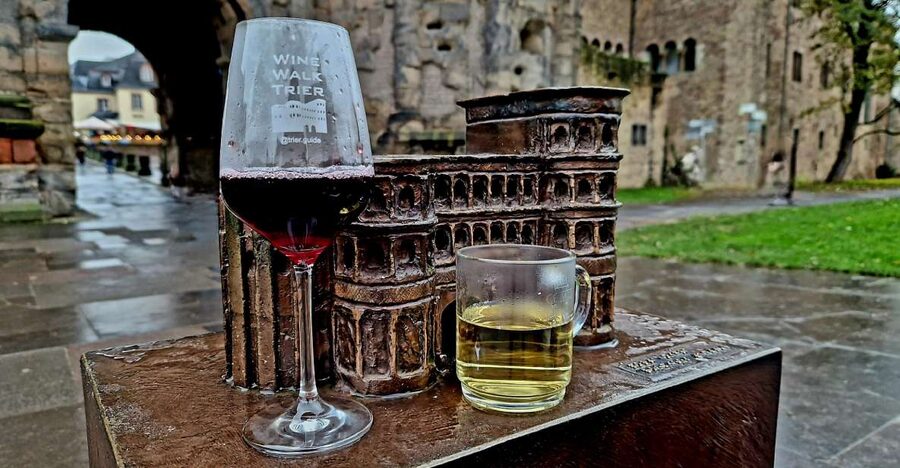
- Five wines in warmer months: You taste five regional wines with water and breadsticks along the walk.
- Winter changes the mood: From mid-November through January, the tasting usually features four local mulled wines when at least six people register.
- Simon leads the experience: His local connection, wine knowledge, humor, and willingness to answer questions are major strengths.
- The route covers Trier’s essentials: Porta Nigra, the Main Market, the cathedral, Liebfrauenkirche, the Basilica, Electoral Palace, Kaiserthermen, and Forum Baths.
- It is barrier-free: No steps are required, and the walk is suitable for wheelchair users.
- You receive a useful dining extra: A voucher covers one glass of wine with a main course at Weinwirtschaft Friedrich-Wilhelm.
Why wine makes Trier’s Roman center easier to understand
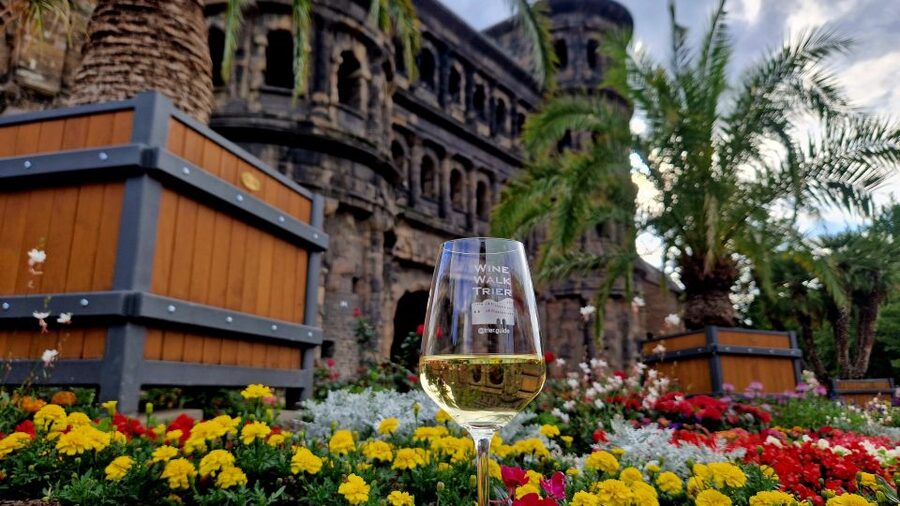
Trier is not a city you should rush through with a checklist. Its Roman monuments are impressive, but the layers can blur together if you do not have someone to connect them. This tour gives you a simple thread: walk from the black Roman gate toward the old center, pause at major buildings, and taste a local wine while hearing why that place matters.
The wine is not treated as a separate activity after the sightseeing. Each pour has a connection to a building, square, period, or wine-growing part of the Moselle region. That makes the tasting more memorable and gives you a better sense of how local wine fits into Trier’s identity.
You should expect five different wines in the summer season. In winter, the format normally switches to four mulled wines from local wineries, from the middle of November through the end of January, provided at least six people register. If fewer than six people sign up, the tour information says five different wines may be served instead.
The portions are intended for tasting, but you are walking and listening at the same time. Water and breadsticks are included, which is welcome. Still, I would not treat this as lunch or a full winery visit. It is a city tour with a generous wine component.
More Wine Tours across Germany
- Hamburg: Harbor Cruise with Wine and Cheese
★ 4.7 · 795 reviews - Trier: Discovery Tour – Germany’s Oldest Wine Cellar
★ 4.7 · 218 reviews - Exclusive Wine & Food Tasting in Historic Cellar | Mainz Old Town
★ 5.0 · 42 reviews
Meeting Simon beside the Porta Nigra
The starting point is on the left side of the Tourist Information office, in front of the city model near the flags. The activity is not run by the Tourist Information itself, so look for your tour guide rather than assuming the office staff will organize the group.
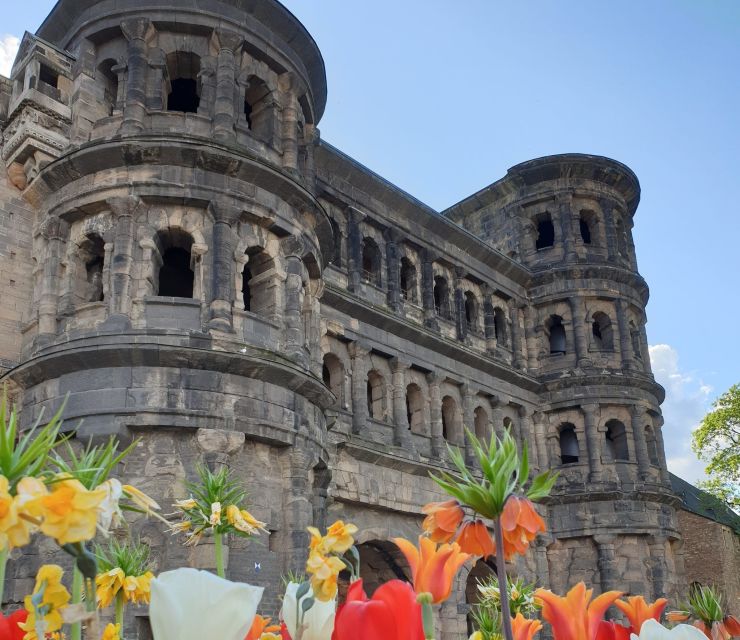
The first landmark is the Porta Nigra, Trier’s famous Roman gate. It was part of the city’s defensive system and gives the tour an immediate sense of scale. This is a strong place to begin because the gate is not just an attractive photo stop. It shows you how firmly Trier’s modern streets sit on top of a Roman city.
Simon is repeatedly praised for making the opening feel easy and friendly. He grew up in Trier and knows both the city’s major story and its smaller details. If you arrive late, do not count on the group waiting indefinitely, but one late arrival was handled kindly, with Simon stopping to let the person catch their breath.
The area around Porta Nigra can be busy. Keep close enough to hear, especially if traffic or crowds are passing. One useful tip is to arrive a few minutes early and stand near the flags, rather than trying to find the group at the last second.
The Main Market and Trier’s city center
From Porta Nigra, the walk continues to the Market Cross on the Main Market. This square is one of the city center’s key public spaces, and it shifts the story from Roman Trier to the medieval and later city.
Expect a guided explanation and a wine tasting here, along with time for photographs. The stop helps you see how Trier’s civic life changed after the Roman period. The exact balance depends on the group and the street conditions, but the tour does not linger at every point for a long lecture.
That is part of the appeal and part of the limitation. In two hours, you cover a lot of ground. You get a useful first orientation, but you will want to return later if you hope to study architectural details or explore the square without a group around you.
The wine connection gives this stop extra flavor. Instead of hearing only dates and names, you are also thinking about the Moselle area as a living wine region. For a first afternoon in Trier, that combination is more engaging than a standard list of monuments.
Trier Cathedral and Liebfrauenkirche
The route then reaches Trier Cathedral, one of the city’s major religious landmarks. The cathedral represents the long Christian chapter of Trier’s story, following the Roman foundations that dominate the opening of the walk.
The itinerary describes this as a photo and guided stop. You should not assume that a full interior visit is included or that the group will spend a long time inside. If the doors are open and the schedule allows, you may get a chance to look around, but the tour’s central purpose is the outdoor route and tasting.
Nearby, Liebfrauenkirche adds a different architectural note. This stop includes wine tasting, and the pairing gives Simon a chance to connect local wine with the city’s religious and cultural past. The churches are close enough to visit again on your own, which is useful because a quick tour stop cannot show every detail.
I like this section for the way it prevents Trier from becoming only a Roman-history destination. The city’s identity also comes from its churches, public squares, later rulers, and continuing wine culture. Simon’s broad historical range is particularly useful here, since the story moves quickly across several centuries.
More Food & Drink across Germany
- Cologne: Brewery Tour with 3 Kölsch Beer Tastings
★ 4.7 · 3,108 reviews - Hamburg: St. Pauli Highlights Guided Tour with Beer for 18+
★ 4.7 · 2,353 reviews - Hamburg: Elbphilharmonie Plaza and HafenCity Food Tour
★ 4.7 · 1,711 reviews - Bavarian Beer and Food Evening Tour in Munich
★ 4.5 · 1,575 reviews
The Basilica and Electoral Palace
The Aula Palatina, usually called the Basilica, is one of the most striking stops on the route. Its vast brick interior and severe exterior make a strong contrast with the more decorative Electoral Palace beside it.
The Basilica was built as a Roman audience hall, and its size helps you picture the importance of Trier in the imperial period. The tour stops for photographs and explanation, but again, do not expect a long guided interior visit to be guaranteed. Plan to return if this is one of your priorities.
The Electoral Palace brings the route into a later era. Its ornate facade and relationship to the Basilica show how Trier’s rulers reused and reshaped an older political center. Wine is served at this stop, with the tasting tied to the local region and the historical setting.
This is where the tour’s structure works best for me. A Roman building, a later palace, and a glass of Moselle wine sit within a short walk of one another. You are not merely moving between attractions. You are seeing how the same city center changed hands and purpose over time.
Kaiserthermen and the Forum Baths
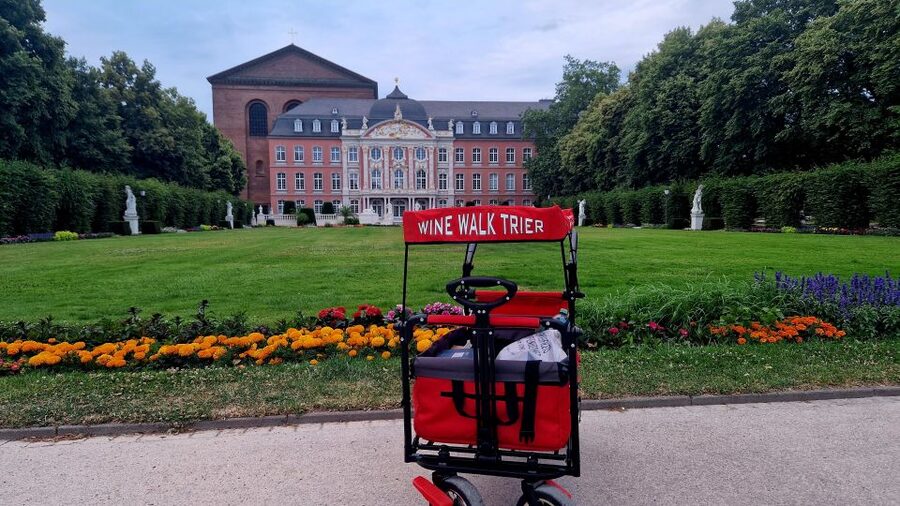
The walk continues to the Kaiserthermen, another major Roman remnant. These imperial baths help explain the scale and sophistication of Roman Trier. They are not just decorative ruins. They point to the public life, engineering, and social habits of a city that once carried real weight in the Roman world.
The tour includes a photo stop and historical explanation here. The schedule gives only two hours for the full route, so treat this as an introduction rather than a complete archaeological visit. If Roman sites are your main reason for coming to Trier, allow extra time on another day for a slower look.
The final stop is the Forum Baths, where the walk ends. This Roman bath complex gives the tour a tidy finish, bringing you back to the ancient city after the later churches and palace. The last wine tasting takes place along this part of the route, and the ending is outside the Forum Baths.
Ending here is practical. You are not returned to the starting point, so check your next destination before booking. The finish also makes sense for sightseeing: you can continue exploring the Roman remains, walk back toward the center, or use the included restaurant voucher nearby.
What you really receive for $43
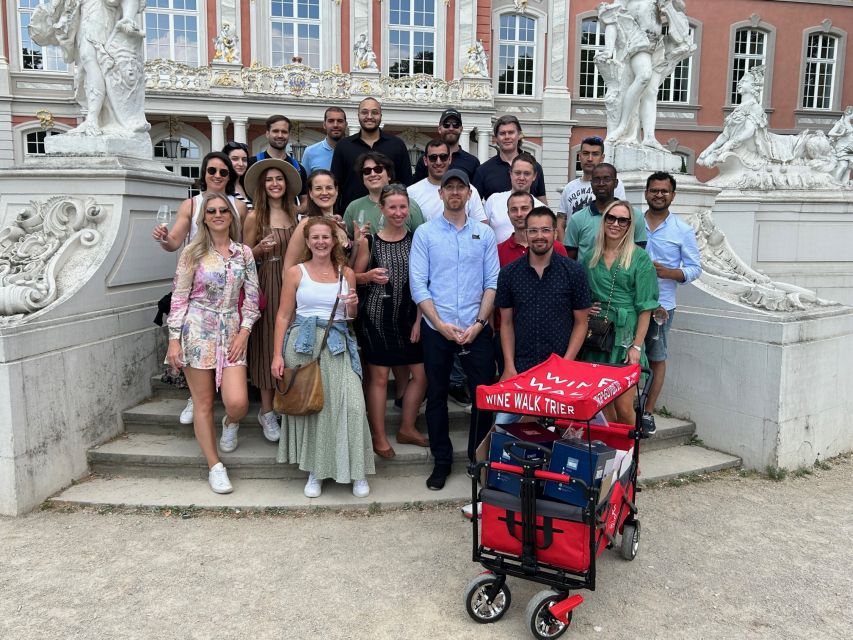
At $43 per person, this is not the cheapest way to take a city walk. The value depends on whether you would otherwise pay separately for several tastings and a guide.
You receive a two-hour guided walk, five regional wines in the main season, or the seasonal mulled-wine format, plus water and breadsticks. You also receive a voucher for one glass of wine with a main course at Weinwirtschaft Friedrich-Wilhelm near the Basilica. That extra is useful because it turns the tour into part of a wider food-and-wine afternoon rather than a one-off tasting.
The ticket does not include hotel pickup, a return transfer, or admission to attractions. You should also know that a glass can be purchased afterward for €6, and a wine-glass holder costs €3. Those optional purchases may be useful if you want a souvenir or easier handling, but they are not needed to enjoy the walk.
The strongest value comes from the pairing of the guide and the route. If you only want to taste Moselle wine, a dedicated winery experience may suit you better. If you want to understand Trier quickly while tasting local wines, $43 is a fair price for the amount packed into two hours.
How demanding is the walk?
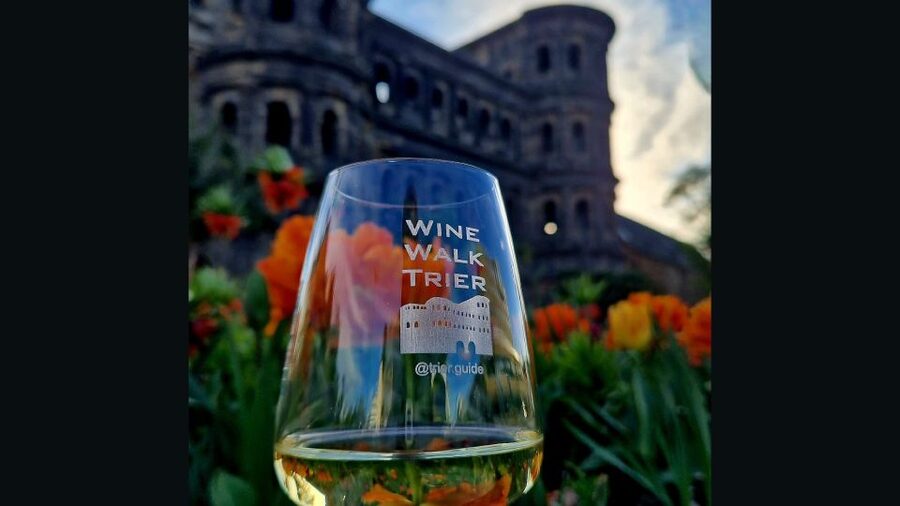
The tour is described as completely barrier-free and does not require climbing steps. It is wheelchair accessible, which makes this one of the easier ways to see Trier’s central landmarks with a guide.
That does not mean you should ignore practical comfort. The activity takes place rain or shine, so bring suitable clothing and shoes. The wine is served outdoors or along the walking route, and bad weather can make listening and handling drinks less pleasant.
The walk covers several city-center landmarks, but no distance is specified. The itinerary is compact enough to fit in two hours, and the main challenge is likely staying with the group while stopping for photos and tastings. If you have limited mobility or need frequent pauses, contact the provider before booking so you can confirm the current pace.
A warm-weather tour brings chilled Rieslings and other regional wines. A winter tour replaces the usual tasting with mulled wine when the minimum group size is met. That seasonal change is worth considering: summer suits anyone who wants to sample the region’s normal wine style, while winter offers a cozier, more festive version.
Who will enjoy this most?
I would choose this for a first visit to Trier, especially if you have only a day in the city. It gives you a useful map of the center and points out places you can revisit at your own pace.
It also suits anyone who wants history without a formal lecture. Simon’s humor and local connection help keep the information moving, and his willingness to answer questions makes the experience feel more personal. The strongest comments about the tour focus on his city knowledge, wine choices, kindness, and ability to explain links between the two.
Wine drinkers will get the most from it, but you do not need to be an expert. The activity is about tasting and context, not technical study. Non-alcoholic grape juice can be requested by email, which makes the experience possible for people who do not drink alcohol. Breadsticks and water are included, but eat beforehand if you need a full meal.
This may not suit you if you want lengthy interior visits, a quiet private tour, or a visit to vineyards outside the city. You remain in central Trier and see wine as part of the city story. That is the point, but it is different from touring a vineyard and cellar.
A practical way to plan your day around the walk
Book the tour early in your Trier visit if possible. The route introduces the main sights, and you can then return to the cathedral, churches, Basilica, or Roman baths that deserve more time.
Leave a little space after the two-hour walk. The restaurant voucher is designed for Weinwirtschaft Friedrich-Wilhelm near the Basilica, and it covers one glass of wine with a main course. You can use that as a convenient meal stop rather than trying to squeeze another major attraction into the same hour.
Bring a phone or camera, but keep your attention on the guide during the short stops. Several points are mainly photo opportunities, and the details connecting the wines to the buildings are easy to miss if you wander away for pictures.
The tour is offered in German and English. If you are visiting during the winter wine market period, confirm which tasting format applies, since the number and style of wines depend on the season and, in winter, on group size.
Should you book the Trier wine walk?
I would book it if you want a friendly, efficient introduction to Trier and like the idea of tasting local wine while walking among Roman and medieval landmarks. The combination is unusually well matched, and Simon’s local knowledge adds real value.
I would skip it only if your priority is a long archaeological visit, a vineyard excursion, or a private, slow-paced tour. For most first-time visitors, especially those arriving for a day trip, this is a smart way to get your bearings, taste the Moselle region, and learn why Trier is more than a collection of old stones.
FAQ
How long is the Trier guided wine walk?
The tour lasts two hours and finishes at the Forum Baths.
How many wines are included?
You taste five regional wines during the main season. From the middle of November through the end of January, the tour features four local mulled wines when at least six people register. If fewer than six people register, five different wines may be served instead.
Can I request a non-alcoholic option?
Yes. Four different grape juices can be requested by email.
Where does the tour meet?
Meet on the left side of the Tourist Information office, in front of the city model near the flags. The tour is not provided by the Tourist Information office itself.
Is the route wheelchair accessible?
Yes. The route is described as completely barrier-free and does not require climbing steps.
What is included besides the wine?
The package includes a guide, walking tour, water, breadsticks, and a voucher for one glass of wine with a main course at Weinwirtschaft Friedrich-Wilhelm near the Basilica. Hotel transportation and attraction admission are not included.
More Walking Tours across Germany
- Discover Berlin Half-Day Walking Tour
★ 5.0 · 9,624 reviews - Berlin: Third Reich and Cold War 2 Hour Walking Tour
★ 4.9 · 6,830 reviews - Munich: Third Reich & WWII Walking Tour
★ 4.6 · 6,181 reviews - Berlin: Discover Berlin Walking Tour
★ 4.9 · 5,998 reviews
Just added in Germany
- Berchtesgaden: Via Ferrata Beginner Tour of Schützensteig★ 4.7 · 15 reviews
- Berlin: Energizing 2-Hour Morning Segway Tour★ 4.7 · 35 reviews
- Berlin: Thrilling E-Scooter Adventure Tour★ 4.4 · 66 reviews
- Bayreuth: German City Walking Tour (Tourist Info)★ 4.7 · 202 reviews
- Beelitz-Heilstätten: Baum&Zeit Tree Top Walk Entry Ticket★ 4.9 · 7 reviews
- Beer Bike & Party Bike: Unforgettable Berlin City Tour incl. pickup★ 5.0 · 5 reviews
- Bavaria: Beginner Canyoning Tour★ 4.5 · 10 reviews
- Bayreuth: Christmas city tour in German★ 4.9 · 12 reviews
Wine Tours, compared.
Exclusive Wine & Food Tasting in Historic Cellar | Mainz Old Town
Read our review →
Guided wine hikes with 4wines and cable car ride
Read our review →Browse the lists this tour appears in