
Reviewed · WINE TOURS
Exclusive Wine & Food Tasting in Historic Cellar | Mainz Old Town
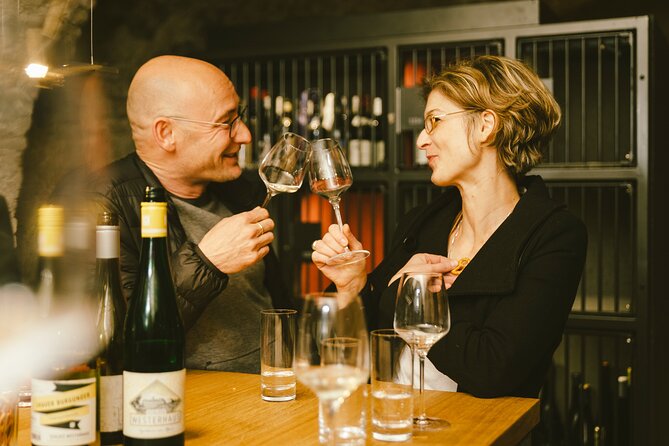
A cellar hidden beneath Mainz’s hillside gives this tasting its special character. Over about two hours, Jérôme leads you through six German wines, from sparkling Sekt to Riesling and Pinot Noir, with local snacks at each step. I especially like the small group of 12 and the way the tasting connects wine to Mainz food traditions, not just tasting notes.
I also like that the evening is built for curious drinkers, not wine experts. You can ask about labels, grape varieties, and buying good-value bottles in Germany. The main drawback is practical: the cellar can feel chilly, and it is not recommended for people with mobility issues.
Key points to know before booking
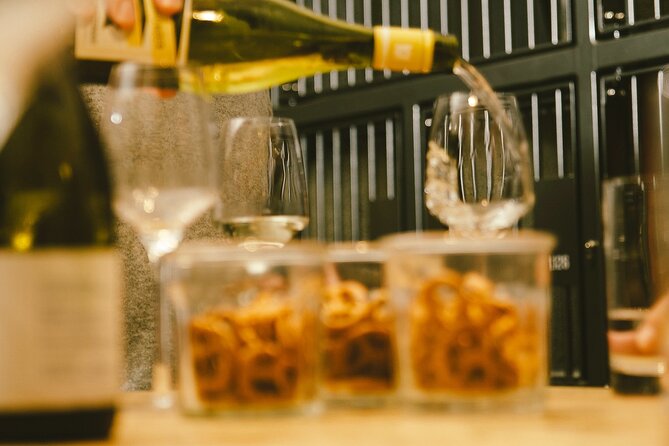
- Six wines with food pairings: Expect five to six local wines, water, and small plates such as sausage, cheese, and Spundekäs.
- Jérôme leads the evening: His English is described as excellent, and his relaxed approach suits first-time tasters.
- A historic underground setting: The tasting takes place in one of the most atmospheric cellars in the Mainz area.
- A useful Mainz food lesson: The Weck, Woscht & Woi tradition links bread, sausage, and wine in one very local pairing.
- A compact evening plan: The tour begins at 5:30 pm and ends back at the meeting point, leaving you time for dinner afterward.
- Bring a light jacket: The cellar may be cool, even when Mainz is warm above ground.
Entering Mainz’s underground wine world
Mainz is a natural place to learn about German wine. It sits beside the Rhine and near major wine-growing areas, with Riesling at the center of local drinking culture. This tasting gives you a quick, guided introduction without asking you to spend a full day visiting vineyards outside the city.
The meeting point is at Kupferbergterrasse 23, 55116 Mainz. From there, the experience moves into a cellar beneath the hillside. The underground room is part of the appeal. It feels removed from the city above, and the old cellar setting gives the evening a sense of place that a standard bar tasting would miss.
That setting also comes with a small trade-off. One person found the cellar a little chilly, so bring an extra layer. The activity is not recommended for people with mobility issues, which is worth taking seriously because the venue is underground and may not be easy to navigate.
You meet at 5:30 pm, a useful time for an evening in Mainz. It is late enough to enjoy the city beforehand, but early enough to continue on to dinner afterward. Public transportation is nearby, and the experience returns to the same meeting point at the end.
More Old Town Walking Tours across Germany
- Dresden: Semperoper and Old Town Tour
★ 4.8 · 5,735 reviews - Nuremberg: Old Town Guided Walking Tour
★ 4.6 · 2,416 reviews - Munich: Old Town & Viktualienmarkt City Walk in German
★ 4.7 · 2,304 reviews
Jérôme’s relaxed approach to German wine
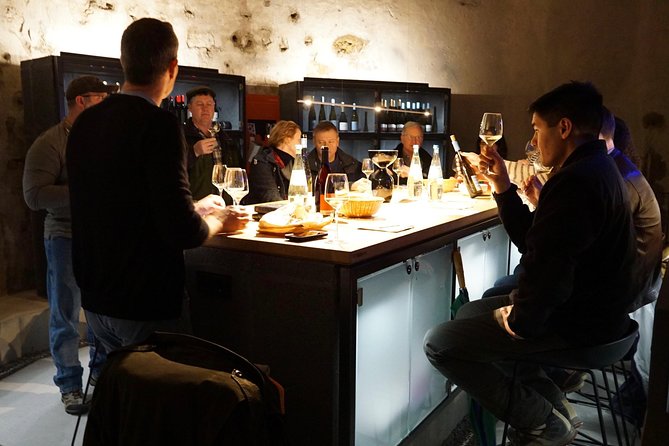
A good wine tasting should help you understand what is in your glass without making you feel as if you are taking an exam. Jérôme’s role seems to be exactly that. He explains German wine, the local region, and production methods in clear English, while keeping the mood informal and fun.
This matters if you are new to German wine labels. German bottles can seem complicated at first, especially when you are trying to understand grape names, sweetness levels, quality terms, and regional references. The tasting gives you a chance to ask questions before you face a shop shelf on your own.
Jérôme also covers practical buying advice. You can learn how labels point to quality, how to spot a reputable producer, and what a sensible price range might be when shopping. That makes the experience more useful than a simple sequence of pours.
The tone is social rather than stiff. A past group described learning a three-sip method for judging a wine’s real taste. That is a handy tip for anyone who tends to decide too quickly after the first sip. The evening is designed to help you try something unfamiliar, then form your own opinion.
English speakers should feel comfortable booking. Jérôme’s English has been praised as very strong, and the format allows time for questions. The activity is offered in English, making it a practical choice for international visitors who want local wine context without a language barrier.
Six pours, from Sekt to Riesling
The tasting usually begins with a classic Sekt, Germany’s sparkling wine. This opening pour is paired with a surprise snack and introduces the long relationship between German sparkling wine and French Champagne.
Sekt is often misunderstood as a simple party drink, but the point here is to show how the category can include more serious bottles. Pay attention to how the sparkling wine compares with the still wines that follow. The first glass sets up a useful question: how do production methods and regional identity affect what you taste?
The next pairing brings in dry Riesling with sausage. This is the clearest expression of Mainz’s Weck, Woscht & Woi idea, a local combination of bread, sausage, and wine. The sausage is described as a bologna-style Fleischwurst, a classic regional food with a mild, savory character.
Dry Riesling is an important part of the lesson. It can be crisp, fresh, and quite different from the sweet Riesling many people first associate with Germany. If you usually avoid white wine, this pairing may help you see how dry Riesling works with food rather than treating it as a stand-alone drink.
The third pour is Grauburgunder, the German name for Pinot Grigio. It comes with cheese from northern and southern parts of Germany. This is a smart pairing because cheese shows how a wine can change at the table. The same glass may seem sharper, softer, fruitier, or fuller depending on the bite beside it.
Next comes Spätburgunder, the German name for Pinot Noir, paired with dry-cured sausage. This red wine offers a change of pace after several white wines. It also helps explain that German wine is not only about Riesling. The region produces reds too, and Pinot Noir gives the tasting a useful contrast in color, body, and flavor.
A red wine blend follows with Spundekäs, one of Mainz’s best-known snacks. Spundekäs is a creamy cheese preparation, often served as a spread, and it is a very local choice for the table. The pairing connects a red wine with a savory snack that you might not encounter in a formal wine course.
The final wine is Riesling with a surprise dessert pairing. This is meant to challenge the idea that sweet Riesling is difficult to match with food. If you normally avoid sweet wines, keep an open mind here. The purpose is not to force you to like every style, but to show how food can alter the balance of sweetness and acidity.
The exact wines and pairings can change with the season and availability. That means you should treat the menu as a guide, not a guarantee. The core idea remains consistent: several regional wines, matched with small local foods, presented as a connected lesson rather than unrelated samples.
Why the food pairings matter
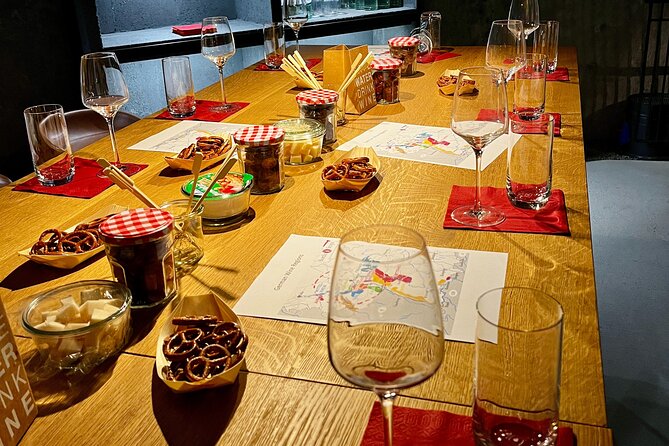
The snacks are more than something to eat between pours. They give the wine a job to do. A crisp white wine may taste different with cheese, a red may make more sense beside sausage, and a sweeter Riesling may become more balanced with dessert.
The tasting also avoids the common problem of making wine feel separate from everyday life. Mainz wine culture is presented through familiar foods, including sausage, cheese, and Spundekäs. That makes the evening feel tied to the city rather than copied from a generic tasting room.
Portions are described as small plates and tasting snacks, not a full meal. I would plan to eat dinner later if you arrive hungry. The food should be enough to support the wines, but it should not replace a proper evening meal.
The pairings are especially useful for people who do not drink much wine. You do not need to identify every aroma or know grape varieties in advance. You can simply notice what changes when you take a sip before and after a bite.
More Wine Tours across Germany
- Trier: Guided City Walk with Wine Tasting
★ 4.8 · 979 reviews - Hamburg: Harbor Cruise with Wine and Cheese
★ 4.7 · 795 reviews - Trier: Discovery Tour – Germany’s Oldest Wine Cellar
★ 4.7 · 218 reviews - Constance: Public city tour with wine tasting
★ 4.5 · 34 reviews
A small group with room for questions
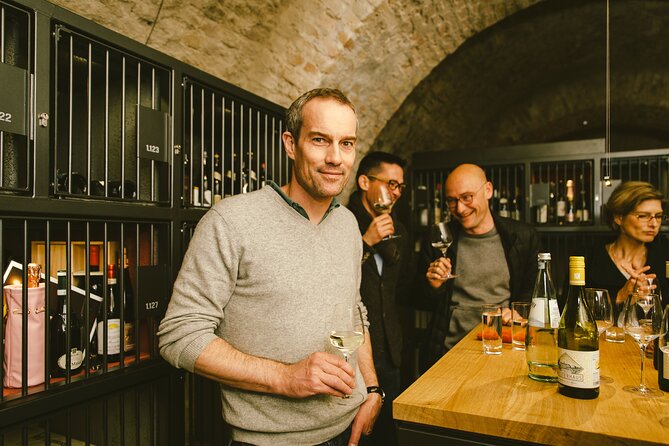
The group is limited to 12 people. That is small enough for a more personal exchange, while still giving the evening a social feel. You are not likely to receive the same level of attention in a large tasting room with several dozen people.
A compact group also helps with the questions that make a wine tasting worthwhile. You can ask why a dry Riesling tastes different from a sweet one, what German labels mean, or how to choose a bottle at a shop. If another person in the group asks something you had not considered, you benefit from that too.
The experience has received a five-star rating from 42 published reviews, with 100 percent recommending it. The strongest praise focuses on three things: Jérôme’s explanations, the range of wines, and the cellar setting. Those are the parts I would treat as the main reasons to book.
The mood is not entirely formal. Expect conversation, humor, and a shared evening rather than a silent professional tasting. That will suit you if you want to meet other wine lovers and learn in an easygoing setting. It may be less suitable if you want a highly technical certification-style class.
Is $102.12 good value?
At $102.12 per person, this is not a cheap drink-and-snack stop. The value depends on how much you want from the evening beyond the alcohol itself.
You are paying for five to six wine samples, local food pairings, water, the two-hour presentation, the cellar venue, and Jérôme’s instruction. All fees and taxes are included. If you would otherwise book several glasses of wine and pay separately for food and a guided activity, the price becomes easier to justify.
The educational side is the strongest value. You leave with a clearer idea of German grape varieties, regional wine culture, label information, and food matching. That can help you choose bottles later in the trip, or simply make the rest of your German meals more interesting.
The experience is also efficient. You do not need transport to a vineyard outside Mainz, and the 5:30 pm start fits neatly into a city visit. For a short stay, that matters. You receive a focused introduction in two hours rather than giving up most of a day.
Still, I would not book it just for quantity. This is a guided tasting with small plates, not a large dinner and not an all-evening drinking session. It makes the best sense for you if you value setting, explanation, and local context.
Who should book this Mainz tasting?
I would recommend it to first-time visitors who want a clear introduction to German wine without leaving the city. It is also a good fit for couples, friends, and solo visitors who enjoy a social evening with a little structure.
You will get the most from it if you are willing to try wines outside your usual choices. Several pairings use white wine, and the tasting includes both dry and sweeter Riesling. If you only want full-bodied reds, this may not match your preferences.
The activity suits English-speaking visitors, since it is offered in English and Jérôme is comfortable answering questions in that language. It also works for people with moderate wine knowledge who want practical information about labels and shopping, not just an introduction to the basics.
Think carefully about mobility and temperature. The underground cellar may be chilly, and the activity is not recommended for people with mobility issues. Bring a jacket and wear shoes you can manage comfortably in an old cellar setting.
For cancellation, you can receive a full refund if you cancel at least 24 hours before the 5:30 pm start. Changes or cancellations inside that window are not accepted for a refund. The activity also requires a minimum number of participants, and if that minimum is not reached, you will be offered another date or a full refund.
Should you book it?
Book this experience if you want Mainz wine explained by a friendly local expert, served with foods that belong to the city, in a cellar that gives the evening real atmosphere. The combination of Jérôme’s clear guidance, six varied pours, and practical label advice makes it more useful than a basic tasting flight.
Skip it if you need a full dinner, dislike white wine, have mobility concerns, or prefer a modern tasting room with a warmer temperature. For everyone else, this is a strong early-evening choice, especially if you want to understand German wine before ordering more of it during your trip.
FAQ
Where does the wine tasting start?
The experience starts at Kupferbergterrasse 23, 55116 Mainz, Germany.
What time does the activity begin?
The tasting begins at 5:30 pm.
How long does the experience last?
The activity lasts approximately two hours.
How many wines are included?
You will taste five to six wines. The advertised tasting usually includes six wines, but the exact selection can change with the season and availability.
What food is served with the wine?
Pairings may include sausage, cheese, Spundekäs, dry-cured sausage, and surprise pairings for the sparkling wine and dessert course. The exact menu can vary.
Is the tasting offered in English?
Yes. The experience is offered in English, and Jérôme leads the tasting.
Can I cancel for a full refund?
Yes, if you cancel at least 24 hours before the experience’s start time. Cancellations or changes made less than 24 hours in advance are not eligible for a refund.
More Food & Drink across Germany
- Cologne: Brewery Tour with 3 Kölsch Beer Tastings
★ 4.7 · 3,108 reviews - Hamburg: St. Pauli Highlights Guided Tour with Beer for 18+
★ 4.7 · 2,353 reviews - Bavarian Beer and Food Evening Tour in Munich
★ 4.5 · 1,575 reviews - Düsseldorf: Brewery Tour with Alt Beer Tastings
★ 4.7 · 1,523 reviews
More Food Tours across Germany
- Hamburg: Schanzenviertel Culinary Tour
★ 4.6 · 2,051 reviews - Hamburg: Elbphilharmonie Plaza and HafenCity Food Tour
★ 4.7 · 1,711 reviews - Berlin Center Food Tour with 8+ Authentic Local Tastings
★ 5.0 · 1,227 reviews - Munich: Viktualienmarkt Food Tour
★ 4.5 · 1,127 reviews
Just added in Germany
- Berchtesgaden: Via Ferrata Beginner Tour of Schützensteig★ 4.7 · 15 reviews
- Berlin: Energizing 2-Hour Morning Segway Tour★ 4.7 · 35 reviews
- Berlin: Thrilling E-Scooter Adventure Tour★ 4.4 · 66 reviews
- Bayreuth: German City Walking Tour (Tourist Info)★ 4.7 · 202 reviews
- Beelitz-Heilstätten: Baum&Zeit Tree Top Walk Entry Ticket★ 4.9 · 7 reviews
- Beer Bike & Party Bike: Unforgettable Berlin City Tour incl. pickup★ 5.0 · 5 reviews
- Bayreuth: Private Guided Walking Tour★ 5.0 · 15 reviews
- Bavaria: Beginner Canyoning Tour★ 4.5 · 10 reviews
Wine Tours, compared.
Guided wine hikes with 4wines and cable car ride
Read our review →Browse the lists this tour appears in