
Reviewed · BERLIN WALL & COLD WAR TOURS
Cold War, Berlin Wall, Spies and the East Side Gallery
Berlin’s Cold War story becomes clearest when you move through the city itself. This tour links the Palace of Tears, Alexanderplatz, Karl-Marx-Allee, the former death strip and the East Side Gallery, showing how political power shaped ordinary streets and private lives. The Berlin Wall is not treated as a single monument, but as part of a wider system of surveillance, escape routes and fear.
I like the way the tour joins big political events to small human stories, including escape attempts through tunnels, over rooftops and across guarded borders. I also like the mix of preserved sites and everyday East Berlin architecture, especially the grand scale of Karl-Marx-Allee and the painted wall beside the Spree.
The main consideration is pace. Three hours covers a lot of ground, and you will use public transport between several stops. The required AB day pass costs extra, and anyone hoping for a quiet museum visit may find the walking, train rides and outdoor explanations more demanding.
Key points at a glance
- Begin at the Palace of Tears: Start beside Friedrichstrasse station at the former border crossing where departures between East and West carried enormous emotional weight.
- See socialist Berlin in full scale: Walk Karl-Marx-Allee and hear how its broad avenue and monumental apartment blocks served political display.
- Connect history to real lives: Stories about Stasi surveillance, escape attempts and the 1953 workers’ uprising make the Cold War personal.
- Use Berlin’s trains as part of the tour: Short rides link the central sites, so an AB day pass is required.
- End with art on the wall: Walk along the East Side Gallery, where sections of the former barrier became an open-air gallery.
- Expect strong guiding: Paul, Xavier, Tina, Klaus, Jamie G and others are praised for clear storytelling, personal detail and patience with questions.
Why this Cold War tour works so well
At $18 per person, this is a strong-value way to organize a first look at East Berlin’s Cold War story. You are not paying for entry to a major museum or a long private transfer. You are paying for three hours of guiding, route planning and historical context across several parts of the city.
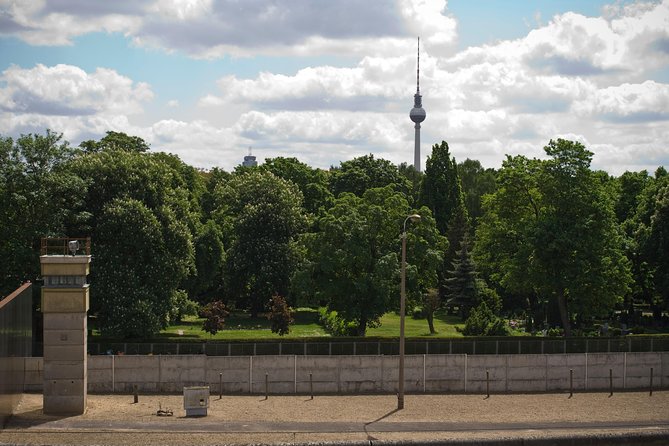
That matters in Berlin. Remains of the Wall are scattered, and much of the old border is easy to miss without someone explaining what once occupied the open spaces. A guide can point out how the border system worked, why a particular street mattered, or how architecture reflected the East German state.
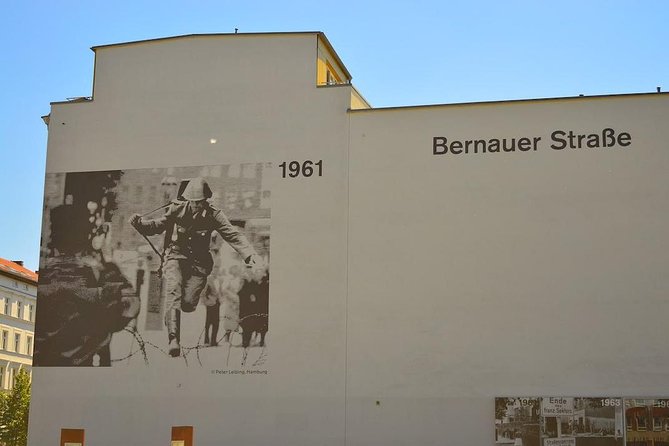
The strongest feature is the human scale. The tour deals with spies, informants, escape attempts and Stasi surveillance, but it also explains what those forces meant for families and workers. The 1953 uprising, the building of the Wall in 1961 and the fall of the Wall in 1989 become connected events rather than isolated dates.
Guides bring different strengths. Paul is praised for vivid storytelling and detail. Xavier is noted for answering questions, caring for the group and using stories and pictures to make the past easier to picture. Tina, Klaus, Jamie G and several other guides are also praised for clear explanations and an engaging manner. Some guides have personal connections to East Germany, which can add a direct sense of what life behind the Iron Curtain felt like.
The tone is serious, but not dry. You should expect a lot of information, with room for questions when the group and schedule allow. If you already know Berlin’s Cold War history, you may still pick up lesser-known escape stories and details about daily life.
Other divided-city history in Berlin:
- Berlin: Third Reich and Cold War 2 Hour Walking Tour
★ 4.9 · 6,830 reviews - Berlin’s Best: 2 Hour Walking Tour Third Reich and the Cold War
★ 5.0 · 5,486 reviews - Skip-the-Line: Berlin Wall Museum at Checkpoint Charlie
★ 4.1 · 2,041 reviews
Meeting beside the Palace of Tears
The usual starting point is outside Friedrichstrasse train station, on the square beside the Tränenpalast, or Palace of Tears. Look for a guide with a yellow name badge and yellow umbrella.
The building earned its nickname because it was a farewell point for people crossing between East and West Berlin. A short visit here gives the tour an emotional opening. Instead of beginning with a broad political lecture, you start at a place where families actually said goodbye.
The scheduled stop lasts about 20 minutes. That is enough for an introduction and exterior or interior orientation, but it is not a long museum session. You should arrive ready to listen and keep moving.
The meeting point is central and easy to reach by train. Check the selected option carefully, since pickup arrangements can differ. Hotel pickup may be available for some bookings, while the standard meeting point is beside the Palace of Tears.
Alexanderplatz and the public face of East Berlin
After the first short train ride, the group reaches Alexanderplatz. The guided visit lasts around 20 minutes.
Alexanderplatz is useful because it shows East Berlin as a functioning capital, not just a border city. Its wide spaces and GDR-era architecture reflect the government’s wish to project order, progress and collective strength. The square also connects the Cold War story with daily life: shopping, transport, public gatherings and state ceremonies all came together here.
The guide sets the political background before moving on. You will hear about the East German government, public control and the pressure beneath the official image of socialist success.
This stop is not meant to cover every part of Alexanderplatz. Think of it as a way to read the square, notice the surviving visual clues and understand why it mattered. The short duration keeps the tour moving, but it also means you may want to return later if you enjoy architecture or city photography.
Karl-Marx-Allee and the 1953 uprising
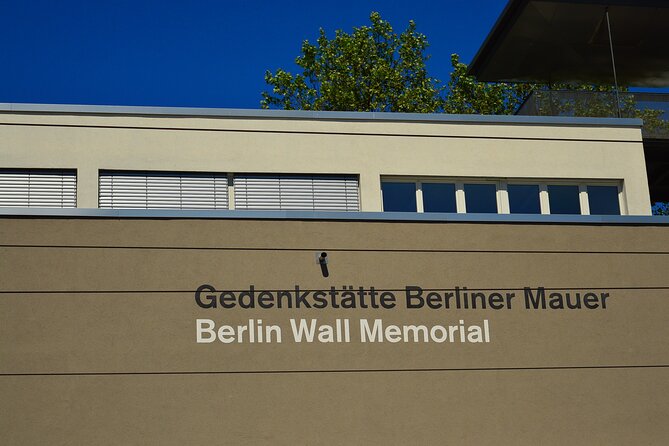
From Alexanderplatz, the group walks along Karl-Marx-Allee for about 20 minutes. This is one of the tour’s most revealing stretches.
The avenue was designed as a grand socialist boulevard. Its scale, broad layout and monumental buildings were meant to express confidence in the East German state. Your guide explains how architecture carried propaganda, turning housing and public space into a display of political ideals.
The avenue also connects directly to the workers’ uprising of 1953. Construction workers protested worsening conditions, and the unrest spread, challenging the communist government. The event shook the regime and became an early sign that official claims of unity did not match life on the ground.
I like this section because the buildings do much of the teaching. You are not only hearing about state power in an abstract way. You are walking through the physical setting chosen to present that power.
Allow time for the scale of the boulevard. It is an outdoor stop, so weather matters. Comfortable shoes and clothing suited to the forecast will make a real difference.
Other museums and galleries in Berlin:
- Berlin: Jewish Museum Berlin Entrance Ticket
★ 4.5 · 8,393 reviews - Berlin: Natural History Museum Entrance Ticket
★ 4.6 · 3,382 reviews - Berlin: Neues Museum Entry Ticket
★ 4.6 · 3,261 reviews - Berlin: Museum Island Multiple Museum Entry Ticket
★ 4.4 · 2,007 reviews
Friedrichshain and the changing edge of the city
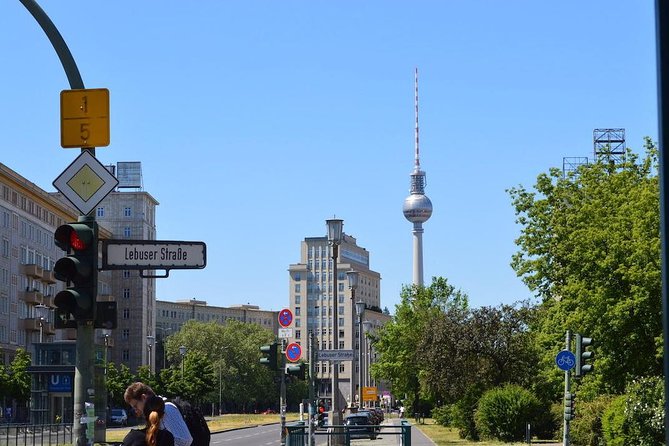
A short train ride of roughly six minutes takes the group toward Friedrichshain. The guided stop lasts about 20 minutes.
Here, the tour shifts from monumental state planning to the changing neighborhoods of the former East. Friedrichshain helps connect the polished public image of Karl-Marx-Allee with the lived reality of ordinary districts.
The guide may use photographs, personal stories and smaller details to show how the city changed. Past and present sit close together, which is one reason walking tours work well in Berlin. You can hear about the division, then see modern streets and buildings occupying the same ground.
This section may be especially useful if you want more than the standard Wall photo. It gives the tour room to discuss people, neighborhoods and the consequences of reunification. The tradeoff is that the experience remains introductory at each place. You will get a strong narrative, not a long stop for independent exploration.
The former death strip and escape stories
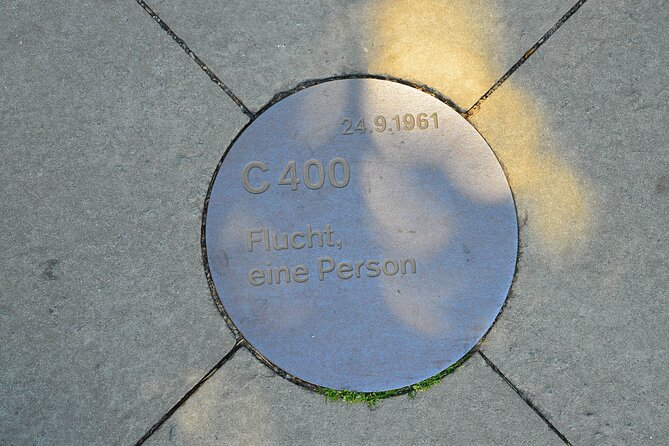
The tour then reaches a section of the Berlin Wall and the former death strip. The guided Wall stop lasts around 16 minutes, followed by more time at the East Side Gallery.
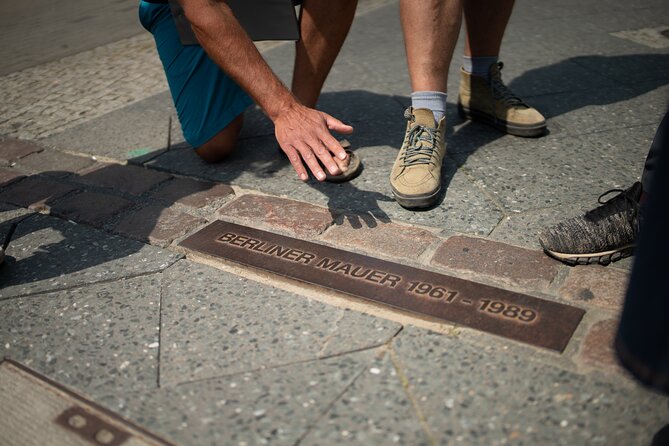
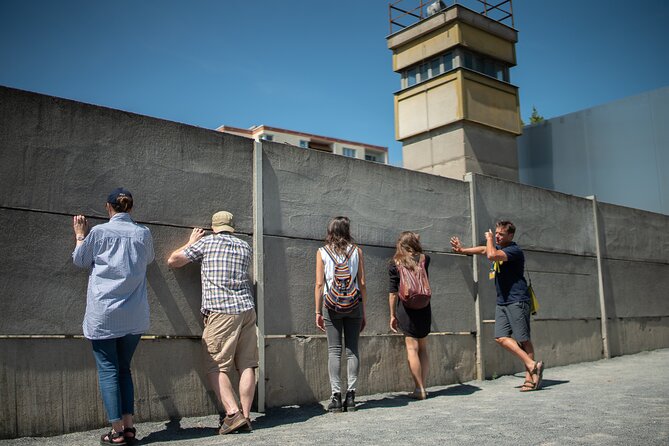
This is where the political story becomes stark. The border was not simply a concrete wall. It included controlled zones, watch points, barriers and armed guards. The open strip between sections of the border was designed to expose escape attempts.
Your guide explains how people tried to flee East Germany through tunnels, across rooftops and by other dangerous means. These accounts help you understand the risks involved, but the subject is handled as history rather than spectacle. The important point is the desperate choice people faced when movement, work and family contact were controlled.
You may also hear about the Stasi, East Germany’s secret police, and the use of informants. Surveillance shaped more than political opposition. It affected trust between neighbors, colleagues and even friends.
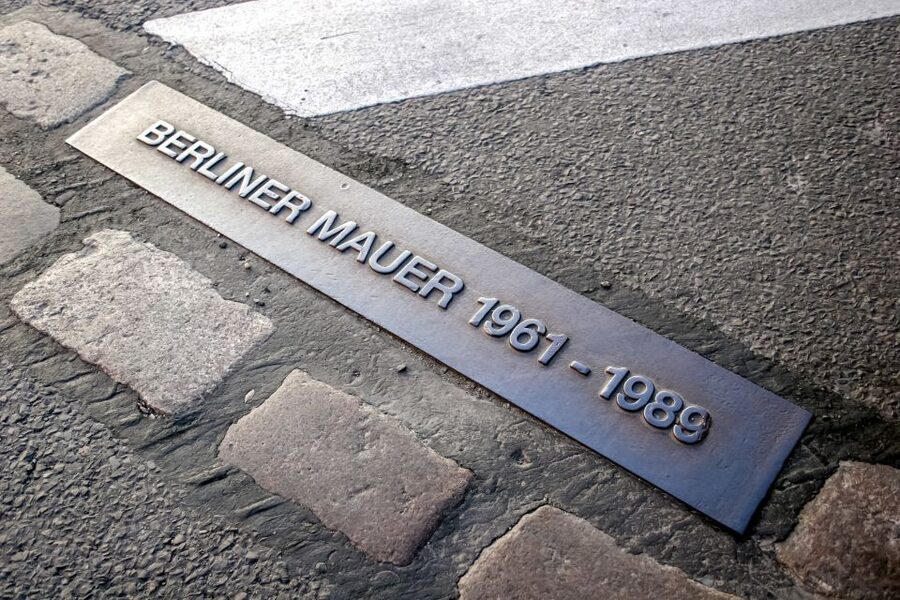
The Wall remains can be visually uneven. Some sections are restored, some are reconstructed and some traces are marked rather than fully preserved. That is not a flaw in the tour. It reflects Berlin’s complicated approach to remembering a border that once cut through ordinary streets.
East Side Gallery: from barrier to open-air art
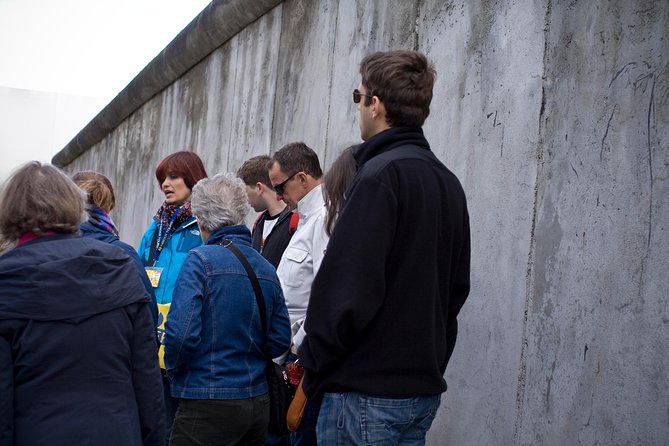
The final major walk follows the East Side Gallery. The route along the painted Wall takes about 20 minutes.
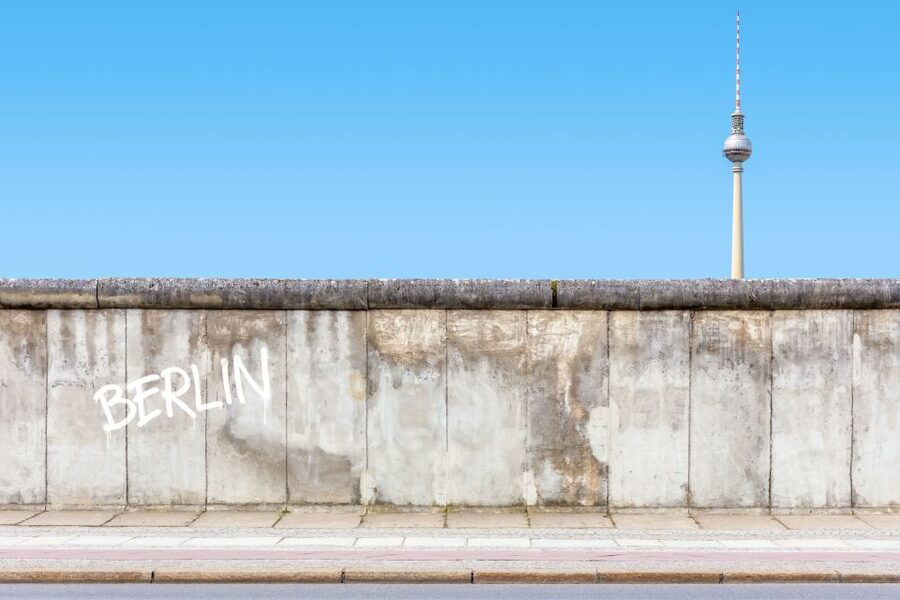
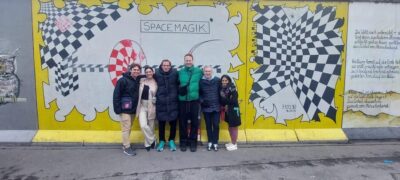
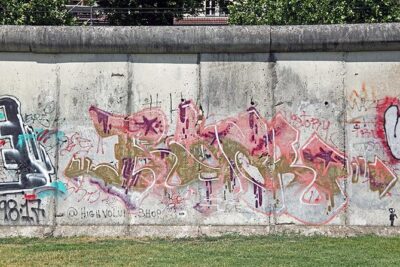
This long section of preserved Wall is now an open-air art gallery. Murals cover what was once a symbol of confinement, turning the barrier into a public place of memory, protest and creative expression.
The contrast is powerful. Earlier, you have heard about guards, surveillance and escape attempts. Here, the same kind of concrete surface carries images made after the Wall fell. The setting shows how Berlin has tried to handle its past without leaving it frozen in 1989.
The East Side Gallery is also the most immediately photogenic part of the tour, so bring a camera. Still, it is worth listening before reaching for your phone. The meaning of the artwork becomes clearer when you understand the Wall’s earlier role.
The tour ends with two possible drop-off locations, including Bernauer Straße. Confirm the exact end point for your booking, since transport and pickup options can vary.
Timing, transport and physical effort
The tour lasts three hours and includes walking, short train rides and outdoor explanations. The listed rail journeys take about five and six minutes, but you should allow time for boarding, regrouping and moving between platforms.
You need an AB public transport day pass. It is not included in the $18 price, though staff can help you buy one on the day. This is an important cost to remember when comparing the tour with a simple self-guided walk.
The route is best for people who can walk and stand for much of the session. Comfortable shoes are essential, especially if the ground is wet or the weather is poor. The tour runs in all weather, so bring a waterproof layer, sun protection or warm clothing as needed.
The activity is listed as wheelchair accessible, but the route includes trains and several outdoor locations. If you use a wheelchair, confirm the day’s route and assistance arrangements before booking.
Small-group and private options are available. A private tour should suit anyone who wants more time for questions or a pace shaped around their interests. A small group keeps the price low while still allowing interaction with the guide.
Who should book it
I would choose this tour if you want a clear introduction to Berlin’s Cold War period and prefer stories tied to actual places. It suits first-time visitors, history fans, families with older children and anyone who feels unsure about how the Wall, East Germany, the Stasi and reunification fit together.
It also works well for people who have already seen the main central sights. The route adds Karl-Marx-Allee, Friedrichshain and the East Side Gallery, rather than focusing only on Brandenburg Gate and Checkpoint Charlie.
You may want a different experience if your main interest is military strategy, international diplomacy or a long museum visit. One past participant expected more war and politics and less focus on the Wall. That is a fair warning: this tour is strongest on the Wall, East German life, escape stories and the human effects of division.
The guides are a major part of the value. Names vary, but the strongest feedback repeatedly centers on passionate delivery, personal accounts, visual aids, patience and the ability to answer questions. If you want the best chance of a particular guide, check availability when booking, but do not assume a specific person is guaranteed.
Practical details before you go
The standard price is $18 per person, with public transportation extra. Food and drinks are not included, and there is no standard hotel drop-off or pickup unless you select an option that provides it.
English and German tours are offered. Cancellation is free up to 24 hours before the start, and you can reserve now and pay later, which helps if your Berlin schedule is still shifting.
Bring a camera, comfortable clothes and shoes suited to three hours outside. Alcohol and drugs are not allowed. Since the tour continues in bad weather, do not treat a rainy forecast as an automatic cancellation.
Should you book this Berlin Wall tour?
Yes, if you want a compact, well-priced introduction to divided Berlin that goes beyond a single Wall photo. The combination of the Palace of Tears, Alexanderplatz, Karl-Marx-Allee, Friedrichshain and the East Side Gallery gives you a useful geographic and human framework.
The main cost is not the ticket, but your time and the extra AB day pass. You will walk, ride trains and absorb a lot of information in three hours. For $18, that is a fair exchange, especially if you choose a small group and take advantage of the guides’ stories and question time.
Book it early in your Berlin stay if you want context for later museum visits. Skip it only if you want a slow, highly specialized political history tour or prefer to explore each site at your own pace.
FAQ
How long does the Cold War Berlin tour last?
The tour lasts three hours.
What sites are included?
The route includes the Palace of Tears, Alexanderplatz, Karl-Marx-Allee, Friedrichshain, a section of the Berlin Wall and the East Side Gallery.
Is public transportation included?
No. You need an AB public transport day pass, which can be purchased on the day with help from staff.
Where does the tour begin?
The usual meeting point is outside Friedrichstrasse train station, on the square beside the Palace of Tears. Look for the guide with a yellow name badge and yellow umbrella.
Where does the tour finish?
There are two possible drop-off locations, including Bernauer Straße in Berlin. The exact end point depends on the selected option.
Is the tour offered in English?
Yes. Live guides are available in English and German.
Is the tour wheelchair accessible?
The activity is listed as wheelchair accessible. Because the route uses trains and outdoor sites, confirm the practical arrangements for your chosen tour.
Can I cancel or pay later?
You can cancel up to 24 hours in advance for a full refund. Reserve now and pay later is also available.
Just added in Berlin
- Private One way Airport Transfer Berlin Airport To Berlin★ 3.5 · 17 reviews
- Private Walking Tour: Berlin Wall, Cold War and Checkpoint Charlie★ 5.0 · 37 reviews
- Modern Berlin Private Walking Tour: Diverse, Vibrant and Exciting German Capital★ 5.0 · 13 reviews
- Private Day Trip to Potsdam from Berlin by Train★ 4.5 · 27 reviews
- City Explorer: Potsdam Private Day Trip★ 4.5 · 10 reviews
- Berlin Private Custom 5-Hour Tour by Car★ 5.0 · 30 reviews
- Private Half-Day Sightseeing Tour in Berlin★ 3.5 · 6 reviews
- Berlin Private Custom Tour in a Minivan, East and West★ 5.0 · 123 reviews
Berlin Wall & Cold War Tours, compared.

Skip-the-Line: Berlin Wall Museum at Checkpoint Charlie
Read our review →
Cold War, Berlin Wall, Spies and the East Side Gallery
Read our review →
Guided Bike Tour of the Berlin Wall and Third Reich
Read our review →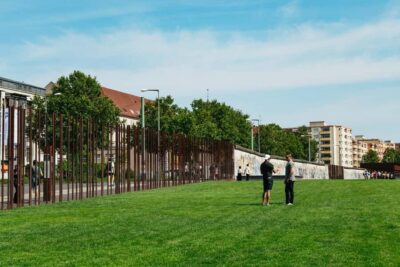
East Berlin and the Berlin Wall 2-Hour Walking Tour
Read our review →Browse the lists this tour appears in