
Reviewed · BERLIN WALL & COLD WAR TOURS
Berlin Wall, Cold War and Stasi Museum Tour
Berlin’s Cold War story is easiest to grasp when you see the places where it happened. This four-hour walking tour links socialist architecture, Stasi headquarters, the Palace of Tears, and surviving sections of the Wall into one clear route through the city.
I like the strong mix of outdoor sights and the two-hour Stasi Museum visit, which gives the tour more substance than a quick Wall photo stop. I also like the practical end point at the Berlin Wall Memorial, where the division of Berlin is presented in a fuller setting. The main drawback is that you must pay separately for public transport, and the language should be confirmed carefully before booking.
Key points to know before you book
- Alexanderplatz starts the story: You begin in one of East Berlin’s most recognizable public squares, a useful place to set the postwar context.
- Karl-Marx-Allee shows GDR city planning: The broad avenue and 1950s socialist apartment blocks reveal how East Germany wanted its capital to look.
- The Stasi Museum takes two hours: The former Ministry of State Security headquarters provides the tour’s most detailed indoor visit.
- Bernauer Straße gives the Wall context: The final stop is not just a fragment of concrete, but a memorial area explaining division and reunification.
- The group can reach 25 people: This is a small-group format by city-tour standards, but not a private tour.
- Transport is extra: Bring an AB-zone ticket. A 24-hour ticket is listed at €9.90.
Why this Cold War route works
Many Berlin history tours concentrate on the Brandenburg Gate, Checkpoint Charlie, and a few isolated Wall fragments. This route takes a different path. It begins in former East Berlin and follows the political story through places tied directly to the German Democratic Republic, commonly called the GDR.
That order matters. You start with the public face of East Germany, see the monumental streets built to express socialist power, then enter the offices of the state security service. You finish at Bernauer Straße, where the Wall’s physical and human impact is easier to understand.
I find that structure useful because the Wall did not appear out of nowhere. Berlin was divided after World War II, with the city controlled by the Soviet Union, the United States, Britain, and France in separate sectors. Tensions between the Soviet-backed East and the Western powers shaped daily life, politics, and travel.
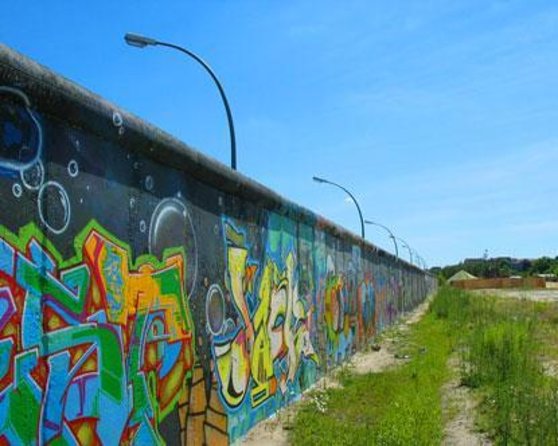
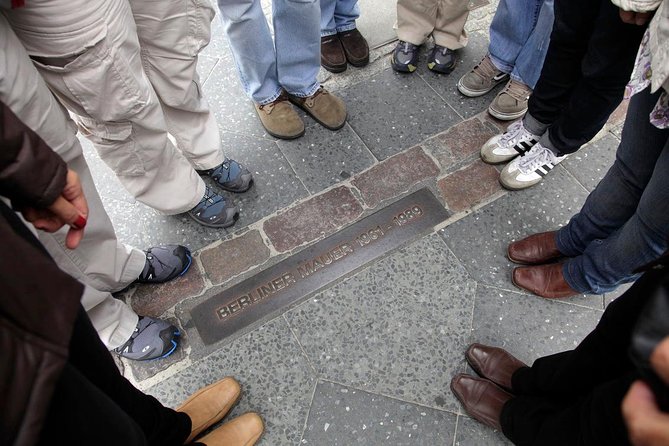
The GDR built the Berlin Wall in 1961 to stop people from leaving East Germany for the West. Your guide’s job is to connect that broad political decision with the streets, buildings, and institutions you see along the way.
The tour runs for about four hours and begins at 10 a.m. That is a good length for a serious history walk without turning the whole day into a single subject. Still, much of the time is spent on foot, and the route uses public transport between some points, so comfortable shoes and a valid ticket matter.
Other divided-city history in Berlin:
- Berlin: Third Reich and Cold War 2 Hour Walking Tour
★ 4.9 · 6,830 reviews - Berlin’s Best: 2 Hour Walking Tour Third Reich and the Cold War
★ 5.0 · 5,486 reviews - Skip-the-Line: Berlin Wall Museum at Checkpoint Charlie
★ 4.1 · 2,041 reviews
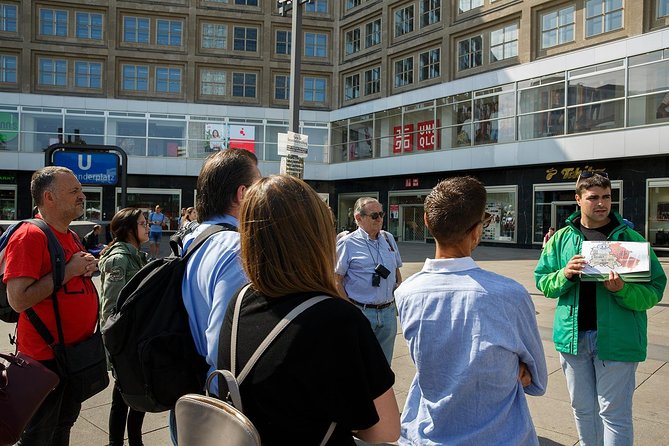
Alexanderplatz sets the East Berlin tone
The meeting point is Alexanderplatz, where the tour begins at 10 a.m. You spend about 15 minutes here, with admission included because this is an open public area.
Alexanderplatz is a useful starting point because it reflects the public image of East Berlin. It was a major city center during the GDR period and remains one of the easiest places to reach by public transport. If you arrive early, you will have time to locate the meeting point without rushing.
Do not expect a long museum-style explanation at this first stop. The listed time is short, so the guide will likely use Alexanderplatz to establish the political setting before moving on. The value comes from the connection between the square and the rest of the route.
This is also where you should confirm the guide’s language. The tour information has caused some confusion between English and Spanish, so I would not leave that question until the morning of the tour. Make sure the language you need is clearly confirmed when you book.
Karl-Marx-Allee reveals GDR ambition
The next major stop is Karl-Marx-Allee, about a 30-minute visit. This broad avenue was among the best-known streets in East Germany. Between Strausberger Platz and Frankfurter Tor, you see large apartment blocks built in the socialist style of the 1950s.
This is one of the most interesting parts of the experience because the architecture gives you something concrete to study. The avenue was not designed as an ordinary residential street. Its scale, formal layout, and grand apartment buildings were meant to project confidence in the new socialist state.
Your guide can help you read the street as political theater. Look beyond the size of the buildings. Ask how the avenue was meant to represent East German society, who lived there, and why the government invested so much in this particular style.
The stop also helps explain why a Cold War tour should not focus only on walls, escape tunnels, and secret police. Governments express power through everyday urban spaces, too. Karl-Marx-Allee shows the GDR trying to make its ideology visible in brick, stone, and apartment blocks.
The drawback is that this is an outdoor stop, so the experience depends on weather and your interest in architecture. If you mainly want dramatic Wall remains, this part may feel slower. For me, it earns its place because it shows the world the Wall was built to protect.
Frankfurter Allee connects the city’s older routes
The tour continues to Frankfurter Allee for about 15 minutes. This is one of Berlin’s older traffic routes and forms the continuation of Karl-Marx-Allee.
This stop is brief, but it helps you understand the route as a connected urban corridor rather than a series of unrelated sights. The guide can point out how the road links the monumental section of Karl-Marx-Allee with the wider eastern part of Berlin.
There is no separate admission cost here. You are reading the city from the street, which is part of the appeal of a walking tour. You do not need a ticket for every historical point, and the surroundings continue to function as an ordinary part of Berlin.
The tour points may be visited in a different order depending on transportation. That flexibility is practical, but it means the day may not follow the exact sequence described above. I would treat the route as a connected theme rather than a fixed march from one stop to the next.
Other museums and galleries in Berlin:
- Berlin: Jewish Museum Berlin Entrance Ticket
★ 4.5 · 8,393 reviews - Berlin: Natural History Museum Entrance Ticket
★ 4.6 · 3,382 reviews - Berlin: Neues Museum Entry Ticket
★ 4.6 · 3,261 reviews - Berlin: Museum Island Multiple Museum Entry Ticket
★ 4.4 · 2,007 reviews
Two hours inside the Stasi Museum
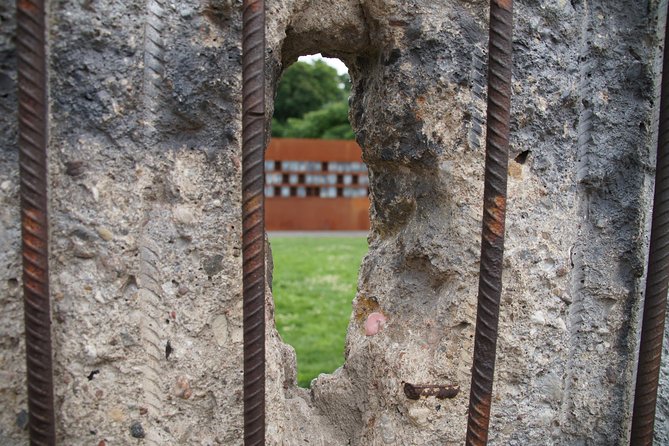
The Stasi Museum is the heart of the tour. You spend about two hours inside the former headquarters of the Ministry of State Security, the GDR institution commonly known as the Stasi.
This is where the tour moves from public architecture to private control. The Stasi monitored suspected opponents, gathered information, and helped enforce the East German state. A visit to its former headquarters gives the subject a physical setting that a street lecture cannot provide.
Two hours is a useful amount of time. You have enough space to see the displays rather than racing through them, and the guide can explain how the agency fit into the wider GDR system. The museum entrance is included in the tour price, which improves the value considerably.
I would pay close attention to the building itself as well as the exhibits. Government offices can seem plain, but the setting helps make the machinery of surveillance feel less abstract. The tour’s earlier discussion of public streets and socialist ideals gains a sharper edge here.
This is also the stop most likely to appeal to visitors who want more than a general Berlin overview. You get political history, state institutions, and the effects of division in one place. If your interest is mainly art, royal Berlin, or present-day city life, two hours in the Stasi Museum may feel like a large commitment.
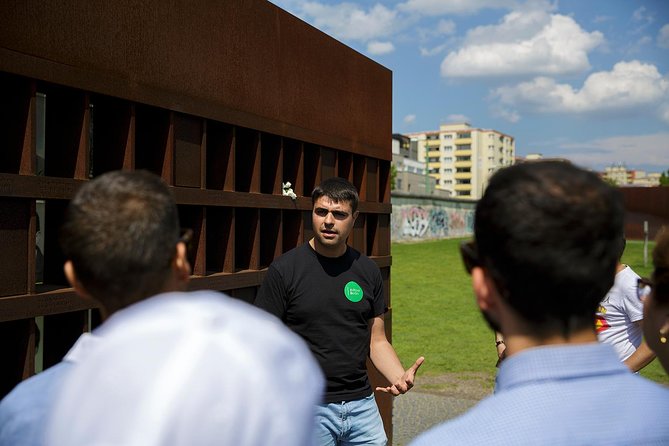
The group limit is up to 25 people. That is smaller than a large coach excursion, and it should allow the guide to keep the visit organized. It is not intimate in the way a private tour would be, so do not expect the guide to tailor every minute to your personal interests.
Bernauer Straße brings the Wall story into focus
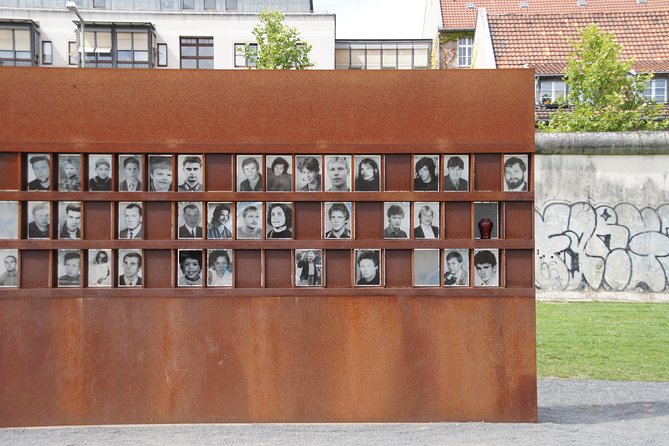
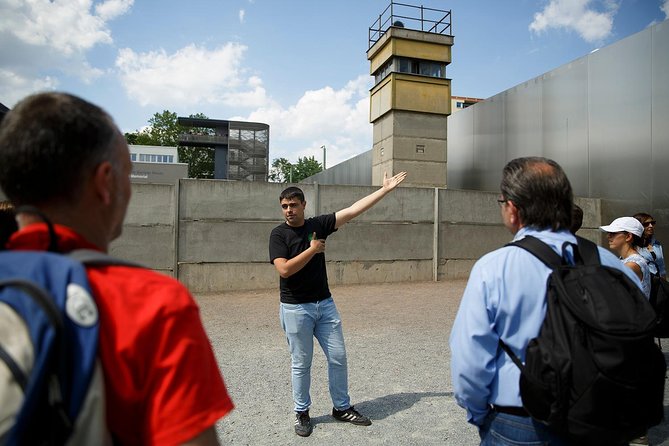
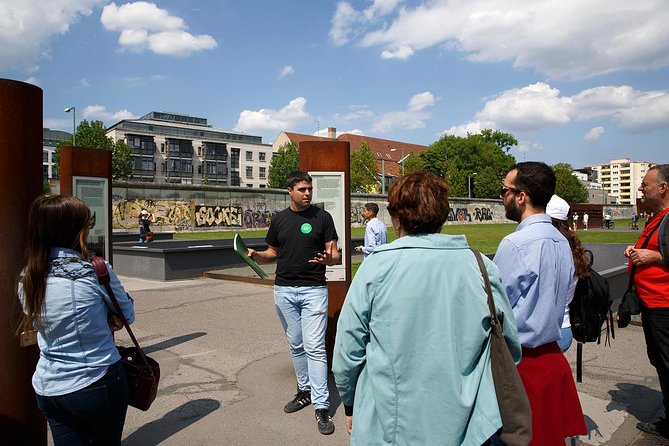
The final stop is the Berlin Wall Memorial on Bernauer Straße, with about one hour here. The tour ends at Bernauer Str. 111, 13355 Berlin, rather than returning to Alexanderplatz.
This is an important practical detail. You finish in a different part of Berlin, so plan your next activity from Bernauer Straße. The end point is useful, though, because the memorial presents the division of Berlin in a broader setting than a lone Wall fragment.
The area shows how the Wall cut through an inhabited city. Bernauer Straße is associated with separated streets, buildings, and families, making it easier to understand that the barrier was not simply a line between two political systems. It ran through ordinary neighborhoods.
The memorial also addresses reunification, so the tour does not stop at the construction of the Wall. You get the later part of the story too: how Berlin changed after the border opened and Germany moved toward reunification.
One hour is enough for a focused visit, though you may want to return on your own if this subject matters greatly to you. The tour gives you a guided introduction, not unlimited time for every exhibit and viewing point.
I like ending here because the memorial gives the day a clear final chapter. You begin with East Berlin’s public center, move through its planned avenues and security headquarters, then finish at the place where division is made visible and personal.
What you pay, and what you receive
The price is $32.56 per person. For about four hours with a guide, admission to the Stasi Museum, and entry to the Berlin Wall Memorial, that is a fair price for a visitor who wants a focused Cold War experience.
The Stasi Museum admission is the biggest value point. If you visited the museum separately, you would still need to arrange your own route and find a way to connect it with Karl-Marx-Allee and Bernauer Straße. Here, the guide supplies the link between those places.
You do need to budget for transportation. An AB-zone 24-hour ticket is listed at €9.90 and is not included. Since the points may be visited in a different order depending on transport, buy the correct ticket before the tour begins or ask the provider exactly what is needed.
The tour does not include food or drinks, so plan accordingly. Four hours is not an especially long day, but the schedule moves through several parts of the city. You may prefer to eat before the 10 a.m. start and carry water.
The group size can reach 25 people. At its best, that gives you the cost advantage of a group tour while keeping the guide’s presentation more manageable than a large bus group. If you want a quiet, highly personal discussion, a private tour would suit you better.
Who should book this tour
I would recommend this experience to first-time Berlin visitors who want a clear introduction to the GDR, the Berlin Wall, and the Stasi without spending several separate days on the subject.
It also suits you if you like seeing history in ordinary streets. Karl-Marx-Allee and Frankfurter Allee are not just display cases. They are working parts of Berlin, and that makes the discussion feel connected to the city you are walking through now.
The tour is a good fit for adults and older children who can handle several hours of walking and a serious museum visit. Most travelers can participate, according to the tour information, but the route still requires you to move between stops and use public transportation.
I would choose another experience if you want a broad tour of all Berlin’s main attractions. This route does not focus on Museum Island, the Brandenburg Gate, the Reichstag, or royal history. Its subject is narrower, but it treats that subject at useful length.
I would also think twice if you have already spent a full day at the Stasi Museum and Berlin Wall Memorial. In that case, the value comes mainly from the guide’s connections between the sites, not from seeing the museums for the first time.
Small details that can make the day easier
The start time is 10 a.m. at Alexanderplatz, and the end point is Bernauer Straße. Give yourself time to reach the starting square and identify the group before the tour begins.
A mobile ticket is provided, so keep your booking available on your phone. Confirmation arrives at the time of booking.
The tour is near public transportation, but the AB-zone ticket is not included. Since the route can change based on transport, keep your schedule flexible and avoid booking a tight appointment immediately after the 2 p.m. finish.
Free cancellation is available up to 24 hours before the start time. Inside that window, the price is not refunded and changes are not accepted.
The provider is cultourberlin. The experience has a listed rating of 4.9 from 60 ratings, with 98 percent recommending it. Those figures suggest strong overall satisfaction, but I would still confirm the tour language, especially if you need English rather than Spanish.
Should you book the Berlin Wall, Cold War and Stasi Museum Tour?
Book it if you want a compact, well-connected introduction to East Berlin and the Cold War. The combination of Karl-Marx-Allee, the former Stasi headquarters, and Bernauer Straße gives you more context than a quick Wall-photo walk, while the $32.56 price remains reasonable once you account for the included museum entrance.
Skip it if you prefer a general Berlin sightseeing tour, dislike museum-heavy history, or need a private guide. Before booking, confirm the language and budget €9.90 for public transport. For the right visitor, this is a thoughtful way to see how Berlin’s division shaped its streets, institutions, and people.
FAQ
Where does the tour begin?
The tour begins at Alexanderplatz, Berlin, at 10 a.m.
Where does the tour end?
The tour ends at the Berlin Wall Memorial on Bernauer Straße, at Bernauer Str. 111, 13355 Berlin.
How long does the tour last?
The tour lasts approximately four hours.
Is entrance to the Stasi Museum included?
Yes. Entrance to the Stasi Museum is included in the tour.
Is public transportation included?
No. An AB-zone transportation ticket is not included. A 24-hour ticket is listed at €9.90.
How many people can join the tour?
The tour has a maximum of 25 travelers.
Just added in Berlin
- Private One way Airport Transfer Berlin Airport To Berlin★ 3.5 · 17 reviews
- Private Walking Tour: Berlin Wall, Cold War and Checkpoint Charlie★ 5.0 · 37 reviews
- Modern Berlin Private Walking Tour: Diverse, Vibrant and Exciting German Capital★ 5.0 · 13 reviews
- Private Day Trip to Potsdam from Berlin by Train★ 4.5 · 27 reviews
- City Explorer: Potsdam Private Day Trip★ 4.5 · 10 reviews
- Berlin Private Custom Tour in a Minivan, East and West★ 5.0 · 123 reviews
- Berlin Private Custom 5-Hour Tour by Car★ 5.0 · 30 reviews
- Private Half-Day Sightseeing Tour in Berlin★ 3.5 · 6 reviews
Berlin Wall & Cold War Tours, compared.

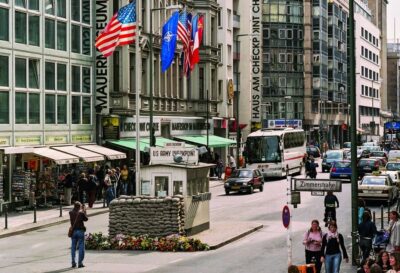
Skip-the-Line: Berlin Wall Museum at Checkpoint Charlie
Read our review →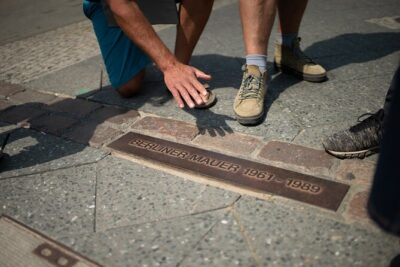
Cold War, Berlin Wall, Spies and the East Side Gallery
Read our review →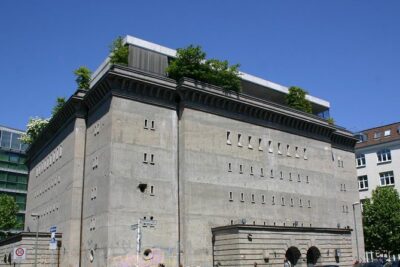
Guided Bike Tour of the Berlin Wall and Third Reich
Read our review →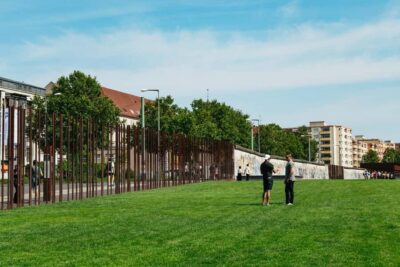
East Berlin and the Berlin Wall 2-Hour Walking Tour
Read our review →Browse the lists this tour appears in