
Reviewed · THIRD REICH & WWII TOURS
Berlin & The Third Reich Private Guided Tour
Berlin’s most important Nazi-era sites are scattered through the city center, often hidden in plain sight beneath modern offices, traffic lanes, and apartment blocks. This private walking tour connects them into one clear story, from Hitler’s rise to power through the destruction of 1945 and the Cold War that followed. The former Führerbunker site is especially striking because it is now an ordinary parking area with only a small information sign.
I like the private format, which lets you ask direct questions and move at a pace suited to your group. I also like the route itself: the Reichstag, Brandenburg Gate, Holocaust Memorial, Potsdamer Platz, and Checkpoint Charlie give you a strong overview of central Berlin without paying admission fees at each stop. The main consideration is that this is a serious four-hour walking tour, not a light introduction to Berlin, and the non-refundable booking policy leaves little room for a last-minute change.
Key points about Berlin’s Nazi history walk
- Private group of up to 15: You receive a guide for your own party rather than joining a large public group.
- Four hours on foot: The route links major sites in central Berlin, with short stops for explanation and discussion.
- Several guides have led the tour: Walid, Campbell, and Gregor are among the guides associated with this experience.
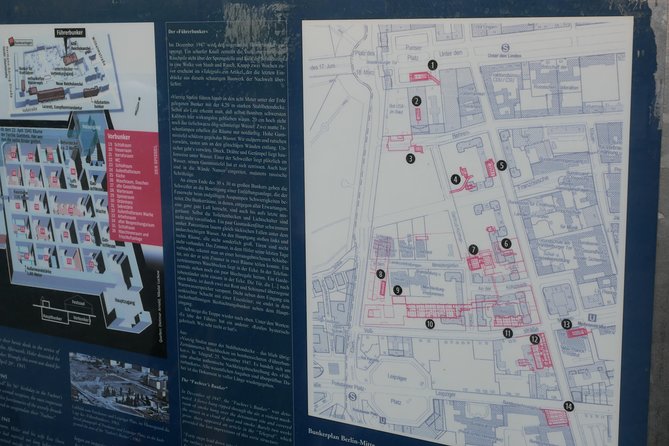
- The Führerbunker site is deliberately understated: You see a parking lot and a simple sign, not a preserved underground room.
- The route covers two eras: The main focus is the Third Reich and World War II, but Checkpoint Charlie and Berlin’s divided past extend the story into the Cold War.
- Pickup is offered: The stated meeting point is Brandenburg Gate at Pariser Platz, and the tour returns there.
Why this private walk works in central Berlin
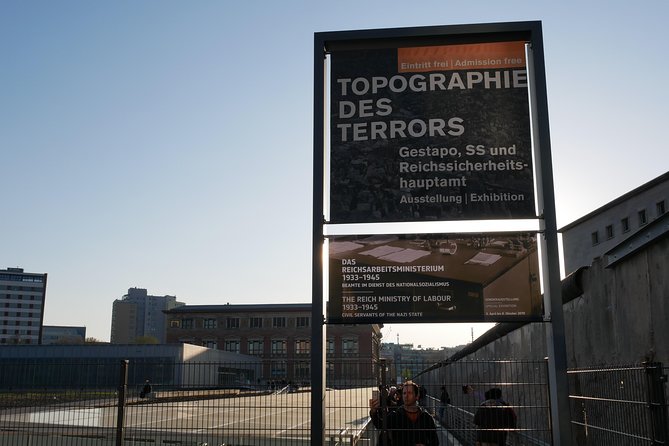
The strength of this experience is the way it joins places that can feel disconnected when you visit them alone. You may walk past the Reichstag in the morning, cross Pariser Platz later, and find yourself at Checkpoint Charlie another day without seeing how these locations fit together. A guide supplies that connecting thread.
The tour also deals with a difficult subject without turning it into a parade of dramatic ruins. Much of Nazi Berlin was destroyed, rebuilt, or covered by ordinary modern development. That can make the history harder to see, but it also makes a guided walk useful. You are not simply looking at old walls. You are learning what happened at places that now appear surprisingly normal.
This is a private activity for your group, with a maximum size of 15 people. That matters. You can ask about a particular building, spend a little longer at a memorial, or clarify a point without trying to get the attention of a guide in a packed group. The tour has included guides named Walid, Campbell, and Gregor. Since the specific guide is not guaranteed in the booking details, treat those names as examples rather than a promise.
The pace is likely to feel steady rather than rushed. The listed stops add up to roughly an hour and a half of formal viewing time, leaving the rest of the four-hour period for walking between sites and hearing the wider story. Wear comfortable shoes and be ready to spend much of the morning or afternoon outside.
More Third Reich and WWII Tours in Berlin
- Berlin: Third Reich and Cold War 2 Hour Walking Tour
★ 4.9 · 6,830 reviews - Berlin’s Best: 2 Hour Walking Tour Third Reich and the Cold War
★ 5.0 · 5,486 reviews - Third Reich Berlin: Hitler and WWII Walking Tour
★ 5.0 · 3,301 reviews
Pariser Platz and the Brandenburg Gate
The tour begins at Pariser Platz, Berlin’s grand square at the end of Unter den Linden. The Brandenburg Gate is the obvious centerpiece, but the square also gives your guide a useful opening point for explaining Berlin as a royal capital before it became the center of Nazi power.
The gate began as a royal entrance for the Hohenzollern family and was one of 18 former city gates. Its long story includes Napoleon, World War II, the Berlin Wall, and German reunification. During the Cold War, it sat in the restricted area between East and West Berlin. Today, it is one of the city’s clearest symbols of a reunited Germany.
You are scheduled to spend about 15 minutes at Pariser Platz and another 15 minutes at the Brandenburg Gate. Those stops overlap geographically, so the time should feel efficient rather than repetitive. The useful part is not simply taking a photograph. It is understanding why this one monument has carried such different meanings at different points in German history.
The Reichstag and Hitler’s seizure of power
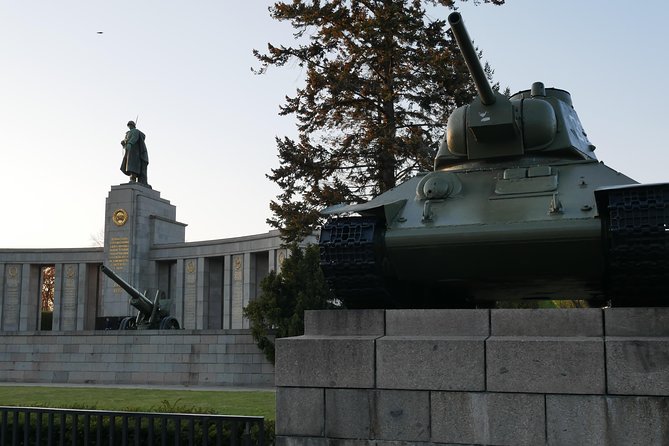
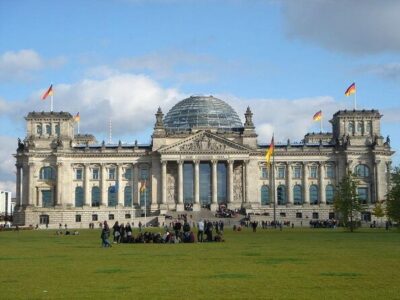
The Reichstag is Germany’s parliament building, and its role in the Nazi story is tied to the fire that helped Hitler take total control. A short stop of about 10 minutes gives your guide a chance to explain why the fire mattered politically and how the Nazi government used the crisis to crush opposition.
The building was also fought over during the Battle of Berlin in 1945, when German and Soviet forces battled for control of the city. Today, the Reichstag is topped by a glass cupola designed by British architect Sir Norman Foster. That modern addition creates a sharp contrast with the building’s wartime past.
You should not expect an interior visit on this tour. The stop is an exterior look and historical explanation, with admission listed as free. If seeing the glass cupola from inside is important to you, that would require a separate arrangement. For this tour, the value lies in placing the building within the larger story of political collapse, wartime destruction, and postwar democracy.
The Holocaust Memorial and the problem of remembrance
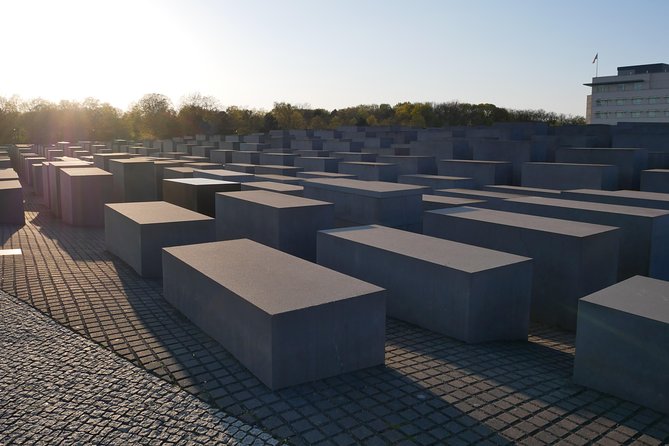
The Memorial to the Murdered Jews of Europe covers a broad area with rows of stone stelae. It is Germany’s central memorial to Jewish victims of the Holocaust, and the tour allows about 20 minutes here.
This is one of the most important stops on the route, but it deserves a thoughtful pace. You can walk among the blocks and see how the space changes as the ground rises and falls. The design does not give you a simple display of events. Instead, the physical setting asks you to pause and consider the scale and absence represented by the memorial.
A guide can also help prevent this visit from becoming a quick photo stop. The memorial’s meaning is serious, and your guide can place it within the Nazi persecution of Europe’s Jews. The time allotted is enough for an introduction and personal reflection, though you should not expect a full museum visit or a detailed exhibition tour.
Other trips into the same period in Berlin:
- Berlin: Third Reich, Hitler, and WWII Walking Tour
★ 4.9 · 1,133 reviews - Berlin Third Reich Sites: Half-Day Walking Tour
★ 5.0 · 835 reviews - Berlin: Guided Bike Tour of the Berlin Wall and Third Reich
★ 4.7 · 499 reviews - Hitler’s Germany: Berlin During the Third Reich & WWII
★ 4.8 · 476 reviews
The Führerbunker site, now an ordinary parking area
The former Führerbunker is one of Berlin’s most unsettling locations because almost nothing looks dramatic. The site is now a parking lot with a simple sign. This is where Hitler spent his final days, married Eva Braun, and committed suicide as World War II in Europe reached its final stage.
The tour allocates about 15 minutes here. That may sound short, but the plain setting is part of the lesson. There is no preserved bunker interior to inspect and no grand monument celebrating the place. Instead, you are asked to imagine the final days of the regime from a location that has been deliberately kept low-key.
You should come prepared for a site that feels more like a historical marker than a museum. If you are hoping to enter an underground bunker, this tour will not provide that. If you want a clear explanation of what happened at the end of the Nazi government and why the location is treated so simply today, this stop is valuable.
Potsdamer Platz, from wartime ruin to modern Berlin
Potsdamer Platz broadens the story beyond the Nazi leadership. Before World War II, it was one of Europe’s busiest traffic intersections. The area was almost completely destroyed during the war, then remained deeply affected by Berlin’s division and the Berlin Wall.
During the 1990s and early 2000s, Potsdamer Platz was rebuilt as one of Berlin’s most modern districts. The contrast is immediate: glass, steel, offices, shops, and broad city streets occupy ground that once lay in ruins and later sat near the divided city’s frontier.
The scheduled stop is about 10 minutes. That is enough to point out the area’s transformation, though not enough for a full architectural tour. I like this part of the route because it keeps the story from ending with 1945. Berlin’s present-day appearance is closely tied to wartime destruction, postwar division, and large-scale rebuilding.
Checkpoint Charlie and the Cold War after 1945
Checkpoint Charlie shifts the focus from the Third Reich to the Cold War. It was a frontline crossing point, with American and Soviet forces manning the checkpoint during the period when Berlin was divided.
The stop lasts about 10 minutes. You will not be spending the entire afternoon on Cold War history, but this final location shows how the effects of World War II continued long after the Nazi regime had fallen. The city did not simply return to normal in 1945. Berlin became a major pressure point between the United States and the Soviet Union.
Checkpoint Charlie is also a reminder that the tour is not only about Hitler’s government. It follows the physical and political changes that shaped central Berlin through the twentieth century. If your main interest is strictly Nazi military history, this stop may feel like a brief side trip. If you want a fuller explanation of why modern Berlin looks and feels the way it does, it earns its place.
Price, timing, and what you receive
The price is $329.92 per group of up to 15 people. That is not cheap for one person, but the calculation changes quickly when you are sharing it with family or friends. A full group would pay relatively little per person for four hours of private guiding. A couple would pay much more per person, but would gain a private guide and the ability to shape the conversation around their interests.
There are no admission charges listed for the stops. That does not mean the experience is free, of course. You are paying for the guide’s time, the route planning, and the explanation that turns separate sites into a coherent account of Berlin’s twentieth century.
The tour is usually booked about 12 days ahead. That gives you a useful planning clue: reserve it before your visit rather than assuming you can arrange it the night before. Pickup is offered, but the stated starting point is Brandenburg Gate at Pariser Platz, and the activity ends back there. Confirm the pickup details when booking if you need something other than the listed meeting point.
Because the tour lasts about four hours, you should avoid placing it directly before a timed museum reservation or train departure. The formal stop times are short, but walking and discussion make the full duration meaningful. The mobile ticket is convenient, and confirmation is sent when you book.
Who will get the most from this tour
I would choose this tour if you want a serious introduction to Berlin’s Nazi and wartime past and prefer asking questions as you go. It is a good fit for families with older children, couples, history-minded visitors, and first-time visitors who want the city’s central landmarks explained together.
The private format is especially useful if your group has a particular interest, such as Nazi propaganda, the Battle of Berlin, memorial design, or the transition from World War II to the Cold War. You have more room to ask for context than you would on a large scheduled walk.
I would think twice if you dislike long walks, want a museum-heavy experience, or prefer to explore independently with an audio guide. The tour is built around streets, squares, exterior views, and conversation. It does not include a listed interior visit to the Reichstag or a preserved bunker.
The subject can also be emotionally heavy. The Holocaust Memorial and Führerbunker site require a respectful attitude, and the tour is not designed as casual sightseeing. That seriousness is appropriate, but it may not suit someone looking for a relaxed overview of Berlin’s main attractions.
Booking cautions and practical details
The experience is non-refundable and cannot be changed after booking. If you cancel or request an amendment, the amount paid will not be returned, so check your date and group size carefully before paying.
Service animals are allowed, and the tour is near public transportation. Most people can participate, but the four-hour format means you should be comfortable walking and standing for extended periods. The available information does not provide a precise accessibility assessment, so contact the provider before booking if you have mobility concerns.
The tour receives an overall rating of 5 from three reviews, with especially strong praise for the guides’ historical explanations and the way the walk reaches many of central Berlin’s key locations. One guide, Walid, led a four-hour stroll with breaks for discussion at important sites. Campbell and Gregor have also led the experience, with Gregor specifically noted for making modern Berlin history fascinating and easy to follow.
Should you book Berlin and the Third Reich Private Guided Tour?
Book it if you want the difficult parts of Berlin’s past explained at the places where they unfolded, and if your group values private conversation over the lowest possible price. The route covers a remarkable amount in four hours, from royal Berlin and Nazi power to Holocaust remembrance, wartime destruction, the Führerbunker site, and the Cold War.
Skip it if you want extensive time inside museums, a short sightseeing loop, or a flexible reservation you can change later. For most history-focused visitors, though, the combination of a private guide, central locations, and a clear story makes the price reasonable, especially when shared among a larger group.
FAQ
Where does the tour begin?
The tour begins at Brandenburg Gate on Pariser Platz, 10117 Berlin, Germany.
Where does the tour end?
The activity ends back at the meeting point.
How long does the tour last?
The tour lasts approximately four hours.
How many people can join the private tour?
The price covers one private group of up to 15 people.
Is pickup available?
Pickup is offered. The stated meeting point is Brandenburg Gate, so confirm the pickup arrangement when booking.
Are admission tickets included?
The listed stops show free admission. The tour is primarily a guided walking experience at outdoor and exterior locations.
Can service animals participate?
Yes. Service animals are allowed.
Can I cancel or change the booking?
No. The experience is non-refundable and cannot be changed for any reason.
Just added in Berlin
- Private Walking Tour: Berlin Wall, Cold War and Checkpoint Charlie★ 5.0 · 37 reviews
- Modern Berlin Private Walking Tour: Diverse, Vibrant and Exciting German Capital★ 5.0 · 13 reviews
- Private One way Airport Transfer Berlin Airport To Berlin★ 3.5 · 17 reviews
- Private Day Trip to Potsdam from Berlin by Train★ 4.5 · 27 reviews
- City Explorer: Potsdam Private Day Trip★ 4.5 · 10 reviews
- Berlin Private Custom 5-Hour Tour by Car★ 5.0 · 30 reviews
- Private Half-Day Sightseeing Tour in Berlin★ 3.5 · 6 reviews
- Berlin Private Custom Tour in a Minivan, East and West★ 5.0 · 123 reviews
Third Reich & WWII Tours, compared.

Third Reich Berlin: Hitler and WWII Walking Tour
Read our review →
Walking Tour of Former Nazi Party Rally Grounds
Read our review →
Berlin Third Reich Sites: Half-Day Walking Tour
Read our review →
Birthplace of the Third Reich Guided Walking Tour
Read our review →Browse the lists this tour appears in