
Reviewed · BERLIN WALL & COLD WAR TOURS
Berlin: The Wall and Cold War – a Private Walking Tour
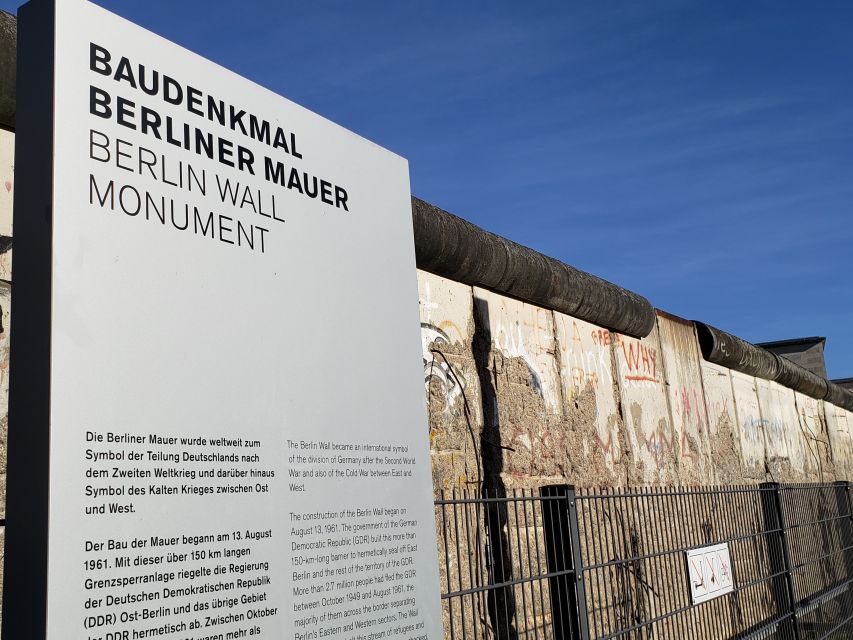
Berlin’s Cold War story becomes much clearer when you walk the former border instead of viewing it from a museum room. This two-hour private tour begins at Bernauer Strasse, follows the Wall through central Berlin, and ends at Checkpoint Charlie, with the Palace of Tears and escape sites along the way.
I like the route for two reasons: Bernauer Strasse gives you surviving Wall evidence, while personal stories help explain how division shaped ordinary life. I also like the private format, which lets your guide adjust the pace and explain details in English or German. The main consideration is time. Two hours gives you a strong introduction, but not a full study of every Cold War site in Berlin.
Key points at a glance
- Start at Bernauer Strasse: See one of Berlin’s clearest surviving sections of Wall and former border ground.
- Follow the old borderline: The route links northern Wall remains with central Berlin rather than treating each site as an isolated stop.
- Hear real escape stories: Your guide explains where people tried to cross and what made escape so dangerous.
- Visit the Palace of Tears: This former border station adds a personal view of family farewells and controlled travel.
- Look toward the former death strip: A viewing platform may be available, depending on opening conditions.
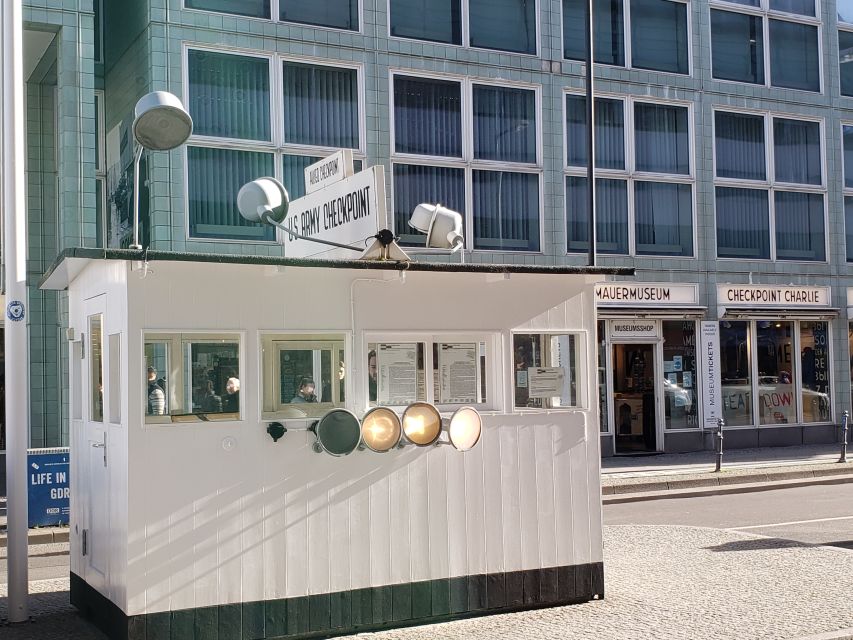
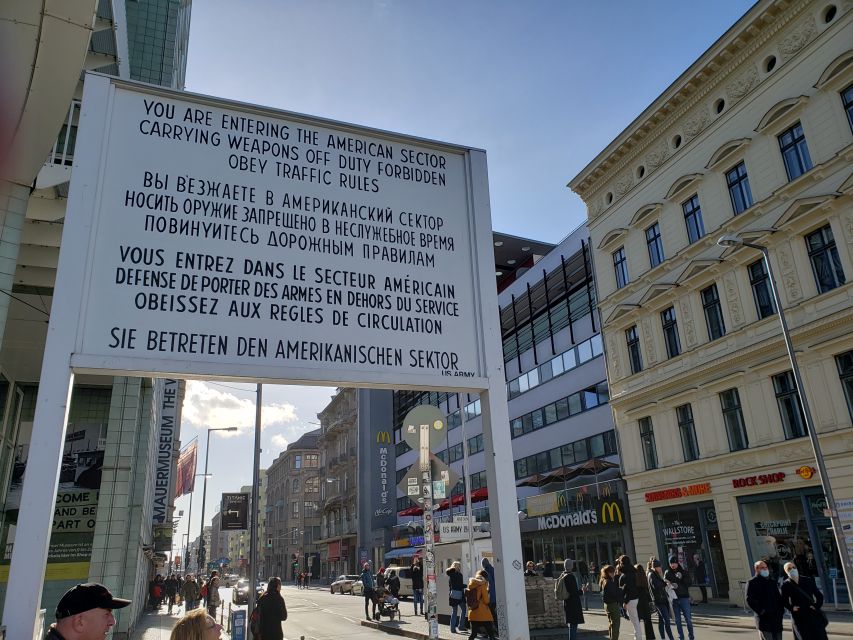
- Finish at Checkpoint Charlie: End at one of Berlin’s best-known former crossing points.
Why this short walk tells Berlin’s story well
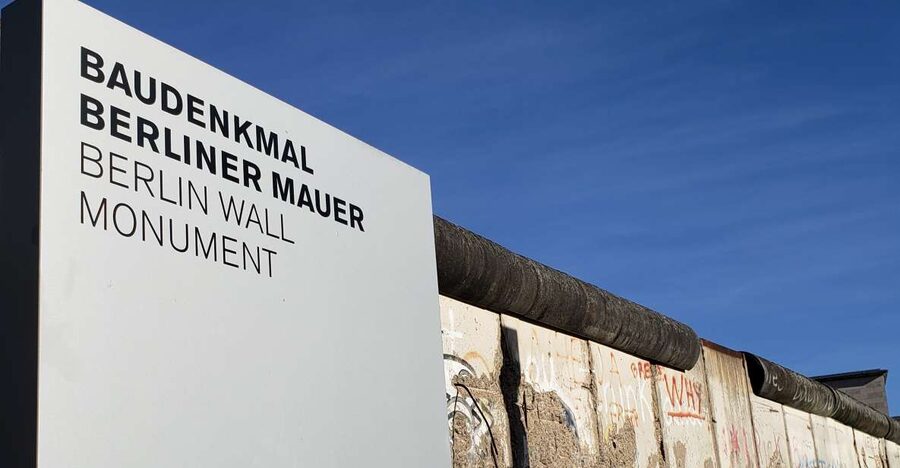
The Berlin Wall is easy to misunderstand if you see only a painted fragment or a famous checkpoint sign. This tour helps you connect the physical remains with the rules, fear, and daily choices that shaped life in a divided city.
You begin at the underground station U Bernauer Straße. Meet your guide upstairs at the exit marked Bernauer Strasse. A sign with your name identifies the meeting point, which is useful at a busy transit stop.
From there, the route follows the former borderline toward the center. That direction matters. You are not simply hopping between famous attractions. You are tracing the division across the city, while your guide explains how the Wall was built, how it changed, and how it finally fell.
The private format is a real advantage here. Cold War history raises basic questions, but it also leads to personal ones. You may want to ask about escape attempts, border controls, family separation, or what happened at a particular section of Wall. With only your own group, you can pause for those questions instead of waiting for a large crowd to catch up.
Past guides have included Stephanie and Stefan. Stephanie was praised for telling the story in an authentic, friendly way, while Stefan led an excellent explanation of the Cold War and its effect on the divided city. Those comments point to the quality that matters most on this route: clear storytelling tied to the places under your feet.
Other divided-city history in Berlin:
- Berlin: Third Reich and Cold War 2 Hour Walking Tour
★ 4.9 · 6,830 reviews - Berlin’s Best: 2 Hour Walking Tour Third Reich and the Cold War
★ 5.0 · 5,486 reviews - Skip-the-Line: Berlin Wall Museum at Checkpoint Charlie
★ 4.1 · 2,041 reviews
Bernauer Strasse and the Wall’s physical remains
Bernauer Strasse is the strongest opening point because it is not just a place where a piece of Wall happens to survive. It is an open-air documentation area, with remnants and information that help you see how the border cut through a real neighborhood.
Your guide introduces the construction of the Berlin Wall and explains what remains today. You also hear about the people who lived along this line and the ways division affected homes, streets, and movement.
This is where the tour can give you a feel for the city’s Cold War reality. The Wall was not an abstract line on a map. It split communities and made familiar journeys subject to strict control. A guide can connect those large political decisions with the smaller human choices that followed.
The site also helps you understand why escape attempts were so difficult. You learn about places where people tried to get across, along with the wider border system meant to stop them. The exact stories covered can depend on your guide, but escape routes are a central part of the walk.
I would give this opening your full attention. If you arrive early, use the time to get your bearings around the station, then meet the guide at the correct exit. The tour is only two hours, so a late start can reduce time for questions and explanations.
Walking the former borderline into central Berlin
After Bernauer Strasse, you follow the former border through Berlin. This is the part of the route that turns separate Cold War facts into one connected story.
Your guide explains daily life in the divided city as you move along. That can include how border controls affected ordinary people, how escapes were attempted, and how the Wall changed the shape of the city. The value is in the connection between the physical route and the human experience.
A private walk also lets you control the balance between movement and discussion. If your group already knows the political background, you can ask for more attention to daily life and escape attempts. If the subject is new to you, your guide can focus on the basic sequence of events: construction, life beside the Wall, escape efforts, and the Wall’s fall.
The route is likely to feel more thoughtful than entertaining. This is a serious subject, and the best moments come from seeing what remains while considering how quickly a normal street could become a controlled border zone.
You should also expect an outdoor experience. Wear shoes suitable for walking and check the weather before you set out. The tour is listed as wheelchair accessible, but if your group has particular mobility needs, it is sensible to confirm the exact route and any access details with the local partner before booking.
The Palace of Tears and the personal cost of crossing
The tour includes a guided visit to the Palace of Tears, known in German as Tränenpalast. It was a former border crossing station, and its name reflects the emotional farewells that took place there.
This stop adds something different from the Wall remains. Bernauer Strasse helps you see the border itself. The Palace of Tears helps you think about the people passing through it, especially the strain of controlled departures and goodbyes.
I find this kind of stop valuable because it gives the Cold War story a human scale. A border station can look like a building, but its meaning comes from the people who had to use it and the people who could not pass freely.
Your guide leads you through the stop and explains its role. The time available is limited, so do not expect a long museum visit with every exhibit covered. Instead, treat it as one important chapter in the route, linking official border control with the private emotions of divided families.
The Palace of Tears also breaks up the walk at a useful point. You move from Wall remains and escape stories to a border station where the rules of division were applied to people making real journeys.
Other walks around Berlin:
- Discover Berlin Half-Day Walking Tour
★ 5.0 · 9,624 reviews - Berlin: Discover Berlin Walking Tour
★ 4.9 · 5,998 reviews - Berlin: Hidden Backyards Guided Walking Tour
★ 4.8 · 5,360 reviews - Third Reich Berlin: Hitler and WWII Walking Tour
★ 5.0 · 3,301 reviews
Seeing the former death strip from above
If the viewing platform is open, you can look over the former death strip, the heavily controlled zone designed to prevent escape attempts. This view helps show that the Wall was more than a single concrete barrier.
The word death strip refers to the border area between sections of the security system. From above, you may get a clearer sense of the space used to monitor and block crossings. The sight is important because photographs of one Wall segment often hide the wider system around it.
The condition here is simple: the platform may not be open. Do not book this walk solely for that view. The route still includes Bernauer Strasse, the Palace of Tears, escape locations, and Checkpoint Charlie, but the platform should be treated as a possible extra rather than a guarantee.
Your guide can place the view in context, which makes it more useful than seeing the area without explanation. You will understand why escape was so dangerous and why the border required more than one wall or fence to control movement.
Checkpoint Charlie gives the walk a famous ending
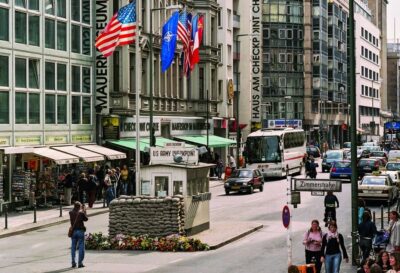
The tour concludes at Checkpoint Charlie, another former border crossing station. It is one of Berlin’s most recognizable Cold War sites, so ending here gives the route a clear final point.
Checkpoint Charlie is famous, but fame can make a site feel simplified. The value of arriving with the earlier parts of the route in mind is that you can place the checkpoint within a wider story of crossings, restrictions, and escape attempts.
By this stage, you have seen a surviving Wall area, followed the former borderline, heard about daily life, visited the Palace of Tears, and possibly viewed the former death strip. Checkpoint Charlie then works as a closing chapter rather than the whole story.
This ending is also practical. You finish in central Berlin rather than returning to the starting station. The tour does not include a return transfer, so plan your next stop from Checkpoint Charlie. The exact onward journey is not part of the experience, but ending there puts you in a useful central position for continuing your day.
What the private price means at $22 per person
At $22 per person, this is a reasonable price for a private two-hour introduction to Berlin’s Cold War sites. You are paying for a local guide and a route that links several locations, not just for access to one attraction.
The value improves if your group wants to ask questions or needs the guide to switch between different levels of background knowledge. A private tour can be especially useful for families, couples, or friends who prefer a conversation over a fixed speech.
Past groups have used both English and German. One guide handled English for Canadian friends and German for children in the same group, which shows how useful the language flexibility can be for mixed-language parties. The stated tour languages are English and German, so choose the language that lets your group follow the subject most easily.
The price does not turn the walk into a full-day Berlin history course. You will not cover every Wall memorial or Cold War museum in two hours. Think of it as a focused route that gives you the framework to explore more on your own afterward.
The free cancellation option up to 24 hours before the start and the reserve now, pay later choice add flexibility. They matter if your Berlin schedule is still changing, but the main value remains the guide’s ability to connect places that you might otherwise see separately.
Who will get the most from this walk
I would recommend this tour to anyone visiting Berlin for the first time who wants a clear introduction to the Wall and the divided city. It suits people who learn best by walking through real places rather than reading only in a museum.
It is also a good fit for families with older children, provided they are ready for a serious subject. The private setting lets you ask the guide to explain difficult ideas in a way that suits your group. The bilingual example is useful for families with both English and German speakers.
History fans may appreciate the focus on escape attempts and border stations. People with limited time will like the compact route, since it covers several major Cold War points in two hours.
I would be more cautious if you want a relaxed sightseeing walk with lots of free time for photographs. This tour is built around explanation and historical context. You will walk, listen, and move on to the next site, with the private format giving you some control but not turning it into an unstructured outing.
Practical details before you reserve
The meeting point is upstairs at the U Bernauer Straße exit marked Bernauer Strasse. Your guide carries a sign with your name, and the voucher includes a phone number for the local partner if you are late or cannot find the guide.
The tour lasts two hours and operates as a private group experience. Starting times depend on availability, so check the schedule before you build the rest of your day around it.
English and German are available. The tour is listed as wheelchair accessible, but ask about your specific needs if you require detailed access information.
Since the viewing platform is conditional, keep your expectations flexible. The rest of the route does not depend on that single viewpoint.
Should you book the Berlin Wall and Cold War walk?
Book it if you want a short, focused way to understand how the Wall shaped Berlin and ordinary lives. The combination of Bernauer Strasse, escape sites, the Palace of Tears, a possible view of the former death strip, and Checkpoint Charlie gives you more substance than a quick photo stop.
The best reason to choose it is the private guide. Past guides Stephanie and Stefan were praised for personal, authentic storytelling, and the bilingual format can work well for mixed-language groups.
Skip it if you want a broad survey of all Berlin history or a long museum visit. For $22 per person, two hours, and a private format, this is a strong choice for a first look at the Cold War city, especially when you want the places explained as you see them.
FAQ
How long is the Berlin Wall and Cold War walking tour?
The tour lasts two hours.
Where does the tour begin?
Meet your guide upstairs at the U Bernauer Straße underground station, at the exit marked Bernauer Strasse.
Where does the tour finish?
The walk ends at Checkpoint Charlie.
Is the tour private?
Yes. It is offered for a private group.
Which languages are available?
The live guide is available in English or German.
Does the tour include the Palace of Tears?
Yes. The itinerary includes a guided visit to the Palace of Tears, also called Tränenpalast.
Can I see the former death strip?
You can view it from a viewing platform if the platform is open. Its availability is not guaranteed.
Is the tour wheelchair accessible?
Yes. The activity is listed as wheelchair accessible.
Just added in Berlin
- Private One way Airport Transfer Berlin Airport To Berlin★ 3.5 · 17 reviews
- Private Walking Tour: Berlin Wall, Cold War and Checkpoint Charlie★ 5.0 · 37 reviews
- Modern Berlin Private Walking Tour: Diverse, Vibrant and Exciting German Capital★ 5.0 · 13 reviews
- Private Day Trip to Potsdam from Berlin by Train★ 4.5 · 27 reviews
- City Explorer: Potsdam Private Day Trip★ 4.5 · 10 reviews
- Private Half-Day Sightseeing Tour in Berlin★ 3.5 · 6 reviews
- Berlin Private Custom Tour in a Minivan, East and West★ 5.0 · 123 reviews
- Berlin Private Custom 5-Hour Tour by Car★ 5.0 · 30 reviews
Berlin Wall & Cold War Tours, compared.

Skip-the-Line: Berlin Wall Museum at Checkpoint Charlie
Read our review →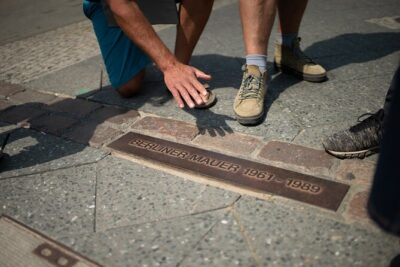
Cold War, Berlin Wall, Spies and the East Side Gallery
Read our review →
Guided Bike Tour of the Berlin Wall and Third Reich
Read our review →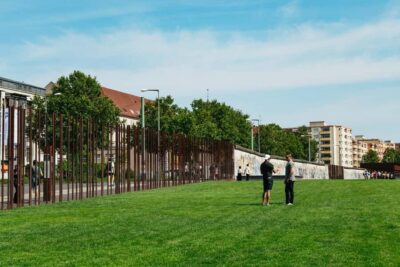
East Berlin and the Berlin Wall 2-Hour Walking Tour
Read our review →Browse the lists this tour appears in