
Reviewed · THIRD REICH & WWII TOURS
Berlin: Jewish Walking Tour including World War II
Berlin’s Jewish story is told most clearly on foot, where a synagogue, school, cemetery, workshop, and memorial sit within the ordinary streets of Mitte. This private walk with Tal connects the community’s growth from the 17th century through its golden era, Nazi terror, and rebuilding after the war. I especially like the stop at the Otto Weidt Museum, where one person’s efforts to protect Jewish workers become a human-scale story, and the attention given to the often-overlooked Ostjuden, Eastern European Jews who came to Berlin after persecution elsewhere.
I also like that you can shape the walk around your interests, with optional additions such as the Kindertransport Memorial or Grunewald Deportation Memorial. The main caution is the $318 per person price, which makes sense mainly for visitors who want a private, serious history lesson rather than a quick sightseeing stroll. The route also involves several hours on foot, and the accessibility information is inconsistent, so confirm that point before booking.
Key points to know before you book
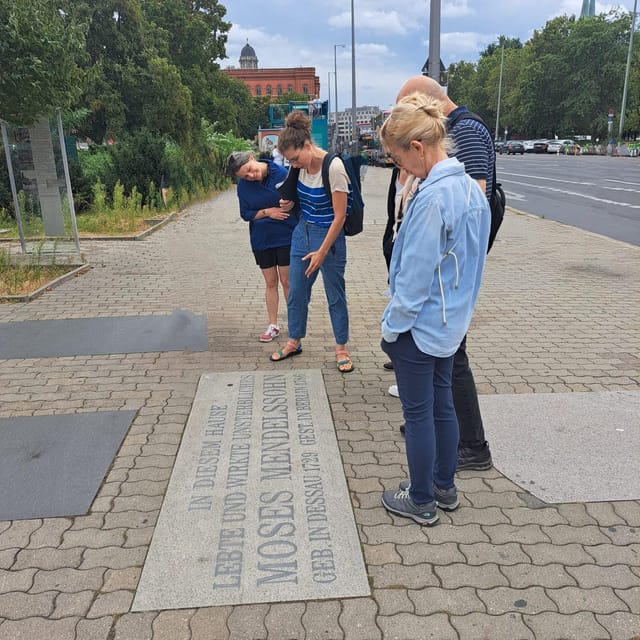
- Moses Mendelssohn’s Berlin: Connect the philosopher’s life to the growth of the city’s Jewish community.
- A walk through Mitte: See Hackescher Markt, the old cemetery, former community institutions, memorials, and the New Synagogue from outside.
- Otto Weidt’s workshop: Visit the museum dedicated to a Berliner who helped protect Jewish workers during the Holocaust.
- The Women’s Block memorial: Learn about the 1943 protest by non-Jewish wives and relatives demanding the release of detained Jewish men.
- Private and adjustable: Tal can adapt the walk and add sites such as Schönhauser Allee Cemetery or Grunewald.
- English or Hebrew: The tour lasts about 3.5 to 4 hours and includes a short break.
Why this Jewish Berlin walk matters
This is not a tour that treats Jewish Berlin as a single chapter ending in 1945. Tal presents a longer story: the community’s return in the second half of the 17th century, its growing confidence and internal debates, the arrival of Eastern European Jews, the destruction of the Nazi period, and the question of what Jewish life looks like in Berlin now.
That wider frame makes the route more useful than a list of Holocaust memorials. You’ll hear about the era of Moses Mendelssohn, whose work helped shape Berlin’s Jewish intellectual life, and about the tensions created when German Jews encountered newer arrivals from Eastern Europe. The tour also touches on divisions within the community, including disagreements over religious practice and the introduction of an organ.
Tal brings both academic and professional experience to the subject. Her post-doctoral work examines how current staff at Berlin’s Charité hospital deal with the institution’s role and past during the 1930s and 1940s. That background matters because this subject demands care, not just dates and dramatic stories.
More Third Reich and WWII Tours in Berlin
- Berlin: Third Reich and Cold War 2 Hour Walking Tour
★ 4.9 · 6,830 reviews - Berlin’s Best: 2 Hour Walking Tour Third Reich and the Cold War
★ 5.0 · 5,486 reviews - Third Reich Berlin: Hitler and WWII Walking Tour
★ 5.0 · 3,301 reviews
Starting at Hackescher Markt
Meet in front of Starbucks near Hackescher Markt, a convenient central point in Mitte. The area is important to the tour because it became a focal point for Ostjuden, Jewish people from Eastern Europe who came to Berlin after pogroms and other persecution.
The opening section gives you a useful sense of Jewish Berlin as a place of movement and change. The community was not fixed or uniform. German Jews and Eastern European Jews had different customs, social positions, and ideas about identity. Tal uses the streets around Hackescher Markt to explain those contrasts.
You’ll spend about 15 minutes here. It is a short stop, but it sets up one of the tour’s main ideas: Berlin’s Jewish community developed through several waves of arrival, adaptation, and disagreement. Wear shoes that can handle city pavement, and bring water. The tour is long enough that small comforts matter.
The Women’s Block and a rare story of protest
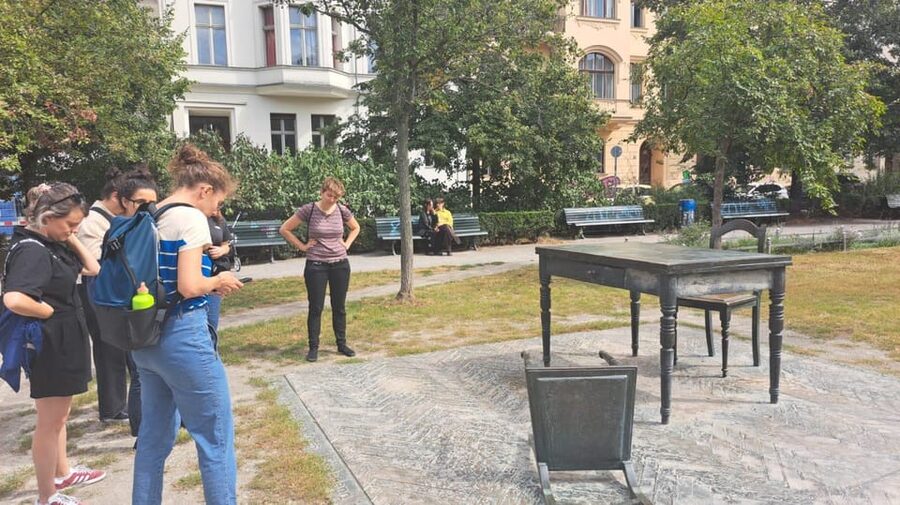
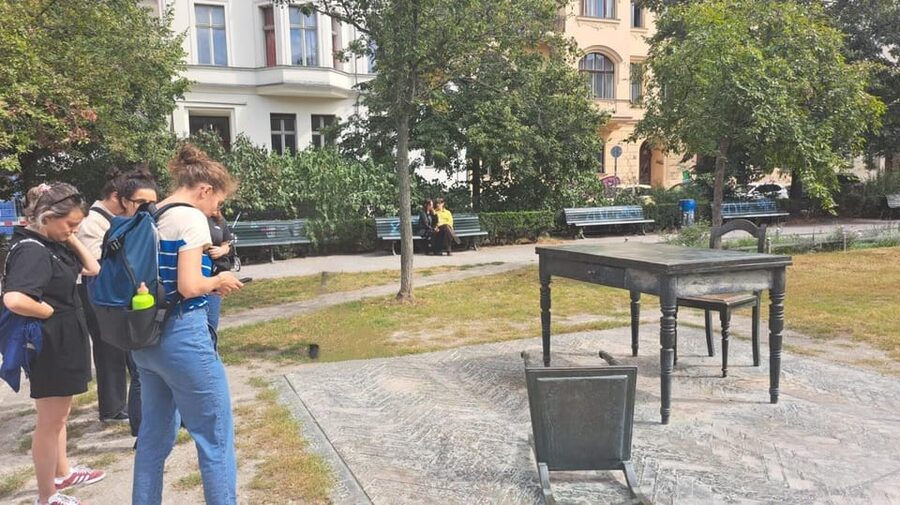
The next major stop is the Women’s Block memorial, where Tal explains the 1943 protest by women demanding the release of Jewish men who had been detained by the Nazi regime. The guided visit lasts about 20 minutes.
This is a valuable stop because it focuses on a specific act of resistance rather than speaking only in broad terms about persecution. It also raises difficult questions about courage, public pressure, family ties, and the limits of protest under dictatorship.
The memorial is one of the places where the tour shifts from community development to wartime destruction. Tal’s approach, according to the shape of the tour, is to place the event within the larger story rather than present it as an isolated anecdote. You get a concrete Berlin location and a human story, not just another date in a timeline.
Otto Weidt’s workshop and the personal scale of the Holocaust
The Otto Weidt Workshop for the Blind is likely to be one of the strongest parts of the walk. You receive admission to the museum, except on days when it is closed, and the guided visit lasts around 30 minutes.
Otto Weidt ran a workshop employing blind and deaf Jewish people. The museum focuses on his efforts to protect workers from deportation and death. The story has a direct, personal scale: a workplace, its employees, and the choices made by one employer under Nazi rule.
I like this stop because it gives the history a setting you can picture. Instead of only hearing about laws, deportations, and statistics, you learn how persecution affected people at work and how Weidt tried to use his position to help them. Tal’s personal stories and historical context are especially useful here.
The museum is not just another point on a walking map. It also provides an indoor pause after several outdoor stops. Check the operating schedule before you commit to the route, since museum admission is not available when the museum is closed.
Other trips into the same period in Berlin:
- Berlin: Third Reich, Hitler, and WWII Walking Tour
★ 4.9 · 1,133 reviews - Berlin Third Reich Sites: Half-Day Walking Tour
★ 5.0 · 835 reviews - Berlin: Guided Bike Tour of the Berlin Wall and Third Reich
★ 4.7 · 499 reviews - Hitler’s Germany: Berlin During the Third Reich & WWII
★ 4.8 · 476 reviews
The old cemetery and Moses Mendelssohn
The walk continues to the old Jewish cemetery, the community’s first cemetery in Berlin. Moses Mendelssohn is buried here, making the site especially important for understanding the earlier period of Jewish life in the city.
Admission to the old cemetery is included except on Jewish holidays and Saturdays. That limitation matters, so check the tour date carefully if seeing the cemetery is a priority.
A cemetery can tell you more than a biography alone. Here, Tal connects Mendelssohn’s burial place with the community’s first institutions and its gradual establishment in Berlin. The stop helps you see that the city’s Jewish story did not begin with the New Synagogue or the 20th century. Its roots reach much further back.
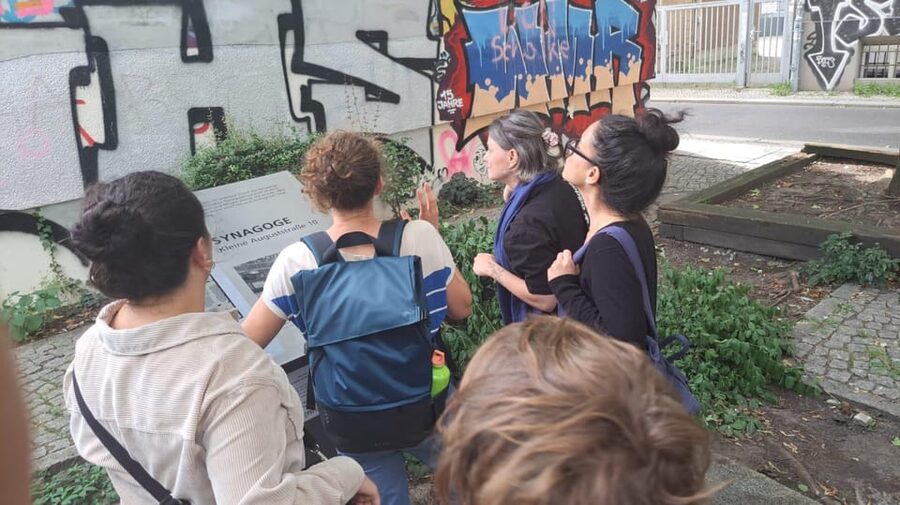
The route also includes the site of the old synagogue, the community’s first synagogue. The itinerary gives this stop about 20 minutes. Although the surviving details may be limited, the location helps you understand how the community moved from its early foundations toward larger institutions.
The New Synagogue and Berlin’s golden era
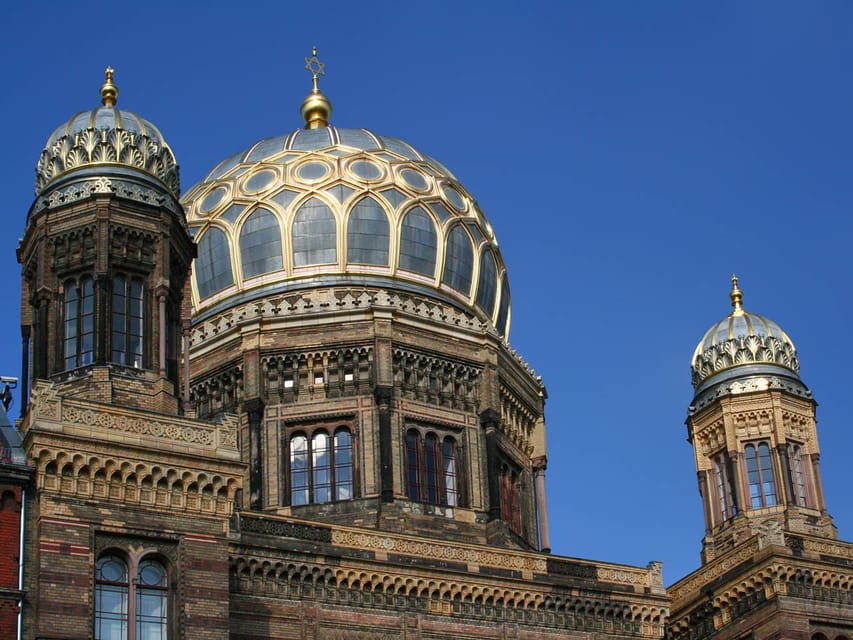
The New Synagogue is the visual high point of the route. You’ll see the building from outside and hear how it represented the confidence and prosperity of Berlin’s Jewish community during its golden era.
The synagogue is also tied to the community’s fall, so this is not simply an architectural photo stop. Its place in the tour is symbolic: a major institution reflects the scale Jewish life had reached, while the surrounding history shows how quickly that life was attacked and dismantled.
Admission to Centrum Judaicum, the museum inside the New Synagogue, is not included. If you want to enter, plan for a separate ticket. The outdoor portion still has value, but visitors who want the fullest visit should decide in advance if the museum fits their schedule and budget.
Tal also points out community institutions such as the Mendelssohn School and the girls’ school. These sites broaden the story beyond famous men and religious buildings. Schools show how a community organized daily life, education, and the future.
From community institutions to wartime memory
Several itinerary sections are listed simply as guided stops, but the stated themes make their purpose clear. Tal uses the institutions and streets of Mitte to explain how Jewish life developed, divided, and eventually faced Nazi persecution.
You’ll hear about the movement of Jewish residents toward the west of Berlin, as well as the arrival of Ostjuden in the city. This is useful context because it prevents an overly tidy picture of one united community. There were differences in background, worship, language, social status, and attitudes toward newcomers.
The tour also deals with Berlin’s Jewish present, not only its past. The overview promises attention to what is happening today, although the exact modern sites are not specified. If current Jewish life is central to your interests, tell Tal when arranging the tour so the private format can work in your favor.
The walk ends with the Jewish cemetery memorial according to the route description. Another meeting-point note says the activity ends back at the starting point, so confirm the final location with Tal before the day of the tour. That small detail matters if you have a train, museum reservation, or dinner booking afterward.
Optional extensions for a longer history lesson
You can extend the tour for additional time and cost. These options make sense if you want to move beyond Mitte and focus on a particular theme.
Schönhauser Allee Cemetery is the final resting place of well-known members of Berlin’s Jewish community from its golden era. It would add more detail about the people who shaped the community before the Nazi period.
The Kindertransport Memorial at Friedrichstraße Station focuses on children sent out of Nazi-controlled territory to safety. The site adds a family and refugee dimension to the wartime story.
The Grunewald Deportation Memorial commemorates the deportation of Berlin’s Jews. It would make the machinery of persecution more visible and connect central Berlin’s community story with the forced removal of its people.
These additions are not minor detours in terms of time. They cost extra and lengthen an already substantial walk. I would choose one based on your main interest rather than trying to add everything.
Is $318 per person good value?
At $318 per person, this is a costly walking tour. The price is easier to justify if you are traveling as a private party, want to ask detailed questions, and value a guide with specialist academic experience. It is harder to justify if you simply want a general introduction to Jewish Berlin or a short overview of Holocaust sites.
The included museum and cemetery access add some value, but the New Synagogue museum requires a separate ticket. Meals and drinks are also not included. The main purchase is Tal’s time, interpretation, and flexibility.
The private format is important. You can ask about Moses Mendelssohn, religious reform, the Ostjuden, wartime resistance, the Charité’s past, or present-day Jewish life without being limited to a fixed group discussion. The tour’s strongest feedback emphasizes Tal’s passion, historical context, and personal stories. That matches the design of this experience: it is built around conversation and explanation, not just movement between landmarks.
Who should take this tour?
I would recommend it to visitors who already know a little about German history and want to connect the major events to actual streets and institutions. It also suits anyone with a personal or academic interest in Jewish history, Berlin’s 19th-century community, Holocaust memory, or the city’s Jewish life today.
The tour may be too long or emotionally demanding for someone looking for light sightseeing. It is also not a good fit if you dislike walking, need a short route, or want guaranteed access to every museum listed. Bring a hat, sunscreen, water, and a head covering or kippah. Flash photography is not allowed, and smoking is not permitted.
The accessibility information needs special attention. The activity details identify the tour as wheelchair accessible, but they also say it is not suitable for people with mobility impairments or wheelchair users. That is a direct conflict. Ask Tal to confirm the route, surfaces, cemetery access, and museum access before paying.
Free cancellation is available up to 24 hours before the tour, and you can reserve now and pay later. Those policies help if your Berlin plans are still shifting, but they do not change the need to check museum and cemetery opening restrictions.
My verdict: book it for depth, not speed
Book this tour if you want a private, carefully connected account of Jewish Berlin, led in English or Hebrew by Tal, with time for questions and the option to adjust the route. The Otto Weidt Museum, Women’s Block, old cemetery, and New Synagogue create a strong sequence from community life to persecution and remembrance.
Skip it if $318 feels too high for a walking tour, if you want a broad city tour with only a short Jewish-history section, or if several hours on foot will be uncomfortable. For the right audience, the value lies in Tal’s interpretation and the chance to see how Jewish Berlin developed, fractured, suffered, and continues.
FAQ
How long does the Berlin Jewish walking tour last?
The main tour lasts about 3.5 to 4 hours and includes a short break.
Where does the tour start?
The meeting point is in front of Starbucks near Hackescher Markt in Berlin Mitte.
Where does the tour finish?
The route description lists the Jewish cemetery memorial as the final stop. Another meeting-point detail says the activity ends back at the meeting point, so confirm the exact finish location with Tal.
Is the tour private?
Yes. It is offered as a private group experience.
Which languages are available?
Tal guides the tour in English or Hebrew.
Is admission to the New Synagogue museum included?
No. The tour visits the New Synagogue from outside, while admission to Centrum Judaicum requires a separate ticket.
What should I bring?
Wear comfortable walking shoes and dress for the weather. Bring water, a hat, sunscreen, and a head covering or kippah. Flash photography and smoking are not allowed.
More walking tours in Berlin
- Discover Berlin Half-Day Walking Tour
★ 5.0 · 9,624 reviews - Berlin: Discover Berlin Walking Tour
★ 4.9 · 5,998 reviews - Berlin: Hidden Backyards Guided Walking Tour
★ 4.8 · 5,360 reviews - Berlin: Alternative Berlin Walking Tour
★ 4.6 · 1,204 reviews
Just added in Berlin
- Private One way Airport Transfer Berlin Airport To Berlin★ 3.5 · 17 reviews
- Private Walking Tour: Berlin Wall, Cold War and Checkpoint Charlie★ 5.0 · 37 reviews
- Modern Berlin Private Walking Tour: Diverse, Vibrant and Exciting German Capital★ 5.0 · 13 reviews
- Private Day Trip to Potsdam from Berlin by Train★ 4.5 · 27 reviews
- City Explorer: Potsdam Private Day Trip★ 4.5 · 10 reviews
- Berlin Private Custom 5-Hour Tour by Car★ 5.0 · 30 reviews
- Private Half-Day Sightseeing Tour in Berlin★ 3.5 · 6 reviews
- Berlin Private Custom Tour in a Minivan, East and West★ 5.0 · 123 reviews
Third Reich & WWII Tours, compared.
Third Reich Berlin: Hitler and WWII Walking Tour
Read our review →
Walking Tour of Former Nazi Party Rally Grounds
Read our review →
Berlin Third Reich Sites: Half-Day Walking Tour
Read our review →
Birthplace of the Third Reich Guided Walking Tour
Read our review →Browse the lists this tour appears in