
Reviewed · THIRD REICH & WWII TOURS
Path of Resistance: Berlin’s Hidden Holocaust Stories
Berlin’s Holocaust story is often told through major memorials and famous names. This walk takes a more personal route, from the workshop where Otto Weidt protected blind and deaf Jewish workers to the street where German women demanded the release of their Jewish husbands. Ordinary courage is the main subject here, not just the actions of famous leaders.
I like the way the tour links small memorials with personal stories, so the history feels tied to real streets and buildings. I also like the small group format, with no more than 10 participants listed for the experience, although another description gives a maximum of 15. The main drawback is the emotional weight: this is a serious tour, and the amount of ground covered in 2.5 hours means some stops receive only 10 or 15 minutes.
Key points to know
- Otto Weidt’s workshop: See the place where a Berlin brushmaker sheltered Jewish employees who were blind or deaf.
- Rosenstraße protest: Learn how German women publicly demanded the return of their Jewish husbands.
- Bebelplatz book burning memorial: Connect the 1933 attack on books with the wider Nazi assault on free thought.
- Personal resistance stories: Hear about quiet defiance, collective action, and Nicholas Winton’s rescue work.
- Historic Jewish quarter: Walk past the New Synagogue, Moses Mendelssohn school, old cemetery, and Stolpersteine memorials.
- Practical format: The English tour lasts 2.5 hours, is wheelchair accessible, runs in all weather, and ends near Berlin Friedrichstraße station according to the route details.
A Berlin walk built around acts of courage
This is not a general sightseeing walk with a few wartime facts added on. The focus is resistance: why some Germans opposed Nazi rule, why others stayed silent, and how antisemitism developed into government-backed persecution and murder.
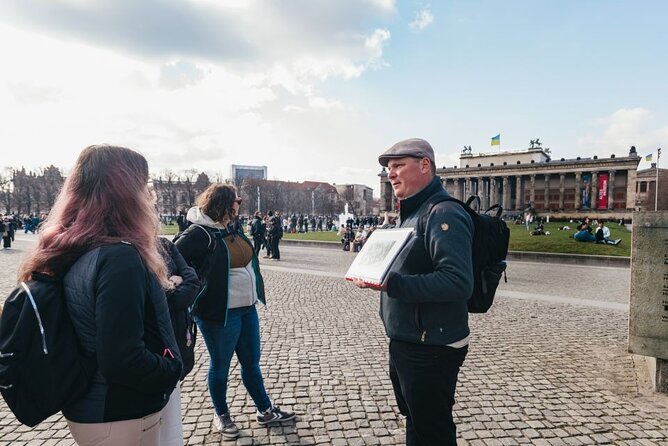
You begin at the former Imperial Post Office. Arrive 10 minutes early and look for the guide at the main entrance, holding a blue umbrella. From there, the route moves through Berlin’s old Jewish quarter before heading toward Museum Island, Neue Wache, Bebelplatz, and the final memorial near Friedrichstraße.
The guide is the key to the experience. Tom is described as friendly, patient, and able to handle questions on sensitive subjects. Hannah brings strong feeling to stories about lesser-known heroes, and her approach makes the time pass quickly without turning the subject into entertainment. The best guides on a topic like this know when to explain and when to let a place speak for itself.
More Third Reich and WWII Tours in Berlin
- Berlin: Third Reich and Cold War 2 Hour Walking Tour
★ 4.9 · 6,830 reviews - Berlin’s Best: 2 Hour Walking Tour Third Reich and the Cold War
★ 5.0 · 5,486 reviews - Third Reich Berlin: Hitler and WWII Walking Tour
★ 5.0 · 3,301 reviews
New Synagogue and the Moses Mendelssohn school
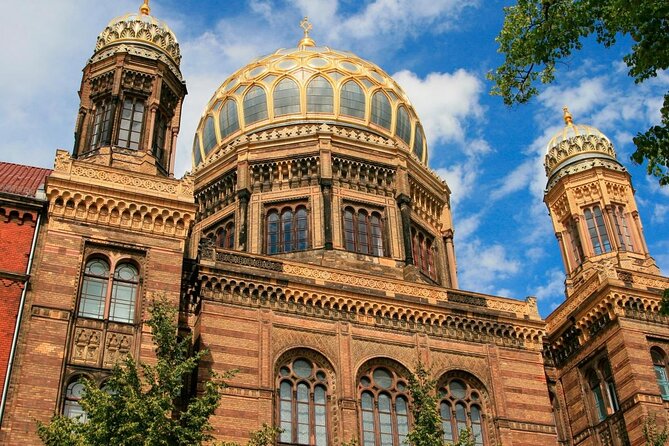
The first major stop is the New Synagogue Berlin, also known as the Jewish Centre. You spend about 15 minutes here with the guide, using the building and surrounding area to discuss Jewish life in Berlin and the pressure placed on Jewish people under Nazi rule.
The nearby Jüdisches Gymnasium Moses Mendelssohn receives about 10 minutes. A former school is a useful stop because it shifts the story away from statistics. You begin to think about children, teachers, families, and the ordinary routines that persecution destroyed.
These opening stops help set the human scale of the tour. They also prepare you for the quieter memorials ahead. Do not expect long museum visits at every location. The format is a walking lesson, with short stops linked by the guide’s explanation.
Grosse Hamburger Strasse and the memory of a vanished community
At Grosse Hamburger Strasse Cemetery, you have about 15 minutes. This stop connects Berlin’s Jewish past with the deportations that tore families from their homes. The tour asks you to consider not only the people who were taken, but also the neighbors who saw what was happening and chose to resist, comply, or look away.
That question is one of the strongest parts of the walk. It avoids the easy idea that resistance belonged only to a few dramatic heroes. You hear about people who hid others, protected coworkers, passed on information, or objected in ways that carried real risk.
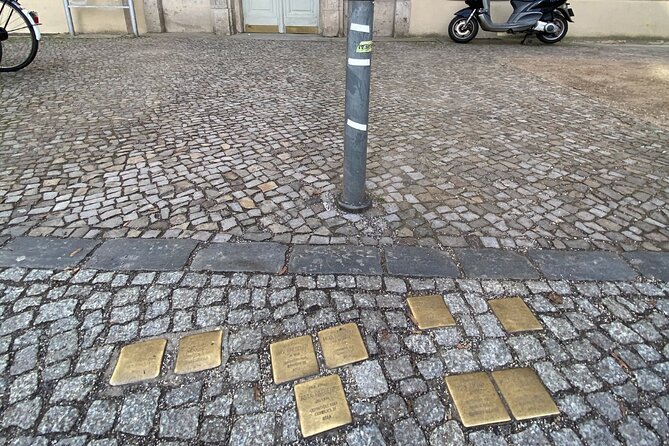
Berlin’s Stolpersteine, the small memorial stones set into pavements, add another layer. They mark individual people rather than treating the murdered Jewish population as one faceless group. The guide’s historical maps and Then and Now photographs are especially useful here, since modern streets can otherwise hide how much has changed.
Otto Weidt’s workshop and practical resistance
Otto Weidt’s Workshop for the Blind is the emotional center of the walk. You spend roughly 15 minutes at this location, learning how Weidt protected blind and deaf Jewish workers from persecution.
The power of the stop comes from its modest setting. This is not a grand government building or a battlefield. It was a workplace, and Weidt used his position to help people who were in danger. His story shows how resistance could grow from daily decisions: falsifying information, offering protection, or refusing to abandon employees.
The stop also raises a useful point about the word hero. Weidt’s actions were brave, but the tour does not suggest that resistance was simple or safe. The wider discussion includes people who resisted and people who did not. That balance matters, especially if you want a serious account rather than a neat tale of good people against bad ones.
Other trips into the same period in Berlin:
- Berlin: Third Reich, Hitler, and WWII Walking Tour
★ 4.9 · 1,133 reviews - Berlin Third Reich Sites: Half-Day Walking Tour
★ 5.0 · 835 reviews - Berlin: Guided Bike Tour of the Berlin Wall and Third Reich
★ 4.7 · 499 reviews - Hitler’s Germany: Berlin During the Third Reich & WWII
★ 4.8 · 476 reviews
Rosenstraße and the Block of Women
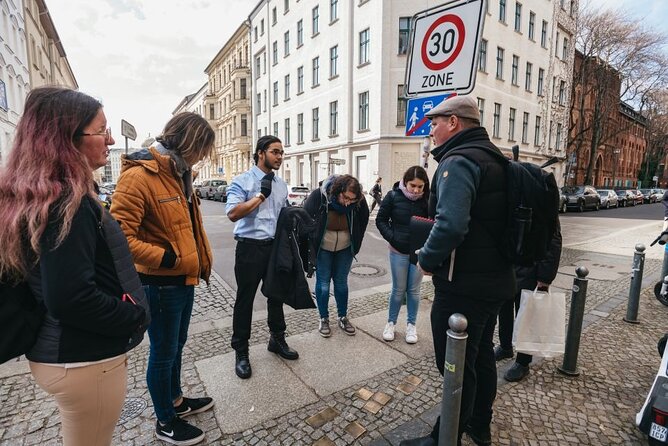
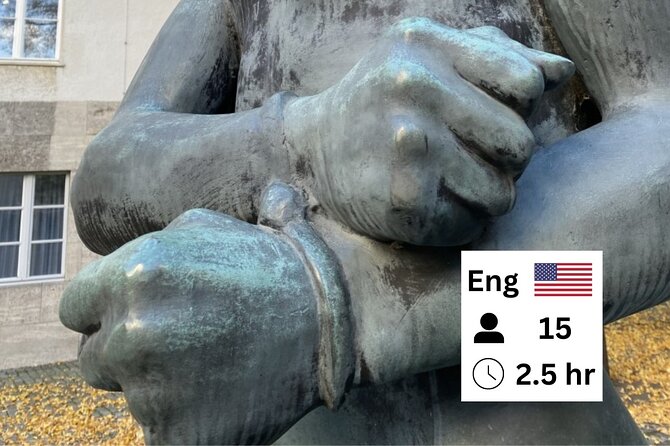
The Block of Women marks the site of the Rosenstraße Protest. You spend about 15 minutes learning how German women stood outside the detention site and demanded the release of their Jewish husbands.
This story gives the tour one of its clearest examples of collective action inside Germany. The protesters were not an underground army. They used public pressure, persistence, and the visibility of their protest to challenge the authorities.
The stop is brief, so your guide has to explain a complicated event quickly. Take the opportunity to ask questions. The tour includes interactive discussion and a question period, and this is one of the places where a thoughtful guide can help you understand why the protest mattered.
It also broadens the meaning of resistance. Defiance was not always secret or armed. Sometimes it meant refusing to leave when officials ordered people away.
Museum Island and Neue Wache
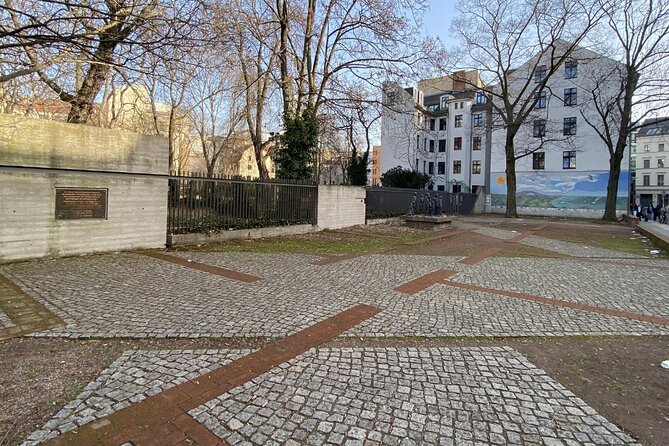
The route then crosses Museum Island for about 20 minutes. This is the longest walking section at a single listed stop, and it gives the guide room to connect the Jewish quarter with central Berlin’s political and cultural institutions.
You are still following the larger question of how Nazi ideology entered public life. The tour explains the belief in Aryan superiority and the Nazi classification of people into supposed sub-races. That material is essential because it shows how prejudice was turned into official policy, paperwork, exclusion, deportation, and murder.
Neue Wache provides another setting for reflection. The building is a major memorial site in central Berlin, and the guide uses it to place the Holocaust within the broader memory of war and state violence. This part may feel less directly tied to Jewish Berlin than the earlier stops, but it helps connect individual persecution to the wider system that enabled it.
Bebelplatz and the 1933 book burning
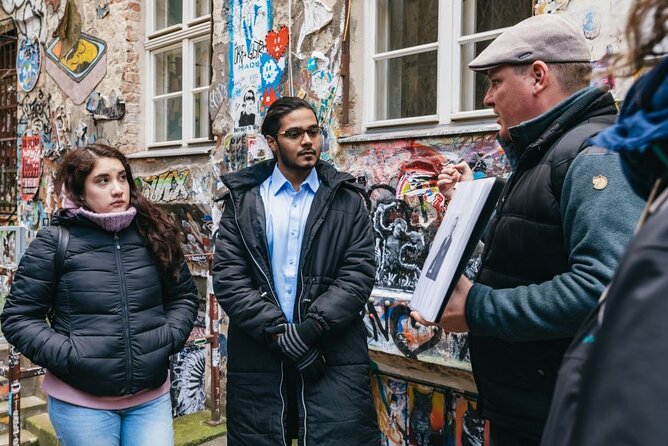
At Bebelplatz, you visit the memorial to the Nazi book burning of May 10, 1933. The stop lasts about 10 minutes, but its meaning is large.
The book burning signaled the Nazi attack on free thought, writers, scholars, and intellectual freedom. It also offers a clear early warning. The destruction of books came before the full machinery of genocide, showing how a government can begin by silencing ideas, humiliating opponents, and defining which people belong in public life.
I find this stop useful for understanding the sequence of Nazi rule. The tour does not treat the Holocaust as something that appeared without warning. It traces the connection between ideology, public propaganda, antisemitic laws, and physical violence.
Bebelplatz can be busy and open to the elements, so listen closely when the guide gathers the group. The memorial is easy to miss if you are walking through the square alone. Here, the explanation is the essential part.
Trains to Life, Trains to Death
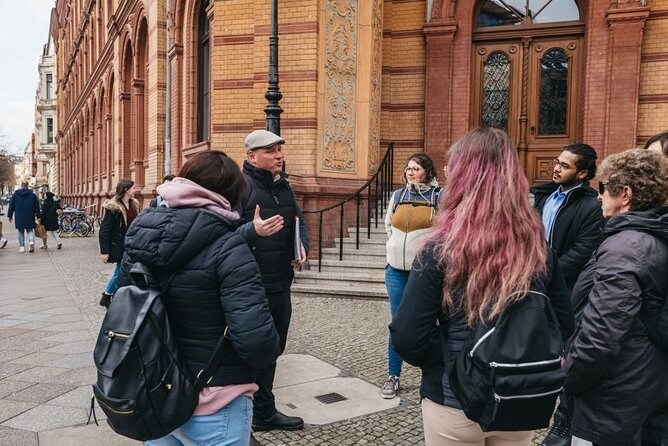
The final listed memorial is Trains to Life, Trains to Death, where you spend about 10 minutes. This stop brings the tour back to individual choices and rescue.
You hear about Nicholas Winton, sometimes called the British Schindler, who helped hundreds of Jewish children escape the Holocaust. His story gives the walk a different kind of resistance, one based on organizing escape and creating a chance for survival.
The title itself sets two paths beside each other. Some children were transported to safety, while countless others were deported toward death. The contrast is powerful because it avoids presenting rescue as a replacement for the scale of the crime. One person’s courage mattered enormously to those he helped, but it could not undo the larger disaster.
The tour ends at Berlin Friedrichstraße station according to the route description. Another meeting-point note says the activity ends back at the meeting point, so I would confirm the exact end location when booking. Either way, the route finishes in a useful central area for continuing your day.
What the $56 price gets you
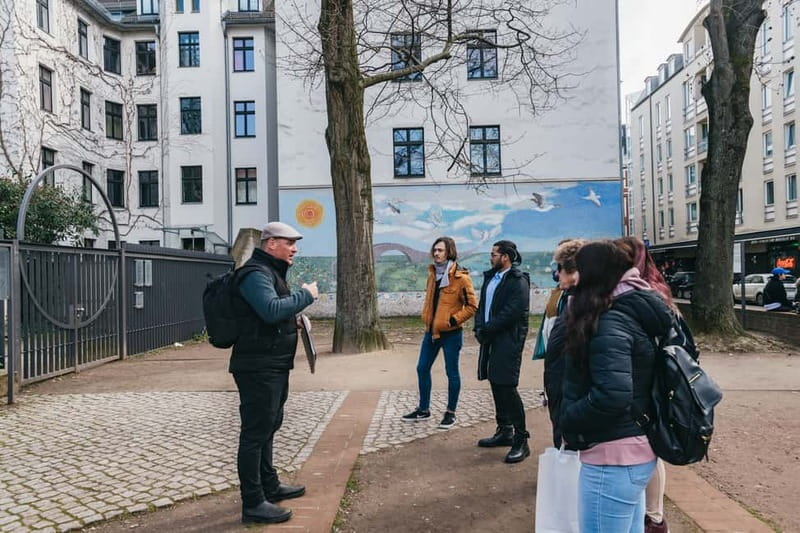
At $56 per person, this is not the cheapest way to walk around central Berlin. The value depends on how much structure and interpretation you want.
You are paying for a live English-speaking historian, a small group, museum and memorial entry, historical maps, Then and Now photographs, and time for questions. You also get access to places and stories that are easy to pass without understanding. If you walked the route alone, you could see several of the sites, but you would not automatically grasp how they connect.
The small group matters. A limit of 10 participants is stated in the practical details, while another description lists 15, so confirm the exact group size. Either limit is more personal than a large coach tour and gives you a fair chance to ask about difficult points.
The tour does not include food, drinks, or public transport. You do not need public transport during the walk, but comfortable shoes and water are sensible. Bring rain protection or sun cover because the tour runs in all weather.
Who will get the most from this walk
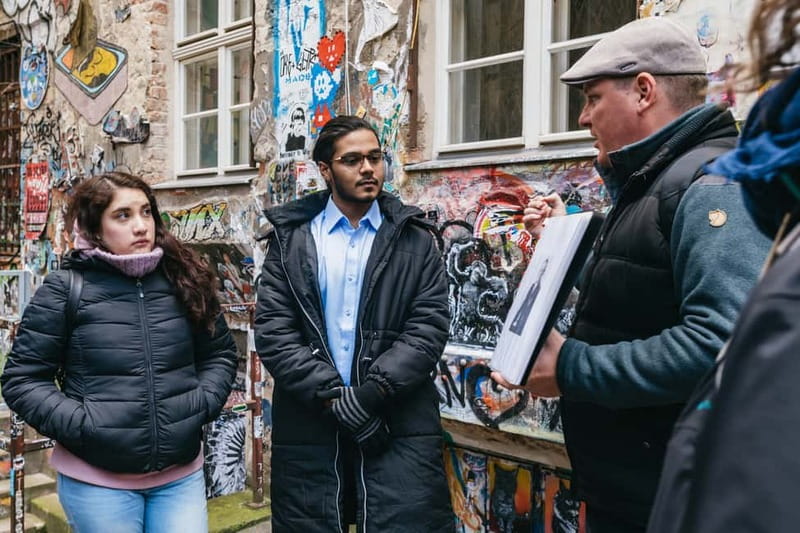
I would choose this tour if you want more than a list of dates and buildings. It suits history enthusiasts, first-time Berlin visitors who want a strong introduction to the Holocaust, and anyone interested in the choices made by ordinary people under dictatorship.
It is also a good fit if you have already visited major memorials and want a more local route through Jewish Berlin. The workshop, cemetery, school, protest site, and Stolpersteine give you a different view from a standard Nazi-era sightseeing circuit.
You should think carefully about the subject matter if your group includes young children or anyone who finds Holocaust history especially difficult. The tour is respectful, but it deals directly with deportation, murder, antisemitism, and the failure of many people to resist.
The walk is listed as wheelchair accessible. Berlin’s historic streets and outdoor stops can still make the physical experience depend on the day’s conditions, so ask the provider for current route details if you need specific access information.
Booking details worth checking
The tour is conducted in English and lasts 2.5 hours. Starting times vary, so check availability before planning meals or other timed visits.
You can cancel up to 24 hours before the start for a full refund, and reserve now while paying later. The meeting point is the former Imperial Post Office, with the guide holding a blue umbrella at the main entrance.
Wear comfortable shoes. Bring water and an umbrella or other weather protection. Alcohol and drugs are not allowed.
Should you book Path of Resistance?
Book it if you want Berlin’s Holocaust history told through people and choices rather than only through monuments. The strongest sections are Otto Weidt’s workshop, Rosenstraße, and the stories of lesser-known acts of courage. The guides, especially Tom and Hannah, bring the subject patience, feeling, and room for questions.
Skip it if you want a light city walk, a broad overview of Berlin, or long unhurried visits inside museums. This is a focused, serious route with several short stops and difficult material.
For most visitors who want a thoughtful introduction to Jewish Berlin and the many forms resistance could take, $56 is a fair price. Confirm the group-size limit and final meeting location before you pay, then arrive ready for two and a half hours of walking, listening, and remembering.
FAQ
How long does the tour last?
The walking tour lasts 2.5 hours.
What language is the tour conducted in?
The live tour guide speaks English.
Where does the tour begin?
The tour begins at the former Imperial Post Office. Arrive 10 minutes early and look for the guide at the main entrance holding a blue umbrella.
Where does the tour finish?
The route details list Berlin Friedrichstraße station as the finish. Another activity note says it ends back at the meeting point, so confirm the exact ending location when booking.
Is public transport needed during the walk?
No public transport ticket is required for the walking tour.
Is the tour wheelchair accessible?
Yes, the activity is listed as wheelchair accessible.
What should I bring?
Bring comfortable shoes, water, and an umbrella or other protection from rain or strong sun.
Does the tour run in bad weather?
Yes. The tour runs in all weather conditions, so dress appropriately and bring rain or sun protection.
What is included in the price?
The price includes an expert local historian, entry to museums and memorials, historical maps and Then and Now photographs, interactive discussion, questions and answers, and recommendations for further exploration.
Can I cancel the booking?
Yes. You can cancel up to 24 hours in advance for a full refund. You can also reserve now and pay later.
Just added in Berlin
- Private One way Airport Transfer Berlin Airport To Berlin★ 3.5 · 17 reviews
- Private Walking Tour: Berlin Wall, Cold War and Checkpoint Charlie★ 5.0 · 37 reviews
- Modern Berlin Private Walking Tour: Diverse, Vibrant and Exciting German Capital★ 5.0 · 13 reviews
- Private Day Trip to Potsdam from Berlin by Train★ 4.5 · 27 reviews
- City Explorer: Potsdam Private Day Trip★ 4.5 · 10 reviews
- Berlin Private Custom 5-Hour Tour by Car★ 5.0 · 30 reviews
- Private Half-Day Sightseeing Tour in Berlin★ 3.5 · 6 reviews
- Berlin Private Custom Tour in a Minivan, East and West★ 5.0 · 123 reviews
Third Reich & WWII Tours, compared.

Third Reich Berlin: Hitler and WWII Walking Tour
Read our review →
Walking Tour of Former Nazi Party Rally Grounds
Read our review →
Berlin Third Reich Sites: Half-Day Walking Tour
Read our review →
Birthplace of the Third Reich Guided Walking Tour
Read our review →Browse the lists this tour appears in