
Reviewed · THIRD REICH & WWII TOURS
Private Walking Tour in Berlin: Hitler’s Germany & WWII
Berlin’s Nazi past is written into ordinary streets, empty lots, memorials, and surviving government buildings. This private walking tour links those places into one clear story, beginning near Museum Island and ending at the Reichstag after about four hours.
I like the private format, since your group can spend longer at a stop when a question catches fire. I also like the route’s balance: it covers Nazi persecution, resistance, the Holocaust, and the war’s aftermath rather than focusing only on Hitler. The main drawback is that every site is viewed from outside, and the walk requires a public-transport ticket of about €4 in addition to the tour price.
Key points
- A four-hour route through Berlin’s Nazi-era center: You visit sites tied to persecution, resistance, government, war, and remembrance.
- Private guiding for your group only: The guide can adjust the pace and linger at places that matter most to you.
- Historian-led interpretation: Past guides have included Jasper, Stefan, Rohan, Lewis, and Xavier.
- No interior admissions: The tour explains each place from the street, with no museum or building entry included.
- A serious but varied itinerary: Otto Weidt, Johann Georg Elser, the Holocaust Memorial, and the Soviet Memorial add human stories beyond Nazi leadership.
- A practical endpoint: The walk finishes outside the Reichstag, a useful place to continue sightseeing.
Why this route gives Berlin’s Nazi past a human scale
A tour about Hitler’s Germany can easily become a parade of dates and military facts. This one has a wider lens. You see places tied to the Nazi state, but you also hear about people who resisted, people who tried to protect others, and groups targeted by the regime.
That range matters. The former Gestapo and SS headquarters show how terror was organized. The Holocaust Memorial confronts the murder of Europe’s Jews. The monument to homosexuals persecuted under National Socialism reminds you that Nazi persecution reached far beyond one category of victim. The Johann Georg Elser sculpture brings the focus back to an individual who tried to kill Hitler.
Because this is a private tour, you can ask direct questions without waiting for a large group to catch up. You can also ask the guide to stay longer at a particular place. That flexibility is one of the strongest reasons to choose this experience over a fixed group walk.
The guide makes a major difference. Jasper is praised for a thorough explanation of Hitler’s rise and the World War II sites. Stefan is described as friendly and willing to discuss the group’s ideas. Rohan has led a route that worked well for a 15-year-old with a strong school background in history. Lewis and Xavier have also been singled out for clear, engaging guiding.
Those names are useful when booking, but they are not a promise that a particular guide will lead your departure. Confirmation is subject to availability, and the assigned guide can vary.
More Third Reich and WWII Tours in Berlin
- Berlin: Third Reich and Cold War 2 Hour Walking Tour
★ 4.9 · 6,830 reviews - Berlin’s Best: 2 Hour Walking Tour Third Reich and the Cold War
★ 5.0 · 5,486 reviews - Third Reich Berlin: Hitler and WWII Walking Tour
★ 5.0 · 3,301 reviews
Starting at Otto Weidt’s workshop and the Neue Synagogue

The meeting point is at Neue Promenade 3, near Museum Island. The first listed stop is the Museum Blindenwerkstatt Otto Weidt, where your guide explains the story of the workshop and its wartime setting.
This is a valuable opening because it moves the subject away from military leaders and government offices. Otto Weidt is associated with efforts to protect Jewish workers, and the site gives the tour an early human focus. You are not simply looking at where decisions were made. You are considering how individuals acted inside a system built on fear and racial persecution.
The stop is brief, about 10 minutes, and admission is free. Since the tour does not include interior visits, your guide’s explanation is especially important here. If this story interests you, use the private format to ask for more detail before moving on.
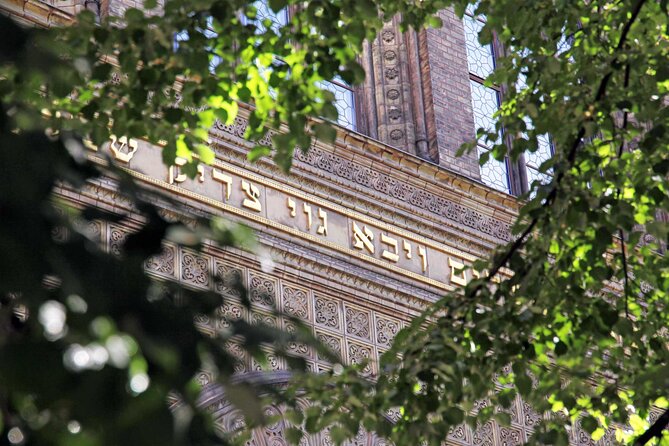
The next stop is the Stiftung Neue Synagoge Berlin, also known as Centrum Judaicum. The guide explains the history of the site from outside. The synagogue’s presence offers a powerful reminder that Berlin’s Jewish life did not begin with the Nazi period and cannot be reduced to what happened during it.
Together, these first two stops set the tone. You begin with Jewish Berlin, persecution, and individual action before moving toward the machinery of Nazi power.
Anhalter Bahnhof and the mechanics of deportation
Anhalter Bahnhof is one of the route’s most haunting stops. The guide explains its connection with the deportation of prisoners to concentration camps. The surviving ruins make the site feel less like a distant historical subject and more like a place where people were forced onto trains and removed from their homes.
You spend about 10 minutes here, though the private arrangement allows extra time when the group wants it. The ruins are viewed from outside, so do not expect a station tour or a formal indoor exhibit. The value lies in the setting and the explanation: Berlin’s transport system was part of the machinery that carried out persecution.
This is also a good point to ask the guide how the city’s infrastructure was used by the Nazi state. A strong explanation can connect a familiar public building with the wider process of imprisonment, deportation, and murder.
Topography of Terror and the former Nazi power centers
The Topography of Terror stop brings you to the former headquarters area of the Gestapo and SS. The guide explains the site from outside, placing the institutions of terror in the setting where they operated.
This part of the route helps you understand that Nazi violence was not random or carried out by a few fanatics alone. It depended on offices, orders, police structures, records, and people who carried out those orders. The site gives the tour a clear shift from individual experience to the state system behind it.
The stop is listed at about 10 minutes. That is enough for an orientation, but it is not enough for a full museum visit. If you want the indoor Topography of Terror exhibition, you will need to return separately. That is one of the tour’s practical limits, but the outside explanation still gives you a useful framework for a later visit.
The nearby Aviation Ministry of Berlin adds another layer. The guide explains the history of the building from outside. Its connection with Nazi government and the wartime state makes it a useful stop for understanding how official power occupied Berlin’s streets.
You may notice the contrast between the building’s formal government role and the crimes organized by the regime. That contrast is part of what makes a guided route worthwhile. Without context, a large historic building can look like just another monument. With context, you begin to see how administration and ideology worked together.
Other trips into the same period in Berlin:
- Berlin: Third Reich, Hitler, and WWII Walking Tour
★ 4.9 · 1,133 reviews - Berlin Third Reich Sites: Half-Day Walking Tour
★ 5.0 · 835 reviews - Berlin: Guided Bike Tour of the Berlin Wall and Third Reich
★ 4.7 · 499 reviews - Hitler’s Germany: Berlin During the Third Reich & WWII
★ 4.8 · 476 reviews
Johann Georg Elser and the question of resistance
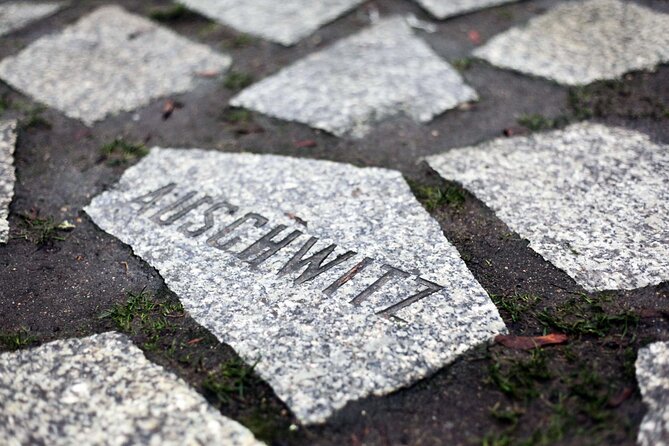
The Johann Georg Elser sculpture is a smaller stop, but it gives the route a needed change of scale. The guide explains Elser’s attempt to kill Hitler, bringing attention to German resistance against the Nazi leadership.
A 10-minute stop may sound short, yet this is exactly the sort of place many people would miss without a guide. Large memorials naturally attract attention. A sculpture connected with one act of resistance can be easy to pass without knowing its meaning.
The stop also complicates the simple idea that everyone in Germany supported the regime. Resistance took many forms, and some people acted alone at great personal risk. Ask your guide about Elser if you want to spend more time here. The private setup makes that possible without holding up a larger group.
This is one of the tour’s best features: it does not present Berlin only through the actions of Hitler and his senior officials. It also looks at people who resisted, people who suffered, and people who tried to help.
The Holocaust Memorial and the weight of remembrance

The Memorial to the Murdered Jews of Europe is likely to be the emotional center of the walk. The guide explains the memorial’s purpose and the history it represents, with about 15 minutes scheduled here.
The memorial’s field of concrete slabs is intentionally open to interpretation, and the guide’s role is useful because the place can otherwise remain abstract. You can ask about the memorial’s design, its setting near major government buildings, and the challenge of representing the murder of Europe’s Jews in a public space.
The stop is free, but the tour does not include entry to the underground Information Centre. That distinction matters. The outdoor memorial gives you a strong visual and physical experience, while the indoor center provides additional names, biographies, and documentation. If you want the fullest visit, plan to return on your own.
The route then continues to the Monument to Homosexuals Persecuted Under the National Socialist Regime. This 10-minute stop broadens the story of Nazi persecution. It shows that the regime targeted people based on identity and sexuality as well as political opposition and Jewish heritage.
Taken together, the two memorials encourage a more careful understanding of victim groups. You are not asked to treat Nazi persecution as one undifferentiated tragedy. Each group and each site has its own history.
Hitler’s bunker site and the final approach to the Reichstag
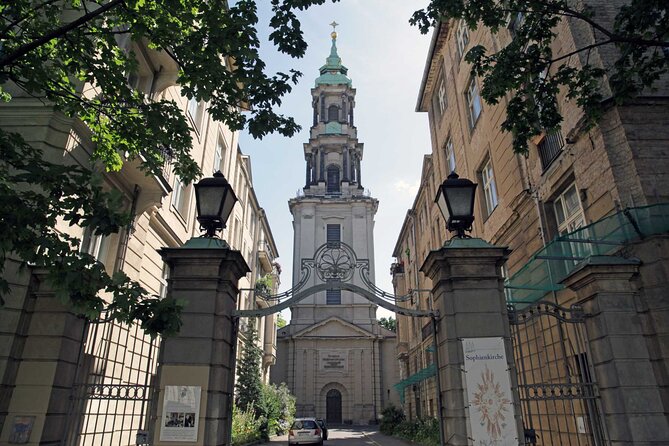
The tour includes the site of Hitler’s bunker, described from outside. There is no visible bunker interior to enter, and the location is not presented as a dramatic attraction. That is a strength. The guide can explain the site without turning it into a shrine.
A visit here works best when it is placed within the wider story of the Nazi state and its collapse. The tour’s earlier stops have already shown how power, terror, resistance, and mass murder operated. The bunker site then marks the final days of the regime rather than serving as the sole focus.
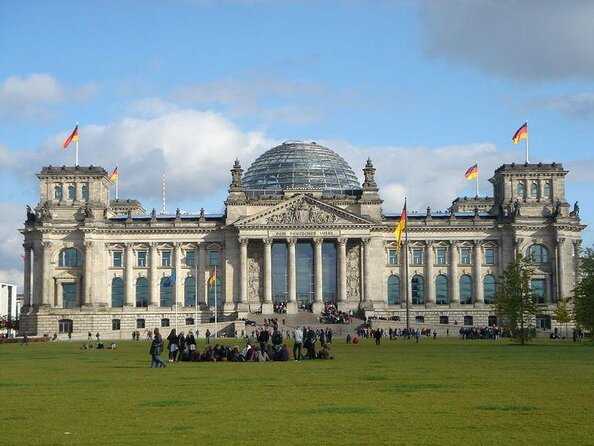
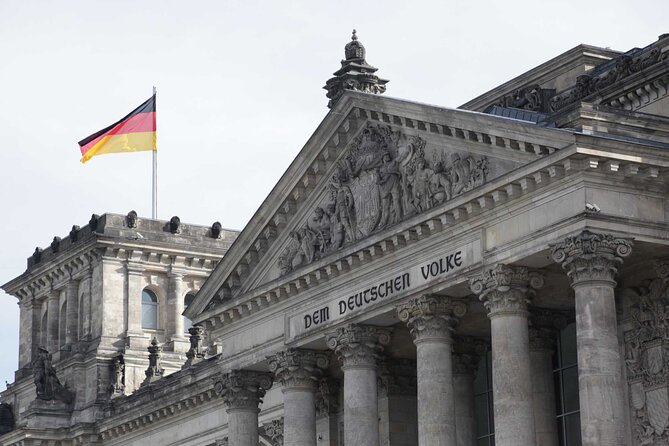
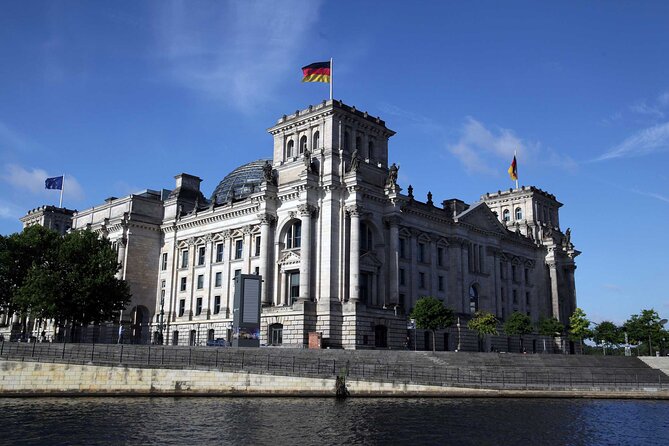
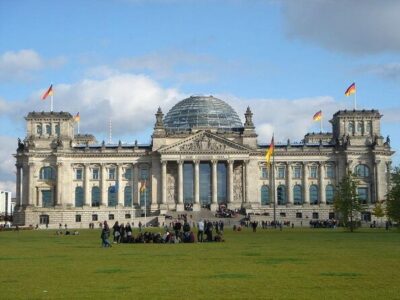
The walk finishes near the Reichstag Building at Platz der Republik. Your guide explains its history from outside, and the usual ending is in front of the building.
The Reichstag is a practical endpoint. You can continue around the government quarter, plan a separate visit, or use public transport from the area. Entry to the Reichstag is not included, so you should not expect the tour to include the dome or interior. The finish gives you a clear place to continue your Berlin day.
The route also includes the Soviet Memorial in Tiergarten. The guide explains its history from outside, linking the end of the war with the Soviet role in Berlin. This adds an important postwar perspective. Nazi Germany’s defeat did not erase the city’s destruction or settle Berlin’s political future.
What four hours and €173.06 buy you
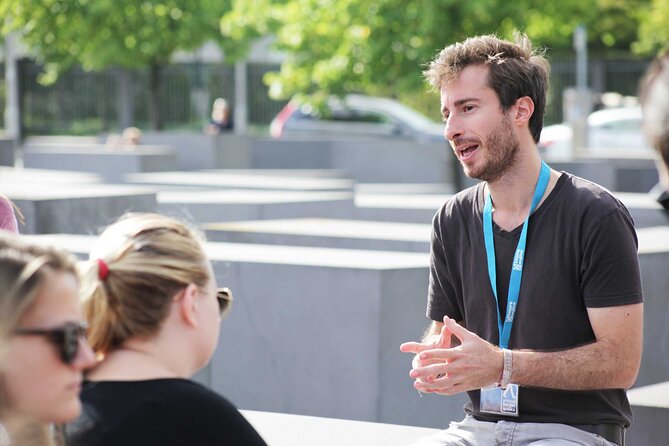
The listed price is $173.06 per person, with group discounts offered. Since this is a private tour, the value depends heavily on how many people are in your party. For one or two people, the cost is significant. For a family or group splitting the price, private guiding can make more sense.
You are paying mainly for time, interpretation, and flexibility. There are no major entrance tickets included because the sites are viewed from outside. The fee covers the professional guide and all listed taxes and fees, but not tips or public transport.
The four-hour length is well suited to visitors who want a serious half-day without giving up an entire day. Past departures have lasted about three and a half to four hours. The pace is substantial, especially on a hot day, so wear comfortable shoes and carry water. The provided information confirms that public transport is part of the logistics, with a single Berlin AB ticket costing about €4 per person.
The tour is not a substitute for every museum connected with Nazi Germany. Instead, it gives you a connected street-level framework. You can then choose which indoor sites deserve more of your time.
Who will get the most from this private walk
I would recommend this tour to you if you want historical explanation rather than a quick checklist of memorials. It suits adults, families with older children, and students who already have some background and want to connect facts with real places.
The private format is especially helpful for mixed groups. A teenager may ask about resistance or wartime politics, while another person may want to focus on Jewish Berlin or memorial design. The guide can respond without following a rigid large-group script.
The route is also a good fit if you have only a few days in Berlin. It covers a large amount of ground and helps you identify places worth revisiting. The stop-by-stop explanations are brief, so you still have room to explore independently later.
I would hesitate to recommend it if you want to enter museums, see original interiors, or spend long periods at each memorial. The tour is an outdoor overview. Weather matters, too, since much of the experience takes place on foot and in the open air.
Service animals are allowed, the route is near public transportation, and most people can participate. The available information does not provide a precise accessibility assessment, so anyone with mobility concerns should confirm the walking and transport details before booking.
Should you book this Berlin Nazi history tour?
Book it if you want a private, serious introduction to Berlin under Nazi rule, with a guide who can connect persecution, resistance, government power, the Holocaust, and the war’s aftermath. The strongest part is the range of sites and the freedom to ask questions or stay longer where the subject matters most.
The main caution is simple: you see the attractions from outside, and the public-transport ticket costs extra. If that suits your plans, the tour offers a useful half-day foundation. Guides such as Jasper, Stefan, Rohan, Lewis, and Xavier have been praised for clear, friendly, and engaging explanations, but a specific guide cannot be guaranteed.
You can cancel for a full refund up to 24 hours before the start time. For a private group that wants context without spending a full day indoors, this is a thoughtful and worthwhile way to meet Berlin’s most difficult history.
FAQ
How long does the walking tour last?
The tour lasts approximately four hours. Past departures have taken about three and a half to four hours.
Where does the tour start?
The tour starts at Neue Promenade 3, 10178 Berlin, Germany.
Where does the tour finish?
It usually finishes outside the Reichstag Building at Platz der Republik 1, 11011 Berlin.
Is this a private tour?
Yes. Only your group participates in the activity.
Does the tour include museum or building entry?
No. The sites are viewed from outside, and the guide explains their history from the street.
Is public transportation included?
No. You need a Berlin AB single ticket, which costs about €4 per person.
Are entrance fees included?
All listed taxes and fees are included, but the tour does not include tickets for indoor attractions or the Reichstag.
Can the guide spend longer at a particular stop?
Yes. The tour can stay longer at an attraction depending on your group’s interests.
What is the cancellation policy?
You can cancel at least 24 hours before the start time for a full refund. Cancellations or changes made less than 24 hours before the start time are not accepted for a refund.
More walking tours in Berlin
- Discover Berlin Half-Day Walking Tour
★ 5.0 · 9,624 reviews - Berlin: Discover Berlin Walking Tour
★ 4.9 · 5,998 reviews - Berlin: Hidden Backyards Guided Walking Tour
★ 4.8 · 5,360 reviews - Berlin: Alternative Berlin Walking Tour
★ 4.6 · 1,204 reviews
Just added in Berlin
- Private One way Airport Transfer Berlin Airport To Berlin★ 3.5 · 17 reviews
- Private Walking Tour: Berlin Wall, Cold War and Checkpoint Charlie★ 5.0 · 37 reviews
- Modern Berlin Private Walking Tour: Diverse, Vibrant and Exciting German Capital★ 5.0 · 13 reviews
- Private Day Trip to Potsdam from Berlin by Train★ 4.5 · 27 reviews
- City Explorer: Potsdam Private Day Trip★ 4.5 · 10 reviews
- Berlin Private Custom 5-Hour Tour by Car★ 5.0 · 30 reviews
- Private Half-Day Sightseeing Tour in Berlin★ 3.5 · 6 reviews
- Berlin Private Custom Tour in a Minivan, East and West★ 5.0 · 123 reviews
Third Reich & WWII Tours, compared.

Third Reich Berlin: Hitler and WWII Walking Tour
Read our review →
Walking Tour of Former Nazi Party Rally Grounds
Read our review →
Berlin Third Reich Sites: Half-Day Walking Tour
Read our review →
Birthplace of the Third Reich Guided Walking Tour
Read our review →Browse the lists this tour appears in