
Reviewed · THIRD REICH & WWII TOURS
Hitler’s Berlin – the rise and fall (Small Group)
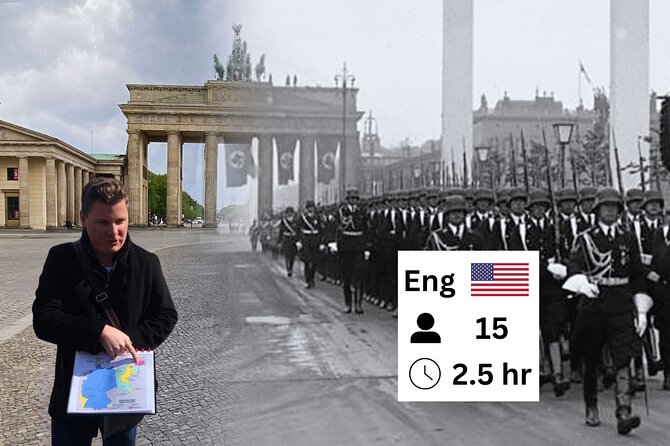
Berlin’s Nazi past is not tucked away in one museum. It is spread across a compact part of central Berlin, where government buildings, memorials, former command centers, and the site of Hitler’s bunker sit within a walkable route. This tour connects those places into one difficult but useful story, from the Nazi rise to power through the Holocaust and the regime’s final days.
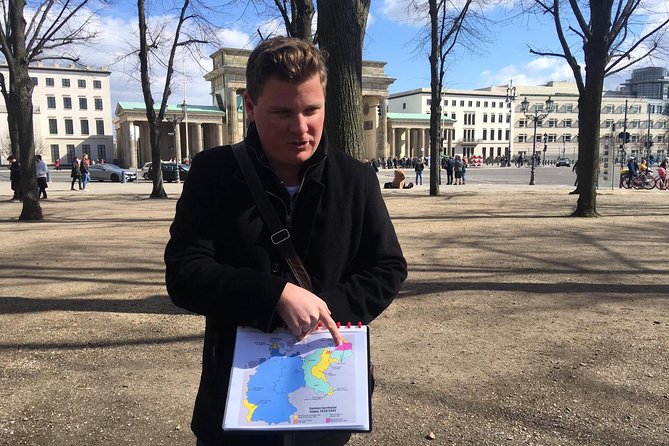
I like the small maximum group of 15, which gives you a fair chance to ask questions. I also like the use of historic maps and Then & Now photographs, since they help you picture buildings and streets that were damaged, rebuilt, or changed after the war. The main drawback is that this is a serious, information-heavy walk, and some people may find the nearly two-and-a-half-hour outdoor format tiring.
Key points to know before you book
- The route links nine major sites between the Brandenburg Gate and the Topography of Terror.
- The focus is political and human, covering Nazi propaganda, persecution, resistance, war, and remembrance.
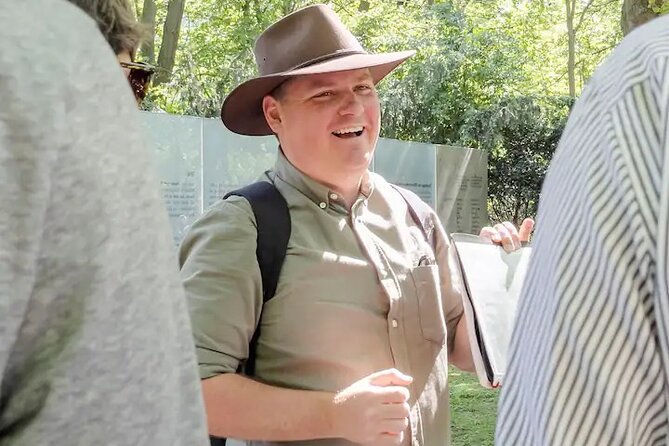
- Guides have included Scott, Johan, Roshana, Jochen, and Matt, with an academic background in WWII history.
- The Holocaust Memorial and Topography of Terror are the emotional centerpieces of the walk.
- You walk on several types of surfaces, so comfortable shoes matter.
- The $54.44 price buys a focused small-group lesson, but you should enjoy listening outdoors to get full value.
Starting at the Brandenburg Gate and Reichstag
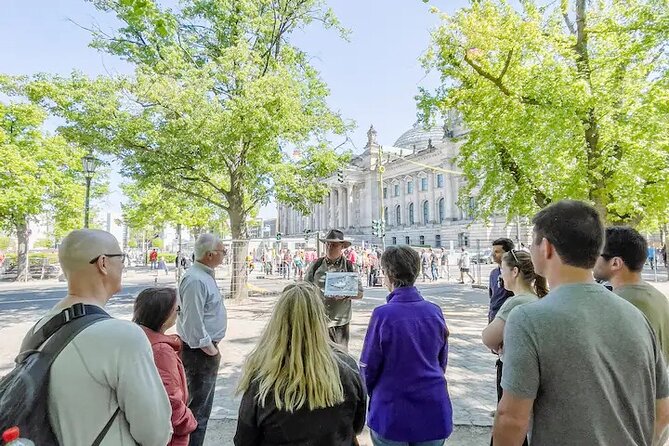
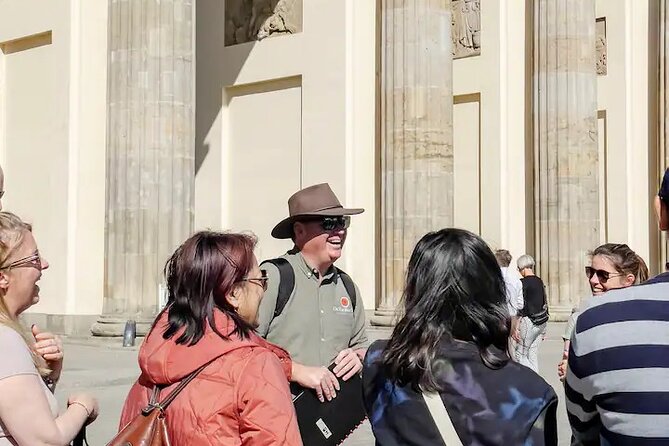
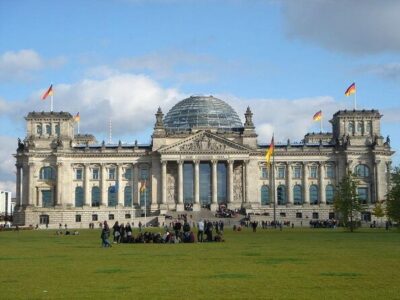
The tour begins at the Brandenburg Gate, on Pariser Platz, a fitting place to start because this is where Berlin’s political power and public symbolism meet. From here, your guide sets up the political conditions that allowed the Nazi Party to gain influence, then explains how Hitler moved from party leader to dictator.
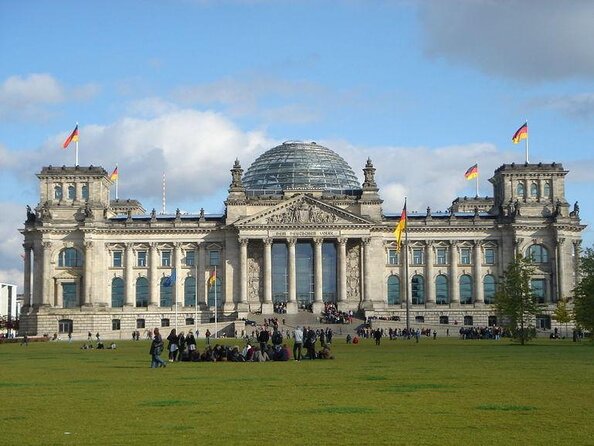
At the Reichstag, you learn how the Nazi Party was elected into power and how Hitler became Führer. This part is important because it pushes back against the lazy idea that dictatorship arrived overnight through one dramatic event. The guide’s job here is to explain the steps, pressures, political choices, and legal changes that turned an elected government into a one-party regime.
The stop is listed at about 15 minutes, so expect a focused explanation rather than a full architectural tour of the Reichstag. You do not enter the parliament building on this experience. Instead, the building works as a setting for the political story.
The opening section is especially useful if you know the war mainly through battles and dates. You will first see how power was gathered and used. Guides such as Scott, Jochen, and Matt have been praised for making this political material clear and for taking questions without rushing the group.
More Third Reich and WWII Tours in Berlin
- Berlin: Third Reich and Cold War 2 Hour Walking Tour
★ 4.9 · 6,830 reviews - Berlin’s Best: 2 Hour Walking Tour Third Reich and the Cold War
★ 5.0 · 5,486 reviews - Third Reich Berlin: Hitler and WWII Walking Tour
★ 5.0 · 3,301 reviews
Sinti and Roma persecution at the Tiergarten memorial
The first stop is the Memorial to the Sinti and Roma Victims of National Socialism. It is a quiet place, and the brief visit introduces a part of Nazi persecution that is often treated as a footnote.
Here, the guide explains how racist social theories shaped official policy against Roma and Sinti people. That matters because the Holocaust did not grow from random wartime cruelty. It was supported by laws, classifications, policing, forced removal, and a wider ideology that defined whole groups as enemies of the state.
The stop lasts about 10 minutes. That is enough for an introduction, though you may want to visit the memorial again on your own if you want more time for reflection. Its position early in the route also gives the walk a wider frame: the Nazi program targeted more than one community.
The Soviet Memorial and the Battle of Berlin
At the Soviet Memorial in Tiergarten, the discussion shifts from political control and persecution to the war’s final stage. You learn about the Battle of Berlin, including the brutal fighting that brought the conflict to the city and the way these events have been remembered.
The memorial is a useful place to discuss competing memories. It is both a monument to Soviet military victory and a reminder of the immense human cost of the final battles. Your guide connects the physical site to the collapse of the Nazi regime rather than treating it as a simple military stop.
The planned visit takes around 15 minutes. You are outdoors, so rain, cold, or heat can affect how comfortable the discussion feels. Bring suitable clothing in every season. One practical point comes through clearly: this is a walking lesson, not a coach tour, and there may not always be a place to sit while you listen.
The Holocaust Memorial and the meaning of remembrance
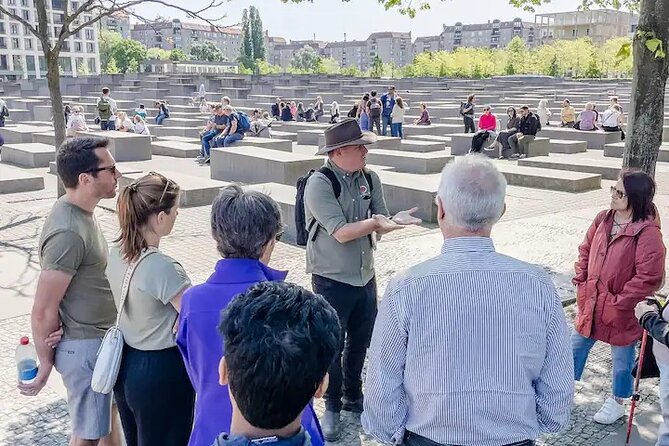
The Memorial to the Murdered Jews of Europe is one of the most important stops on the route. Its field of concrete slabs can feel confusing and unsettling, which is partly why a guide’s explanation is useful. You are given time to consider what the design communicates and how a modern city chooses to remember a state-organized crime.
The guide places the memorial within the wider story of the Jewish people targeted by the Nazi regime. The visit is not just about taking photographs among the slabs. It is a chance to discuss remembrance, responsibility, and the difference between seeing a memorial and understanding the events it represents.
The stop is planned for about 15 minutes. That may feel short if you want to walk through the memorial at length, but the tour has several more sites to cover. I would return independently if this is the place you most want to contemplate.
This is also a point where the tone of the tour matters. The subject is grave, and the strongest guides handle it without turning the material into spectacle. The focus stays on victims, decisions, and consequences.
Other trips into the same period in Berlin:
- Berlin: Third Reich, Hitler, and WWII Walking Tour
★ 4.9 · 1,133 reviews - Berlin Third Reich Sites: Half-Day Walking Tour
★ 5.0 · 835 reviews - Berlin: Guided Bike Tour of the Berlin Wall and Third Reich
★ 4.7 · 499 reviews - Hitler’s Germany: Berlin During the Third Reich & WWII
★ 4.8 · 476 reviews
A brief stop for homosexual victims of Nazism
The Monument to Homosexuals Persecuted Under National Socialism receives about five minutes. It is a short visit, but it adds another group to the story of Nazi persecution.
The monument helps show how the regime used criminal law, surveillance, imprisonment, and social exclusion against gay men and others it considered unacceptable. Since the stop is brief, expect only a concise explanation rather than a long treatment of the subject.
This is one reason the route works well as a first introduction. It does not cover every subject in equal detail, but it keeps widening your view of who was targeted and how Nazi control reached into private life.
The Führerbunker site and Hitler’s final days
The former Führerbunker site is one of the route’s most curious stops. Hitler spent his final days there during the last stage of the Second World War, but the location does not offer a grand ruin or dramatic underground entrance. The value comes from understanding where the bunker was and what happened there as Berlin collapsed.
Your guide explains the bunker’s role in the final days of the regime. This is also a useful moment to separate fact from the myths and fascination that often surround Hitler’s death. The stop is about the end of a dictatorship, not about turning its leader into a figure of glamour or mystery.
The visit lasts about 15 minutes. Because the physical site is not presented as a conventional attraction, some people may find it less visually rewarding than the Holocaust Memorial or Topography of Terror. I think it works best when you approach it as a location that completes the political and military story.
Johann Georg Elser and German resistance
The Johann Georg Elser Memorial introduces one of the most compelling resistance stories on the walk. Elser planned an attempt to assassinate Hitler, and the guide uses his story to discuss opposition to the Nazi regime along with the actions of others who tried to resist.
This stop corrects another common misunderstanding: resistance in Germany was not absent, even though it was dangerous and often isolated. Learning about Elser gives you a human-scale view of opposition. It also raises hard questions about timing, chance, courage, and what happens when an attempt to stop a dictatorship fails.
The planned stop is around 15 minutes. Guides often use this kind of site to open discussion, so listen carefully and ask questions if you want to connect Elser’s actions with the wider resistance story. The information comes quickly, especially if the group has a lot of questions.
The Aviation Ministry and the buildings that survived
The former Aviation Ministry was built in 1936 to house the German Ministry of Aviation under Hermann Göring. At the time of construction, it was the largest office building in Europe.
Only about five minutes are set aside here, but the building helps explain the scale and confidence of the Nazi state. It was not simply a party headquarters. It was part of a large administrative machine that planned, managed, and carried out state policy.
This is also a good place to notice how much of Berlin’s Nazi-era architecture remains in ordinary urban surroundings. A building can survive while its political purpose changes, and that contrast is part of what makes this route more than a list of memorials.
Topography of Terror: the route’s natural finish
The walk ends at the Topography of Terror, on Niederkirchnerstraße. The site once held the headquarters of the Gestapo, the SS, and other Nazi security bodies. The tour uses the location to bring together the themes of repression, policing, imprisonment, and state terror.
A 20-minute stop is planned here, including a chance to pause for tea or coffee and use the restrooms. That break matters. By this point, you have spent much of the tour outdoors, listening to a large amount of information.
The Topography of Terror is a strong end point because it shifts the story from individual leaders to institutions. Hitler mattered, but the Nazi regime depended on offices, officials, records, police, soldiers, and people who carried out orders. The site helps you see how ordinary administration can be turned toward extraordinary cruelty.
The tour ends here rather than returning to the Brandenburg Gate. Ask your guide for the best connection to your next destination. Since the ending is near central Berlin, you can continue sightseeing, visit the exhibition independently, or make your way elsewhere.
What the $54.44 price includes
At $54.44 per person, this is not the cheapest way to see central Berlin, especially since the memorials and outdoor sites have no admission charge. You are paying for the guide’s preparation, the historical structure, the small-group format, the maps and images, and the chance to ask questions along the way.
I think the value is strongest if you want a guided interpretation of Nazi-era Berlin rather than a self-guided list of locations. A map can show you where the Reichstag, bunker site, memorials, and Topography of Terror are located. It cannot easily explain how they connect.
The value is weaker if you prefer to read quietly at your own pace or want to spend a long time at one memorial. The route covers nine stops in roughly 2.5 hours, so each location receives a limited amount of time.
The group can reach 15 people. That is small enough for a personal feel, though it is not the same as a private tour. You should expect an active walking and listening experience. Guides have included Scott, Johan, Roshana, Jochen, and Matt, and the strongest feedback centers on clear explanations, friendly discussion, and the ability to answer questions.
One caution is worth noting: a single poor language match or a guide who speaks too softly could affect the experience. One account described awkward English, while another found background noise made the guide hard to hear. Most of the available response is strongly positive, but I would stay close to the guide and speak up if you cannot hear.
Who should take this walk
I would choose this tour if you want a clear introduction to the rise and fall of Nazism and prefer learning at the actual sites. It suits adults, older children, and teenagers who can manage a serious subject and pay attention for a sustained period. One family with a teenager found the question-and-answer style useful.
It is also a good fit for history-minded visitors who already know some WWII basics but want to connect the political, social, military, and memorial sides of Berlin. The guide may move quickly through details, so this is not a casual stroll with occasional facts.
You should wear comfortable shoes and dress for the weather. The route uses different surface types, and the experience operates outdoors in all weather when possible. A moderate level of physical fitness is advised.
Booking, cancellation, and practical details
You receive confirmation when booking, and the ticket is mobile. The tour is offered in English and is often reserved well ahead of time, with an average booking point of about 33 days in advance.
Food and drinks are not included, though the route includes a short break at the Topography of Terror for tea or coffee. Plan your own snacks or meal around the tour if needed.
Free cancellation is available up to 24 hours before the start time. Changes or cancellations inside that window are not refunded. If poor weather or too few bookings causes the tour to be canceled, you are offered another date or experience, or a full refund.
Should you book Hitler’s Berlin?
Book it if you want a serious, well-organized walking lesson that connects Berlin’s major Nazi-era sites. The route is compact, the subject matter is handled with care, and the small group gives you more room for questions than a large city tour.
Skip it if you want a light sightseeing walk, a museum-heavy visit, or plenty of time at each memorial. For most visitors who want to understand how Hitler’s regime gained power, persecuted millions, fought to the end, and is remembered today, the $54.44 fee is reasonable. Bring warm layers, good shoes, and the patience to listen. This is a sobering tour, but it gives Berlin’s most important sites a clear human and political context.
FAQ
Where does the tour begin?
The tour begins at the Brandenburg Gate on Pariser Platz, 10117 Berlin, Germany.
Where does the tour end?
It ends at the Topography of Terror at Niederkirchnerstraße 8, 10963 Berlin, Germany.
How long does the tour last?
The tour lasts approximately 2 hours and 30 minutes.
What language is the tour offered in?
The tour is offered in English.
How large is the group?
The maximum group size is 15 people.
Does the tour include admission fees?
The listed stops have free admission. Food and drinks are not included.
What should I wear?
Dress appropriately for the weather and wear comfortable shoes. The tour operates outdoors in all weather conditions and includes different types of walking surfaces.
Can I cancel for a refund?
Yes. You can cancel at least 24 hours before the start time for a full refund. Cancellations or changes made less than 24 hours before the start time are not refunded.
Just added in Berlin
- Private One way Airport Transfer Berlin Airport To Berlin★ 3.5 · 17 reviews
- Private Walking Tour: Berlin Wall, Cold War and Checkpoint Charlie★ 5.0 · 37 reviews
- Modern Berlin Private Walking Tour: Diverse, Vibrant and Exciting German Capital★ 5.0 · 13 reviews
- City Explorer: Potsdam Private Day Trip★ 4.5 · 10 reviews
- Private Day Trip to Potsdam from Berlin by Train★ 4.5 · 27 reviews
- Berlin Private Custom 5-Hour Tour by Car★ 5.0 · 30 reviews
- Private Half-Day Sightseeing Tour in Berlin★ 3.5 · 6 reviews
- Berlin Private Custom Tour in a Minivan, East and West★ 5.0 · 123 reviews
Third Reich & WWII Tours, compared.

Third Reich Berlin: Hitler and WWII Walking Tour
Read our review →
Walking Tour of Former Nazi Party Rally Grounds
Read our review →
Berlin Third Reich Sites: Half-Day Walking Tour
Read our review →
Birthplace of the Third Reich Guided Walking Tour
Read our review →Browse the lists this tour appears in