
Reviewed · THIRD REICH & WWII TOURS
National Socialism WWII with licensed guide – private tour
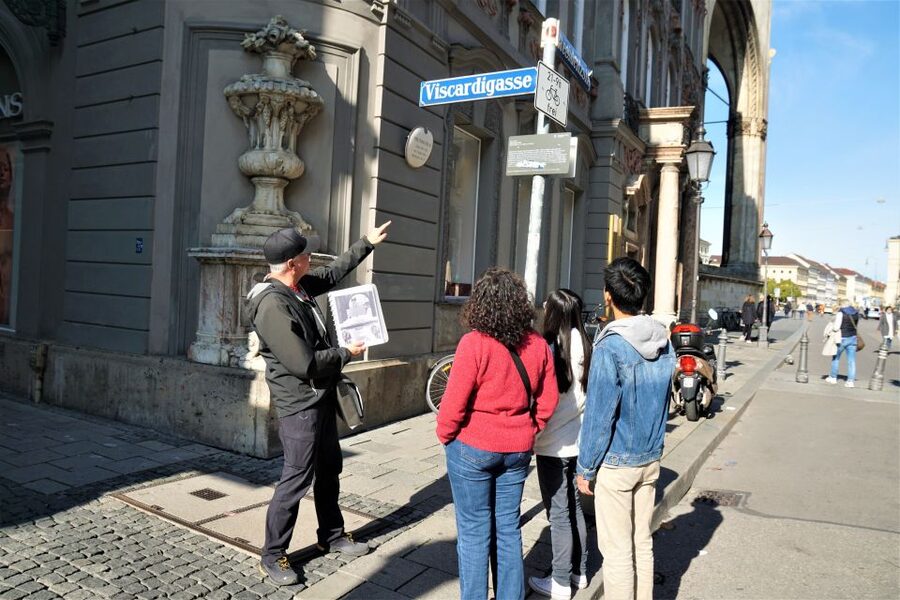
Munich was the birthplace of National Socialism, and this private walking tour shows you where the movement took shape. You begin at the Feldherrnhalle, follow the route of Hitler’s failed 1923 coup, learn about the White Rose resistance at LMU, and finish among the former Nazi headquarters at Königsplatz. It is a serious history walk, not a glossy sightseeing outing.
I like the way the tour connects political events to actual city streets, and I like the use of extensive photo material to help you picture places that have changed. The guide, Wolfgang Brehm, is named by the provider, and the tour is also praised for clear explanations, strong historical knowledge, and keeping the subject interesting. The main drawback is time: two hours gives you a useful framework, but not much room for lengthy discussion or a full visit inside the documentation centre.
Key points to know before booking
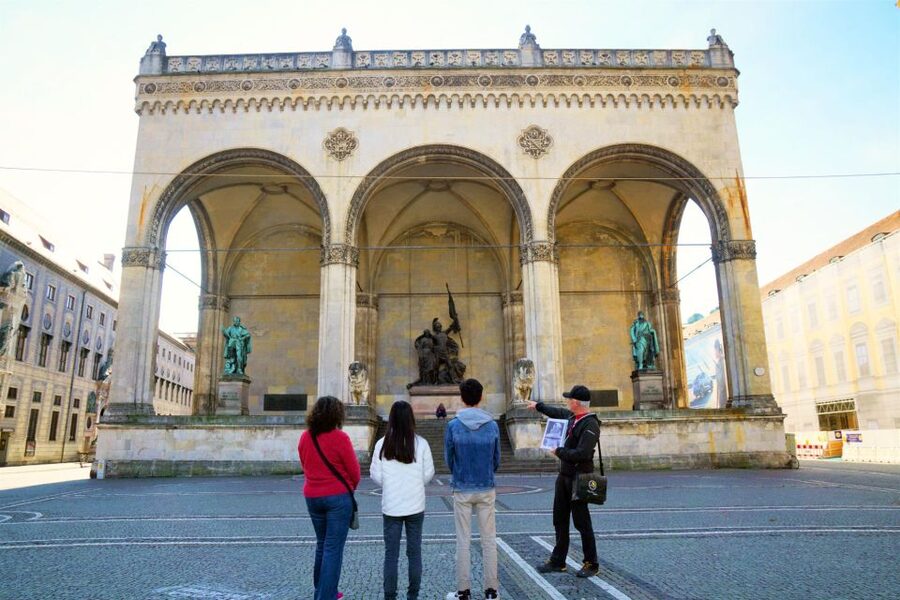
- Munich’s Nazi story is told on foot: The route links Odeonsplatz, the Residenz, Haus der Kunst, the White Rose memorial area, and Königsplatz.
- The tour follows both power and resistance: You hear about Hitler’s rise, Nazi institutions, and the people who opposed the regime.
- Wolfgang Brehm is the named guide: The experience is provided by schwarzgold.info and includes a professional, certified guide with more than ten years of experience.
- Photo material adds useful context: Images help explain how buildings and public spaces were used during the Nazi period.
- The NS Documentation Centre comes at the end: You can continue independently after the walk, but museum admission is not included.
- The private price works best for a group: At $259 for up to 30 people, the cost is easier to justify when shared by several participants.
Why Munich is the right place for this difficult history
This tour works because Munich is not treated as a distant backdrop to Nazi history. The city was where Adolf Hitler lived, worked, built political contacts, and helped turn the NSDAP into a national movement. You see how ordinary-looking streets and grand public spaces became tied to propaganda, political violence, art policy, and resistance.
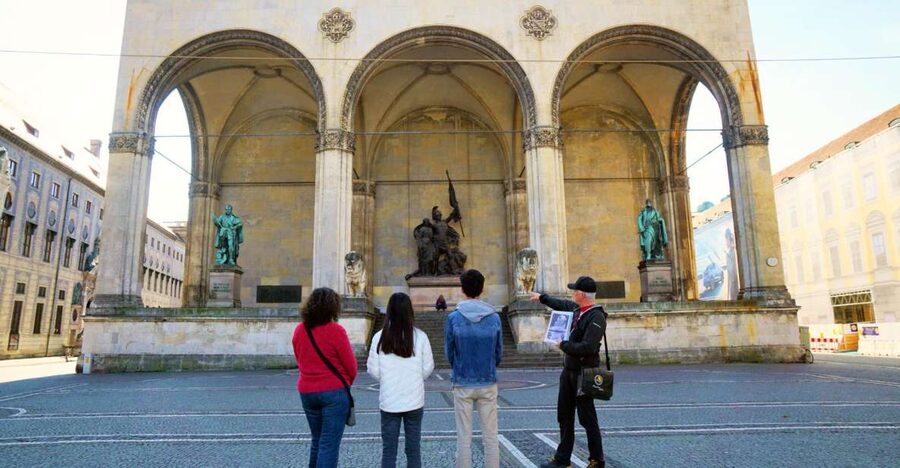
That local focus matters. A general museum visit can explain the Nazi regime in broad terms, but this walk asks you to notice where events happened. At the Feldherrnhalle, you are not simply told about the 1923 putsch. You are shown where it ended and where a monument to the dead putschists once stood.
The subject is grim, and the tour is clearly intended for people seeking serious historical understanding. The provider adds a direct warning that it is not for right-wing radicals or Nazi fans. That is worth taking at face value. The tone is educational and critical, with attention given to victims and resistance as well as Nazi leaders and buildings.
More Third Reich and WWII Tours in Munich
- Munich: Third Reich & WWII Walking Tour
★ 4.6 · 6,181 reviews - Third Reich Walking Tour Munich
★ 4.5 · 4,291 reviews - Munich: Birthplace of the Third Reich Guided Walking Tour
★ 4.6 · 771 reviews
Starting at the Feldherrnhalle on Odeonsplatz
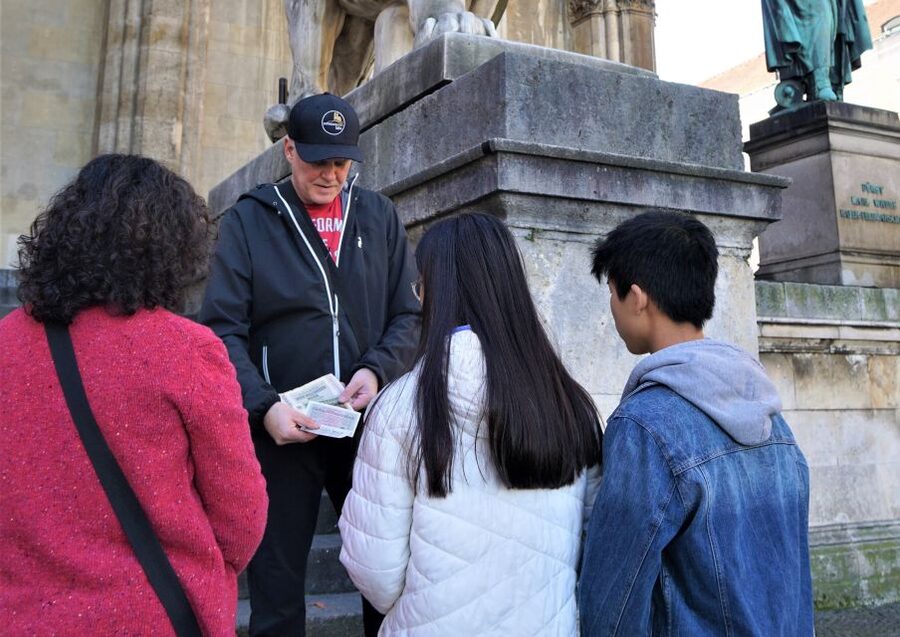
Meet at the steps of the Feldherrnhalle at Odeonsplatz. This is a central location, but do not confuse the meeting point with a museum entrance. You are starting an outdoor walking tour, so arrive ready to stand and walk while listening.
The first part explains why Hitler came to Munich, where he lived, and how he supported himself before his political rise. Those details give the later stops a needed human scale. You are not beginning with a fully formed dictator. You are looking at the early setting in which his political ambitions developed.
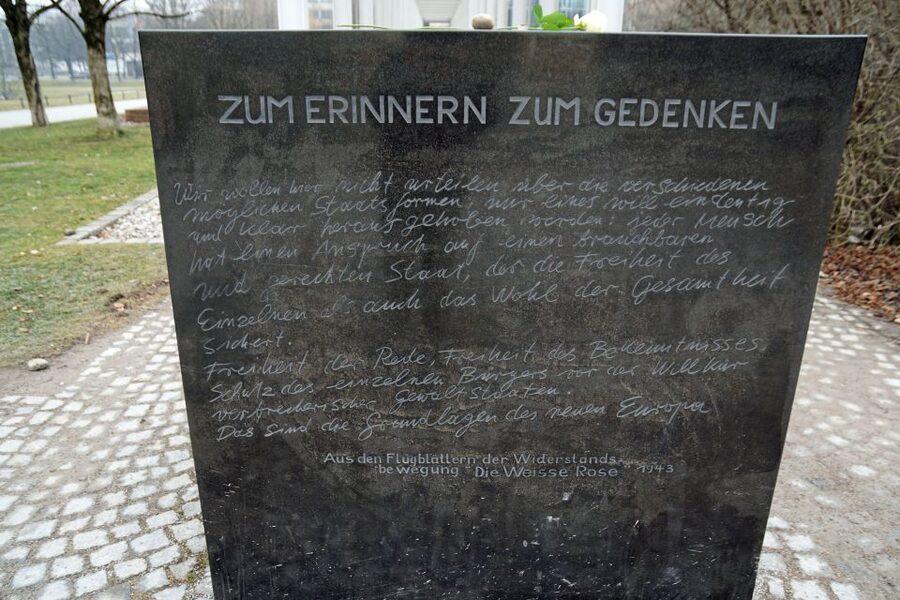
The Feldherrnhalle is also the place to understand the Hitler coup, known as the Beer Hall Putsch. The tour explains exactly where the attempted takeover ended and points out the former memorial erected to honor the putschists who died. That combination of location and imagery helps you see how the Nazi movement used public memory to praise its own supporters.
The itinerary lists two separate guided portions at the Feldherrnhalle, lasting about ten minutes and five minutes. That suggests the opening section receives a fair share of the two-hour schedule. It is a useful beginning, though anyone hoping for a long political lecture will find the time limited.
Court Garden and a monument to resistance
From Odeonsplatz, the route continues through the court garden near the Munich Residenz. Here, the focus shifts from Nazi action to opposition against the regime. You learn about a monument created for resistance fighters, an important change in emphasis after the opening discussion of Hitler’s failed coup.
The Residenz itself receives about ten minutes of guided attention. The supplied details do not promise an interior palace tour, so you should expect the focus to remain on the surrounding historical setting rather than a full visit to the royal rooms.
This is one of the tour’s strengths. You are not asked to view Munich only through Nazi architecture and Nazi leaders. The route includes people who resisted, people who were persecuted, and people who were killed. That broader frame keeps the walk from becoming a parade of infamous names.
The White Rose at LMU
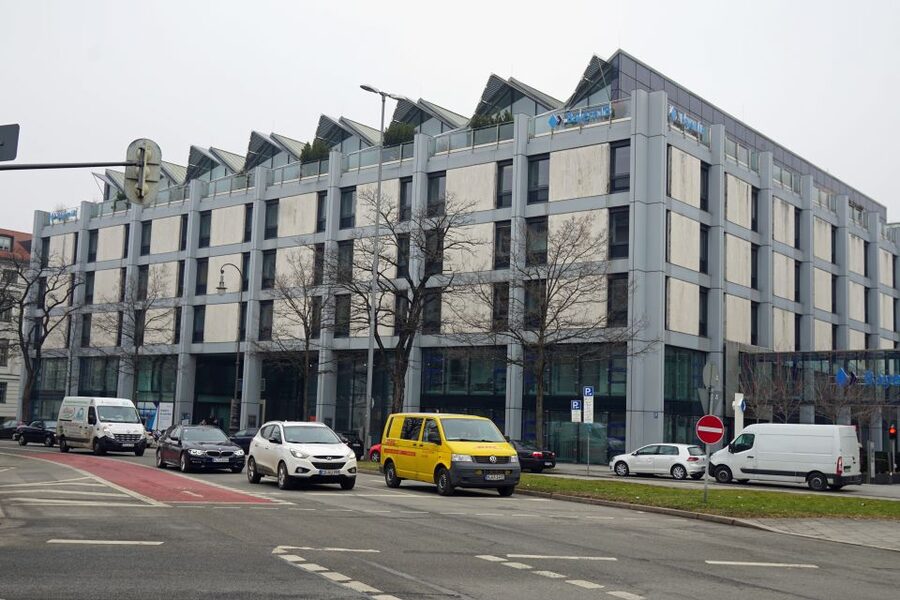
At the Ludwig Maximilian University of Munich, the guide introduces the White Rose, one of the best-known resistance groups connected with the city. The group produced flyers opposing the Nazi regime. Its members were arrested and beheaded.
This section is likely to be especially useful for students and families studying the period. One review describes the tour as valuable for a son preparing for GCSE history, and that fits the walk’s practical strength. The White Rose gives you a clear example of resistance carried out by young people in a setting that still functions as a university.
The route does not treat resistance as a footnote. The White Rose is placed within the city where its members acted, which makes the story more immediate. You should still keep expectations measured. The tour allows about fifteen minutes at the relevant documentation centre stop later in the route, and the complete walk lasts only two hours. This is an introduction with local detail, not a full seminar on the White Rose.
Other trips into the same period in Munich:
- Munich World War II Sites Including Dachau Concentration Camp
★ 4.5 · 570 reviews - Munich City Walking Tour, includes Third Reich & Viktualienmarkt
★ 5.0 · 458 reviews - Third Reich & WWII Walking Tour
★ 4.5 · 417 reviews - Munich 3-Hour Segway Tour: Nazi Munich & Royal Architecture
★ 4.9 · 194 reviews
The Square for the Victims of National Socialism
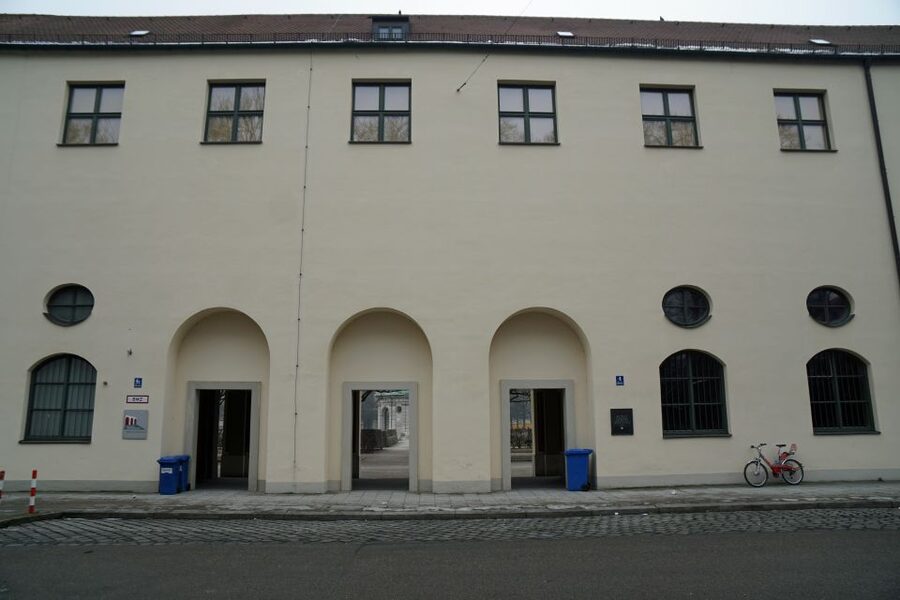
At the Square of the Victims of National Socialism, the guide explains who the victims were. This stop gives the tour an essential moral center.
The wording of the stop matters. The focus is not limited to political opponents or members of named resistance groups. You are asked to consider the wider range of people harmed by the Nazi regime. The information supplied does not list every category covered, so the precise content depends on the guide’s presentation, but the purpose is clear: to identify victims rather than let the story remain centered on Nazi institutions.
Ten minutes is allocated here. That is enough for an explanation and a short pause, though the subject may leave you wanting more time. If you prefer to read memorial text at your own pace, make a note to return later or allow extra time around the tour.
Haus der Kunst and Nazi control of art
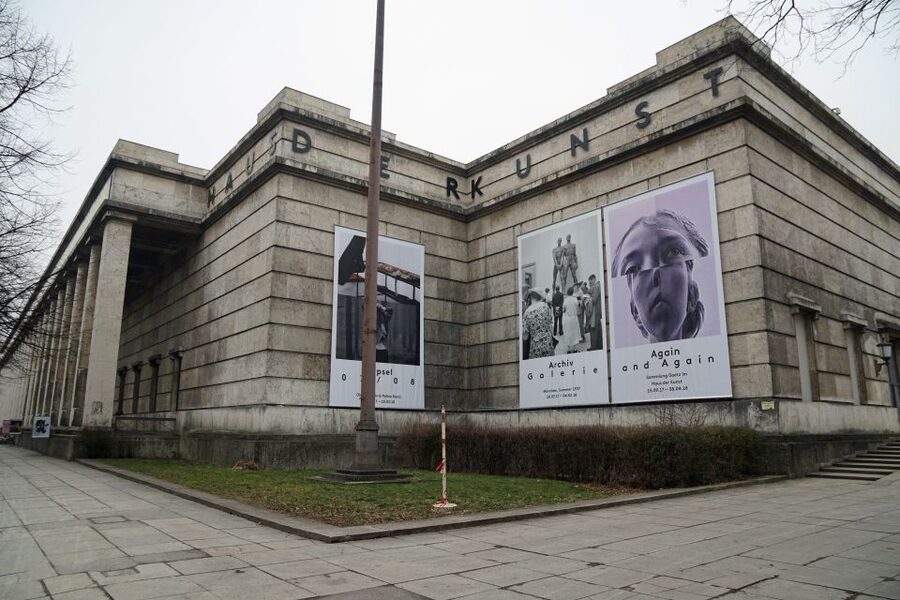
At Haus der Kunst, the guide explains how the Nazis influenced art. The building offers a strong setting for this topic because the Nazi regime used art as a political tool, deciding what was acceptable, what could be displayed, and what should be condemned.
You also hear about the Degenerate Art exhibition and the exact place where it was held in Galeriestraße. This is an especially useful part of the route for anyone interested in culture, censorship, or propaganda. Nazi policy was not limited to elections, policing, and military power. It also reached into painting, public taste, museums, and the careers of artists.
The tour allows around fifteen minutes for Haus der Kunst. That is enough to establish the main idea and explain the location, but do not expect a full art history tour. The value comes from seeing how a familiar cultural subject fits into Munich’s political past.
Karolinenplatz and the people behind the movement
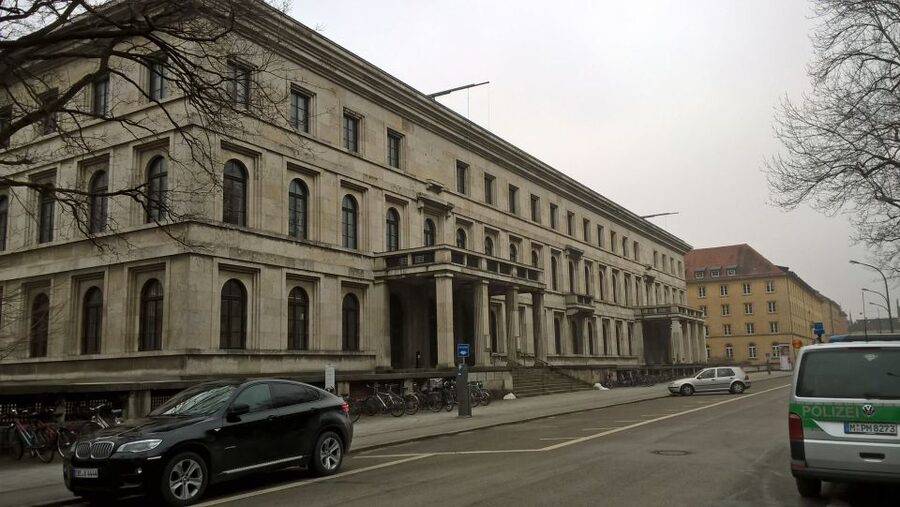
Karolinenplatz is used to discuss the main sponsors of the Nazis. This is a practical reminder that political movements do not grow through speeches alone. Money, social connections, and support from influential people also matter.
The supplied route details do not identify the sponsors by name, so the exact depth of this section depends on the guide. Still, the stop adds an economic and social angle that many short city tours leave out. You move beyond the question of what Hitler said and look at who helped the movement gain strength.
This is another reason to pay attention to the guide’s photo material. Historical photographs can make it easier to understand who occupied these spaces and how public ceremonies, buildings, and political networks were presented at the time.
Königsplatz and the former Nazi party center
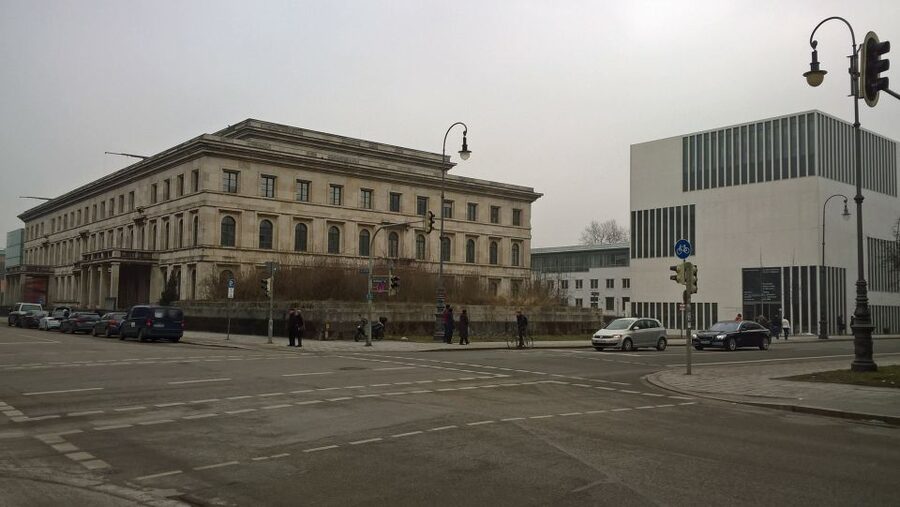
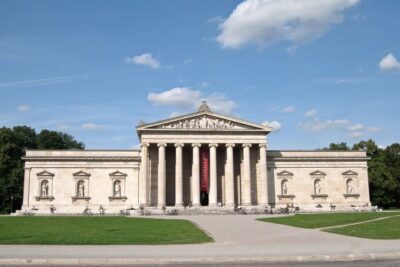
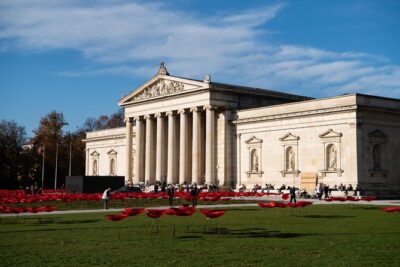
The final part of the walk brings you to Königsplatz, once the Nazi party center in Munich. Here you learn about the Brown House, the Führer Building and Hitler’s office, and the NSDAP administration.
The buildings and former party offices help explain how the movement established itself in the city. You are looking at more than a single memorial or isolated event. The stop shows the administrative side of power: headquarters, offices, party organization, and the physical places from which the regime operated.
The tour ends at Königsplatz 1. That finish makes practical sense because it places you beside the NS Documentation Centre, opened in 2015. You can visit the centre after the walking tour, but admission is separate and not included in the price.
Adding the NS Documentation Centre after the walk
I would strongly consider visiting the NS Documentation Centre after the tour if your schedule allows. The walking route gives you the locations and the basic connections. The centre can then provide more time for documents, photographs, and explanation.
The tour includes a guided stop connected with the NS Documentation Centre, listed at about fifteen minutes. That should not be confused with admission to the full museum. You will need to pay separately if you choose to enter.
This arrangement is useful because you can decide how much more time you want. If you have only two hours, the walk gives you a compact introduction. If the subject is central to your visit, plan additional time at the centre rather than expecting the outdoor tour to cover everything.
What the two-hour format feels like
Two hours is a good length for a focused city walk. You can cover a series of important sites without giving up an entire day, and the private format allows the guide to speak directly to your group.
At the same time, the schedule is full. The listed stops include several ten to fifteen-minute explanations, and the route connects places around Odeonsplatz, the Residenz, LMU, Haus der Kunst, Karolinenplatz, and Königsplatz. You should expect a steady pace with repeated periods of standing outdoors.
The tour is wheelchair accessible, according to the activity details. Since this is a walking route through central Munich, it is sensible to confirm the exact route and access needs when booking if anyone in your group requires particular assistance.
The live tour is offered in English or German. A private group can include up to 30 people, which is a generous limit. For a large family, school group, or organized party, that can be good value. For only one or two people, the flat group price is less of a bargain than a shared group tour.
Is $259 good value for a private group?
At $259 per group, the price works out differently depending on your party size. For 10 people, it is about $26 per person. For 20 people, it is about $13 per person. With the maximum group size of 30, the per-person cost becomes modest for a private, guided history walk.
The included guide is described as professional and certified, with more than ten years of experience. The reviews supplied for the experience consistently praise the explanations as interesting, clear, informative, and educational. Wolfgang Brehm is the named guide associated with the provider, so you may wish to look for his name when booking or confirming the guide.
The cost is less attractive for a couple or solo visitor, especially because museum admission is extra. Still, private guiding has a real benefit here: the subject is complex, and you can ask questions without being tied to the pace of a large public group.
Free cancellation up to 24 hours before the start and the option to reserve now and pay later add flexibility. These are useful safeguards for a sightseeing day that may need to change.
Who should book this Munich history walk?
I would recommend it to you if you want a short, serious introduction to Munich’s Nazi past and prefer to learn by walking through the places where events unfolded. It is a good fit for history students, families with older children, private groups, and visitors planning a longer visit to the NS Documentation Centre.
It also suits you if you want both sides of the story: the rise of Nazi power and the people who resisted it. The White Rose, the resistance memorial, and the Square of the Victims of National Socialism prevent the tour from becoming a simple Hitler biography.
You may want a different experience if you are looking for a relaxed sightseeing walk, a broad Munich city tour, or a full museum visit included in the price. The subject is painful, the tone is direct, and the two-hour format cannot cover every detail.
Should you book it?
Book this tour if you value a private guide, want to connect Munich’s streets with National Socialist history, and can share the $259 cost with a group. The best plan is to take the walk first, then visit the NS Documentation Centre afterward for a fuller treatment.
If you are traveling alone or as a couple, compare the group price with other options. But if you have a family, class, or group of friends, the cost becomes reasonable, especially with an experienced English or German speaking guide and a route that includes Hitler’s Munich years, the 1923 putsch, Nazi art, the White Rose, victims, sponsors, and the former party headquarters.
FAQ
Where does the tour begin?
The tour begins at the steps of the Feldherrnhalle at Odeonsplatz in Munich.
Where does the tour finish?
It finishes at Königsplatz 1, 80333 Munich, near the former Nazi party center and the NS Documentation Centre.
How long does the tour last?
The walking tour lasts two hours.
What languages are available?
The live guide is available in English or German.
Is the tour private?
Yes. It is a private group experience for up to 30 people.
Who leads the tour?
The experience is provided by schwarzgold.info and Wolfgang Brehm is the named guide associated with it. The activity includes a professional, certified guide with more than ten years of experience.
Is admission to the NS Documentation Centre included?
No. You can visit the NS Documentation Centre after the tour, but admission is not included.
Is the tour wheelchair accessible?
Yes, the activity information identifies the tour as wheelchair accessible.
Can I cancel the booking?
You can cancel up to 24 hours in advance for a full refund. The activity also offers reserve now and pay later booking.
Just added in Munich
- Pub crawl incl. Oktoberfest museum guided tour with beer tasting (private)★ 5.0 · 5 reviews
- South Tyrolean specialties and wine tasting★ 5.0 · 5 reviews
- Short & sweet: Tasting the Viktualienmarkt★ 4.8 · 37 reviews
- Size Matters Beer Tour Munich★ 4.6 · 105 reviews
- Secret Food Tours Munich★ 4.8 · 5 reviews
- Munich: Romantic Wine Experience for Two at Viktualienmarkt★ 4.2 · 14 reviews
- Munich: Resistance against Hitler – Historical Walking Tour★ 5.0 · 5 reviews
- Residence of Munich private tour with skip the line ticket★ 5.0 · 4 reviews
Third Reich & WWII Tours, compared.

Third Reich Berlin: Hitler and WWII Walking Tour
Read our review →
Walking Tour of Former Nazi Party Rally Grounds
Read our review →
Berlin Third Reich Sites: Half-Day Walking Tour
Read our review →
Birthplace of the Third Reich Guided Walking Tour
Read our review →Browse the lists this tour appears in