
Reviewed · THIRD REICH & WWII TOURS
Munich: Third Reich Guided City Walking Tour
Munich’s Nazi past is not tucked away in one museum. It is spread across the city center, from the Hofbräuhaus to Königsplatz. This 2.5-hour walking tour connects those places into one clear story, tracing Hitler’s political beginnings, the Beer Hall Putsch, Nazi propaganda, and the German Resistance.
I like the route’s focus on real locations, especially the Hofbräuhaus and Führerbau, where political events unfolded. I also like that it includes Georg Elser and the White Rose, giving space to German opposition rather than telling only the story of Nazi power. The main drawback is practical: the tour is Spanish only, requires at least four participants, and covers a serious subject at a steady walking pace.
Key points to know before booking
- The route starts at Marienplatz and ends at Königsplatz, with the tour returning to the central meeting point.
- The Hofbräuhaus stop explains the Beer Hall Putsch and the early growth of the Nazi Party in Munich.
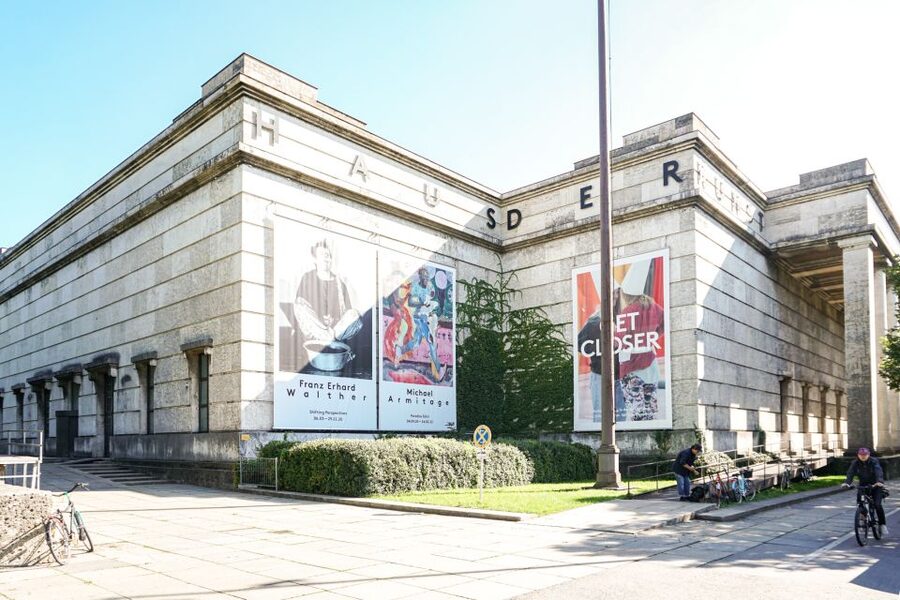
- Haus der Kunst reveals how art became a propaganda tool, including the regime’s attack on so-called degenerate art.
- The German Resistance receives real attention, including Georg Elser and the White Rose.
- The tour is conducted in Spanish, and children under 13 cannot join.
- The $23 price is strong value for a 2.5-hour guided walk covering several major historical sites.
Why Munich is the right place for this history walk
Munich was central to the early Nazi movement, and this tour makes that point through streets and buildings rather than dates alone. You begin at Marienplatz, Munich’s main central square, then move through places tied to the political origins of Adolf Hitler and the National Socialist German Workers’ Party.
That approach matters. A museum can give you documents and photographs. A walking tour shows how political activity occupied ordinary civic spaces, beer halls, grand public buildings, and ceremonial squares. You get a physical sense of how close these locations are to one another.
The tour also avoids presenting the period as a single story of Nazi control. It includes the German Resistance, with attention to Georg Elser and the White Rose. That wider frame helps you understand that opposition existed, even though the tour’s main subject is the growth and reach of the regime.
This is a serious history outing, not a general sightseeing walk with a few Nazi-era facts added along the way. You should book it if you want political context and historical explanation. If you are looking for Munich’s food, architecture, or royal palaces, choose a different tour.
More Third Reich and WWII Tours in Munich
- Munich: Third Reich & WWII Walking Tour
★ 4.6 · 6,181 reviews - Third Reich Walking Tour Munich
★ 4.5 · 4,291 reviews - Munich: Birthplace of the Third Reich Guided Walking Tour
★ 4.6 · 771 reviews
Starting at Marienplatz with the city’s political past
You meet the Spanish-speaking guide in front of the Tourist Information Office at Marienplatz. This is a simple meeting point in the heart of Munich, but the tour quickly moves beyond the usual city-center introduction.
From here, the guide lays out the political origins of Hitler and the Nazi movement in Munich. The opening matters because it gives you a framework for the rest of the walk. Instead of reaching each site with no context, you can connect the locations to the events that followed.
The guide’s role is especially important on a subject like this. Names, dates, organizations, and political movements can blur together. The strongest part of the experience is its clear delivery of a large amount of material at a manageable pace. The tour has a 4.9 rating from 34 reviews, with particular praise for the amount of historical information, the friendly guide, and the well-paced structure.
The exact guide’s name is not provided, so you should not book expecting a particular person. What is clear is that the tour is led live in Spanish, not delivered through an audio guide or self-guided booklet.
The Hofbräuhaus and the Beer Hall Putsch
The route continues to the Hofbräuhaus, one of Munich’s best-known beer halls. Here the subject shifts to Hitler’s putsch and the origins of the National Socialist German Workers’ Party.
This stop gives the political story a very specific setting. The Beer Hall Putsch was not an abstract event carried out somewhere far from daily life. The tour uses Munich’s beer-hall culture and central meeting places to explain how political organizing took shape in the city.
You will want to listen closely here, since the stop covers both the putsch and the early Nazi Party. These are connected subjects, but not identical ones. The guide’s job is to show how the movement developed and how Hitler’s political ambitions took form.
The Hofbräuhaus is still an operating attraction in Munich, so you should expect a public city setting rather than a preserved historical exhibit. The tour focuses on the historical meaning of the location. Food and drinks are not included, and this is not a beer-tasting stop.
That distinction is useful. You are paying for interpretation and a structured route, not a meal or a reserved table. If you want to visit the Hofbräuhaus independently afterward, you can treat the tour as a historical introduction before returning for food.
Haus der Kunst and Nazi control of art
The next major stop is outside Haus der Kunst. The tour presents it as the first propaganda building in Nazi Germany and uses the site to explain the regime’s influence on art.
This section adds an important layer to the walk. Political power did not operate only through speeches, police action, or party organization. It also shaped what people could see, praise, display, and reject. The discussion of banned degenerate art shows how the regime tried to control cultural life and define acceptable artistic expression.
For you, the value of this stop is its change of subject. The tour moves from political beginnings and attempted seizure of power to the use of culture as a public tool. The building becomes a way to discuss propaganda in a physical setting rather than as a vague idea.
The stop is outside the building, according to the route provided. Do not assume that your ticket includes interior entry or an art exhibition. The historical explanation takes place on the walking route, and the supplied details do not promise admission inside Haus der Kunst.
That is not a major weakness if you understand what you are booking. This is a city walk with exterior stops, not a museum tour. If seeing the interior is important to you, plan that separately and check its opening information.
Other trips into the same period in Munich:
- Munich World War II Sites Including Dachau Concentration Camp
★ 4.5 · 570 reviews - Munich City Walking Tour, includes Third Reich & Viktualienmarkt
★ 5.0 · 458 reviews - Third Reich & WWII Walking Tour
★ 4.5 · 417 reviews - Munich 3-Hour Segway Tour: Nazi Munich & Royal Architecture
★ 4.9 · 194 reviews
Georg Elser, the White Rose, and German opposition
One of the tour’s best choices is giving time to the German Resistance Movement. The guide introduces Georg Elser and the White Rose, two names linked to opposition against the Nazi regime.
This portion keeps the story from becoming a simple march through Nazi institutions. You hear about people who resisted, not only people who gained power or worked within the system. For a visitor trying to understand Germany’s difficult twentieth-century past, that balance is valuable.
The provided details do not specify every location used for the Resistance section, so you should expect the guide to explain these figures as part of the route rather than assume a dedicated museum visit. The central benefit is the connection between individuals, ideas, and Munich’s historical setting.
This is also where the tour may feel most emotionally demanding. The subject is not light, and the guide will be discussing political violence, propaganda, repression, and opposition. The experience suits adults and older teenagers who are ready to give the material their full attention.
Children under 13 are not allowed to participate. That rule is a useful signal about the tone of the tour. It is designed for serious historical learning, not a family-friendly general walk.
Führerbau and the Munich Agreement
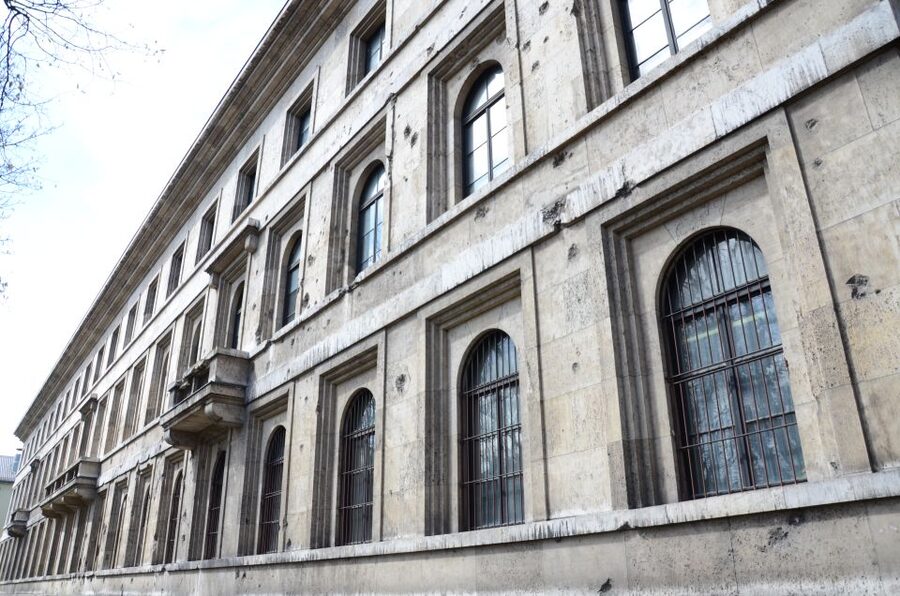
The route then reaches Führerbau, the place where the Munich Agreement was signed in 1938. This stop moves the focus from the Nazi movement’s beginnings in Munich to the regime’s wider political reach.
The building helps show how Munich’s Nazi-era story connected with international events. You are no longer looking only at party origins or local propaganda. The tour places the city within a major diplomatic moment tied to the period before the Second World War.
As with Haus der Kunst, the supplied information identifies the exterior location but does not promise interior entry. You should think of Führerbau as a stop for explanation and context. The guide’s account is what turns the building from an ordinary city sight into a meaningful historical site.
This part of the route also rewards careful listening. The tour covers a lot in 2.5 hours, and the historical names and events can arrive quickly. The strong feedback on pacing is reassuring, but I would still avoid scheduling another time-sensitive activity immediately afterward.
Ending at Königsplatz
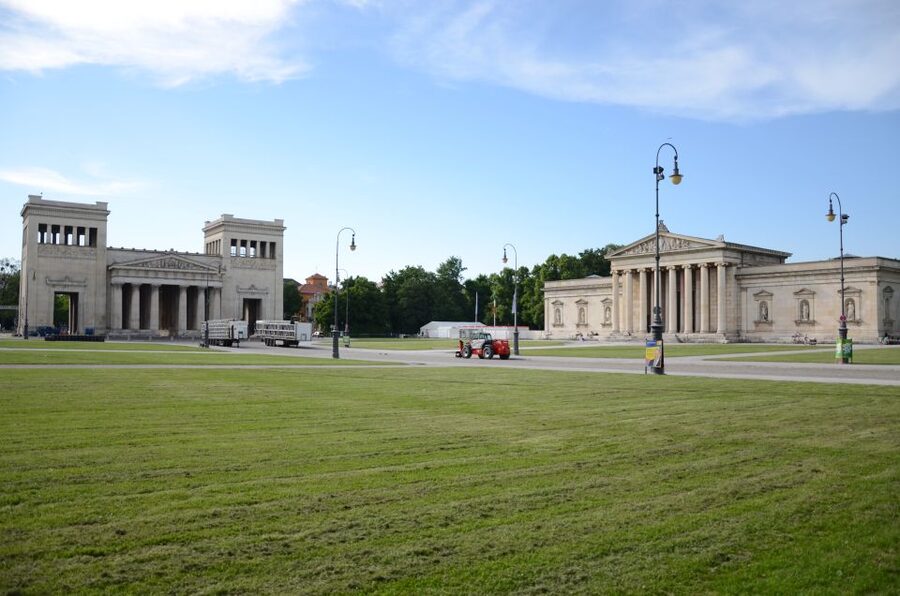
The walk concludes at Königsplatz. This gives the route a clear finish and lets the guide draw together the main strands: Hitler’s political beginnings, the Beer Hall Putsch, Nazi Party development, propaganda, the German Resistance, and the Munich Agreement.
Königsplatz is a fitting endpoint because the tour has moved from early political organizing to the public expression of power. You finish with a broader understanding of how Munich’s buildings and squares were tied to the Third Reich.
The activity ends back at the meeting point, making the logistics easier. You begin in the central city and do not need to arrange a separate return transfer from an unfamiliar part of Munich.
You should wear comfortable shoes. This is a 2.5-hour walking tour with several stops, and the schedule leaves little room for a long sit-down break. Food and drinks are not included, so bring what you need for the walk or plan a meal before or after.
Spanish-language guiding and the pace of the experience
This tour is open only to people who speak Spanish. That restriction is important, since the subject depends on detailed explanations rather than quick visual stops. If Spanish is not comfortable for you, the tour will not be a good fit, even if the route interests you.
The guide is live and Spanish-speaking. The positive comments about a friendly guide and a well-paced presentation point to the kind of experience you can expect: plenty of information, delivered in an organized way rather than rushed from one site to the next.
The minimum group size is four participants. If that number is not reached, the local partner will contact you and offer an alternative. Keep that in mind if you are planning around a fixed schedule, especially during a short stay in Munich.
At $23 per person, the value is easy to see if you want a guided historical route. You get 2.5 hours of live instruction and several significant locations for less than the cost of many museum admissions or short specialist tours. The price does not include food, drinks, or interior entry to the buildings described, so its value comes from the guide and the connected interpretation.
Free cancellation up to 24 hours before the start gives you some flexibility. You can also reserve and pay later, which helps if your Munich plans are still shifting.
Who should book this Munich history walk?
I would recommend this tour to you if you want to understand how Munich became a center of the early Nazi movement and prefer a guide to explain the connections. It is especially useful if you already know a few broad facts about the Third Reich but want to place them in the city.
It also suits Spanish-speaking visitors who want a serious, focused activity rather than a general city tour. The inclusion of the Resistance makes it more balanced than a route centered only on Hitler and Nazi institutions.
I would not choose it for children under 13, visitors who do not speak Spanish, or anyone wanting a relaxed sightseeing stroll. The walking time, dense subject matter, and political focus require attention. You should also avoid booking it as a casual add-on if you dislike structured historical tours.
Should you book it?
Book this tour if Munich’s Nazi-era past is a priority and you want the city’s locations tied together by a Spanish-speaking guide. The route covers the Hofbräuhaus, Haus der Kunst, Führerbau, and Königsplatz, while also giving space to the Beer Hall Putsch, Nazi art policy, Georg Elser, and the White Rose.
At $23, it offers solid value for a 2.5-hour specialist walk. Just confirm that your group has at least four participants, wear comfortable shoes, and remember that the experience is Spanish only. If those conditions work for you, this is a focused and useful way to face one of Munich’s most difficult chapters.
FAQ
Where does the tour start?
The tour starts in front of the Tourist Information Office at Marienplatz.
Where does the tour end?
The activity ends back at the meeting point after concluding at Königsplatz.
How long does the tour last?
The walking tour lasts 2.5 hours. Starting times vary, so check availability when booking.
What language is the tour conducted in?
The tour is conducted in Spanish. It is not open to people who do not speak Spanish.
What locations are included?
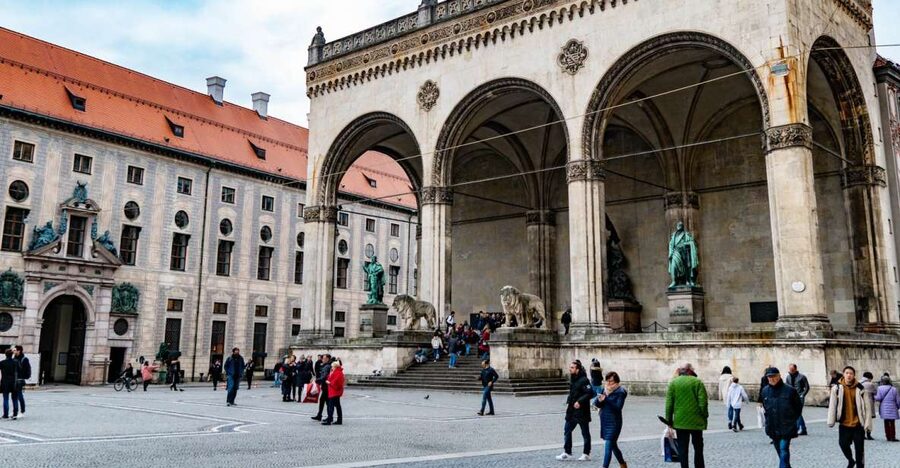
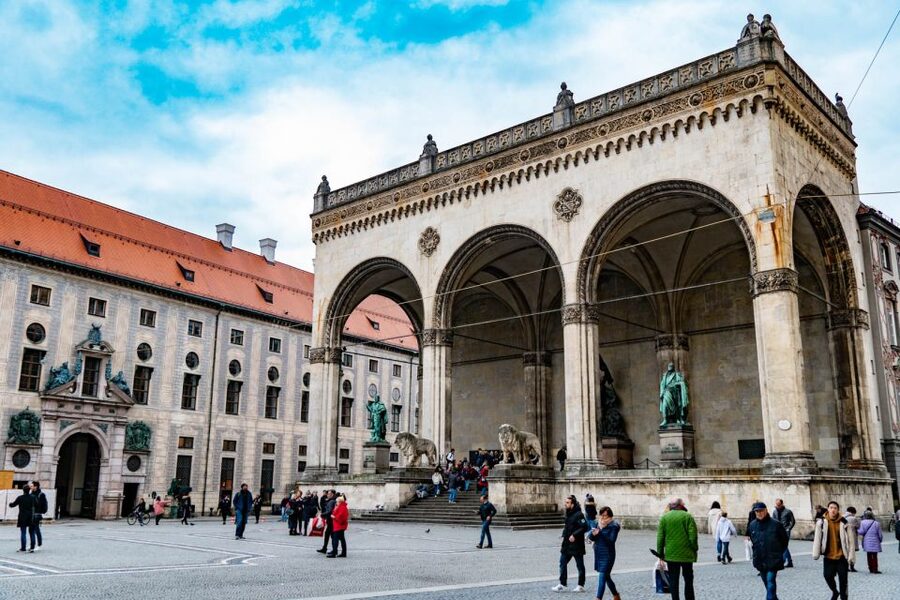
The route includes Marienplatz, Odeonsplatz, the Hofbräuhaus, the front of Haus der Kunst, Führerbau, and Königsplatz.
Does the tour discuss the Beer Hall Putsch?
Yes. The guide explains Hitler’s putsch, the origins of the National Socialist German Workers’ Party, and the beginnings of the Nazi movement in Munich.
Does the tour cover the German Resistance?
Yes. The tour discusses the German Resistance Movement, including Georg Elser and the White Rose.
Are children allowed to join?
Children under 13 are not allowed to participate.
What should I bring?
Bring comfortable shoes for the 2.5-hour walk. Food and drinks are not included.
More walking tours in Munich
- Munich: Old Town & Viktualienmarkt City Walk in German
★ 4.7 · 2,304 reviews - Munich: Night Watchman Walking Tour
★ 4.7 · 2,092 reviews - Munich Ghosts and Spirits Evening Walking Tour
★ 5.0 · 1,900 reviews - Munich Old Town Walking Tour
★ 4.5 · 1,287 reviews
Just added in Munich
- Pub crawl incl. Oktoberfest museum guided tour with beer tasting (private)★ 5.0 · 5 reviews
- South Tyrolean specialties and wine tasting★ 5.0 · 5 reviews
- Short & sweet: Tasting the Viktualienmarkt★ 4.8 · 37 reviews
- Size Matters Beer Tour Munich★ 4.6 · 105 reviews
- Secret Food Tours Munich★ 4.8 · 5 reviews
- Munich: Romantic Wine Experience for Two at Viktualienmarkt★ 4.2 · 14 reviews
- Munich: Resistance against Hitler – Historical Walking Tour★ 5.0 · 5 reviews
- Residence of Munich private tour with skip the line ticket★ 5.0 · 4 reviews
Third Reich & WWII Tours, compared.

Third Reich Berlin: Hitler and WWII Walking Tour
Read our review →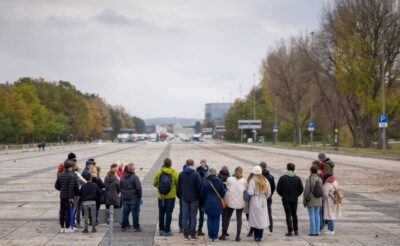
Walking Tour of Former Nazi Party Rally Grounds
Read our review →
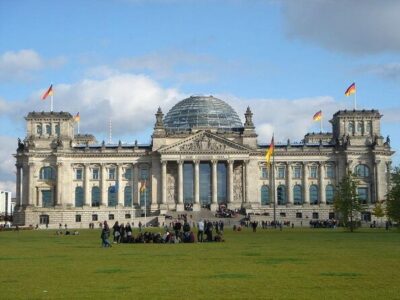
Berlin Third Reich Sites: Half-Day Walking Tour
Read our review →
Birthplace of the Third Reich Guided Walking Tour
Read our review →Browse the lists this tour appears in