

Reviewed · THIRD REICH & WWII TOURS
Munich: Birthplace of the Third Reich Guided Walking Tour
Munich’s Nazi past is not tucked away in a distant museum. It is tied to beer halls, government buildings, ordinary streets, and memorials in the city center. This 2.5-hour walking tour connects those places and explains how Munich became the birthplace of the Nazi movement.
I like two things here. First, the tour links political events to real addresses, so Hitler’s rise feels less like a string of textbook dates. Second, guides such as Jake, Sam, Nic, Iain, Aileen, and Steve are praised for clear storytelling, thoughtful answers, and the ability to handle a grim subject without turning it into a lecture.
The main drawback is simple: this is a serious walking tour outdoors. Rain, cold, or summer heat can affect your comfort, and there is no hotel pickup. You will also see many sites from the street rather than enter a series of museums or historic rooms.
Key points at a glance
- Beer halls tied to Hitler’s early speeches: See the settings where the Nazi movement first gathered support and where Hitler began attracting followers.
- The failed putsch and Munich’s streets: Learn how the attempt to seize power helped shape the Nazi movement and its public image.
- The building linked to Kristallnacht planning: Stop near the place where Goebbels plotted the Night of Broken Glass, a major step toward the Holocaust.
- Former Nazi headquarters: View official Nazi buildings that survived wartime destruction, along with nearby reminders of the damage caused by the war.
- Memorials to victims and opponents: The route includes monuments honoring people murdered by the regime and those who resisted it.
- English-speaking guides with different strengths: Jake is praised for energy and humor, Steve for archival detail, and Iain for thoughtful discussion and historical range.
Why Munich is the right place for this subject
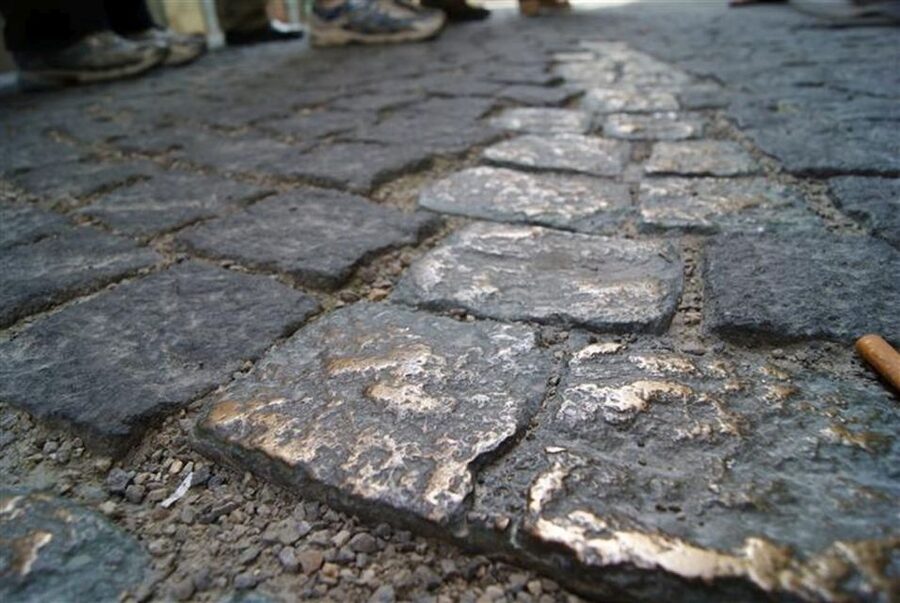
Munich was not just another German city in the story of the Third Reich. It was where the Nazi Party developed its early identity, where Hitler tested his public speaking, and where supporters gathered before the movement controlled Germany.
That local setting gives this tour its purpose. You do not simply hear that the Nazi Party grew in Bavaria. You walk through the city where early meetings took place and where political violence helped push the movement into public view.
The tour also avoids treating the Nazi period as a sealed-off chapter that began with war. It reaches back to the party’s early gatherings, Hitler’s failed putsch, and the years when ideology, propaganda, anti-Semitism, and street fighting built momentum.
I find that approach useful because it asks the question that matters most: how was this possible? The guide connects speeches, institutions, crowds, intimidation, and political choices. That makes the subject more unsettling, but also more useful for understanding how extremist movements gain ground.
More Third Reich and WWII Tours in Munich
- Munich: Third Reich & WWII Walking Tour
★ 4.6 · 6,181 reviews - Third Reich Walking Tour Munich
★ 4.5 · 4,291 reviews - Munich World War II Sites Including Dachau Concentration Camp
★ 4.5 · 570 reviews
Meeting at the Radius Tours office
You meet at the Radius Tours office. The exact starting arrangement depends on the option you select, and transportation to Munich’s historic center is included. Hotel pickup is not included, so plan to reach the office yourself.
That detail matters more than it sounds. Give yourself enough time to find the office and arrive ready to walk. Since the route uses central Munich streets, you will likely spend much of the tour moving between locations rather than remaining in one place for long talks.
The tour is offered in English with a live guide. The guide team varies, and names praised in recent bookings include Jake, Sam, Nic, Iain, Aileen, Steve, Dan, Josh, Mark, and others. You cannot choose a particular guide from the information provided, but the repeated pattern is clear: the experience depends heavily on the individual guide’s style.
That can be a strength. Jake is often described as lively and able to use gentle humor when the material becomes heavy. Steve is praised for his depth and for using a binder of photographs to compare past scenes with the streets in front of you. Aileen is noted for clear explanations and good care of the group’s pace and breaks.
The beer halls where the movement began
The early part of the route focuses on Munich’s beer halls, where the Nazi Party held small meetings before it became a force capable of controlling Germany. These places matter because they show how political movements grow through ordinary social spaces, not only through grand government buildings.
You will see the halls connected with Hitler’s first party meetings and early speeches. The point is not simply that Hitler spoke there. Your guide explains how speeches, shared resentment, anti-Semitic ideas, and a receptive audience helped turn a fringe political group into something larger.
Do not expect a preserved room where every chair and table remains exactly as it was. Much of the value comes from hearing what happened at the address while looking at the modern city around you. That contrast is part of the lesson. The places may function as businesses or public buildings today, yet their earlier political role remains important.
This stop is especially useful if you know the broad story but want to understand the mechanics of recruitment. A guide can point out how Hitler’s public speaking developed and how the beer hall setting allowed a movement to build a loyal base.
The failed putsch and the struggle for power
The route then follows Munich’s role in Hitler’s failed attempt to seize power. The putsch is a key part of the tour because it shows that the Nazi rise was not smooth or inevitable.
Hitler and his Brownshirts fought through Munich’s streets as they tried to force their way into power. The failure did not end the movement. Instead, it became part of the story the Nazis later told about sacrifice, loyalty, and national destiny.
On foot, the event becomes easier to picture. You are not studying a line on a map. You are moving through the same city center where political confrontation took place. The guide’s job is to explain what happened without making the street fighting sound like a heroic adventure.
That balance matters. The Nazi Party used memory and ceremony as political tools, and the tour shows how events were later presented to supporters. Munich’s streets therefore tell two stories at once: what happened, and how the Nazis tried to make people remember what happened.
Other trips into the same period in Munich:
- Munich City Walking Tour, includes Third Reich & Viktualienmarkt
★ 5.0 · 458 reviews - Third Reich & WWII Walking Tour
★ 4.5 · 417 reviews - Berlin: Third Reich and Cold War 2 Hour Walking Tour
★ 4.9 · 6,830 reviews - Berlin’s Best: 2 Hour Walking Tour Third Reich and the Cold War
★ 5.0 · 5,486 reviews
The Nazi headquarters and surviving buildings
A major stop is the former official Nazi headquarters. You will see the building from the outside and learn how Munich served as a center for Nazi administration and display.
Many central Munich buildings were damaged by Allied bombing, yet several Nazi-era structures survived. Seeing them in person gives you a physical sense of the period’s scale. These are not just meeting points from a map. They are large, formal reminders of a government that turned ideology into policy and violence.
The surrounding area also carries the marks of the Second World War. Your guide can place surviving buildings beside the wartime destruction and later memorial work. This helps you read the city as a layered place rather than a perfectly restored postcard.
The drawback is that this part of the tour may not satisfy you if you expect long interior visits. The emphasis is on the street, the building’s role, and the explanation around it. For a fuller look at objects, documents, and exhibits, you would need to add museums separately.
Kristallnacht and the road to mass persecution
One of the hardest stops concerns the building where Goebbels plotted the Night of Broken Glass, known as Kristallnacht. The tour treats this event as a grim milestone on the road toward the Holocaust.
The value here is the connection between public violence and organized policy. Kristallnacht was not an isolated burst of anger. It showed how anti-Semitic propaganda and state power could encourage attacks on Jewish people, homes, businesses, and places of worship.
Standing at the location gives the subject a sharper edge. Your guide explains what was planned there and how the event fit into the wider development of Nazi persecution. The stop is brief compared with the scale of what followed, but it helps you understand the progression from hateful rhetoric to public destruction and then to systematic murder.
This section may feel emotionally difficult, and it should. The tour does not turn suffering into entertainment. Guides are expected to keep the tone respectful while making the facts understandable, and Aileen, Steve, Iain, and others are especially praised for handling this material with care.
Memorials to victims and opponents of Nazism
The final part of the walk brings the story toward remembrance. You will see monuments honoring victims of Nazism and people who resisted the regime.
These memorials are important because they shift the focus away from Hitler and his followers. A tour about the Third Reich can accidentally give too much attention to the men who built the dictatorship. The inclusion of victims and opponents corrects that imbalance.
Your guide also explains how Germany has confronted its past and how Munich memorializes those who suffered. This gives you more than a list of crimes. You begin to see the choices a city makes about public memory, responsibility, and warning.
The final memorial section can be one of the strongest parts of the route. It connects the historical subject to the present without forcing a false sense of closure. The message is not that the past is safely finished. It is that anti-Semitism, political extremism, and the abuse of public fear require constant attention.
How the guides shape the experience
The guide is the most important variable in this tour. The material is heavy, and a flat delivery could make two and a half hours feel long. The strongest guides use photographs, explain difficult terms, answer questions, and keep the group moving.
Jake is a good choice for people who like energy and light humor used carefully. Sam is praised for extensive knowledge of Munich and for answering questions well. Nic is described as friendly, fluent, organized, and able to keep a group moving through several parts of the city.
Steve brings another style. His work documenting Munich’s neighborhoods and buildings gives him a large store of detail, and his binder of photographs helps you compare the city today with its appearance during the Nazi period. Iain is a good fit for history buffs who enjoy asking follow-up questions and discussing political ideas.
Dan is praised for holding a group’s attention even in bad weather, while Aileen is noted for clear explanations and sensible breaks. The names change, but the qualities you want are consistent: accuracy, empathy, a calm tone, and willingness to say when a question deserves a careful answer.
Several guides also use humor. That may sound surprising for this subject, but well-judged humor can help a group stay focused during a long and painful history lesson. It should never make the crimes themselves seem funny. Based on the guide descriptions, the best moments of humor are used to keep the group alert between difficult stops.
Timing, weather, and walking comfort
The advertised duration is 2.5 hours. That is long enough to build a serious story, but short enough to fit into a busy Munich visit.
You will spend the full time outdoors or moving between outdoor stops. Wear shoes suited to city walking and check the forecast before you go. Rain and freezing temperatures have not stopped the tour from running, but they can affect your comfort. In warm weather, you may want to carry water, since one participant wished for a drink stop during a hot outing.
The route includes breaks and the guide keeps track of the group, according to the available descriptions. Still, this is not a sit-down history talk. If you need frequent indoor pauses, consider the weather carefully before booking.
The end point is listed as two drop-off locations, including postal code 80331 and the Radius Tours office. Since the walk finishes in central Munich, you should receive useful bearings for continuing your day, though the exact final arrangement can depend on the selected option.
Is $29 a fair price?
At $29 per person, I consider this good value if you want context rather than a simple stroll past famous buildings.
You are paying for a live English-speaking guide, transport to the historic center, and two and a half hours of organized interpretation. A guide can connect beer halls, Nazi administration, wartime damage, Kristallnacht, and memorials in a way that would take considerable reading to reproduce on your own.
The value is strongest for first-time visitors to Munich who want to understand how the city fits into the history of the Third Reich. It is also useful for people who already know the broad outline but want local addresses and a clearer timeline.
The price is less attractive if you mainly want interiors, museum exhibits, or a short introduction to Munich. This experience is focused on walking and explanation. You will see important places, but you should not confuse it with a museum visit or a full memorial-center program.
Free cancellation up to 24 hours in advance and the option to reserve now and pay later make it easier to fit into a changing schedule. Those policies are practical, but the real question is still whether you want a serious outdoor history tour.
Who should book this walk
I would choose this tour for:
- History-focused visitors who want the Munich setting behind the major events.
- First-time visitors who need a clear introduction to the Nazi rise in the city.
- Students and families with older children who can handle discussion of anti-Semitism, political violence, and mass murder.
- People who enjoy questions and conversation, especially if you hope to discuss history beyond the basic timeline.
- Visitors with limited time, since the 2.5-hour format covers many key locations without taking a full day.
I would think twice if you dislike walking in poor weather, prefer private tours, or want to spend most of your time inside buildings. The exact group size is not specified in the main details, although the experience has been described as small-group, so do not book assuming a private guide.
Should you book the Birthplace of the Third Reich tour?
Book it if you want Munich’s streets to explain how Hitler’s movement grew, how Nazi power became organized, and how the city remembers those who suffered and resisted. The strongest reason to go is the connection between ordinary places and extraordinary crimes.
Choose a morning option if available, especially if you want a quieter start or plans for museums later. Several guides are praised for making the history clear without softening it, and the earlier start can also help you get away from the busiest parts of the main square before crowds build.
Skip it if you want a cheerful overview of Munich or a tour centered on grand architecture. This is a sober, fact-heavy walk. For the right reader, though, $29 buys a strong local introduction to one of Europe’s most important historical subjects.
FAQ
How long is the Munich Third Reich walking tour?
The tour lasts 2.5 hours.
What language is the tour offered in?
The live guided tour is offered in English.
Where does the tour meet?
You meet at the Radius Tours office. The exact starting arrangement depends on the option selected.
Is hotel pickup included?
No. Hotel pickup is not included.
Is transportation included?
Transportation to Munich’s historic center is included.
What places does the tour cover?
The walk covers beer halls connected with Hitler’s early meetings and speeches, the former Nazi headquarters, the building linked to Goebbels and Kristallnacht, wartime buildings, and memorials to victims and opponents of Nazism.
Can I cancel the booking?
Yes. You can cancel up to 24 hours in advance for a full refund. You can also reserve now and pay later.
More walking tours in Munich
- Munich: Old Town & Viktualienmarkt City Walk in German
★ 4.7 · 2,304 reviews - Munich: Night Watchman Walking Tour
★ 4.7 · 2,092 reviews - Munich Ghosts and Spirits Evening Walking Tour
★ 5.0 · 1,900 reviews - Munich Old Town Walking Tour
★ 4.5 · 1,287 reviews
Just added in Munich
- 2 Hours Munich: VIP Private Segway Tour★ 4.9 · 5 reviews
- “Comedykills” – das Open Mic im Glockenbachviertel★ 4.1 · 51 reviews
- Munich: City Highlights Guided Segway Tour★ 4.6 · 266 reviews
- From Munich: Herrenchiemsee Palace and Boat Trip Day-Tour★ 4.8 · 129 reviews
- Munich: Classical Concert at the Residenz Palace★ 4.5 · 148 reviews
- Munich: Law Library Guided Visit with Entry Tickets★ 4.6 · 297 reviews
- From Munich: Guided Group Tour to Eagle’s Nest★ 4.8 · 303 reviews
- From Munich: Nuremberg Day Trip by Train★ 4.4 · 357 reviews
Third Reich & WWII Tours, compared.
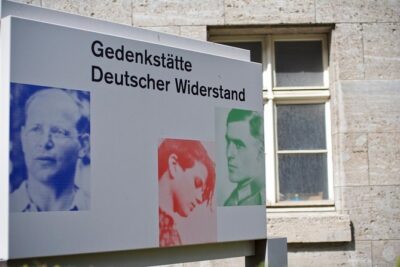
Third Reich Berlin: Hitler and WWII Walking Tour
Read our review →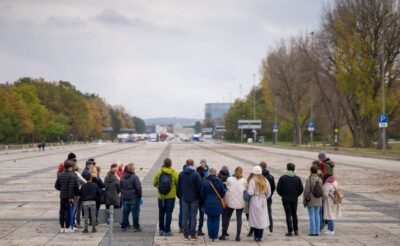
Walking Tour of Former Nazi Party Rally Grounds
Read our review →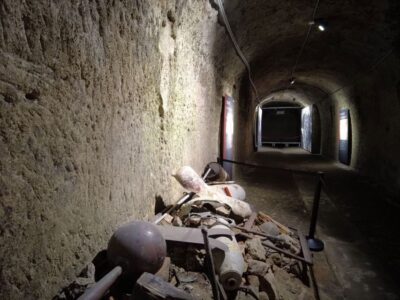
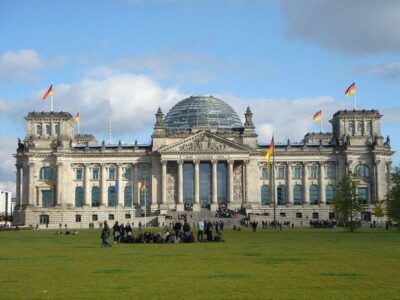
Berlin Third Reich Sites: Half-Day Walking Tour
Read our review →
Munich World War II Sites Including Dachau Concentration Camp
Read our review →Browse the lists this tour appears in