Reviewed · WALKING TOURS
Private Berlin City Center Walking Tour
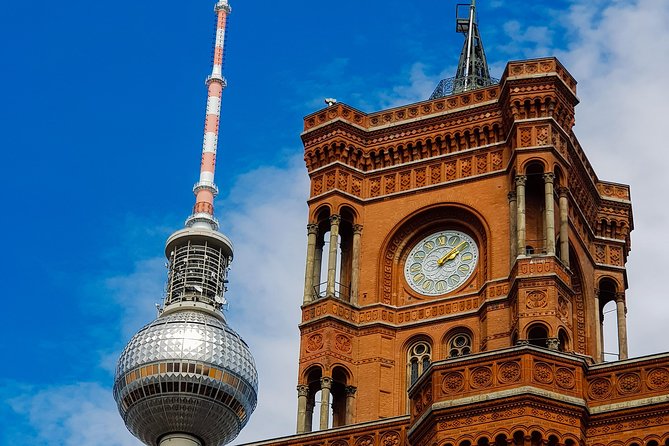
Berlin’s story is packed into a surprisingly small central area, and this private walk connects the key places in a single four-hour introduction. You move from Prussian power to Nazi terror, Cold War division, and modern Germany without spending your first day trying to decode a map.
I like the hotel pickup and the private format, especially for a family or group with mixed interests. I also like the guide’s willingness to shape the route around your questions. The main drawback is pace: 17 listed stops in four hours means many visits are brief, and this is mainly an outdoor orientation rather than a museum tour.
Key points at a glance
- Seventeen central Berlin sights: The route covers Brandenburg Gate, the Reichstag, the Holocaust Memorial, Checkpoint Charlie, Museum Island, and more.
- A private group of up to 15: You receive the guide’s attention instead of joining a large shared party.
- Hotel-lobby pickup: You do not need to find an unfamiliar street corner at the start, though you should confirm the pickup details.
- A serious history lesson: Nazi Germany, the Berlin Wall, East Germany, and the changing meaning of memorials all form part of the walk.
- $397.38 per group: The price makes more sense when shared by several people, particularly near the 15-person limit.
- Mostly free outdoor sights: There are no admission charges, but public transport, food, drinks, and interior museum visits are not included.
Why this is a useful first look at Berlin
This tour works because Berlin’s main sights are not isolated attractions. The Brandenburg Gate is near the Reichstag and the Holocaust Memorial. From there, the route moves toward the former government district, the Berlin Wall, Checkpoint Charlie, the old royal avenue of Unter den Linden, and Museum Island.
A guide can supply the links that a quick photo stop cannot. At the Holocaust Memorial, for instance, you discuss not just the concrete blocks but also the setting in which the memorial was built and the different ways people interpret it. At Neue Wache, the subject broadens to Germany’s difficult culture of remembrance and the way successive governments used the building.
That context is the real reason to book a private walk. You are not simply collecting landmarks. You are asking why a memorial is here, why a government building changed purpose, and how one city became the front line of the Cold War.
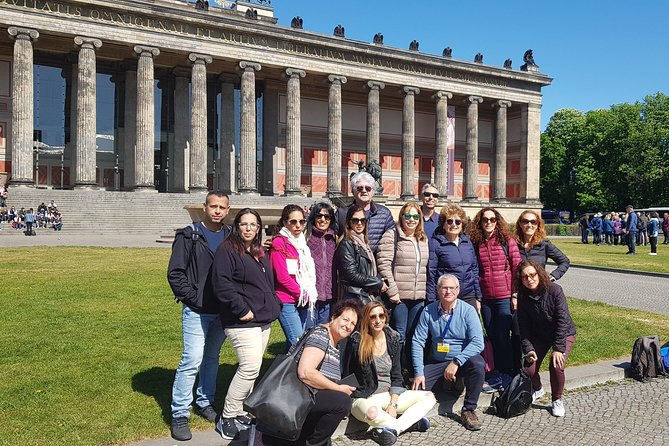
The tour is offered in English and is private for your group. That makes it a good choice for parents with children, a group of friends, or three generations traveling together. One particularly useful sign is the positive account from a group spanning three generations, where the personalized attention worked well for everyone. That matters in Berlin, where one person may want military history, another may care about architecture, and someone else may simply need the big picture.
Other walks around Berlin:
- Discover Berlin Half-Day Walking Tour
★ 5.0 · 9,624 reviews - Berlin: Third Reich and Cold War 2 Hour Walking Tour
★ 4.9 · 6,830 reviews - Berlin: Discover Berlin Walking Tour
★ 4.9 · 5,998 reviews
Brandenburg Gate and the Reichstag
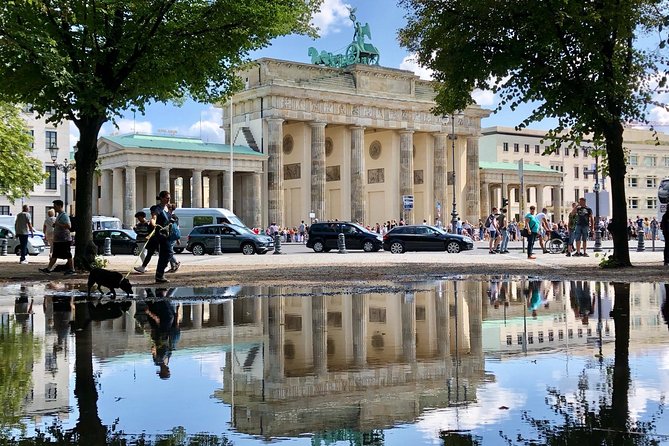
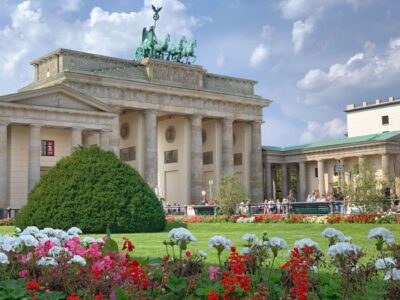
The walk begins with two of Berlin’s most recognizable buildings. At Brandenburg Gate, your guide explains its history and significance rather than treating it as a quick photograph. The gate has become a symbol of Berlin itself, so it is a sensible place to set the scene.
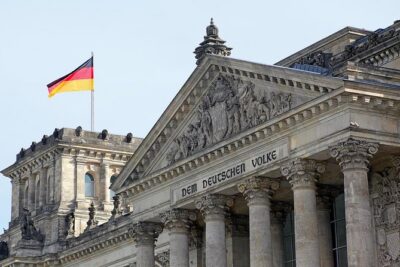
Nearby, the Reichstag Building provides a second lesson in Germany’s political past and present. The listed visit is a view and discussion from outside, not a guaranteed interior visit or dome entry. If seeing the inside matters to you, ask about that before booking.
Ten minutes is allocated to each of these first stops. That is enough for a clear explanation and photographs, but not enough for a long architectural talk. You should think of the opening section as orientation, not a full tour of either building.
The Holocaust Memorial and Hitler’s bunker site
The Memorial to the Murdered Jews of Europe is one of the most important stops. You walk through the field of concrete blocks while discussing its purpose, the context in which it was built, and its possible interpretations.
This is a place where a guide’s tone matters. The memorial does not offer a simple message, and a short conversation can help you approach it with the seriousness it requires. The listed schedule allows about ten minutes, so you will not have a long period for quiet reflection unless the guide adjusts the timing.
The nearby site of Hitler’s bunker brings the final days of the Second World War into the conversation. The tour discusses what happened there, including the historical question of whether Hitler died by suicide. The bunker itself is not presented as an intact attraction. You are visiting the location and learning what occurred there.
That distinction is important. This stop is about historical context, not dramatic ruins or an underground visit. If you prefer Berlin’s history told through sites rather than formal museum displays, it is a useful stop. If you want detailed documentation, plan separate time for a museum.
The Aviation Ministry and the Topography of Terror
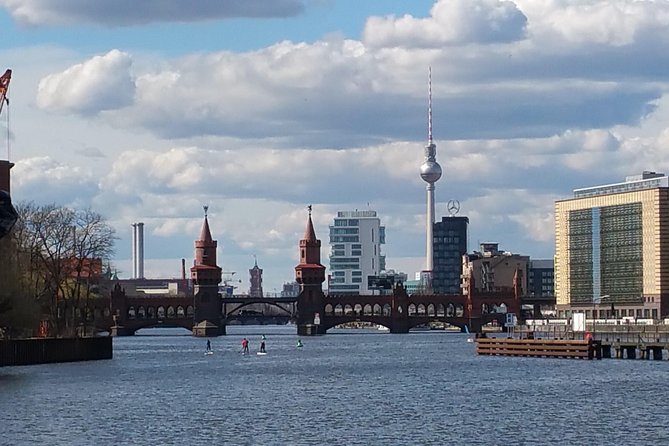
The former Aviation Ministry opens a different chapter. The building was constructed for Hermann Göring’s aviation administration and later served as the House of Ministries under East Germany’s government. A single structure therefore lets you discuss both the Nazi period and the GDR years.
The tour then turns to the Topography of Terror area, where you see an original section of the Berlin Wall and discuss the division of Berlin and Germany after the Second World War. The supplied route lists Topography of Terror twice, once for the Wall discussion and once for the site’s history. Treat these as connected parts of the same area, rather than two entirely separate attractions.
This portion should be especially helpful if Berlin’s Cold War story feels confusing. You get the basic political background before reaching Checkpoint Charlie, instead of seeing a famous checkpoint without understanding why it existed.
The stop is still mainly an exterior visit. The Topography of Terror has more to offer than a brief sidewalk explanation, but the four-hour route cannot give it a full museum session. You may want to return on your own if this subject catches your interest.
A few more things to do in Berlin worth a look
- Berlin: Private Reichstag and Glass Dome Tour
★ 4.8 · 2,226 reviews - Berlin Private Complete History All Day Walking Tour
★ 5.0 · 474 reviews - Private Walking Tour Berlin Third Reich Hitler and World War II
★ 5.0 · 360 reviews - Private Berlin: Iconic Sights and Hidden Gems Walking Tour
★ 5.0 · 292 reviews
Checkpoint Charlie and the former divided city
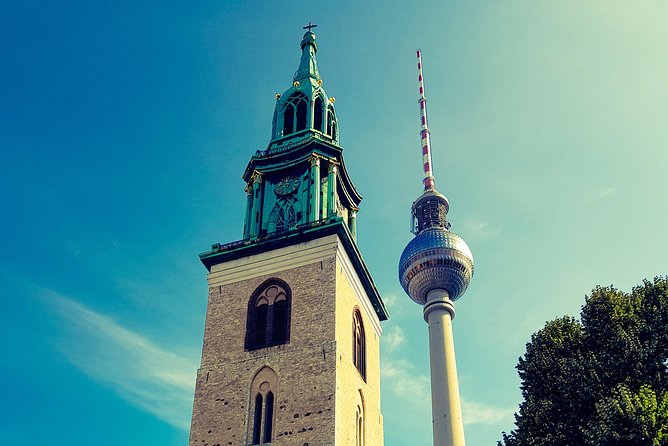
Checkpoint Charlie is one of Berlin’s best-known Cold War names. On this tour, you see the site and hear about its place in the divided city.
The stop is short, and the present-day setting can feel more commercial than historic. That is precisely why background helps. A guide can separate the real importance of the crossing from the souvenir stalls and photo opportunities that surround it.
Do not expect an extended border-control exhibit or a long indoor visit as part of this walk. The value here is the connection between Checkpoint Charlie, the Wall, the former East and West Berlin, and the political tension that shaped the city.
Gendarmenmarkt, Bebelplatz, and Unter den Linden
The route continues through some of central Berlin’s most elegant spaces. Gendarmenmarkt gives you a chance to look at a grand urban square, while Bebelplatz carries a darker story. At Bebelplatz, the guide discusses the events that took place there, connecting the square to the Nazi period.
Again, the short stop works best as part of a larger explanation. You are not spending an hour studying every façade. You are learning how Berlin’s attractive central spaces can also carry painful memories.
Unter den Linden then provides the broad avenue that links many of these landmarks. Its history helps explain why the area became a center of royal, political, and cultural life. The route makes good use of this connection because the avenue leads naturally toward the memorials, museums, cathedral, and former city palace.
This is one reason a private guide can be more useful than a self-guided checklist. You can ask how the different sites relate to one another instead of treating each as a separate stop.
Neue Wache and the question of remembrance
Neue Wache is a small building with a very large subject. It serves as Berlin’s central memorial for victims across German history, and the guide explains when it was built, the setting in which it was created, and how different governments used it.
This is among the most thoughtful parts of the route. Germany’s memorials do not fit neatly into one story, and Neue Wache allows you to discuss how public remembrance changed under different regimes. It is a good place to slow down and ask questions.
The time allocation is still about ten minutes, so do not expect a seminar. But the stop can give you a framework for later visits to Berlin’s museums and memorials. I would pay close attention here, especially if you are interested in architecture, politics, or the choices behind public memorials.
From the German Historical Museum to Museum Island
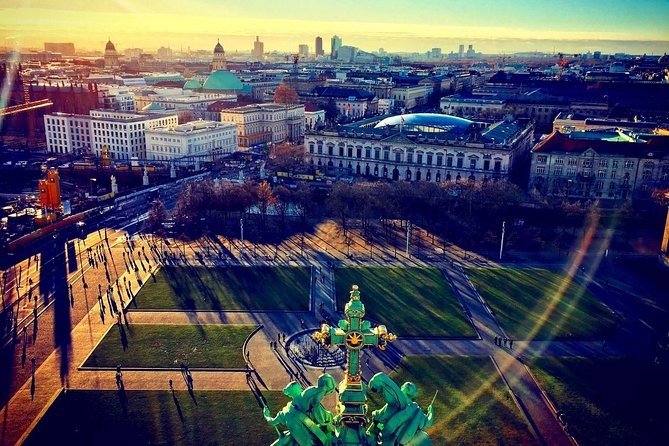
The final stretch covers a dense cluster of Berlin sights. At the Deutsches Historisches Museum, the discussion focuses on the building’s history and architecture. The tour does not include museum admission or a dedicated indoor visit, so the emphasis remains on the exterior.
At Lustgarten, the guide explains the history of the site. The square connects several major landmarks and helps you understand the relationship between the old royal center, the cathedral, and Museum Island.
The Humboldt Forum follows, with a discussion of the Berlin City Palace. The modern building occupies the historic palace site, making it a useful place to consider how Berlin reconstructs and presents its past.
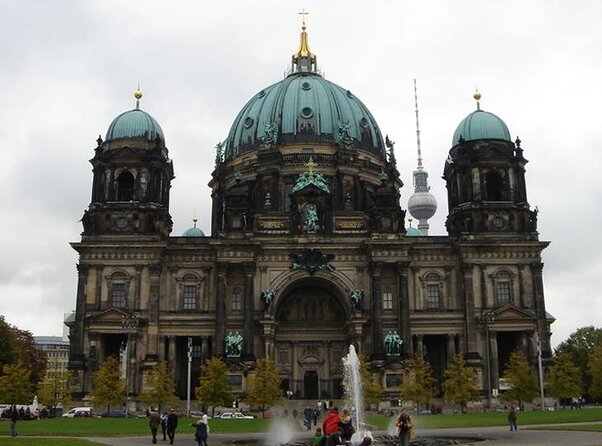
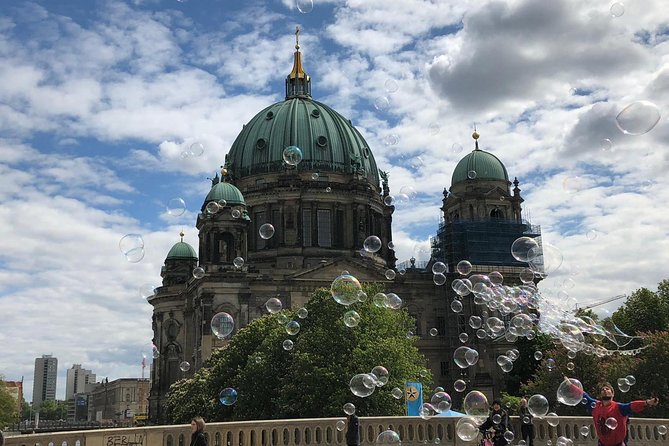
You then see Berliner Dom, with about five minutes allotted to its history, and continue to Museum Island. The guide discusses the island’s development and importance, but entry to its museums is not included.
This ending is well chosen for a first visit. You finish among some of the city’s best-known cultural buildings, with a clearer idea of where to return. If you want to visit the museums, set aside another half-day or more. The walking tour gives you the map and the context, not the full collections.
What $397.38 means for your group
The listed price is $397.38 per group of up to 15 people, not per person. For a full group, that works out to about $26.49 each. For four people, it is roughly $99.35 each, before any extra transport or food costs.
That makes the tour strongest for a large family group, a group of friends, or several generations traveling together. A couple may find the price harder to justify unless the private format and hotel pickup are especially important.
All fees and taxes, along with an expert private guide, are included. Public transportation tickets, food, and drinks are not. The route covers a lot of ground, so ask how the guide expects the group to move between stops and whether any public transport will be useful.
Every listed sight has free admission, but that does not mean every building can be entered. The itinerary describes views, outdoor visits, and discussions. Budget separately for museums or interior attractions you want to see afterward.
Timing, pickup, and the walking pace
The experience lasts about four hours and is offered daily from 8:00 a.m. to 8:00 p.m. Hotel-lobby pickup is offered, which is a practical help on your first morning in Berlin. The stated meeting address is Scheidemannstraße 5, while the pickup information says the guide will meet you in your hotel lobby, so confirm the exact starting arrangement after booking.
The route lists 17 stops, most with about ten minutes each. That tells you something important about the pace. You will receive a brisk explanation at many places, with time for questions, but you will not linger at every memorial or building.
The activity ends back at the meeting point. Since the route covers central Berlin, you may want to plan your next stop near Museum Island or ask the guide for practical advice about where to continue. Do not count on a meal break, since food and drinks are not included.
Confirmation is sent within 48 hours, subject to availability. The experience is often booked well ahead, with an average booking time of 41 days in advance, so reserve early if your dates are fixed.
Who should book this private walk
I would choose this tour for a first visit, a short stay, or a group that wants a clear overview before exploring museums independently. It is also a good fit if you dislike organizing several separate sightseeing stops or if your group has different levels of interest in Berlin’s past.
The private format is useful for families. A guide can explain the Holocaust Memorial and the bunker site in an appropriate way, pause for questions, and adjust the discussion to the group. Service animals are allowed, the route is near public transportation, and most people can take part.
You should think twice if you want long interior visits, extensive museum time, or a slow architectural walk. The tour has an ambitious route and a serious amount of history to cover. It is best used as a well-guided city introduction, followed by your own return visits to the places that matter most to you.
Free cancellation is available if you cancel at least 24 hours before the start time. Changes or cancellations inside that window are not accepted for a refund.
Should you book it?
Book this tour if you want Berlin’s major central sights tied together by one private English-speaking guide. The strongest reasons are the hotel pickup, the flexible format, and the range of subjects, from Prussian Berlin and Nazi Germany to the Wall, East Germany, and modern memorial culture.
Skip it if you mainly want museum interiors or plenty of time at each stop. For a larger group, the price can be good value. For only one or two people, compare the cost with a shared walking tour. For most first-time visitors who want a serious orientation in four hours, this is a practical and thoughtful choice.
FAQ
How long does the private Berlin walking tour last?
The tour lasts approximately four hours.
How many people can join the private tour?
The price covers one private group of up to 15 people.
Is hotel pickup available?
Yes. Pickup is offered from your hotel lobby. Confirm the exact pickup arrangement after booking because a specific meeting address is also provided.
What language is the tour offered in?
The tour is offered in English.
Are admission tickets included?
All listed stops have free admission, and the tour includes all fees and taxes. Interior museum admission is not included.
Is public transportation included?
No. Public transportation tickets are not included in the tour price.
Are food and drinks included?
No. Food and drinks are not included.
Does the tour enter the Reichstag or the museums?
The route describes viewing and discussing the Reichstag, the Deutsches Historisches Museum, the Humboldt Forum, Berliner Dom, and Museum Island. It does not include stated interior admission to those places.
What is the cancellation policy?
You can cancel at least 24 hours before the start time for a full refund. Cancellations or changes made less than 24 hours before the start time are not accepted for a refund.
Just added in Berlin
- Private One way Airport Transfer Berlin Airport To Berlin★ 3.5 · 17 reviews
- Private Walking Tour: Berlin Wall, Cold War and Checkpoint Charlie★ 5.0 · 37 reviews
- Modern Berlin Private Walking Tour: Diverse, Vibrant and Exciting German Capital★ 5.0 · 13 reviews
- Private Day Trip to Potsdam from Berlin by Train★ 4.5 · 27 reviews
- City Explorer: Potsdam Private Day Trip★ 4.5 · 10 reviews
- Berlin Private Custom 5-Hour Tour by Car★ 5.0 · 30 reviews
- Private Half-Day Sightseeing Tour in Berlin★ 3.5 · 6 reviews
- Berlin Private Custom Tour in a Minivan, East and West★ 5.0 · 123 reviews
Walking Tours, compared.

Third Reich Berlin: Hitler and WWII Walking Tour
Read our review →