
Reviewed · CRIME, WITCHES & CEMETERY TOURS
Nuremberg: St. Johannis Friedhof &Hesperidengärten IN GERMAN
Nuremberg’s St. Johannis Cemetery is not a standard sightseeing stop. Its old graves, family epitaphs, and orderly rows of sandstone memorials turn the city’s past into something you can read at walking pace. The tour adds Albrecht Dürer’s grave and the nearby Hesperides Gardens, once used for leisure and Mediterranean fruit growing.
I like the way this walk connects famous figures with ordinary city life, from patricians and politicians to craftsmen and artists. I also like the modest length: about 1 kilometer over 90 minutes, enough time for stories without turning the outing into a long march.
The main consideration is simple: the tour is held in German. The cemetery should interest history lovers even if your German is limited, but you will miss much of the guide’s explanation. The Hesperides Gardens also close to tour visits from November through April, and the route is not suitable for wheelchair users or people with limited fitness.
Key points to know before you book
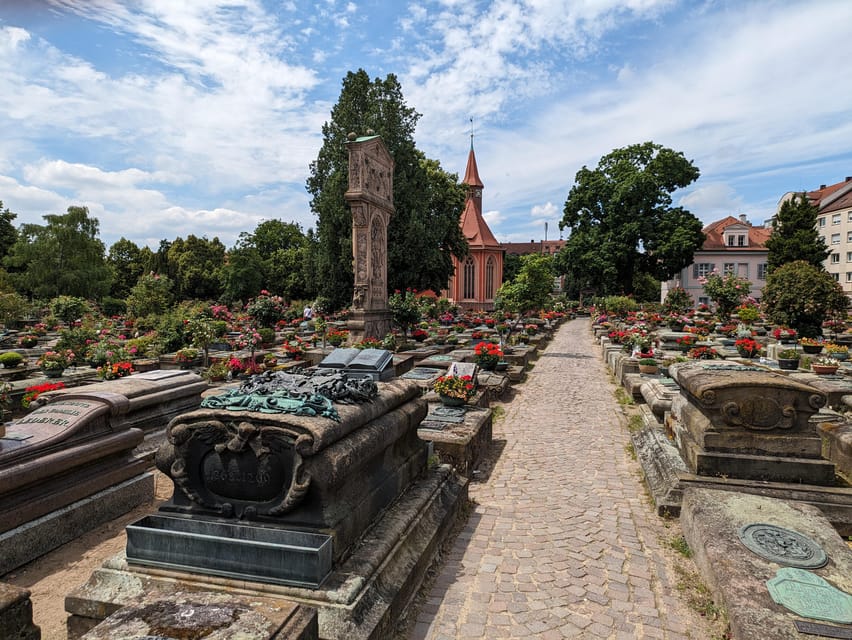
- Germany’s most beautiful cemetery in 2013: St. Johannis Cemetery was given this distinction in a national vote.
- A city history told through graves: Patricians, craftsmen, artists, and politicians are all part of the story.
- Albrecht Dürer’s grave: The famous Nuremberg artist is one of the tour’s named stops.
- A second setting nearby: The Hesperides Gardens show a more leisurely side of the historic Johannis district.
- A short walking route: The tour covers roughly 1 kilometer and lasts about 1.5 hours.
- German-language guiding: A minimum of two participants is required, and comfortable shoes are a good idea.
Why St. Johannis Cemetery is worth your time
The best reason to take this tour is that it gives you a different way to understand Nuremberg. Instead of moving from museum to museum, you follow the city’s story through its burial ground. The graves belong to people from several parts of civic life, so the cemetery works like an open-air record of who shaped the city and how its social groups were remembered.
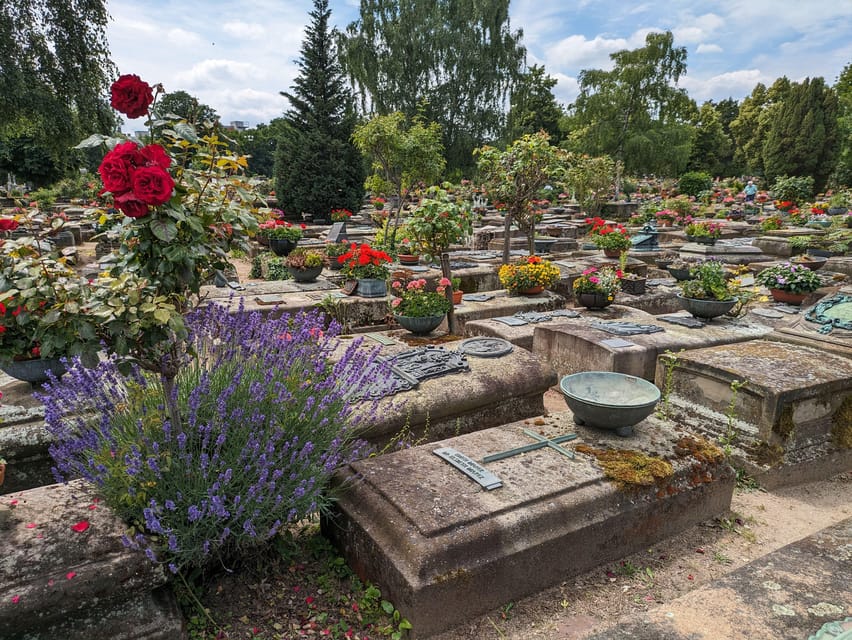
St. Johannis Cemetery is considered one of Europe’s most famous burial grounds. It was also voted Germany’s most beautiful cemetery in 2013. That title may sound grand for a cemetery, but it points to what makes the place unusual: the artistic epitaphs, the repeated family memorials, and the overall visual character of the grounds.
I would not visit expecting a dramatic monument at every turn. The appeal is quieter. You look closely at the grave markers, listen to the stories connected with them, and begin to see how burial customs reflect Nuremberg’s past. A guide is useful here because the names and inscriptions alone cannot explain the people behind them.
The cemetery also offers a useful balance between prominent figures and less famous citizens. You hear about patricians and politicians, but also craftsmen and artists. That wider range keeps the tour from becoming only a biography of famous men.
Other tours run in German:
- Nuremberg: The Old Town in Evening Light – IN GERMAN
★ 4.7 · 353 reviews - Nuremberg: Private guided tour of the Old Town in German
★ 4.9 · 17 reviews - Nuremberg: The Old Town Hall – Centre of Power – IN GERMAN
★ 4.8 · 8 reviews
Entering through Lindengasse and Johannisstraße
The meeting point is at the east entrance of St. Johannis Cemetery, where Lindengasse meets Johannisstraße. This detail matters because the cemetery is the starting point, not a general meeting area somewhere in central Nuremberg. Check the map provided with your booking and arrive with enough time to find the entrance.
The tour begins at the cemetery before moving toward the gardens. Since the route is on foot and includes historic ground, comfortable shoes are sensible. The total walking distance is about 1 kilometer, which makes the outing manageable for many older visitors who enjoy history, though the activity is not listed as suitable for people with low fitness.
The cemetery setting also means that this is a calm, respectful tour. It is not a fast-paced city walk with constant changes of scenery. You will spend time looking at graves and listening to biographies, so it suits you best if you enjoy detail and do not need a busy schedule.
Reading Nuremberg through its graves
The tour’s central idea is cemetery and garden culture. That combination gives the experience more depth than a simple walk past old tombstones. The burial ground shows how families commemorated their dead, while the later garden visit shows how people in the Johannis district used nearby green spaces for pleasure and cultivation.
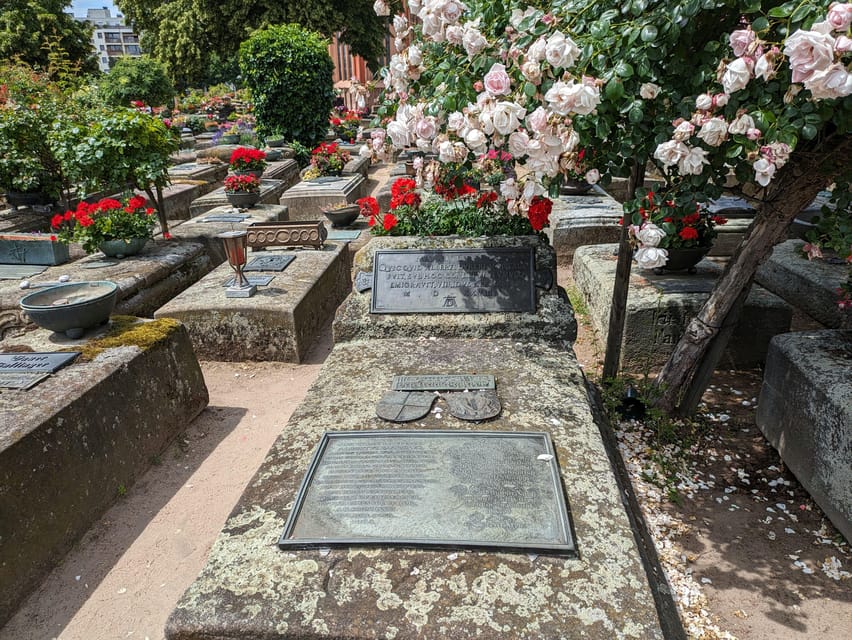
The artistic epitaphs are an important part of the cemetery. These memorials commemorate the deceased and their families, giving the guide material to explain social position, family connections, and the values expressed in public remembrance. You are not just seeing names. You are looking at how people wanted a life and a family to be remembered.
This is also where the local guide makes the biggest difference. The tour promises city history through the graves, and the strongest part should be the explanation of who these people were and why they mattered. Sabine Peters is associated with the experience and has been praised for presenting historical information in an interesting, entertaining way. If she is your guide, you can expect a lively delivery rather than a dry list of dates.
The guiding is especially valuable if you do not already know Nuremberg’s civic history. The cemetery brings together several groups, and a guide can help you understand how they fit into the city’s development. You will hear about patricians, craftsmen, artists, and politicians rather than following only the usual major sights.
Albrecht Dürer’s grave and the famous name on the route
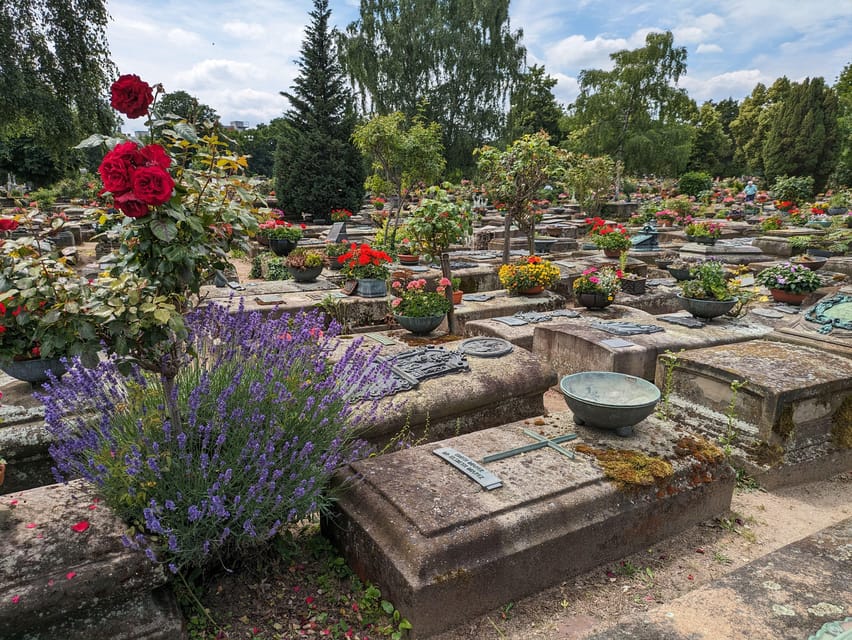
Albrecht Dürer’s grave is one of the clearest anchors on the walk. Dürer is one of Nuremberg’s best-known artists, so seeing his burial place gives the cemetery a direct link to the city’s artistic identity.
Do not expect this stop to function like a large museum exhibit. Its value comes from placing a famous person within the same cemetery culture as other residents and families. The guide can use Dürer’s grave as a point of reference, then widen the discussion to the surrounding memorials and the people represented there.
If you are interested in art, this stop will likely be one of the tour’s main draws. If you are mainly interested in architecture or religious buildings, the cemetery’s epitaphs and overall setting may be more important than Dürer’s grave itself.
Other dark corners of Nuremberg:
- Nuremberg: Medieval Dungeons Guided Tour
★ 4.8 · 1,726 reviews - Medieval Tour in Nuremberg in Spanish
★ 5.0 · 1,374 reviews - Nürnberg: Mörder, Fälscher, Messerstecher
★ 4.8 · 53 reviews - Nuremberg: 1.5-Hour Medieval Tour
★ 4.6 · 33 reviews
The Hesperides Gardens from May through October
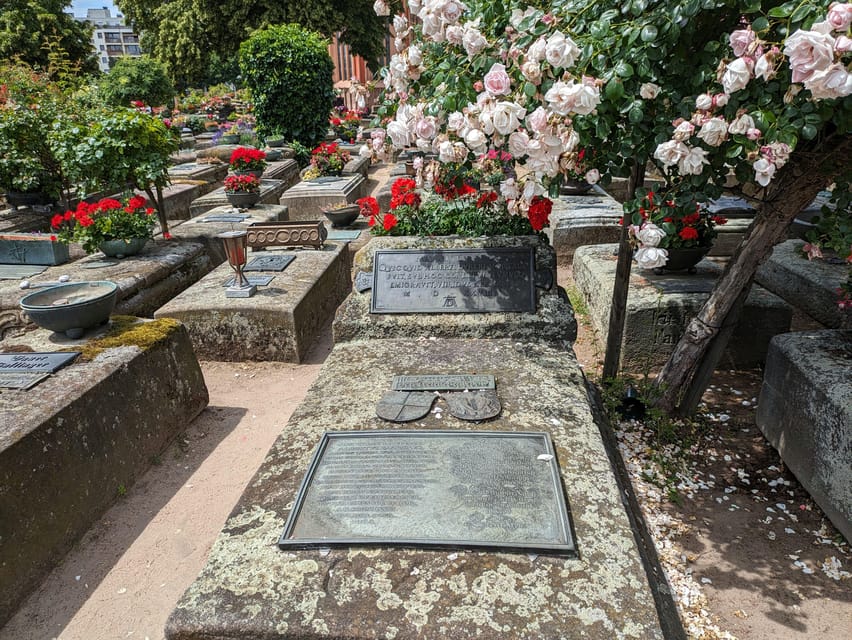
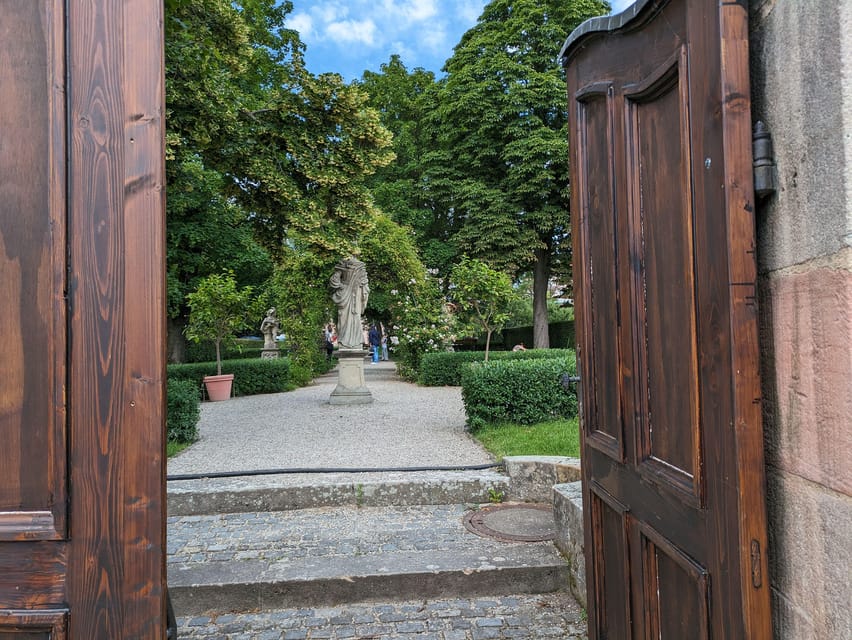
After the cemetery, the route continues to the Hesperides Gardens. These gardens were used for recreation and for cultivating Mediterranean fruit. That second purpose gives them a distinctive place in the story of the Johannis district, since they were not simply decorative spaces.
The gardens complete the picture of the area by showing how historic green spaces served more than one role. They provided somewhere to spend leisure time, but they also supported the cultivation of fruit associated with a warmer climate. You get a different view of local life here: less about death and remembrance, more about gardens, leisure, and the use of cultivated land.
The Hesperides Gardens are not available year-round on this tour. They can be visited from May through October, so the seasonal timing is important when you plan your booking. If you visit outside those months, the cemetery portion may still be the main attraction, but you should not expect the full cemetery-and-garden route.
The gardens may also be a matter of personal taste. I would treat them as a useful second chapter rather than the sole reason to book. The cemetery carries the stronger historical focus, while the gardens add atmosphere and context. In very hot weather, the garden portion may feel less appealing, especially if you prefer to walk in cooler conditions.
What the 90-minute format feels like
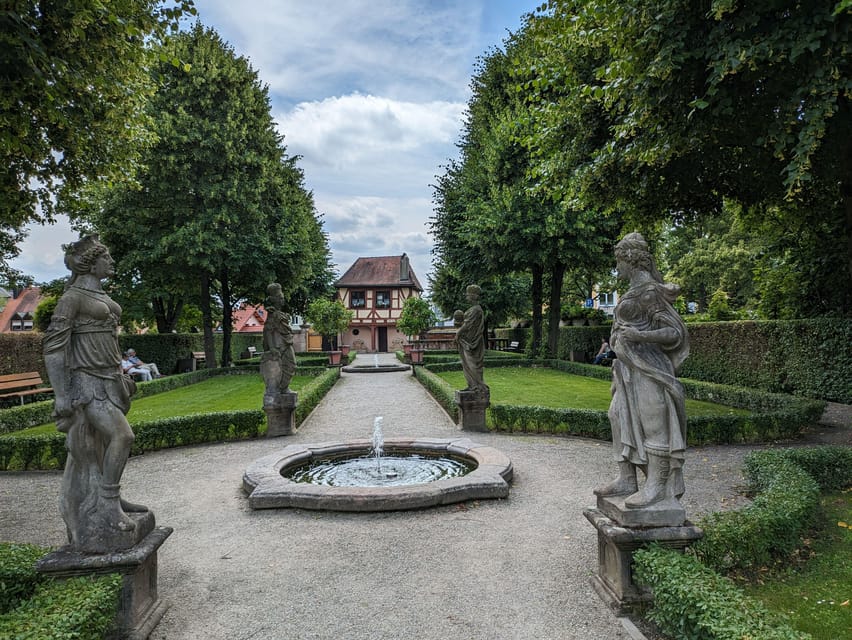
A 1.5-hour tour is a practical length for this subject. You have enough time for a guided explanation of the cemetery, Dürer’s grave, and the gardens, but the outing should not take over your whole day in Nuremberg.
The route finishes at the Hesperides Gardens. That makes the experience easy to pair with other sightseeing afterward, although no onward transport or additional stop is included. The route is guided throughout, and there is no suggestion that you need to prepare with specialist historical knowledge.
The short distance is another advantage. One German-language booking described the walking route as roughly 1 kilometer and suitable for older people with an interest in the subject. That does not mean the tour is accessible to everyone. Wheelchair users and people with low fitness are specifically advised against booking, and people with visual impairments may find the grave-focused format difficult.
Weather can shape the experience. The cemetery is an outdoor site, and the gardens are also open-air. Bring comfortable shoes, and consider the season carefully. A chilly day need not spoil the tour, but hot weather can make the walk less pleasant, particularly during the garden section.
A German-language tour with a local point of view
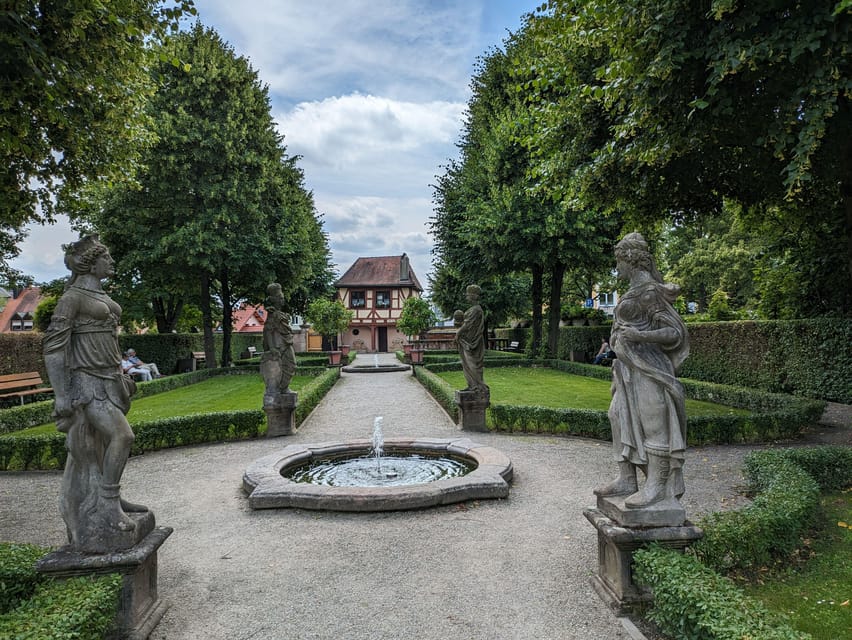
This activity is conducted in German, with a live German-speaking guide. That is the most important booking decision. If you understand German well, the tour offers local detail that a self-guided visit would not provide. You can ask questions, follow the biographies, and understand why particular graves and epitaphs matter.
If you have only basic German, you may still enjoy the visual side of the cemetery and gardens, but you should not book this as a language-neutral experience. Much of the value is in the spoken history. The guide’s descriptions are what connect the memorials to Nuremberg’s people and past.
The guiding style can also vary by person. Sabine Peters has been singled out for making the material both informative and entertaining. Another German-language booking described the guide’s knowledge as extensive. Those details suggest that the tour works best when you are ready to listen rather than simply walk through and take photographs.
The minimum group size is two people. If fewer than two participants are booked, the activity may not operate, so this is worth keeping in mind when planning around a tight schedule.
Is $17 a fair price?
At $17 per person, the tour is reasonably priced for a 90-minute guided walk, especially if you value local interpretation. You are paying for access to a specialist route and for the guide’s explanation of people and memorials that would be easy to overlook on your own.
The value is strongest for visitors who would otherwise wander through the cemetery without knowing who is buried there or why the epitaphs matter. A self-guided visit costs less, but it would not provide the same biographical and historical thread unless you prepared in advance.
The price is less compelling if you speak little German or mainly want to see a garden. The Hesperides Gardens are one part of the outing, not the whole experience, and the cemetery is the real focus. Book it for the guided history, not simply for a green space.
Flexible booking also helps. You can cancel up to 24 hours before the start for a full refund, and you can reserve now and pay later. Those terms are useful when weather or sightseeing plans are uncertain, though they do not change the seasonal access to the gardens.
Who should book this Nuremberg walk?
I would recommend this tour to you if you enjoy:
- Cemetery art, memorials, and local customs
- Biographies of artists, politicians, craftsmen, and civic families
- Quiet walking routes away from the busiest city sights
- Gardens with a practical historical purpose
- German-language cultural tours led by a local guide
It is less suitable if you want a broad overview of all Nuremberg attractions. The route stays focused on St. Johannis Cemetery, Albrecht Dürer’s grave, and the Hesperides Gardens. It also may not suit you if you need a wheelchair-accessible route, have limited fitness, or have difficulty seeing details in an outdoor cemetery.
The experience is a good match for history-minded adults and older people who are comfortable walking about a kilometer. Families may enjoy it if children are interested in art or biographies, but the quiet subject and German narration will not appeal to every child.
Should you book the St. Johannis Cemetery tour?
Book it if you want to understand Nuremberg through its people rather than only through its major monuments. The combination of artistic epitaphs, Dürer’s grave, civic biographies, and the Hesperides Gardens gives you a focused look at one historic district.
Choose a May-to-October date if the gardens matter to you. If your German is limited, consider how much spoken explanation you can follow before paying. At $17, the tour offers good value for a German-speaking visitor who likes local history and a measured walk, but it is not the right choice for every sightseeing style.
FAQ
How long does the St. Johannis Cemetery tour last?
The tour lasts 1.5 hours.
Where does the tour begin?
It begins at the east entrance of St. Johannis Cemetery, at Lindengasse and Johannisstraße in Nuremberg.
Where does the tour finish?
The tour finishes at the Hesperides Gardens.
Is the tour offered in English?
No. The live tour guide conducts the experience in German.
Can I visit the Hesperides Gardens all year?
No. The Hesperides Gardens can be visited as part of the tour from May through October.
Is the route suitable for wheelchair users?
No. The activity is not suitable for wheelchair users, people with visual impairments, or people with low fitness.
Just added in Nuremberg
- Tour en español al Campo Zeppelin★ 5.0 · 8 reviews
- Stein: Public guided tour of the “Old Mine” museum★ 4.5 · 18 reviews
- “Rotes Bier” and “Blaue Zipfel”. A historical-culinary walk★ 4.4 · 190 reviews
- Nuremberg: Old Town Guided Tour By Bus★ 4.4 · 198 reviews
- Nürnberg kennenlernen: Highlights in der Altstadt★ 4.7 · 189 reviews
- Nuremberg: Bar and Club Tour with Free Shots and Free Entry★ 3.8 · 23 reviews
- Nürnberg Bachelor(ette) Party with Night PubCrawl★ 4.2 · 5 reviews
- Nuremberg: Tour of Former Nazi Party Rally Grounds★ 5.0 · 43 reviews
Crime, Witches & Cemetery Tours, compared.





Raven Black Witches and Executioners Walking Tour
Read our review →Browse the lists this tour appears in