

Reviewed · CRIME, WITCHES & CEMETERY TOURS
Mannheim, guided costume tour: Hangmen, Witches, Huguenots
Mannheim’s past takes a sharp turn on this tour: you follow the executioner’s daughter through the lower town and former craftsmen’s quarter, asking where executions happened and what blood judgment meant. The route uses crime, punishment, witchcraft, war, and disease to show a less polished side of the city.
I like the clear 90-minute format and the meeting point at the Market Square fountain, both useful when fitting this into a day in Mannheim. I also like the unusual subject matter. You are not getting a standard city walk focused only on grand buildings.
The main drawback is the language: the live guide speaks German. The subject can also be grim, with executions, failed procedures, witchcraft accusations, epidemics, and suffering during war. This is not a gentle family stroll for every visitor.
Key points to know before booking
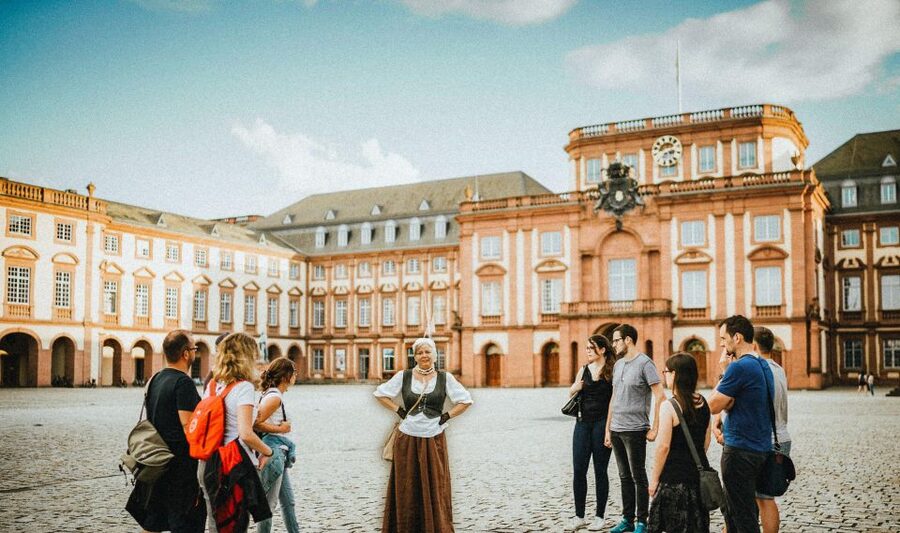
- Follow the executioner’s daughter: The costumed guide gives the tour a clear character and a personal route into Mannheim’s past.
- Explore the lower town: The walk visits the former craftsmen’s quarter, connecting everyday work and city justice.
- Hear real crime stories: The program includes original Mannheim cases and curious details about the old legal system.
- Learn about witchcraft in Electoral Palatinate: The tour reaches beyond local punishment to the wider world of suspicion and accusation.
- Expect rain or shine: Wear comfortable shoes and clothing suited to the forecast.
- Plan for German only: The tour is wheelchair accessible, but pets are not allowed on public tours.
Mannheim’s darker past begins at the Market Square

Meet your guide at the fountain on Mannheim’s Market Square. This is a practical starting point, easy to identify and central to the route. There is no transfer included, so you need to make your own way there before the tour begins.
The costumed guide appears as the executioner’s daughter. That choice gives the walk a strong point of view without pretending that the past was tidy or comfortable. Instead of hearing a broad list of dates, you follow one figure connected to the city’s justice system and hear how punishment affected ordinary life.
I like this setup because it gives the tour a human voice. The executioner was not just a tool of the authorities. The subject raises questions about social position, public fear, official law, and the practical work behind a sentence. The available information does not identify the guide by name, so you should book this for the character and subject rather than for a particular performer.
The route lasts about an hour and a half. That is enough time to build a story and cover several themes, but short enough to combine with other sightseeing in Mannheim. You will be walking outdoors, so comfortable shoes matter more than dressy clothing.
More Crime, Witches & Cemetery Tours across Germany
- Hamburg: Sex and Crime in St. Pauli Tour for Ages 18+
★ 4.7 · 15,447 reviews - Cologne: Melaten Cemetery Life, Love and Death Tour
★ 4.9 · 2,728 reviews - Nuremberg: Medieval Dungeons Guided Tour
★ 4.8 · 1,726 reviews
The lower town and former craftsmen’s quarter
The tour takes you into Mannheim’s lower town and the former craftsmen’s quarter. These areas provide the setting for the city’s working life, which helps explain why the executioner’s story belongs here rather than in a detached museum room.
The route is not presented as a simple procession from one famous building to another. Its interest comes from the questions it raises as you move through the old quarters. Where was the place of execution? How did a sentence become a public event? What happened when a procedure went wrong?
Those questions give the walk its edge. The tour description specifically asks what could go wrong during an execution, so expect practical and unsettling details rather than a vague account of medieval punishment. I would not choose this walk if you want to avoid death or graphic historical subjects.
The former craftsmen’s quarter also helps put the legal system into an everyday setting. You hear about work, public order, accusation, and punishment in the same part of town. That connection is valuable because city history is not only about rulers and monuments. It is also about the people whose work and conduct were judged by local authorities.
Blood judgment, executions, and the old legal system

One of the tour’s central questions is the meaning of blood judgment. The phrase points to a form of justice involving serious physical punishment, and the walk uses it to explain how law once operated in Mannheim.
You can expect the guide to discuss the place of execution and the duties tied to that work. The focus is not simply on naming a site. It is on showing what public justice meant in practice, how an execution was carried out, and why the process could fail.
That last point makes the subject especially memorable. Historical punishment is often presented as a clean legal act: accusation, sentence, execution. The tour asks you to consider the uncertainty and human error inside that process. The result is a more grounded picture of law, fear, and public spectacle.
I like that the program includes original Mannheim crime stories. Local cases give the tour a stronger sense of place than a general talk about European punishment. The word original here is important for your expectations: the program promises stories tied to Mannheim, not only broad examples from German history.
Still, the topic has limits. Details about execution and failed procedures may be too harsh for young children or anyone sensitive to violence. The description itself warns that the tour is not for the faint of heart, so take that seriously.
Witchcraft in Electoral Palatinate
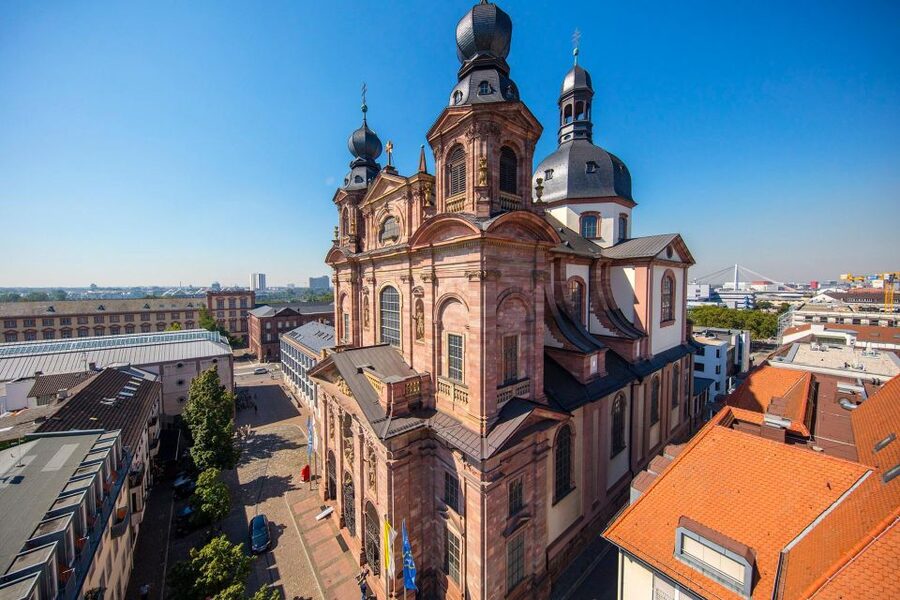
The route also covers witchcraft in the Electoral Palatinate. This broadens the tour beyond criminal acts and formal executions. You hear how fear and accusation could affect people who were suspected of supernatural wrongdoing.
The subject fits the tour’s wider question: how did a community decide who was dangerous? Witchcraft accusations show a different kind of legal and social pressure from ordinary crime. They also connect local events to the political area around Mannheim, rather than treating the city as isolated.
The information provided does not give specific names, dates, or case details for this section. That means you should not book expecting a documented list of every trial or a specialist lecture on witchcraft. Expect a guided introduction that uses the subject as part of a larger story about law, fear, and punishment.
For me, this is one reason the tour works well for repeat visitors to Mannheim. You do not need to ignore the city’s better-known attractions, but you get a different way to read its streets. The route turns questions about public order into a way of understanding the people who lived here.
A few more things to do in Germany worth a look
- Berlin: Reichstag, Dome and Government District Guided Tour
★ 4.7 · 18,288 reviews - Dresden: Semperoper Tickets and Guided Tour
★ 4.7 · 12,102 reviews - Berlin: Government District around the Reichstag Guided Tour
★ 4.7 · 8,447 reviews - Hamburg: Elbphilharmonie Plaza Guided Tour
★ 4.7 · 5,882 reviews
The Mannheim Experiment, war, and epidemics
The tour does not remain inside the executioner’s professional world. It also includes the Mannheim Experiment and the suffering caused by wars and epidemics that struck the city.
The supplied information does not explain exactly which event is meant by the Mannheim Experiment. That is worth keeping in mind. You will hear the term during the tour, but you should not assume that the walk provides a full academic account of it before booking.
Its inclusion suggests a wider look at the city’s past. The tour moves from individual crime and punishment to pressures that affected whole communities. War and epidemics changed daily life on a far larger scale than any single court case, and the program places those subjects beside the legal stories.
This range is a strength, but it may also make the experience feel broad rather than tightly focused. If you want only executioner lore, the sections on war, disease, and the Mannheim Experiment may feel like a change of direction. If you want to understand how fear and hardship shaped the city, they add useful scale.
The program describes the suffering caused by wars and epidemics plainly. It is not selling a cheerful version of the past. Bring an open mind and expect the tone to shift between curious crime stories and more serious accounts of collective hardship.
Why the costume matters on a short walking tour
A costume can either add atmosphere or become a distraction. Here, the executioner’s daughter is the guide’s central role, so the costume supports the structure of the walk rather than sitting on top of a standard sightseeing route.
The character helps you follow the subject across different locations. Instead of hearing disconnected facts about executions, witchcraft, and crime, you have a guide who represents a family linked to the justice system. The role also creates room for questions about how executioners and their families were viewed.
No guide name is provided, and the tour is offered in German. If you understand German well, you should get the full effect of the storytelling and the wordplay that may come with a character-led tour. If you do not, the language is a serious practical barrier. There is no English option stated.
A verified booking from October 2024 rated the experience five out of five and described it as interesting and entertaining, with plenty of new information even for a woman from Mannheim. That is a useful sign for local residents and repeat visitors: the unusual angle may offer more than the standard facts you already know.
Price, length, and the value of the experience
At $20 per person, this is a modestly priced guided walk. The value depends less on the number of stops than on your interest in the subject and your ability to follow German.
You are paying for a professional guide in costume and 90 minutes of local storytelling. Food, drinks, and transport are not included, but those omissions are reasonable for a short walking tour. The real question is whether a focused historical performance adds enough to your day.
I think the price works well for three kinds of visitors:
- You want a themed tour rather than a general introduction to Mannheim.
- You have already seen the main sights and want a fresh angle.
- You enjoy legal history, crime stories, witchcraft, or darker city folklore.
The value is weaker if you are looking for a broad orientation tour, a museum visit, or an English-language experience. It is also not the right choice if you prefer light entertainment and do not want to hear about executions, epidemics, or war.
You can reserve now and pay later, which keeps the booking flexible. Free cancellation is available up to 24 hours before the tour for a full refund. Check the current starting time when booking, since the duration is fixed but the departure time can vary.
Practical advice for the 90-minute walk
Wear comfortable shoes. The route covers city streets and should be treated as a walking tour, not a seated performance. Weather-appropriate clothing is important because the tour operates in rain or shine.
Dogs and other pets are not allowed on public tours. This is especially important if you are planning a day around Mannheim with an animal.
The tour is wheelchair accessible. Since the route is outdoors and the supplied details do not describe every street surface or stop, you may still want to confirm any specific mobility needs before booking.
There is no food or drink included. For a 90-minute activity, that is easy to manage, but plan around it if you are joining near a meal. The Market Square meeting point also makes it simple to arrange your own refreshment before or after the walk.
The tour is conducted in German. That point deserves more weight than it often gets in booking information. A character-led historical walk depends on spoken detail, so limited German may reduce the experience considerably.
Who should book the executioner’s daughter tour?
I would recommend this tour to adults and older teens who like local stories with a dark edge. It suits curious repeat visitors particularly well, since the lower town and former craftsmen’s quarter are presented through crime, punishment, and social fear rather than through a standard list of landmarks.
It also suits people who enjoy unusual city tours. The combination of blood judgment, original Mannheim crime stories, witchcraft in the Electoral Palatinate, the Mannheim Experiment, war, and epidemics gives the walk a wide range of subjects.
Families should use their judgment. The tour is wheelchair accessible, but pets are not allowed, and the subject matter may be too grim for younger children. The warning that it is not for the faint of heart is clear and should guide your decision.
I would skip it if you need an English-language guide, dislike theatrical costumes, or want a relaxed overview of Mannheim’s architecture. The guide speaks German, and the tour’s appeal comes from its unusual and sometimes disturbing content.
Should you book it?
Book this tour if you want Mannheim told through crime, punishment, and fear, not just through buildings and dates. For $20, the 90-minute walk offers a distinctive local angle, a costumed guide, and stories that can add depth to a familiar city.
Skip it if the German language is a problem or if executions and witchcraft are not subjects you want on your holiday. For everyone else, especially repeat visitors and history fans, the executioner’s daughter provides an entertaining way to look at Mannheim’s lower town and ask harder questions about how the city lived with law, illness, war, and suspicion.
FAQ
Where does the tour meet?
The meeting point is at the fountain on Mannheim’s Market Square.
How long does the tour last?
The guided walking tour lasts 1.5 hours.
What language is the tour in?
The live tour guide speaks German.
Is the tour wheelchair accessible?
Yes, the activity is wheelchair accessible.
Are dogs or other pets allowed?
No. Pets are not allowed on public tours.
Does the tour run in bad weather?
Yes. The tour takes place in rain or shine, so bring weather-appropriate clothing.
Can I cancel for a full refund?
Yes. You can cancel up to 24 hours in advance for a full refund.
Just added in Germany
- Private One way Airport Transfer Berlin Airport To Berlin★ 3.5 · 17 reviews
- Private Walking Tour: Berlin Wall, Cold War and Checkpoint Charlie★ 5.0 · 37 reviews
- Modern Berlin Private Walking Tour: Diverse, Vibrant and Exciting German Capital★ 5.0 · 13 reviews
- Private Day Trip to Potsdam from Berlin by Train★ 4.5 · 27 reviews
- City Explorer: Potsdam Private Day Trip★ 4.5 · 10 reviews
- Berlin Private Custom 5-Hour Tour by Car★ 5.0 · 30 reviews
- Private Half-Day Sightseeing Tour in Berlin★ 3.5 · 6 reviews
- Berlin Private Custom Tour in a Minivan, East and West★ 5.0 · 123 reviews
Crime, Witches & Cemetery Tours, compared.



Raven Black Witches and Executioners Walking Tour
Read our review →Browse the lists this tour appears in