Reviewed · WALKING TOURS
Jewish Life in Berlin – Private Walking Tour
Berlin’s Jewish story comes alive in the ordinary streets of Mitte. This walk links former Jewish homes, schools, cemeteries, synagogues, and places of resistance, moving from the first immigrants of the 17th century through the Holocaust and into modern Berlin. The Otto Weidt workshop is especially moving: its owner used his small factory to protect blind and deaf Jewish workers from Nazi persecution.
I like the private format, since your guide can adjust the pace and answer questions from children, adults, or a mixed-age group. I also like that the route looks beyond famous memorials and shows how Jewish life was woven into daily Berlin. The main drawback is that three hours on foot covers a lot, while the route may not include entry into the Centrum Judaicum museum itself or the Holocaust Memorial.
Key points at a glance
- A private route through Berlin’s former Jewish quarter: Your group alone takes the walk, with up to 15 people included in the price.
- Otto Weidt’s workshop adds a personal story: Learn how a factory owner tried to shield blind and deaf Jewish workers during the Nazi era.
- The route favors everyday history: Scheunenviertel, Sophienstraße, Auguststraße, schools, cemeteries, and community buildings receive more attention than headline sights.
- Guides bring different strengths: Caroline, Carlos, Finn, and Marriette are among the guides associated with especially warm, thoughtful, and engaging tours.
- Expect a flat but substantial walk: The tour lasts about three hours and operates in all weather, so good shoes and rain protection matter.
- The price works best for a full group: At $355.25 for up to 15 people, the per-person cost drops sharply when shared by family or friends.
Following Jewish Berlin from the 17th century onward
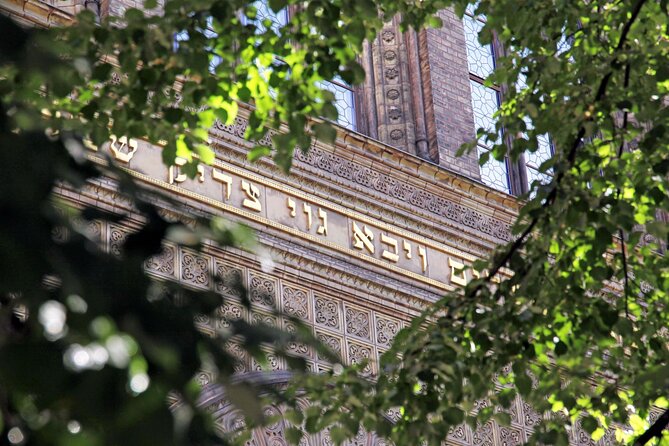
This tour is less about one grand building and more about tracing a community across time. You begin with the arrival of Jewish residents in Berlin during the 17th century, then follow the growth of Jewish schools, businesses, religious institutions, and family life.
Your guide also introduces figures who shaped wider European culture. Albert Einstein appears in the story, as does Moses Mendelssohn, the philosopher who founded the first modern public school for Jewish boys. These names help you see Jewish Berlin as a center of education, science, commerce, and public life, not only as a subject tied to wartime destruction.
That wider frame matters. If you visit only memorials connected with the Holocaust, you can leave with an incomplete picture. This walk spends time on what existed before the Nazi period, what was lost, and how Jewish life continues in Berlin today.
Other walks around Berlin:
- Discover Berlin Half-Day Walking Tour
★ 5.0 · 9,624 reviews - Berlin: Third Reich and Cold War 2 Hour Walking Tour
★ 4.9 · 6,830 reviews - Berlin: Discover Berlin Walking Tour
★ 4.9 · 5,998 reviews
Meeting at Hackescher Markt and entering the old quarter
The meeting point is outside Starbucks near Hackescher Markt S-Bahn station, at Neue Promenade 3. Your guide begins with an introduction before leading you into the surrounding streets.
Hackescher Markt is a practical place to meet because it is near public transportation and easy to find. Still, give yourself a few minutes to locate the correct spot. The tour details identify the meeting point clearly, but a busy station area can be confusing if you arrive at the last moment.
The opening stop takes about 10 minutes. It is not a major sightseeing stop in itself. Instead, it gives you a map of the neighborhood and explains why this part of Berlin became connected with Jewish life.
Hackesche Höfe and the memory of protest
The next stop is Hackesche Höfe, a courtyard complex with a layered past. Here, your guide explains the site’s earlier history and discusses the memorial connected with the women’s protest.
This is one of the places where the walk connects architecture with human choices. You are not simply looking at attractive courtyards. You are being asked to consider who lived and worked here, how the area changed, and how Berlin remembers acts of courage during the Nazi era.
The stop lasts about 10 minutes. That short timing is useful for keeping the walk moving, but it also means the depth of the explanation depends heavily on your guide and on your questions. The private format helps here. You can ask for more context without holding up another group.
Otto Weidt’s workshop and quiet resistance
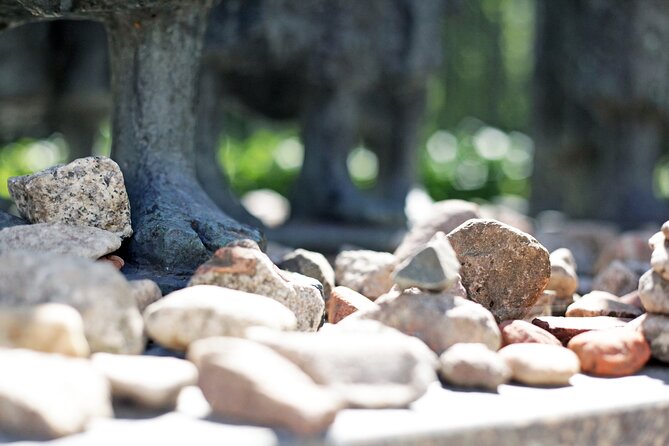
The Museum Blindenwerkstatt Otto Weidt is the emotional center of the route. Otto Weidt ran a brush workshop during the 1940s and employed blind and deaf Jewish workers. He tried to protect them from persecution, using his position and personal courage to help people who were in grave danger.
Your guide explains Weidt’s actions and the resistance connected with the workshop. This stop gives the Holocaust a human scale. Rather than hearing only about government orders and military events, you learn about a workplace, its employees, and the decisions made by one person trying to help.
The itinerary allots roughly 10 minutes here. That is enough for an introduction, but not necessarily enough for a full museum visit. If you want to explore the museum at length, ask at booking or before the walk begins how much interior time is planned. The tour includes the professional guide, while the provided details do not promise a separate museum admission or an extended visit inside.
A few more things to do in Berlin worth a look
- Berlin: Private Reichstag and Glass Dome Tour
★ 4.8 · 2,226 reviews - Berlin Private Complete History All Day Walking Tour
★ 5.0 · 474 reviews - Private Walking Tour Berlin Third Reich Hitler and World War II
★ 5.0 · 360 reviews - Private Berlin: Iconic Sights and Hidden Gems Walking Tour
★ 5.0 · 292 reviews
Scheunenviertel and daily Jewish life
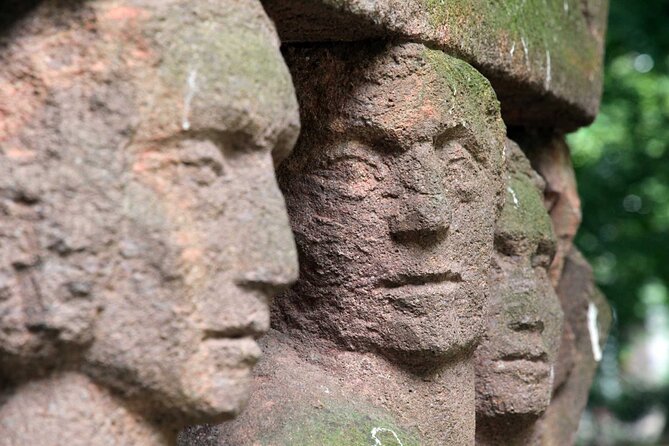
From there, you enter the Scheunenviertel, often described as Berlin’s former Jewish quarter. Your guide explains the older Jewish community and the development of the neighborhood.
This section is a major reason to choose the walk. You see Jewish Berlin through streets and urban spaces rather than through isolated monuments. The story includes homes, work, worship, education, and the gradual changes that shaped the community.
Do not expect a perfectly preserved quarter. Berlin’s wartime destruction, postwar changes, and modern redevelopment mean that much of the earlier world survives in fragments. That can feel disappointing if you expect a single intact historic district. For me, the fragments are the point: your guide helps you read traces that would be easy to miss alone.
Sophienstraße and Sophia Church
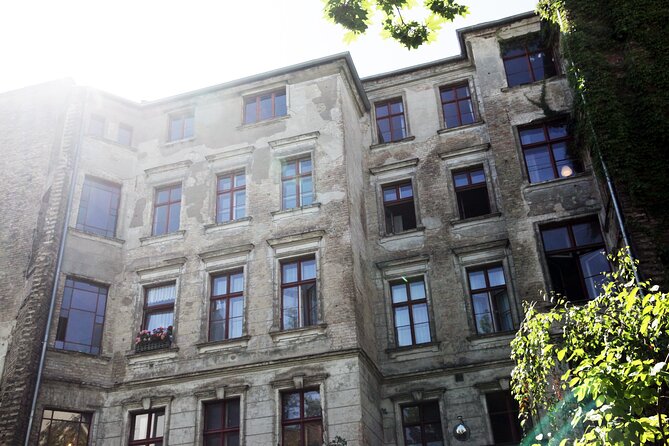
Sophienstraße brings a change of mood. This picturesque street in Berlin Mitte is named after Queen Sophie, and your guide explains its place in the neighborhood’s development.
The walk then reaches Sophia Church, where you hear about the church’s history and its connection with Martin Luther King. This stop widens the subject beyond Jewish institutions alone. Berlin’s religious and civic stories overlap, and the route uses that overlap to show the setting in which Jewish residents lived.
Each stop is short, usually around 10 minutes. I would treat the schedule as a guide rather than a promise that every explanation will last exactly that long. Questions, weather, and the pace of your group can change the timing.
Grosse Hamburger Strasse: cemetery, school, and deportation
Grosse Hamburger Strasse is one of the most serious sections of the walk. Your guide explains the Jewish cemetery, the Jewish school, and the deportation of Berlin’s Jews during the Nazi period.
The combination is powerful because it brings together different stages of community life. A cemetery points to generations who lived and died in Berlin. A school points to families planning for the future. The deportation story shows how that ordinary life was broken apart by state persecution.
This is also a stop where a thoughtful guide matters. Carlos has been praised for handling difficult questions with calm, facts, perspective, and appropriate humor. Another guide, Caroline, has been singled out for a patient and considerate approach. Guide assignments can change, but the experience depends strongly on the person leading it.
Auguststraße and the traces left behind
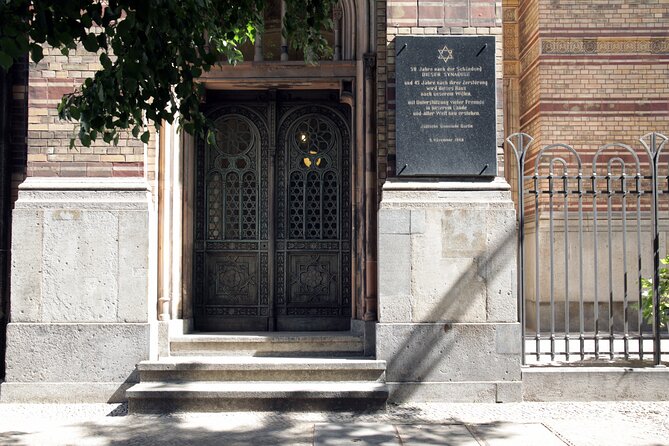
Auguststraße is known for art galleries and important buildings tied to Berlin’s old Jewish community. Your guide explains what stood here and how the area related to Jewish life before the Second World War.
This stop reinforces one of the route’s best features: it shows that Jewish history is not confined to one synagogue or one cemetery. It appears in streets where people lived, taught, worked, prayed, and built institutions.
You may find the amount of surviving evidence uneven. Some buildings remain, while other stories are marked only by small traces or by an explanation from the guide. A guide who keeps a running commentary can make these less obvious locations meaningful. Finn, an Irish guide living in Berlin, has been noted for doing just that, while a guide originally from the United States has also been praised for making the scattered remains feel connected.
The New Synagogue and the tour’s final chapter
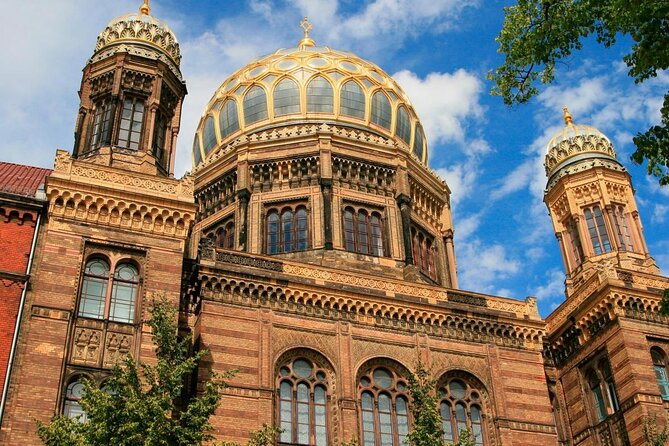
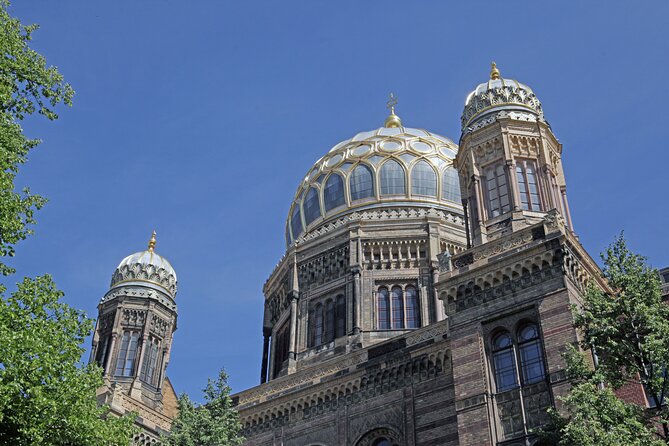
The final stop is the New Synagogue, at Oranienburger Strasse 28 to 30. Built in the 19th century, it served as the main synagogue of Berlin’s Jewish community and became an important architectural landmark.
Your guide explains the building’s history, the 1938 Night of Broken Glass, and the people who helped Jewish residents. The synagogue is a fitting endpoint because it brings together the community’s public presence, its persecution, and its continued place in Berlin.
The building is now home to the Centrum Judaicum, which traces the synagogue’s history and the life connected with it. The tour ends here, but the listed walk does not clearly promise a full museum visit. One person specifically wanted more time inside the old synagogue museum, so you should confirm the plan if that interior visit is central to your decision.
The stated opening hours for the listed period are Monday through Sunday, 9 a.m. to 3 p.m. These hours may help you plan additional time, but they do not guarantee that museum admission is part of the walking tour.
What the private format is worth
The price is $355.25 per group of up to 15 people. That is a serious cost for one person or a couple, but the calculation changes for a family, reunion, school group, or circle of friends.
With 10 people, the price works out to about $35.53 each. With 15, it is about $23.68 per person. You are paying for a private professional guide rather than a standard shared walk, so the value comes from flexibility, personal questions, and control over the pace.
The format also helps with sensitive material. One guide handled a difficult situation especially well, and several guides have been praised for explaining Nazi propaganda, Jewish history, and moral questions with poise. That kind of exchange is harder to manage in a large group.
The tradeoff is that the price is not as attractive for a small party. If you are traveling alone or with one companion, compare it with a shared walking tour or a museum visit. If you have a larger group, the private setup becomes much easier to justify.
Walking conditions, weather, and practical planning
The route lasts about three hours and is described as flat, but it involves quite a lot of walking. Wear comfortable shoes. The streets are not a mountain hike, yet standing outside at nine stops can tire you, especially in hot weather.
The tour operates in all weather. Bring rain protection if the forecast looks uncertain, and dress in layers during cooler months. A heavy shower can make the final stops less comfortable, while hot weather adds strain even on level streets.
Most people can take part, and service animals are allowed. The route is near public transportation at the beginning, with the end at the New Synagogue. The booking information confirms the tour at booking unless you reserve within three days of departure, in which case confirmation can take up to 48 hours and depends on availability.
Free cancellation is available up to 24 hours before the start time. Inside that window, the amount paid is not refunded, and changes are not accepted. The cut-off uses Berlin local time.
Who will get the most from this walk
I would choose this tour if you want context, conversation, and places that are easy to overlook. It suits adults interested in European history, families who want a guided introduction, and groups who prefer to ask questions as they go.
It also works well for people who already know the basic Holocaust timeline but want to understand Jewish life before the catastrophe. The route gives you more than wartime history, including education, religion, architecture, and daily community life.
You should think twice if you want a museum-heavy experience. The walk visits the Otto Weidt workshop and ends at the New Synagogue, but the supplied details do not promise long indoor visits. It also does not include the Holocaust Memorial, despite that being an expectation some people may have.
Guide style can shape the experience. Carlos has been praised for passion, facts, candid comments, and handling a wide range of ages. Caroline has been described as thoughtful and clear. Marriette has brought a warm, lively manner, while Finn has offered strong historical explanations. The particular guide is not guaranteed, so book for the route and private format rather than for one named person.
Should you book Jewish Life in Berlin?
Book it if you want to understand how Jewish Berlin existed before the Holocaust, how persecution destroyed that world, and how the city remembers it today. The strongest parts are the Otto Weidt workshop, Grosse Hamburger Strasse, the former quarter, and the personal explanations that connect scattered sites.
I would recommend it most for a group of several people, since $355.25 becomes reasonable when shared. Go prepared to walk, stand outdoors, and encounter difficult subjects. If you need a full museum tour or expect the Holocaust Memorial, choose another experience or add those visits separately.
FAQ
Where does the Jewish Life in Berlin tour begin?
It begins outside Starbucks near Hackescher Markt S-Bahn station, at Neue Promenade 3, 10178 Berlin, Germany.
Where does the tour end?
The tour ends at the New Synagogue Berlin, Centrum Judaicum, at Oranienburger Strasse 28 to 30, 10117 Berlin, Germany.
How long does the walking tour last?
The tour lasts approximately three hours.
Is the tour private?
Yes. It is a private activity, and only your group takes part.
How many people can join the private tour?
The listed price covers a group of up to 15 people.
What is included in the price?
A professional guide is included. The provided details do not list separate museum admission as an inclusion.
Is the tour accessible by public transportation?
Yes. The meeting point is near public transportation, including Hackescher Markt S-Bahn station.
Does the tour operate in bad weather?
Yes. It operates in all weather conditions, so you should dress appropriately.
Are service animals allowed?
Yes. Service animals are allowed.
Can I cancel for a full refund?
Yes, if you cancel at least 24 hours before the experience begins. Cancellations made less than 24 hours before the start time are not refunded.
Just added in Berlin
- Private One way Airport Transfer Berlin Airport To Berlin★ 3.5 · 17 reviews
- Private Walking Tour: Berlin Wall, Cold War and Checkpoint Charlie★ 5.0 · 37 reviews
- Modern Berlin Private Walking Tour: Diverse, Vibrant and Exciting German Capital★ 5.0 · 13 reviews
- Private Day Trip to Potsdam from Berlin by Train★ 4.5 · 27 reviews
- City Explorer: Potsdam Private Day Trip★ 4.5 · 10 reviews
- Berlin Private Custom 5-Hour Tour by Car★ 5.0 · 30 reviews
- Private Half-Day Sightseeing Tour in Berlin★ 3.5 · 6 reviews
- Berlin Private Custom Tour in a Minivan, East and West★ 5.0 · 123 reviews
Walking Tours, compared.

Third Reich Berlin: Hitler and WWII Walking Tour
Read our review →