
Reviewed · WALKING TOURS
Füssen: Private Guided Walking Tour
Füssen’s appeal is easy to grasp on foot: a walled medieval town, pastel buildings, cobbled lanes, baroque churches, and the bright turquoise river running through its center. This private walk ties those pretty scenes to the town’s Roman beginnings, the 9th-century Benedictine monastery of St. Mang, and the former summer residence of the prince-bishops of Augsburg.
I like the private format, especially if you want to ask questions or shape the walk around your interests. I also like the way the tour gives Füssen a proper place in your day, rather than treating it as a quick lunch stop before Neuschwanstein. The main consideration is that 90 minutes passes quickly, and entrance fees are not included.
Key points at a glance
- High Castle puts Füssen’s power story on the hill: Learn how the former summer residence of Augsburg’s prince-bishops shaped the town.
- Roman origins meet medieval streets: The walk connects Füssen’s earliest roots with its old walls, lanes, and churches.
- St. Mang’s monastery reaches back to the 9th century: The monastery gives the town its religious and cultural backbone.
- A private guide means room to adjust: Your guide can make some changes on the spot for your group.
- Sandra has stepped in with strong local context: Her tour has covered Füssen, medieval dates, and Bavaria’s Christian beginnings.
- The cost works best for a group: At $310 for up to 15 people, the per-person price drops sharply when shared.
Why Füssen deserves more than a castle transfer
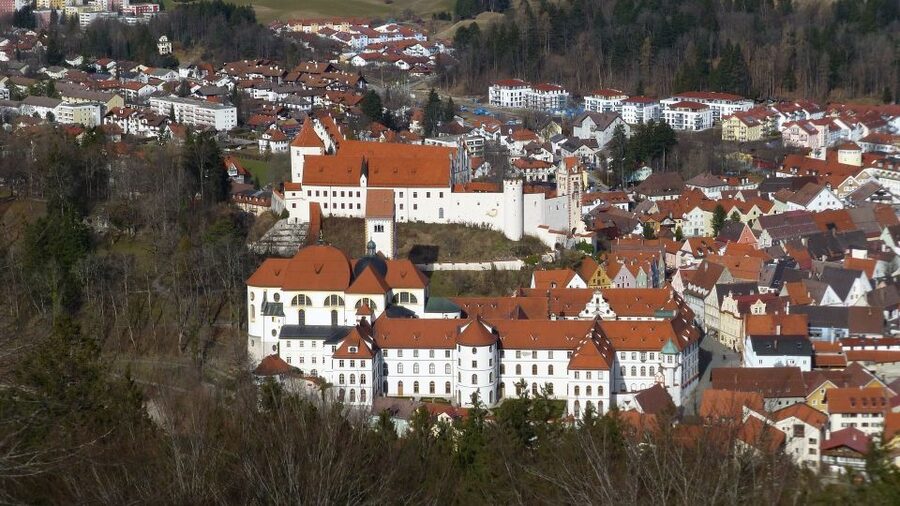
Many people first notice Füssen because it is the nearest town to Neuschwanstein. That famous castle gets the photographs, but Füssen gives you the setting and the backstory. Its old center has enough surviving character to make a short walking tour worthwhile, even if your main goal is the castle above the village of Hohenschwangau.
I like beginning with the town itself. The walls, narrow lanes, colored façades, churches, and river are not isolated sights. Together, they show how Füssen grew as a settlement, a religious center, and a place of regional power. A guide can point out those connections while you walk, which is far more useful than seeing the same buildings without context.
The name Füssen is linked in the tour explanation to the German word for feet. That makes a neat practical point: this is a town best understood at walking pace. You are not racing between distant sights or spending your time on a bus. The route puts the old center under your feet, where its scale makes sense.
The tour lasts 90 minutes. That is enough time for a clear introduction to the town and its main historic themes, but not enough for a slow visit to every museum or interior. Think of it as a strong orientation walk, not an all-day historical program.
More Walking Tours across Germany
- Discover Berlin Half-Day Walking Tour
★ 5.0 · 9,624 reviews - Berlin: Third Reich and Cold War 2 Hour Walking Tour
★ 4.9 · 6,830 reviews - Munich: Third Reich & WWII Walking Tour
★ 4.6 · 6,181 reviews
Starting at Schrannenplatz
The meeting point is Schrannenplatz, at Schrannengasse 10, in Füssen. From here, you begin in the old town rather than at a remote attraction. That matters because the first part of the experience can establish the shape of Füssen before you move toward its larger monuments.
Expect the guide to lead you through the historic center, where the town’s medieval character is easiest to see. Cobbled lanes and older façades help you picture Füssen as a walled settlement, while modern shops and services remind you that this is still a working town, not a preserved film set.
The private setup is useful here. You can ask your guide to slow down for architectural details, focus more on local history, or keep the pace brisk if you have a castle appointment later. The tour includes some on-the-spot customization, though the exact route remains dependent on your guide and the conditions on the day.
Wear comfortable shoes. That sounds basic, but cobbles and a 90-minute walk are a poor match for thin soles or formal footwear. The experience is not suitable for wheelchair users or people with mobility impairments, so check that the walking demands fit your group before booking.
Roman Füssen and the town’s early roots
One of the tour’s useful features is that it does not begin with the medieval walls and stop there. Füssen also has Roman roots, and the guide places the town within that older story.
You should not expect a large Roman archaeological site based on the information provided. Instead, the value is in seeing Füssen as a place with more than one historical layer. Roman beginnings help explain why this location mattered before the medieval town took shape.
That wider view is especially helpful if you are visiting Neuschwanstein first or planning to see it afterward. The castle is a 19th-century creation, while Füssen carries older religious and political stories. A walking tour here can give your day a better sense of time, from Roman foundations to medieval power and later romantic tourism.
I would pay attention to how the guide handles dates and transitions. One guide, Sandra, was praised for explaining medieval dates and the Christian beginnings of the town. That is the sort of detail that can turn a collection of old buildings into a story you can follow.
St. Mang’s monastery and Magnus of Füssen
The 9th-century Benedictine monastery of St. Mang is one of the walk’s key historic stops. It gives Füssen a religious center and helps explain why the town developed importance beyond its position near the Alps.
The monastery is also tied to Magnus of Füssen, the town’s patron saint. His legacy adds a human figure to the story. Instead of hearing only about institutions and rulers, you get a sense of the religious tradition that shaped Füssen’s identity.
The tour presents St. Mang as part of the town’s long development, not merely as a church to photograph. That distinction matters. You can admire architecture on your own, but a guide helps explain why a monastery was important, how Christian traditions affected the town, and why the site still matters to Füssen.
The supplied details do not promise a full interior visit or an included entrance ticket. Plan to appreciate the exterior and the surrounding setting as part of the walk, and ask your guide what can be visited during your time. Since admission is not included, any optional entry would be an extra cost.
A few more things to do in Germany worth a look
- Berlin: Private Reichstag and Glass Dome Tour
★ 4.8 · 2,226 reviews - Berlin Private Complete History All Day Walking Tour
★ 5.0 · 474 reviews - Munich Private Tour with a Local – Highlights & Hidden Gems
★ 5.0 · 469 reviews - Private Walking Tour Berlin Third Reich Hitler and World War II
★ 5.0 · 360 reviews
High Castle and the prince-bishops of Augsburg
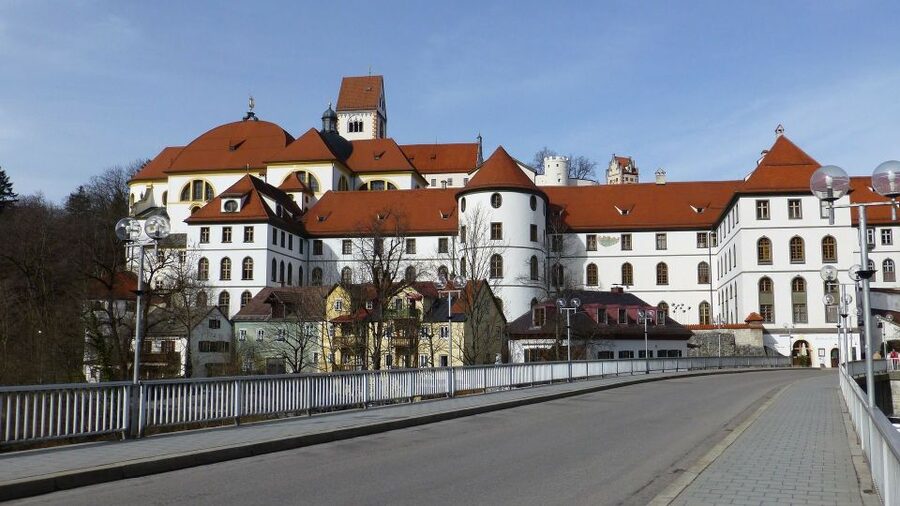
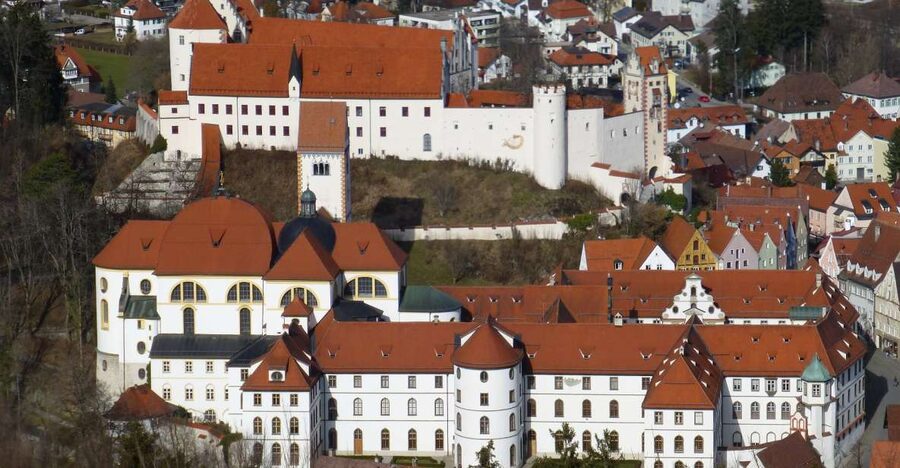
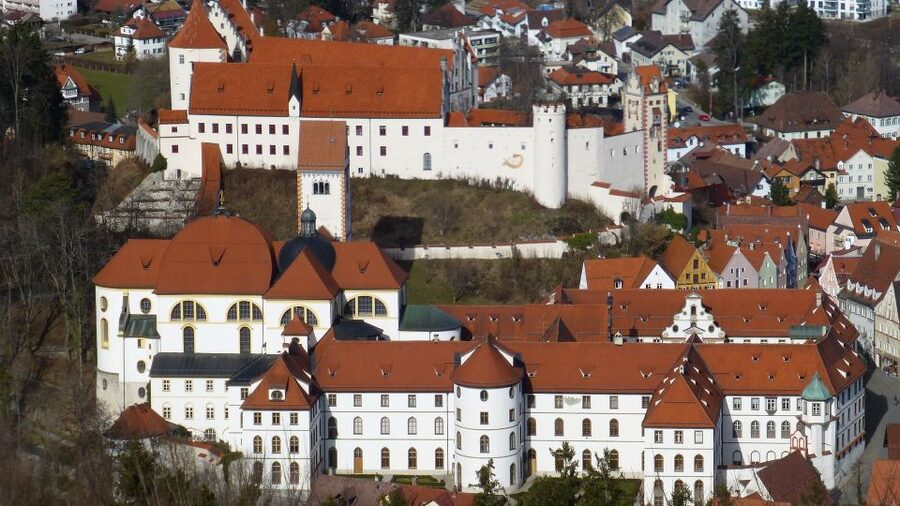
High Castle is the architectural centerpiece of the experience. It was the former summer residence of the prince-bishops of Augsburg, giving Füssen a direct link to church power and regional politics.
The castle’s position also helps you read the town. From above, you can better understand the old center, its walls, and the way the settlement sits around the river. Even without promising a particular viewpoint, the castle gives the guide a natural place to explain who controlled Füssen and why the town mattered.
This is where the tour moves beyond pretty Bavarian architecture. High Castle represents authority. The prince-bishops were not simply religious figures. Their residence points to the overlap of faith, government, wealth, and land that shaped much of medieval and early modern Europe.
Entrance fees are not included, so do not assume the price covers every castle or museum admission. The walking tour can still explain the site from outside and place it in context. If entering is important to you, confirm what is possible when you book or with the guide at the start.
The Treaty of Füssen and a larger political story
The tour also covers the Treaty of Füssen, described as an agreement that ended imperial ambitions. That topic gives the town a role in a much larger chapter of European politics.
You do not need to arrive with a detailed knowledge of imperial history. A good guide should explain the treaty in plain terms and show why an agreement signed in or associated with Füssen mattered beyond the town’s walls.
This is one of the reasons I would take the walk before spending more time in the area. Without context, Füssen can look like a charming stop between larger attractions. With the treaty and the prince-bishops in the story, you begin to see it as a place where regional and imperial concerns met.
The information supplied does not give the treaty date or identify the precise building connected to it, so expect an overview rather than a specialized diplomatic history lecture. That is appropriate for a 90-minute town walk, but travelers seeking detailed political history may want to add a museum or independent reading.
The river, walls, and old-town atmosphere
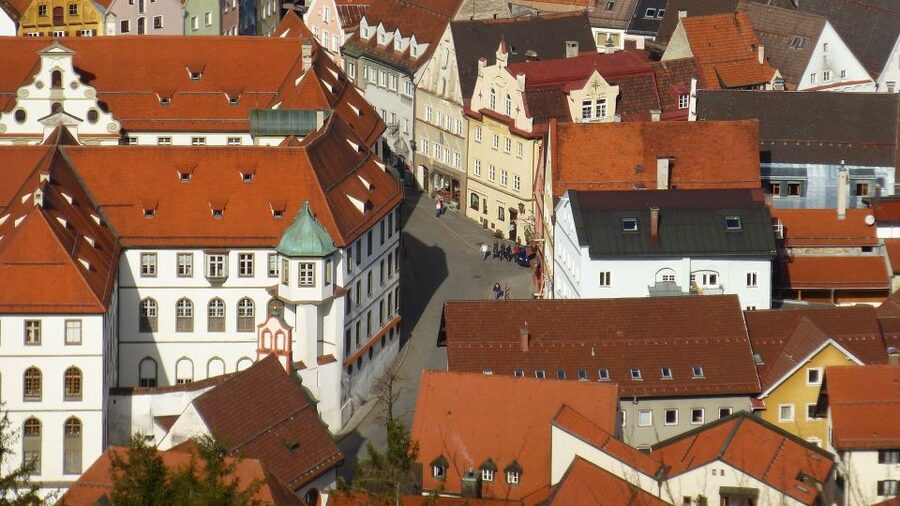
Füssen’s visual pleasure comes from its combination of small details. The turquoise river cuts through the center. The old wall and cobbled lanes give the town a medieval outline. Pastel-toned shops and baroque churches keep the scene from feeling like a single period frozen in place.
I like this mix because it gives you plenty to notice between the formal historical stops. A private guide can point out how architecture changes as you move through the town, or simply let you enjoy the setting while filling in the background.
The river is more than scenery. It helps explain the town’s shape and gives the walk a natural thread. The walls, meanwhile, make the old center easier to understand as a defended settlement. You are not just walking through attractive streets. You are seeing how water, protection, religion, and political power helped define Füssen.
Bring an umbrella or rain protection if the forecast looks poor. One guide brought umbrellas when rain arrived, which shows useful practical care, but you should not assume that will happen on every departure. Comfortable shoes remain the safer bet.
A private tour before Neuschwanstein
This experience makes particular sense before visiting Neuschwanstein. One traveler used the Füssen walk to understand the town and region before touring the castle, then received recommendations for lunch and dinner.
That sequence works well. Neuschwanstein is famous for its dramatic setting and royal story, but it can easily dominate your day. Füssen gives you a quieter historical base. You learn about Roman beginnings, Christian traditions, medieval rulers, and local politics before moving on to the 19th-century castle.
The private group format also helps if your party has mixed interests. One person may care about architecture, another about church history, and someone else may simply want to know where to eat afterward. The guide can respond to questions in a way that a large group tour usually cannot.
The tradeoff is price. The total cost is $310 for a group of up to 15 people. For 15 people, that works out to about $20.67 each. For two people, it is $155 each, and for four people it is $77.50 each. The value improves as your group gets larger, especially if you want a guide dedicated only to your party.
What the guide quality means for your experience
The strongest praise has focused on clear explanations, friendly service, and flexibility. Sandra was specifically praised for her understanding of Füssen and Bavarian history. She also stepped in when the scheduled guide could not make it, which suggests the provider was able to keep the tour running despite a last-minute change.
Another guide adjusted the start time to fit a tight schedule and supplied umbrellas in wet weather. That kind of flexibility is useful if you are linking Füssen with Neuschwanstein, a meal, or a train departure.
Still, the experience may depend on the individual guide. One booking received a poor assessment because the information felt too limited, even though the rain itself was not considered a problem. That is an important warning: a private walk is only as useful as the explanation you receive.
I would arrive with two or three questions ready. Ask about the Roman roots, the monastery, the treaty, or the castle’s political role. A private guide is at its best when you use the chance to ask, rather than simply follow silently from stop to stop.
Timing, language, and practical value
The tour is offered in English or German. Confirm the language you want when checking availability, especially if your group includes people who need one language throughout the walk.
The experience lasts 90 minutes, with starting times dependent on availability. That short length makes it easy to fit into a Füssen visit, but you should leave room for the meeting point, photos, meals, and any later castle plans.
Cancellation is flexible: you can cancel up to 24 hours in advance for a full refund. You can also reserve now and pay later, which helps if your route through Bavaria is still changing.
The total cost does not include entrance fees. That makes the tour price easier to understand: you are paying for a private local guide and a tailored walking experience, not a package of admissions. If your main goal is to enter High Castle or another site, budget separately.
Should you book the Füssen private walking tour?
Book it if you want a clear introduction to Füssen before Neuschwanstein, prefer a private guide, or are traveling with a group large enough to share the $310 price. It is especially suitable for people who enjoy architecture, church history, medieval politics, and old-town walks.
Think twice if you need step-free access, dislike cobbled streets, or want a long visit inside museums and historic buildings. The walk is 90 minutes, entrance fees are extra, and the depth of the commentary may vary by guide.
For most visitors with time in Füssen, I see this as a useful first layer. It gives the town a story, leaves you time to explore on your own, and helps prevent the nearby castle from swallowing the whole day.
FAQ
Where does the Füssen walking tour meet?
The meeting point is Schrannenplatz, Schrannengasse 10, 87629 Füssen, Germany.
How long does the tour last?
The walking tour lasts 90 minutes.
Is the tour private?
Yes. It is a private group tour, and the guide is with your group only.
Which languages are available?
The tour is available in English and German with a live guide.
Are entrance fees included?
No. Entrance fees are not included in the tour price.
What should I bring?
Bring comfortable shoes, since the experience is a walking tour through Füssen.
Can I cancel the booking?
Yes. You can cancel up to 24 hours in advance for a full refund. You can also reserve now and pay later.
Just added in Germany
- Private One way Airport Transfer Berlin Airport To Berlin★ 3.5 · 17 reviews
- Private Walking Tour: Berlin Wall, Cold War and Checkpoint Charlie★ 5.0 · 37 reviews
- Modern Berlin Private Walking Tour: Diverse, Vibrant and Exciting German Capital★ 5.0 · 13 reviews
- Private Day Trip to Potsdam from Berlin by Train★ 4.5 · 27 reviews
- City Explorer: Potsdam Private Day Trip★ 4.5 · 10 reviews
- Berlin Private Custom Tour in a Minivan, East and West★ 5.0 · 123 reviews
- Berlin Private Custom 5-Hour Tour by Car★ 5.0 · 30 reviews
- Private Half-Day Sightseeing Tour in Berlin★ 3.5 · 6 reviews
Walking Tours, compared.



Third Reich Berlin: Hitler and WWII Walking Tour
Read our review →
Browse the lists this tour appears in