Reviewed · WALKING TOURS
Fulda: Private Guided Walking Tour
Fulda’s appeal comes into focus when you walk from narrow old-town lanes to grand baroque buildings, then into quiet churches and the formal gardens of the Residence. The Cathedral of Fulda is the main prize: a pilgrimage church, the burial place of Saint Boniface, and the visual high point of the town’s baroque quarter.
I like the private format, which gives your group its own guide and allows some on-the-spot adjustment. I also like the range of sights packed into 90 minutes, from wooden-beamed houses and craftsmen’s shops to the Flora Vase, one of Germany’s finest garden sculptures.
The main caution is pace and group management. One recent participant found the walk unstructured and said not everyone could hear or keep up, while another suggested that larger groups need to stay better formed around the guide.
Key points to know before you book
- The Cathedral anchors the walk: See Fulda’s best-known landmark and Saint Boniface’s tomb.
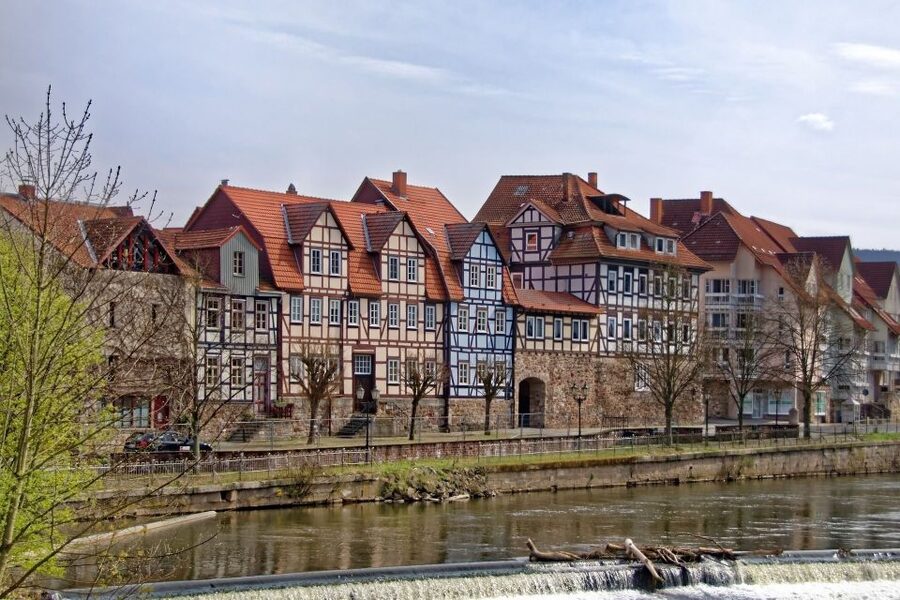
- The route mixes grand and intimate sights: Baroque court buildings sit close to narrow lanes, timber-framed houses, and old shops.
- The Residence Garden adds variety: Its baroque and English garden styles include the notable Flora Vase.
- You get a private guide: The tour is for your group only, with English and German available.
- Ninety minutes goes quickly: This is a brisk introduction, not a leisurely visit inside every major building.
- Plan for walking on foot: Comfortable shoes are essential, and the tour is not suitable for wheelchair users or people with mobility impairments.
Why Fulda makes a good baroque walking tour
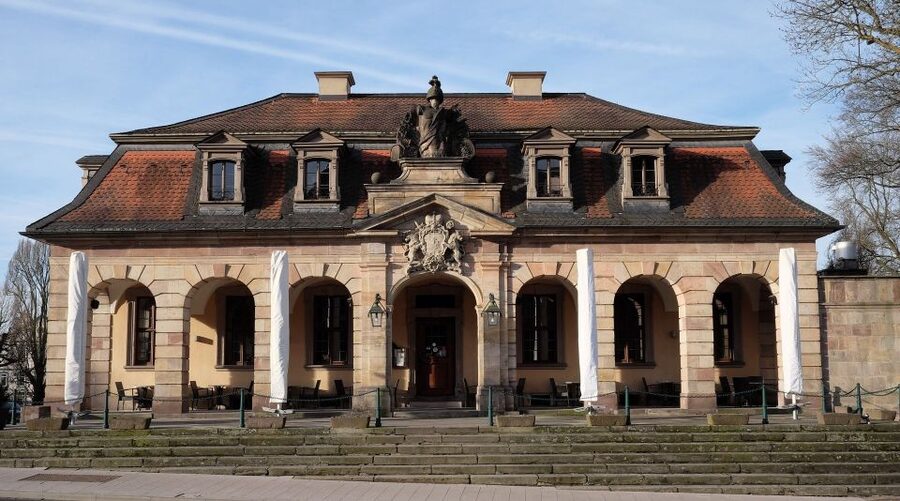
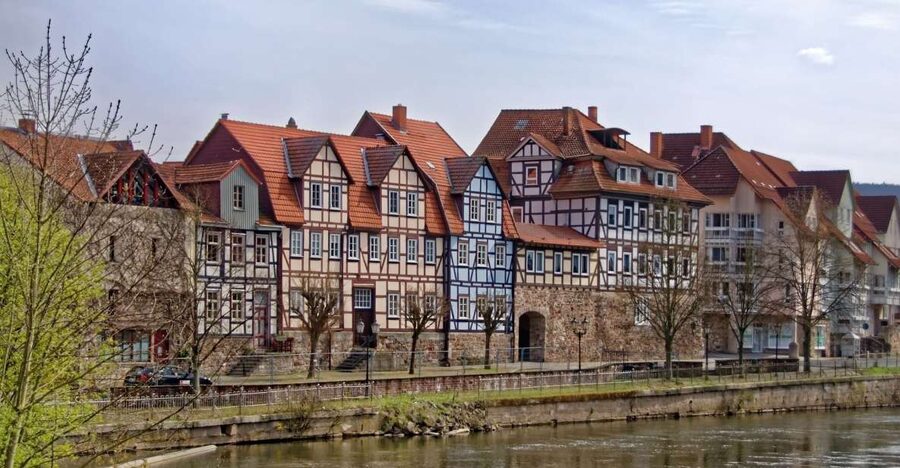
Fulda is a useful place to see how a German town changed when church and court power reshaped its center. The old streets still show the earlier town, with narrow lanes, timber-framed houses, and small craftsmen’s shops. Then the scale opens up around the baroque quarter, where court officials once lived in more formal residences.
That contrast gives the walk its character. You are not looking only at grand facades in a ceremonial square. You are also seeing the smaller streets that made the town work. I find that combination more revealing than a tour built entirely around monuments.
The tour is priced at $294 for a group of up to 15 people. That is expensive for one person, but the arithmetic changes if you are traveling with family or friends. At the full group limit, the cost works out to just under $20 per person. For two people, it is a much steeper private-tour price.
The value depends on what you want from Fulda. If you prefer a local guide who can respond to your questions and adjust the route for your group, the private setup has a clear advantage. If you mainly want a quick orientation and are comfortable exploring on your own, the price may feel high for 90 minutes.
More Walking Tours across Germany
- Discover Berlin Half-Day Walking Tour
★ 5.0 · 9,624 reviews - Berlin: Third Reich and Cold War 2 Hour Walking Tour
★ 4.9 · 6,830 reviews - Munich: Third Reich & WWII Walking Tour
★ 4.6 · 6,181 reviews
Starting at the Tourist Office
The meeting point is in front of the Tourist Office at Bonifatiuspl. 1, 36037 Fulda. That gives you a straightforward place to begin, rather than asking you to find a guide somewhere inside a large station or complicated attraction.
From there, expect a walking route through the central historic area. The guide is with your group only, and the available languages are English and German. The private format should make it easier to ask about a building, pause for a photograph, or request more time at a particular church.
The guide can also make possible changes on the spot. That does not mean every requested stop is guaranteed, especially within a 90-minute schedule, but it gives you more control than a fixed public group walk.
If your group is large, take a simple precaution at the beginning: agree to stay close enough to hear the guide. A prior participant specifically raised this issue, saying the group needed to remain formed and that not everyone could hear. A private tour is only useful if the guide’s explanations reach everyone.
The old town’s smaller details
Fulda’s narrow streets give the tour a human scale before the larger baroque buildings take over. Look for the wooden beams and the older shopfronts as you walk. The former craftsmen’s shops help you picture a working town, not just a polished historic center prepared for photographs.
The houses of high-ranking court officers offer another angle. Their size and decoration point to the influence of the court and the people who served it. You can read the town’s social order in the streets: grander homes for officials, religious buildings for worship and pilgrimage, and smaller commercial spaces for daily work.
A guide adds value here because the details can otherwise pass quickly. The architecture is attractive on its own, but the story of who lived in these buildings and why the town developed this way makes the walk more than a facade survey.
Keep your expectations practical. The tour description does not promise entry to every building, and entrance fees are not included. Some sights may be viewed from outside or discussed during the walk, while access inside may require an additional ticket or may depend on opening conditions.
Fulda Cathedral and Saint Boniface
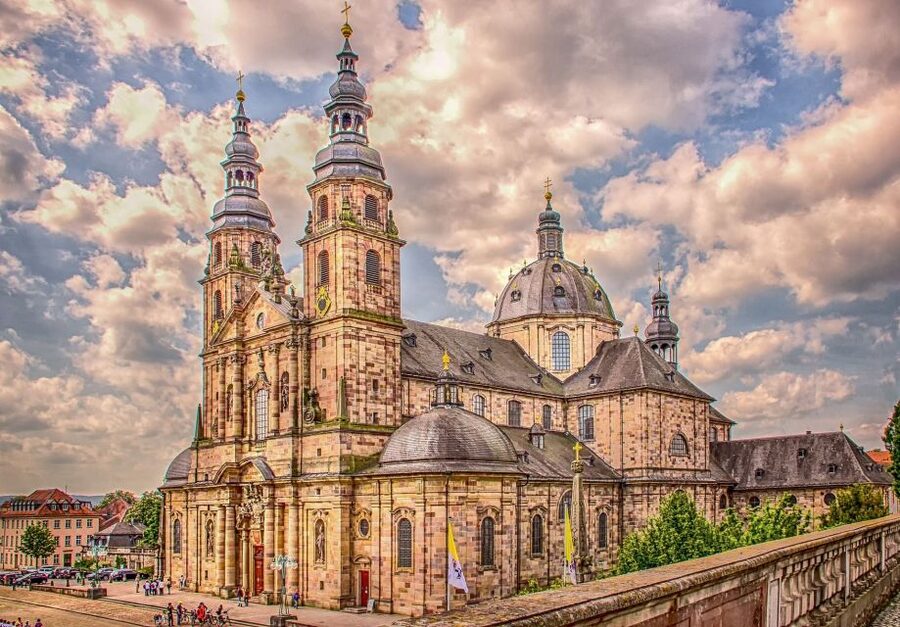
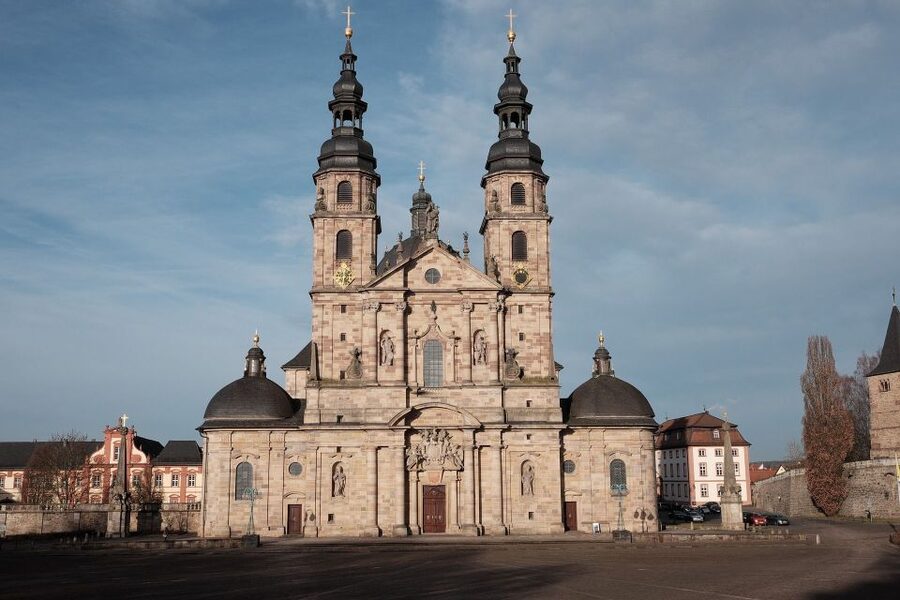
The Cathedral is the tour’s central landmark and the clearest expression of Fulda’s baroque identity. It is also a place of pilgrimage because Saint Boniface is buried there. Boniface is closely tied to the religious history of Fulda, and his tomb gives the building importance beyond its architecture.
You can expect the guide to explain why the Cathedral matters to the town and to the wider Catholic church in Germany. German bishops meet here each year for their autumn conference, adding a current institutional role to the building’s older religious purpose.
The Cathedral works best as a stop where you slow down and look carefully. Pay attention to the scale of the building, its decorative detail, and the way it shapes the surrounding baroque district. This is the point where the town’s grand ambition becomes easiest to understand.
Because the walk lasts only 90 minutes, do not assume you will have a long, unhurried interior visit. If entering the Cathedral is especially important to you, ask the guide at the start how much time is available and whether an entrance fee applies. The activity includes no entrance fees, so you should be ready to pay separately if needed.
A few more things to do in Germany worth a look
- Berlin: Private Reichstag and Glass Dome Tour
★ 4.8 · 2,226 reviews - Berlin Private Complete History All Day Walking Tour
★ 5.0 · 474 reviews - Munich Private Tour with a Local – Highlights & Hidden Gems
★ 5.0 · 469 reviews - Private Walking Tour Berlin Third Reich Hitler and World War II
★ 5.0 · 360 reviews
Saint Michael’s Church and the Holy Sepulcher
Saint Michael’s Church provides a sharp change from the Cathedral. It is considered one of the most significant medieval church buildings in Germany, so it gives the tour an older architectural layer. Fulda is not only a baroque town. Its religious story reaches back into the medieval period.
The church is valuable for comparison. After seeing the later grandeur of the Cathedral and the court quarter, you can look at Saint Michael’s as an example of an earlier building tradition. The contrast helps you notice how design, purpose, and religious space changed over time.
The route also covers Germany’s oldest Holy Sepulcher church. That is a rare and specific claim, and it gives this stop a strong historical hook. A Holy Sepulcher church recalls the Church of the Holy Sepulchre in Jerusalem, so the building connects local worship with a wider Christian pilgrimage tradition.
The available information does not specify the exact interior access or any additional fee at either church. Treat them as important planned stops, but confirm with the guide what can be entered on your date. If you care about seeing reliquaries or particular devotional objects, raise that request early rather than waiting until the final minutes.
The Residence and its courtly past
The Residence introduces the political side of Fulda’s story. The route presents its past through the former homes of senior court officers and the Residence itself. This is where the town’s baroque architecture becomes tied to power, rank, and public display.
I like this part of the route because it keeps the tour from becoming only a church visit. Fulda’s identity grew from religious authority and court life together. The grand buildings make more sense when you see them as parts of a town shaped by officials, ceremonies, and a powerful religious center.
The tour description refers to the Residence’s rich past, but it does not give a detailed room-by-room itinerary. You should therefore expect an introduction to the building and its role, rather than a guaranteed full palace tour. Entrance fees are excluded, and the 90-minute schedule limits how much time can be spent inside.
If the Residence is your main reason for booking, ask whether the guide plans to enter or explain it from the outside. That one question will help you judge if this short walking tour fits your plans or if you need a separate palace visit.
Residence Garden and the Flora Vase
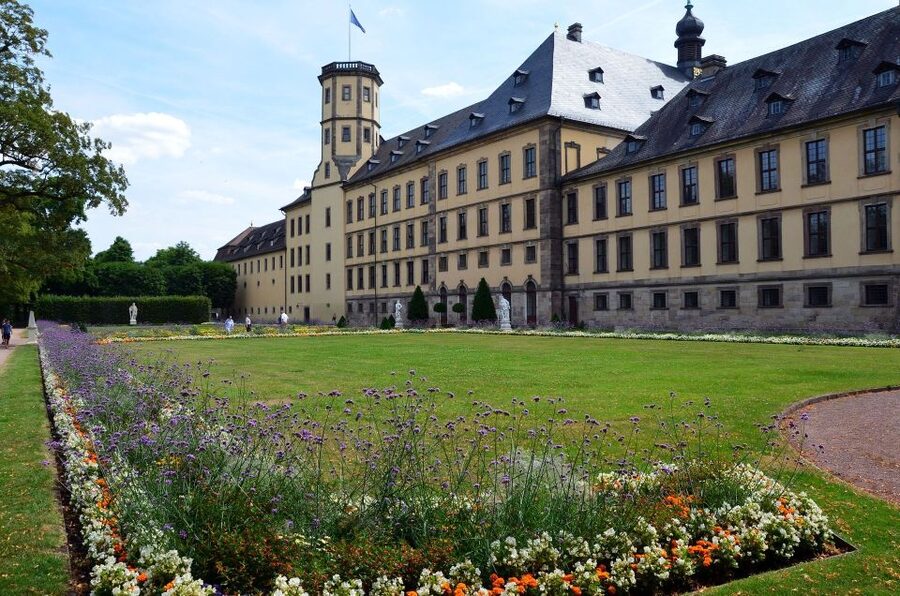
The Residence Garden gives the walk a welcome change of pace. Its design mixes formal baroque elements with the looser character of an English garden. That blend lets you see how garden taste changed over time, rather than presenting one single style.
The Flora Vase is the garden’s signature object. It is described as one of the most beautiful garden sculptures in Germany, and it gives you a specific detail to look for rather than a vague promise of pleasant greenery. If you enjoy sculpture, decorative design, or palace gardens, this may be one of the most memorable stops.
The garden also helps break up the architecture. After streets, churches, and official buildings, an open garden gives you room to look at the Residence from another angle. You can consider how courtly spaces were designed not just for use, but also for display.
The tour does not state how much free time you get in the garden. Since the full walk is only 90 minutes, the garden visit is likely part of a connected route rather than a long independent stroll. Wear shoes that can handle steady walking and do not count on having time for every path.
What the 90-minute format really means
Ninety minutes is enough for a clear introduction to Fulda, especially if you want to learn how the Cathedral, churches, court buildings, old lanes, and gardens fit together. It is not enough for a slow examination of every facade or a full visit to every interior.
You will get the most from the tour if you arrive with three or four priorities. For example, you might ask the guide to give extra attention to Saint Boniface, the Holy Sepulcher church, and the Residence Garden. The private format makes those requests more realistic, though the guide still has to keep the group moving.
A previous participant praised the explanations and city history on a tour led by Heidi. That is useful practical information: if Heidi is assigned to your group, you may find her city-history approach particularly helpful. The guide name is not guaranteed at booking, so do not assume she will lead every departure.
There is also a clear warning in the feedback. One participant described the tour as unprepared and unstructured, with explanations given while walking and not everyone being able to hear. Another found the experience very pleasant and informative but still noted the need for better group formation. Those comments point to a simple strategy: stay near the guide, speak up if you cannot hear, and ask for a full stop before a longer explanation.
Who should book this private walk
I would recommend it to a small group that wants a focused introduction to Fulda and values having a guide to connect the sights. Families, friends, and private groups can spread the cost, ask questions freely, and request small changes to the route.
It also suits you if baroque buildings, church architecture, religious objects, and court history are your main interests. The route covers enough ground to show Fulda’s different eras without requiring transport between stops.
You should think twice if you want a long interior tour of the Cathedral or Residence. The duration is short, entrance fees are not included, and the supplied details do not guarantee extended access inside any one building.
It is also a poor fit for anyone with mobility impairments or for wheelchair users. This is a walking tour through historic streets and is specifically marked as unsuitable for those needs. Bring comfortable shoes, and keep the pace in mind before booking.
Should you book Fulda’s private walking tour?
Book it if you are visiting Fulda with a group and want the town’s baroque center explained in one compact walk. The Cathedral, Saint Boniface’s tomb, Saint Michael’s Church, the Holy Sepulcher church, the Residence, and the Flora Vase give the route real variety.
The strongest reason to choose it is the private guide and the option to adjust the walk on the spot. The biggest concern is organization during the tour, especially with a larger group. At $294, it makes the most sense when shared among several people.
For a small group of architecture and history fans, this can be a useful first look at Fulda. Just confirm your priorities at the start, stay close enough to hear, and plan separate entrance visits if you want more than a short introduction.
FAQ
Where does the Fulda walking tour meet?
The tour meets in front of the Tourist Office at Bonifatiuspl. 1, 36037 Fulda, Germany.
How long does the tour last?
The walking tour lasts 90 minutes.
How much does the private tour cost?
The price is $294 for a private group of up to 15 people.
Which languages are available?
The live guide is available in English and German.
Is this a private group tour?
Yes. The guide is with your group only.
Can the route be customized?
Possible customization can be arranged with the local guide on the spot.
Are entrance fees included?
No. Entrance fees are not included in the tour price.
Is the tour suitable for wheelchair users?
No. The tour is not suitable for wheelchair users or people with mobility impairments. Comfortable shoes are recommended.
Just added in Germany
- Private One way Airport Transfer Berlin Airport To Berlin★ 3.5 · 17 reviews
- Private Walking Tour: Berlin Wall, Cold War and Checkpoint Charlie★ 5.0 · 37 reviews
- Modern Berlin Private Walking Tour: Diverse, Vibrant and Exciting German Capital★ 5.0 · 13 reviews
- Private Day Trip to Potsdam from Berlin by Train★ 4.5 · 27 reviews
- City Explorer: Potsdam Private Day Trip★ 4.5 · 10 reviews
- Berlin Private Custom 5-Hour Tour by Car★ 5.0 · 30 reviews
- Private Half-Day Sightseeing Tour in Berlin★ 3.5 · 6 reviews
- Berlin Private Custom Tour in a Minivan, East and West★ 5.0 · 123 reviews
Walking Tours, compared.

Third Reich Berlin: Hitler and WWII Walking Tour
Read our review →