Reviewed · WALKING TOURS
East Berlin: City of Shadows Walking Tour
East Berlin’s story comes into focus when you move from the grand Brandenburg Gate to the former Stasi headquarters, with the Berlin Wall, ghost stations, and Karl-Marx-Allee filling in the gaps between. This three-hour Communist-era tour links famous sights to the daily fear, separation, and frustration that shaped life behind the Iron Curtain.
I like the small maximum group of eight, since it gives a historian room to explain complicated events and answer questions. I also like the route’s range: you see political monuments, ordinary housing, a border crossing, a prison-like surveillance system, and the places where public protest helped end East Germany’s rule.
The main consideration is the price, $156.53 per person, especially since food, drinks, museum admission, and public transport are not included. The tour offers a strong introduction, but you will need to return on your own if you want enough time inside places such as the Stasi Museum.
Key points to know before booking
- A compact Cold War route: You connect seven important East Berlin sites in about three hours.
- A historian leads the walk: The guide explains politics, architecture, surveillance, escape attempts, and daily life under Communist rule.
- Public transport is part of the tour: Bring or buy a Berlin transit pass because some stops are too far apart to reach on foot.
- The group is limited to eight: This is a more personal format than a large city sightseeing walk.
- The museums are mostly viewed from the outside: The route gives context, but entrance time is not built into the schedule.
- The tour begins near the Brandenburg Gate: The listed meeting point is Unter den Linden 42, with Berlin pickup details requiring confirmation.
Why this route explains East Berlin better than a monument-only walk
I like this tour because it treats Berlin as a city of clues. A ceremonial gate, a train station, a housing project, a subway platform, and a television tower each reveal a different part of the Communist era.
The route also avoids reducing East Germany to a single wall. You learn how the government controlled movement, built propaganda into city planning, used surveillance against its own people, and eventually lost control when public anger reached the streets.
The schedule lists roughly 90 minutes at the seven stops, so the remaining time is taken up by walking, public transport, and explanation. That matters. This is not a museum marathon or a long stop at every site. It is a guided framework that helps you understand what to explore later.
The 4.8 rating from 11 reviews and a recommendation rate of 91 percent suggest that the format works well for people seeking a focused introduction. The more cautious assessment is also useful: one three-star review describes it as a brief overview and advises returning separately for museum visits. I agree with that expectation. Think of this as a well-organized orientation, not a full day of indoor exhibits.
Other walks around Berlin:
- Discover Berlin Half-Day Walking Tour
★ 5.0 · 9,624 reviews - Berlin: Third Reich and Cold War 2 Hour Walking Tour
★ 4.9 · 6,830 reviews - Berlin: Discover Berlin Walking Tour
★ 4.9 · 5,998 reviews
Brandenburg Gate and the Cold War divided in four
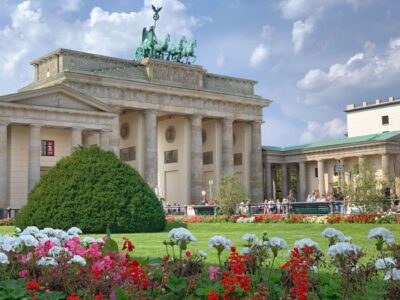
The tour starts at the Brandenburg Gate, one of Berlin’s most recognizable monuments. Today it is a symbol of reunification and open movement. During the Cold War, its location near the Wall gave it a much heavier meaning.
Here you discuss the postwar division of Germany and Berlin into four Allied sectors. That arrangement helped create the decades-long struggle between the Soviet Union and the Western powers. The guide also connects the gate with Ronald Reagan’s 1987 speech calling on Mikhail Gorbachev to tear down the Wall.
Nearby, the former Soviet Embassy adds another layer. Built in 1945 amid the ruins of World War II, its grand scale signaled Stalin’s ambition to control Berlin. It is a useful first stop because the architecture itself becomes evidence of power.
You will not pay an admission fee at the gate or embassy. The value here comes from interpretation. Without a guide, you may photograph the buildings and move on. With the political background, you begin to see why this part of Berlin mattered so much.
Friedrichstrasse and the sorrow of the Palace of Tears
Friedrichstrasse train station was a crossing point between East and West Berlin. It handled movement across the divided city, but it also became a place where families were separated by East Germany’s strict border rules.
The stop focuses on the building known as the Palace of Tears. The name comes from the farewells made there, often between people who could not freely visit one another. This is one of the tour’s most human stops because the political division becomes personal and immediate.
You spend about 15 minutes here. That is enough for context, but not a long visit. If you want to examine the station or related exhibits at length, plan separate time after the tour.
I find this stop valuable because it corrects a common misunderstanding. The Wall was not only a physical barrier between two political systems. It also controlled family contact, work, travel, and the simple act of saying goodbye.
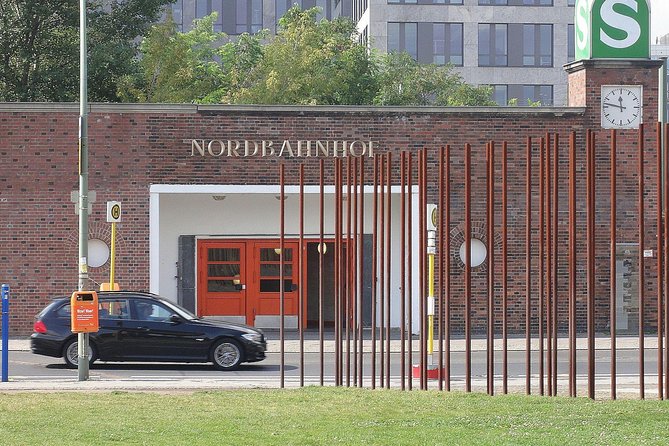
Nordbahnhof and Berlin’s ghost stations
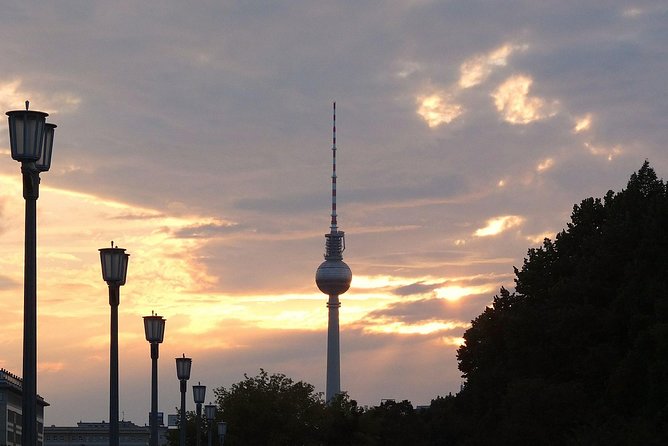
At Nordbahnhof, the tour explains how the division affected Berlin’s subway system. Some West Berlin subway lines passed through East German territory, creating stations that trains crossed without stopping.
These became known as ghost stations. They were unused, heavily guarded, and watched by East German authorities. The trains continued moving under East Berlin, while passengers in the West could see little more than dark platforms and security controls.
This is a fine example of the tour’s approach. Instead of focusing only on famous walls and speeches, it shows how the border reached into ordinary infrastructure. Public transport, which should make a city easier to navigate, became part of the machinery of division.
The listed stop lasts about 10 minutes. You will not spend hours underground, but the guide can explain why these stations existed and what they reveal about the city’s strange political geography.
A few more things to do in Berlin worth a look
- Berlin: 1-Hour City Tour by Boat with Guaranteed Seating
★ 4.3 · 16,993 reviews - Berlin: City Sightseeing Hop-On Hop-Off Bus Tour
★ 4.1 · 4,233 reviews - Berlin: 1-Hour City Sightseeing Cruise
★ 4.4 · 2,210 reviews - Berlin City Hop-on Hop-off Tour with Optional Cruise
★ 3.5 · 1,155 reviews
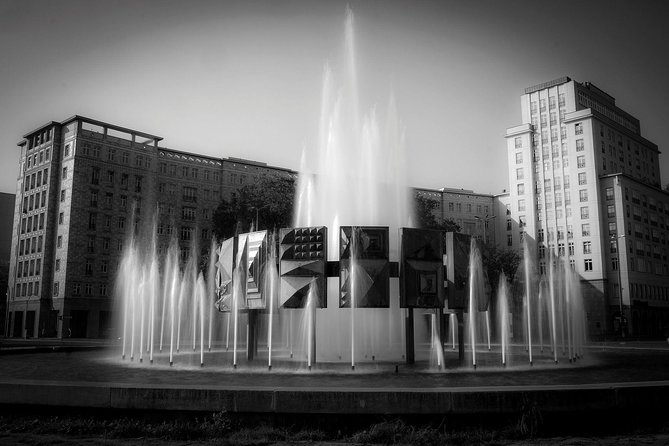
Karl-Marx-Allee and the promise of a Socialist capital
Karl-Marx-Allee presents a different face of East Germany. Its grand housing complex was designed to project confidence, order, and the promise of a Socialist future.
The long avenue and monumental architecture were meant to show that the state could provide modern homes and a better life for working people. The tour then examines how those promises collided with deprivation, political suppression, and constant suspicion.
I like this stop because it moves beyond the usual image of East Berlin as gray and grim. The city’s leaders did not present their system that way. They used architecture, broad avenues, and monumental projects to express an ideal society.
At the same time, the buildings cannot tell the whole story. A handsome avenue does not explain shortages, censorship, or fear of surveillance. This is where the historian’s explanation matters. You get both the public image and the private reality.
The visit is scheduled for about 10 minutes, so treat it as a concise architectural and political reading rather than a detailed building tour.
The Berlin Wall Memorial and the Death Strip
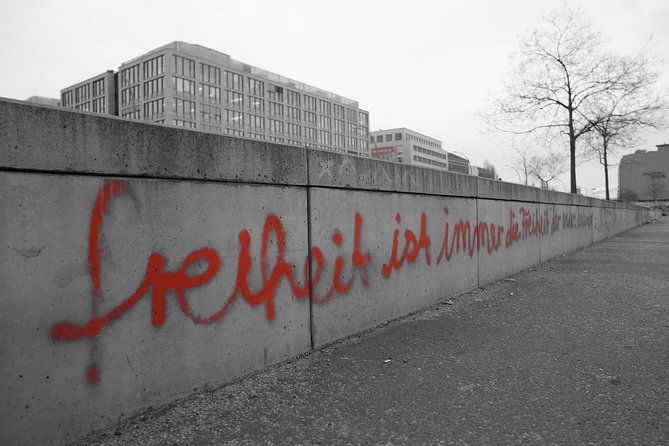
The Berlin Wall Memorial is likely the most powerful physical reminder on the route. Here you encounter the former Death Strip and hear about East Berliners whose attempts to escape ended in death.
The memorial gives the Wall more depth than a remaining section of concrete can provide. You begin to understand the barriers, controlled space, and danger involved in crossing from East to West. The stories of escape attempts make the political system personal once again.
The stop lasts about 15 minutes. That is enough for a serious explanation, but the site deserves slower independent exploration if you want to read every sign and examine the memorial area carefully.
I would pay close attention here, even if you have already seen other Wall remnants in Berlin. A painted section of concrete often becomes a photo opportunity. This memorial helps you understand the human cost behind it.
Stasi headquarters and the machinery of suspicion
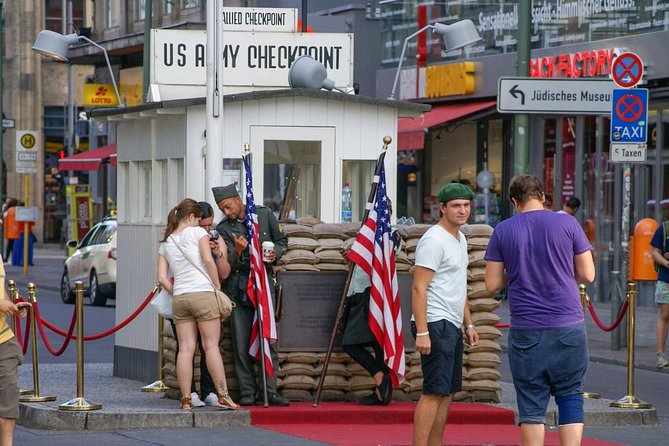
The Stasi Museum stop introduces East Germany’s secret police. The former headquarters was the center of a system that encouraged neighbors, relatives, and colleagues to spy on one another.
The guide explains how Erich Mielke built a huge network of informants and developed surveillance methods designed to watch ordinary people. The frightening part was not just the size of the agency. It was the way suspicion entered homes, offices, friendships, and families.
The schedule allows about 10 minutes here, and the tour does not include museum admission. That distinction is important. You receive an introduction to the building and the Stasi system, but you should not expect a full indoor museum visit during the walking tour.
If the subject interests you, return later with time set aside for the exhibits. The guided explanation will help you know what to look for, but the museum itself requires a separate visit. This is the clearest example of the tour’s main limitation: it gives you the story’s structure, not every document and display.
Alexanderplatz and the end of East Germany
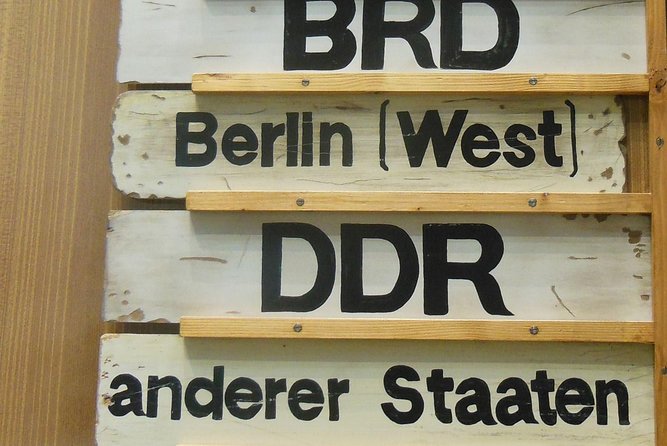
Alexanderplatz was the center of public life in East Berlin. The square was rebuilt in the 1960s with monuments meant to express the confidence of the East German state, including the futuristic parliament building and the famous TV Tower.
The tower served as both a practical landmark and a symbol of Communist pride. From the government’s point of view, it represented modern science and progress. Yet Alexanderplatz later became one of the main settings for demonstrations that helped bring down the regime in 1989.
That change gives the square its force. A place built to display state power became a place where people challenged that power. The tour closes here by connecting public protest with the collapse of 40 years of Communist rule.
The stop lasts about 10 minutes. You get the political meaning and the historical turning point, but not a full visit to the tower or other attractions. If you want panoramic views or indoor sightseeing, schedule those separately.
How the transport and small group affect the day
Although this is described as a walking tour, you will use public transport several times. The distances between the key sites are too great to cover entirely on foot, so the practical side of Berlin travel becomes part of the experience.
A Berlin AB one-way ticket is listed at 2.80 euros, with a senior fare of 1.70 euros. A day ticket for one person is listed at 7 euros, with a senior price of 4.70 euros. If you already have a multi-day transit pass, bring it. If not, the guide can help you buy a ticket at the first metro station.
This is useful for first-time visitors, but it also means you should not arrive expecting three uninterrupted hours of walking commentary. You will move through stations and streets, with the guide explaining how the city’s divided past affected transport.
The maximum group size is eight. That is a real advantage for a subject with many questions and complicated names. You can ask about the Wall, the Stasi, border rules, or architecture without trying to speak over a large crowd.
Pickup information needs a little care. Pickup is offered, while the cost details also say hotel pickup and drop-off are not included. The listed start point is Unter den Linden 42, and the tour ends in Berlin. Confirm the exact pickup arrangement before booking rather than assuming a hotel transfer is part of the price.
Is $156.53 a fair price?
At $156.53 per person, this is not a budget walking tour. You are paying for a local historian, a small group, a carefully connected route, and help making sense of a difficult period.
The price is easier to justify if you want context quickly and prefer asking questions as you go. It may also suit you if you have limited time in Berlin and want a strong first look at East Berlin before choosing which museums and memorials to revisit.
The value is weaker if you expect admission to the Stasi Museum or other indoor sites, food, drinks, and transportation to be included. Those costs are separate, and the short stop lengths mean you will only receive an introduction at several locations.
I would compare this tour with the cost of spending a day assembling the same route yourself. A self-guided visit costs less, but you would need to research the political connections, plan the public transport, and understand what each location meant. For someone who wants a historian’s framework, the extra cost can make sense. For a museum-focused visitor, a shorter guided walk followed by independent visits may be better value.
Who will get the most from this tour?
I would choose this tour if you want to:
- Understand the Cold War beyond the Berlin Wall
- Learn how ordinary people experienced division and surveillance
- See major Communist-era sites in one organized route
- Ask questions in a group limited to eight
- Get your bearings before visiting museums independently
- Use public transport with help from a guide
It suits adults and older children who can manage a moderate level of walking and several transit rides. You should have a moderate physical fitness level, according to the tour details.
I would hesitate if you want a slow photography walk, a full museum day, or a tour with no extra transport costs. I would also set aside more time if your main interest is the Stasi Museum or the Wall Memorial itself.
The tour has free cancellation up to 24 hours before the start time. Changes or cancellations inside that window are not accepted for a refund, so check the local start time before making plans.
Should you book East Berlin: City of Shadows?
Book it if you want a compact, guided explanation of East Berlin’s political legacy and value direct access to a historian in a very small group. The route is especially useful early in your stay, when the city’s monuments and former border sites can otherwise feel disconnected.
Do not book it expecting a full museum experience or a cheap city walk. The $156.53 price is high, public transport costs extra, and the brief stops give you a framework rather than exhaustive visits.
My practical choice would be to take this tour early in a Berlin visit, then return to the Berlin Wall Memorial and Stasi Museum on your own. That combination gives you both the big picture and the time needed for the details.
FAQ
How long does the East Berlin: City of Shadows tour last?
The tour lasts approximately three hours.
Where does the tour begin?
The listed meeting point is Unter den Linden 42, 10117 Berlin, Germany.
Does the tour include hotel pickup?
Pickup is offered from hotels or accommodations in Berlin, but hotel pickup and drop-off are also listed as not included. Confirm the exact arrangement before booking.
Is public transportation required?
Yes. Some sites are too far apart to walk, so you will use public transport several times during the tour.
How much does Berlin public transport cost for this tour?
A Berlin AB one-way ticket is listed at 2.80 euros, or 1.70 euros with the senior discount. A day ticket is listed at 7 euros, or 4.70 euros with the senior discount.
Are museum admissions included?
No. The tour includes a local guide, but food, drinks, transportation, and museum admission are not included.
How large is the group?
The tour has a maximum of eight travelers.
Can I cancel for a full refund?
Yes, if you cancel at least 24 hours before the experience start time. Cancellations or changes made less than 24 hours before the start time are not accepted for a refund.
Just added in Berlin
- Private One way Airport Transfer Berlin Airport To Berlin★ 3.5 · 17 reviews
- Private Walking Tour: Berlin Wall, Cold War and Checkpoint Charlie★ 5.0 · 37 reviews
- Modern Berlin Private Walking Tour: Diverse, Vibrant and Exciting German Capital★ 5.0 · 13 reviews
- City Explorer: Potsdam Private Day Trip★ 4.5 · 10 reviews
- Private Day Trip to Potsdam from Berlin by Train★ 4.5 · 27 reviews
- Berlin Private Custom 5-Hour Tour by Car★ 5.0 · 30 reviews
- Private Half-Day Sightseeing Tour in Berlin★ 3.5 · 6 reviews
- Berlin Private Custom Tour in a Minivan, East and West★ 5.0 · 123 reviews
Walking Tours, compared.

Third Reich Berlin: Hitler and WWII Walking Tour
Read our review →