
Reviewed · WALKING TOURS
Berlin Walking Tour
Berlin’s past is laid out across its streets, and this walking tour gives you a fast introduction to the city’s biggest chapters: Prussian power, Nazi rule, the Berlin Wall, and reunification. You’ll see the Reichstag, Brandenburg Gate, Holocaust Memorial, and Berlin Wall sites, while your guide connects them into one broad story.
I like the tour’s low advertised price and its useful first-day route. I also like the range of guides praised for clear storytelling, humor, and strong command of Berlin’s past. The main caution is reliability: some bookings have been affected by guide no-shows, meeting-point changes, or cancellations when numbers were low.
Key points to know before you book
- A fast tour of major sights: The route covers the Reichstag, Berliner Dom, Brandenburg Gate, Checkpoint Charlie, the Berlin Wall Memorial, and the Holocaust Memorial.
- Guide quality can shape the day: Miguel, Ana, Katia, Ester, Evan, and several others have been praised for clear, lively presentations.
- Expect a long walk: The listed duration is about three hours, but some tours have lasted three and a half to four hours.
- The price needs checking: The supplied price is $2.90 per person, yet some participants were told it was a free walking tour with an expected tip or extra payment.
- This works best early in your stay: The route helps you get your bearings and choose which places deserve a later, closer visit.
- Weather matters: You’ll be outside for most of the experience, so wear warm clothing in winter and carry rain protection when needed.
A broad introduction to Berlin’s past
This is an orientation walk rather than a close study of one museum or neighborhood. In roughly three hours, you move across central Berlin and hear how the city changed from a small settlement into the center of Prussian power, the capital of Nazi Germany, a divided Cold War city, and the reunited capital of modern Germany.
I like that range. Berlin can feel scattered because its most important sites are spread across broad streets, parks, government districts, and former border zones. A guide gives those places a common thread. The Reichstag is not just a handsome government building, the Brandenburg Gate is not just a photo stop, and Checkpoint Charlie is not just a busy tourist corner.
The tradeoff is pace. You may spend about 20 minutes at several stops, and Checkpoint Charlie may receive only a very brief explanation before the group moves on. If you want time inside buildings or quiet reflection at memorials, you’ll need to return on your own.
The group limit is listed as 50 people, which is large for a walking tour. That can make the guide harder to hear and the group slower to gather, especially in busy areas. Smaller groups may form in practice, but you should be ready for a public, social tour rather than a private walk.
Other walks around Berlin:
- Discover Berlin Half-Day Walking Tour
★ 5.0 · 9,624 reviews - Berlin: Third Reich and Cold War 2 Hour Walking Tour
★ 4.9 · 6,830 reviews - Berlin: Discover Berlin Walking Tour
★ 4.9 · 5,998 reviews
Starting at Generator Berlin Alexanderplatz
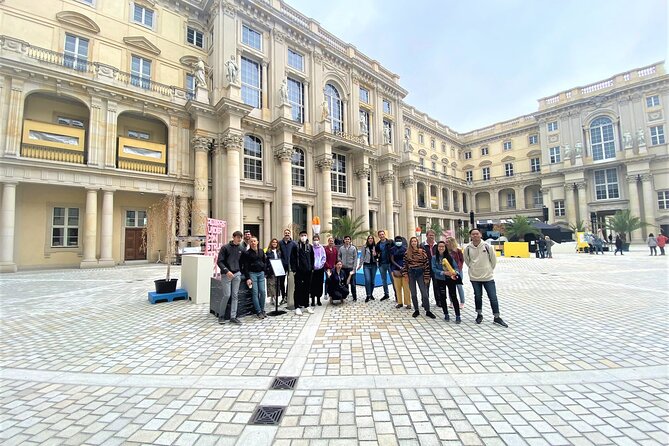
The meeting point is Generator Berlin Alexanderplatz on Otto-Braun-Straße. This puts you near one of Berlin’s main transport areas, with public transportation nearby and Alexanderplatz within reach.
The location is practical, though it is not itself one of the headline historic sights on the route. Allow time to find the exact meeting spot and arrive early. That matters here because some participants were left waiting after a guide failed to appear, while others reported a meeting-point change that did not reach them.
I would save the confirmation details and check for any last-minute message before leaving your accommodation. The tour normally returns to the same meeting point, but the route may include public transport if needed, and that cost is not included.
The Reichstag and Berlin’s modern government
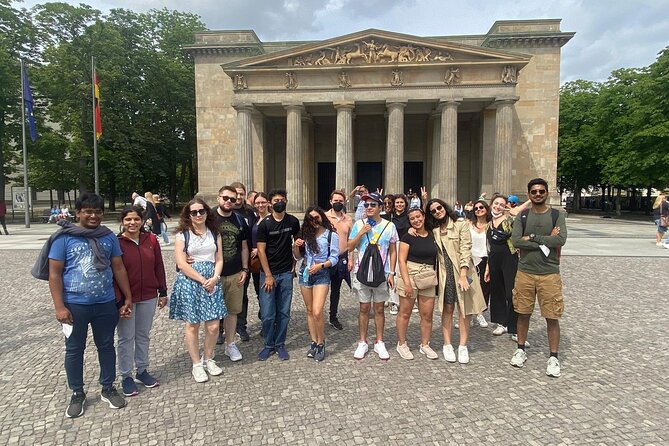
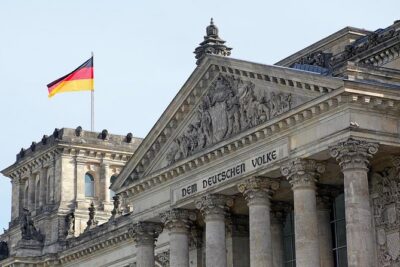
The Reichstag is usually the first major sight, with about 20 minutes set aside. The building houses the Bundestag, Germany’s lower house of parliament, and its story helps explain Berlin’s role as the country’s political center.
This is a good opening stop because the building links several eras. You can hear about imperial Germany, the damage caused by war, the years when Berlin was divided, and the building’s place in the reunited capital.
Do not expect a full interior visit. Admission is listed as free, but this tour is focused on the exterior and the guide’s explanation. If you want to visit the dome or parliamentary areas, you would need to make separate arrangements.
Berliner Dom and the royal city
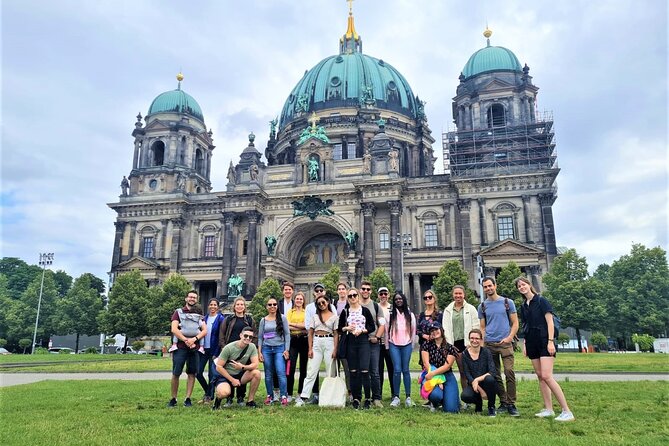
The Berliner Dom provides a different view of Berlin. Its setting by the Museum Island area brings in the city’s royal and religious past, while the surrounding architecture helps you see how central Berlin developed around the former Prussian capital.
The guide uses this stop to explain the German capital beyond the twentieth century. That is useful because many short Berlin tours focus only on Hitler and the Wall. Here, the story can include Prussia, German rulers, architecture, and the city’s earlier growth.
Again, the scheduled time is about 20 minutes, so this is a look and listen stop rather than a full visit inside. I would treat it as a preview and return later if the cathedral interests you.
Same base, a different kind of day out:
- Berlin: Reichstag, Dome and Government District Guided Tour
★ 4.7 · 18,288 reviews - Berlin: 1-Hour City Tour by Boat with Guaranteed Seating
★ 4.3 · 16,993 reviews - Berlin: Boat Tour Along the River Spree
★ 4.4 · 11,252 reviews - Berlin: Hop-on Hop-off Bus Tour with Live Commentary
★ 4.3 · 8,579 reviews
Brandenburg Gate, the city’s famous symbol
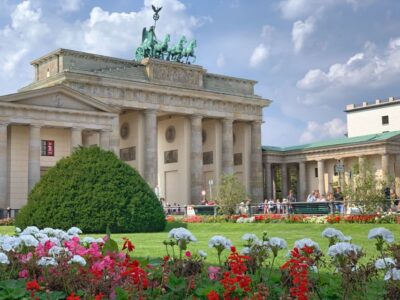
The Brandenburg Gate is likely the tour’s most familiar image. This neoclassical monument was built on the orders of Prussian king Frederick William II after the temporary restoration of order during the Batavian Revolution.
The value of stopping here is not only the photograph. The gate has witnessed the rise of Prussia, the changing fortunes of Germany, Nazi ceremonies, the Cold War division, and reunification. A good guide can turn a familiar monument into a marker of changing power.
The tour allows about 20 minutes. That is enough to hear the main story and look at the surrounding area, but not enough for a detailed architectural lesson. The open setting also means your guide may need to project clearly if the group is large.
Checkpoint Charlie and the Cold War border
Checkpoint Charlie was the best-known crossing point between East and West Berlin during the Cold War. Its name came from the Western Allies, and the location remains one of the city’s clearest reminders that Berlin was once split by force.
This stop can be useful for understanding how the Wall affected ordinary movement through the city. It also helps connect the grand political story to the practical reality of a divided capital, where crossing from one side to the other was controlled and dangerous.
The warning here is simple: the stop may be very short. One account described only about two minutes at Checkpoint Charlie. You may hear the main facts, take a quick look, and move on. If you want a fuller Cold War visit, plan separate time for the Berlin Wall Documentation Center or another dedicated Wall site, though those visits are not part of this booking.
Berlin Wall Memorial and the cost of division
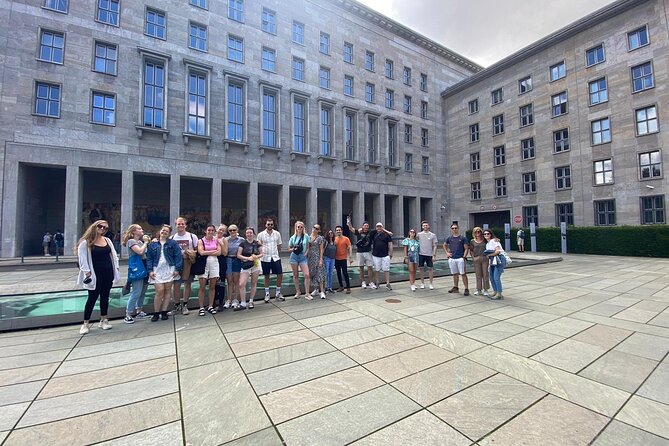
The itinerary also includes a Berlin Wall memorial stop, where the guide discusses the barrier that separated the city and restricted the freedom of millions under Soviet rule. This is one of the more important parts of the walk because it moves beyond the Wall as a photo subject.
Look for the physical traces, memorial markers, guard towers, and the gaps between what remains and what has disappeared. The tour also points out streetlights, towers, and other reminders of the former Soviet-controlled city. These details can be easy to miss when you walk alone.
The wording of the stop suggests a general outdoor explanation, not an extended museum visit. You’ll gain context, but you may want to return later for a slower look at the preserved sections and memorial spaces.
The Holocaust Memorial and Berlin’s hardest subject
The Memorial to the Murdered Jews of Europe is one of Berlin’s most powerful public places. Its field of concrete blocks invites a different kind of attention from the other stops, and the guide uses it to address the Nazi Third Reich and the murder of Europe’s Jews.
A good guide needs care here. The tour’s wider approach includes stories, humor, and social interaction, but this stop calls for a respectful tone and enough quiet for the place to speak for itself. You may hear how the memorial fits into Berlin’s effort to confront its crimes.
The scheduled stop is about 20 minutes. That allows an introduction and a walk among the blocks, but it is not enough for a full visit to the underground information center. If this is a main reason for your trip, return alone and give it more time.
The route may also cover the former site associated with Hitler’s bunker, based on the detailed route descriptions from participants. That location is modest and easy to pass without context, so a guide’s explanation adds real value. Do not expect a preserved bunker interior.
History from Prussia to the present
Several guides have been praised for making the long timeline easy to follow. Adolfo, Ana, Katia, Ester, Ronja, Miguel, Evan, Francesca, Phillipe, Rosanna, Richard, Caroline, and Nora are among the guides singled out for warmth, clear English, humor, strong storytelling, or careful answers.
That list also points to the main variable in the experience: your guide. One guide may balance facts with gossip and unusual stories, while another may deliver the material more like a classroom lecture. One participant found the commentary engaging and funny, while another found the delivery dry and felt that the group moved too quickly.
I would book this with realistic expectations. You are paying for a guide-led introduction, not a guaranteed performance. The strongest reports describe guides who answered questions, watched the group, helped people avoid getting lost, and brought the city’s history to life. If your guide is less lively, the route still gives you a useful map of central Berlin, but the experience may feel like a moving history lesson.
How much walking and time to allow
The published duration is approximately three hours. In practice, some outings have lasted three and a half hours or even four, so I would not schedule a train, museum reservation, or meal immediately afterward.
You need a moderate level of fitness. The walk covers a lot of central Berlin, with repeated stops, standing, and outdoor exposure. One report praised the safe paths even in snow and ice, but that should not make you careless. Winter weather can make a long walk tiring, and another participant wished they had dressed more warmly.
Wear comfortable shoes and bring water. In cold weather, add a proper coat rather than relying on a quick city walk. In wet weather, an umbrella helped one group complete the route, but rain can make the experience less comfortable and harder for everyone to hear.
Public transportation may be used, and fares are not included. Keep a valid ticket in mind if your guide takes the group on transit.
The price, tipping, and value question
The supplied price is $2.90 per person, which is remarkably low for a three-hour guided walk through central Berlin. At that rate, the tour can be excellent value even if you use it mainly to orient yourself and mark places for later visits.
There is an important complication. Some participants understood this as a free walking tour and were then asked for a tip, while one account says the guide requested €20 per person upfront. The provider response says the tour is free to join and tipping is optional. That does not fully match the advertised $2.90 price, so I would clarify the payment and tipping arrangement before you go.
The cancellation policy allows a full refund if you cancel at least 24 hours before the start time. Cancellations within 24 hours are not refunded. Because no-show and schedule problems have been reported, keep your booking confirmation and any operator messages until the meeting is complete.
Who should book this Berlin walk?
I would choose this tour if you have only one day in Berlin, want to see the central landmarks quickly, or prefer a guide to explain the city while you walk. It is especially useful on your first morning, when the route can help you decide which museums, memorials, and neighborhoods deserve a second visit.
Families may also find the route useful, since one account describes a child-friendly path with a park and a short metro ride. Still, the length and historical subject matter may be tiring for younger children.
I would be more cautious if you need guaranteed punctuality, a small group, or a slow study of each site. The group may be large, the pace can be quick, and the exact experience depends heavily on the guide. If you are an expert on Berlin already, the unusual stories and personal anecdotes may still add something, but the basic route will be familiar.
Should you book it?
Book it if you want an inexpensive, broad introduction to Berlin and can accept some uncertainty around group size, timing, and guide style. The best guides bring together architecture, politics, social history, war, and everyday Berlin with warmth and humor.
Skip it if you need a tightly managed premium tour or cannot risk a schedule problem. Before paying, confirm the meeting point, check for changes, and ask how the $2.90 charge relates to tipping. If those conditions suit you, this walk can give you a useful first map of Berlin and a strong list of places to revisit.
FAQ
How long does the Berlin Walking Tour last?
The advertised duration is approximately three hours. Some outings have lasted three and a half to four hours, so allow extra time after the scheduled finish.
Where does the tour start?
It starts at Generator Berlin Alexanderplatz, Otto-Braun-Straße 65, 10178 Berlin, Germany.
Where does the tour end?
The activity ends back at the meeting point.
Which sights are included?
The route includes the Reichstag Building, Berliner Dom, Brandenburg Gate, Checkpoint Charlie, the Berlin Wall Memorial, the Holocaust Memorial, and other historic reminders around central Berlin.
Is public transportation included?
Public transportation may be used if applicable, but transportation costs are not included.
Is the tour conducted in English?
Yes. The experience is offered in English and includes a walking tour guide.
Can I cancel for a refund?
You can cancel at least 24 hours before the start time for a full refund. Cancellations or changes made less than 24 hours before the start time are not refunded.
Just added in Berlin
- Berlin: Energizing 2-Hour Morning Segway Tour★ 4.7 · 35 reviews
- Berlin: Thrilling E-Scooter Adventure Tour★ 4.4 · 66 reviews
- Beelitz-Heilstätten: Baum&Zeit Tree Top Walk Entry Ticket★ 4.9 · 7 reviews
- Beer Bike & Party Bike: Unforgettable Berlin City Tour incl. pickup★ 5.0 · 5 reviews
- AXE THROWING EXPERIENCE IN BERLIN★ 4.7 · 24 reviews
- Alternative Berlin / Street art tour – Private group★ 5.0 · 6 reviews
- Berlin: Alternative & Street Art Tour★ 4.5 · 6 reviews
- Berlin: 2.5-Hour Beer & Sunset Sightseeing Boat Cruise★ 4.6 · 61 reviews
Walking Tours, compared.

Third Reich Berlin: Hitler and WWII Walking Tour
Read our review →
Browse the lists this tour appears in